Front desk agents say they can often spot a seasoned traveler before the first word is spoken. It isn’t the matching luggage or the polished travel outfit. It’s a handful of small, quiet habits that turn a long, awkward slog at the counter into a quick, friendly handoff.
Most people assume a smooth check-in is just luck. It usually isn’t. Much of it is set up before the guest ever reaches the desk, and a few of the moves below sound almost backwards. The one at the very top has nothing to do with logistics, and it may change how you walk up to every front desk from now on.
#15 – They Know the Real Price Before They Walk In
Experienced guests never get ambushed by the bill at the desk. When they book, they look at the total with mandatory fees included. Since 2025 that has gotten easier, because the FTC’s Rule on Unfair or Deceptive Fees took effect May 12, 2025. It bans bait-and-switch pricing for short-term lodging.
Under the rule, hotels must show the total price, including mandatory fees, up front and more prominently than other pricing terms. The FTC can seek up to $53,088 in civil penalties per violation, adjusted annually for inflation. Even so, seasoned guests screenshot the booking page. If the desk quotes a higher number, they have proof in seconds.
The next habit starts in the lobby, and it’s one most guests skip.
#14 – They Hand Over the Right ID and the Right Card Before Anyone Asks

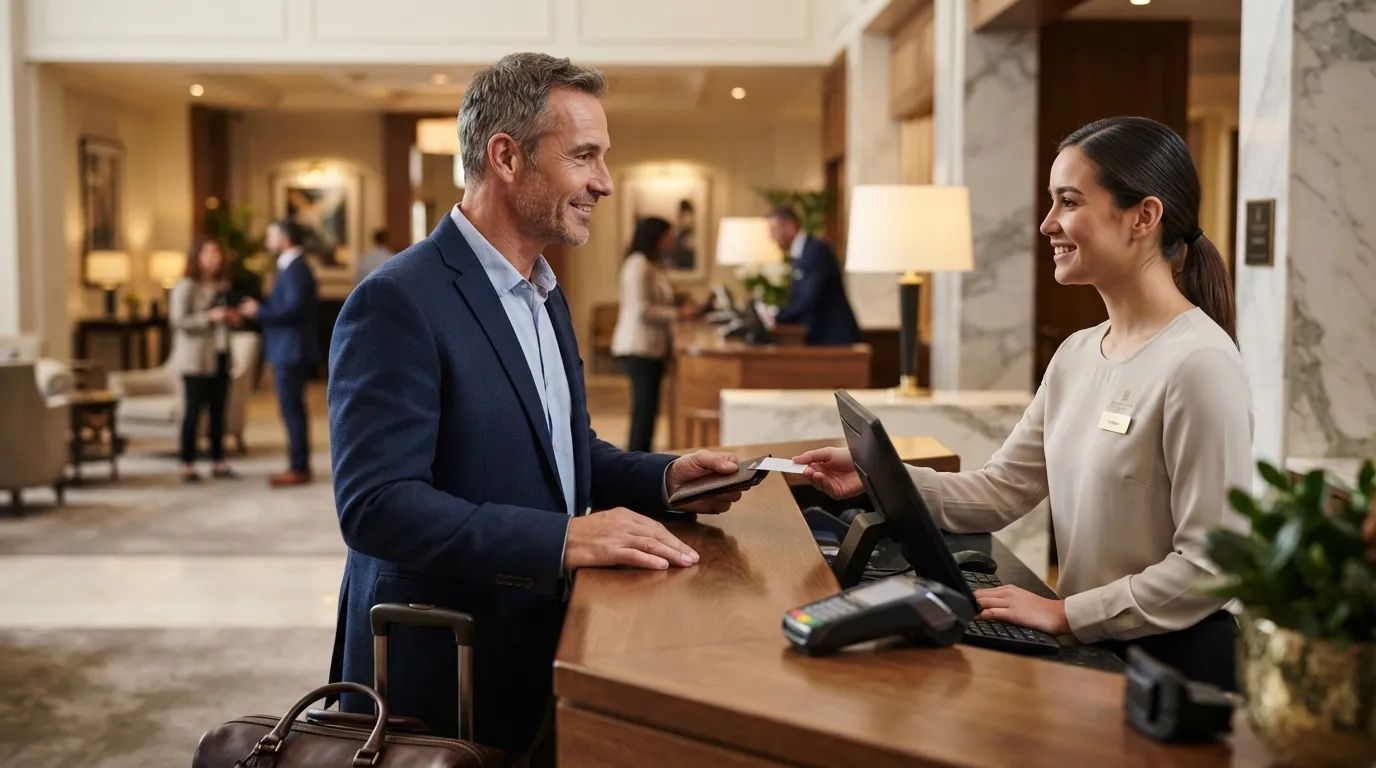
The slowest check-ins begin with a frantic dig through pockets, bags, and coat linings. Experienced guests walk up with a government photo ID and the payment card already in hand. They also know whose name is on the reservation, which sounds obvious until a partner or coworker booked the room.
Third-party bookings cause the most confusion. The reservation may sit under a different name than the person standing at the desk. A mismatch between the booking name and the ID can stall a check-in for several minutes. Pros keep the confirmation email open on their phone so the agent can match it fast.
Now for the timing mistake that trips up almost everyone…
#13 – They Never Expect a Room at 9 A.M.
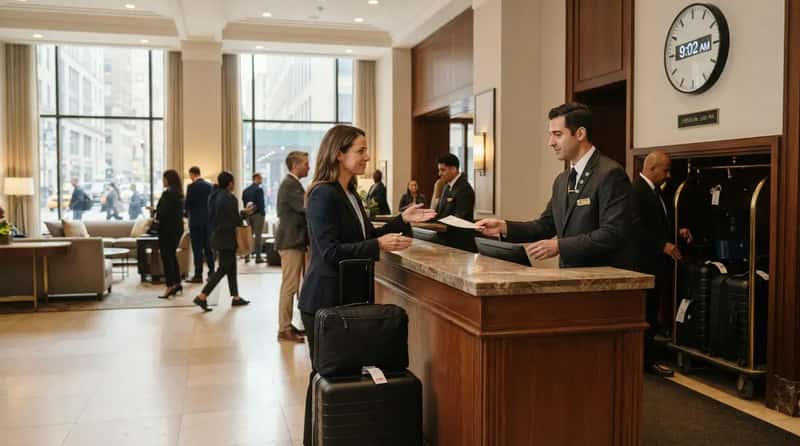
Rooms have to be cleaned between guests, and that takes real time. Most U.S. hotels set standard check-in in the afternoon and checkout in the late morning. A morning arrival often means the room simply isn’t ready, no matter how tired you are.
Experienced guests plan around this instead of arguing about it. They ask, “Can you hold my bags and text me when a room is ready?” Many hotels will store luggage for free even when no room is available. Then they grab coffee, wander the neighborhood, and return to a room that’s actually clean. The guest who demands early entry often ends up with whatever room happened to be ready first.
Fast Facts
- Check-in usually opens in the afternoon, not the morning.
- Checkout is usually late morning, so rooms need a turnaround window.
- Bag storage is a common courtesy, even before your room is ready.
- Asking for a text alert beats hovering in the lobby.
The next move is quieter, and some travelers swear it’s overrated…
#12 – They Check In on Their Phone and Skip the Line
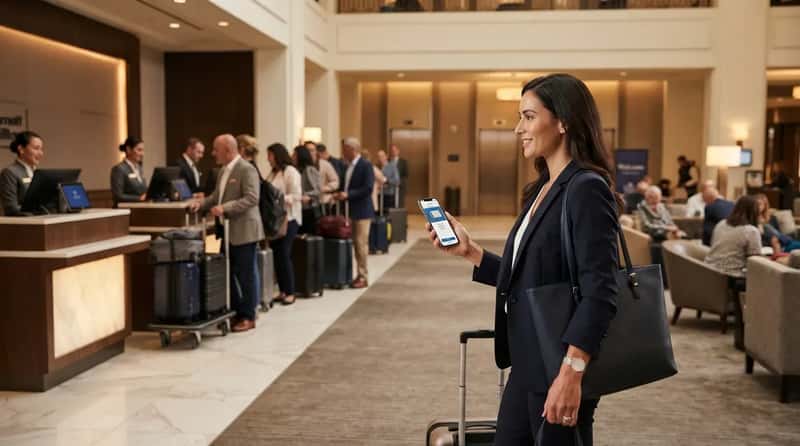
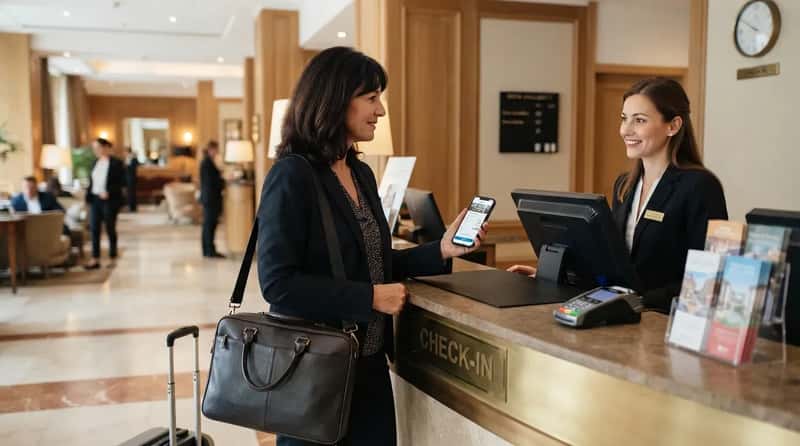
The most efficient guests may never touch the line. Large chains such as Hilton and Marriott let guests check in through their apps at participating hotels. Many also offer a digital key that opens the room door straight from a phone.
Not everyone loves it. Some travelers argue that skipping the desk means skipping the one chance to ask for a better room, and they have a point. App check-in may lock in your room assignment before a human has looked at your request. So the experienced guest often uses the app to save time, then stops by the desk if they want something specific.
What the pros ask about money is even more telling…
#11 – They Ask Exactly What the Resort Fee Actually Covers

Mandatory daily fees are among the most argued-about charges in travel. A resort fee, sometimes called a destination, amenity, or urban fee, commonly runs about $25 to $55 per night. Experienced guests don’t just shrug and accept it. They ask what it includes.
They want specifics: Wi-Fi, pool access, fitness center, parking, bottled water, or a drink credit. If the pool is closed for repairs, they politely ask whether the fee can be adjusted. Class actions have been filed over resort fees where the promised amenities were unavailable or unused. Whether you think the fee is fair or not, the savvy guest asks before signing.
Next up: the status trick that only works when you don’t push it…
#10 – They Mention Loyalty Status Once, Then Zip It

Experienced guests give their loyalty number at the start and leave it there. They don’t announce their tier or drop heavy hints about upgrades. Agents hear pushy upgrade demands all day, and those rarely help anyone.
The better approach is a quick, friendly line: “I’m celebrating an anniversary, so if anything nicer is available, I’d love it.” Upgrades are usually at the agent’s discretion and depend on which rooms are open that night. A polite ask gives them a reason to help. A demand gives them a reason to go check the rule book instead.
Quick Compare
- The rookie: “I’m a top-tier member, so I expect an upgrade.”
- The pro: Shares the loyalty number, then adds a warm, specific occasion.
- The result: One puts the agent on the defensive. The other makes saying yes feel good.
Still, nothing creates more check-in drama than the next item…
#9 – They Know About the Hold on Their Card Before It Hits
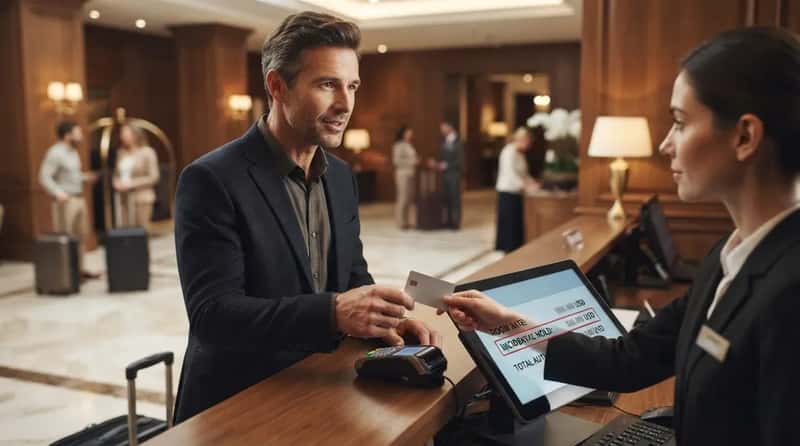
Many hotels place an authorization hold on a card at check-in. It typically covers the room cost plus an extra cushion for possible incidentals. A hold isn’t a charge, but depending on the bank, it can tie up your available funds for days after checkout.
That’s why experienced travelers lean toward credit cards for hotel stays. On a debit card, a hold can temporarily lock up real cash from your checking account. Plenty of travelers have been caught short on the road this way, standing at a restaurant with a declined card. Seasoned guests ask the desk how large the hold will be and how long it usually takes to release.
Now for what the best guests request about the room itself…
#8 – They Ask for a Specific Room Instead of Saying “Whatever You Have”

Newcomers say, “Whatever you’ve got is fine.” Experienced guests name what they want. Common requests include a high floor, a room away from the elevator, or a spot far from the ice machine. Those details can decide whether you sleep well or stare at the ceiling at 2 A.M.
Hotel noise tends to come from the same places: elevators, vending areas, street-facing windows, and rooms above a bar or ballroom. Elevator noise is a perennial complaint in hotel reviews. Agents can’t promise everything, but a clear request gives them something to work with. A vague one gets whatever is left.
And the next detail is one most travelers never notice at all…
#7 – They Notice When the Desk Says the Room Number Out Loud

Good hotels write the room number on the key sleeve or a card instead of announcing it across the lobby. The reason is safety. A stranger standing nearby shouldn’t learn exactly where a guest will be sleeping.
Experienced travelers notice this right away. If an agent does say the number aloud, they politely ask for it to be written down and for a new room if they feel uneasy. Long-standing hotel safety advice says room numbers shouldn’t be spoken at the front desk. Pros also keep the number off social media and don’t leave the key sleeve lying around.
The next habit begins before the trip even starts…
#6 – They Call Ahead When a Delayed Flight Will Make Them Late

A flight delay that lands you at the hotel at 10 P.M. can turn into a stressful lobby scene. Experienced guests call ahead. They say they’re running late and give an estimated arrival time.
This matters most when the room isn’t guaranteed with a card. Depending on the booking terms, a hotel may release unclaimed rooms later in the evening. A short phone call can be what keeps your room from going to a walk-in. Seasoned travelers also confirm the front desk is staffed overnight, since some smaller properties aren’t.
But what experienced guests do with cash may be the most overlooked habit of all…
#5 – They Carry a Few Small Bills for the Moments That Matter
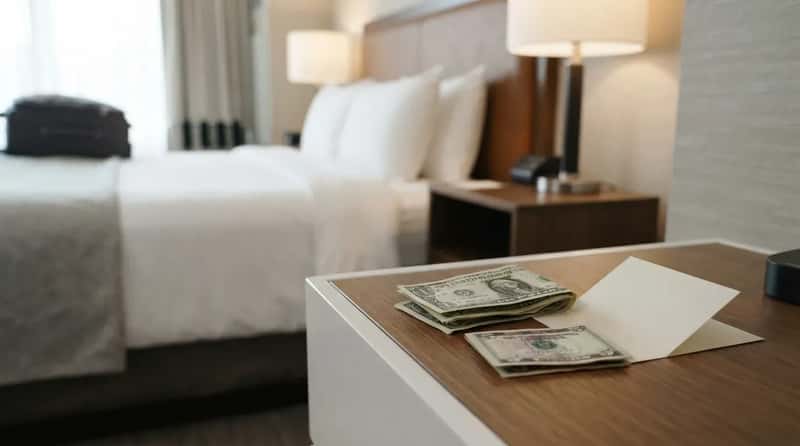
Tipping at hotels is a hot debate. Some travelers think it has gotten out of hand, while others see it as basic fairness for physical, low-paid work. Experienced guests don’t argue about it at the counter. They just show up with a few small bills.
If a bellhop carries the bags, they tip on the spot, before the person leaves the room. Housekeeping tips work best left daily, since different staff may clean on different days. A few dollars in cash can make a quick favor, like an extra towel, much easier to get. It also tells the staff you notice their work.
Worth Knowing
- Singles and fives are the most useful bills to keep in a pocket.
- Tip bellhops when they hand over the bags, not at the lobby door.
- Leave housekeeping tips each morning, with a note so it’s clearly meant for them.
- Staff rotate, so one lump sum on the last day can miss the person who cleaned earlier.
Next comes the habit that saves the most walking…
#4 – They Test the Key Before the Bellhop Walks Away
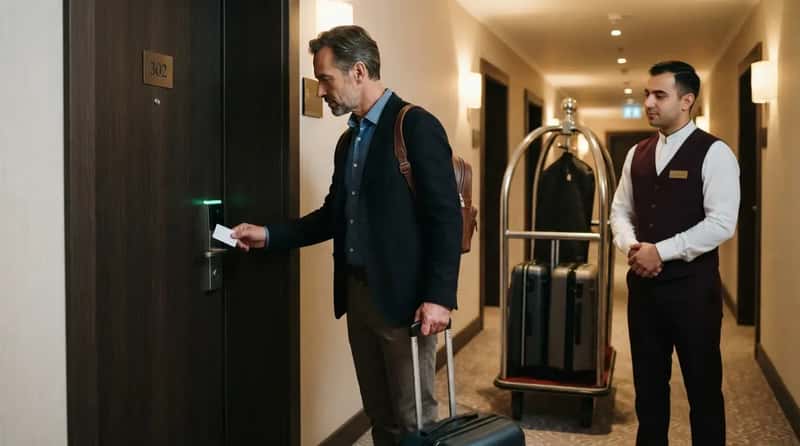
Few things are more annoying than a key card that blinks red. You trudge back to the lobby with your bags in tow, past the same cheerful desk agent. Experienced guests dodge this by trying the key immediately, ideally while the bellhop is still standing there.
Cards fail for ordinary reasons. They may have been encoded for the wrong room, or before the room was ready. Phones and magnets can also interfere with older magnetic-stripe cards. A dead key card is a common reason guests end up back at the front desk. Seasoned travelers keep the card in a separate pocket from their phone, and they ask for a replacement the moment it misbehaves.
The next habit is the one that separates the pros from everybody else…
#3 – They Inspect the Room Before a Single Sock Comes Out of the Suitcase

The moment the door closes, experienced guests do a quick sweep. They look at the bed, the bathroom, the air conditioning, and the outlets. They check the window locks and notice whether the room smells like smoke.
The reason is timing. A problem reported in the first few minutes is far easier to fix than one reported on day three. Other rooms are likely still open, the staff isn’t buried in problems yet, and nobody can suggest you caused the damage. The best guests keep their suitcases closed until they’ve decided the room is acceptable.
And what they do when something is wrong may surprise you…
#2 – They Ask for a Different Room Without the Apology Tour
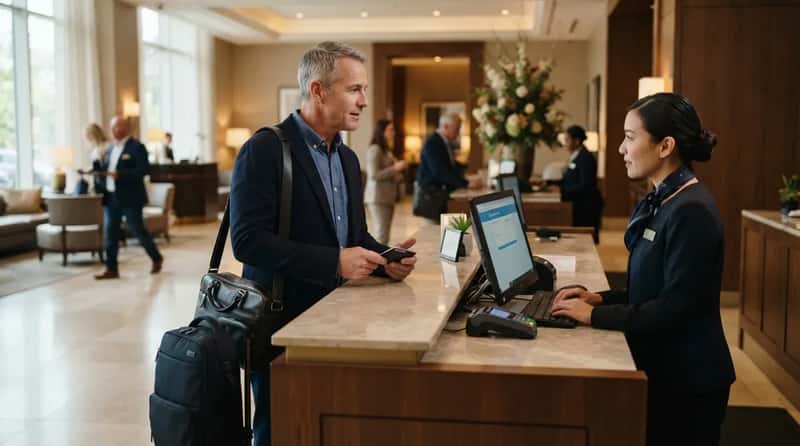
Inexperienced guests suffer in silence. They put up with the rattling air conditioner and the stained carpet because asking feels awkward. Experienced travelers pick up the phone or walk down to the desk within minutes.
They stay calm and specific: “The AC is making a loud rattling noise. Is there another room available on a similar floor?” A hotel can often fix a problem more easily on night one than after a bad stay turns into a bad review. There’s no yelling and no lecture. The tone is that of a customer making a simple, fair request.
At a Glance
- Speak up fast: Call within the first few minutes, while other rooms are likely open.
- Name the problem: “Loud AC” beats “this room is terrible.”
- Ask for a solution: A similar room on a similar floor is an easy yes.
- Keep it friendly: The agent didn’t build the room, but they can fix it.
But the number one sign has nothing to do with logistics at all…
#1 – They Treat the Front Desk Agent Like a Person, Not a Vending Machine

The clearest sign of an experienced guest costs nothing. They look up, say hello, and use the agent’s name from the badge. They stay patient when the line is long and the computer is slow.
Agents often have some discretion over room assignments, late checkout, and small goodwill gestures. That discretion isn’t guaranteed, but it tends to flow toward the guests who made the job easier. An agent remembers who was kind at hour 14 of a long shift. Experienced travelers know this, and they often end up with the better room as a result.
None of this takes status, money, or insider connections. It takes a little preparation and a lot of ordinary decency. The guests who look the most experienced aren’t gaming the system. They’re making a tired person’s night easier, and their own along with it.
Which of these have you actually seen at a front desk?