Walk through any airport terminal and you’ll see the same scene playing out at every gate: rows of tired people slumped in plastic chairs, phones an inch from their faces, waiting for an announcement that hasn’t come yet. From the outside, it looks like dead time, a stretch of nothing to be endured before the real trip starts. It isn’t.
The travelers who actually get something out of a delay or a layover aren’t the ones refreshing the flight tracker every ninety seconds. They’re doing something else entirely at that gate, something almost nobody around them notices, and once you see what it is, you’ll never look at a boring wait the same way again.
#15 – Walk a Slow Lap Around the Terminal Instead of Scrolling
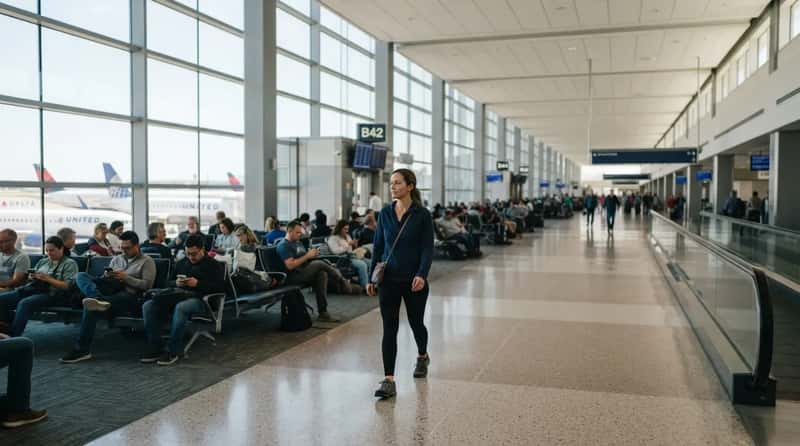
Sitting for hours before a flight and then sitting for several more hours on the plane is a rough combination for your body, and most people make it worse by staying glued to a chair the entire time. A slow, unhurried lap around the terminal does more for circulation than most travelers realize, and it costs nothing but a few extra minutes. It also clears the mental fog that builds up from staring at a screen in the same cramped seat.
Frequent flyers treat this walk like a ritual, not an afterthought, because they know exactly how stiff a body feels after a five-hour flight with zero movement beforehand. Airport concourses are often stretched out over a quarter mile or more for this exact reason, built for foot traffic, not just gate access. Skipping the walk means skipping one of the easiest, cheapest ways to land feeling like a person instead of a pretzel.
Fast Facts
- A brisk lap before boarding can noticeably loosen legs stiffened by security lines and gate waiting.
- Many U.S. terminals stretch a quarter mile or longer between end gates.
- Moving before a long flight is one of the simplest ways to counter hours of forced stillness in the air.
- Some larger airports even mark looped walking paths through their concourses.
#14 – Call the Person You Keep Meaning to Call
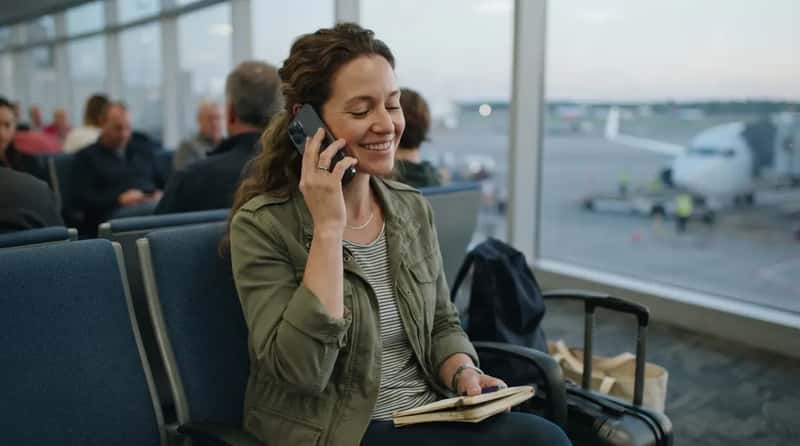
Gate time is oddly perfect for the phone calls that never happen at home, the ones that keep getting pushed aside by dishes, deadlines, and everyday noise. There’s no meeting waiting, no errand tugging at your attention, just a rare chunk of unclaimed time sitting in your lap. That’s exactly why some of the most meaningful conversations of an entire trip happen before the trip even technically starts.
People who actually make that call almost always say the same thing afterward: it felt strange to suddenly have the time, and then stranger that they hadn’t used it sooner. A twenty-minute wait is more than enough for a real conversation, not a rushed text with three emojis. It’s a small window, and it slams shut the second boarding begins.
#13 – Watch Planes Take Off and Guess Where They’re Headed
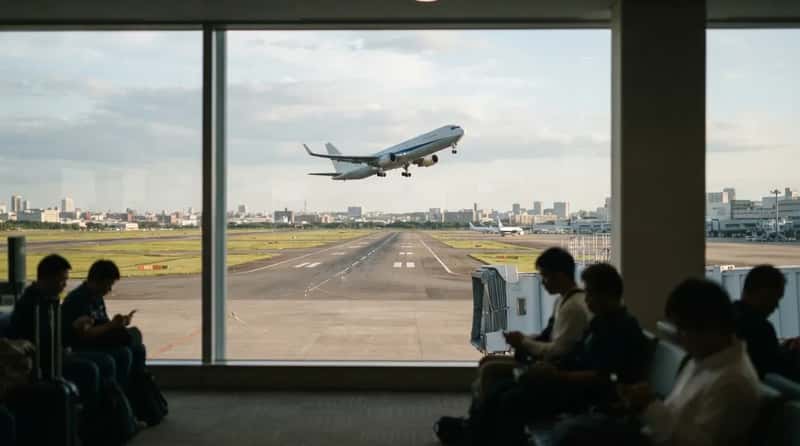
Every gate has a window, and every window has a runway view most travelers walk right past without a glance. Watching planes line up, throttle forward, and lift off is strangely calming, and turning it into a guessing game about which city each one is headed to makes the whole thing feel less like a waiting room and more like a crossroads of a thousand different lives. It’s a tiny curiosity, but it changes the whole mood of the wait.
Plane spotting has a genuine, loyal following for a reason: it’s one of the last free, unhurried spectacles left in modern travel. Kids light up almost every single time watching a jet leave the ground, but plenty of adults will quietly admit it’s their favorite part of the whole day. There’s something oddly satisfying about being right when a plane you guessed was headed to Denver turns out to actually be a Denver flight.
#12 – Refill Your Water Bottle Instead of Buying One
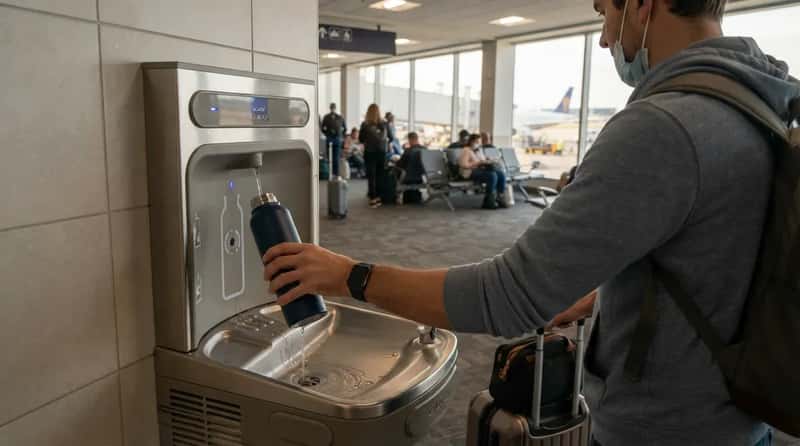
Most major U.S. airports now have refill stations built directly into their water fountains, yet a huge number of travelers still walk straight past them to a newsstand cooler. Bottled water at some terminal shops can run several times higher than it would cost at a regular grocery store outside security, and that markup adds up fast over a long travel day. A reusable bottle and a two-minute detour solves the entire problem before it starts.
It’s a small habit, but it’s also a quiet act of loyalty to your own wallet, the kind of move that pays off more the more you fly. Staying hydrated before boarding also helps counter the notoriously dry cabin air that makes long flights feel far worse than they need to. By the time you land, the difference between a hydrated traveler and a dehydrated one is obvious in a headache you never had to have.
Quick Compare
- Bottled water at a terminal newsstand: often marked up well beyond grocery store pricing.
- Refill station water: essentially free once you’re past security.
- Buying every leg of a multi-flight trip: costs add up fast over a full travel day.
- Refilling once and reusing: solves hydration for the whole itinerary in one move.
#11 – Introduce Yourself to the Person Next to You
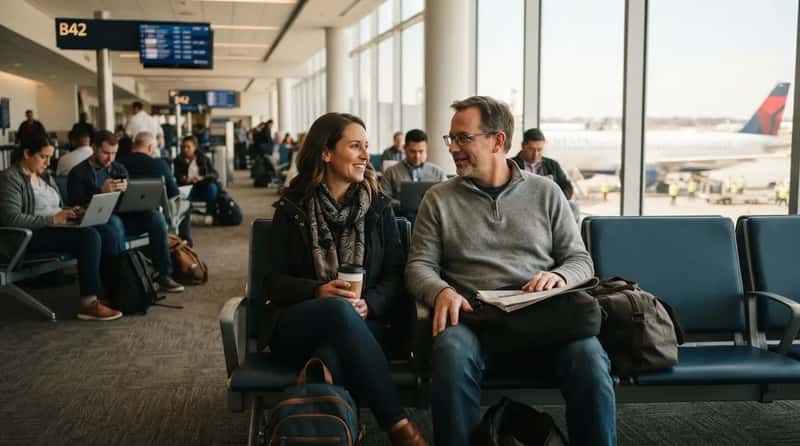
Gate seating puts total strangers shoulder to shoulder for an hour or more, and almost nobody speaks first. A simple hello can turn an awkward silence into a genuinely good conversation, sometimes with someone flying to the exact same city for a wildly different reason than you. Airports are one of the last places left where people from completely different lives sit side by side with nothing to do but talk.
Not every conversation goes anywhere interesting, and that’s fine, that’s the nature of a coin flip. But the ones that do stick with people far longer than the flight itself ever does, sometimes turning into a business connection, a friendship, or just a story worth telling later. It’s a small risk with almost no real downside and an occasional, surprisingly big upside.
#10 – Stretch Before You’re Stuck in a Middle Seat
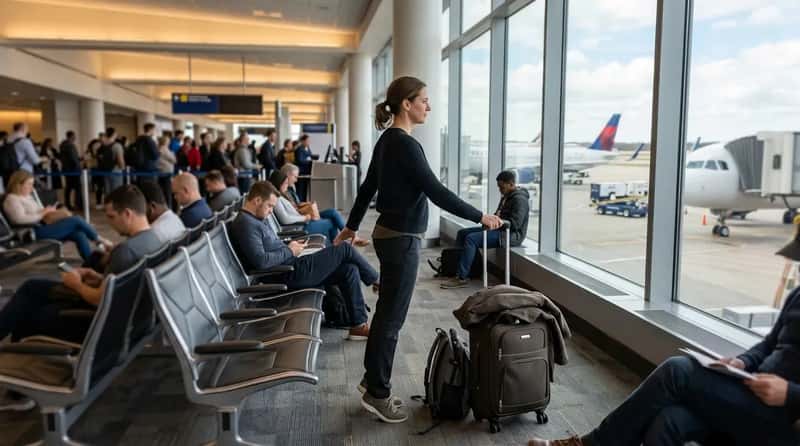
Calf raises, ankle circles, and a few slow shoulder rolls look a little silly in the middle of a crowded gate area, but they matter more than most travelers want to admit. Sitting still for hours before a flight and then hours during it is exactly the kind of prolonged stillness that doctors warn can contribute to stiffness and poor circulation on longer routes. A few minutes of deliberate movement beforehand makes a real, physical difference once you’re wedged into a narrow seat with nowhere to stretch your legs.
Flight attendants often do the same quiet stretches near the boarding door before a long haul, which tells you everything about how seriously the people who fly for a living take it. The travelers who cross time zones for work rarely skip this step, even when everyone around them is hunched over a phone pretending the wait doesn’t exist. It’s a two-minute habit that can save you from an hour of stiffness on the other end.
#9 – Ask the Gate Agent a Real Question
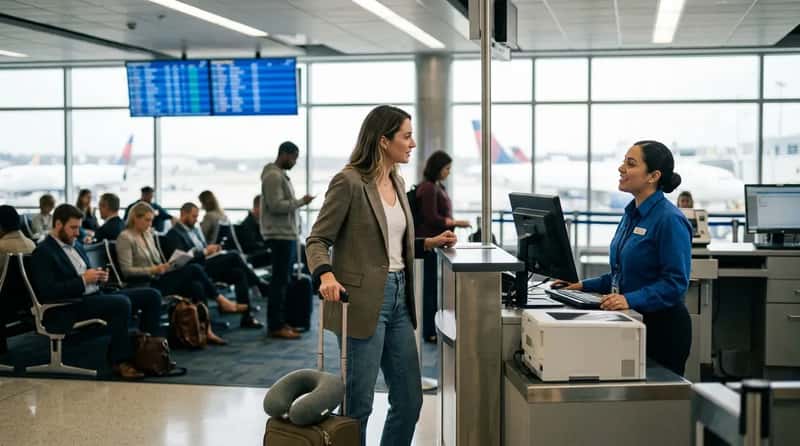
Most travelers only approach the gate desk after something has already gone wrong, which means the gate agent’s day is full of frustration and almost nothing pleasant. Asking a calm, specific question before that happens, like whether the flight is trending toward on-time or if there’s still room to check a bag for free, often gets a far more helpful answer than expected. Gate agents notice a polite question the same way anyone notices kindness in a room full of complaints.
Sometimes that one question uncovers something genuinely useful, like an earlier flight with open seats or a gate change about to be posted before it hits the board. It’s a small move that occasionally saves real time and real stress, and it costs absolutely nothing but a bit of confidence. The travelers who never ask never find out what they missed.
Worth Knowing
- Asking about standby seats on an earlier flight sometimes surfaces options an app never shows.
- A quick check on bag policy at the gate can prevent a surprise fee at boarding.
- Gate agents often know about a coming gate change minutes before it posts publicly.
- A calm, specific question tends to get a far more useful answer than a vague complaint.
#8 – Take One Photo That Isn’t for Social Media
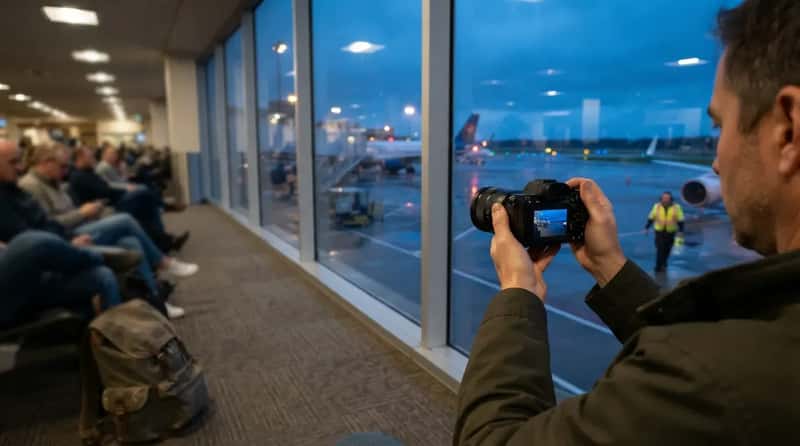
Airports have a strange, overlooked beauty hiding in plain sight: dramatic light pouring through floor-to-ceiling windows, the choreography of ground crews moving like a rehearsed dance, the specific deep blue of a runway right at dusk. Taking a photo just to keep, not to post, changes how you experience the moment entirely. It becomes something you actually notice instead of something you’re quietly performing for an audience of followers.
Years later, those unposted photos tend to mean far more than the polished, filtered travel shots ever did. They capture the in-between moments, the boring parts nobody plans to remember, which is exactly what makes a trip feel real instead of curated. A blurry photo of an empty gate at 6 a.m. can end up being the one that brings a whole trip rushing back.
#7 – Write Down What You’re Nervous About and What You’re Excited For
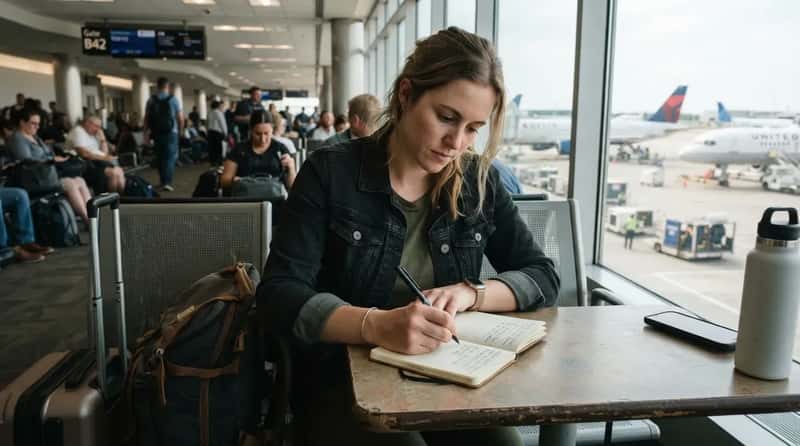
A gate is a strange emotional midpoint, past the stress of getting there, before the reality of actually arriving. Jotting down one honest sentence about what you’re nervous about and one about what you’re excited for takes less than a minute, and it clears more mental clutter than it has any right to. It’s a habit borrowed loosely from therapists who recommend naming emotions out loud instead of carrying them around silently and unexamined.
Frequent business travelers use a version of this exact trick to manage pre-flight anxiety, especially before high-stakes trips where the stakes feel bigger than the flight itself. It’s not about journaling for an hour with a scented candle. It’s about naming the noise in your head before you hand over your boarding pass, so it doesn’t follow you onto the plane.
#6 – Watch for Reunions Near the Arrivals Side of the Gate
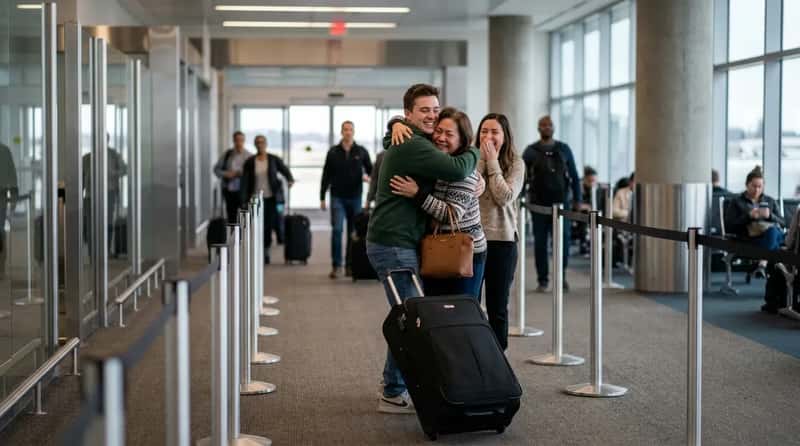
Some gates sit close enough to arrivals corridors that you can catch the exact second someone spots a face they’ve missed for months, sometimes years. It’s an unscripted, genuinely moving thing to witness, and it happens dozens of times a day without a single person planning to watch for it. Most travelers are too buried in their phones to notice it unfolding a few feet away from where they’re sitting.
Airport staff who’ve worked the same terminal for years will tell you these moments never really get old, no matter how many thousands of times they’ve seen a stranger drop their bag and run. It’s one of the only places left where raw, public emotion is completely normal, expected, and nobody looks away in embarrassment. Catching one, even by accident, tends to stick with you longer than almost anything else about the trip.
#5 – Do a Five-Minute Digital Declutter
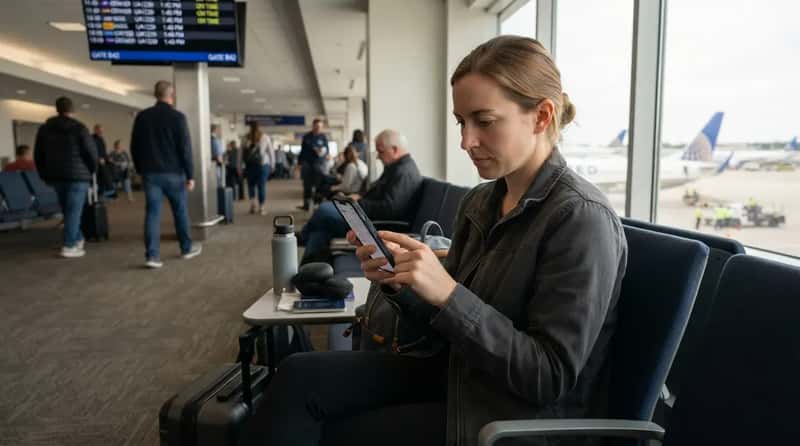
Gate time is a low-stakes window to delete the forty duplicate photos clogging your camera roll, clear out an overflowing inbox, or finally unsubscribe from the emails nobody has read in years. It sounds unremarkable on paper, but arriving at your destination with a lighter, faster phone feels noticeably better than arriving with the same digital mess you left with. It’s the kind of maintenance most people only bother with once their storage is completely full and the phone starts glitching.
This is also the ideal moment to download anything you’ll need offline, like maps, boarding passes, or a show to watch, before cabin wifi turns slow or disappears entirely somewhere over the Midwest. A few minutes of cleanup at the gate quietly prevents an hour of frustration mid-flight. It’s the boring chore that pays off exactly when you have no other option but to deal with it.
#4 – Study the Departure Board Like a Puzzle
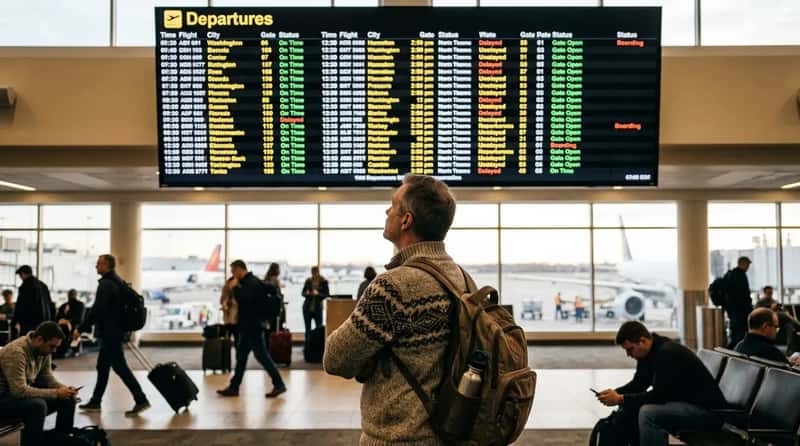
Departure boards reveal more than most travelers ever bother to notice. A flight that keeps flipping between “On Time” and “Delayed” is often waiting on the very same inbound aircraft as several other flights on the board, which means watching one gate’s status can quietly predict what’s about to happen to yours. Frequent flyers read these patterns the same way regular commuters read a traffic app before leaving the house.
It’s a strange kind of insider knowledge that costs absolutely nothing to pick up, just a habit of glancing at the whole board instead of only your own line. Once you start noticing the pattern, delays stop feeling like random bad luck and start feeling like something you half-expected before the gate agent even said a word. It’s a small edge, but it’s a real one.
At a Glance
- A flight bouncing between “On Time” and “Delayed” often signals a shared inbound aircraft issue.
- Watching nearby gates can hint at ripple delays before they reach your own flight.
- Gate changes sometimes appear on the board minutes ahead of any announcement.
- Boards update in real time, often faster than a phone app refreshes.
#3 – Stand at the Window During a Sunset Boarding
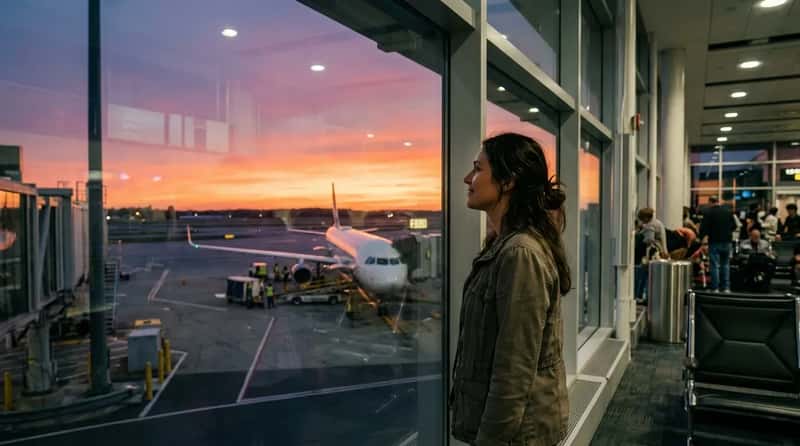
Late afternoon and early evening flights often board right as the sky turns orange, pink, or a deep bruised purple over the runway, and almost nobody actually stops to look at it. Standing at the window for even thirty seconds turns a mundane wait into a genuinely beautiful moment that most people scroll straight past without ever glancing up. It’s free, it’s fleeting, and it’s shockingly easy to miss entirely if your eyes never leave your phone screen.
Photographers and pilots alike have long pointed out that airports catch some of the best natural light of the day, precisely because runway views are so wide open and unobstructed by buildings or trees. It’s one of the more overlooked beautiful moments modern travel still has to offer, hiding right there in the last place anyone thinks to look. Missing it costs nothing, but catching it tends to be the thing people remember years later.
#2 – Send a Message to Whoever Is Waiting for You
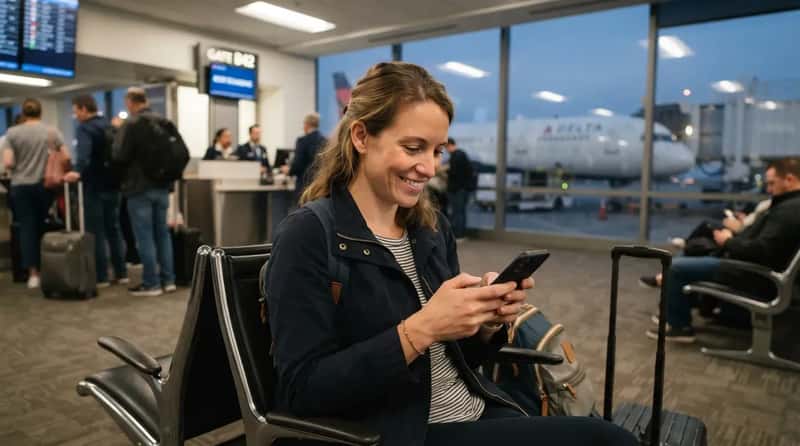
A short text before boarding, something as simple as “landing soon, can’t wait to see you,” changes the emotional tone of an entire trip before it’s even over. It costs ten seconds and quietly turns a routine flight into something someone else is now excitedly counting down to as well. Most travelers only send that message after they’ve already landed, missing the chance to build anticipation instead of just announcing an arrival that already happened.
This one small habit consistently shows up in stories about especially meaningful reunions and homecomings, the kind people replay in their heads for years. It’s such a tiny gesture that it’s easy to forget entirely, and that’s exactly why it stands out so much when someone remembers to send it anyway. The people waiting on the other end never forget who thought to send that text.
#1 – Just Sit With the Silence for a Second
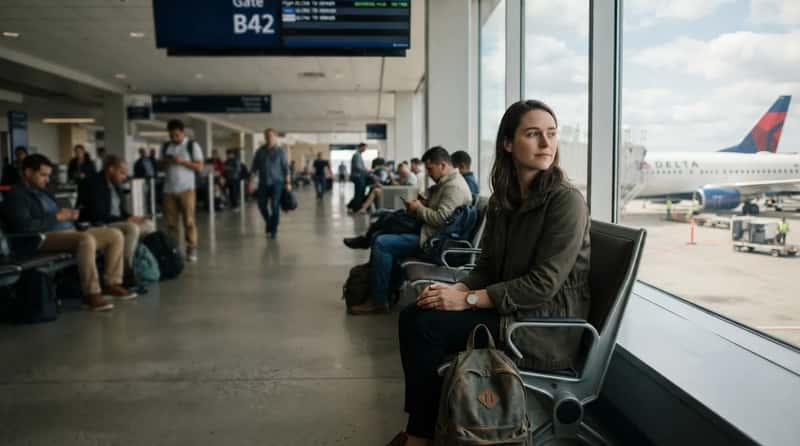
Of everything on this list, the simplest is the one almost nobody actually does: putting the phone down completely and sitting with a few minutes of real, unfilled quiet. No scrolling, no music, no distraction, just the low hum of a terminal and a rare moment to actually think. In a world where every spare second gets filled automatically without a second thought, unfilled time has become genuinely, almost uncomfortably rare.
People who try it, even for just a few minutes, often describe it as unexpectedly grounding, a short reset before a flight that’s easy to dismiss as pointless until you actually sit through it. It’s not dramatic, and it’s definitely not Instagrammable. It’s just quiet, and in a place built entirely around noise and hurry, that alone is what makes it stand out.
None of these things require a lounge pass, a long layover, or extra money. They just require noticing that the wait itself is part of the trip, not an obstacle standing between you and the part that actually matters. The travelers who figure that out tend to remember their trips a little differently than everyone else scrolling beside them, gate after gate, year after year.
So the next time boarding gets pushed back and a familiar groan rolls through the gate, try staying in your seat a little differently than everyone around you. What would you add to this list? Drop it in the comments.