Most travelers spend weeks obsessing over flight deals, hotel reviews, and packing cubes – then walk out the door wearing the single worst outfit possible for a day of air travel. The thing nobody warns you about is that your clothing choices affect far more than comfort. The wrong outfit can slow you down at security, wreck your skin, put your circulation at risk, and in rare worst-case scenarios, actually endanger your life. And the same mistakes show up at every gate, every single day.
Flight attendants, TSA insiders, and aviation safety experts have been flagging these blunders for years. Some are minor frustrations. Others carry consequences most passengers never see coming until they’re already stuck in a middle seat with swollen ankles, itchy eyes, and a belt alarm echoing through the checkpoint. A few on this list are genuinely surprising – and at least one is something almost every traveler does without thinking twice.
#15 – Wearing Lace-Up Boots or Complex Buckle Shoes
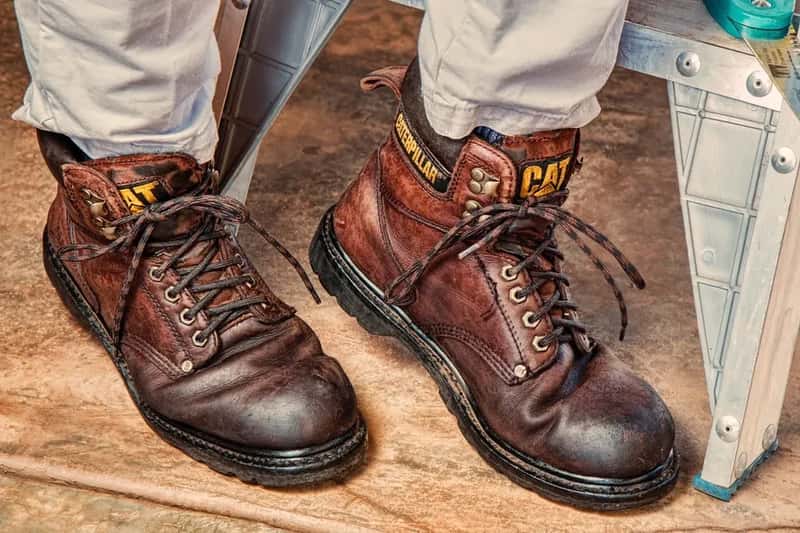
Lace-up boots look great at baggage claim, but they’re one of the most quietly punishing choices you can make on travel day. The TSA recommends that travelers avoid shoes with excessive lacing, complex buckles, or multiple zippers – anything that makes removing and replacing them a slow, fumbling ordeal at the checkpoint. Every second you spend kneeling at the conveyor belt is a second the entire line behind you is silently fuming.
Footwear with metal details can also trigger the scanner on its own, adding extra inspection time on top of the shoe-removal delay. The fix is almost embarrassingly simple: slip-on sneakers or loafers. Easy off, easy on, still completely functional for a full day of travel. Save the tall boots for your destination, where nobody is waiting in line behind you.
At a Glance: Footwear That Actually Works at the Airport
- Slip-on sneakers – off in one motion, on in one motion, zero delay
- Loafers – polished enough for business travel, hassle-free at the checkpoint
- Closed-toe flats – easy removal, foot protection, and no exposed toes
- Lace-ups and tall boots – pack them; put them on when you land
#14 – Wearing Heavy Perfume or Cologne on the Plane

Spritzing your favorite scent before a flight feels like self-care. To everyone seated within three rows of you, it can feel like a migraine trapped inside a metal tube. Airplane cabins are sealed, recirculated environments – there is no escaping a powerful fragrance at 35,000 feet. What smells subtle in your bathroom becomes inescapable in a space shared with 150 other people for six hours.
Headaches, nausea, and genuine allergy flare-ups are all documented reactions to heavy fragrance in confined spaces. Some passengers are highly sensitive to synthetic fragrances; others may have respiratory conditions that make a scented cabin genuinely miserable. Apply your cologne or perfume after you land – your row will quietly thank you, even if they never say a word.
#13 – Skipping Socks Entirely at the Security Checkpoint
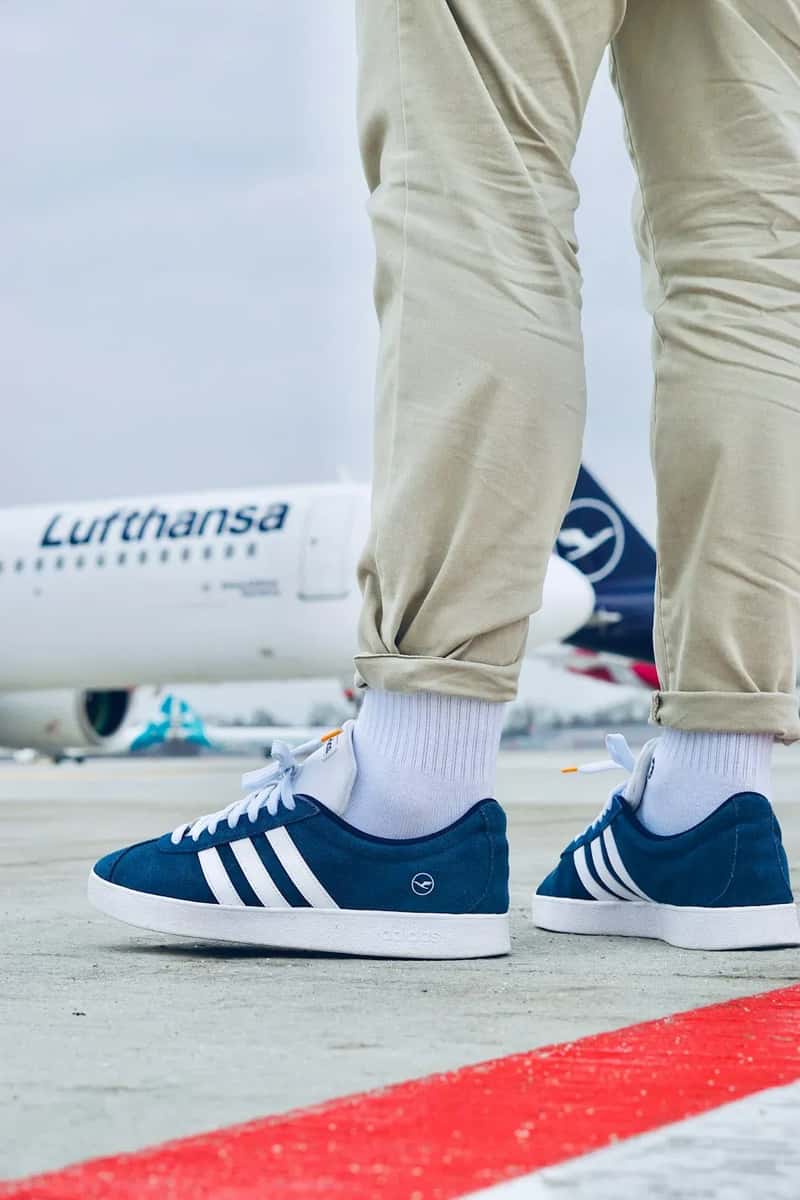
Barefoot at TSA feels harmless and turns out to be genuinely risky. Doctors consistently flag airport security floor mats as one of the more likely places to pick up foot fungus and toenail infections – thousands of bare feet cross those mats every single day, and no one is sanitizing them between passengers. Even if you’re wearing sandals for the flight itself, tuck a pair of thin socks or disposable footies into your carry-on specifically for the checkpoint.
The socks serve double duty: they protect you from whatever is living on that floor, and they keep your feet warm once you’re onboard – because airplane cabins run cold and sandals offer zero insulation. This is the kind of detail that never crosses most people’s minds until it happens to them. Socks are free protection. Going barefoot at a crowded checkpoint is a completely unnecessary gamble.
#12 – Loading Up on Chunky Statement Jewelry

Layered necklaces, stacked bangles, and oversized hoop earrings might complete your look, but they have a way of completely unraveling your security experience. Former TSA agents have noted that heavy accessories and bedazzled clothing – including sequined tops and metal-studded jackets – can trigger sensitive scanners, leading to additional screening, wand checks, and pat-downs. Every extra piece you’re wearing is another potential alarm, another bin to fill, another moment of delay for everyone around you.
Beyond security, bulky jewelry creates its own in-flight misery. Chunky hoop earrings make headphones unwearable. Stiff claw clips make sleeping impossible. Costume or fashion jewelry with cheaper metal alloys is more likely to set off detectors than fine jewelry like a wedding band. The TSA generally recommends wearing fine jewelry through security – but packing the fashion stacks and putting them on at the destination is the smarter move by far.
Quick Compare: Jewelry That Travels vs. Jewelry That Doesn’t
- Fine jewelry (gold, platinum wedding bands) – low alarm risk, easy to keep on
- Stacked fashion bangles – cheap alloys trigger scanners; pack them
- Oversized hoops – incompatible with headphones; a miserable six hours
- Sequined or metal-studded jackets – flagged by body scanners; leave for the destination
#11 – Wearing a Belt With a Metal Buckle
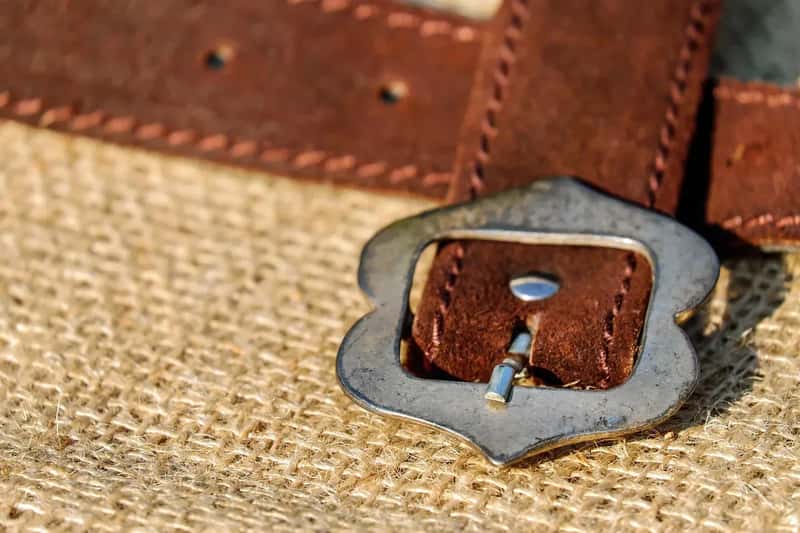
This one seems obvious until you count how many people still arrive at the metal detector wearing a full leather belt with a brass buckle and look genuinely surprised when the alarm sounds. Most belts have metal clasps, which means most belts require removal at security. That sounds like a ten-second task – until you’re juggling a carry-on, a laptop bag, your shoes, and your jacket while the line stacks up behind you.
Threading a belt back through pants loops under time pressure, with a checkpoint full of impatient strangers watching, is one of those low-grade miseries that’s completely avoidable. Belt-free pants, elastic waistbands, and drawstring styles eliminate the problem entirely. If you genuinely need a belt, toss it in your bag before you reach the bin area. Seconds matter in a long security line, and this is one of the easiest friction points to remove in advance.
#10 – Wearing Stiff Jeans on Long Flights
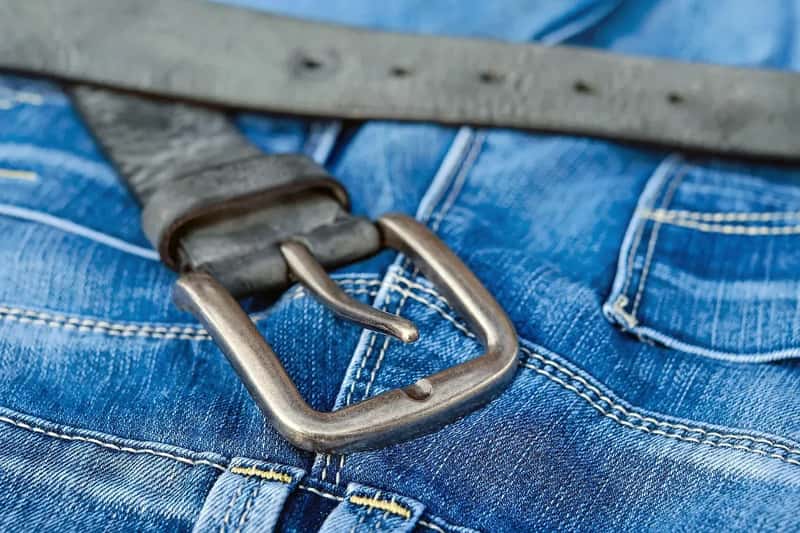
Denim is practically the default American travel outfit. It’s also quietly one of the worst fabrics you can put on your body before a multi-hour flight. A rigid denim waistband has zero give, which means every hour you spend sitting in a pressurized cabin, your waistband and thighs are under increasing tension. Most passengers blame the seat. The seat is bad – but the jeans are making it significantly worse.
More seriously, wearing tight jeans on a long flight can increase your risk of deep vein thrombosis – blood clots that form in the legs and can travel to the lungs with potentially fatal results. Denim also holds heat and provides no stretch, two problems that compound over a cross-country or international flight. Stretchy trousers, tapered joggers, or soft cotton pants deliver a clean, casual look without any of the punishment. The jeans can wait in your checked bag.
#9 – Ignoring the Waistband Problem at Altitude
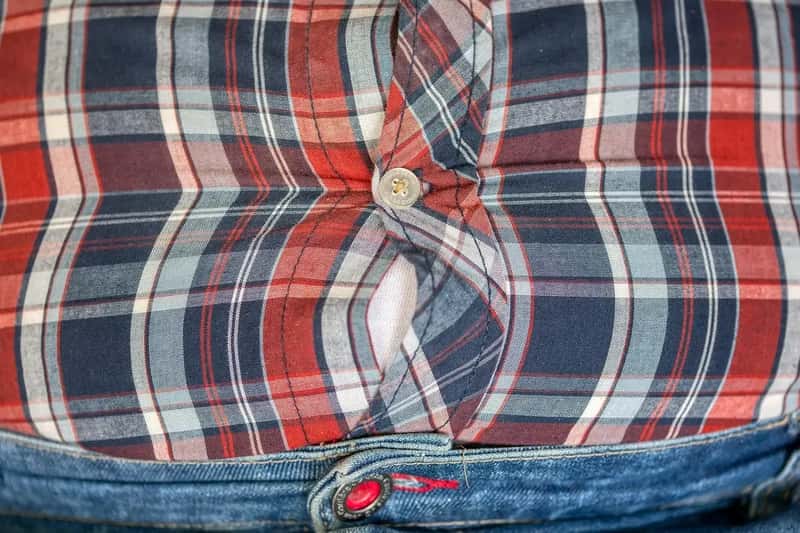
Even passengers who skip the stiff jeans often make this mistake: they wear something that fits perfectly on the ground and becomes genuinely unbearable once the plane levels off. Your midsection bloats during flights – and that’s not your imagination. Lower cabin pressure causes gas in your digestive system to expand, so a waistband that felt comfortable at home can feel like a tourniquet two hours into a flight. That fitted blazer, tailored trousers, and high-waisted skirt all become progressively more miserable as altitude does its work.
Tight waistbands also make it harder to shift positions in your seat, which compounds circulation issues on longer flights. The fix costs nothing and requires almost no sacrifice in style: drawstring waists, elastic waistbands, and stretch-panel high-rise pants all give your body room to do what it naturally does at altitude. One small fabric decision at home makes a noticeable difference by hour two in the air.
Worth Knowing: What Happens to Your Body at Cruising Altitude
- Cabin pressure drops to the equivalent of roughly 6,000–8,000 feet above sea level
- Gas in your digestive tract expands up to 30% – tight waistbands have nowhere to go
- Cabin humidity falls to just 10–20%, drier than the Sahara Desert’s average of 25%
- Feet and ankles can swell noticeably, especially on flights over three hours
- All of this starts within the first 30–60 minutes after takeoff
#8 – Wearing Open-Toed Shoes or Flip-Flops
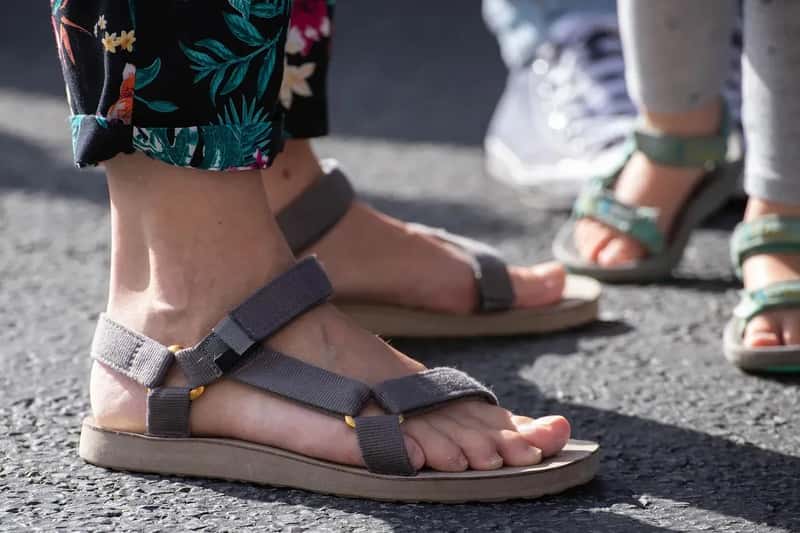
Flip-flops feel practical in warm weather and impossibly casual at the airport. Flight attendants and aviation safety professionals consistently rate them as one of the worst footwear choices for air travel – and the reasons go well beyond the sticky airplane bathroom floor. Airports are a minefield for exposed toes: luggage wheels roll over feet in crowded terminals, escalator edges snag loose sandals, and anything spilled in a galley can reach your bare skin without warning.
The more serious argument is safety. In an emergency evacuation, you need footwear that stays on your feet and protects them from debris, heat, and rough surfaces. Flip-flops can fly off in seconds, leaving you barefoot on a tarmac or on an evacuation slide. Aviation safety experts consistently point out that 90 seconds is the window considered survivable in most cabin emergencies – and your footwear absolutely matters in that window. Comfortable slip-on sneakers give you the ease of sandals at the checkpoint without any of the risk.
#7 – Wearing Overly Baggy or Oversized Clothing

Passengers reach for the largest, most oversized hoodie on travel day in the name of comfort – and then spend extra time at security because of it. TSA agents are trained to flag baggy clothing because scanners produce less precise images when fabric folds obscure the body’s silhouette. What reads as comfortable loungewear to you reads as a potential concealment issue to the equipment. Maxi skirts, oversized coats, and shapeless sweatshirts have all been cited by former TSA agents as common triggers for additional screening and pat-downs.
The sweet spot is relaxed-fit, not shapeless. Soft, mid-weight joggers, a fitted t-shirt, and a light zip-up give you complete comfort without the security friction. You get warmth, ease of movement, and a clean enough silhouette that the scanner reads you quickly and you keep moving. Save the floor-length oversized cardigan for a day when you’ve got TSA PreCheck and an empty checkpoint – or for the hotel room entirely.
#6 – Wearing Heavy Makeup for a Long-Haul Flight

This is a mistake that announces itself hours after boarding, when passengers start wondering why their skin looks exhausted before the trip has even started. Airplane cabin humidity typically drops to between 10 and 20 percent – drier than the Sahara Desert on most days. Layering heavy foundation, powder, and setting spray on top of already dehydrating skin accelerates moisture loss and creates the ideal environment for clogged pores, breakouts, and flaky, dull skin by the time you land.
The passengers who arrive genuinely fresh-faced are almost always the ones who skipped the full face at departure. A good moisturizer, lip balm, and SPF are everything you need in the air. If you want to arrive looking polished, wait until the plane begins its descent to apply anything beyond skincare. A quick freshen-up in the airport bathroom after landing will serve you better than anything you applied eight hours earlier in a dry, pressurized cabin.
Fast Facts: What Low Cabin Humidity Does to Your Skin
- Cabin humidity sits at just 10–20% – compared to 40–60% in a typical home or office
- The Sahara Desert averages 25% humidity – planes are routinely drier
- Low humidity accelerates moisture loss from skin, eyes, lips, and nasal passages
- Heavy foundation and powder on dehydrated skin leads to flaking and a dull finish by landing
- A simple moisturizer + lip balm routine outperforms a full face of makeup on any long-haul flight
#5 – Going Sleeveless With No Backup Layer

Packing light is smart. Packing so light that you have nothing to put on when the cabin turns arctic mid-flight is a different problem entirely. Airplane cabins are notoriously cold – airlines keep temperatures low partly to reduce the risk of passenger fainting, which is more common in warm, crowded spaces. The crop top and shorts that felt reasonable on a hot tarmac become genuinely miserable once the plane hits cruising altitude and the air conditioning locks in.
Practically every flight, I see someone with barely any clothes on – crop tops with booty shorts, sports bras and leggings with no jacket. And practically every time, these are the people who want a blanket on flights where we don’t provide them.
American Airlines flight attendant, via travel industry interviews
The layer doesn’t have to be bulky or take up meaningful space. A lightweight zip-up hoodie folded into the top of your carry-on solves everything. Dress in breathable layers you can add or shed as the temperature shifts – warm terminal, hot tarmac, freezing cabin, warm arrival gate. Assume the plane will be cold, because nine times out of ten, it will be.
#4 – Wearing Contact Lenses for the Entire Flight
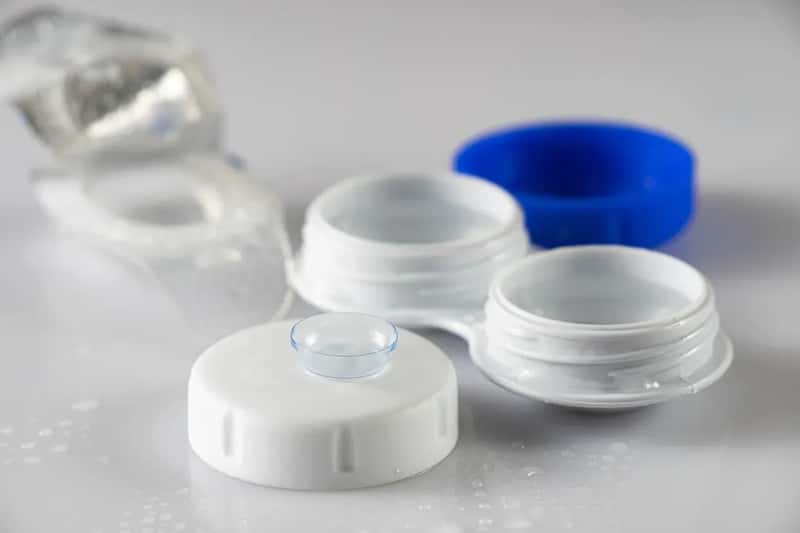
Most passengers don’t think of contact lenses as part of their travel outfit. They should – because this is one of the most consistent sources of in-flight misery that almost nobody warns you about in advance. Cabin humidity drops so low that many travelers report dry, scratchy, irritated eyes within the first hour of flying, and contacts amplify every bit of it. What feels fine at sea level becomes increasingly uncomfortable as the flight continues, and removing lenses in a cramped airplane bathroom is neither easy nor sanitary.
The same low-humidity environment that wrecks your skin does the same thing to the surface of your eyes – and contact lenses sit directly on that surface, trapping dryness against the cornea. Switching to glasses for the duration of the flight costs you nothing and can completely change how you feel on arrival. If you’re committed to wearing contacts, pack rewetting drops in an easy-access pocket of your carry-on and use them proactively, making sure the bottle complies with the TSA’s 3.4-ounce liquid rule.
#3 – Skipping Compression Socks on Longer Flights
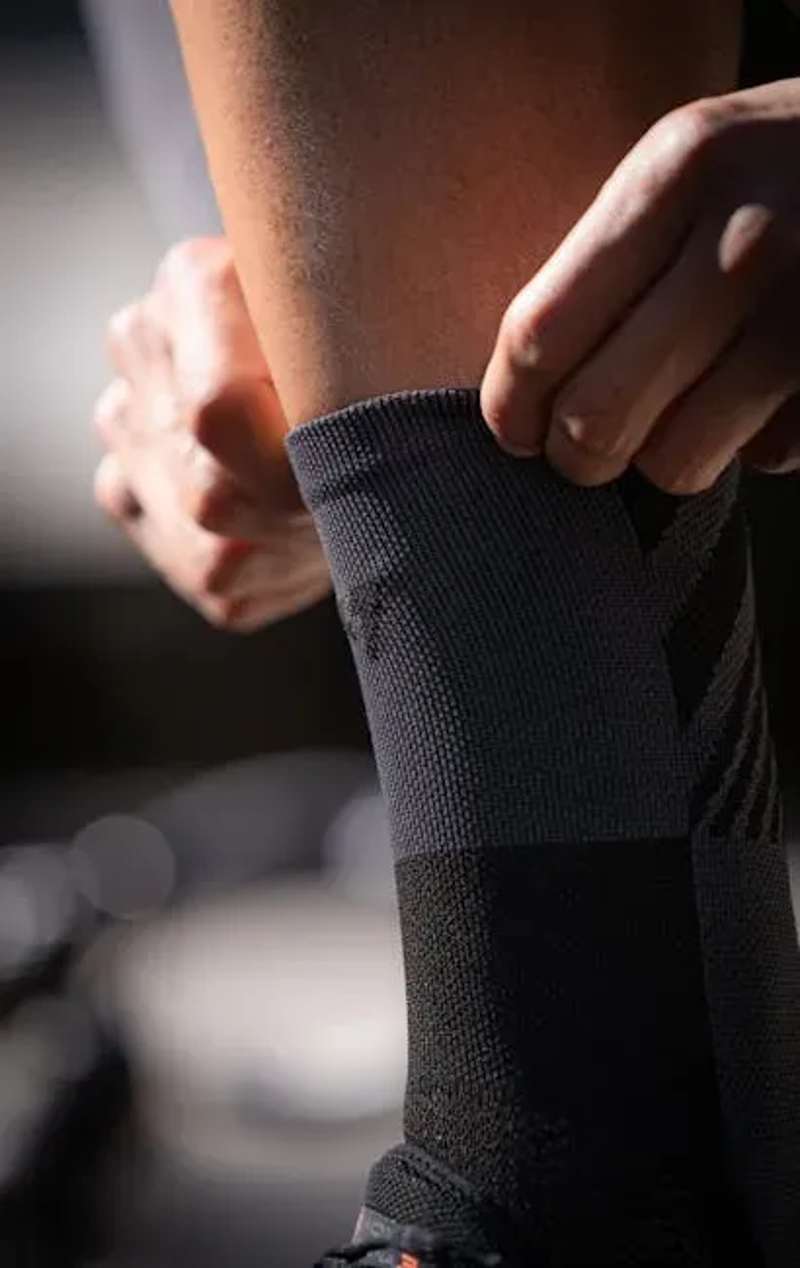
Compression socks have a reputation as something reserved for hospital recovery wards and retirement communities. The medical reality is that skipping them on a long flight is one of the riskiest outfit decisions most passengers casually make. A Cochrane review of 12 randomized clinical trials involving nearly 2,900 participants found high-certainty evidence that compression stockings reduced the risk of symptomless DVT on flights longer than four hours. DVT – a blood clot forming in a deep vein, usually in the leg – can travel to the lungs and become a pulmonary embolism, which is potentially fatal.
The numbers tell a clear story: among healthy travelers who skipped compression socks, about 10 per 1,000 developed a symptomless clot; among those who wore them, the rate dropped to just 1 per 1,000. For passengers with additional risk factors, socks reduced clot incidence from 30 per 1,000 down to 3. Compression socks are widely available, affordable, and now made in genuinely stylish patterns and cuts – nobody at your destination will know you’re wearing them. There is no good reason to skip them on any flight over four hours. Most people only learn they needed one after something goes wrong.
Fast Facts: Compression Socks by the Numbers
- Cochrane review covered 12 randomized trials and nearly 2,900 participants
- Healthy travelers without socks: ~10 per 1,000 developed a symptomless clot; with socks: ~1 per 1,000
- High-risk travelers: socks cut clot incidence from 30 per 1,000 to 3 per 1,000
- Recommended compression level for most travelers: 15–20 mmHg (no prescription needed)
- Put them on 30–60 minutes before the flight for best results
#2 – Wearing Synthetic Fabrics From Head to Toe
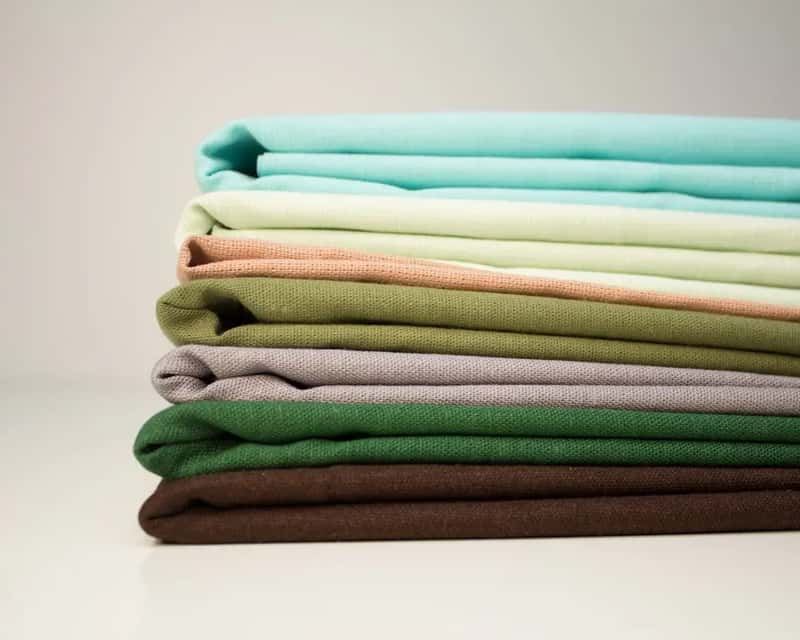
This is the travel outfit mistake the most people make and the fewest people know carries a real safety dimension beyond discomfort. Leggings, athletic wear, and athleisure travel outfits made from nylon, polyester, or spandex blends are extremely popular – and extremely flammable. In the rare event of a fire onboard, synthetic materials can melt and fuse to skin, causing severe burns that are far more serious than what natural fabrics would produce in the same situation. Aviation safety experts consistently recommend natural fibers – cotton, wool, linen – as the smarter choice for flying precisely for this reason.
Beyond the fire risk, tight synthetic fabrics compound the circulation problems that make long flights dangerous. Constricting clothing around the waist, thighs, or ankles limits blood flow and increases DVT risk – the same threat compression socks are designed to counter. Loose-fitting cotton pants, a long-sleeved cotton or linen shirt, and closed-toe shoes are what safety professionals point to as the informed choice. Comfortable, natural, and protective – it costs nothing extra to make that swap before you leave home.
Why It Stands Out: Natural vs. Synthetic Fabrics on a Flight
- Cotton & linen – breathable, don’t melt or fuse to skin in heat, comfort-friendly
- Wool – naturally fire-resistant, temperature-regulating, surprisingly travel-friendly
- Polyester & nylon – flammable, melt in high heat, trap sweat, restrict circulation
- Spandex blends – tight fit worsens blood pooling on long flights; also synthetic
- Aviation safety experts have long flagged synthetics – the risk is real, even if rare
#1 – Dressing for the Destination, Not the Journey
This is the mistake that underlies almost every other one on this list. Most passengers walk out the door dressed for where they’re going – and completely forget they have to survive the trip to get there. Your body goes through a remarkable amount of stress at 35,000 feet: cabin pressure drops, humidity falls to desert-level lows, your feet and ankles swell, your midsection bloats, and you’re sitting mostly still for hours in recycled air. The passenger in rigid jeans, tight boots, heavy cologne, a sleeveless crop top, and full makeup is dressed for a restaurant reservation, not a pressurized aluminum tube.
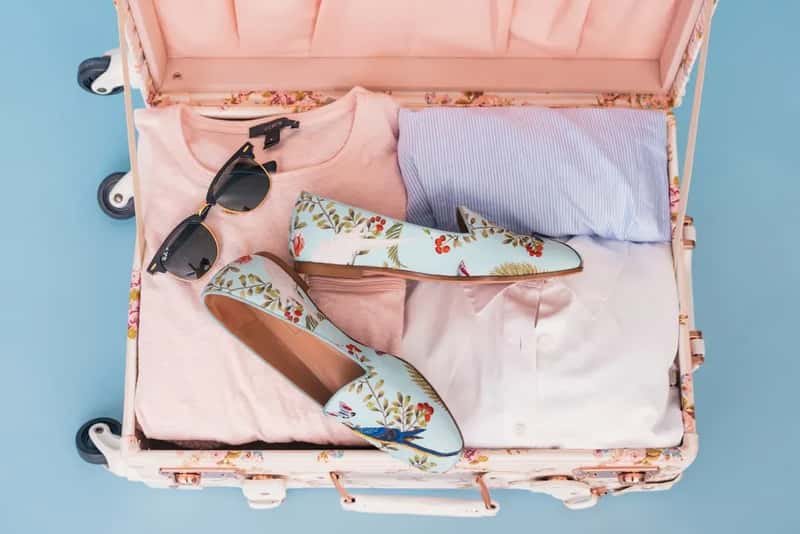
The best travel outfit is the one you forget you’re wearing by the time you land – no pinching, no peeling off at the hotel, no security delays, no swollen feet jammed into shoes that fit fine six hours ago. Experienced frequent flyers, pilots, and flight attendants have largely converged on the same formula: natural fibers, relaxed fit, slip-on footwear, a backup layer, and compression socks for anything over four hours. It doesn’t have to sacrifice style. Pack the statement outfit in your carry-on and put it on when you arrive. Your body will notice the difference long before you do.
Every item you wear to the airport carries a consequence most passengers never stop to consider. From synthetic fabrics that pose a real fire risk, to tight waistbands that tighten further at altitude, to flip-flops that could fail you in an evacuation, the gap between a thoughtful travel outfit and a careless one is surprisingly wide – and surprisingly consequential. The good news is that almost every mistake on this list is a one-time fix. Learn it once, adjust your airport routine, and you’ll never board a flight regretting what you put on that morning.