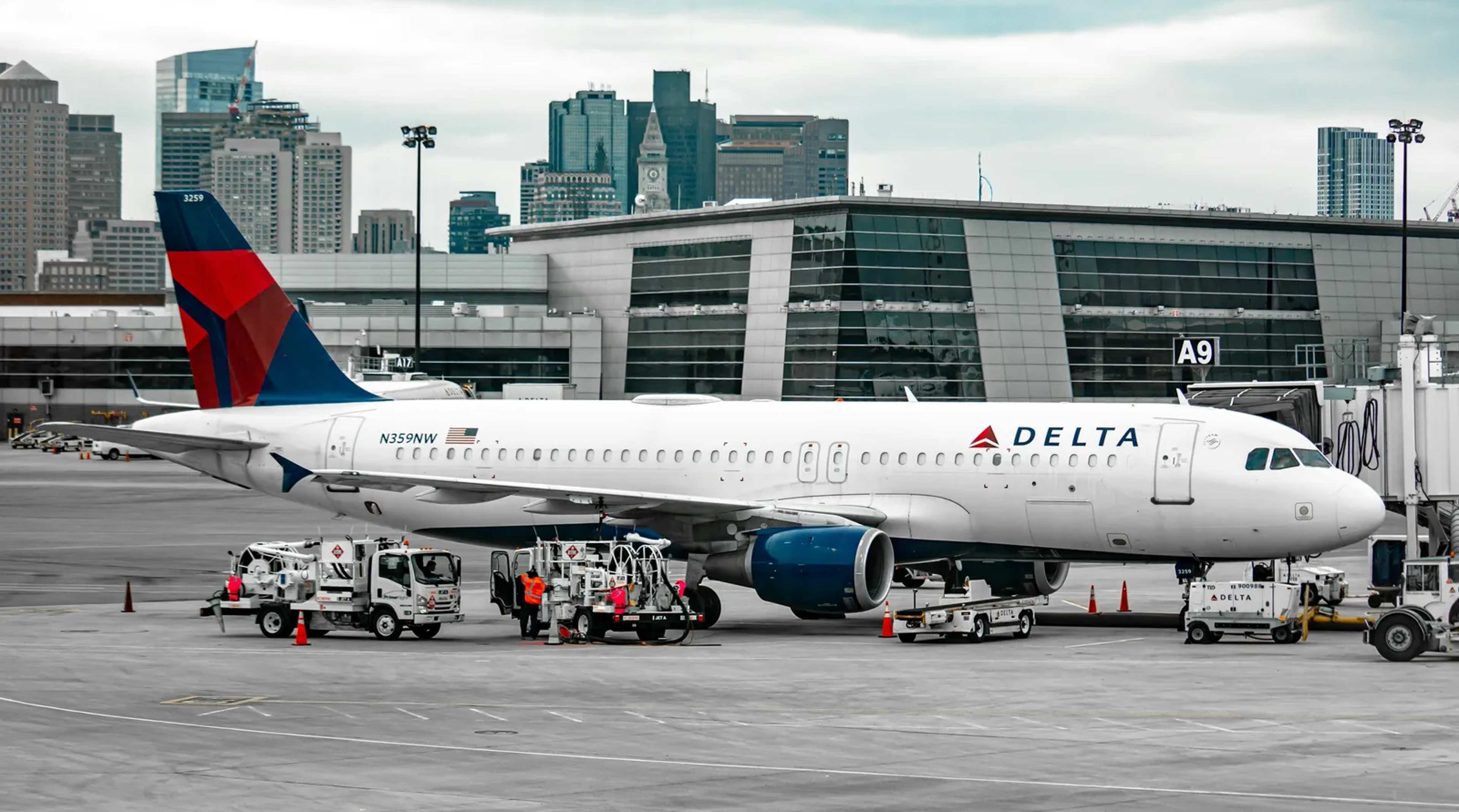
Most people assume every airline fee is locked in the moment they hit “purchase” online. That assumption is quietly costing families real money – a surprising number of the charges on your itinerary only exist because you booked through an app or website instead of a phone line, and mentioning hearing loss, joint pain, mobility issues, or trouble reading a tiny screen can make plenty of them disappear completely.
Here’s the twist most families miss: the old “automatic senior discount” airlines used to advertise is basically extinct now, so a lot of travelers gave up calling altogether. But the fees that actually vanish by phone in 2026 are bigger, stranger, and far more common than that old discount ever was – and here’s exactly what airline insiders and federal regulators confirm.
#16 – The “Convenience Fee” Budget Airlines Hope You Never Question

Plenty of travelers pay a booking fee without ever realizing it’s optional. Many airlines charge booking fees when you purchase tickets through their website or call center, and these fees can vary significantly between carriers and might appear as “service charges” or “convenience fees.”
Most people never push back. But it’s sometimes possible to get these fees waived simply by asking a live agent directly instead of clicking through checkout on autopilot. For a 60-plus traveler who mentions difficulty completing an online form, that request tends to land a lot softer with the person on the other end of the line.
#15 – Breeze Airways’ Sneaky “Technology Development Charge”
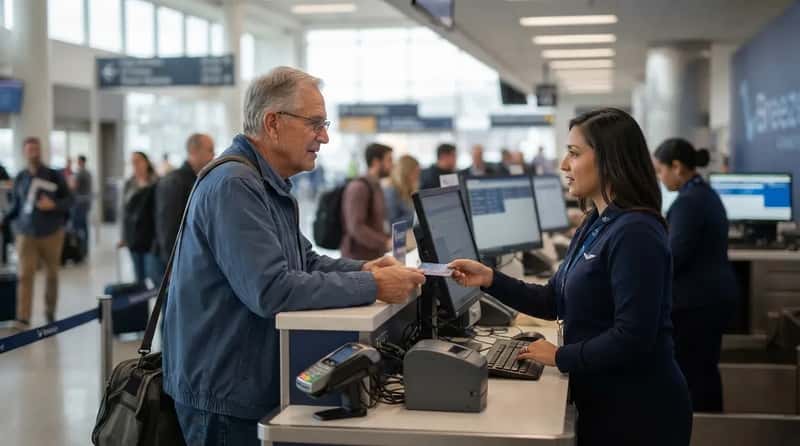
This one sounds made up, and in a way, it kind of is. Breeze quietly tacks on a charge for anyone who books through its app or site, but the airline has openly said it doesn’t have to stay on your bill.
Breeze Airways’ chief commercial officer has said customers can often save on their reservations by booking directly at the airport, where this charge can be waived. There’s a catch that trips up a lot of travelers: to qualify, guests must purchase their tickets at the ticket counter between 8:00 a.m. and 10:00 a.m. PT on Tuesdays. Show up outside that window, and the fee sticks around.
#14 – Frontier’s Nearly-$50 Round-Trip Loophole
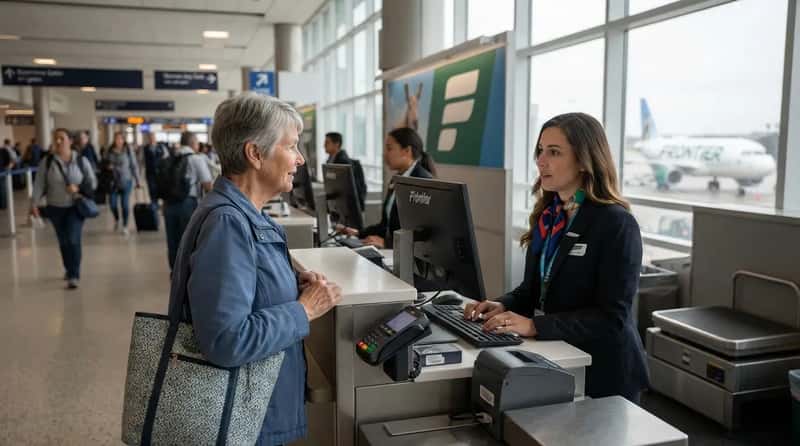
Frontier is famous for nickel-and-diming every seat and bag – but the base booking fee itself is negotiable if you’re willing to talk to a human. The airline and other budget carriers charge fees that can be waived simply by buying tickets in person.
The math adds up faster than most people expect. This tip can yield savings of nearly $50 on round-trip flights, though it also comes with some stipulations, including limited counter hours at some airports. For a senior traveler with time to spare before a flight, walking up to a counter agent instead of tapping “buy now” can turn into real money back in your pocket.
Quick Compare
- Breeze Airways: Technology fee waived only at the ticket counter, Tuesdays between 8:00-10:00 a.m. PT.
- Frontier Airlines: Booking fee dropped for in-person counter purchases, saving close to $50 round-trip.
- The pattern: Both airlines reward travelers willing to skip the app and talk to a person face-to-face.
#13 – The “Extra Phone Line” Charge That’s Flatly Illegal

Some travelers assume that using a text-based or hearing-assist phone line to book a flight comes with a surcharge, since it requires more staff time. It doesn’t, and airlines aren’t allowed to pretend otherwise.
Information and services must be available to people who use text telephone, and there can be no extra charges for TTY users, with carriers required to provide access during the same hours phone service is available to the general public. If a rep ever tries to tack on a surcharge for using this line, that’s a red flag worth escalating, not paying.
#12 – The Rule That Forces Phone Agents to Match Online-Only Prices

Here’s the part almost nobody knows: if the airline’s website is hard for you to use, the phone agent legally has to give you the same deal the website would have. If a carrier’s website is not accessible to people with certain disabilities, it must allow those travelers to make reservations and purchase tickets another way – such as by phone – without imposing additional charges.
That protection goes further than most travelers assume. If a price discount is available only for online purchases, the airline must provide the same discount to people with disabilities who cannot access the inaccessible website. Mentioning vision trouble or difficulty completing a multi-step checkout screen can be exactly the phrase that unlocks it.
#11 – The Wheelchair and Walker “Handling Fee” That Should Never Show Up
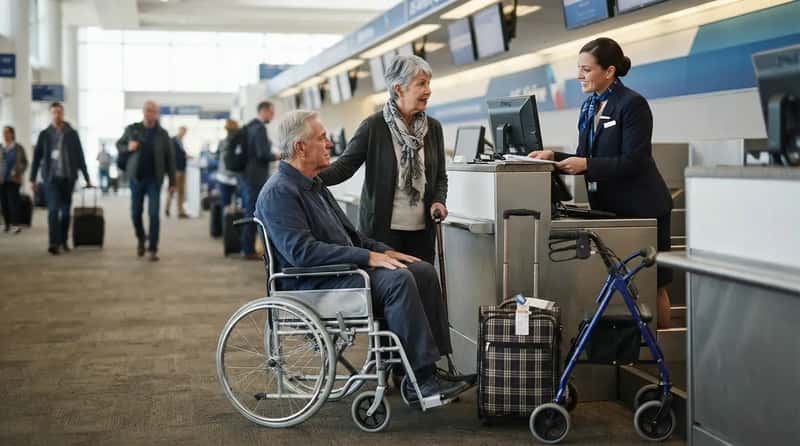
Families sometimes brace themselves for a surprise charge when traveling with a walker, cane, scooter, or wheelchair. That fee shouldn’t exist in the first place, and phone agents are trained to zero it out on the spot.
US carriers waive fees that other passengers pay, including free transport of wheelchairs, scooters, walkers, and other assistive devices, plus free seat selection when a specific seat is needed for a disability-related reason. Booking this by phone means it’s documented in the reservation before you ever reach the ticket counter, which cuts down dramatically on gate-side confusion.
#10 – The Companion Seat Fee That Disappears For a Required Helper
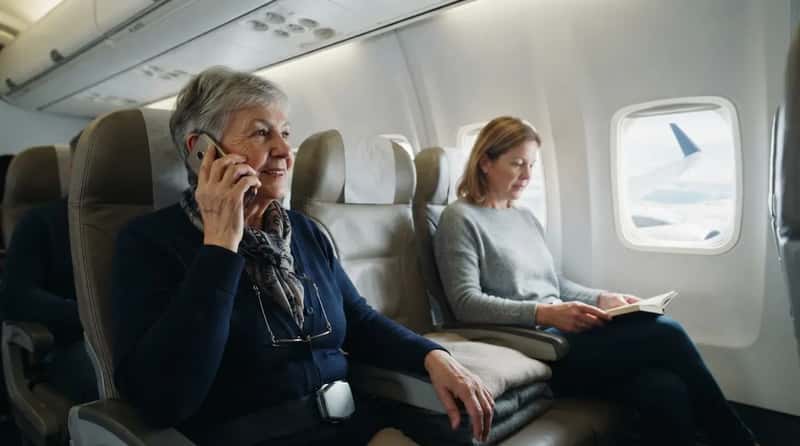
If you travel with a spouse, adult child, or aide who genuinely helps you move through the airport, some carriers will seat that person next to you for free instead of charging the usual seat-selection premium.
Air Canada, for example, offers a free adjacent seat for a required support person on domestic flights, mandated by Canada’s disability transportation regulations. In the U.S., Delta’s Accessible Travel Services line doesn’t offer a fare discount, but does provide free accommodations through a dedicated booking line and complaint resolution officials. Either way, it’s a conversation that has to happen by phone – the website has no box to check for it.
#9 – The Aisle, Bulkhead, and “Extra Room” Seat Fee
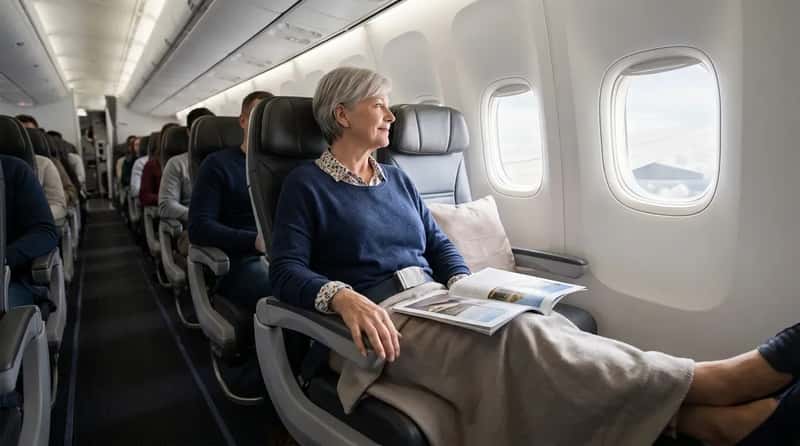
Airlines routinely charge $30 to $50 for the exact seats that older travelers actually need – an aisle for easier access, a bulkhead for stretching a bad knee. Most people just pay it without ever asking.
Passengers who need specific accommodations should notify the airline’s special needs number at least 48 hours before departure, and subject to availability may request aisle seats, movable armrests, seats with greater legroom, and adjoining seats for a traveling companion providing assistance. For context on what you’re skipping: major U.S. airlines charge $33 on average for a preferred seat, $48 for an exit row, and $18 for a last-row seat.
At a Glance
- Average preferred seat fee: $33
- Average exit-row seat fee: $48
- Average last-row seat fee: $18
- Disability-related seat requests: free when arranged at least 48 hours ahead by phone
#8 – United’s $25 Phone Fee (and the Trick That Beats It)

United openly charges extra just for using a human voice instead of a keyboard, but the fee has a well-known blind spot that phone-savvy travelers exploit constantly.
United charges $25 per passenger if you book by phone, and they will not waive this phone fee just because a booking could not be completed online. There’s still a workaround worth knowing: phone ticketing fees are never charged to Premier Platinum members and higher. Below that tier, starting the reservation online and finishing the ticketing step by phone often sidesteps the charge entirely.
#7 – Alaska’s Call-Center Fee That Cardholders Skip Automatically

Alaska Airlines quietly bakes a phone fee into award bookings that most travelers never notice until the receipt arrives. It’s one of the easiest charges to make vanish if you’re holding the right card.
Alaska keeps a $12.50 partner award booking fee and a $15 call center booking fee for awards booked over the phone, and both are nonrefundable. But the partner booking fee is waived for those with the Atmos Rewards Summit Visa Infinite credit card. A quick mention of the card number before the agent finalizes the ticket is often all it takes.
Worth Knowing
- United waives its $25 phone fee for Premier Platinum members and above.
- Alaska waives its $12.50 partner award fee for Atmos Rewards Summit Visa Infinite cardholders.
- JetBlue waives its $75 same-day change fee for Mosaic elite members.
- Many travelers over 60 already qualify for one of these tiers without realizing it applies to phone fees too.
#6 – JetBlue’s $25 “Just For Calling” Fee

JetBlue has a reputation for being fee-friendly, but there’s a quiet exception buried in its change and cancellation policy that catches phone callers off guard.
You will be charged a $25 fee if you process your change or cancellation over the phone, though Blue Basic tickets can otherwise be cancelled for $100 per person on North American routes. The good news: same-day changes cost $75, but that fee is waived for Mosaic elite members – a status that plenty of frequent senior travelers already hold without realizing it applies here too.
#5 – The Same-Day Change Fee Phone Agents Waive More Freely

Flight delays and connection worries hit older travelers harder, which is exactly why same-day change fees matter so much – and why they’re often the easiest fee to get an agent to drop during a call.
Alaska’s same-day change fee is waived for passengers booked in first class or coach who hold Atmos Rewards Gold or Titanium status, or certain American AAdvantage elite tiers, along with companions on the same reservation. Phone agents routinely check these boxes manually – something the automated online change tool simply doesn’t do.
#4 – The “Better Treatment” Cost Nobody Names, But Everyone Pays Online

This isn’t a line-item charge, but it might be the most expensive one on this whole list: the cost of getting a wrong seat, a missed connection accommodation, or a mishandled wheelchair request because nobody flagged it properly.
Most airlines have a “special needs desk” dedicated to answering questions from disabled passengers, and since those employees are specially trained, seniors who need assistance usually receive better customer service by contacting that representative directly. American Airlines even publishes a dedicated hotline for senior travelers at 800-778-4838 – a number the checkout page never shows you.
#3 – The Seating Fee Federal Law Quietly Overrides
A lot of travelers don’t realize there’s an actual federal statute standing behind these seat requests, not just airline goodwill that could disappear tomorrow.
A federal law known as the Air Carrier Access Act, together with the Americans with Disabilities Act, requires substantial accommodation of disabled passengers on U.S. flights. That’s not a suggestion airlines can quietly ignore – it’s an enforceable right, and phone agents are the ones trained to apply it correctly on the spot.
Fast Facts
- The Air Carrier Access Act bars airlines from discriminating against passengers with disabilities.
- The Americans with Disabilities Act reinforces accommodation requirements nationwide.
- These protections apply to booking, seating, and boarding – not just physical airport access.
- Phone agents are specifically trained to apply these rules in real time.
#2 – The Elite-Status Seat Fee Most Travelers Don’t Know They Already Have
Plenty of travelers over 60 have racked up frequent flyer status over decades of business travel or family visits without ever using it to skip a fee.
Elite status generally restores free preferred or extra-legroom seat selection, the benefit airlines lean on to reward loyalty. That perk almost never applies itself automatically online the way it should – a phone agent pulling up the account manually catches it every time, even on fares that technically shouldn’t qualify.
#1 – The Entire Booking Fee, Erased Because the Website Failed You First

This is the big one, and it’s the reason this whole list exists: if an airline’s website simply doesn’t work for you – too small, too confusing, too many steps that assume perfect eyesight and a steady hand on a trackpad – the law says the phone call should cost you nothing extra.
Airlines with inaccessible websites must allow reservations and ticket purchases another way, such as by phone, without imposing additional charges. That single rule is the quiet foundation underneath almost every fee on this list. Most travelers over 60 have never once mentioned it on a call – and most agents won’t bring it up first, either.
None of this requires a lawyer, a complaint letter, or a confrontation at the gate. It just requires picking up the phone, saying plainly what makes the website hard to use, and letting a trained agent do what the checkout page can’t. The fees above aren’t secret exactly – they’re just buried under systems designed to move fast and skip questions. A five-minute call slows things down just enough to ask them.
Which of these sixteen surprised you the most? Have you ever gotten a fee waived just by calling and asking? Drop your experience in the comments – the next traveler scrolling past this might need exactly that tip.