Most diners think the meal is decided the moment it hits the plate. It isn’t.
By the time you’re seated, a chef has already made a string of judgment calls that quietly decide whether your night goes smoothly or falls apart – and you’ll never see a single one of them happen. There are 16 of these decisions, made in the quiet hours before the dining room even opens, and getting just one wrong can unravel an entire service. Here’s what actually happens behind that kitchen door, starting with the one that sets the tone for everything else.
#16 – Walking the Kitchen Before Anyone Else Arrives
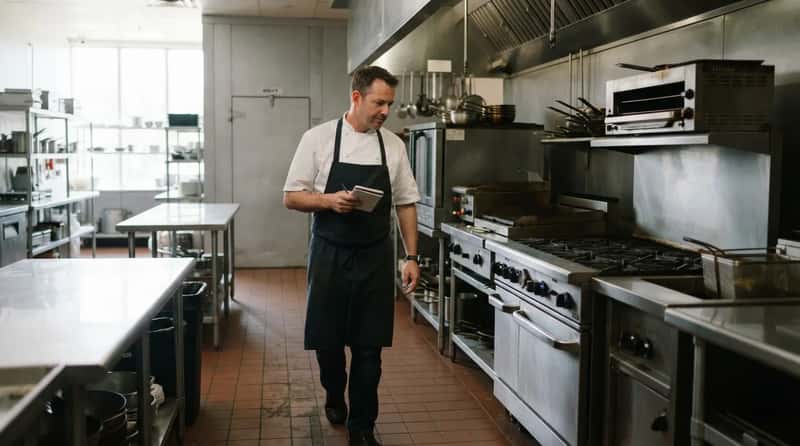
The very first decision a chef makes isn’t about food at all – it’s about the space.
Chefs typically start work several hours before service begins, and this preparation phase streamlines everything that happens during busy dining hours. That starts with a walk-through of the kitchen to check cleanliness and equipment status.
A faulty oven discovered at 4 p.m. is a fixable problem. The same discovery at 7 p.m. is a catastrophe.
Most kitchen equipment failures are caught not by engineers, but by chefs walking the floor with sharp eyes and a clear head. This walk sets the tone for the entire shift.
But what the chef finds in that walk-through immediately feeds into the very next decision…
#15 – Checking Refrigeration and Cold-Chain Temperatures
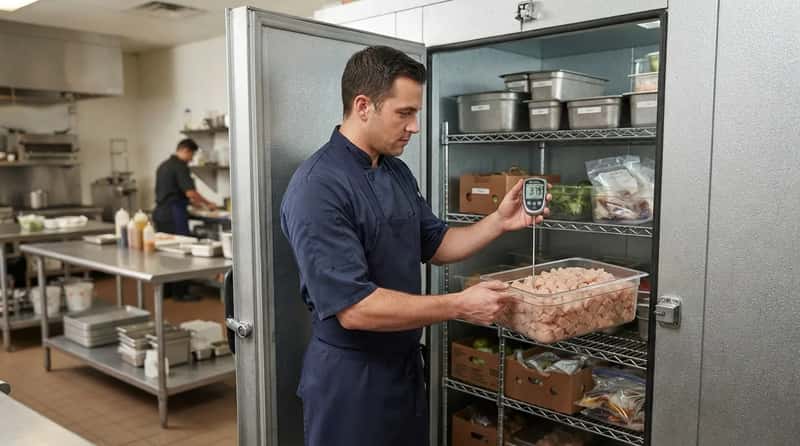
Temperature logs aren’t just bureaucratic paperwork – they’re a life-or-death checkpoint.
A walk-in reading 48°F instead of a safe holding temperature is a critical food safety issue that demands immediate action. Every morning, a chef must decide whether ingredients held overnight are safe to serve or need to be thrown out – a judgment call that protects every guest who walks in that night.
Fast Facts
- The FDA’s “Danger Zone” runs from 40°F to 140°F – the range where bacteria multiply fastest.
- In that zone, bacteria can double in number in as little as 20 minutes.
- Perishable food left in the Danger Zone for more than 2 hours must be discarded.
- Walk-in coolers are built to hold food at or below 40°F for exactly this reason.
A single walk-in refrigerator failure overnight can silently wipe out thousands of dollars of protein – and no one knows until the chef checks. This one decision alone can restructure an entire evening’s menu on the spot.
The temperature check raises an immediate follow-up: what exactly is available to cook tonight?
#14 – Auditing the Inventory and Updating the 86 Board
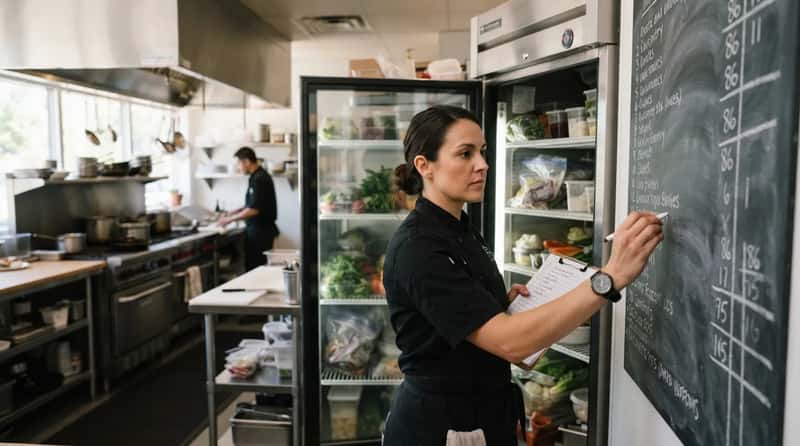
Once the fridge is verified, the chef takes stock – literally.
Fresh ingredients arrive each morning, and it’s important to check them for quality and make sure they’re stored properly. This isn’t just counting; it’s a triage exercise. The chef decides in real time what’s good, what’s borderline, and what’s gone.
The “86 board” – the running list of items no longer available – gets updated before anything else is communicated to front-of-house staff. Getting this wrong means servers sell guests dishes the kitchen physically cannot make.
With inventory locked in, the chef turns to what the evening’s bookings actually demand…
#13 – Reviewing the Reservation Sheet for Volume and VIPs
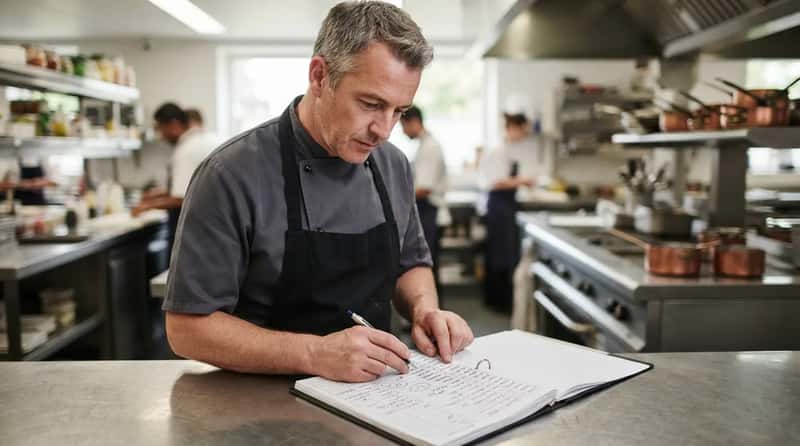
A reservation sheet tells a chef far more than how many covers to expect.
Are there large group reservations? Special dietary requirements? Pre-orders? A party of 22 at 8 p.m. changes everything – protein portions, sauce volumes, station timing, and how many hands are needed at each station shift based on one booking.
A VIP reservation – a food critic, a regular who tips generously, a table a manager has flagged – can change the plating standard for an entire section of the kitchen. Most guests have no idea their table is being treated differently before they even sit down.
And hidden inside that reservation sheet is one detail that can quietly derail service if missed…
#12 – Identifying Dietary Restrictions and Allergy Flags
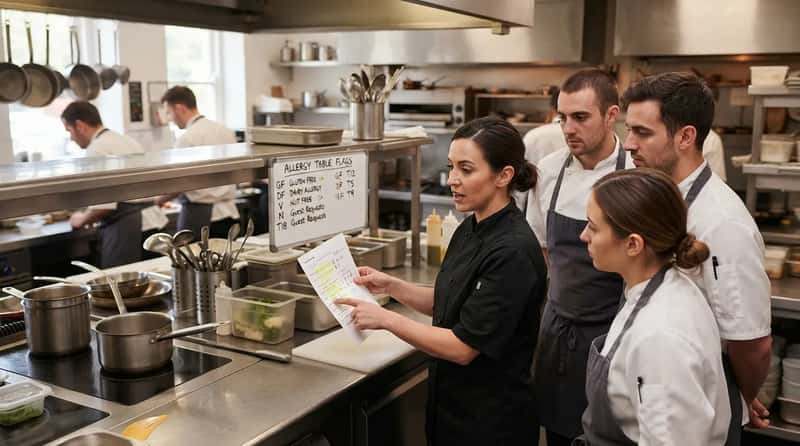
This decision is, without question, the most legally consequential one a chef makes before service.
Allergy information flagged during booking has to be traced through every component of a dish – not just the protein, but the sauce, the garnish, the oil used on the grill.
Cross-contamination doesn’t announce itself. A trace of tree nut in a shared oil, or gluten in a sauce thickener nobody questioned, can trigger a serious allergic reaction. Chefs who are thorough here brief their entire line on allergy tables before the first ticket drops, not after.
The allergen audit naturally leads into another pre-service judgment: what’s actually on the menu tonight?
#11 – Locking In the Day’s Specials
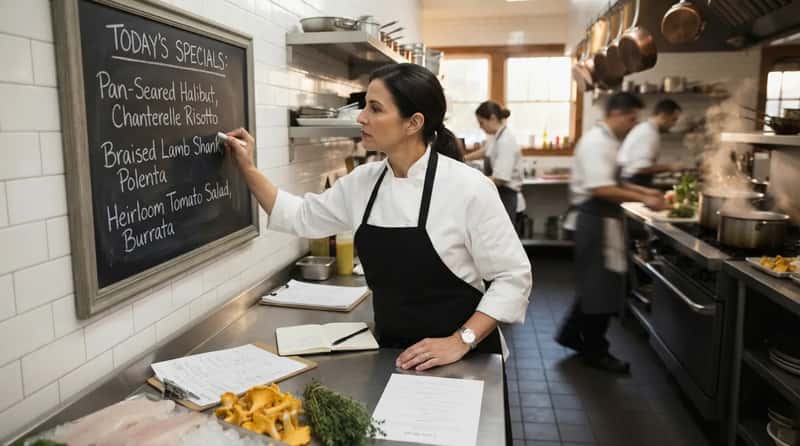
Specials aren’t just creativity on a chalkboard – they’re a strategic kitchen decision.
Chefs look at every menu item to figure out what can be prepped ahead without losing quality. Soups and sauces can usually be made ahead and held, while steaks and fish get cut and seasoned but must be cooked to order.
Many chefs treat the daily special as their truest creative expression – but insiders know it’s often just smart inventory management dressed up beautifully. Guests who order the special are usually getting the freshest ingredient in the building.
But before those specials can be cooked, the chef has to decide exactly how much of everything to prepare…
#10 – Setting Prep Quantities and Par Levels
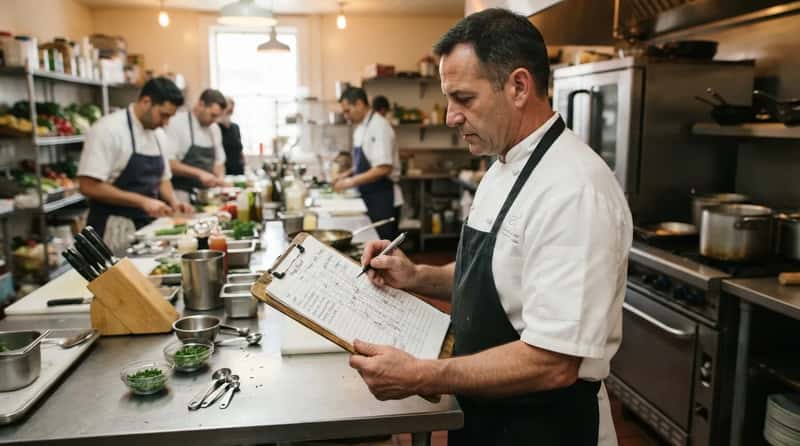
This is one of the most underrated decisions in the entire pre-service process – and one of the easiest to get catastrophically wrong.
By analyzing sales, chefs can see how much of an item typically moves on a given day of the week. Even with sophisticated POS data available, most stations still keep a form tracking exactly how much was prepped and used each shift.
Over-prep and you waste food and money; under-prep and you 86 your most popular dish at 7:30 p.m. on a Friday. Getting par levels right is where data meets instinct, and it takes years of service patterns before this decision starts feeling automatic.
Once the quantities are set, the chef has to decide who does what – and that’s a whole separate science…
#9 – Assigning Stations and Tasks to the Team
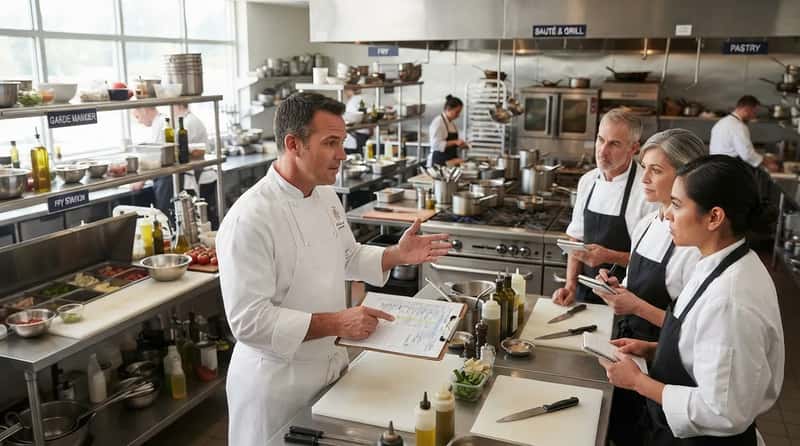
This is leadership disguised as logistics.
Before service starts, the head chef or sous chef assigns and adjusts prep tasks based on the day’s menu and expected volume, making sure every section of the kitchen is stocked and ready before orders start coming in.
Worth Knowing
- Garde manger handles cold dishes, salads, and appetizers.
- Sauté station covers pan-fried and quick-cooked items.
- Grill or broiler station manages proteins cooked over direct heat.
- Fry station runs everything that hits hot oil.
- Pastry often operates almost independently, prepping hours ahead of the rest of the line.
Station assignment isn’t just about who’s skilled – it’s about reading the room. A cook who’s hungover, distracted, or nursing a hand injury gets moved to a lower-pressure spot.
Putting the wrong cook on the grill during a 200-cover Saturday service is a decision that can collapse the entire right side of the kitchen. Most great chefs make these calls without ever explaining them publicly – the team just finds out where they’re standing.
With everyone placed, the physical setup begins – and it’s more deliberate than most people ever realize…
#8 – Organizing Mise en Place at Every Station
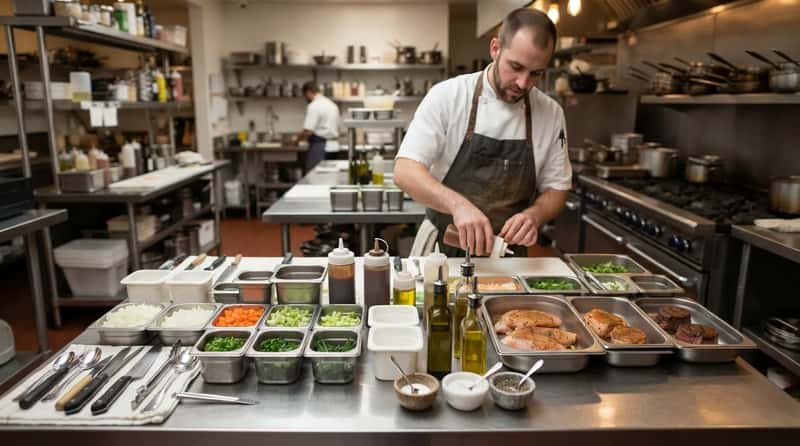
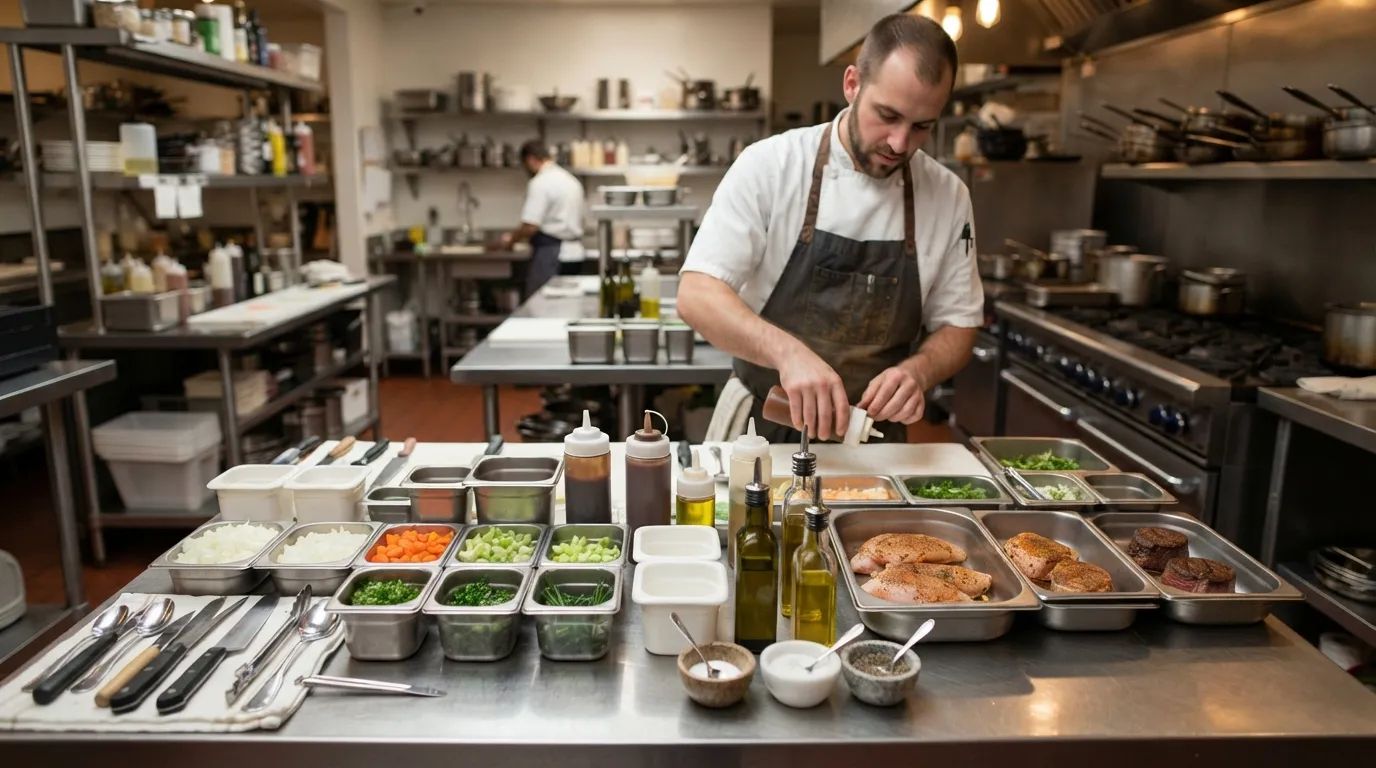
This is the one decision the entire industry agrees on: if your mise en place fails, your service fails.
Literally translated, mise en place means “everything in its place.” In the kitchen, that means every ingredient prepped, every protein portioned, every tool set out, and every garnish arranged before the first ticket drops.
Restaurants that build it run faster, waste less, train new cooks quicker, and feel calmer at full volume. The ones that skip it pay every night, in ticket times, in 86 announcements, and in cooks who quietly stop wanting to come back.
A line cook who has to reach more than a couple of feet for anything during a rush is already losing time they’ll never get back. Mise en place isn’t a box to check – it’s the physical architecture of a successful service.
But even perfect mise en place won’t save you if your knives are dull and your equipment is cold…
#7 – Verifying Equipment is Preheated and Ready
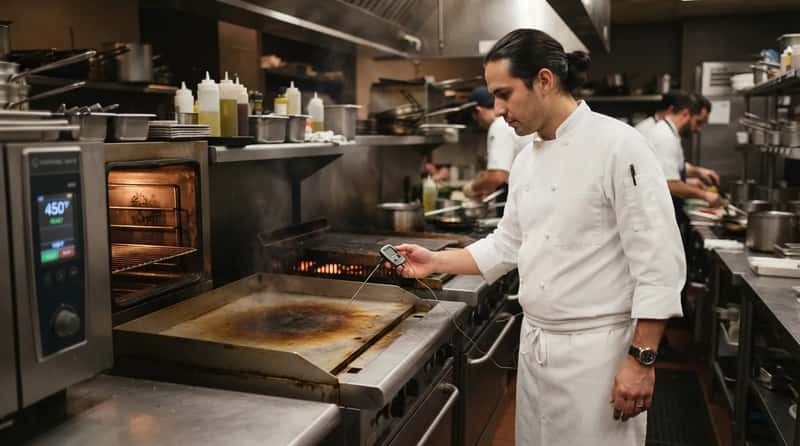
A cold oven at service time is a chef’s nightmare dressed up as a scheduling problem.
Grills, ovens, fryers, and flat-tops need to reach and hold their working temperatures long before the first order fires – not once tickets start stacking up. This is a timed decision, not an afterthought.
In most professional kitchens, equipment needs to be on and holding temperature well before the first cover is seated – often 30 to 45 minutes out, depending on the piece of gear. A grill still climbing to temp when the first steak order lands means uneven searing and a plate that goes out wrong.
Equipment is ready. Mise en place is set. Now comes the human element that many overlook entirely…
#6 – Tasting Every Sauce, Soup, and Base Preparation
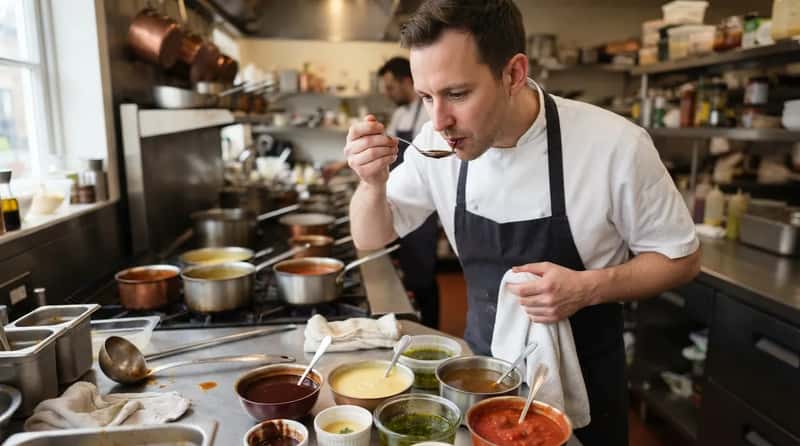
The tasting round is where the chef transitions from manager to craftsperson.
Taste checks by the expeditor or chef on duty are standard for every new batch of sauces, soups, and base preparations. Tasting is not optional – it’s the final quality gate before food reaches a paying guest.
A sauce made yesterday can drift overnight – too acidic, too reduced, or simply flat – and no amount of plating skill will rescue it once it’s on the pass. The pre-service taste is the only moment a chef gets to fix a problem privately. After service starts, every mistake is public.
With sauces signed off, the chef then makes one of the most psychologically powerful decisions of the entire day…
#5 – Running the Pre-Service Team Briefing
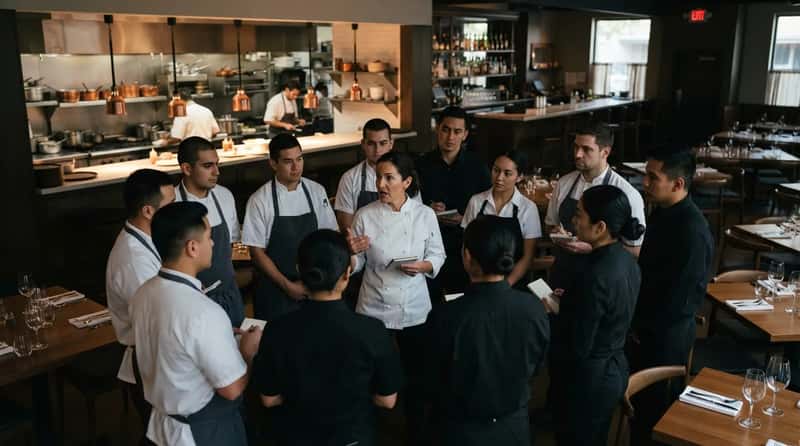
This ten-minute meeting is quietly one of the most important performances a chef gives all day.
It’s the moment to align front-of-house and kitchen staff on specials, 86’d items, and any tricky customer requests. Five focused minutes of communication prevent hours of problems.
Chefs who walk into a briefing distracted or visibly stressed transfer that energy directly to their line cooks, and it shows in ticket times within the first 30 minutes. The briefing isn’t just information delivery – it’s a mood-setting exercise that every cook in the room absorbs and carries onto the line.
That briefing creates alignment – but the chef still needs to finalize one more critical sequence before service…
#4 – Deciding the Fire Order and Timing Sequence
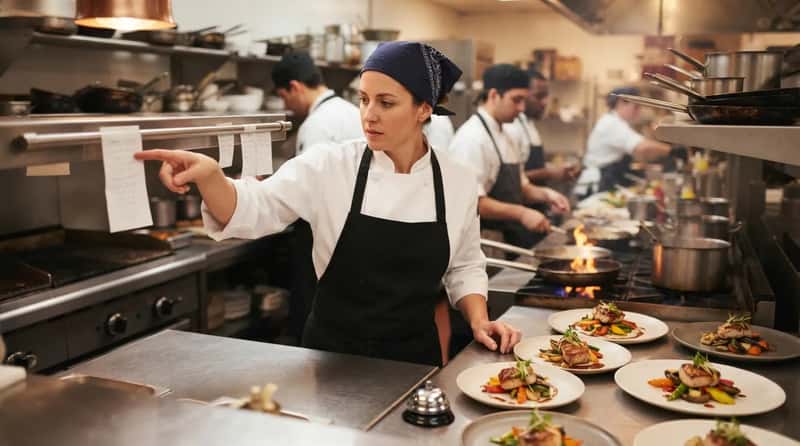
This is the decision that turns individual skill into team choreography.
The whole idea behind mise en place is that all the thinking, measuring, and preparation happens before the heat goes on, so cooking never competes with basic prep that could’ve been handled calmly beforehand.
The chef decides, before a single ticket drops, how stations will communicate timing – who calls “fire,” when proteins go down relative to sides, how dishes from different stations land at the pass together.
Quick Compare
- Called too early: proteins rest too long, sauces separate, plates go out lukewarm.
- Called too late: tickets back up, tempers flare, one table waits while others already eat.
- Called right: every plate for a table lands at the pass within moments of each other.
In a well-run kitchen, all four plates for a table hit the pass within moments of each other, not minutes apart. That synchronicity doesn’t happen by accident – it’s rehearsed in the chef’s head hours before service and locked in during the briefing.
Get that sequence right, and service flows. But one detail can still break the whole thing apart…
#3 – Confirming FOH and BOH Communication Channels
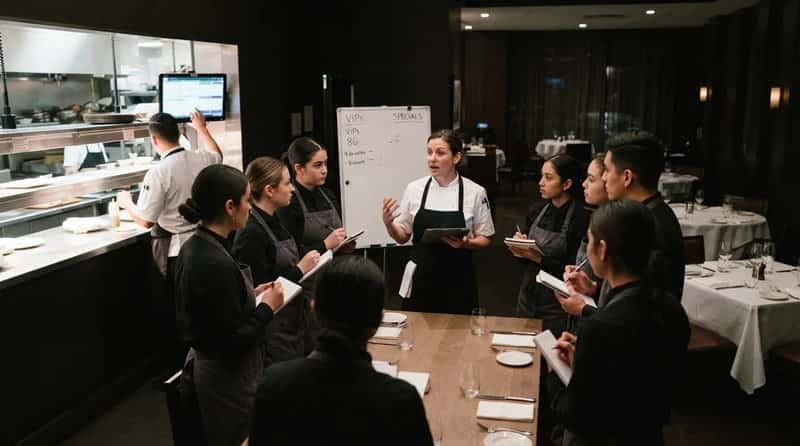
The kitchen and the dining room are two separate worlds that must speak the same language on cue.
Gathering the whole team before opening for a pre-shift briefing – the 86 list, specials, VIPs, station assignments – is what aligns front-of-house and back-of-house before the doors unlock.
The chef decides how servers flag allergy tables, how they signal a table is ready to order, and how the expeditor calls tickets.
In kitchens that rely on a Kitchen Display System, the chef has to verify it’s working before service – a crashed KDS at 7 p.m. is the closest a kitchen gets to a total blackout. Poor FOH-BOH communication consistently produces longer ticket times, cold food, and frustrated staff. It’s not a soft-skills problem; it’s a systems problem decided before service begins.
Two decisions left. The second-to-last one surprises almost everyone who hasn’t worked a line…
#2 – Reading the Room: Weather, Day of Week, and Gut Instinct
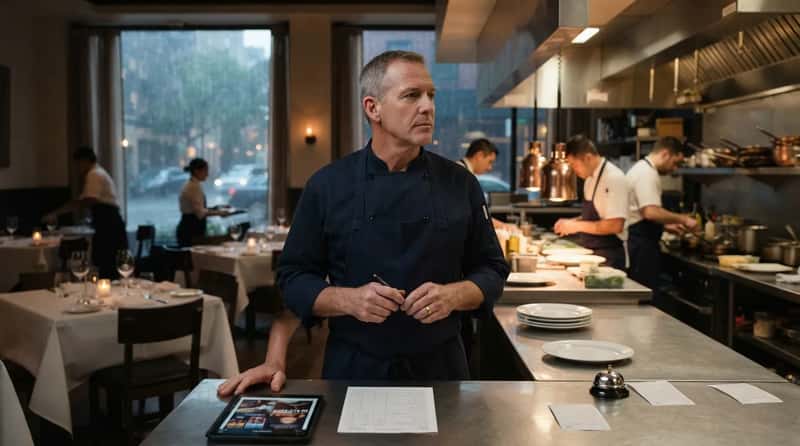
This is the decision that separates a competent chef from a truly experienced one.
Every chef knows the feeling right before service begins – a particular tension in the air, not because something’s already gone wrong, but because something always could.
Experienced chefs read external signals – a sudden rainstorm that packs the bar early, a local event that spikes walk-ins, a holiday week that shifts the crowd younger or older.
Cooking is not about convenience. It’s about doing something the right way and taking the time to do it.
Thomas Keller
Some seasoned chefs openly admit they adjust prep volumes based on nothing more than feel – and they’re right far more often than luck would explain. That instinct is data compressed by thousands of hours of service, not guesswork. It’s the invisible layer of decision-making that no checklist captures.
And then comes the one decision that, if made wrong, renders every other decision irrelevant…
#1 – Making the Call on What Doesn’t Go Out Tonight
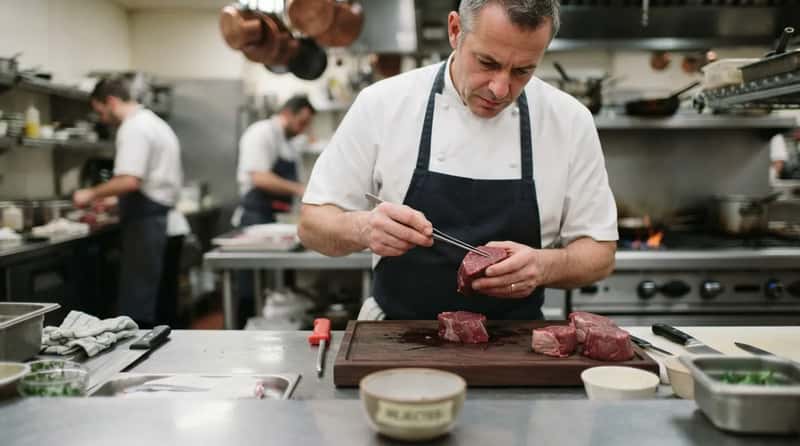
Every chef, before every service, must decide what they are not willing to serve.
It means pulling a dish that isn’t up to standard, cutting a protein that’s borderline, or telling front-of-house that a popular item is off the menu tonight. This is the hardest decision because it costs money.
The chefs who build reputations that last a decade are the ones who make this call without hesitation – and the ones who hedge it are the ones whose kitchens quietly decline. Real readiness doesn’t start with the first incoming ticket. It starts with the courage to say no before the doors even open.
The Bottom Line
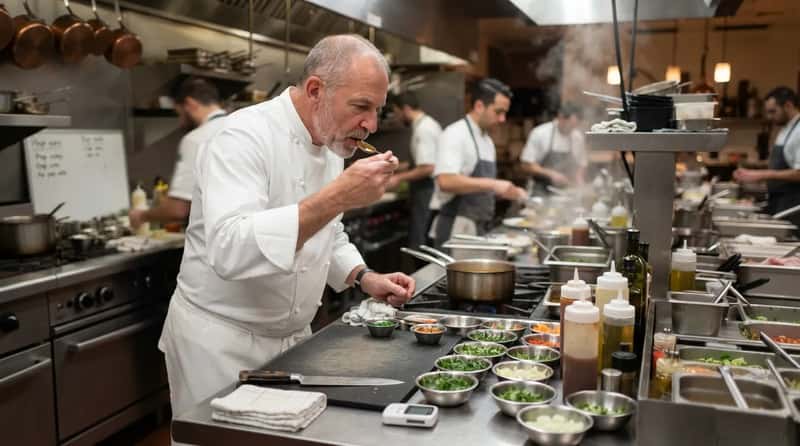
Before a single guest is seated, a professional chef has already made 16 binding decisions – about safety, supply, people, timing, and quality.
At a Glance
- Safety: temperature checks, allergy flags, equipment readiness.
- Supply: inventory audits, the 86 board, prep quantities.
- People: station assignments, the pre-service briefing, communication channels.
- Craft: tasting, fire order, and the final call on what doesn’t go out tonight.
Good mise en place and pre-service discipline eliminate decision pressure once the doors open: every dish has its ingredients ready, every station is set up, and errors quietly disappear before they can happen.
The decisions that produce a flawless dinner aren’t made at the pass. They’re made in a quiet kitchen hours before anyone arrives.
The most critical one – knowing what not to serve – is the mark of every chef worth trusting. Have you ever worked a restaurant line, or spotted a kitchen that clearly hadn’t made these calls? Drop it in the comments.