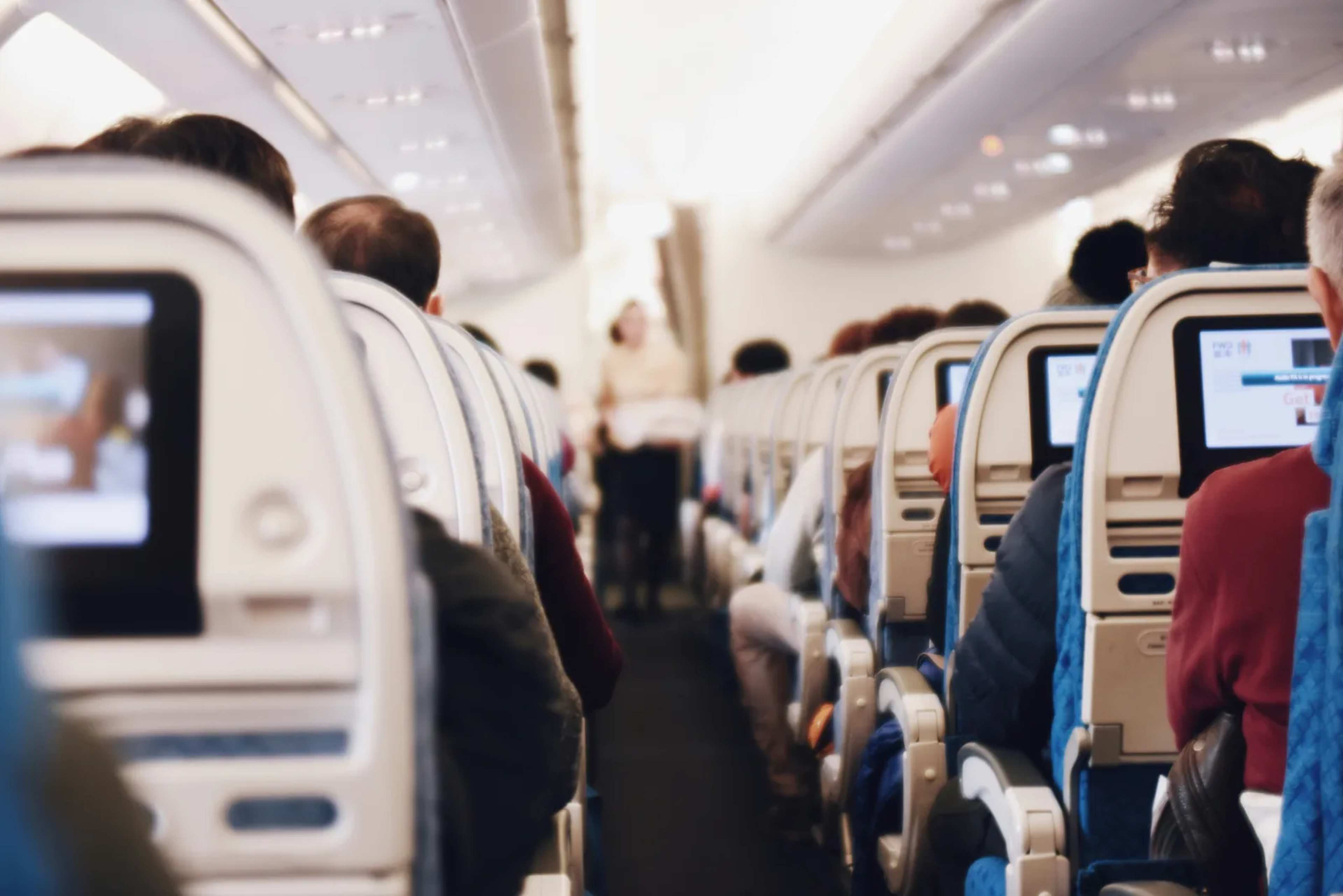
Most first-time cruisers picture the last morning as easy: pack up, walk off, go home. What actually happens is closer to an airport terminal during a snowstorm, minus the airport. Suitcases pile up in hallways, the buffet turns into a mob scene, and the ship that felt like a floating resort for seven days suddenly feels like a logistics puzzle nobody warned you about.
Veteran cruisers know this because they paid for the lesson once, sometimes literally. A missed deadline, a surprise charge, a bag that vanished into the wrong pile, that’s how these 16 habits got built. Here’s what frequent cruisers actually do differently on the final morning, and why the smallest ones end up saving the most money.
16. They Never Book a Same-Day Flight, No Matter How Good the Deal Looks
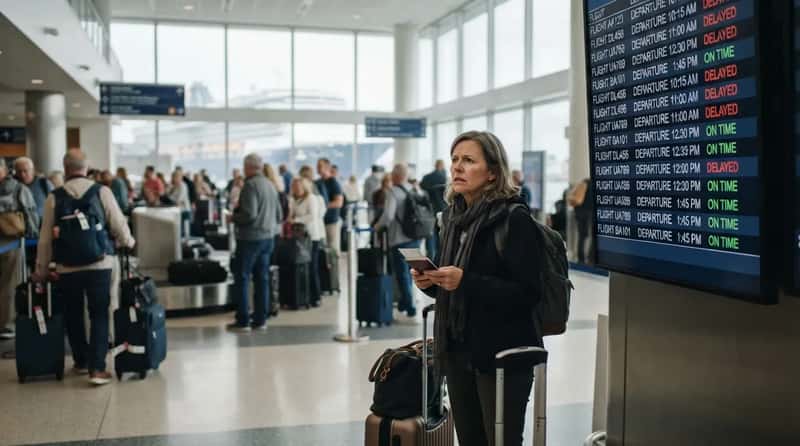
Cutting flight timing close is the most repeated regret among frequent cruisers, and it usually starts with a great fare for a flight that leaves the same day the ship docks. Ships get delayed by weather, customs backups, or mechanical checks, and none of that cares about a 10 a.m. boarding pass.
Cruise lines even account for this when scheduling. Booking agents typically flag how early a flight can realistically depart on disembarkation day, since a very early flight is usually impractical once you factor in customs and luggage retrieval. Seasoned cruisers now build in a full buffer day, or refuse to book anything before noon.
Fast Facts
- Customs clearance alone can take two hours or more after docking
- Weather and port congestion are common causes of delayed disembarkation
- Many agents recommend nothing earlier than noon for flights out
- A full buffer day removes the risk entirely for international arrivals
15. They Read the Bill Before the Ship Docks, Not After

Nothing kills post-cruise bliss faster than a mystery $400 charge showing up on your card from a rental car parking lot three states away. It might be drinks never ordered, a cancelled excursion, or gratuities billed twice. Once you’re off the ship, your leverage to fix it basically disappears.
Frequent cruisers now treat the final-night folio check like a non-negotiable ritual. Trying to sort out a billing mistake from home, after disembarking, is nearly impossible with cruise line phone support. A two-minute stop at Guest Services the night before beats hours on hold once you’re back on dry land.
14. They Stopped Trusting the Alarm Clock on the Last Morning

Waking up at dawn to “get a head start” is one of the most pointless habits new cruisers cling to. The ship might dock at 6 a.m., but it still has to clear customs, which can take two hours or more. The gangway doesn’t open any faster just because someone’s standing near it.
Experienced cruisers now sleep in a little, order coffee, and let the earliest wave of the line thin out on its own. The ship isn’t leaving without you. Rushing only buys stress, never actually buys time.
13. They Photograph the Luggage Tag Before It Ever Leaves the Cabin

Losing track of your tag color sounds trivial until you’re standing in a warehouse-sized terminal scanning hundreds of identical bags. Smart cruisers snap a photo of the tag, or keep a spare, before handing luggage over. That one photo saves a frantic sweep of every zone in the terminal.
The tag isn’t just a label, either. Each color or number corresponds to a specific pickup time, and showing up in the terminal too early just means standing around waiting for bags that aren’t out yet. Seasoned travelers stop guessing and start checking the paperwork the moment it arrives.
12. They Quietly Skip the Buffet on the Final Morning
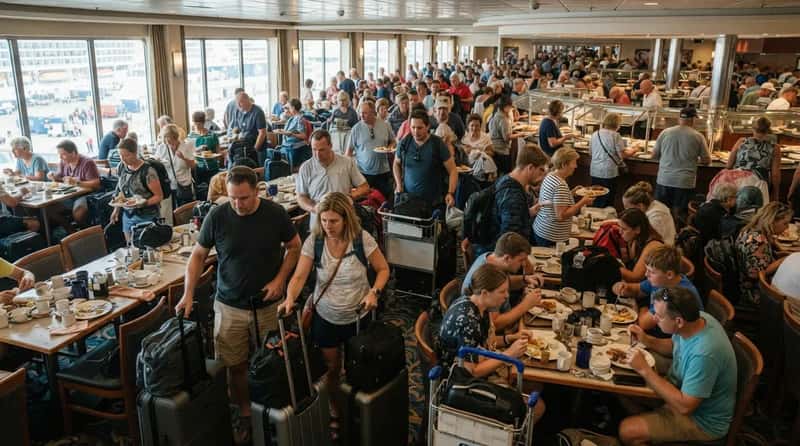
The breakfast buffet on disembarkation day is not the relaxed spread it was the rest of the cruise. Crowds, luggage carts weaving between tables, and a compressed timeline turn a normally pleasant meal into a headache nobody signed up for. Veterans figured this out the hard way, usually while balancing a coffee and a suitcase at the same time.
Instead, they plan around it. Depending on the ship, last-morning options often include a quieter cafe, room service, or the main dining room instead of the buffet crush. Choosing the calmer option isn’t picky, it’s just efficient.
11. They Take Old Tags Off Their Bags Before New Ones Go On
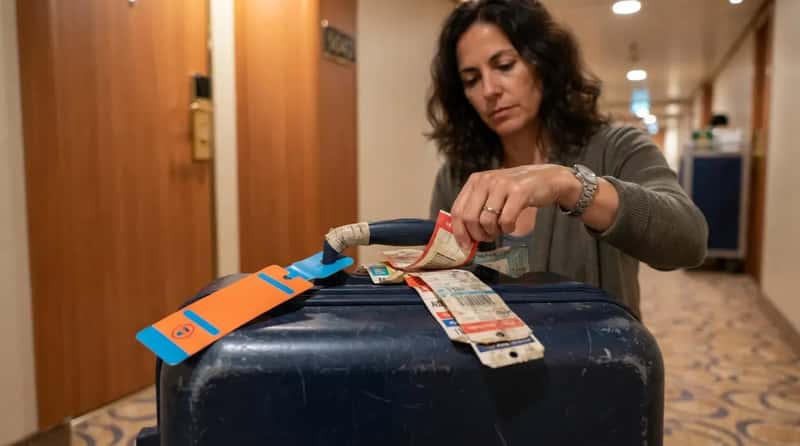
A suitcase covered in tags from three previous trips looks like a badge of honor, but it can genuinely confuse the sorting process at the pier. Removing old airline and cruise tags helps avoid mix-ups when a porter or scanner grabs the wrong sticker. It’s a small step that prevents a real, avoidable delay.
The instructions arrive with plenty of notice, so there’s no real excuse for skipping it. Every old tag should come off except personal ID, replaced by the newly issued debarkation tag, which is color- or number-coded to match transportation and flight schedules. It takes thirty seconds and saves everyone a headache later.
10. They Refuse to Pack Their Passport in Checked Luggage

This one sounds obvious until you hear how often it actually happens. Travelers pack their passport or ID into the suitcase that leaves the cabin the night before, then realize the next morning it’s gone until the terminal. Customs officials don’t accept “it’s in my checked bag” as an answer.
Frequent cruisers now build a small “morning kit” that never touches the checked pile. The ship’s key card matters just as much, since it’s needed to actually get off the ship one last time. ID, boarding documents, and that card all stay on the body, not buried in cargo.
9. They Sit Through the Disembarkation Talk Instead of Tuning It Out

It’s tempting to treat the final briefing as background noise while packing. But every ship holds a disembarkation talk the day before arrival, and it covers port-specific details that no generic blog post can replicate. Skipping it means missing the exact information that would’ve made the morning painless.
Experienced cruisers now treat it like a briefing they can’t afford to miss. Written instructions delivered to the cabin the night before cover luggage procedures, customs requirements, meeting times, and disembarkation order, and reading them carefully is how you avoid winding up in the wrong line entirely.
Worth Knowing
- The talk usually happens the afternoon before arrival
- Written follow-up instructions arrive in the cabin that same night
- Details cover luggage cutoff times, customs steps, and meeting points
- It also explains the order in which color groups are called to leave
8. They Book Their Next Cruise Before the Desk Closes

This habit exists entirely because of a scheduling regret. The next-cruise desk closes on disembarkation morning, so anyone who wants to lock in perks needs to check the hours and go before it shuts. Miss that window, and the onboard-only benefits vanish with it.
Frequent cruisers now treat this as a mid-cruise errand instead of a last-minute scramble. Booking while onboard often comes with reduced deposits, onboard credit, or fare discounts depending on the line, and the reservation can even be transferred to a travel agent afterward. Waiting until the final morning just means losing free money for no reason.
7. They Sweep the Cabin Like It’s a Crime Scene
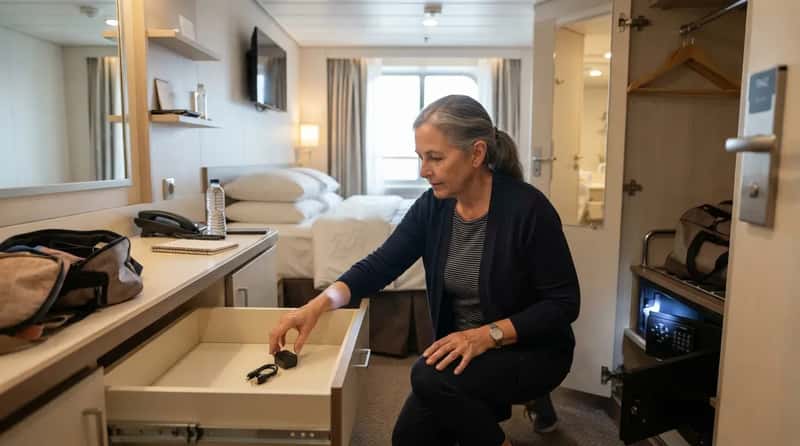
Leaving something behind in the rushed final hour is almost a rite of passage, and seasoned cruisers know it firsthand. Right before walking out for good, they check every shelf, drawer, and the safe again, even if it was already checked the night before. Chargers, jewelry, and medication are the usual casualties left behind.
This isn’t paranoia, it’s pattern recognition built from experience. A too-common mistake is skipping that last-minute cabin sweep because you’re “already packed,” and paying for it later with a phone call to lost-and-found. Once that door closes, whatever’s inside is gone for good.
6. They Stopped Assuming Self-Disembarkation Is Always the Fast Option
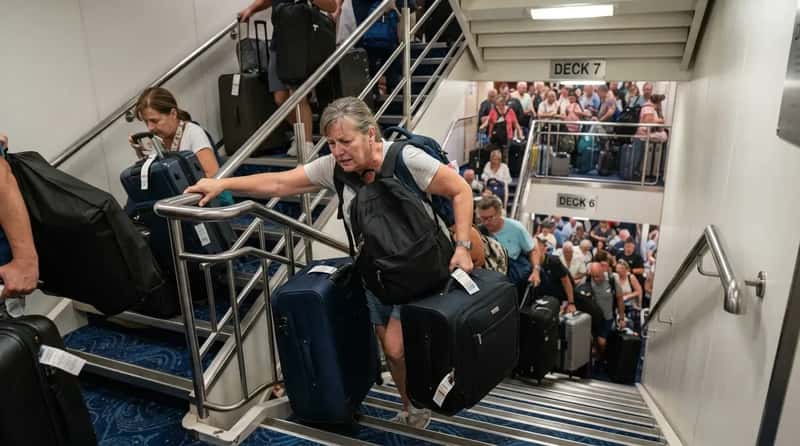
Carrying your own bags off the ship sounds like the smart move, until the elevators are packed and the stairwells stretch down six decks. Frequent cruisers now warn against self-disembarkation unless they’re truly confident they can manage every bag alone, since it can mean hauling luggage down multiple flights when elevators are jammed. The speed advantage evaporates fast if you’re doing it solo with three suitcases.
It works great for the right traveler, just not for everyone. Self-disembarkation is ideal on smaller ships, shorter itineraries, and with manageable, lightweight bags. Choosing it out of impatience rather than practicality is exactly how the “expensive” back injury or missed connection happens.
5. They Tip the Porters Before They Even Ask
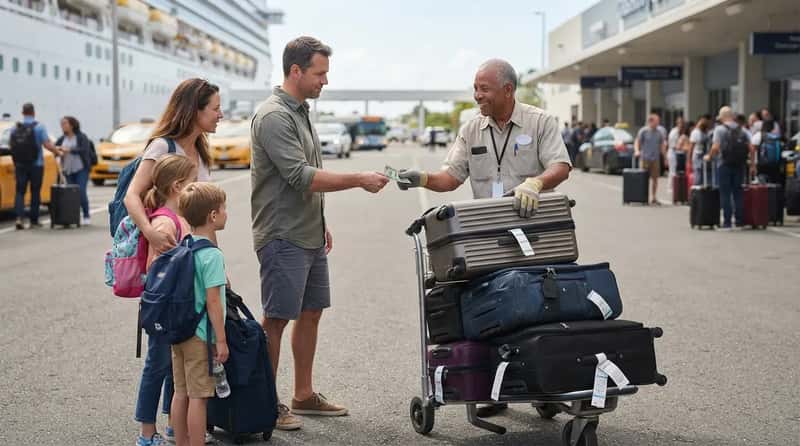
Skipping this step is one of those small mistakes that quietly damages a traveler’s reputation at the pier. When a porter offers to help with the luggage, accepting means tipping, usually $2 to $3 per bag, especially if they load it into a car or taxi. It’s a small cost for saving your back and your schedule.
Families with young kids and multiple suitcases benefit the most from this habit. With just one or two bags, a porter isn’t strictly necessary, but they’re a lifesaver for larger families juggling luggage and children at the same time. Seasoned cruisers now budget this tip in advance instead of fumbling for cash at the curb.
At a Glance
- Typical porter tip: $2 to $3 per bag
- Cash is easier than cards for a quick curbside tip
- Most valuable for families juggling kids and multiple suitcases
- Optional for solo travelers with just one or two light bags
4. They Never Argue With a Ship’s Financial Desk After Everyone Else Has Left

Waiting until the very last minute to resolve a billing dispute is a gamble that rarely pays off. With only one staffer working the financial desk during peak demand, trying to fix a small billing issue while also racing to catch a flight can turn a minor hassle into a real problem. The line only grows as departure time gets closer.
Frequent cruisers now front-load this task instead of leaving it for the final scramble. Settling the bill and flagging discrepancies at Guest Services well before the last morning matters, because that’s when things get genuinely chaotic. Waiting until everyone else has the same idea is how a five-minute fix turns into a forty-minute wait.
3. They Treat the Overnight Luggage Deadline as Sacred

Missing the checked-bag cutoff sounds minor until it derails the entire morning. Bags should be packed, tagged with the provided color-coded labels, and left outside the cabin by the deadline, usually somewhere between 10 p.m. and midnight. Miss that window and your bag might not make the same overnight sorting run as everyone else’s.
Frequent cruisers now set a separate phone alarm just for this, distinct from the wake-up alarm. Crew members collect bags overnight and sort them in the terminal by tag color, and passengers won’t see them again until after clearing customs. There’s no partial credit for being fifteen minutes late.
2. They Stopped Being “That Passenger” in the Customs Line
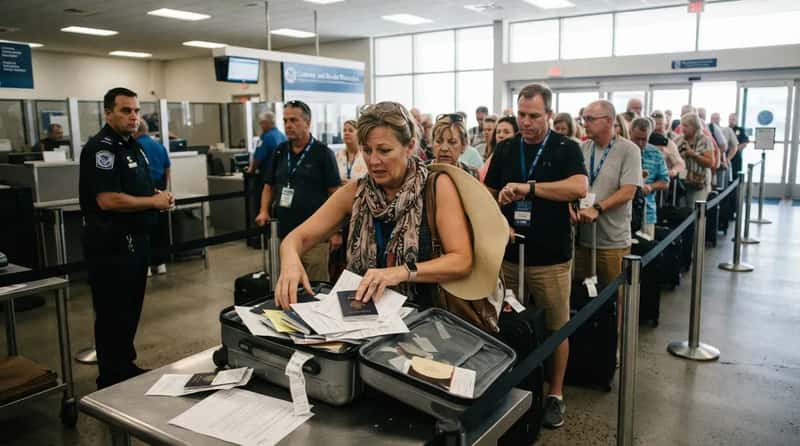
Every seasoned cruiser has a story about the person who stalled an entire terminal without realizing it. There’s always one, hunting for a passport at security, reorganizing luggage at the scanner, or fumbling with incomplete customs paperwork while a long line of tired passengers waits behind them. It’s an easy mistake to make once, and an embarrassing one to repeat.
Now the habit is preparation, not speed. Well-traveled cruisers keep documents handy, move with the flow, and step aside if they need extra time to sort something out. It’s a small courtesy that saves everyone, including the disorganized traveler, a stressful ten minutes.
Quick Compare
- Unprepared: digging for documents at the scanner, holding up the whole line
- Prepared: passport and papers already in hand before reaching the desk
- Unprepared: reorganizing bags mid-line to find a customs form
- Prepared: stepping aside first, then sorting things out off to the side
1. They Say Thank You in Person, Not Just Through Auto-Gratuities

The most quietly regretted mistake among frequent cruisers isn’t about money or luggage at all, it’s about timing a goodbye. Plenty of travelers assumed the automatic gratuity covered it, until they realized a simple thank-you would’ve meant more. By the final morning, cabin stewards and servers are already buried in turnover work and barely have a moment to talk.
This habit didn’t come from a packing checklist, it came from regret. Frequent cruisers now build in a deliberate moment on the second-to-last night, a note, a face-to-face thank you, something beyond a line item on a bill. It costs nothing, and it’s the one thing people who skipped it still bring up years later.
None of these habits require insider access or expensive upgrades. They’re small, unglamorous corrections that come from someone standing in the wrong line once, missing one deadline, or surviving one too many chaotic buffet mornings. That’s really what “seasoned” means on a cruise ship: not fewer mistakes, just fewer repeats of the same one.
Which one of these hits closest to home? Drop your own disembarkation-day story in the comments.