Walk through any cruise terminal and you can spot the veterans in about ten seconds. They aren’t rushing, they aren’t panicking, and they definitely aren’t hauling a 50-pound suitcase up the gangway like it owes them money. These 16 habits are the giveaways, and once you notice them, you can’t unsee them.
Most people assume cruising skill shows up in the fancy stuff, like specialty dinners and suite perks. It doesn’t. It shows up in tiny, quiet moves on day one that first-timers walk right past. A couple of them might even start an argument in your family group chat.
#16 – The Small Bag They Never Let Out of Their Hands Holds the Entire First Afternoon

Veterans plan for a delay that most newcomers don’t know about. Your suitcases get checked at the terminal, and porters send them to the ship. They usually land at your cabin door a few hours after you board.
So the carry-on becomes a survival kit: swimwear, sunscreen, medications, chargers and a toothbrush. Cruise guides say to pack everything you need for that first afternoon in it, so you aren’t waiting on luggage.
First-timers who skip this step end up sitting on the bed in jeans, staring at a closed door while the pool party rages upstairs. But that’s nothing compared to what veterans do with their passports at #15.
#15 – Passports Never Go Anywhere Near the Luggage Drop
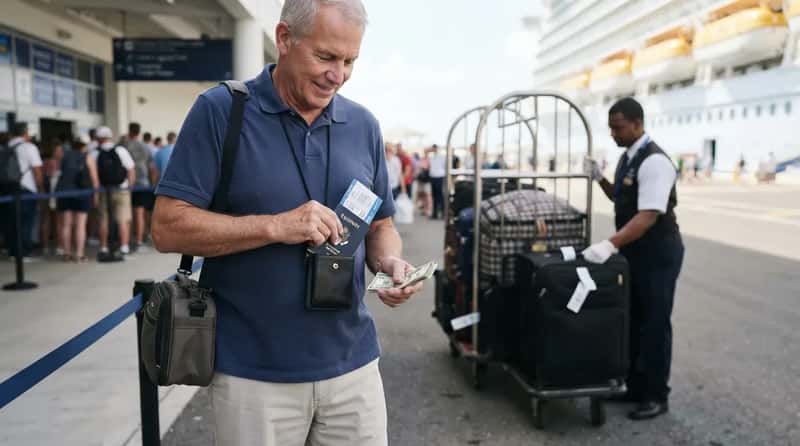
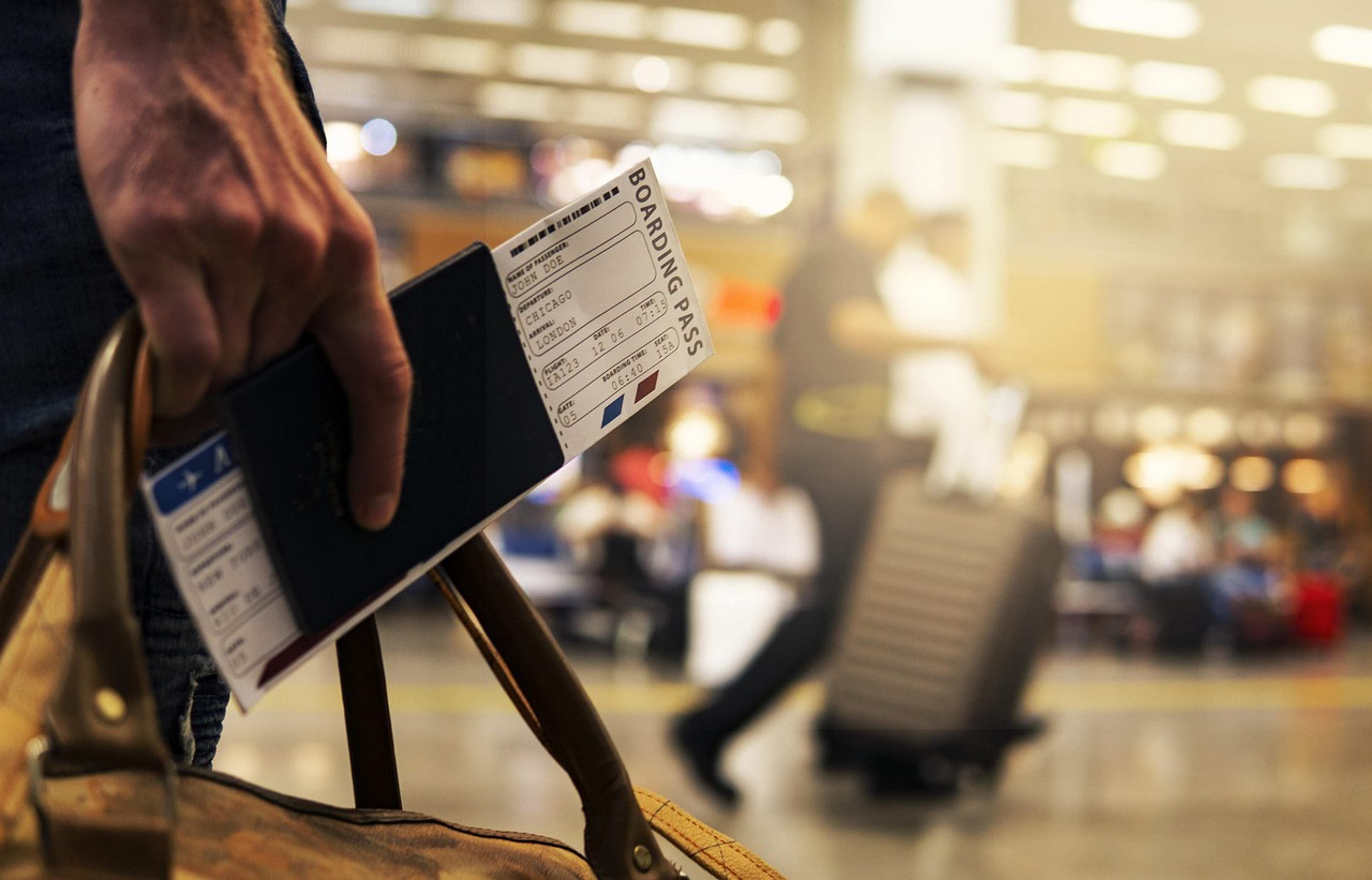
This is the mistake that can wreck a trip before it starts. Once your bag disappears onto the porter’s cart, it’s gone for hours. Your passport and travel documents must stay on you, never in the checked luggage. Cruise guides repeat this warning for good reason.
Worth Knowing
- Keep your passport, boarding documents and photo ID in one pouch on your body.
- Medications and a payment card belong in the carry-on too, not the checked bag.
- Check passport expiration dates well before sailing. Many destinations want several months of validity left.
- A few small bills for the porters stay in a pocket, not buried in a suitcase.
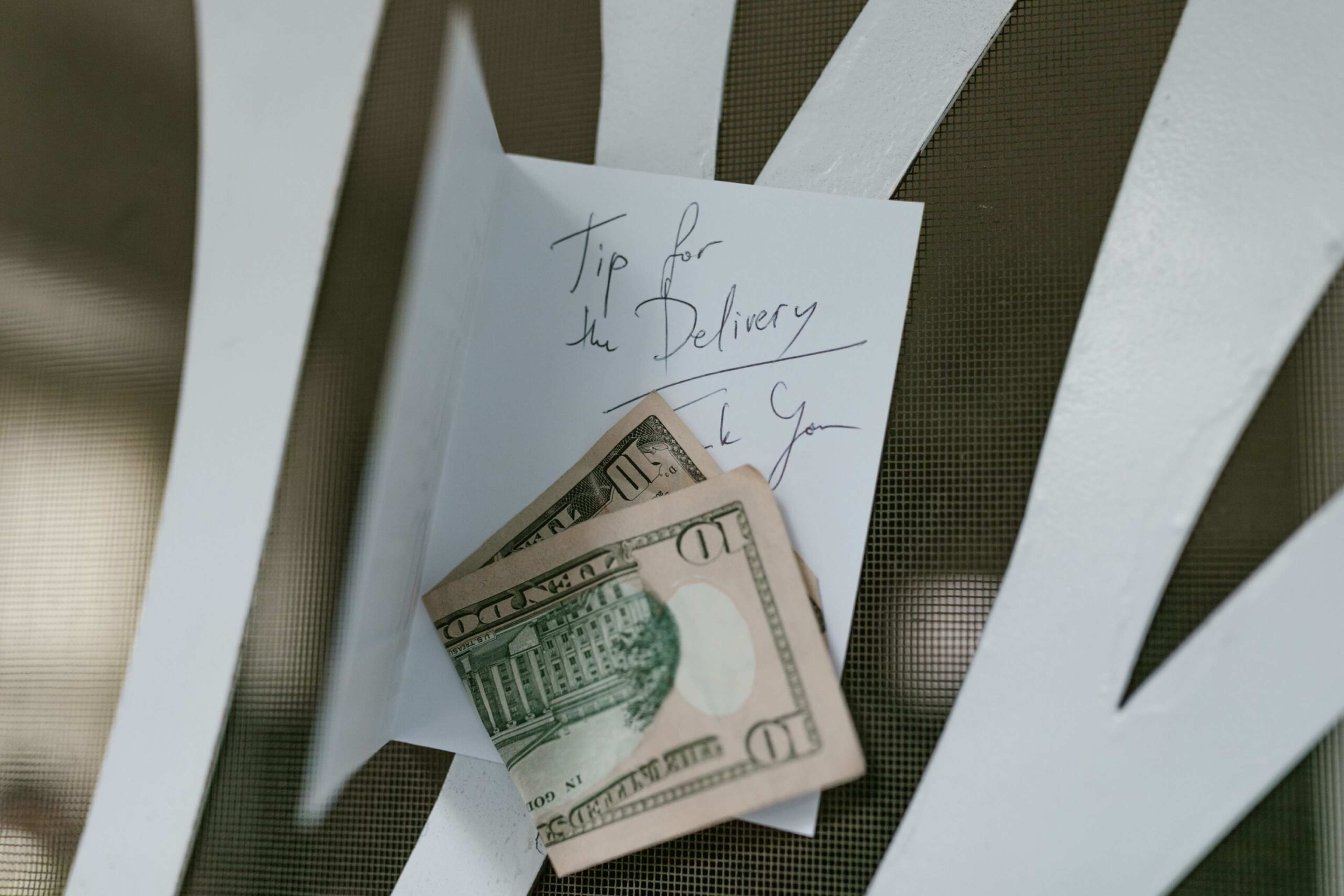
Veterans also keep a few small bills in a pocket for the porters, a standard suggestion in cruise planning guides. It takes five seconds and quietly says you’ve done this before. The habit at #14 happens weeks before anyone gets near the port.
#14 – They Grabbed the Earliest Boarding Slot Weeks Ago
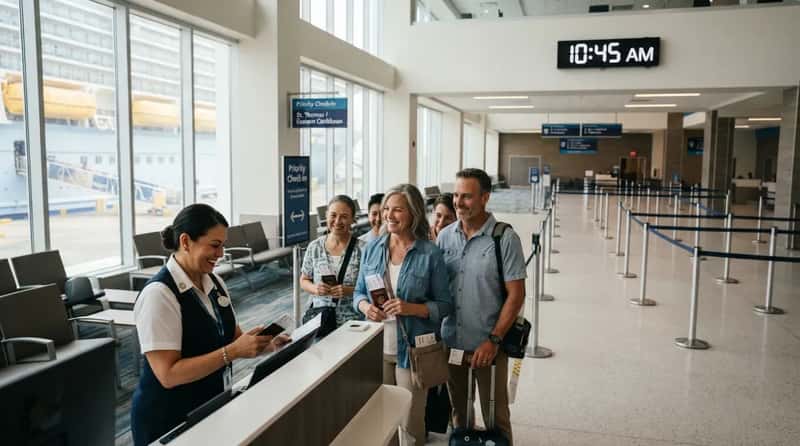
Experienced cruisers treat online check-in like concert tickets. They do it the moment it opens and grab the earliest arrival window on offer. One veteran blogger prefers the early slots, around 10:30 to 11:30 am.
Check-in is also when they double-check passport details, while there’s still time to fix a typo. The earlier you’re in line, the less of any ripple delay you absorb. Still, some veterans argue the exact opposite, and that’s the twist at #13.
#13 – They Refuse to Show Up Hours Early (Yes, Really)
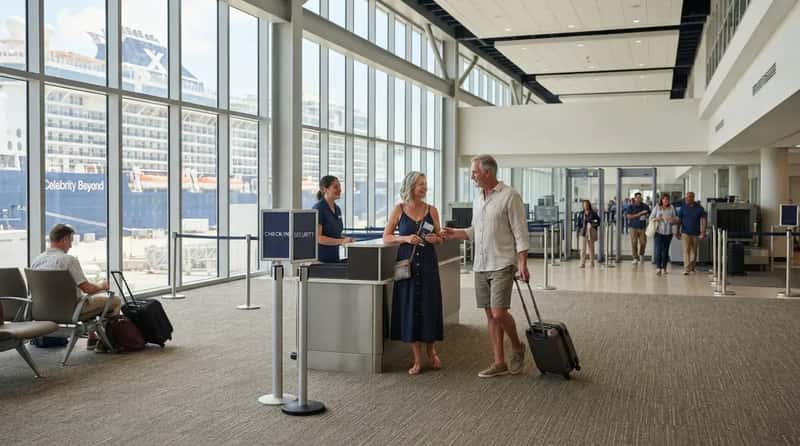
Here’s a hot take: arriving at the pier at dawn is the rookie move. When a line assigns staggered boarding times, showing up early just means waiting around. One cruiser described being stuck in a hot terminal for ages because of it. Veterans stick to the window they were given.
Quick Compare
- Earliest slot (about 10:30 to 11:30 am): Less backlog, and you’re aboard before the crowds.
- Midday (noon to 1 PM): One checklist calls it the sweet spot, just after the late-morning rush.
- Around 2 PM: The same checklist flags this as another busy wave.
- Arriving hours before your slot: Mostly just extra time standing in the terminal.
Some even aim for the middle of the day. One checklist says the 11 AM rush and the 2 PM wave are busiest, and that noon to 1 PM is often the sweet spot. Others swear nothing beats the earliest slot, which makes this one of the great cruise debates. The habit at #12 is the one nobody argues about.
#12 – They Flew In the Day Before and Never Look Back

Ask a frequent cruiser about their worst travel story and it usually involves a flight on sailing day. Veterans won’t take that gamble. One guide calls same-day flying really risky, which is why many experienced cruisers arrive a day early.
The reason is brutal: if your flight is cancelled, the ship does not wait.
There’s an upside, too. Cruise-line writers suggest adding a hotel night before the ship, so you can enjoy the local scene and sleep off jet lag. You board rested instead of frazzled. And the next habit starts before the car even leaves the hotel.
#11 – They Eat Breakfast Before the Terminal, Not After

Boarding is a long, slow shuffle through lines, and hunger makes everyone short-tempered. Veterans arrive fed. One cruise blogger puts it plainly: don’t arrive hungry to the cruise terminal on embarkation day.
The payoff is patience. When the line stalls, a full stomach is the difference between smiling through it and snapping at a terminal agent. It’s a small thing, but you’ll notice who has it figured out. Next is the one task veterans never leave until later, at #10.
#10 – The Safety Drill Is Done Before Their Shoes Come Off
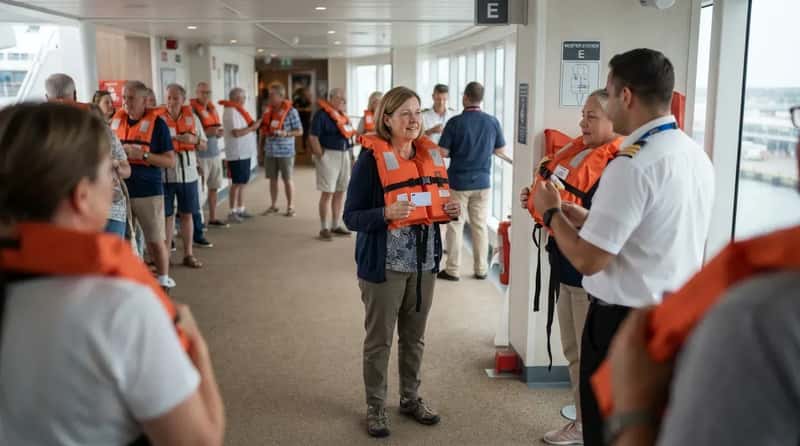
Veterans know the muster drill is the first checkbox of the trip. Many lines now use a two-part version. You watch the safety video in the app or on the stateroom TV, then check in at your muster station for a short life jacket demo.
Skipping it has consequences on some lines. Carnival cruisers report that missing it flags your Sail & Sign card and can delay access to drinks, shows, or even dinner. Veterans do it right away, because it takes five minutes and saves them from being tracked down over the loudspeaker. The next habit may start a family feud at #9.
#9 – They Walk Right Past the Buffet Stampede
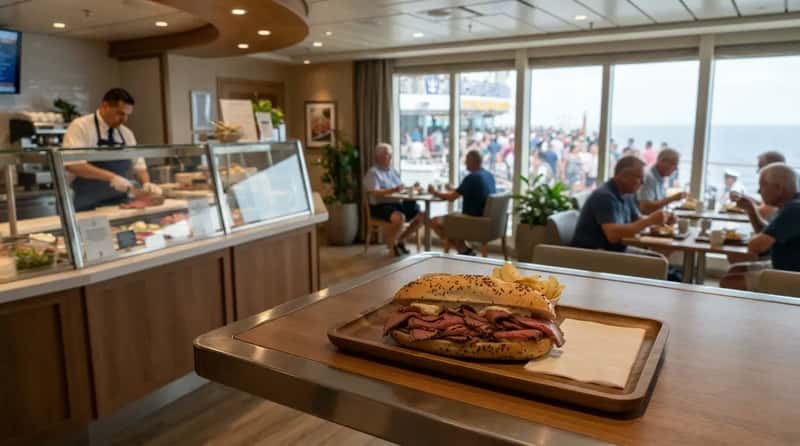
The buffet is the most obvious spot on the ship, and that’s exactly the problem. Boarding runs from noon well into the afternoon, many people arrive hungry, and crew often point them straight to the buffet. One cruiser’s advice was blunt: avoid it at all costs on day one, because it’s a madhouse.
Veterans head for the main dining room, a poolside grill, or a venue like Royal Caribbean’s Park Cafe, where the roast beef sandwiches are an embarkation day rite of passage. Some simply eat a big brunch before boarding and skip the scramble altogether. What they do about their luggage might surprise you at #8.
#8 – They Don’t Stand Guard at the Cabin Door Waiting for Bags
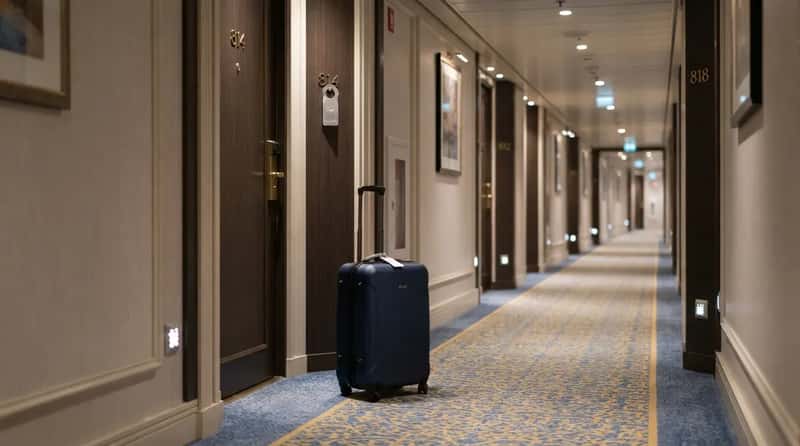
New cruisers hover. They check the hallway every ten minutes and rearrange the room twice. Veterans know the bags arrive when they arrive, often sometime in the afternoon. Staring at the door doesn’t make the suitcase move faster.
So they leave and enjoy the ship. When the bags come, they’ll be sitting outside the cabin door waiting. That’s one less thing to stress over, and the afternoon becomes a vacation instead of a waiting room. The next habit is one most people only learn after something goes wrong, at #7.
#7 – They Inspect the Cabin Like a Rental Car
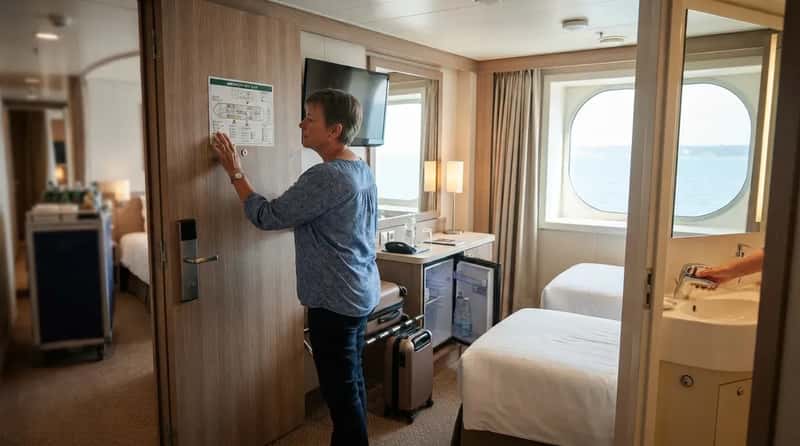
The moment the cabin opens, veterans start testing. One cruise guide advises you to flick the light switches, turn on the faucets, run the shower, flush the toilet, and check that the minibar works. If something is broken, they report it before the ship leaves.
Many also study the ship layout and emergency exit routes posted on the back of the cabin door, a quick check most passengers never do. Waiting is the rookie mistake, since some guides warn against putting off problem reports until day two or three. And what veterans ask the cabin steward to do next might sound strange at #6.
#6 – They Ask the Steward for Odd Things, and Get Them
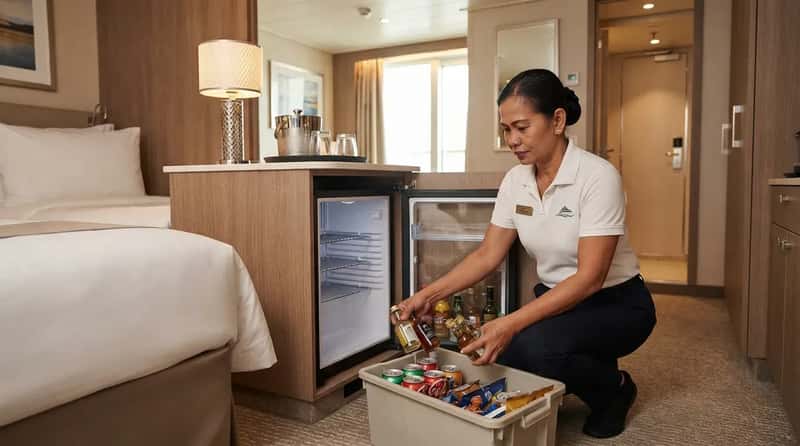
The cabin attendant is the most underused resource on board. Veterans know it, so they make requests early. If you booked twin beds and found a double, just ask your stateroom attendant to switch them. Need more coat hangers or a daily bucket of ice? Simply ask.
At a Glance
- Bed setup: Ask to switch between twin and double configurations.
- Extras: More hangers, towels or pillows are usually just a request away.
- Ice: A daily bucket can be arranged.
- Minibar: Have the contents cleared so the fridge is yours.
The strangest request is clearing the minibar. One cruise writer says veterans ask the steward to remove the overpriced minibar contents right away. The empty fridge then holds fruit cups, milk, juice boxes and your own drinks instead of tiny bottles and $6 sodas. The next habit comes from a very specific trick of the cabin walls at #5.
#5 – They Bring Magnets, Because the Walls Are Secretly Metal
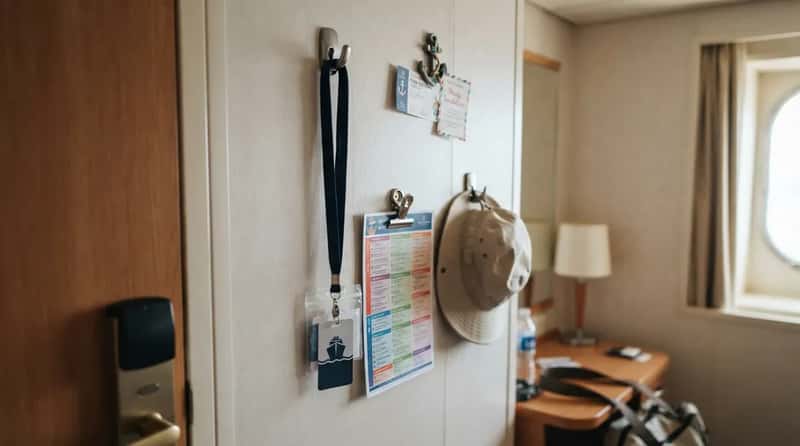
Cruise cabins are small, and veterans know how to stretch them. One cruise veteran’s tip is to use magnets to hang loose paper like excursion tickets and party invitations on the cabin wall. Another checklist confirms that cabin walls are metal. Suddenly, blank steel becomes storage.
It costs a few dollars and weighs almost nothing. Yet it’s the thing first-timers most often wish they’d known about when they’re staring at a pile of paper on the desk. Next is a habit that saves money and quietly annoys the bar staff, at #4.
#4 – The Water Bottle Is Already Full
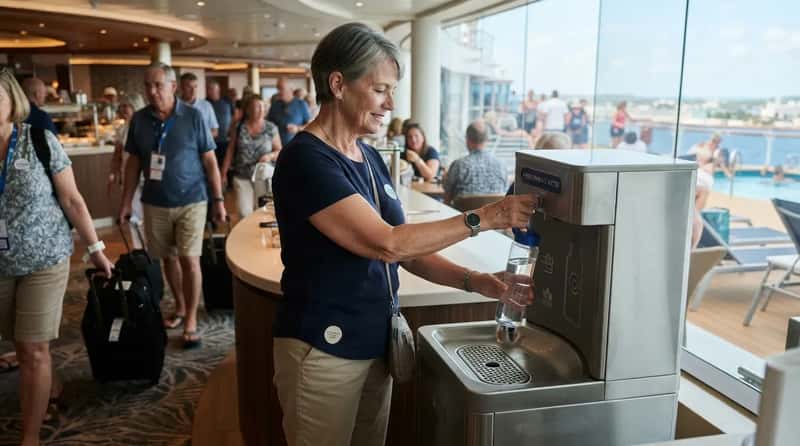
Veterans don’t pay for water. One cruise tip roundup calls a refillable bottle one of the best packing hacks, since you can fill it at the ship’s water stations. The same source says seasoned cruisers know the water is safe to drink and free.
Fast Facts
- Water stations on board let you refill for free.
- A bottle with a built-in filter is a popular upgrade.
- Flavor drops or a lemon slice from the buffet fix the taste.
- A full bottle sidesteps the bottled-water packages sold on board.
Some take it a step further. They bring a bottle with a built-in filter, or add flavor drops or a lemon slice from the buffet. It’s a quiet little rebellion against bottled-water packages. Now for a day-one habit that looks lazy but isn’t, at #3.
#3 – They Wander the Ship With a Map and Learn Where the Quiet Spots Are

Veterans use the first hours to scout. Cruise lines hand out a folding deck map, and experienced guests use it to walk the whole top deck, from the sports deck and walking track to the pools. They’re finding the quiet corners before the crowds do.
It’s also the best time to avoid getting lost. Cruisers admit you’ll probably lose your way once or twice, because cabin corridors tend to look identical. Veterans note nearby cabin numbers so they know they’re on the right deck and side. That brings us to the habit that separates the calm from the frantic at #2.
#2 – They Refuse to Panic-Book Everything on Day One

You’ll see first-timers sprinting between the spa desk, the specialty restaurant and the excursion desk. Veterans watch them with a knowing smile. One cruise line insider describes it as racing around trying to book things with a rising sense of FOMO. The reassuring truth that follows: you will get into the spa and into that specialty restaurant.
Another guide suggests picking the onboard extras you most want over the next couple of days instead of cramming everything into the first. Skipping the first-day rush often leaves you with a better schedule and a lot less stress. The final habit is the one that really gives veterans away, at #1.
#1 – They Put the Phone on Airplane Mode and Head Outside for Sailaway

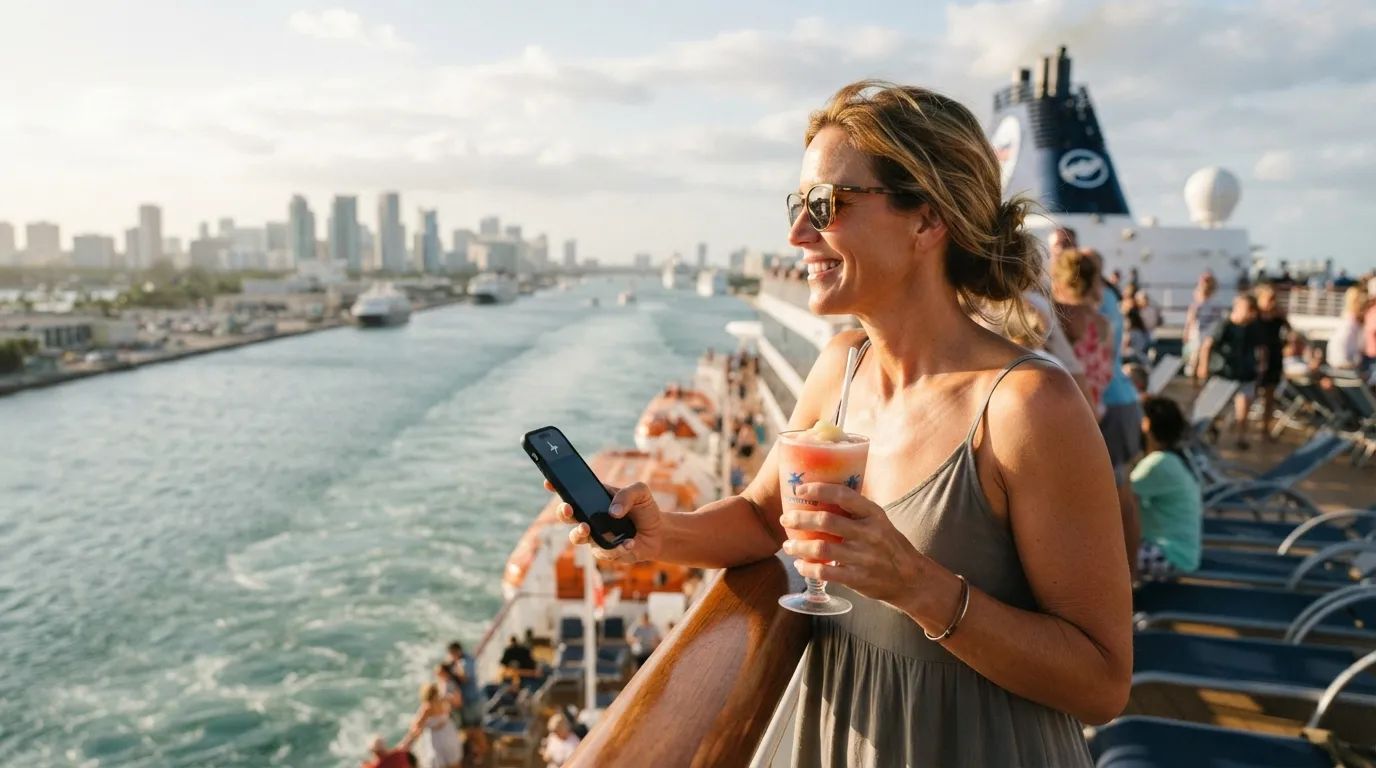
The real veterans treat sailaway as the main event, not a background detail. One guide says to put your phone on airplane mode before the ship leaves the embarkation port. That avoids surprise roaming charges, and it keeps work messages from following you out to sea.
Many pair it with a drink at the pool, since one cruiser says they love a frozen cocktail by the pool before sailaway. They’ve also downloaded shows and audiobooks ahead of time, because ship Wi-Fi is pricey and slow for streaming. The phone is quiet, the ship is moving, and the first real day of vacation has begun.
Look back over all 16 and a pattern shows up: experienced cruisers don’t do more, they do less, and they do it earlier. They keep documents close, finish the safety check first, and let the buffet stampede go by without them.
Most of all, they treat day one as a warm-up instead of a race. By the time the first-timers finally sit down, the veterans have already watched the coastline slide away with a drink in hand.