

Ask any tour guide who’s spent years leading groups through Rome, Kyoto, or the Scottish Highlands, and they’ll tell you something surprising: American travelers over 60 are usually the easiest group to spot in a crowd, and the reason has nothing to do with sneakers or sun hats. It’s a set of small, almost invisible behaviors that guides start clocking within the first ten minutes of any tour.
Some of these habits quietly earn a guide’s respect. Others make them brace themselves the second the group steps off the bus. Here’s what tour leaders actually say about this generation once the microphone is off.
#16 – They Ask the One Question Everyone Else Was Too Embarrassed to Ask
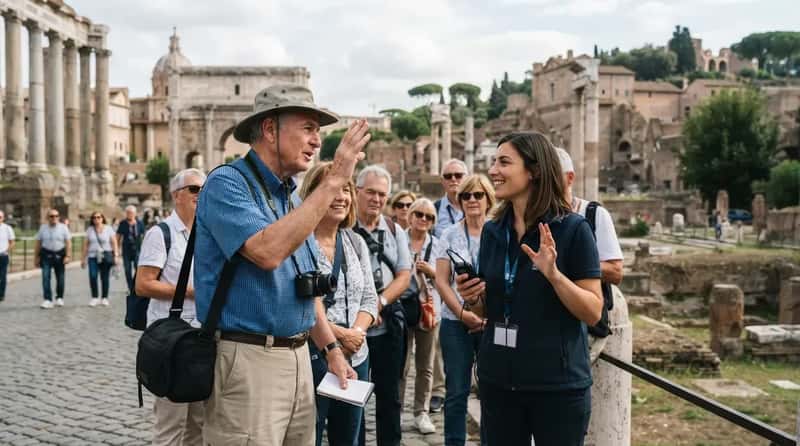
Younger tourists often nod along politely, afraid to look uninformed. Guides say travelers over 60 have zero patience for that kind of pretending, and they’ll raise a hand mid-sentence to ask exactly what’s confusing them, script be damned.
Guides privately love this. It keeps a tour alive and often uncovers details even the guide hadn’t planned to mention. The tradeoff is a schedule that quietly slides twenty minutes behind, because the curiosity never stops at the first answer.
#15 – They Show Up Absurdly Early, Every Single Time

Ask a guide about no-shows or stragglers, and older American travelers almost never come up. The real pattern is the opposite: someone standing at the meeting point fifteen or thirty minutes early, sometimes before the guide has even finished setting up.
This habit traces straight back to decades of workplace punctuality culture, and guides call it one of the most reliable patterns in the business. It occasionally means a little awkward waiting, but most guides will take that trade every time over a group scrambling in late while everyone else stands around.
Fast Facts
- Group tours usually build in a short buffer window before departure, so early arrivals rarely throw off the schedule
- Standing near the front of an early crowd often means better sightlines for photos at popular stops
- Guides say this habit was shaped long before flexible work schedules existed, back when being on time meant something different
#14 – They Still Carry a Paper Itinerary, Folded and Highlighted
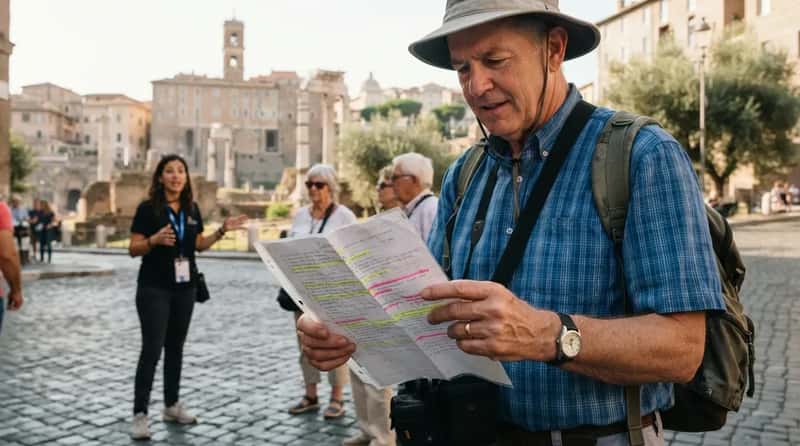
While younger travelers pull up confirmation emails on a phone, guides notice that many travelers over 60 still carry a printed itinerary, often highlighted, sometimes tucked into a plastic sleeve like a keepsake. It looks old-fashioned, but it says a lot about how this generation prepares for a trip.
Guides find it oddly reassuring. When phones die or Wi-Fi vanishes mid-mountain, the group with the paper backup is never the one panicking. It’s a habit born in a pre-smartphone travel era, and in 2026 it still works better than most people expect.
#13 – They Tip Guides in Cash, Quietly, Without Being Asked

Tour guides across Europe and Southeast Asia consistently point to this as a defining trait: American tourists over 60 tend to slip cash tips at the end of a tour, discreetly, with no group announcement and no signup sheet passed around.
It’s a habit shaped by decades of tipping culture that predates apps and QR codes. Guides say it stands in sharp contrast to younger travelers, who increasingly assume a tip is baked into the booking platform’s fee. For many guides, these quiet cash tips still make up a real chunk of their actual take-home pay.
#12 – They Photograph the Menu Before Ordering a Single Bite

Long before food blogging existed, this generation learned to be cautious eaters abroad, and guides notice it instantly at restaurant stops. Instead of ordering quickly, many travelers over 60 photograph the entire menu first, then quietly compare prices and portions before committing.
Guides say this habit slows down group meals but rarely leads to complaints afterward. It reflects a generation that grew up budgeting carefully and reading the fine print, a mindset younger travelers, raised on curated food-app photos, often skip entirely.
#11 – They Learn the Guide’s Name and Never Stop Using It
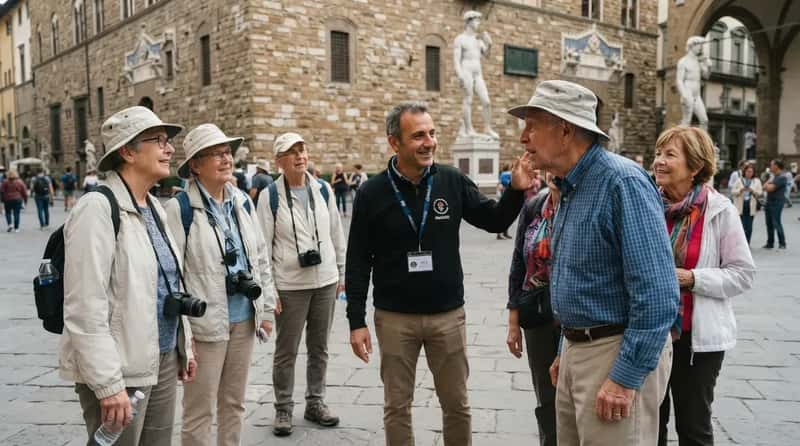
Guides consistently bring this one up with a mix of amusement and warmth: older American tourists make a point of learning and repeating the guide’s first name all day long, far more than any other age group.
It’s rooted in old-school social etiquette, the kind that treats a guide as a person to build rapport with, not just a service to consume. Guides say it changes the entire tone of the day, turning strangers into something closer to acquaintances than customers being herded through a checklist.
#10 – Someone’s Trail Mix Always Appears by Hour Two
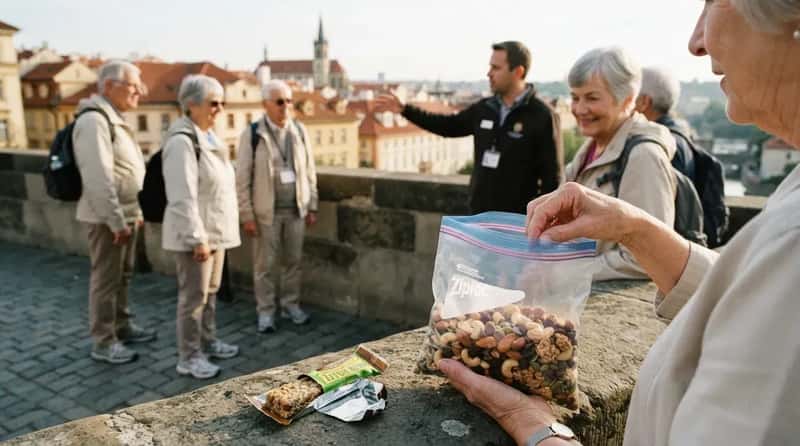
No matter the destination, guides say a granola bar or a bag of trail mix reliably surfaces from someone’s daypack by the second hour of any walking tour. It’s practically a running joke among guides who’ve spent years with older American groups.
This habit isn’t about distrust of local food. It’s practical caution built from years of long road trips and cross-country flights where snacks were simply part of the plan. Guides say it rarely causes issues, and every so often, the guide ends up getting offered a granola bar too.
#9 – The Very First Question Is Always About the Bathroom

It sounds minor, but guides say this is one of the most universal habits they see in travelers over 60: the first question at any new stop, before anything about history or hours, is almost always about restroom locations.
Guides have learned to build the answer into their opening remarks before anyone even asks. It’s less about age and more about hard-earned experience, this generation has learned the tough way that public restrooms are scarce in some countries, and planning ahead avoids a much bigger problem later in the day.
Worth Knowing
- Many European public restrooms charge a small fee or require exact coins to enter
- Some historic sites and old-town squares have no public restroom on-site at all
- Cafés and train stations are usually a traveler’s most reliable backup option abroad
- Guides who mention restroom locations upfront often get fewer interruptions later in the walk
#8 – They Dress for a Storm on a Cloudless, 85-Degree Day
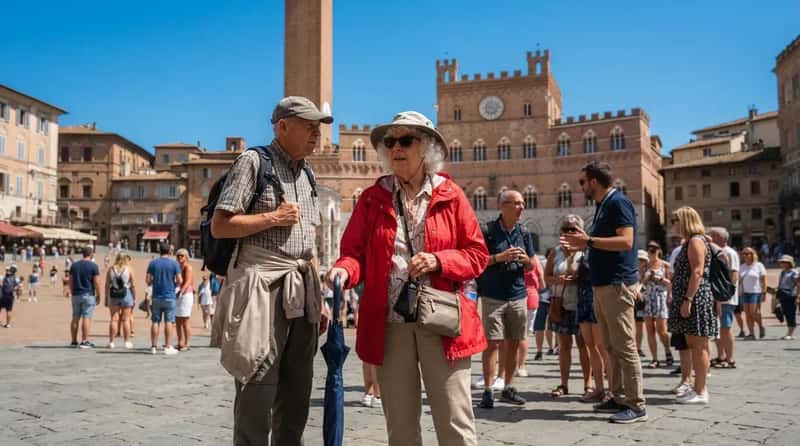
Guides in warm-weather destinations often notice the same thing: someone in the group is wearing a rain jacket, carrying a folded sweater, and holding an umbrella under a perfectly blue sky.
This isn’t indecision, it’s caution learned across decades of unpredictable travel before smartphone weather apps existed. Guides say it can look excessive, but it also means these travelers are rarely the ones caught off guard when a real storm rolls through later in the trip.
#7 – They Compare the City to a Version of It Twenty Years Gone

This is one guides mention with a laugh: older travelers frequently reference a version of the destination from twenty, thirty, or fifty years earlier, often naming exactly what’s changed on that very street.
Some younger travelers find it repetitive, but guides say it’s actually valuable. These comparisons often surface real history, like how a neighborhood transformed after a specific event, that guides can weave back into the tour. It’s living memory, not just nostalgia, and plenty of guides admit they’ve learned obscure local history this exact way.
#6 – They Refuse to Touch a Selfie Stick, Even Surrounded by Them
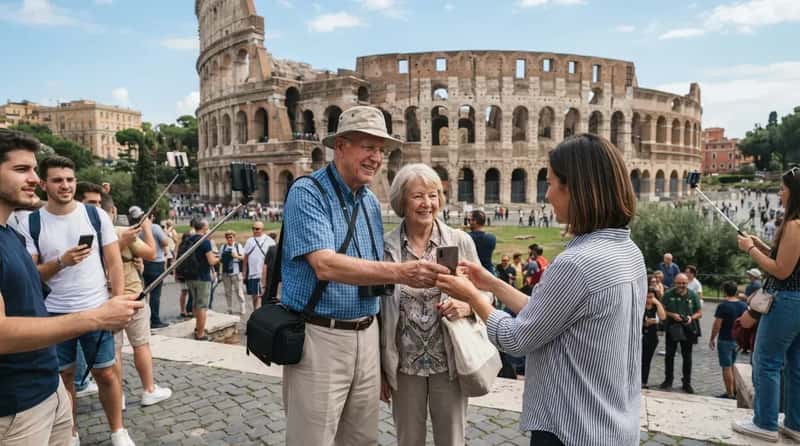
Guides in heavily touristed spots like Rome’s Colosseum or Paris’s Trocadéro often point out a generational divide: selfie sticks are everywhere, except in the hands of travelers over 60.
Instead, this group tends to ask a stranger, or the guide, to snap the photo the old-fashioned way. Guides say it’s a small but telling habit, one that leads to more genuine, less staged photos, and occasionally to unplanned conversations with strangers who end up lending a hand.
#5 – They’re the Ones Who Quietly Tear Up at the Memorial

This is one of the payoffs guides bring up most often, completely unprompted: travelers over 60 are far more likely to visibly tear up at war memorials, cathedrals, or sites tied to major historical events.
Guides trace this to lived proximity. Many in this age group grew up with parents or grandparents who directly lived through events like World War II, which gives certain sites a personal weight younger travelers simply don’t carry. Guides say these are often the most memorable moments of an entire season, not the funny stories, but the quiet, human ones.
You can’t teach a tourist to cry at the right memorial. Either their grandfather was there, or he wasn’t.
A European tour guide, describing why older American groups react differently at historical sites
#4 – They Complain Least in Person, Then Write the Longest Reviews

Here’s a habit that surprises newer guides: older American tourists rarely voice complaints out loud during a tour, even when something goes sideways, like a delayed train or a closed attraction.
But guides say that silence isn’t satisfaction. These travelers tend to save detailed, specific feedback for a written review after the trip, often citing the exact minute things went wrong. Experienced guides have learned the hard way: a smiling group in the moment can still leave a pointed, three-paragraph review a week later.
#3 – They Trade Numbers With Strangers and Actually Call Them

Guides on multi-day tours consistently notice this: travelers over 60 are far more likely to exchange contact information with strangers from the same group and actually follow up afterward, sometimes planning entire future trips together.
This stands in sharp contrast to younger travelers, who guides say tend to keep group interactions friendly but surface-level. It’s one of the more heartwarming patterns in the industry, and several guides recall watching the same friend group rebook trips together years later, all started by a random seat assignment on a tour bus.
Why It Stands Out
- Multi-day tours create shared meals and long bus rides that build rapport faster than a single day trip
- These connections often outlast the vacation itself, leading to reunion trips years later
- Guides say it’s one of the clearest signs of a generation raised on face-to-face community building over app-based networking
#2 – They Ask the Guide Where to Eat, Then Skip the Reviews Entirely

In an era dominated by star ratings, guides say this habit stands out sharply: travelers over 60 are far more likely to ask “where would you actually eat” and then go exactly where the guide points, skipping the review-checking altogether.
Guides say it creates a level of trust that’s getting rarer with younger travelers, who often cross-check every suggestion against an app before committing. It also means guides feel more personally responsible for these recommendations, since there’s no algorithm left to blame if a meal falls flat.
#1 – They Remember to Tip the Bus Driver, Not Just the Guide

Saved for last because it’s the one nearly every guide brings up as the ultimate marker of this generation: American tourists over 60 are consistently the ones who remember to tip the bus driver separately, not just the guide standing at the front of the group.
It’s a small gesture that guides say speaks volumes about how this generation views a tour, as a team effort, not a one-person show. Bus drivers, who rarely get thanked directly by passengers, often mention it as one of the few genuinely rewarding parts of working with older American groups.
At a Glance
- Guide tips are usually handled directly, in cash, at the end of a tour
- Bus driver tips are separate and easy to overlook, since drivers rarely interact with the group directly
- Cash remains the preferred method for both, especially outside the U.S. where tipping apps aren’t standard
None of these habits are flaws. If anything, guides describe them as quiet signs of a generation that travels with more patience, more gratitude, and more attention to the people actually making the trip happen.
The next time you’re on a tour and notice someone slipping the driver an extra tip or wiping their eyes at a memorial, you’ll know exactly what the guide standing nearby is quietly thinking.
Which one of these sounds exactly like your last trip? Tell us in the comments.