Ask a 70-year-old how they plan a 2,000-mile trip and they won’t mention an app. They’ll mention a folded map with coffee stains, a CB radio crackling with static, and a full tank of gas they never let drop below half. Younger drivers assume road trips got easier with technology, but retirees who’ve logged hundreds of thousands of highway miles argue something got lost along the way.
These aren’t just quirky old habits. They’re survival skills built during decades when a wrong turn could strand you for hours with no signal and no app to bail you out. Here’s what lifelong road trippers still swear by, and why plenty of them think today’s drivers are missing something important.
#16 – Never Let the Tank Drop Below Half, No Matter What
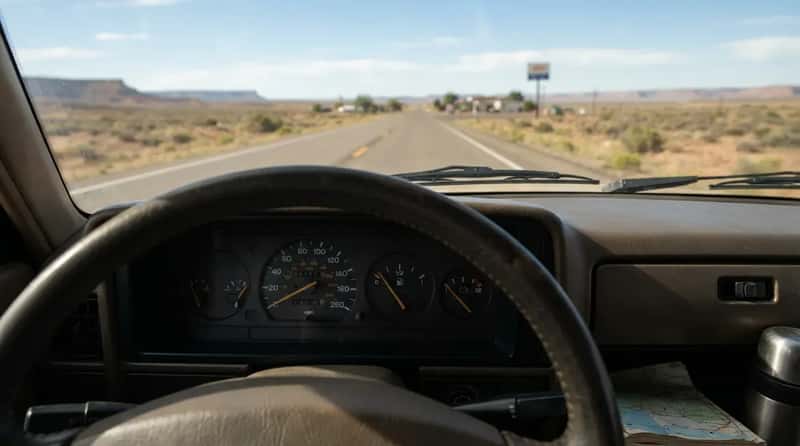
For retired road trippers, this isn’t just caution. It’s a rule with the weight of scripture behind it. Growing up before 24-hour gas stations and reliable fuel gauges, many drivers learned the hard way that a “quarter tank” reading could mean anything.
The habit stuck because rural stretches of highway can still run 60-plus miles without a single station open. Retirees treat the half-tank mark as their real “empty,” filling up long before a younger driver would even think about it. Kids raised on gas-station finder apps often push it to fumes, trusting the phone to always find them a station in time.
#15 – Folding the AAA TripTik Like It’s a Sacred Document
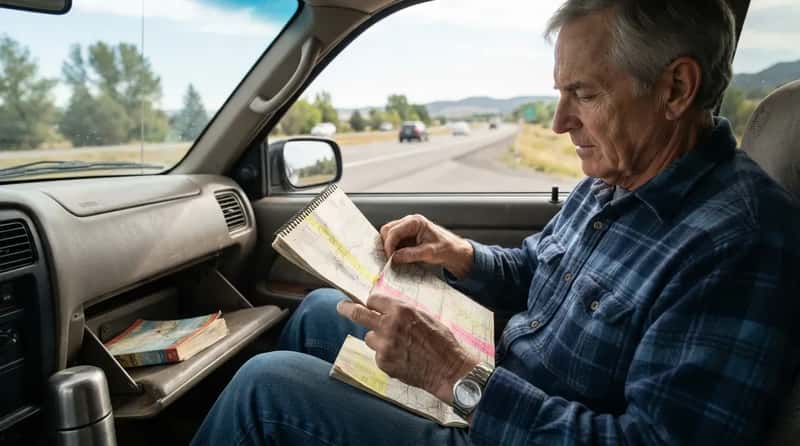
Before GPS, there was the TripTik, and older drivers still talk about it like a lost family heirloom. An AAA agent would sit across the counter and personally trace your route in highlighter through a custom booklet made just for your trip. The first modern TripTiks were spiral-bound notebooks filled with maps, made in 1937, with mass production starting the following year.
An agent would walk the driver through the whole route before they ever left the office. That personal check-in is what retirees miss most: a human being confirming your path, not an algorithm rerouting you mid-drive. Most people don’t realize AAA still offers this service today, though almost nobody asks for it anymore.
Fast Facts
- The TripTik concept traces back to 1937, with mass production of the booklets rolling out the following year.
- Agents hand-highlighted routes in booklets built for one family’s trip, not a generic printout.
- AAA still offers custom trip planning today, even though most members never think to ask for it.
- Unlike GPS, a TripTik never once rerouted a driver based on a dropped signal.
#14 – Keeping a CB Radio On for “Eyes and Ears” Down the Highway
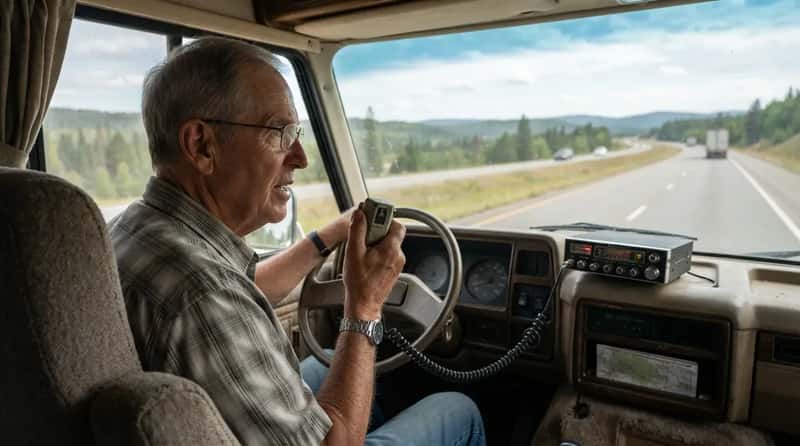
Long before crowdsourced traffic apps, truckers and road trippers relied on a shared radio frequency to warn each other about hazards ahead. Retired drivers who grew up in that era still keep a CB in the glovebox, even if it rarely crackles to life anymore.
CB radios are still used today, just far less than they once were, with less than a third of truckers still regularly using one. Still, the ritual persists among old-school travelers who trust a human voice over a satellite signal. Turns out CB radios were essentially social media before social media existed, a rolling community of strangers looking out for each other.
#13 – Trusting the Glovebox Atlas Over Any GPS
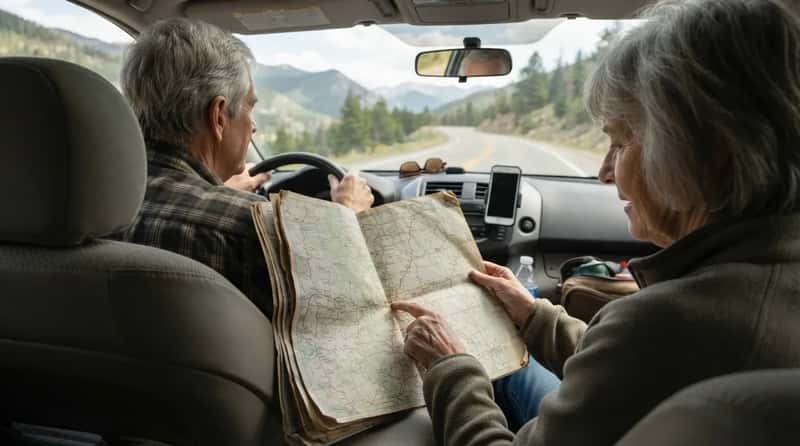
Retired road trippers keep a battered paper atlas in the car at all times, and they’ll tell you exactly why: it never loses signal. GPS apps fail in mountain passes, dead zones, and heavy snow, but a map never needs a satellite to work.
Many older drivers have a personal story about a GPS leading them astray at the worst possible moment, down a closed road, into a field, or the wrong direction entirely. The paper atlas has never once “recalculated” them into a ditch. Younger drivers scoff at the idea right up until they’re the ones stuck with a dead phone battery on an empty stretch of highway.
#12 – Pulling Over Completely, Not Just Slowing Down
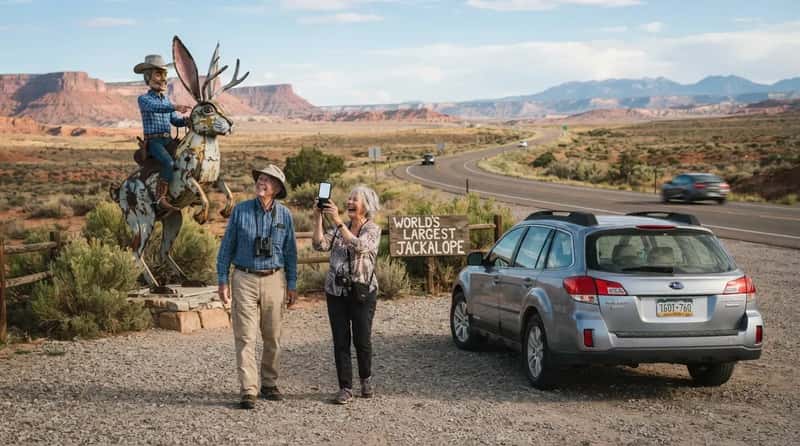
When something looks interesting, a roadside stand, a scenic overlook, a weird statue, retired travelers actually stop. They pull off, park, and get out of the car. Younger drivers, glued to a schedule and a navigation ETA, tend to slow down, snap a photo through the windshield, and keep driving.
This isn’t nostalgia for its own sake. Older road trippers argue the whole point of driving instead of flying is the freedom to stop whenever something catches your eye. Many retirees say the best parts of any trip were never on the itinerary at all, and skipping those stops defeats the entire purpose of the drive.
#11 – A Full Walkaround Before Ever Turning the Key
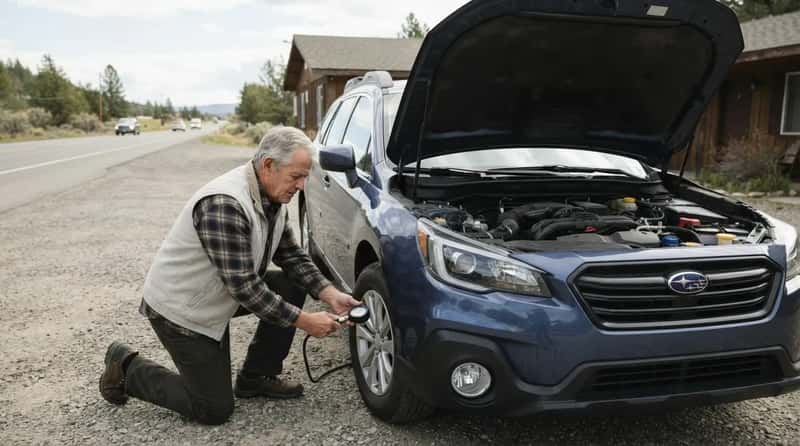
Long before smart cars started warning drivers about tire pressure and fluid levels, road trippers did it themselves, every single morning of a trip. Oil, tires, belts, wipers, lights: checked by hand, not by a dashboard icon.
This ritual comes from an era when breakdowns weren’t a phone call away from roadside help. A five-minute walkaround could mean the difference between a smooth day and being stranded for hours on a highway shoulder. Many retirees still do this out of pure habit, even in cars packed with sensors that already did the job for them.
Worth Knowing
- Tires, oil, belts, wipers, and headlights all get a hands-on check before the key ever turns.
- The ritual predates dashboard warning lights and onboard diagnostics by decades.
- A five-minute look-over was often the only early-warning system on empty stretches of highway.
- Plenty of retirees still walk the car every morning, sensors or not.
#10 – Stashing Cash for Tolls and Emergencies
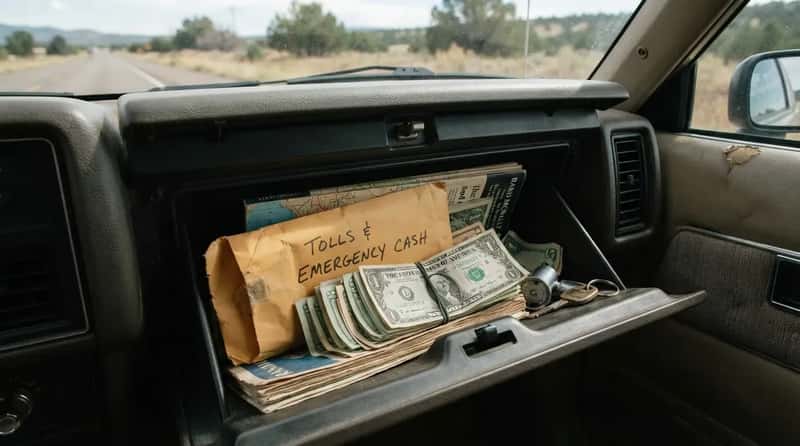
Before EZ-Pass and tap-to-pay, every road trip started with a stop at the bank. Older drivers still keep a visor envelope or glovebox stash of small bills, just in case, for tolls, for a diner that’s cash-only, for a habit that outlived the payphone it was built for.
It’s a small ritual with a big psychological payoff: knowing you’re never fully dependent on a card reader working. Retirees say cash has never once glitched, frozen, or required an app update. Younger travelers, raised on digital wallets, often find this habit almost quaint, until a rural gas station’s card reader goes dark.
#9 – The Two-Finger Wave to Truckers and Fellow Drivers

Retired road trippers notice something younger drivers rarely do: other people on the highway. A lifted hand off the wheel, a headlight flash to say thank you, a nod to a trucker who let you merge, small gestures that used to be basic highway etiquette.
The road used to feel like a community. Now it just feels like traffic.
Common sentiment among longtime road trippers
This tradition traces back to the CB era, when strangers on the road actually talked to each other during long, isolated stretches of highway. Many older drivers say this simple courtesy has almost disappeared among distracted, screen-focused younger drivers. Some retirees call it the biggest loss of highway culture, full stop.
#8 – Never Driving After Dark on Unfamiliar Highways

Call it the sundown rule: if a retired road tripper doesn’t know the road, they don’t drive it at night. Deer, blind curves, unlit rural stretches, all reasons this generation built their entire itinerary around arriving somewhere before dark.
Younger drivers, confident in headlights and navigation apps, often push through the night to save time or a hotel cost. Retirees argue this is exactly backwards. Most nighttime wildlife collisions happen on roads drivers don’t know well, and no app can predict a deer stepping into the headlights at the last second.
At a Glance
- About 76% of deer-vehicle collisions happen after dark, according to insurance industry data.
- November alone brings more collision claims than any other month of the year.
- The three autumn months combined account for nearly 40% of all animal-related crashes annually.
- Collision rates spike sharply in the hours right after sunset, exactly when younger drivers push through unfamiliar roads.
#7 – Calling the Motel Ahead Instead of Booking Through an App
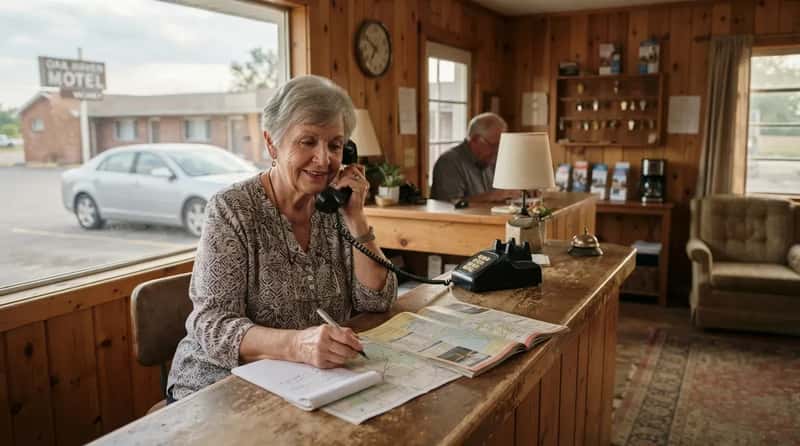
Retired travelers still pick up the phone and call a motel directly, even when a booking app sits right there on their screen. It’s not about avoiding technology, it’s about getting a real person on the line who can tell you if the pool’s actually open or if there’s construction next door.
This habit also comes from decades of learning that photos online don’t always match reality. A five-minute phone call has saved plenty of retirees from a bait-and-switch room. Younger travelers trust the reviews and the app; older ones trust the voice on the other end of the line.
#6 – The State-Line Photo Stop
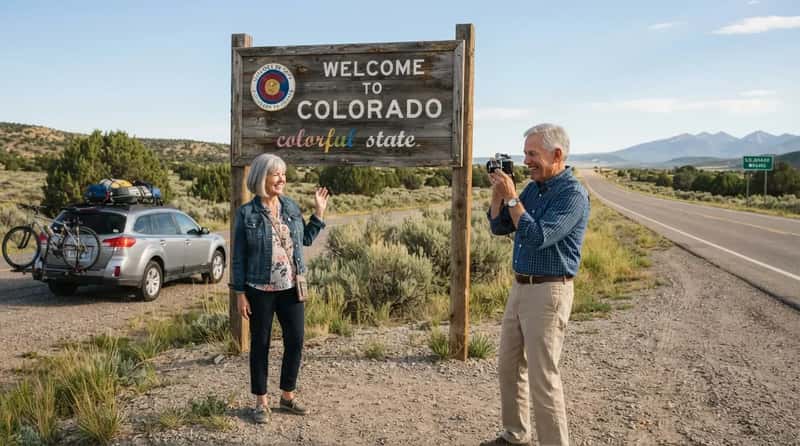
Nearly every retired road tripper has a photo, or dozens, standing next to a “Welcome to” sign. It’s a tradition that predates Instagram by fifty years, born from the simple thrill of crossing into new territory.
Younger travelers often skip this entirely, treating state lines as just another mile marker on the GPS. Older drivers see it differently: each sign is proof of progress on a trip that technology has otherwise made feel routine. It’s a small ritual, but retirees say it’s one of the few that never gets old, no matter how many times they’ve done it.
#5 – A Cooler and a Picnic Table Instead of a Drive-Thru
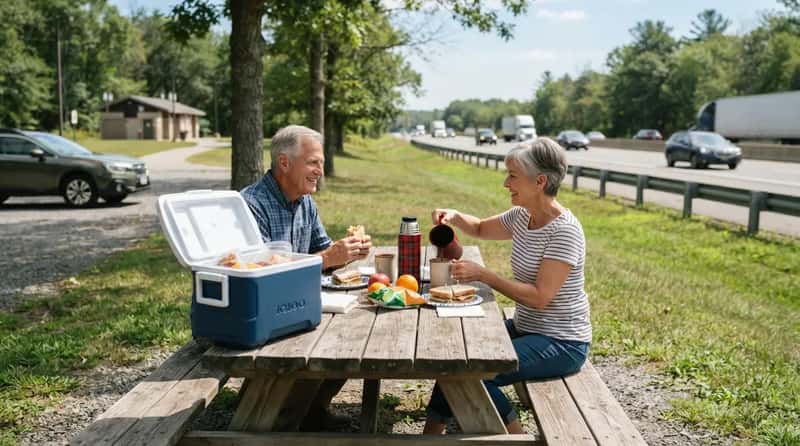
Retired road trippers pack a cooler like it’s part of the car itself: sandwiches, fruit, a thermos of coffee, and a plan to actually stop at a rest area picnic table instead of eating from a paper bag at 70 miles an hour.
This habit isn’t just about saving money, though it does. It’s about treating a meal as a genuine break instead of another task to rush through. Many retirees insist a real sit-down break, even for ten minutes, changes the entire feel of a long driving day.
#4 – License Plate Games and Zero Screens for the Kids
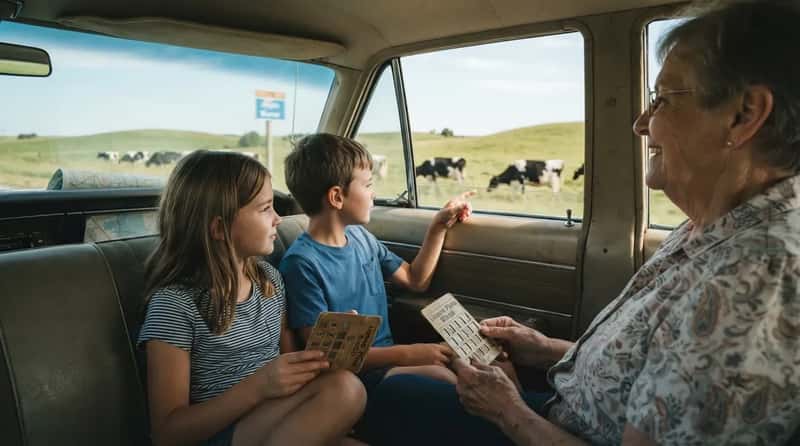
Before tablets and in-car entertainment systems, road trip boredom was solved with games: license plate bingo, counting cows, the alphabet game using highway signs. Retired parents and grandparents still bring these out, often to the confusion of grandchildren handed an iPad instead.
The appeal wasn’t just entertainment, it forced everyone in the car to actually look out the window and pay attention to the drive. Many retirees openly argue that screens have made kids miss the entire point of a road trip: watching the country change outside the glass. It’s one of the more pointed opinions this generation holds about modern parenting on the road.
#3 – Staying in the Right Lane, Letting Faster Traffic Pass
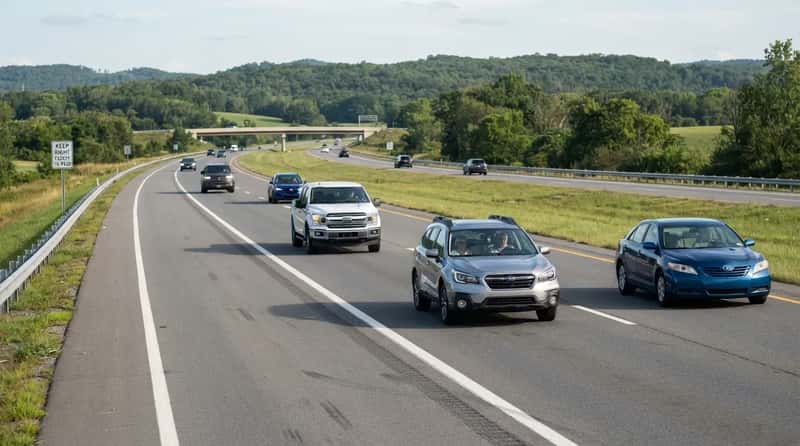
Retired road trippers treat the left lane like a passing lane only, never a cruising lane. It’s a habit rooted in old-fashioned highway etiquette that many younger drivers never learned or simply ignore.
This isn’t just politeness. Older drivers say camping in the left lane creates more accidents and road rage than almost any other habit on the interstate. Many retirees consider this the single most disrespected rule of the modern highway, and they’re not shy about saying so.
Quick Compare
- Old-school rule: the left lane is for passing only, then move back right.
- Modern reality: most states legally require slower traffic to stay right, though enforcement is inconsistent.
- Some states treat lingering in the left lane as a ticketable offense with real fines attached.
- A few states, like Alaska, don’t require slower traffic to move over at all.
#2 – A Full Stop Every Two Hours, Whether You Need It or Not
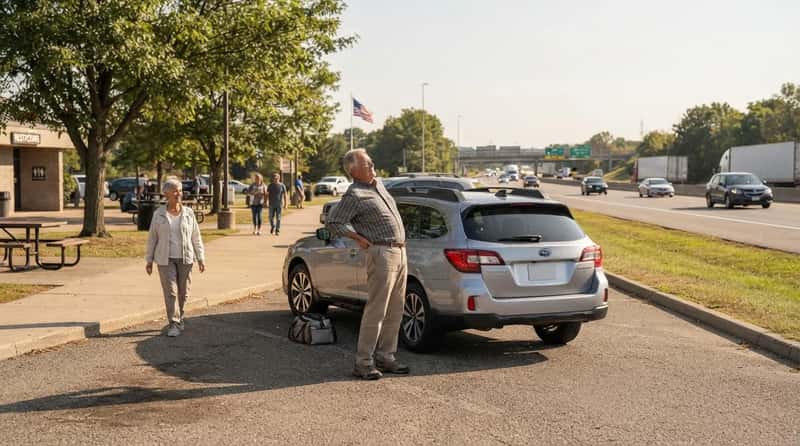
Retired travelers don’t wait until they’re tired to take a break. Every couple of hours, like clockwork, they pull off for a stretch, a bathroom break, and a few minutes out of the driver’s seat, even if they feel completely fine.
This ritual comes from decades of understanding that fatigue creeps up long before it feels obvious. Older drivers treat the two-hour stop as non-negotiable, not optional, a rule that has kept them safe across hundreds of thousands of highway miles. Younger drivers, chasing arrival times, often push through three or four hours without stopping at all.
#1 – Calling Home Every Single Night, No Matter How Late

Of every ritual on this list, retirees say this is the one that mattered most. Whether it was a payphone at a gas station or a motel room landline, checking in with family back home was a nightly non-negotiable, no matter how tired or how late the hour.
It wasn’t about safety alone, it was about connection, a way of keeping the people back home part of the trip even from hundreds of miles away. Many retirees say this simple nightly call is the one habit they wish younger travelers hadn’t replaced with a quick text. A text can wait. A voice on the other end of the line, they argue, never really can.
What ties every one of these habits together isn’t stubbornness, it’s a generation that learned to treat the road itself as part of the destination, not just the distance between two points. Full tanks, paper maps, real phone calls, and actual stops at actual picnic tables all point to the same idea: slowing down was never the mistake younger drivers assume it was. Retired road trippers aren’t clinging to the past for nostalgia’s sake. They’re pointing out, quietly but firmly, what got lost when convenience took over the wheel.