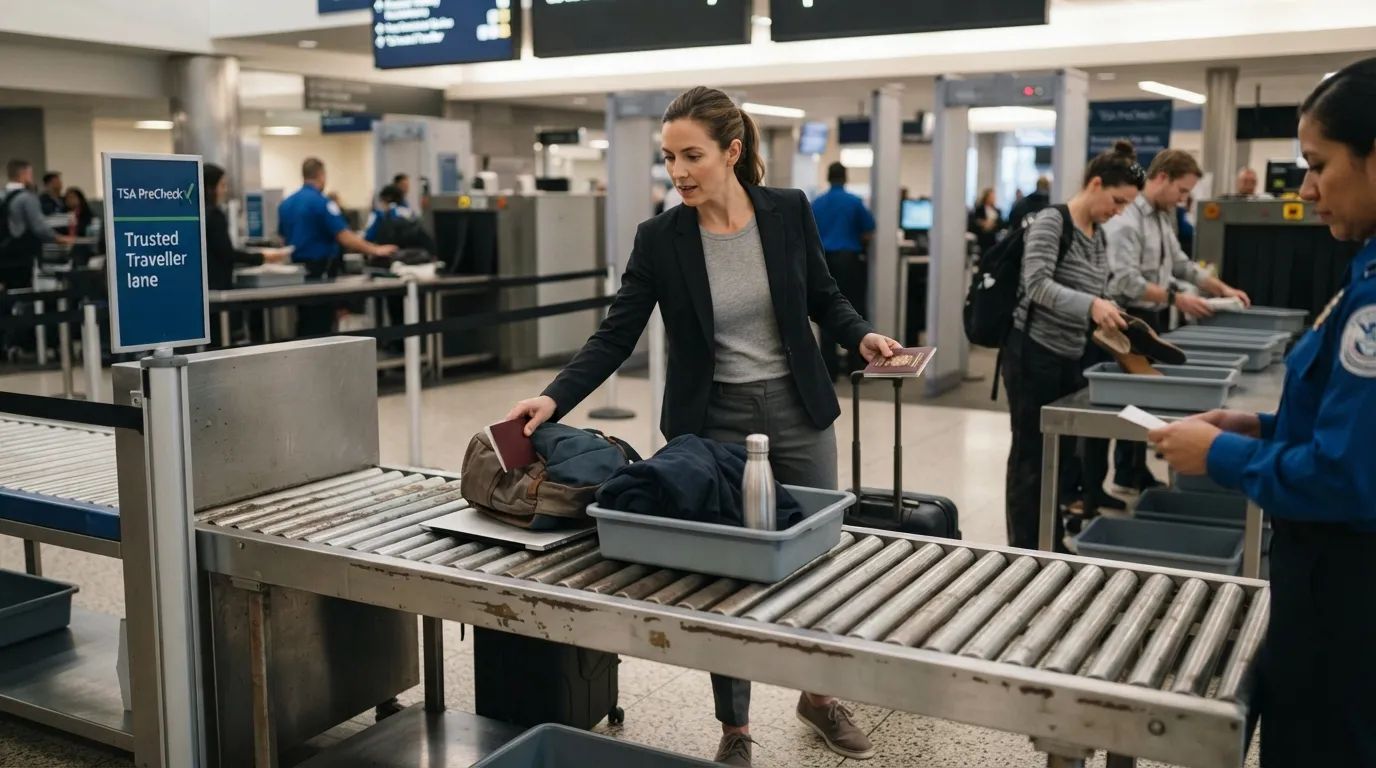
Most travellers treat a layover like a sentence to serve. Experienced flyers treat it like a skill they’ve already mastered.
The gap between a miserable three-hour wait and a genuinely smooth one isn’t luck. It comes down to a short list of habits that seasoned flyers refuse to skip, no matter how tired or rushed they are.
Most people assume they’re already doing layovers right. They’re not – and the habits below start with the one almost everyone gets wrong first.
#16 – They Split Their Layover Into Three Blocks, Not One
Most people look at a four-hour layover and see one big open window. Experienced travellers see three separate ones.
The first block covers clearing the terminal, confirming the gate, and getting oriented. The middle block is for rest, food, or exploring – and the final block is a strict return buffer.
The most common layover regret is cutting that return buffer too short. Burn it browsing duty-free and you’re suddenly sprinting to the gate.
Experienced flyers treat those last 60 to 90 minutes as sacred. Nothing – not a sale, not a snack – gets to eat into it.
But that’s nothing compared to the visa trap waiting in #15…
#15 – They Check Visa Rules Before They Even Book the Flight
Here’s what shocks first-timers: you can be denied boarding over a layover in a country you never planned to enter.
Some international layovers require a transit visa even if you never leave the airport. Skip that check and you’re risking denied boarding, a missed connection, or worse.
In 2025, Spain introduced a mandatory airport transit visa for certain nationalities – even for passengers going plane-to-plane with no plans to step outside security. Experienced travellers verify these rules the moment they spot a connecting itinerary, not at the gate.
But that’s nothing compared to the connection-time trap covered in #14…
#14 – They Never Trust the Minimum Connection Time at Face Value
Airlines publish Minimum Connection Times as a floor, not a promise. Experienced travellers build in a wide buffer on top.
The rule of thumb: an hour for a same-terminal domestic connection, two and a half to three hours for an international one with immigration and a bag recheck.
Mega-hub airports are where this habit really pays off. Plan 3+ hours at giants like Heathrow, CDG, or Dubai, no matter what the ticket says is technically possible.
Immigration at a busy U.S. airport can take five minutes with Global Entry – or ninety without it. Seasoned travellers plan for the worst case, not the average one.
But that’s nothing compared to what experienced flyers do the second they land – revealed in #13…
#13 – They Walk the Terminal Immediately After Landing
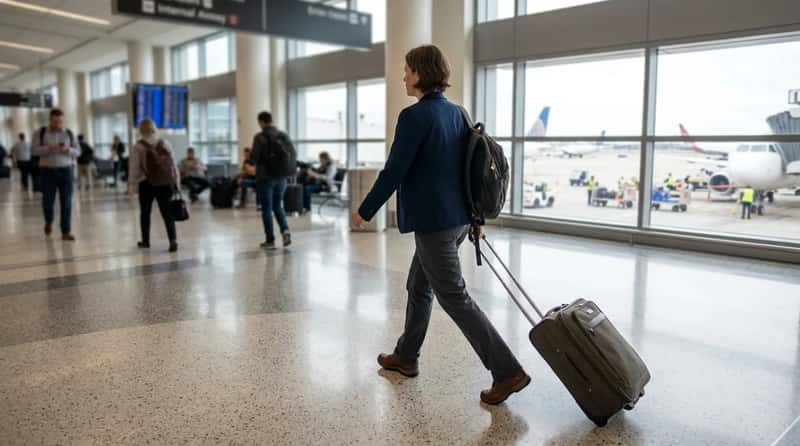
The instinct after a long flight is to collapse into the nearest seat. Experienced travellers do the opposite.
They walk first, deliberately, right off the plane. Deep vein thrombosis is a genuine risk after hours of barely moving your legs, and a lap around the terminal is the fastest way to reset your circulation.
DVT isn’t a rare, extreme risk – it’s a recognised concern on any flight over four hours. Walking also reveals gate changes, bathrooms, and food options before the seat-bound traveller even notices anything’s changed.
But that’s nothing compared to the document trick in #12…
#12 – They Pre-Load Their Documents Into One Accessible Place
Fumbling for a passport at immigration wastes everyone’s time – including yours. Experienced travellers solve this before they even join the queue.
Everything from their pockets goes into one zippered pouch inside the carry-on. It takes thirty seconds and erases one of the most common, avoidable stressors in the entire airport experience.
A pen is also non-negotiable for frequent international flyers. Some countries still require paper customs forms, and the line for borrowed pens is never short.
Fast Facts
- Passport, boarding passes, and any printed visa or transit paperwork
- One reliable pen for paper customs and immigration forms
- Hotel or onward transport confirmation, saved offline and printed
- Travel insurance policy number, kept somewhere you can find it without Wi-Fi
But that’s nothing compared to how smart travellers handle airport food in #11…
#11 – They Never Buy Food in the First 20 Minutes After Landing
The food right next to your arrival gate is almost always the most expensive and the worst in the terminal. Experienced travellers know this, and they keep walking.
Airports like Singapore Changi, Tokyo Narita, and Amsterdam Schiphol hide genuinely good restaurants deeper in the terminal – ones most transiting passengers never reach.
Buying food right at the arrival gate can cost 40–60% more than the same items found one terminal walk away. Experienced travellers scout their options first, then eat – never buying out of pure hunger the second they land.
But that’s nothing compared to the lounge secret that #10 is about to expose…
#10 – They Know Exactly When a Lounge Is Worth It (and When It Isn’t)
Most people either ignore airport lounges completely or assume they’re only for business class. Both assumptions cost money.
A lounge is a tool, not a luxury – sometimes skipping it is smarter, and sometimes it saves the entire day. Quieter seating, real food, strong Wi-Fi, and even showers change what a bad layover feels like.
The financial case is clearer than most people realise. Each visit typically saves $25–$50 versus buying food and coffee at the gate – use one ten times a year and that’s $250–$500 back in your pocket.
But that’s nothing compared to how they actually get into those lounges – which #9 is about to break down…
#9 – They Use a Travel Credit Card to Unlock Free Lounge Access
Paying a walk-up fee for lounge access is something most experienced travellers stopped doing years ago. The right credit card makes it free.
Priority Pass alone covers lounges in hundreds of cities, and you don’t need to fly a specific airline to use them.
Timing matters, though – especially for Centurion Lounge access. Card members must arrive within five hours of their connecting flight, so landing too early locks you out just as much as landing too late.
Quick Compare
- Priority Pass: (cite index=”20-1″>1,900+ airport lounges and experiences in over 600 cities and 143 countries, regardless of the airline you’re flying
- Centurion Lounge: free with select Amex cards, but layover entry is capped at (cite index=”14-8″>5 hours of the connecting flight
- Airline-specific lounges: usually need a same-day boarding pass on that carrier, with no access outside its own network
But that’s nothing compared to the shower secret that #8 reveals…
#8 – They Shower Mid-Layover, Not Just at the Hotel
Arriving fresh after 14 hours of transit feels like a superpower. It’s also available to almost anyone willing to ask.
A quick question at the airport gym or help desk usually reveals shower facilities, often with rented towels and toiletries included.
Some airports go far beyond a basic rinse. Incheon Terminal 2 has free showers and recliner chairs with no lounge required, and Singapore Changi is famous for rooftop pool access during long layovers.
Freshening up mid-layover resets your alertness – which matters enormously if a meeting or a long drive is waiting at the other end.
But that’s nothing compared to what experienced travellers do with overnight layovers – see #7…
#7 – They Pack a Sleep Kit for Every Overnight Layover
Sleeping in an airport sounds grim. It doesn’t have to be, if you’ve prepared for it.
An eye mask and noise-cancelling earbuds, combined with knowing where the quiet zones are, is the difference between four hours of real sleep and four hours of misery under fluorescent lights.
Not every airport stays open 24 hours – a detail that catches out more travellers than you’d expect at smaller hubs. Experienced flyers check overnight facilities before they arrive, including hidden quiet rooms and transit hotels casual travellers walk straight past.
Worth Knowing
- Some international terminals close overnight and reopen before the first departures
- Quiet zones and rest pods are often tucked past security, not near the food court
- In-terminal sleep pods can usually be booked by the hour, not just for a full night
- An eye mask and earbuds pack down to almost nothing but change the whole layover
But that’s nothing compared to the baggage strategy revealed in #6…
#6 – They Understand Exactly What Happens to Their Bags During a Connection
Baggage handling during a layover confuses almost everyone. Experienced travellers have zero ambiguity here.
The single-ticket versus separate-ticket distinction is the variable that matters most. Book one ticket and your bags transfer automatically – book two separate tickets and you’re personally responsible for collecting and rechecking them.
That second scenario can evaporate a tight connection fast, and it sometimes means clearing immigration just to grab your suitcase. Always confirm baggage arrangements with the airline before you fly, not after you land.
But that’s nothing compared to the protection strategy that #5 unlocks…
#5 – They Know Their Rights When a Connection Is Missed
Most travellers have no idea what an airline owes them when a missed connection is the airline’s fault. Experienced travellers know this cold.
If your first flight runs late and causes the misconnection, the airline rebooks you free – and if the delay was within their control, they may owe meals or a hotel too. Weather delays usually don’t qualify; mechanical issues usually do.
Booking both flights on a single ticket is what makes this protection real. A tight connection on one ticket risks your schedule – the same connection split across two tickets risks your wallet.
But that’s nothing compared to the planned adventure habit in #4…
#4 – They Intentionally Book Long Layovers to Explore New Cities
This is the habit that separates the truly experienced from everyone else. A long layover isn’t a delay – it’s a free city visit.
Most travellers have no idea free stopover programmes even exist. Dubai, Doha, Istanbul, Singapore, and Tokyo all offer government-backed tours, complimentary or heavily discounted, to transiting passengers.
The rule experienced flyers live by: if the layover is over five hours and entry clearance allows it, they’re already outside the terminal. A few hours in Changi’s Jewel or a quick ride into central Amsterdam costs almost nothing and gets remembered for years.
Why It Stands Out
- Emirates Dubai Connect: (cite index=”1-5″>covers an automatic 4-star hotel plus meals and the UAE transit visa for layovers between 8 and 24 hours
- Turkish Airlines TourIstanbul: (cite index=”1-7″>hands every eligible passenger a free city tour plus meal for Istanbul layovers between 6 and 24 hours
- Qatar Airways Stopover: (cite index=”8-7″>passengers can book four- and five-star hotels at heavily discounted nightly rates, typically for stays of 12 to 96 hours
- Singapore Airlines Stopover Holidays: (cite index=”2-4″>packages cost from USD 50 per night for a 3-night 4-star bundle including hotel, airport transfers and attraction passes
But that’s nothing compared to the entertainment habit revealed in #3…
#3 – They Pre-Load Entertainment and Work Before Every Trip
Relying on airport Wi-Fi to stream or work is one of the most reliable ways to waste a layover. Even lounge Wi-Fi buckles under dozens of simultaneous users.
Experienced flyers download everything before leaving home – films, podcasts, work files, whatever the trip calls for.
The real secret is matching content to layover length. A 90-minute connection gets a podcast; a five-hour layover gets the work project you’ve been avoiding. Either way, the time stops feeling lost.
But that’s nothing compared to the physical prep habit that #2 is built on…
#2 – They Move Through Security Faster Than Everyone Else in the Queue
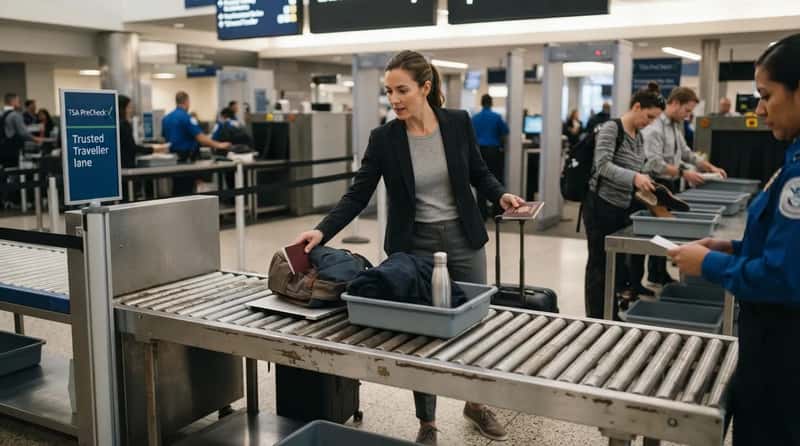
Watching an experienced traveller clear security is like watching someone finish a task everyone else is doing for the first time. Passport out, laptop ready, jacket already off.
Trusted traveller programmes are the real edge. Immigration at a busy U.S. airport can take five minutes with Global Entry or ninety without it – an 85-minute gap that’s the difference between making a connection and missing it entirely.
They also carry an empty water bottle through security and fill it airside, which means never paying $4 for water again.
But all of that leads to the single most powerful habit of all – #1…
#1 – They Have a Plan B Before They Ever Need It
Every experienced traveller walks into a layover with a backup plan already loaded. Gate change, delay, cancellation – none of it surprises them, because they’ve already thought it through.
Choosing airports wisely, before booking rather than after getting stranded, is a deliberate move seasoned flyers make every time.
The best hub airports for missed connections aren’t the ones with the most shops – they’re the ones with the most onward flight frequency. Frankfurt, Amsterdam, Dubai, and Singapore top the list because if one flight falls through, another leaves within hours.
Plan B means knowing the next available flight, having the airline’s app installed, and carrying the direct customer service line – not the hold queue. It’s the one habit that has rescued more trips than any lounge access or PreCheck card ever will.
The Bottom Line
Experienced travellers don’t get lucky at layovers. They engineer them, block by block, buffer by buffer.
They check visas before booking, walk the terminal the moment they land, and never let a tight connection ride on two separate tickets. They treat long layovers as free travel, not wasted time, and they always know their Plan B before they need it.
The gap between a stressful connection and a smooth one was never about the airport. It was always about which habits you brought into it.
#0 – The Backup Ticket Trick That Turns a Missed Connection Into a Non-Issue
The riskiest layover scenario on this whole list is a tight connection booked as two separate tickets – and there’s one fix experienced flyers rarely say out loud.
- Before booking two separate airlines, check if a self-transfer booking platform (such as Kiwi.com) offers a guarantee that protects the connection if your first flight causes the miss.
- If you book the two tickets yourself, add a standalone missed-connection protection product at checkout – it usually costs a few dollars and rebooks or refunds you even when the airline won’t.
- Screenshot both confirmation numbers and the protection policy number before you leave home Wi-Fi, so you’re not searching for them mid-panic at the gate.
- The second a delay alert hits your phone, call the protection provider first – they can often get you rebooked faster than the airline’s own line.
This single step closes the exact gap that swallows more separate-ticket trips than any other habit on this page.