Most drivers think they know how to handle – but the crash data tells a very different story. It’s rarely one big blunder that ends a trip early. It’s a chain of small, invisible mistakes that quietly stack up over hundreds of miles.
Time, fuel range, road conditions, and car readiness all carry more weight than they appear to on a map. Here’s what the data actually says is coming for you, one mile marker at a time.
#16 – Skipping the Pre-Trip Vehicle Check
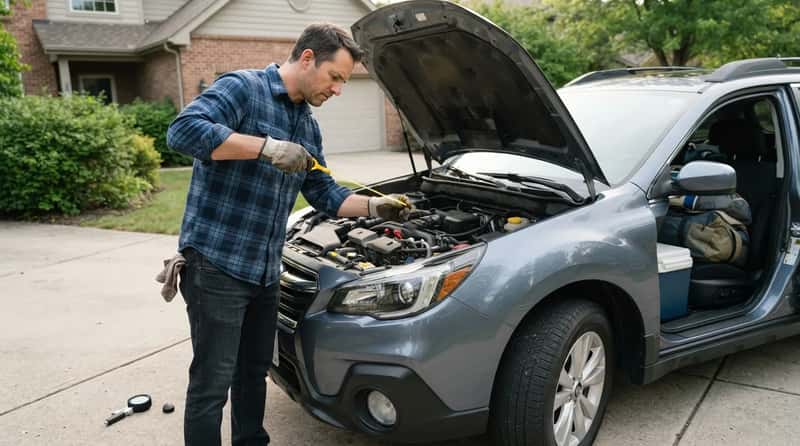
Skipping the pre-departure check is the laziest mistake on this list – and one of the most expensive.
Tire pressure, oil, coolant, brakes, lights – all take minutes to check and can prevent a roadside disaster. On a normal commute you might get away with ignoring them.
On a 500-mile drive, you won’t. Things that were “probably fine” at home become definite problems in the middle of nowhere.
Fast Facts
- Tires: check cold pressure against the sticker on the driver’s door jamb, not the sidewall number
- Oil: top off or change if you’re within 500 miles of your next scheduled service
- Coolant: check the level only when the engine is cold
- Brakes and lights: test every signal, brake light, and headlight before you pull out of the driveway
Ten minutes in the driveway can save six hours on the shoulder of a highway. But the second most-overlooked pre-trip step isn’t even about the engine – it’s about the rubber keeping you on the road, and almost everyone gets it wrong.
#15 – Ignoring Tire Pressure
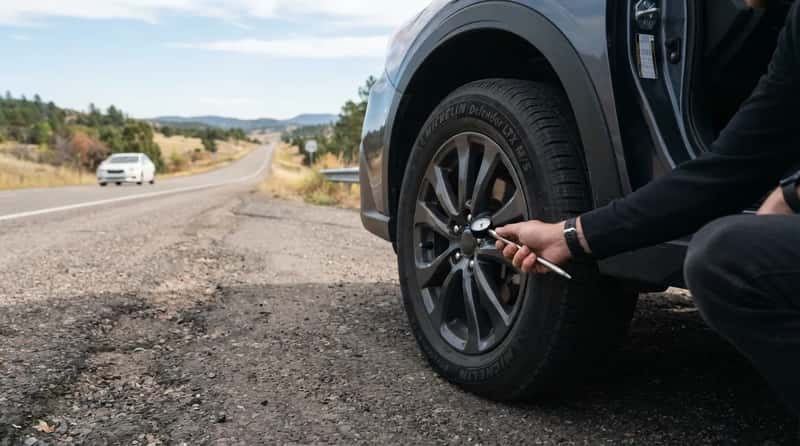
Most drivers glance at their tires, see them look normal, and assume everything’s fine. That’s a dangerous guess.
Only 19% of consumers properly inflate their tires, according to NHTSA’s TireWise campaign. Vehicles with tires underinflated by more than 25% are three times more likely to be involved in a tire-related crash.
Underinflation creates extra friction, and friction creates heat – on a long drive, that heat can make a tire fail outright. And here’s the twist: most people check the wrong number entirely.
The PSI printed on the tire sidewall is the tire’s maximum pressure, not what your car actually needs. The correct number lives on your driver’s door jamb, not the rubber.
A $5 gauge and five minutes can prevent a blowout at 70 mph. But once you’re finally rolling, a different threat starts building quietly – and most people don’t notice until it’s too late.
#14 – Driving Without Scheduled Breaks
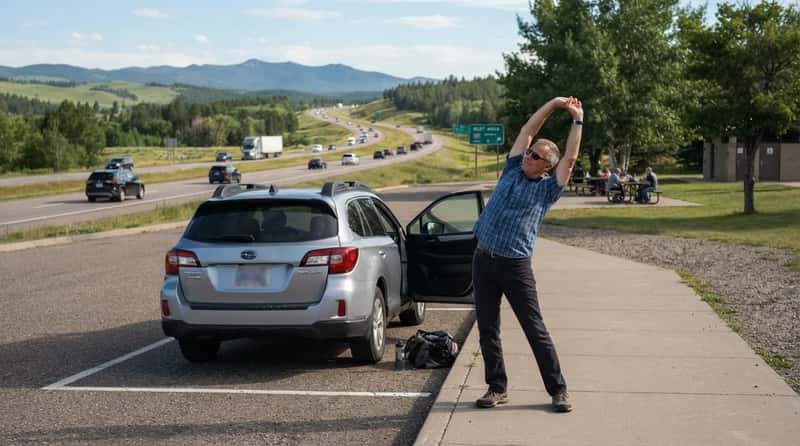
There’s a common belief that stopping wastes time. The data says the opposite.
You don’t need to be short on sleep for fatigue to hit. Highway monotony alone lowers alertness, even after a full night’s rest.
Experienced long-distance drivers cap it at around 350-400 miles a day, with real rest stops built in. Stretching your legs every few hours isn’t a delay – it’s what keeps you sharp enough to finish the trip.
Planned breaks aren’t for amateurs. And if you think skipping them is fine, wait until you see what one bad night’s sleep does to your crash risk.
#13 – Not Sleeping Enough Before You Leave
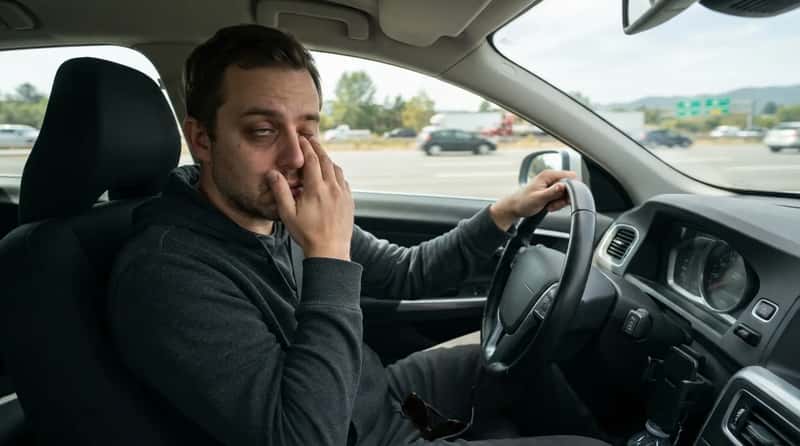
This is the mistake that looks harmless at 10 p.m. and turns deadly by noon the next day.
Drivers who sleep seven hours or less in the past 24 hours have a significantly elevated crash risk, according to the AAA Foundation for Traffic Safety. Fatigue rarely feels dramatic – it shows up as drifting attention and slower reactions long before anyone actually nods off.
A AAA Traffic Safety Culture Index found more than 40% of surveyed drivers reported getting less than 6 hours of sleep on a typical night. Those same people then get behind the wheel for eight hours and wonder why hour three feels unbearable.
Last-minute packing eats into sleep more than most people admit. Treat sleep as part of the trip, not something you sacrifice for it.
Speaking of threats that build slowly – the next one kills thousands of people every year, and almost all of those deaths were preventable.
#12 – Pushing Through Drowsiness Behind the Wheel

Rolling down the windows. Blasting the AC. Turning up the music. None of it actually works – and the data is sobering.
An estimated 17.6% of all fatal crashes from 2017-2021 involved a drowsy driver. Over that five-year stretch, an estimated 29,834 people were killed in crashes tied to drowsy driving.
NHTSA data shows these crashes cluster between midnight and 6 a.m., or in the late afternoon – exactly when most road-trippers push to finish their day’s drive. Drowsy driving mirrors drunk driving: blurred vision, slowed reactions, bad decisions.
If you’re fighting to stay awake, the road has already won. Pull over – but even a fully rested, wide-awake driver can wreck a trip with the very next mistake, starting from mile one.
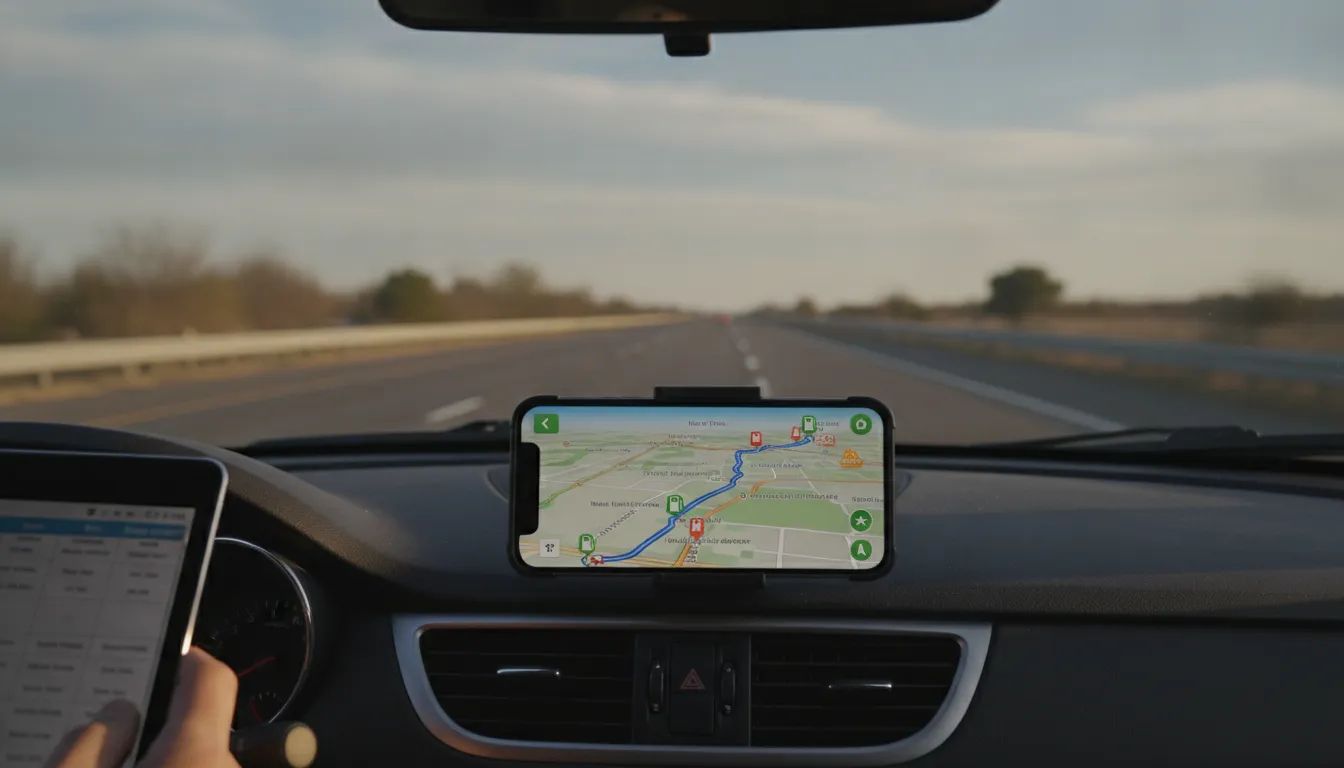
#11 – Relying Entirely on Your Phone for Navigation

GPS feels like a solved problem. It isn’t, and trusting it completely is asking for trouble.
Digital maps fail in remote areas without service, and they routinely miss seasonal road closures. A dead phone battery can turn a simple detour into a real problem fast.
Without a backup route, a missed turn becomes an hours-long detour through unfamiliar roads. Download offline maps before you leave, and memorize your major route waypoints.
Even with perfect navigation, the next mistake can strand you somewhere your GPS can’t help you at all.
#10 – Assuming Gas Stations Are Always Nearby
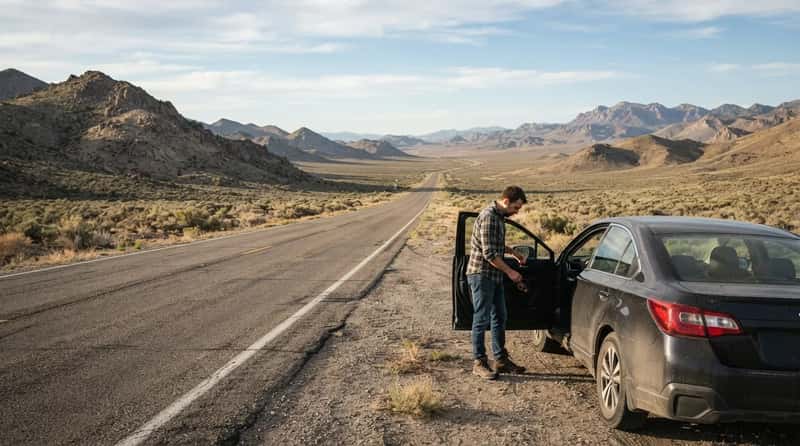
This is the mistake that turns a minor miscalculation into a genuine emergency.
Plenty of drivers assume they’ll always find gas or food along the way, then hit long stretches of highway with neither. Rural interstates and mountain routes are notorious for sparse exits.
Never let your tank drop below a quarter full on a long drive. In remote areas, that quarter tank is your emergency reserve, not extra time you get to spend.
Worth Knowing
- The stretch of US-6 between Tonopah and Ely, Nevada, is the longest signed distance between gas stations with 168 miles in the country
- Parts of I-80 in Nevada run 50-plus miles between exits with any services
- Cell coverage often disappears in these same stretches, so plan fuel stops before you lose signal, not after
Plan your fuel stops the way you plan your route – know exactly where the next station is before you need it. And while you’re planning, don’t make the mistake that fills your trunk but leaves your trip completely unprepared.
#9 – Overpacking the Car
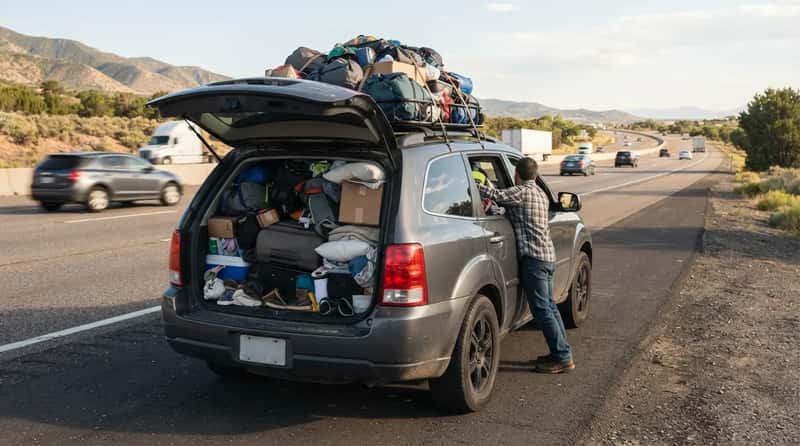
More stuff feels like more preparation. In reality, it creates problems most drivers never see coming.
A survey by Upgraded Points found 45% of travelers admitted they purposefully overpack. All that extra weight strains tires already stressed by highway heat and quietly drags down fuel economy.
Disorganized packing also means constant stops just to dig for essentials, wasting the time you were trying to save. Pack with a system, and pack only what you’ll actually use.
Excess weight in the cabin is one quiet way to compromise your car’s safety. The next mistake does the same thing to your speed, and most drivers won’t admit they’re guilty of it.
#8 – Speeding to “Make Up Time”
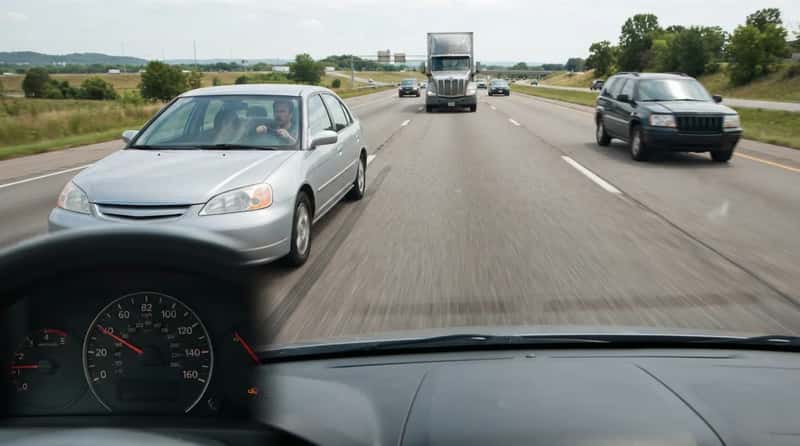
Almost every long-drive speeding story starts the same way: “We were running behind, so I figured I’d push it a little.” It almost never actually works.
Crash severity increases exponentially with speed, not in a straight line. At 80 mph versus 70 mph, the fuel penalty alone is significant.
Here’s the math that stings: driving 200 miles at 80 mph instead of 70 saves less than 22 minutes. Cruise control does more for your trip than a heavy foot ever will.
Quick Compare
- 200 miles at 70 mph: about 2 hours 51 minutes, better fuel economy
- 200 miles at 80 mph: about 2 hours 30 minutes – a savings of roughly 21 minutes
- The trade-off: noticeably higher fuel cost and sharply higher crash severity for a handful of saved minutes
The next mistake costs you even more time – and nobody sees it coming until they’re sitting in a jam that’s been building for two hours ahead of them.
#7 – Leaving at the Wrong Time
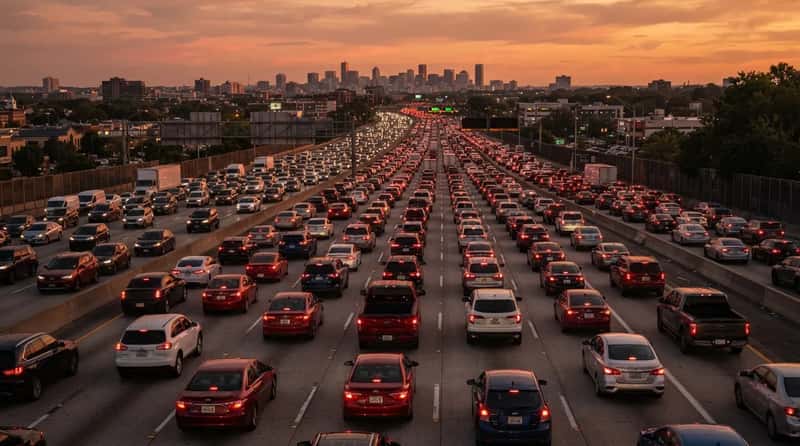
Timing a long drive wrong is one of the most common – and most fixable – mistakes on this list.
Sitting in traffic burns gas and money without moving you an inch. The fix is simple: leave early morning or just after rush hour, when roads are clear and temperatures are lower.
Leaving at 5 p.m. on a holiday Friday, on the other hand, is a decision many drivers regret by mile 30. Ten minutes of route research can save you hours of gridlock.
But even a perfectly timed, perfectly routed trip can go sideways because of the driver in front of you, and how closely you’re following them.
#6 – Tailgating
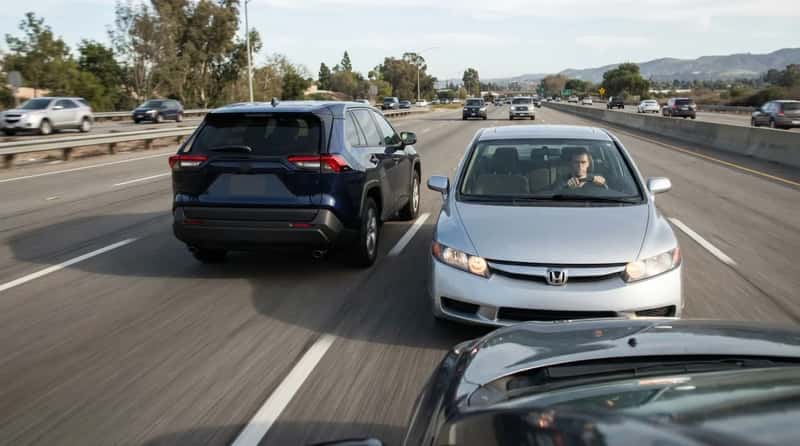
It’s the most normalized dangerous habit on the highway – and one of the deadliest.
Rear-end collisions make up nearly 30% of all accidents, according to the NHTSA, and tailgating is a major cause. Reaction times slow the longer you’ve been driving, so the gap that felt safe at hour one isn’t safe by hour six.
The rule is a three-second gap minimum, doubled in bad weather. Most highway drivers follow at one second or less, which leaves essentially zero room for error.
Don’t be that driver. And watch for the next mistake, because it creates a blind spot that even experienced drivers forget exists.
#5 – Sitting in a Truck’s Blind Spot
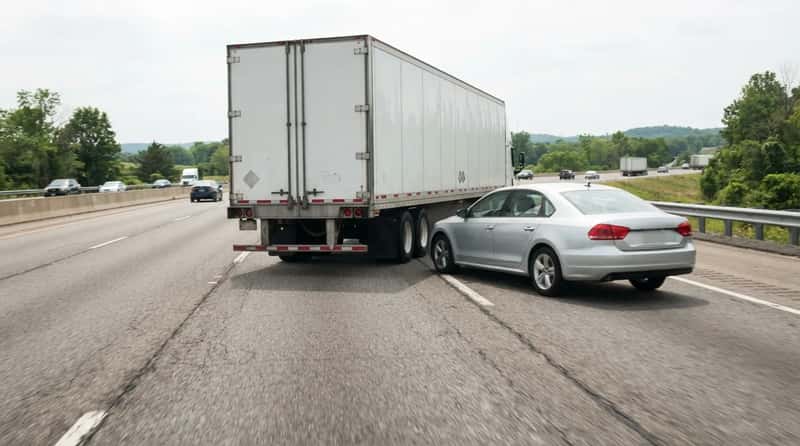
If you can’t see a truck driver’s mirrors, they cannot see you. That’s not a metaphor – it’s physics.
Because of their size, commercial trucks carry massive blind spots on both sides, directly behind, and directly in front. Drivers who cruise alongside a semi for miles are sitting in a danger zone nobody can see.
Pass trucks decisively and get clear of them – don’t linger beside a trailer. Trucks take far longer to stop than passenger cars, and the gap between your bumper and their rear axle isn’t the safety buffer it feels like.
At a Glance
- Front no-zone: about 20 feet directly ahead of the truck
- Rear no-zone: this blind spot extends nearly 200 feet from the back of the truck
- Side no-zones: stretch across one to two full lanes on each side of the trailer
- Size gap: semi-trucks, on average, are about 75 feet long, roughly five times a typical passenger car
But physical blind spots aren’t the only way your attention disappears on a long drive. The next mistake steals it quietly, one glance at a time.
#4 – Distracted Driving

Most drivers believe they’re less distracted than average. The statistics say most drivers are wrong.
It only takes one glance away from the road to drift blind for tens, even hundreds, of feet. Texts, phone calls, snacks, the radio, a conversation with a passenger – every one of them gets more tempting the longer boredom sets in.
Texting while driving takes your eyes off the road for an average of five seconds – at 55 mph, that’s a football field driven completely blind.
Put the phone in the glovebox. Set your playlist before you leave, because the next mistake is sneakier – it doesn’t even feel dangerous.
#3 – Skipping the Emergency Kit
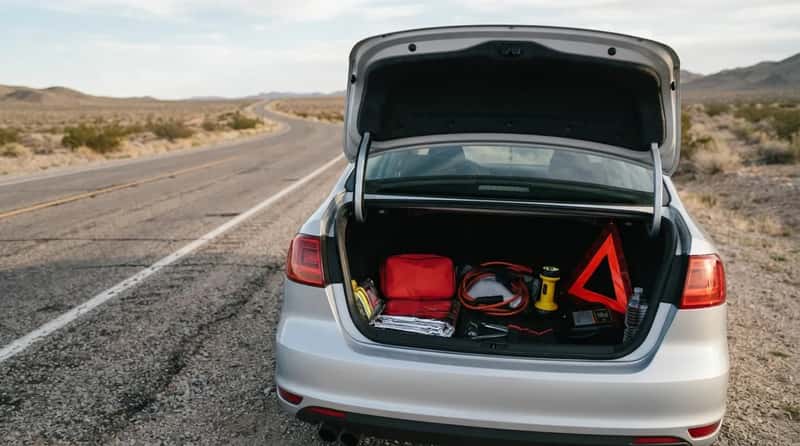
Nobody plans to need a roadside emergency kit. That’s exactly why so many people don’t have one.
No kit, no offline map, no roadside assistance, no plan for a warning light 200 miles from the nearest city – that’s where thousands of drivers find themselves every year. What should be a minor inconvenience turns into a real crisis.
The basics: jumper cables, a flashlight, a first-aid kit, a blanket, water, a phone charger, a reflective triangle, and a simple tool kit. That alone puts you ahead of 90% of drivers on the road.
A breakdown in a remote spot without any of it isn’t just inconvenient – at night, in bad weather, it turns dangerous fast. But there’s one earlier failure that sets the stage for almost everything on this list, and most people commit it before they even leave the driveway.
#2 – Overplanning the Schedule (No Flexibility Built In)
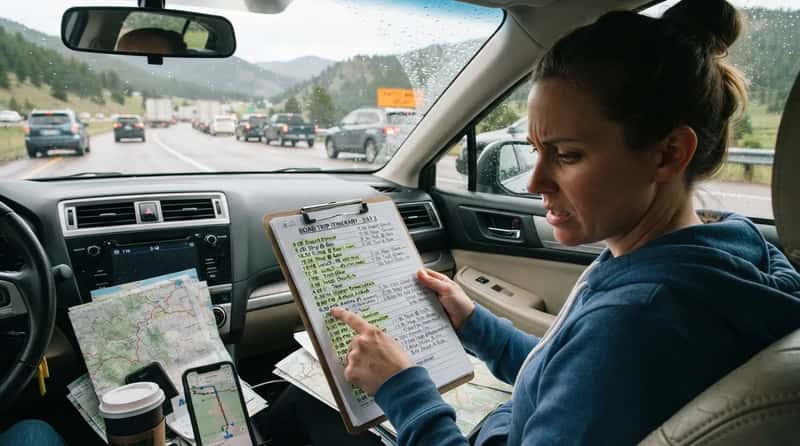
Counterintuitively, the biggest scheduling mistake on a long drive isn’t being too relaxed. It’s being too rigid.
A schedule packed so tight that any delay, detour, or genuine emergency puts you under pressure. Pressure leads to speeding, speeding leads to tailgating, and tailgating leads to accidents – it’s a cascade that starts with an unrealistic itinerary.
Cap your mileage at 350-400 miles a day, with two real stops built in. Anything extra is a bonus, not a target.
Build in buffer time for the unexpected stop, the detour worth taking, the meal that runs long. Which brings us to the single most dangerous mistake on this entire list – one most drivers are actively in denial about.
#1 – Thinking You’re Too Experienced to Make These Mistakes

Here’s the uncomfortable truth most road-trip articles won’t say out loud: experience breeds complacency, and complacency is the root of nearly every fatal driving error.
The driver who’s done the route a dozen times is the one who skips the pre-check. The confident driver pushes through fatigue because “I’ve done worse,” and the seasoned traveler skips offline maps because “it’s always been fine.”
The drivers most at risk on a long drive are often the ones who are most certain they’re not at risk. Every mistake on this list is more likely to catch you when you’re comfortable and certain – not when you’re nervous and careful.
Stay humble. Stay prepared – the road doesn’t care how many miles you’ve driven before.
The Bottom Line
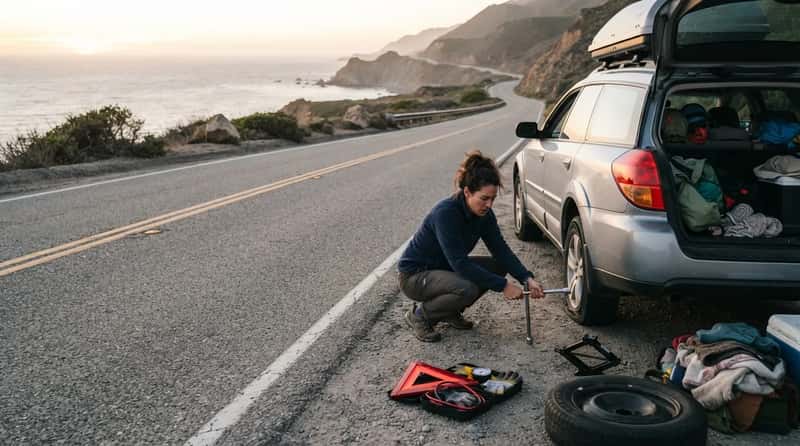
Long drives don’t go wrong all at once – they unravel one overlooked detail at a time.
Sleep deprivation alone is linked to up to 21% of motor vehicle collisions. Add distracted driving, bad timing, no emergency kit, and guesswork tire pressure, and you’re not taking a road trip – you’re rolling dice.
The fixes are genuinely simple: check your tires, sleep before you leave, plan your fuel stops, carry a kit, and build flexibility into your schedule. Most importantly, drop the assumption that experience protects you – it doesn’t.
The mistake you’re most confident you won’t make is usually the one waiting for you. Did we miss one that’s burned you on a long drive? Drop it in the comments.