You packed the good shoes, printed the itinerary, and pictured a window seat with a hot coffee and a slow-rolling landscape. Then the first morning arrives, and the trip you planned starts arguing with the trip you’re actually on. A dead phone signal, a pill bottle in the wrong bag, or a steep staircase can turn day one into a scramble. These 16 mistakes come from Amtrak’s published rules, CDC travel guidance, and the hard-won habits of seasoned riders.
Some are small and a little funny. A couple can land you in the wrong city. And one, waiting at #1, has nothing to do with luggage or tickets, yet it’s the one people still talk about years later.
#16 – The Ticket That Lives Only on a Phone With One Bar

Rural rail corridors are famous for dead zones, and nobody warns you. You wake up, step onto the platform, and watch the app spin with no signal. A ticket you can’t pull up is, in practice, a ticket you don’t have. Conductors are usually patient, but the line behind you may not be.
The fix is boring and it works. Save a screenshot, print the confirmation, or open the ticket while you still have hotel Wi-Fi. Keep the phone charged too, because a dead battery is the same problem in a different outfit. And that’s the easy one.
#15 – Assuming the Senior Discount Covers the Whole Bill
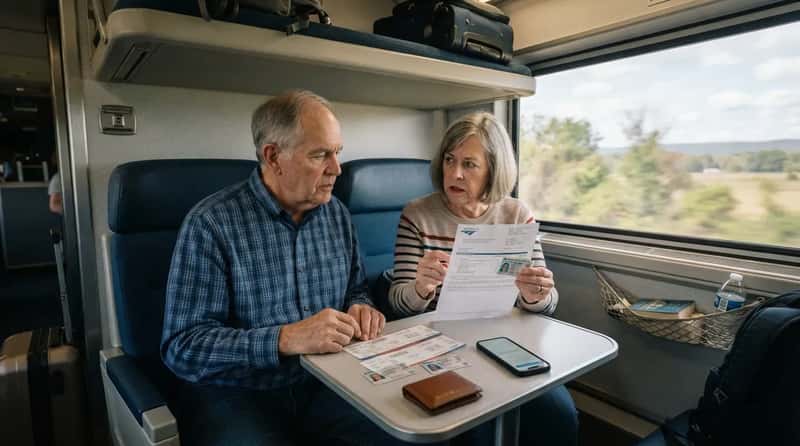
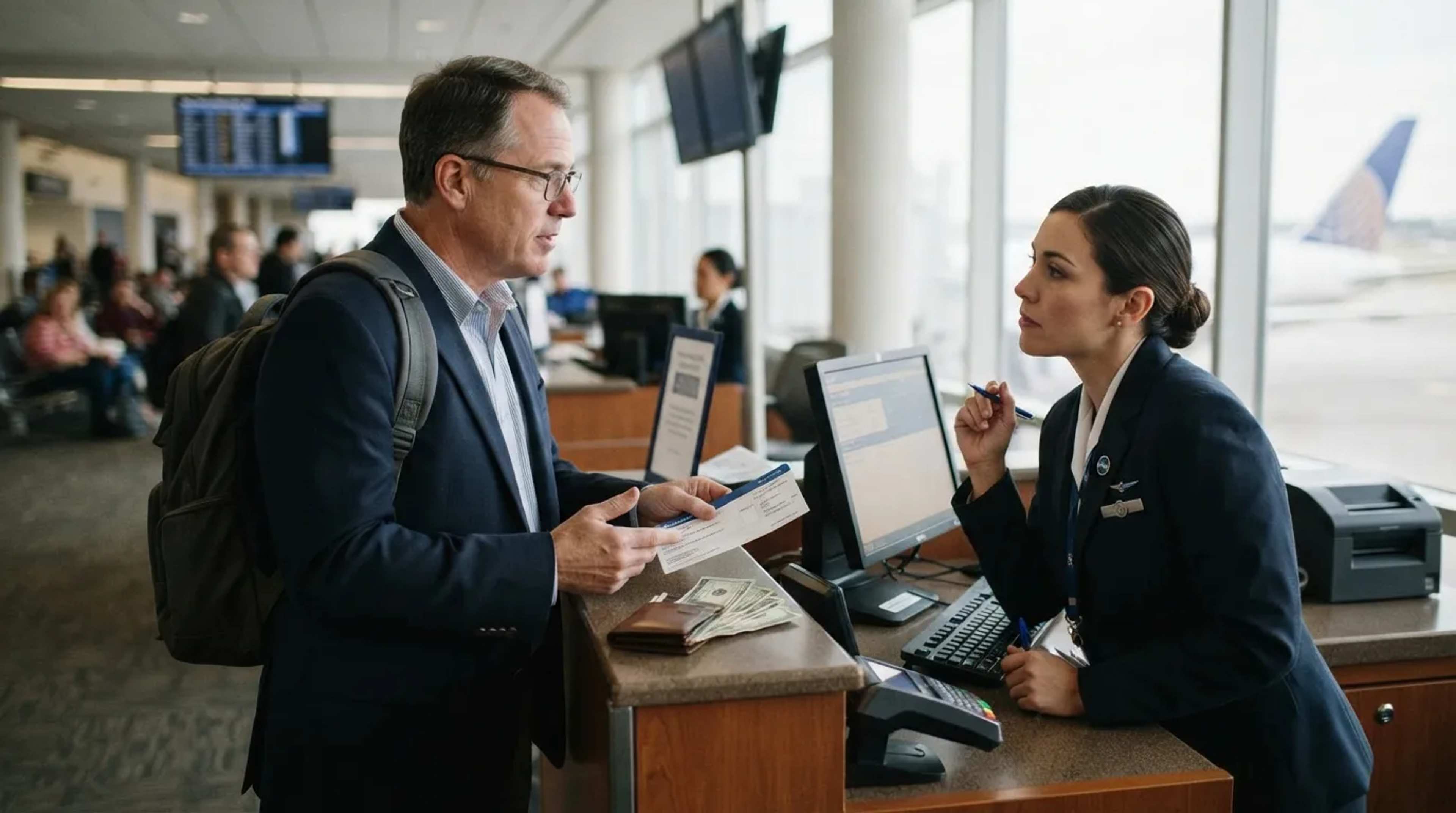
The senior fare sounds like a blanket deal. It isn’t. Amtrak gives travelers 65 and older 10% off the lowest available rail fare on most trains. The discount applies to the rail fare only and does not cover sleeping-accommodation charges or Business/First class upgrades.
That matters because a roomette or bedroom is often the biggest line on the receipt. Valid photo ID proving age is required at purchase and on board, so a license buried in your luggage can mean awkward questions. And on joint Amtrak and VIA Rail Canada trains, the discount starts at age 60.
#14 – Packing the Heart Pills in the Checked Bag
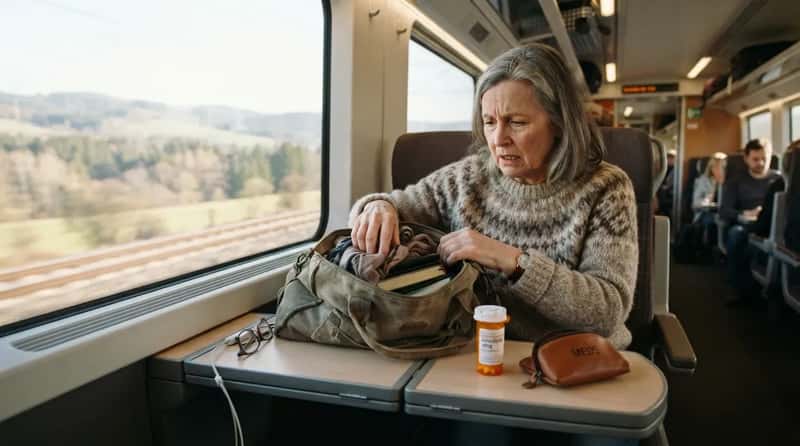
It’s the classic first-morning panic. The checked bag rides in a baggage car you usually can’t reach until you arrive. If your morning medication is inside, you may be hours from getting it. That’s a scary spot for blood pressure pills, insulin, or inhalers.
Veteran riders keep a small “first 24 hours” pouch at their seat. It holds medications, a spare pair of glasses, and a phone charger. Add a day’s extra supply, because delays happen on long routes.
#13 – Dragging a Suitcase You Can’t Lift Onto the Rack
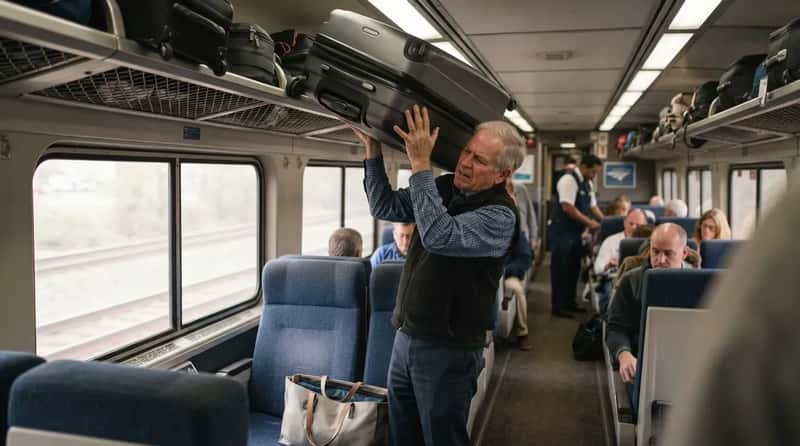
Train luggage racks look easy until you’re holding a swaying 30-pound bag over your head. Amtrak’s published carry-on limit is 25 pounds per bag, and it’s worth checking before you leave home. Add steep steps, narrow aisles, and a floor that won’t hold still, and one heavy case becomes a real hazard.
The common mistake is bringing one big case instead of two small ones. Staff may help, but a busy boarding isn’t the moment to count on it. Many older riders now pack two lighter bags, since each is easier to carry up steps and slide onto a shelf.
Quick Compare
- One big case: Hard to lift, awkward on steep steps, and a gamble on a high rack.
- Two lighter carry-ons: Easier to carry one at a time, with each bag kept under Amtrak’s 25-pound limit.
- Checked bag: Roomy, but it rides in the baggage car and is out of reach until you arrive.
#12 – Never Asking for the Help That’s Already Offered
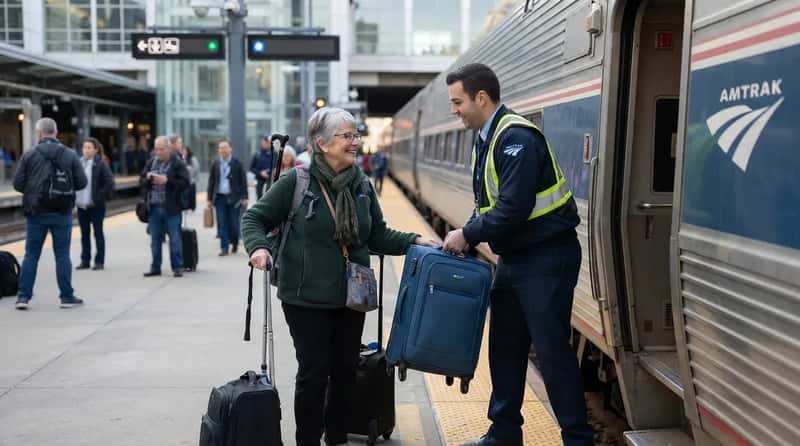
Plenty of travelers feel that asking for assistance means admitting defeat. Rail operators actually build services around it. At many larger stations, staff can help with bags and boarding, but usually only if they know you’re coming.
Amtrak lets passengers request accessibility help when booking or through its customer channels. Waiting until you’re at the platform’s edge makes it harder to arrange. The proud traveler who refuses help often ends up the most worn out by noon.
#11 – Boarding the Half of the Train That Goes Somewhere Else
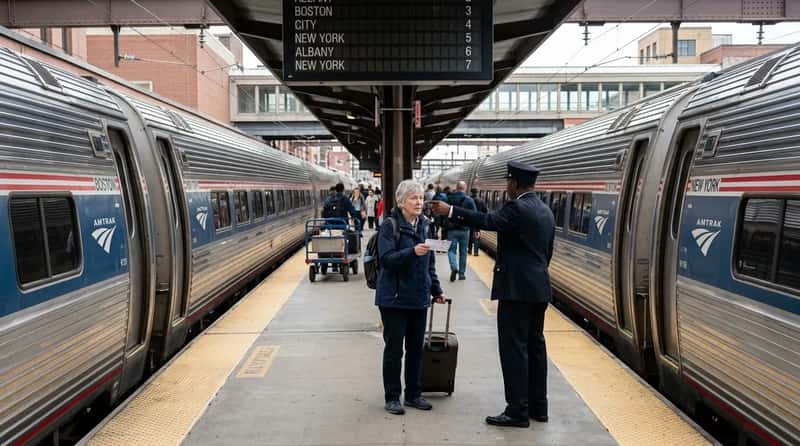
Here’s one almost nobody mentions. Some long-distance trains carry cars bound for different cities, and they separate along the way. The Lake Shore Limited, for example, has historically split at Albany-Rensselaer, with one section heading to Boston and another to New York.
Climb into the wrong car and you can end up in the wrong city. Check the car number on your ticket and ask the crew before you settle in. A thirty-second question beats a very long afternoon.
#10 – Picking the Upstairs Seat on a Double-Decker Without Thinking
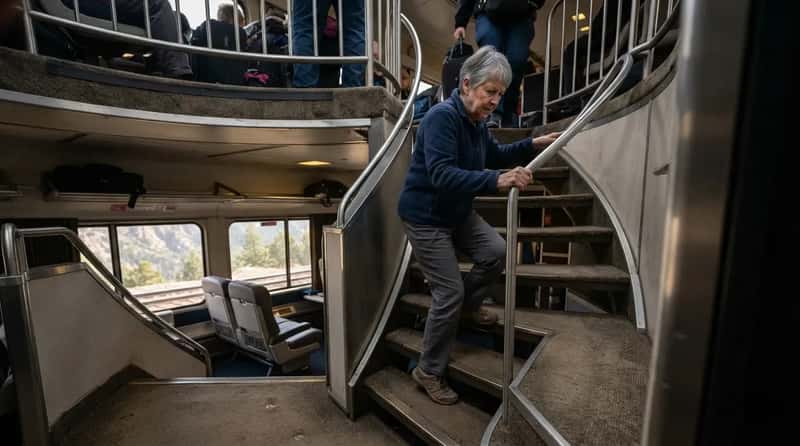
On many western long-distance routes, trains use bi-level Superliner cars. Coach seats are mostly upstairs, reached by steep, curving steps. The seat with the best view can be the hardest to reach when the train lurches.
Lower-level seating is closer to the platform and the restrooms. Amtrak generally lets travelers with mobility needs ask for it. Some riders insist upstairs is the only way to see the scenery, but many older passengers happily take the lower level and skip the climb.
#9 – Booking a Roomette and Forgetting About the Ladder
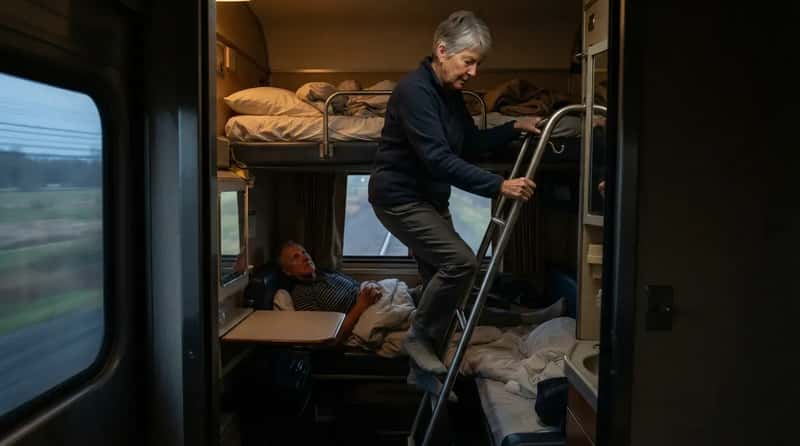
A roomette is two seats by day and bunk beds by night. If two people share it, one of them sleeps in the upper berth and climbs a ladder, usually in the dark. That’s a real hazard for knees and balance.
Some travelers call the sleeper an overpriced splurge. Others say the privacy and the flat bed are the whole point of a long trip. Either way, ask about an accessible bedroom if stairs or ladders worry you, and say so when you book.
#8 – Not Introducing Yourself to the Sleeping-Car Attendant

Sleeper passengers have a secret weapon, and it’s standing in the corridor. The sleeping-car attendant handles bed setup, answers questions, and knows the train’s quirks. Yet many travelers never say hello until something goes wrong.
Introduce yourself the first morning. Mention any mobility limits, your meal preferences, and when you’d like the bed put away. Attendants can often adjust things quietly once they know what you need, and that’s far easier than negotiating halfway down a swaying hallway.
Fast Facts
- The attendant is usually the person to ask about bed setup and putting it away.
- A short hello on morning one makes later requests simpler.
- Mobility limits are worth mentioning before the first night, not after it.
- Meal preferences are easiest to sort out early, before the dining car fills.
#7 – Missing Breakfast Because Nobody Told You How It Works
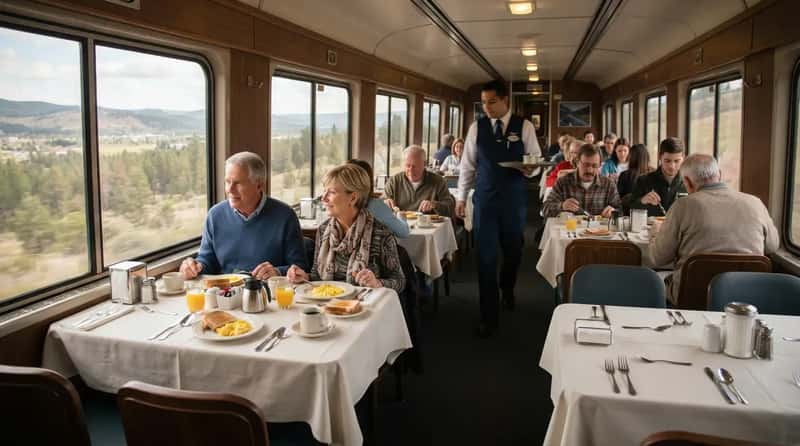
Dining cars run on their own system. On many long-distance routes, sleeper tickets include meals, and tables are often shared with other passengers. Show up without a reservation, and you may wait while the early seatings fill.
Crew members usually take reservations in the morning, often right at your door. If you aren’t in a sleeper, the café car sells food, and its line grows fast. Some riders call the dining car the best part of the trip, while others find the communal tables awkward. Know which camp you’re in before the first call.
#6 – Forgetting the Train Crosses Time Zones
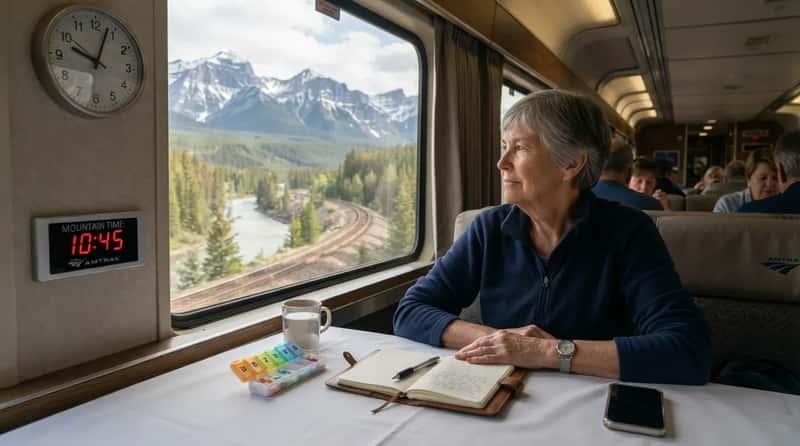
You can wake up in one time zone and eat lunch in another. The Empire Builder, for instance, travels through Central, Mountain, and Pacific time on its way west. Your pill schedule doesn’t automatically adjust.
That matters when medication timing is important. Ask your doctor or pharmacist how to handle doses on long routes before you go. Write the plan down and set alarms with the time zone in mind, because the clock on your phone and the clock on the wall may disagree.
At a Glance
- Route: The Empire Builder runs between Chicago and the Pacific Northwest.
- Time zones: Central, Mountain, and Pacific.
- Risk: Doses taken by the wall clock can drift from your usual schedule.
- Plan: Get written dosing advice from your doctor or pharmacist before departure.
#5 – Sitting Still Like It’s a Reward
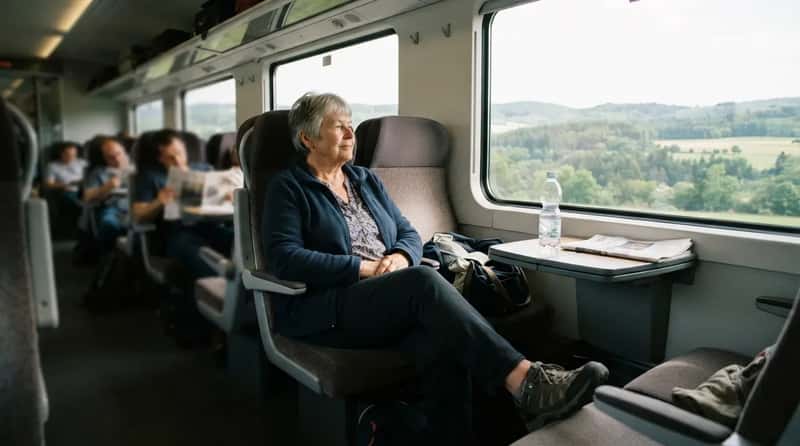
The first morning feels restful, so people settle in and stay put. The CDC notes that travel lasting four hours or more can raise the risk of blood clots, especially for people with other risk factors. A train is gentler than a plane, but sitting still is sitting still.
Get up regularly and walk the car when it’s safe. Flex your ankles and drink water. If you have a history of clots, talk to your doctor before the trip, since personal advice matters more than any general rule.
#4 – Crossing Between Moving Cars With Both Hands Full
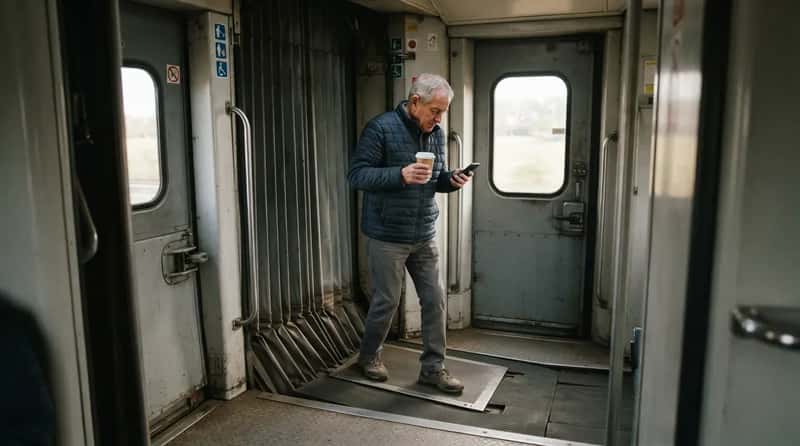
The space between cars is the part of the train that moves the most. The floor shifts, the doors are heavy, and the track bends beneath you. Holding a coffee in one hand and a phone in the other is how people fall.
Use a handrail, keep one hand free, and take your time. Check your messages after you’re through the door. The CDC calls falls a leading cause of injury for adults 65 and older, and a train corridor is a moving version of the same problem.
#3 – Treating a European Rail Pass Like a Free Pass
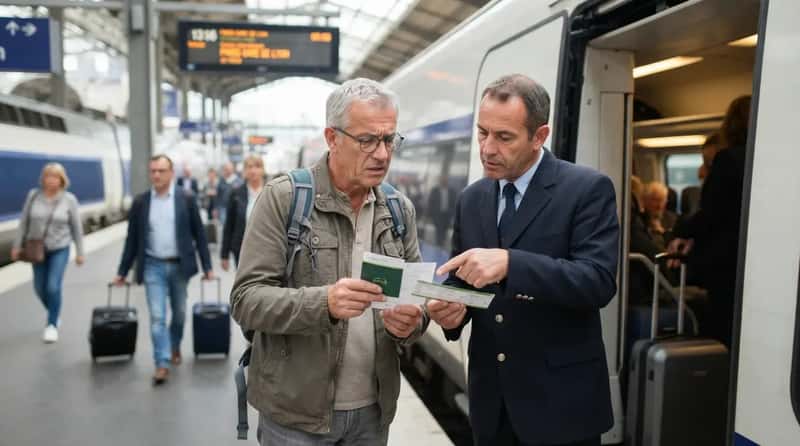
Rail passes feel like freedom, and they are. Seniors get a break, too, since you can buy a Eurail Senior Pass if you are 60 or over on the date you choose to start your trip. The catch is that the pass isn’t always enough on its own.
Many high-speed and international trains require a separate seat reservation, even with a pass. Hop on without one and you could face a fine or a forced move. Check each route’s rules the night before, and book the busy ones early.
#2 – Leaving Your Day Bag on the Seat While You Hunt for Coffee
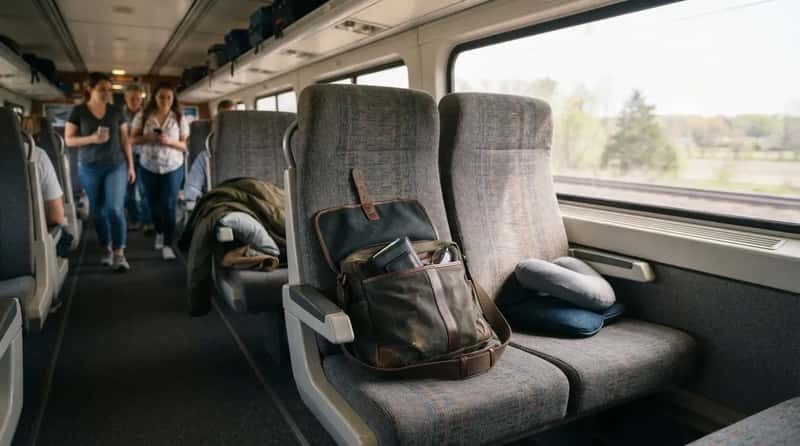
Coach seats don’t lock. When you walk to the café car, your bag sits in plain view of every person who passes. The most valuable thing in it, usually a wallet or medication, is the easiest to grab.
Most trips are fine, and this isn’t about fear. It’s about one small habit: take the essentials with you. A slim crossbody bag or a zippered pouch keeps your ID, cards, and pills on your body, so you can enjoy the walk without looking back.
Worth Knowing
- Photo ID matters on board, especially if you’re traveling on a senior fare.
- Medications are the hardest item to replace in the middle of a route.
- A phone and a spare pair of glasses are small, but you’ll miss them fast.
- Bulky items can stay in the luggage rack. Only the essentials need to come with you.
#1 – Dozing Off and Missing the Stop
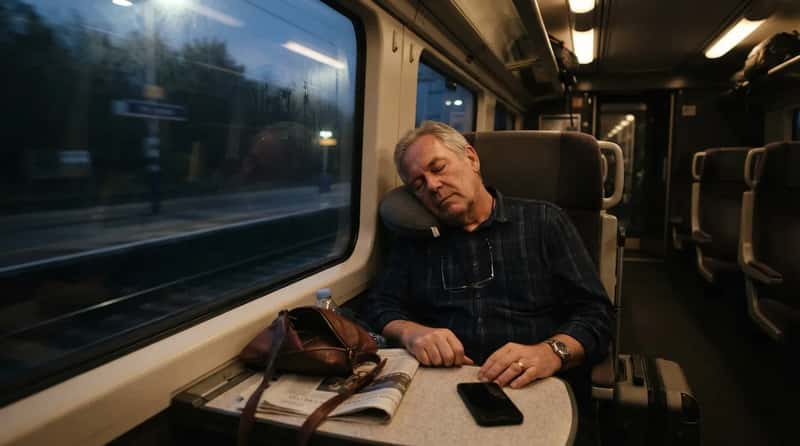
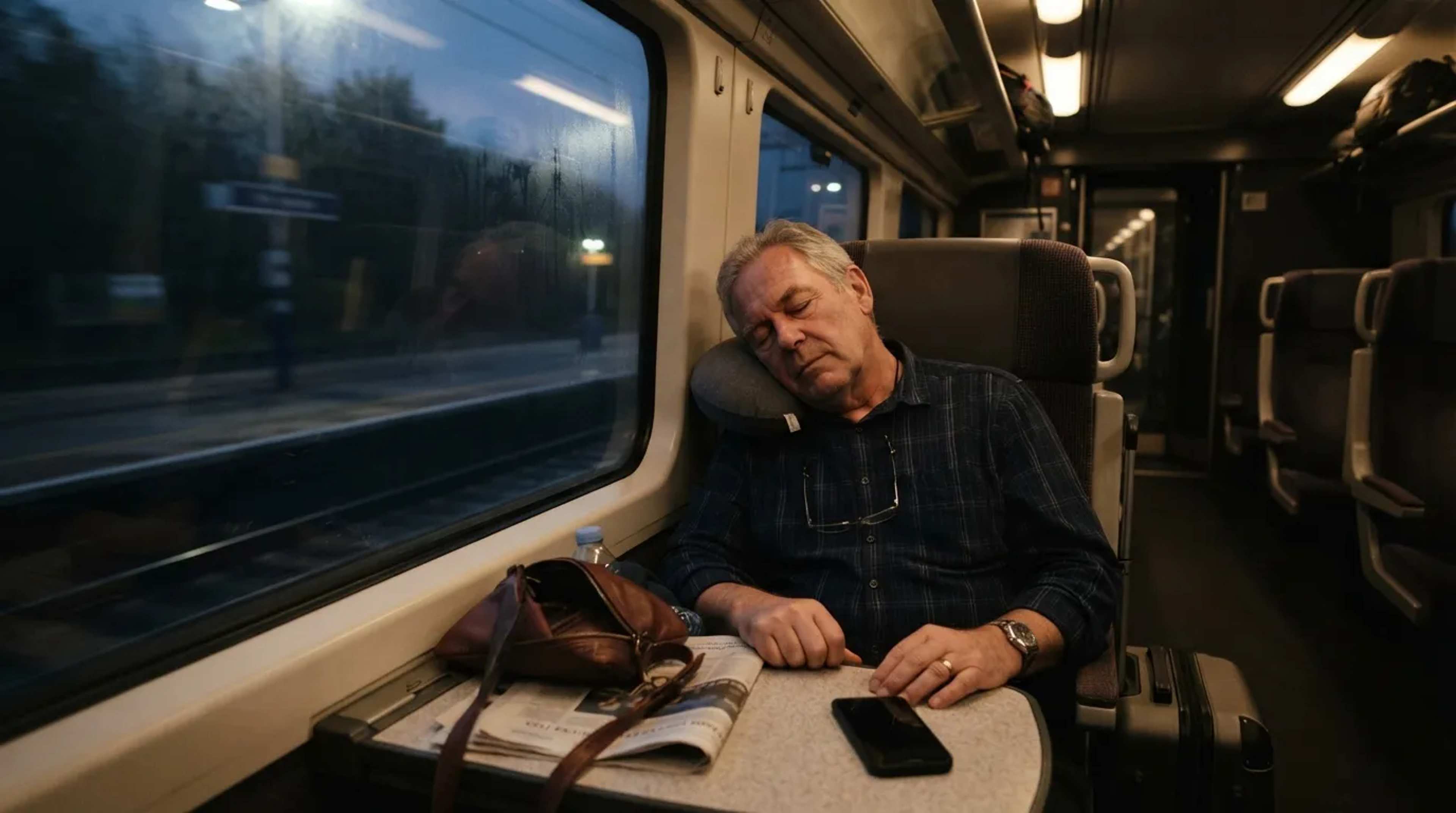
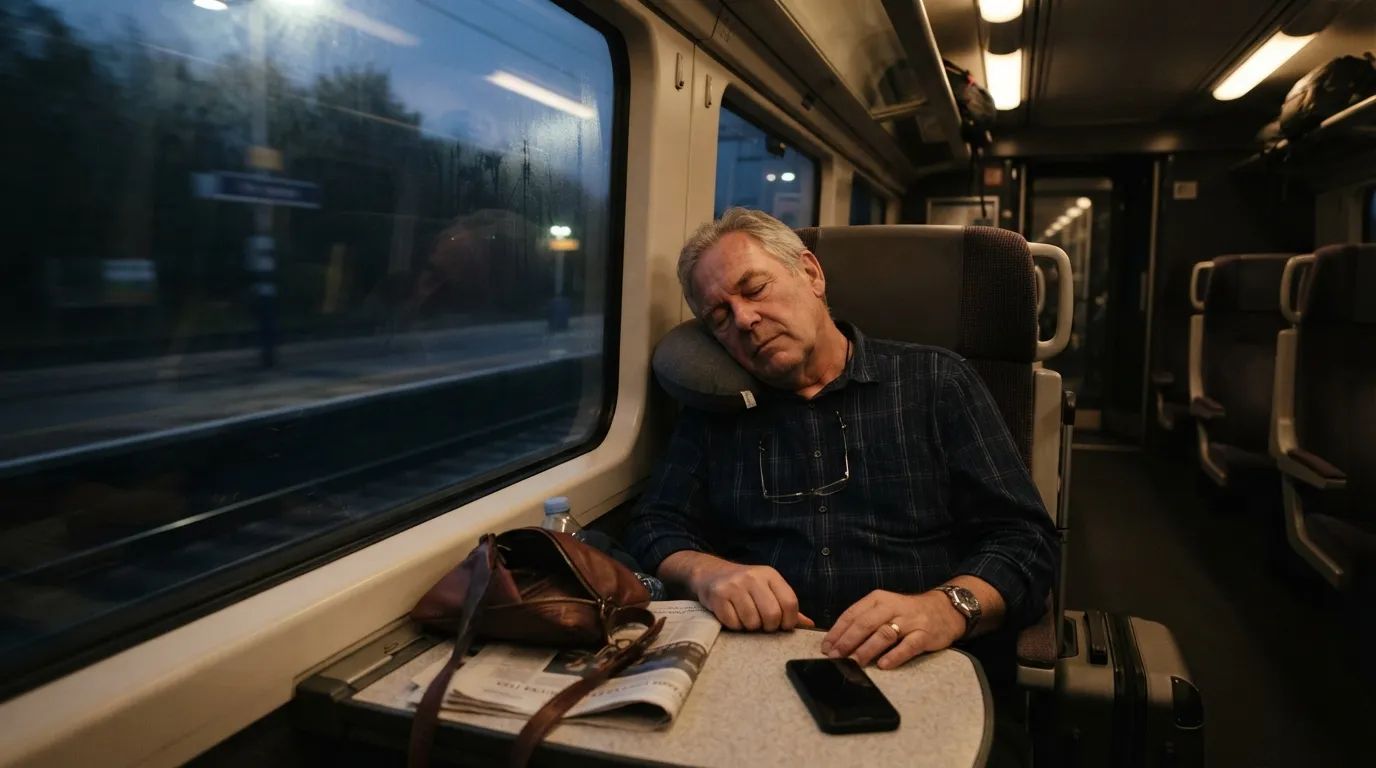
It’s the quietest mistake on the list, and the one people remember for years. The train is warm, the motion is soothing, and the stop is only a few minutes long. Some stations on long-distance routes are served in the middle of the night or the early morning. Miss the announcement and the train simply keeps moving.
Ask the conductor or attendant how you’ll be alerted. Set a phone alarm, but don’t rely on it alone, since signal and battery are both uncertain. Pack your bag before your stop and stand near the door early. That one habit beats every other tip here.
The scenery will still be there once the tickets, pills, and bags are sorted. That’s the quiet secret of the best rail trips: the people who look the most relaxed at 10 a.m. usually did the most boring things at 7.
A printed ticket, a pouch within reach, a quick hello to the attendant. Then the window finally gets your full attention.