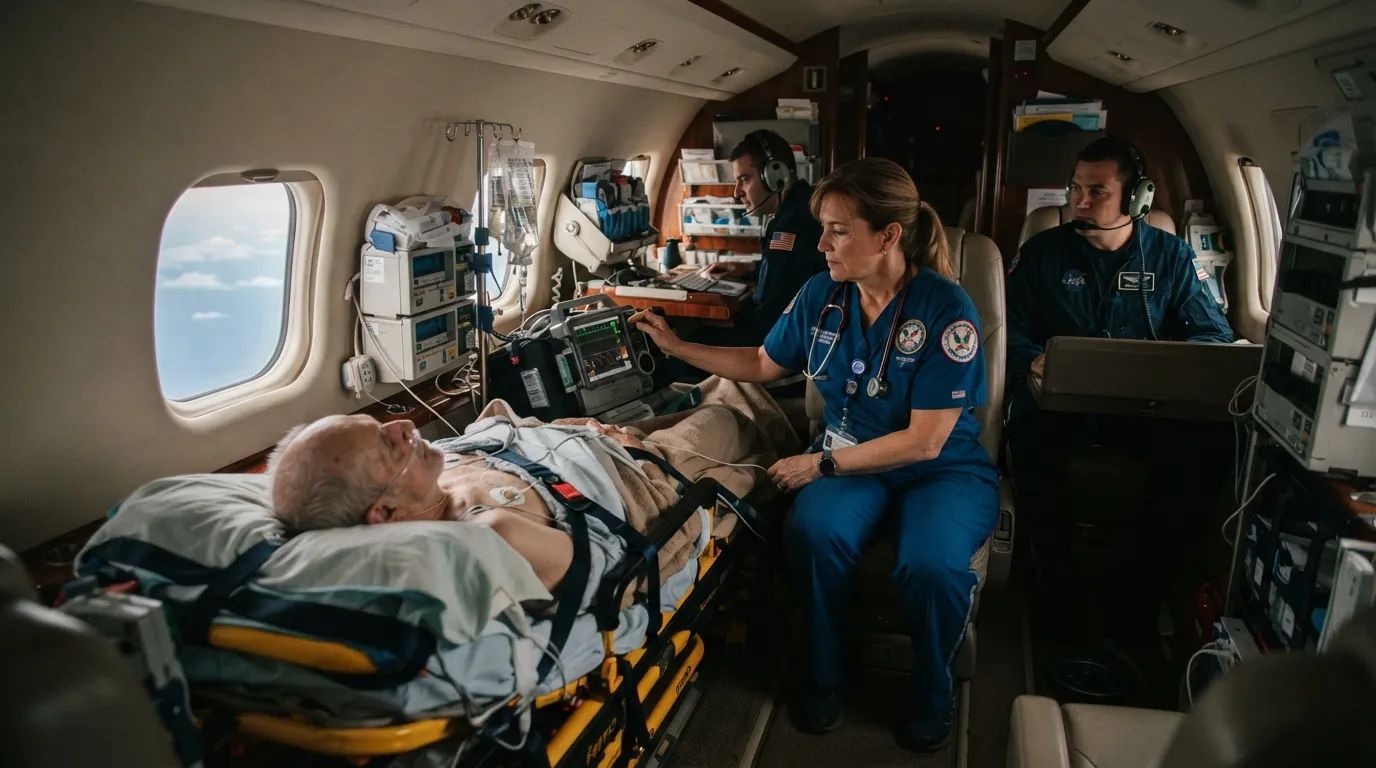
After decades of flying, you’d think the airport would notice you’ve earned a little extra help. Mostly, it doesn’t. The only age-based screening perk TSA documents doesn’t start until 75, and nearly everything else, from wheelchair help to oxygen approval, waits until you speak up.
These 16 questions, drawn from official TSA and DOT rules, can quietly change a whole trip when they’re asked early. Some answers are tiny, like one sentence at security that can prevent a fall. Others are big enough to wreck a retirement budget, including one bill that insurers say can climb into six figures. Let’s start with the question that’s already out of date.
#16 – “Do My Shoes Really Still Come Off?” The Old Senior Perk Went Universal
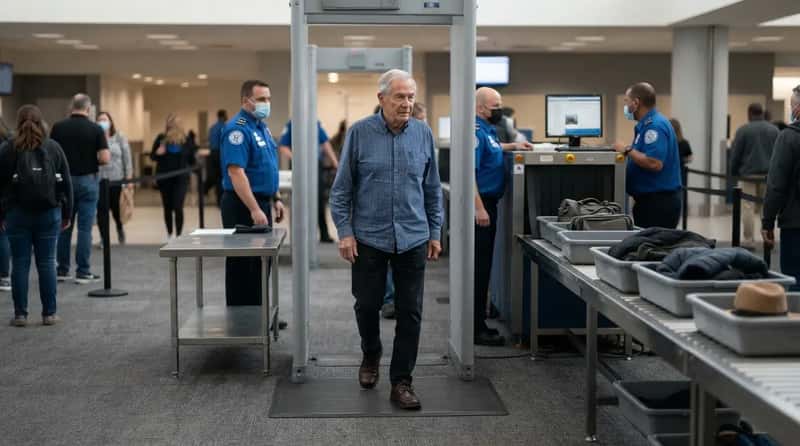
The shoe rule used to separate older travelers from everyone else. TSA ended its shoe removal mandate at U.S. checkpoints on July 8, 2025. Before that, children 12 and under and passengers 75 and older were exempt. Now everyone keeps their shoes on, nationwide.
That’s good news, but it left a lot of travel advice out of date. Travelers 75 and older still get their own track, though. TSA says passengers 75 and older can receive some form of expedited screening through its risk-based approach. The catch is that an alarm can still mean removing shoes for further screening or a pat-down.
But the jacket rule catches even more people off guard…
#15 – “Can I Keep My Light Jacket On?” The Detail Travel Sites Keep Getting Wrong
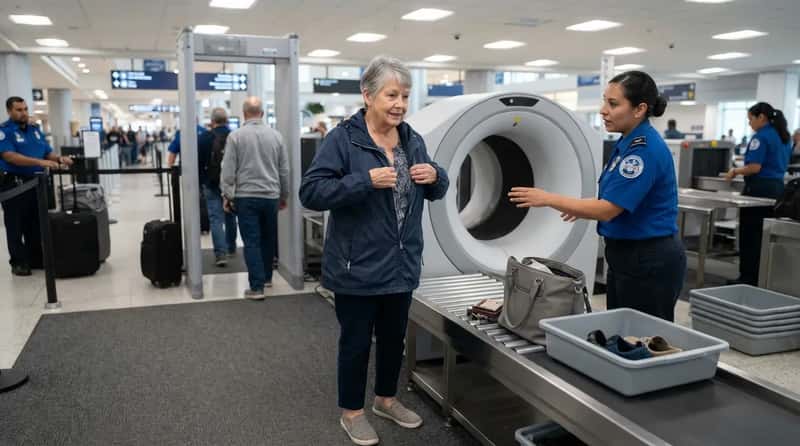
This is where plenty of 75-year-olds get stopped. You may leave your shoes and light jacket on during screening. But removing light jackets is required for Advanced Imaging Technology screening. In other words, the perk comes with fine print.
Many websites claim older flyers never have to remove outerwear. TSA’s own guidance says light jackets still come off for the body scanner. TSA PreCheck still gives you a shorter lane and spares you belt and light-jacket removal.
One enrollment service argues the fee is worth it for most seniors. Whether it pays off for you depends on how often you fly.
Quick Compare
- Standard lane: Shoes stay on, but light jackets come off for the body scanner.
- TSA PreCheck: Shorter lane, plus no belt or light-jacket removal.
- Age 75 and older: Expedited screening is possible, but it isn’t a guarantee.
Still, the next question matters more if the scanner goes off…
#14 – “Can I Sit Down If I’m Pulled Aside?” Most People Never Ask
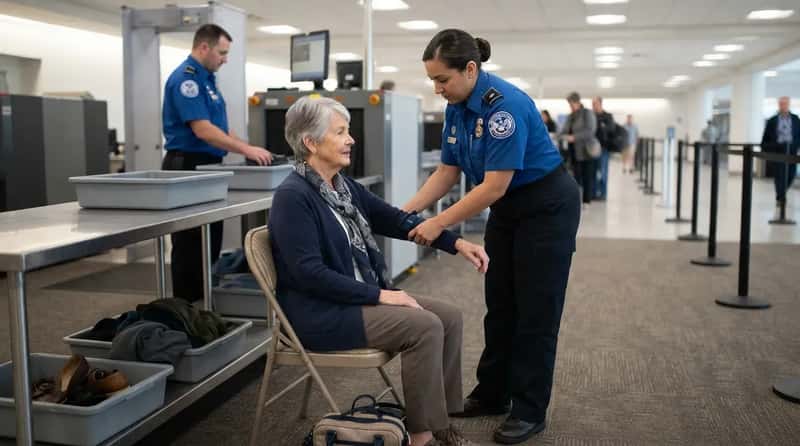
A pat-down while standing can be miserable for anyone with balance issues. Few travelers realize they have a choice. During additional screening, you may ask to remain seated. It’s one sentence, and it can prevent a fall.
There’s more. Passengers 75 and older who can’t stand for screening are screened through other security methods. For travelers whose medical conditions prevent standing or walking, shoes don’t have to come off, but they are inspected manually. Any bags attached to mobility devices must be removed and placed on the X-ray belt.
And if you’re traveling with a spouse, the next question could change the whole checkpoint experience…
#13 – “Can My Spouse Stay With Me Through Screening?” The TSA Cares Answer
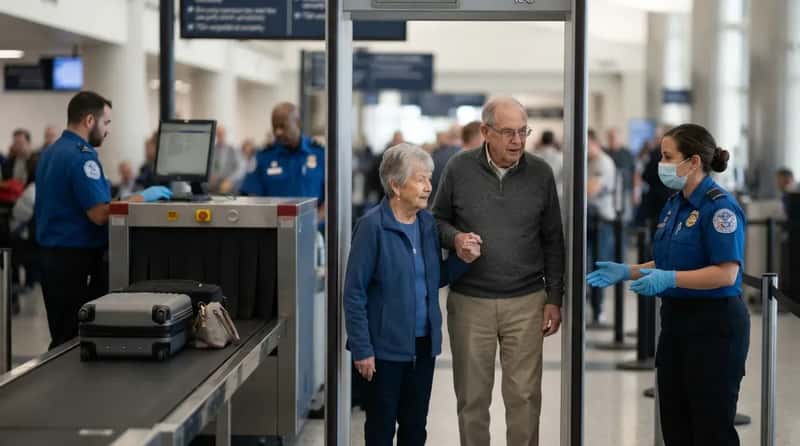
Couples often get split up at the checkpoint, and that’s hard when one partner needs guidance. TSA Cares is designed to help travelers with disabilities, medical conditions and other special circumstances. Most people have never heard of it.
The rules cover some situations travelers don’t expect. If you’re traveling with someone who has a nonvisible disability, such as Alzheimer’s, dementia or autism, you can ask to accompany them during screening, and you’ll be screened on your own afterward. For passengers who can stand and walk but need steadying, a travel companion can offer walking support. Asking ahead is the whole trick.
Once you’re past security, a bigger set of rights kicks in…
#12 – “Who Actually Gets Me From the Curb to the Gate?” Airlines Owe You More Than You Think
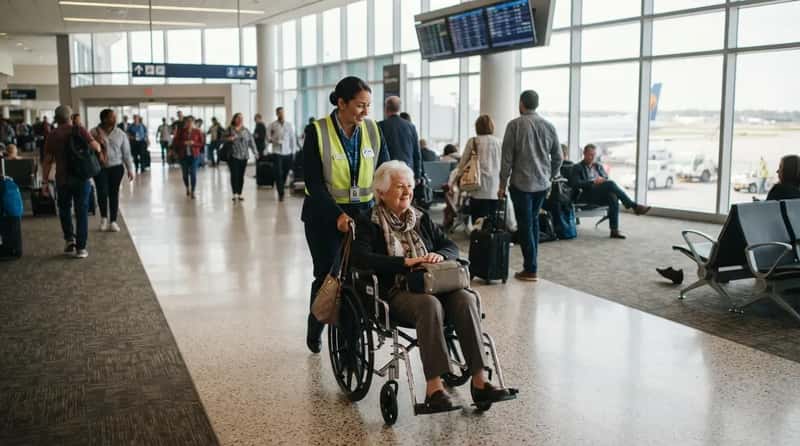
Assistance isn’t a favor. It’s a legal obligation. Upon request, airlines must provide passengers with disabilities prompt boarding and deplaning assistance from properly trained personnel. Most travelers never use it.
The scope is wider than expected. It includes help from the curb to the departure gate, between gates on connecting flights, and from arrival to curb pickup. On the plane, you can request help getting in and out of your seat, getting to the lavatory, and stowing or retrieving carry-on items. Staff must never hand-carry a passenger on or off the aircraft, except in an emergency.
But the real frustration starts when help doesn’t show up…
#11 – “How Long Can They Leave Me Waiting?” There’s an Actual Limit
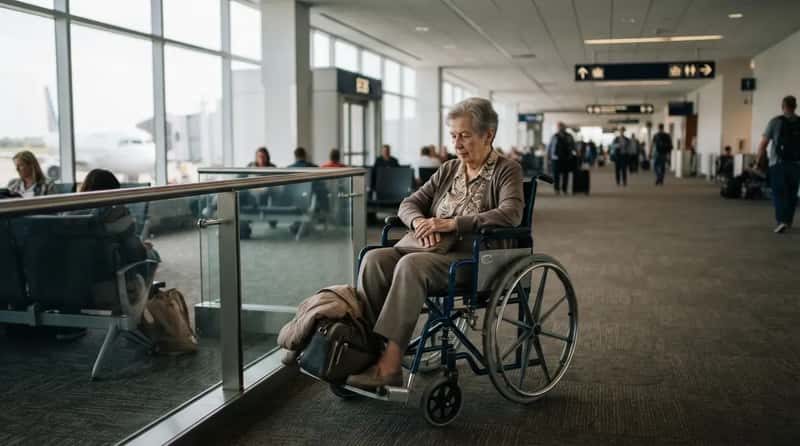
Many travelers have sat alone in a terminal waiting for an escort. Passengers who aren’t independently mobile may not be left unattended in a ground or boarding wheelchair for more than 30 minutes. Few people know that number exists.
Boarding has its own standards. For most planes, boarding must be available by a level jet bridge, ramp, or mechanical lift that accommodates a wheelchair or aisle chair. If something goes wrong, DOT’s disability hotline, 1-800-778-4838, handles time-sensitive problems.
Fast Facts
- 30 minutes: The longest a non-independent passenger can be left unattended in a ground or boarding wheelchair.
- 1-800-778-4838: DOT’s disability hotline for time-sensitive problems.
- Boarding access: A level jet bridge, ramp, or mechanical lift on most planes.
Plenty of proud travelers turn down a wheelchair so they won’t look frail. But a long terminal walk can wreck a trip faster than a ride ever could.
Then comes the question that trips up nearly everyone: do you have to warn the airline first?
#10 – “Do I Have to Give Advance Notice?” Yes and No

The answer surprises people on both sides. Airlines may not require advance notice that a person with a disability is traveling. That means you can show up and ask. But some accommodations need up to 48 hours’ notice.
The rule gives one example. Carrying a power wheelchair on an aircraft with fewer than 60 seats is one accommodation where airlines can require up to 48 hours of notice. Smaller regional jets are exactly where this tends to matter. Waiting until the airport counter can turn a right you hold into a scramble.
And if equipment is involved, the next question can save your trip…
#9 – “What Happens If They Delay or Damage My Wheelchair?” The Rules Changed
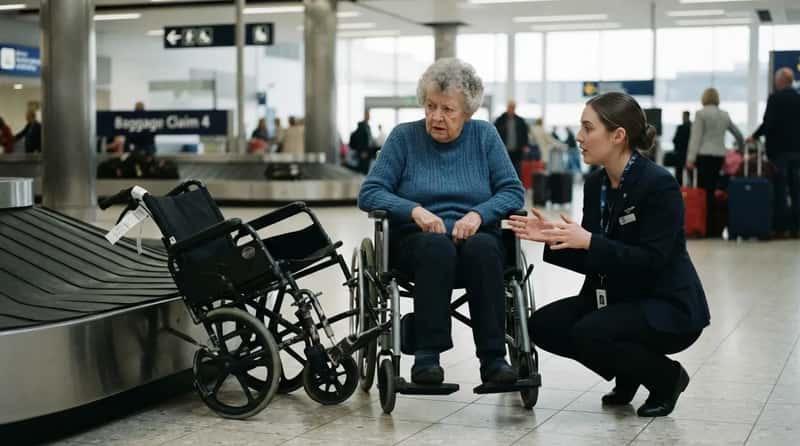
Mishandled mobility devices became a national scandal. In response, DOT issued a final rule to address mishandled wheelchairs and scooters and improper transfers. The rule set real deadlines. Since June 16, 2025, carriers must deliver a delayed wheelchair or scooter to the passenger’s final destination within 24 hours on domestic flights.
Repairs got easier too. Airlines must let passengers choose between the carrier handling repair or replacement and arranging it through their own vendor. There’s a caveat. DOT said it would not enforce four of the original provisions, and an advocacy site says that pause runs until April 2027, while the agency works on a replacement rulemaking. Ask your airline which protections apply right now.
Next up is a right most travelers don’t know exists…
#8 – “Can I Get My Wheelchair at Baggage Claim?” A Right Almost Nobody Uses
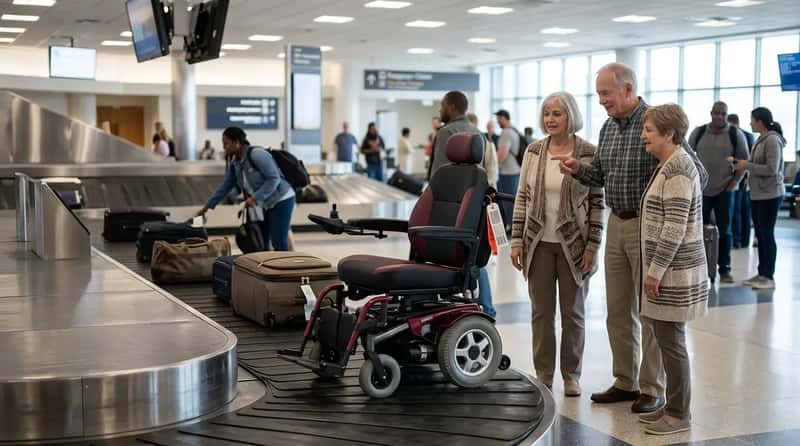
Gate-checked chairs usually come back at the aircraft door. That isn’t your only option. Passengers can reclaim a gate-checked wheelchair at baggage claim instead of the arriving gate, if they prefer. For some travelers, that makes the whole arrival smoother.
Airlines also can’t charge you to carry your chair. They must provide free and safe transportation for personal wheelchairs and mobility devices. By December 17, 2025, airlines were also required to notify passengers whether their chair was loaded before the cabin door closes. If you don’t get that alert, ask the gate agent before boarding.
Now for the medical gear that has its own rulebook, starting with oxygen…
#7 – “Is My Oxygen Concentrator Actually Cleared to Fly?” Check the Label First
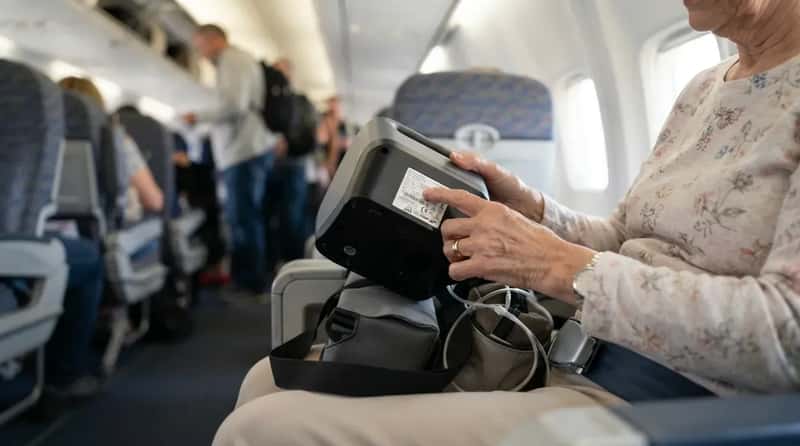
Oxygen is the one area where a wrong assumption can ground you. A portable oxygen concentrator can be used in flight if the manufacturer’s label says it meets FAA requirements. That label is typically on the underside or rear of the unit.
What you can’t bring matters just as much. Stationary and continuous-flow-only home units are not permitted for in-flight use. Compressed oxygen tanks and liquid oxygen systems remain prohibited for passenger use on all commercial flights. Most airlines no longer provide onboard oxygen at all.
But owning the right machine is only half the battle, because the battery math trips up even experienced flyers…
#6 – “How Many Batteries Do I Really Need?” The 150% Rule
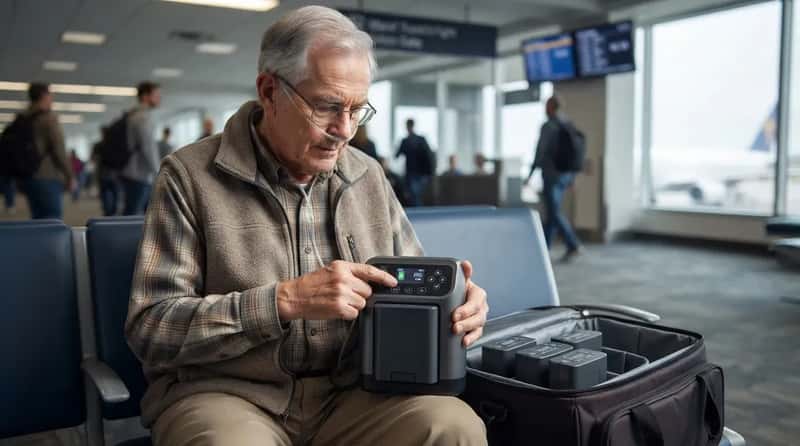
This is the mistake that strands people at the gate. The FAA requires a POC user to carry battery time equal to 150% of the actual flight time. That’s not the time you plan to use it. It’s the flight, plus a cushion.
Some airlines go further. Some carriers require battery coverage for connections and delays too. The good news is that a concentrator is classified as an assistive medical device, so it doesn’t count toward carry-on limits. Always confirm your airline’s own multiplier.
And then there’s the question everyone assumes has an easy answer: can you just plug in?
#5 – “Can I Plug In Mid-Flight?” Don’t Count on It
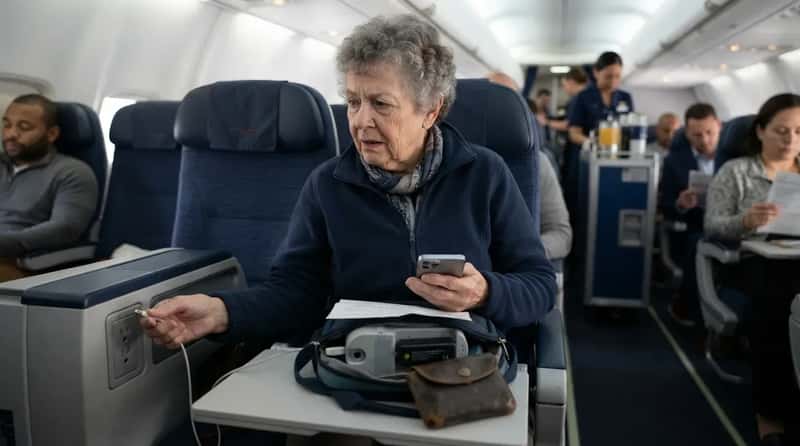
Seat power sounds like an easy fix. Airlines don’t always see it that way. Southwest, for example, allows concentrators only in battery mode. Spare batteries can never go in checked bags. They must be carried in your carry-on.
Packaging rules apply too. Spare batteries should be in protective cases or have their terminals covered to prevent short circuits. Batteries between 101 and 160 Wh may need airline approval. The airline may also ask for documentation from a licensed physician, so bring a doctor’s letter that spells out your flow settings.
Worth Knowing
- Don’t assume seat power is available. Some airlines allow concentrators in battery mode only.
- Spare batteries ride in your carry-on, never in checked bags.
- Cover terminals or use protective cases to prevent short circuits.
- Batteries from 101 to 160 Wh may need airline approval.
Now we move to the money questions, and they get uncomfortable fast…
#4 – “Will Medicare Cover Me Abroad?” The Answer Is Almost Always No

This one blindsides retirees every year. Outside U.S. borders, Original Medicare typically doesn’t pay for health care or medical supplies. It likely won’t cover care on a cruise ship more than 6 hours from a U.S. port.
The exceptions are narrow. They include rare emergencies near Canadian or Mexican borders, or travel between Alaska and the lower 48. There’s also a practical problem. Most foreign hospitals don’t file Medicare claims. Expect to pay up front and chase reimbursement, if there is any.
So what about the supplement plan you’ve paid for all these years?
#3 – “What Does My Medigap Plan Actually Pay?” Read the Fine Print Before the Trip

Some supplement plans do help. Medigap plans C, D, F, G, M and N must provide some emergency foreign travel coverage. The coverage carries a $250 deductible, pays 80%, and has a $50,000 lifetime limit. The emergency must also occur within the first 60 days of travel.
That’s a cushion, not a plan. One insurance seller says a hospital stay in Europe can cost $10,000 to $50,000. Treat that as a sales-side estimate. Even so, a lifetime cap can get used up quickly. And for Medicare Advantage, coverage abroad depends on the plan.
But there’s one expense that no supplement handles well, and it starts at the pharmacy counter…
#2 – “Are My Prescriptions Covered Overseas?” The Pharmacy Surprise

Many travelers assume their drug plan travels with them. It doesn’t. Medicare Part D plans do not cover drugs purchased outside the United States. If you need medication abroad, you pay out of pocket.
There’s one useful exception. Part D covers ACIP-recommended vaccines, including travel vaccines like yellow fever, when you get them in the U.S. before your trip. Smart flyers also pack medication in a carry-on, since checked bags can go missing. Refilling a lost prescription overseas costs far more than a few minutes of extra planning.
At a Glance
- Bought abroad: Not covered by Part D, so you pay out of pocket.
- Travel vaccines: Covered if they’re ACIP-recommended and given in the U.S. before you leave.
- Packing: Keep medication in your carry-on, not your checked bag.
Which brings us to the question with the biggest price tag of all…
#1 – “Who Pays If I Need to Be Flown Home?” The Question Nobody Wants to Ask
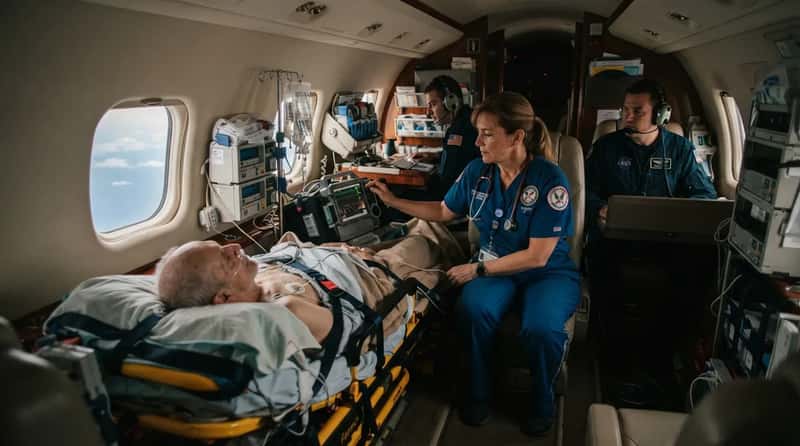
Medical evacuation is the bill that can blow up a retirement budget. One insurance seller estimates that emergency evacuation to the U.S. can cost $25,000 to $250,000. Those are marketing-side figures, but even the low end is alarming. And Medicare is no safety net here.
Age can also change what you can buy. One insurer’s plan lists up to $1,000,000 in coverage under age 80, but $100,000 for ages 80 and up. Limits like that vary by policy, so compare them before you pay. Ask about evacuation specifically, not just “medical.” That single word separates a hospital bill from a rescue flight.
Look back over the list and the pattern is hard to miss. Shoes now stay on for everyone, so that old perk is gone. The protections that really matter, from curb-to-gate help to the 30-minute limit on waiting alone, mostly go to the people who ask for them.
Oxygen users need the right label and 150% battery time, and Medicare mostly stops at the border. The best trips usually start with a phone call weeks earlier, not a scramble at the gate. Which question do you wish someone had told you to ask years ago?