You’ve seen it happen. Boarding is almost done, an agent taps a screen, and a total stranger gets waved toward the front while you stay exactly where you are. It feels like favoritism, but the real reasons are usually more practical, and sometimes more uncomfortable.
Some of these moves are lucky breaks. Others are airlines cleaning up a problem somebody else caused, and the person who gets moved never hears the story. One of the reasons on this list is a cold cost calculation the gate would never say out loud, and it changes how you’ll watch the boarding line.
#16 – The Back of the Plane Was Oversold, So You Got Promoted
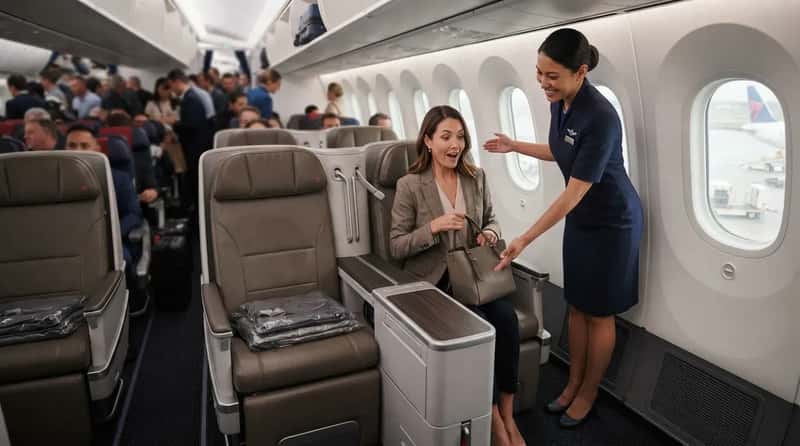
Airlines can end up with more passengers in economy than economy seats. When the back is crowded and the front has open seats, the system can simply slide you up. It’s called an operational upgrade, and nobody asks your permission first.
Gate agents and revenue systems usually sort this out in the last hour before departure. The goal is to get a full flight out the door, not to reward anyone for good behavior. The person who got bumped up often has no idea they solved someone else’s seat problem.
But that’s nothing compared to what status does to the queue in #15…
#15 – Elite Status Quietly Jumps You Ahead of Paying Customers
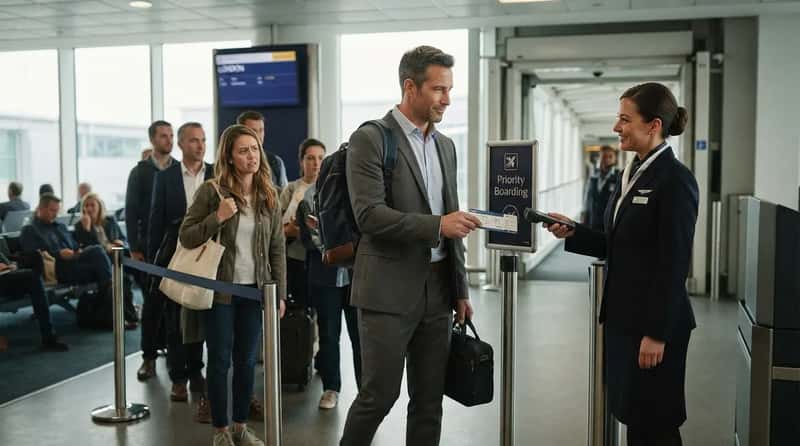
Upgrade lists are not first come, first served. Loyalty tier, fare type, and sometimes the time you requested the upgrade decide who moves up. The pecking order is written into the airline’s software, and you never see it.
That means a traveler on a cheap fare with top-tier status can leapfrog someone who paid more at the counter. Frequent flyers call it earned. Plenty of everyone else calls it the most unfair perk in travel. Either way, the airline almost never explains the ranking to the person left behind.
At a Glance
- Loyalty tier: higher status generally sits higher on the list.
- Fare type: some tickets are upgrade-eligible and others aren’t.
- Request timing: it can break a tie between travelers of equal rank.
- Visibility: the list is internal, so the exact order stays hidden from you.
Wait until you see what weight has to do with it in #14…
#14 – On Small Planes, Where You Sit Is Part of the Balance Math
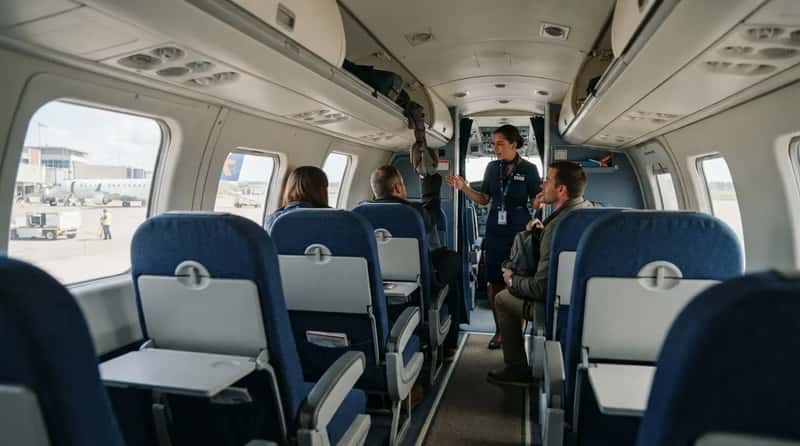
If you’ve ever been asked to switch rows on a regional flight, there was a reason. Smaller aircraft are sensitive to where passengers and bags are placed. Agents may move people forward, or back, to keep the plane balanced.
It isn’t about singling anyone out. Pilots need the load to sit within safe limits for takeoff, and a half-empty turboprop has less room for error. A few people shifting seats can matter more than you’d guess.
Next, the family problem that airlines almost never talk about…
#13 – Families Get Reshuffled When the Seat Map Splits Them Up
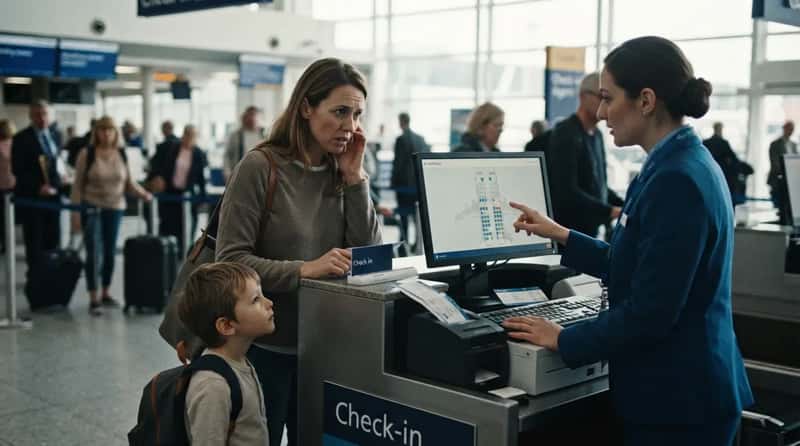
Picture a parent at check-in staring at a seat map where their six-year-old is assigned to row 31 and they’re in row 18. Agents can sometimes fix this by moving other passengers, and some of those moves go forward. The people who get shifted usually hear nothing but “would you mind?”
Several major U.S. airlines say they try to seat young children next to an adult at no extra charge. Congress pushed on the issue in the 2024 FAA reauthorization law, though policies vary and keep changing. Check your airline’s current rules before you fly.
The reshuffle after an aircraft swap is even messier, as #12 shows…
#12 – A Last-Minute Aircraft Swap Scrambles the Whole Cabin
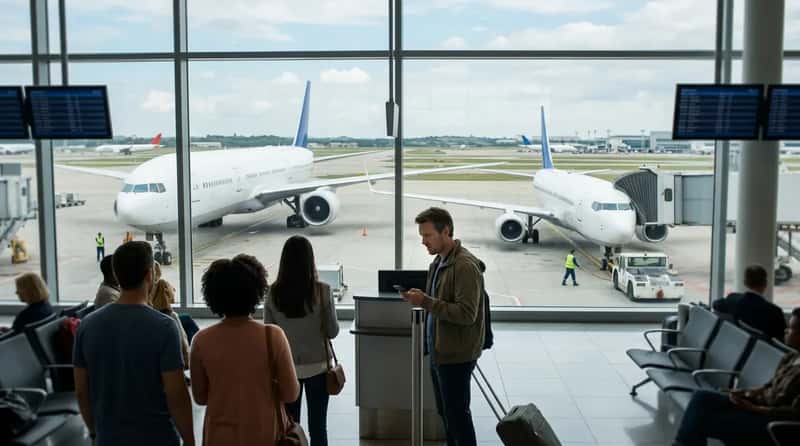
Airlines swap planes for maintenance, crew, or capacity reasons. A different aircraft often means a different seat layout, and the system re-seats everyone on its own. Some people land in better spots without ever knowing why.
If the new plane has fewer seats in one cabin, somebody has to move. If it has more, others slide up. That odd seat-change email you got at 6 a.m. may be nothing more than a mid-day equipment shuffle.
And the clock matters more than you think, as #11 reveals…
#11 – A Tight Connection Can Earn You a Front Seat
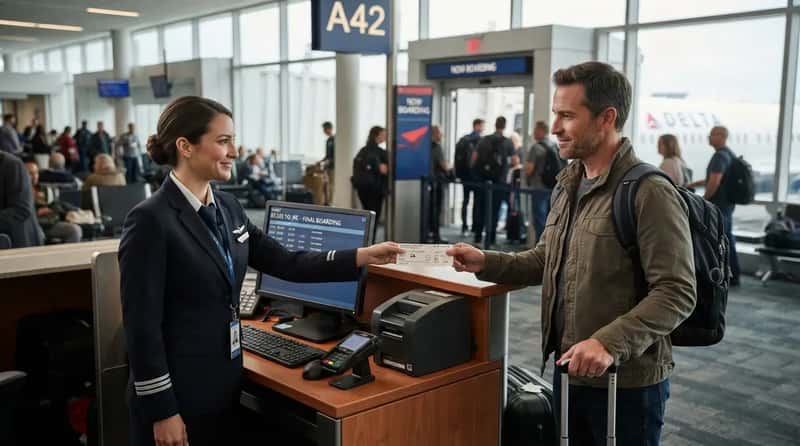
Missing a connection costs the airline money and goodwill. Agents can sometimes move a tight-connection passenger closer to the door. Those few rows can save precious minutes on the other end.
This isn’t guaranteed, and it varies by airline and station. It often happens quietly at the gate once someone checks the connecting flight’s status. Everyone else just sees a seat up front get taken.
Worth Knowing
- It’s a judgment call at the gate, not a right you can claim.
- Agents usually look at the connecting flight’s status before they move anyone.
- Sitting closer to the door means getting off sooner, which can be the whole point.
- The passenger who gave up the seat typically just hears a polite request.
The next group gets moved for reasons that are legally required, not optional…
#10 – Accessibility Rules Pull Certain Passengers Toward Specific Seats
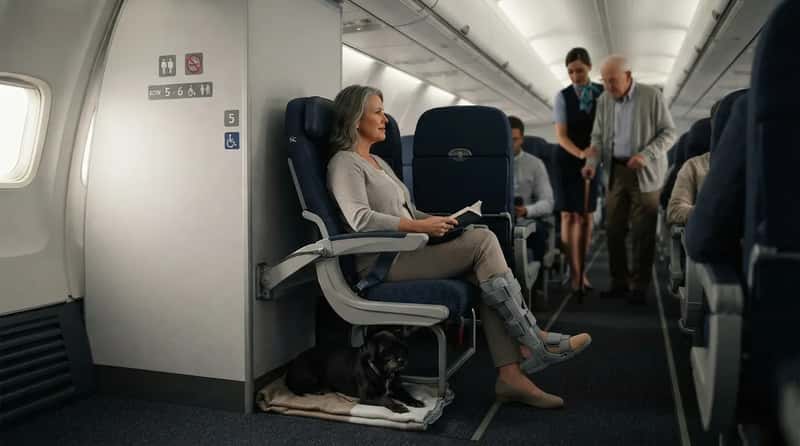
Federal rules require airlines to offer accessible seating options. Those can include aisle seats with movable armrests and, in some cases, bulkhead seats. Passengers with disabilities may be moved there at booking or at the gate.
These travelers aren’t asking for favors. They’re using protections written into law. Meanwhile, the passenger asked to give up that seat may never be told why, and it can look like unfair queue-jumping from the outside.
The next one involves the youngest travelers in the sky…
#9 – Kids Flying Alone Are Placed Where the Crew Can See Them
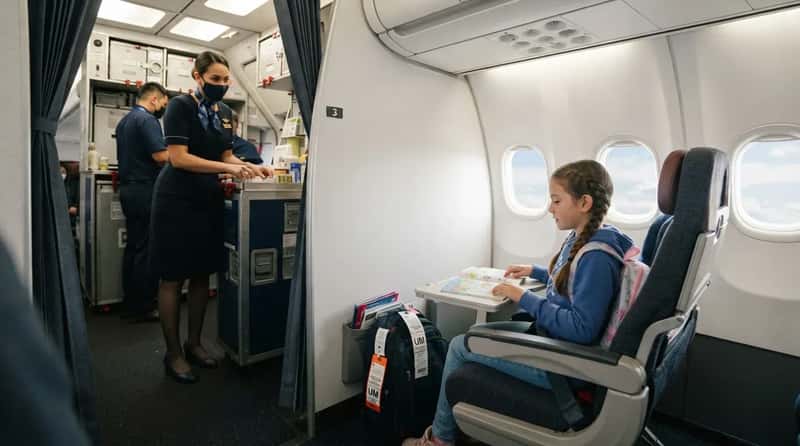
Airlines with unaccompanied minor programs generally want those children close to the crew. That often means a seat toward the front, and other passengers may be moved to make room. It’s a quiet safety measure, and it’s never announced.
Policies differ by carrier, including age limits and fees, so the details live in each airline’s rules. Most passengers never notice the child at all. They only notice that their own seat assignment changed.
But a broken seat can trigger a surprise too, as #8 shows…
#8 – A Broken Seat Can Send You to a Better Cabin
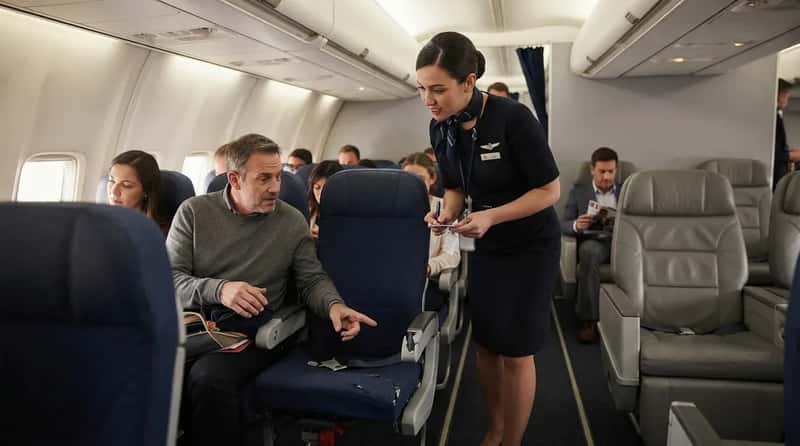
Seats jam. Tray tables snap. Screens go dark. When a seat is declared inoperable, the airline has to put you somewhere, and sometimes that’s forward. It isn’t always an upgrade, but it can be.
Crews and gate agents usually decide within minutes. If a better seat is open, it’s the easiest fix on the table. Honestly, the airline may be saving itself a complaint more than doing you a favor.
Some moves, though, happen because a neighbor is the problem…
#7 – The Quiet Seat Swap After a Conflict Nobody Announced
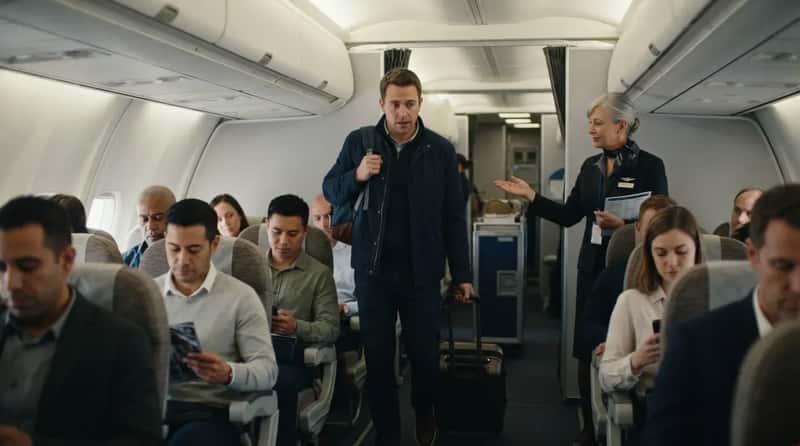
Fights over armrests, recline, or behavior happen more than airlines admit. Crews would rather move one person than referee a feud for four hours. If a better seat is open forward, that’s where the person may land.
Flight attendants are trained to defuse tension early. They won’t explain the details to the cabin. You just see someone gather their things and walk up the aisle while everyone pretends not to look.
Our next reason involves animals, and it surprises people…
#6 – Service Dogs Need Floor Space, and Someone Else Pays for It
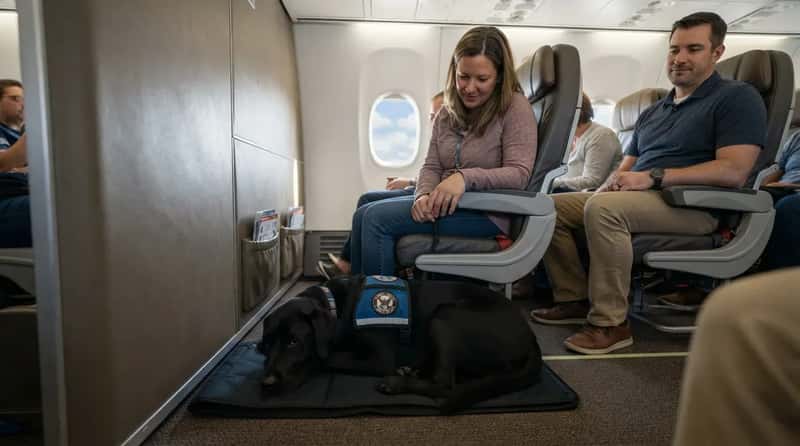
Under current U.S. rules, only dogs trained to do work or perform tasks count as service animals on flights. A dog needs room at its handler’s feet, so passengers nearby may be reseated. Bulkhead rows can help, but exit rows are off limits.
That can push a neighboring passenger into a different row without a clear explanation. It’s a practical fix, not a perk. Still, some travelers grumble about it at the gate.
Then there’s the apology upgrade, which may be the most calculated of all…
#5 – The “Sorry About the Delay” Upgrade Is a Business Decision
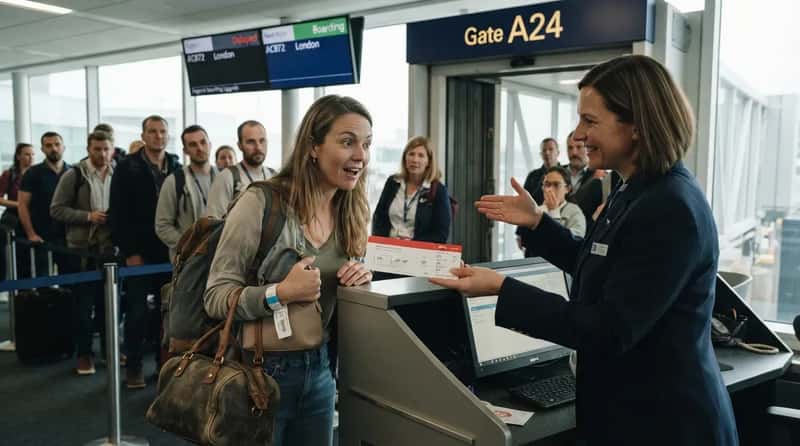
After a long delay or a botched rebooking, a quiet upgrade can appear on your boarding pass. Airlines use cabin upgrades as a low-cost way to calm angry customers. When a premium seat would fly empty anyway, it costs far less than a refund or a voucher.
These upgrades are discretionary. They depend on the agent, the flight, and what’s open. One passenger gets a lie-flat apology while the person beside them in the same delay gets nothing, and that’s where the resentment starts.
Why It Stands Out
- A seat that would fly empty costs the airline very little to give away.
- Two people on the same delay can walk away with very different outcomes.
- It usually shows up silently on the boarding pass, with no announcement.
- It can defuse a complaint before it turns into a refund request.
Now for a myth that refuses to die…
#4 – The Myth That Dressing Up Gets You Moved Forward
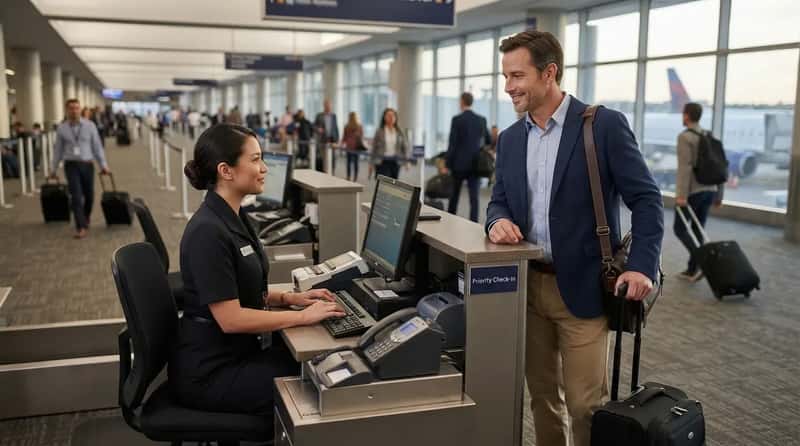
Everyone has heard the advice about wearing a blazer to the airport. Today, upgrades are mostly driven by status, fare class, and system priority, not your outfit. Agents have far less freedom than they once did.
Friendliness and patience may help in rare cases where an agent has discretion. But the old trick of looking wealthy at the counter has largely faded. Many frequent travelers say it’s mostly nostalgia from another era of flying.
But there’s a rare exception that can actually work, as #3 shows…
#3 – Honeymoons, Birthdays, and Milestones Sometimes Move the Needle
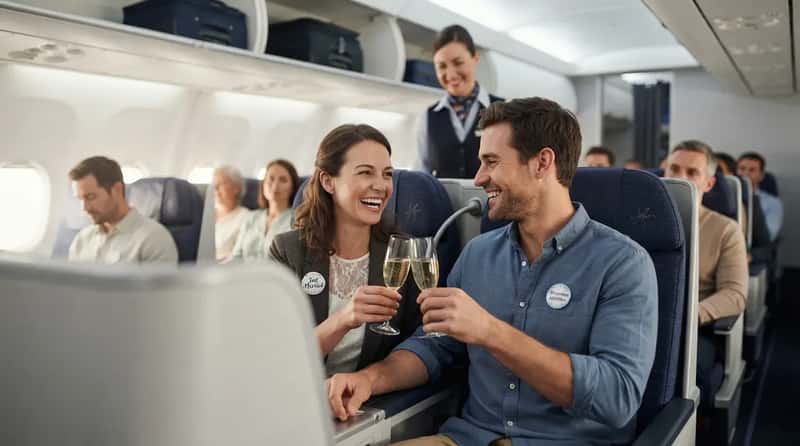
Airlines say they like to celebrate their customers. Occasionally, a crew member or gate agent can offer a small upgrade or a better seat for a special occasion. It’s never promised, and it’s never explained to the people sitting around you.
It depends on open seats and on the person behind the desk. A mention at check-in can’t hurt, but it rarely works on a full flight. Don’t build a trip around it.
The next reason hides in plain sight on your seat map…
#2 – Held-Back Seats Get Released at the Gate
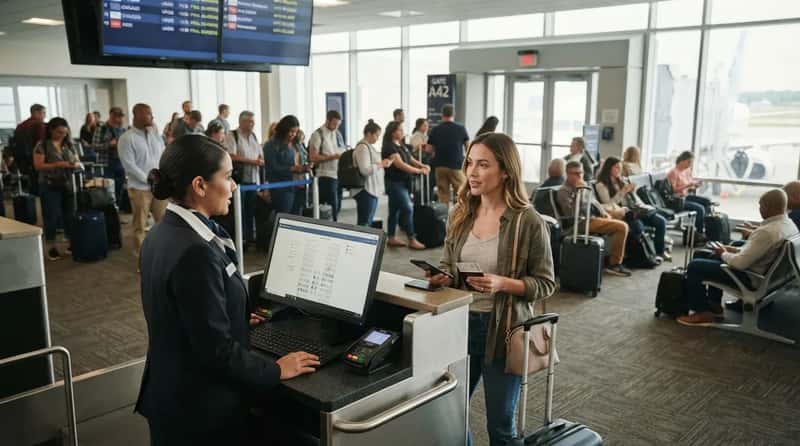
Airlines often keep some seats blocked, including premium ones. Those can be released close to departure and handed to whoever the system or an agent chooses. That’s why a seat map can look packed online and then open up at the gate.
Passengers who are checked in, flexible, and standing at the counter tend to benefit. Everyone else just boards and sees a different map than the one they saw the night before.
But the biggest reason of all comes down to dollars, and it’s #1…
#1 – Moving You Forward Can Cost Less Than Bumping You
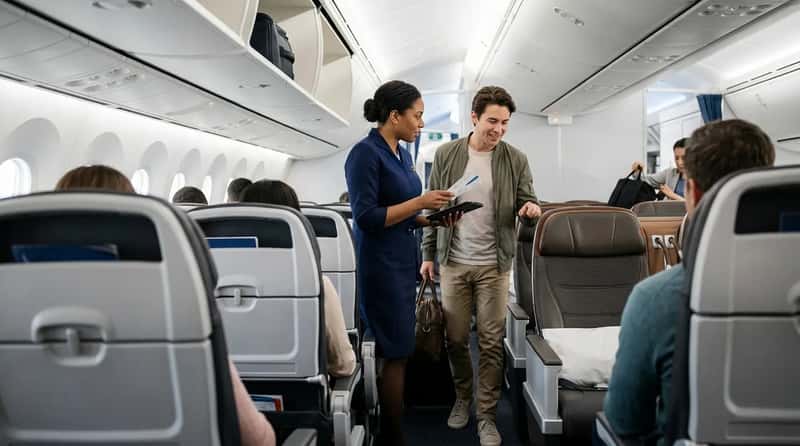
When a flight is overbooked, airlines have to find volunteers or free up seats. Involuntarily denying boarding triggers compensation rules, so a free upgrade can be the cheaper fix. Federal rules tie those payments to the ticket price and the length of the delay.
Fast Facts
- Under 1 hour late: no compensation is required if you’re rebooked to arrive within an hour of your original time.
- 1 to 2 hours late (domestic): 200% of your one-way fare, with the required cap at $1,075.
- More than 2 hours late (domestic): 400% of your one-way fare, capped at $2,150.
- Latest update: those caps came from an inflation adjustment that took effect January 22, 2025.
- Airlines can pay more than the minimum, but not less.
So when the system quietly slides you ahead, it may be protecting the airline’s bottom line. You just see a better seat, while somewhere else a messy bump was avoided. That’s the part nobody says out loud at the gate.
Most surprise moves aren’t random, and they’re rarely a reward. They come from weight limits, legal duties, broken seats, status lists, and a cost calculation. The airline benefits first, and you sometimes benefit second.
So the next time a stranger gets called toward the front, remember that somewhere a rule, a chart, or a spreadsheet already made the call. Nobody at the gate was ever going to tell you.