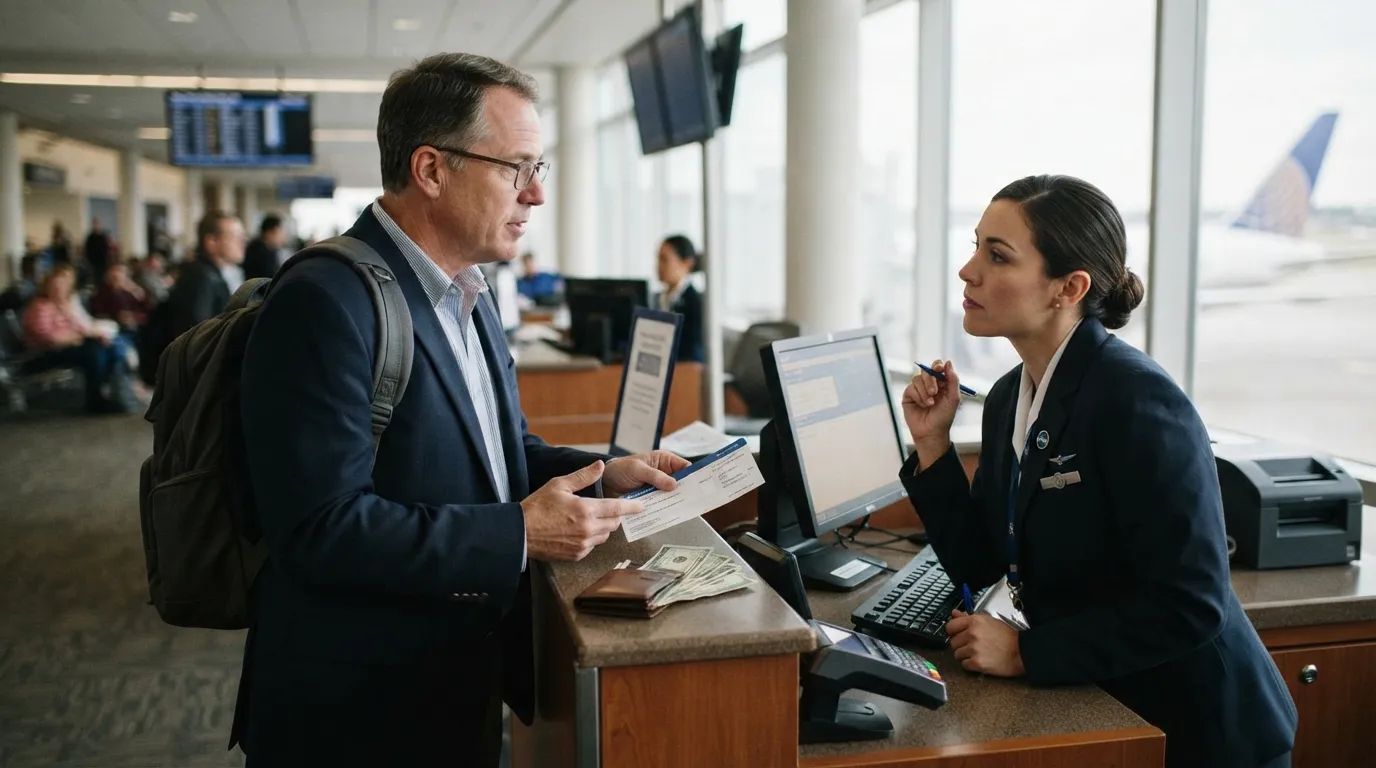
Most travelers walk up to an airline desk braced for a flat “no.” The line behind them is long, the agent looks buried, and the rules feel like a locked door. But the person behind that counter often has more room to say yes than you’d guess, and sometimes the law is already on your side.
The difference usually isn’t charm or luck. It’s the wording, the timing, and one quiet detail most people skip. Below are 16 requests that tend to go over well, and one common word that can sink an upgrade request before the agent finishes the sentence.
#16 – The Middle-Seat Escape Agents Can See Before You Can
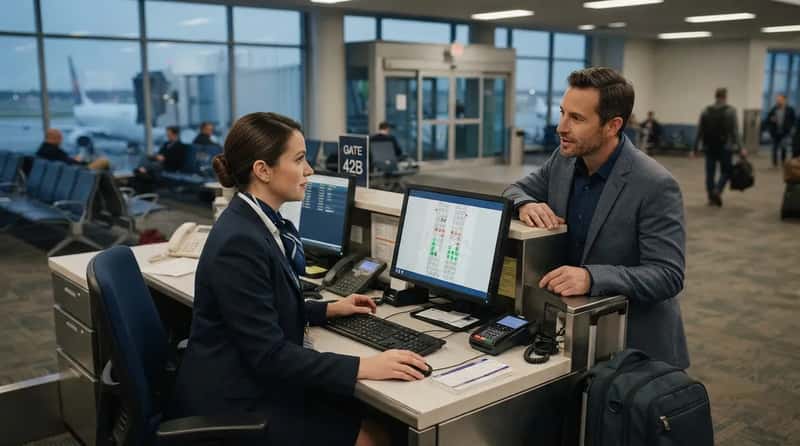
That wedged-in middle seat may not be permanent. On flights that aren’t full, gate agents can often see the whole seat map long before passengers can, including the empty rows you’ve been eyeing from the boarding line. Whether they can waive a fee for a better spot depends on the airline, but moving you to a free seat is often an easy fix.
Timing helps. Frequent flyers often suggest asking about 30 minutes before departure, once the agent has a clearer picture of who is actually showing up. Ask for something specific, like an aisle or an empty row, instead of “anything better.” A calm, narrow ask gives the agent something simple to say yes to.
The next request is one a lot of parents are surprised to learn works so often.
#15 – The Quiet Swap That Puts a Split-Up Family Back Together
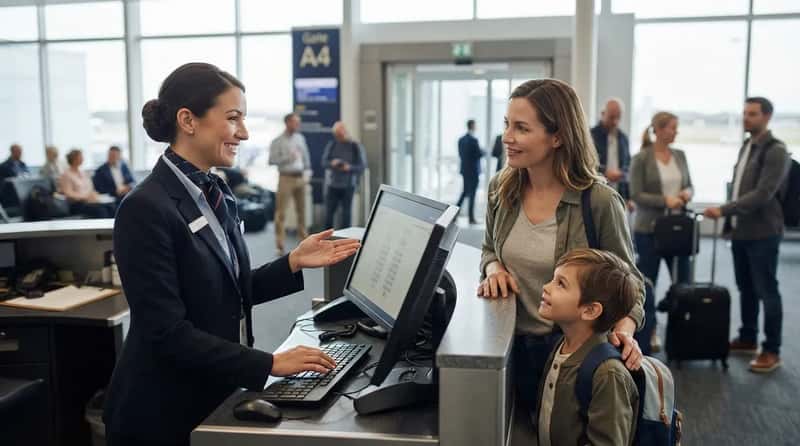
Being seated rows apart from your six-year-old feels like a booking disaster. It’s often a fixable one. Several major U.S. airlines have publicly committed to seating young children next to an adult at no extra charge when they can, and gate agents regularly try to make it happen when asked politely. Policies differ by airline, so don’t treat it as a guaranteed right.
The best moment is before boarding starts, while seat assignments are still easy to shuffle. Skip the speech about how unfair the booking system is. Say how many of you there are, how old the child is, and that you’d like to sit together. Then let the agent work the seat map. A short, specific ask tends to beat a complaint every time.
Worth Knowing
- Lead with the numbers: how many travelers, and the child’s age.
- Ask before boarding, when seats are still easy to move.
- Mention it again at the gate, even if you raised it at check-in.
- Offer to take any seat, as long as the group stays close together.
The next one is where many travelers blow it with a single word.
#14 – The Upgrade Question That Works Only If You Don’t Say “Free”
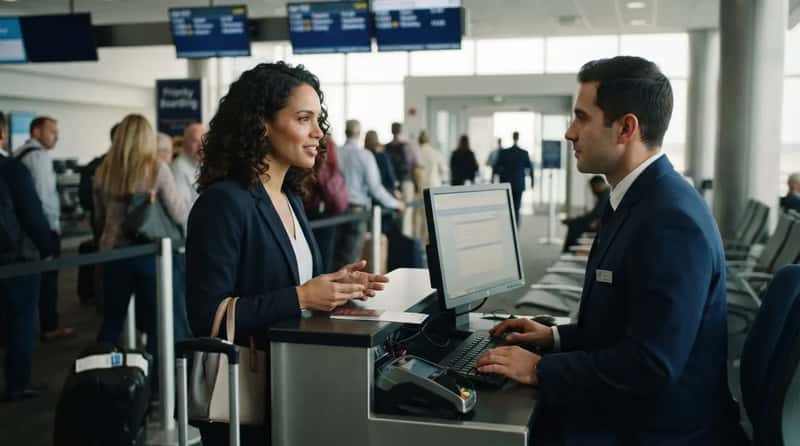
Walk up and ask for a “free upgrade,” and you’ll almost always get a polite refusal. Many seasoned travelers and travel writers call it the worst opener there is. It sounds like a request for a gift, and the agent has heard it a hundred times that day.
Agents do have levers, though. If coach is oversold and seats are open up front, they may move people forward during boarding. You can also ask what last-minute paid upgrade offers are available, since those are sometimes cheaper than the booking-site price. So the question that works sounds like “if you’re moving people up, I’d love to be considered,” not “can I have first class?”
And the myth behind this next one has been spreading online for years.
#13 – The “Comfort Seat” Request That Isn’t an Upgrade at All
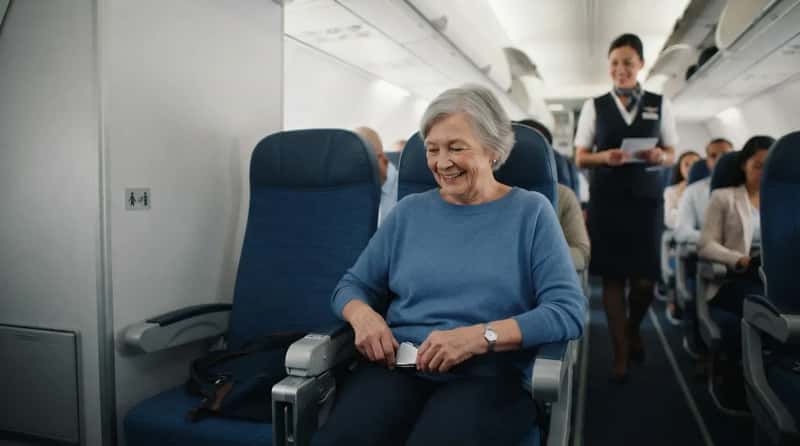
If walking is hard, a seat closer to the front or on the aisle is a different request from a bigger seat. The Department of Transportation says airlines must provide seating accommodations that meet a passenger’s disability-related needs. That can mean an aisle seat or one nearer the door.
Here’s the catch. The airline does not have to move you into a different cabin class. So the viral idea that you can claim a “senior upgrade” is a myth. Describe the need plainly, such as less walking, easier aisle access, or extra room for a medical reason. Agents can say yes to a need far more easily than to a wish.
Fast Facts
- The protection comes from the Air Carrier Access Act, which covers disability-related needs.
- Airlines can’t charge extra for a disability accommodation.
- The accommodation is about the seat’s location, not a higher cabin class.
- If an agent refuses, you can ask to speak with the airline’s complaints resolution official.
And the next request starts well before you reach the gate.
#12 – The Free Curb-to-Gate Ride Nobody Mentions at Check-In
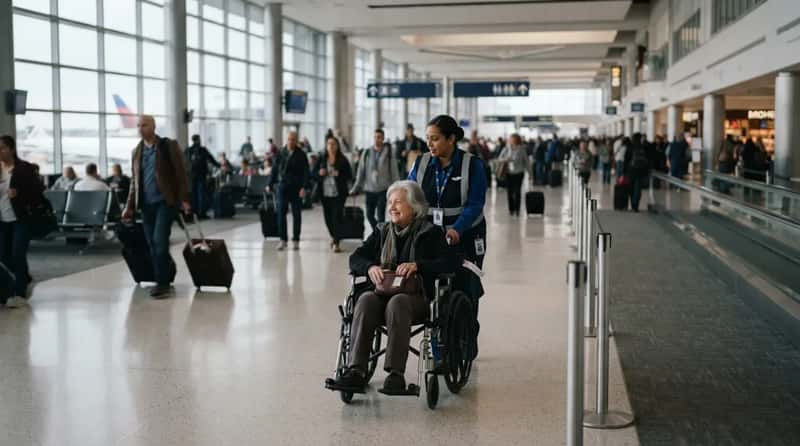
Airport terminals have gotten huge, and crossing them is a real cost for many people. U.S. rules require airlines to provide wheelchair or guide assistance at no charge. You don’t need to hide that you’re asking, and there’s nothing to pay.
The detail people miss is the day-of confirmation. Even if you requested the service when you booked, tell the agent you need it today, or the chair may not be waiting. Mention connections too, because the help has to be lined up at each stop. A quick reminder at check-in can save you a long wait at the far end.
Once you’re at the gate, there’s another request that spares you the worst part of boarding.
#11 – The Pre-Boarding Ask That Skips the Aisle Crush
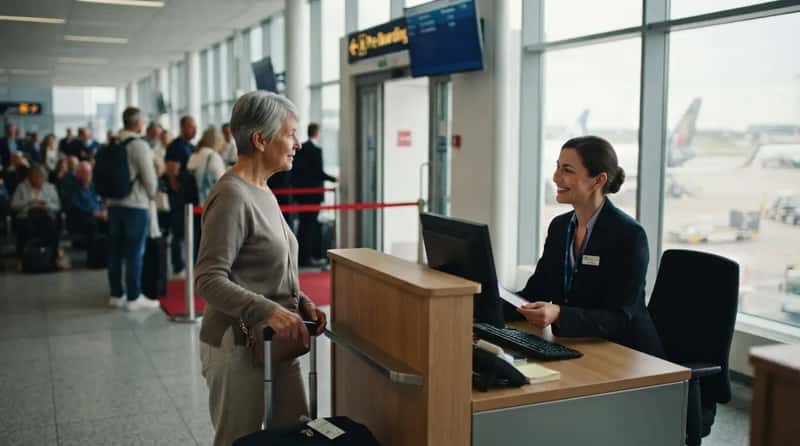
The boarding scramble is where a lot of travelers with limited mobility end up stressed. Ask calmly for pre-boarding assistance because of a mobility need, and you board before the main rush. No overhead bin scramble, no shoulder-to-shoulder shuffle down the aisle.
Say it at the desk, not in the line. Tell the agent what you need, whether that’s extra time or help with a carry-on, so they can plan around it. A short, factual sentence is usually enough, and you generally don’t need paperwork for this kind of request.
The next request is one parents rarely realize costs nothing.
#10 – The Stroller You Can Keep Until the Jet Bridge
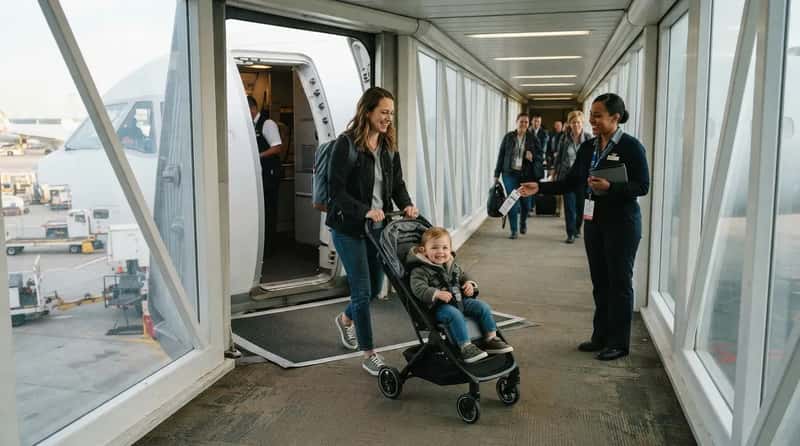
Hauling a stroller through security and then folding it at the gate sounds like a nightmare. It usually isn’t one. Many U.S. carriers let you gate-check strollers and car seats for free, which means you can push your child right up to the plane door.
Ask the gate agent for a tag before boarding. Also ask where the stroller will be returned on arrival, because that can differ by airport. Policies vary by airline, so a quick look at your carrier’s baggage page beats guessing. It’s a small ask, but it saves a lot of arm strain.
The next one is a refund request most people don’t know exists.
#9 – The Refund for Wi-Fi That Never Actually Worked
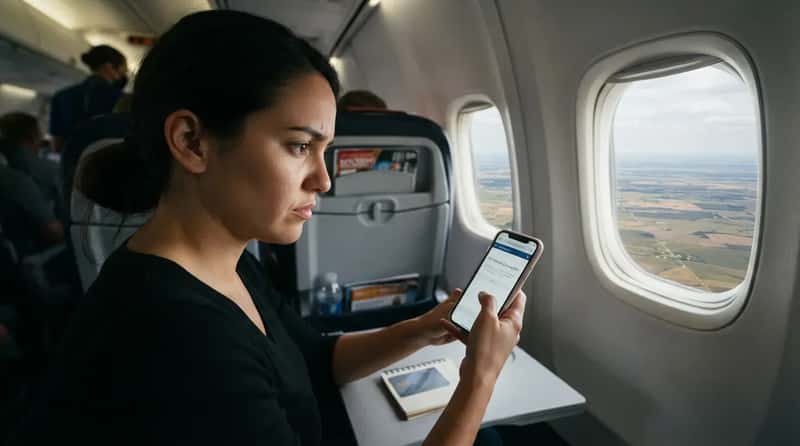
You paid for in-flight internet, it dropped out somewhere over Nebraska, and you shrugged. Federal refund rules say you shouldn’t have to. Under the Department of Transportation’s 2024 automatic-refund rule, passengers are entitled to a refund when an extra service they paid for, such as Wi-Fi, isn’t provided.
Refunds are supposed to be prompt, in the original form of payment, and for the full amount. If nothing shows up on your card, contact the airline and name the Wi-Fi charge specifically. Keep a screenshot of the receipt handy. It’s a small amount of money, but it’s yours.
And what happens when your suitcase takes its own vacation? That one costs real money.
#8 – The Bag Fee You Can Get Back When Your Suitcase Shows Up Late
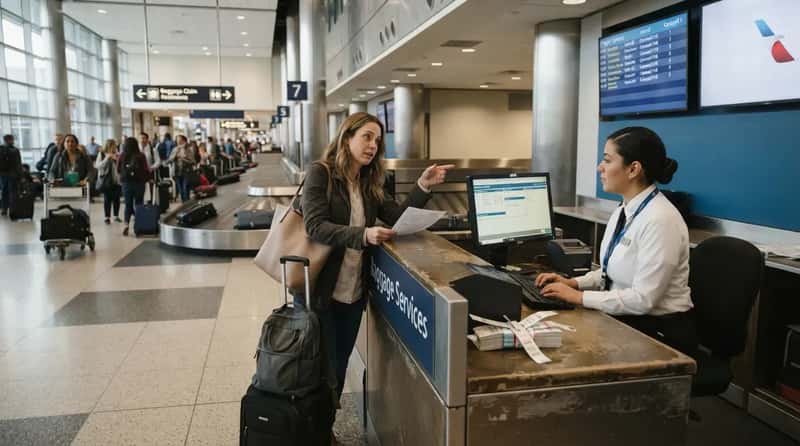
Your bag arrives a day late, and you’ve already paid around $35 for the privilege. Under the same 2024 refund rule, if a checked bag isn’t delivered within 12 hours of your arrival on a domestic flight, you’re entitled to a refund of the bag fee. For international flights, the window runs 15 to 30 hours depending on flight length.
Ask for it by name, and file the delayed-bag report before you leave the airport. Be specific about the timing instead of saying the bag was “very late.” The airline needs to know exactly how long it was delayed, and the rule sets out when that clock starts.
Now for the request that matters most when a flight falls apart.
#7 – The Rebooking Ask That Works Better With a Specific Flight
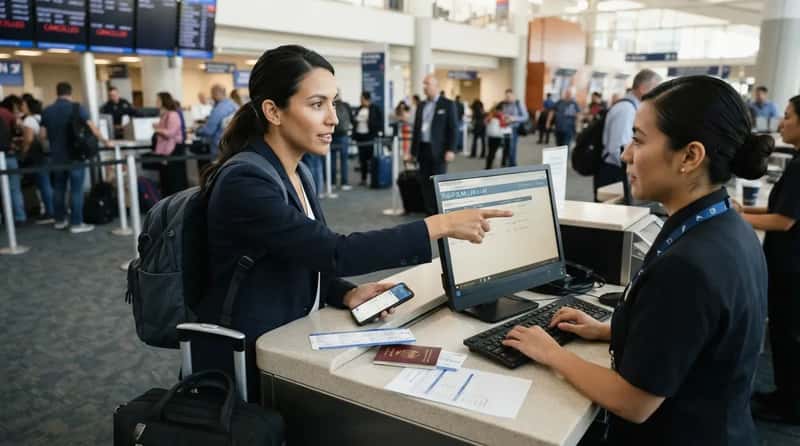
When a flight is cancelled, the whole line asks the same vague question: “What can you do for me?” That’s the weakest version. There is no broad federal rule dictating exactly how an airline must rebook you, so the airline’s own policy fills the gap, and agents often have room to choose.
That makes the quality of your ask matter more. Look at the schedule yourself, then name an option: a later flight, a different connection, or a nearby airport. An agent can say yes to a concrete suggestion in seconds, while a shapeless request often ends at the default. Keep the tone friendly, because that agent is solving your problem and everyone else’s.
Quick Compare
- Vague: “What can you do for me?” Usually ends at the default option.
- Specific: “Is there a seat on the evening flight through Denver?” Gives the agent one thing to check.
- Flexible: “Would a nearby airport work?” Opens a second door if the first is full.
But there’s a bigger choice hiding in these moments, and it involves cash.
#6 – The Cash Refund Many Travelers Take as a Voucher by Mistake

When a flight is cancelled, agents often lead with credits or rebooking. That’s fine if you still want to travel. But if you don’t, you have a stronger option. Under the Department of Transportation’s refund rule, a ticketed passenger is entitled to a refund if the airline cancels a flight, for any reason, and the passenger chooses not to travel.
The same applies to significant schedule changes. You’re owed the ticket price back in the original form of payment when you decline the alternative. The catch is that once you accept a new flight or a credit, that refund door can close. So decide first, then say the word “refund” plainly.
The next one is about knowing exactly what the airline already promised.
#5 – The Meal and Hotel Promise Hiding in the Airline’s Own Fine Print
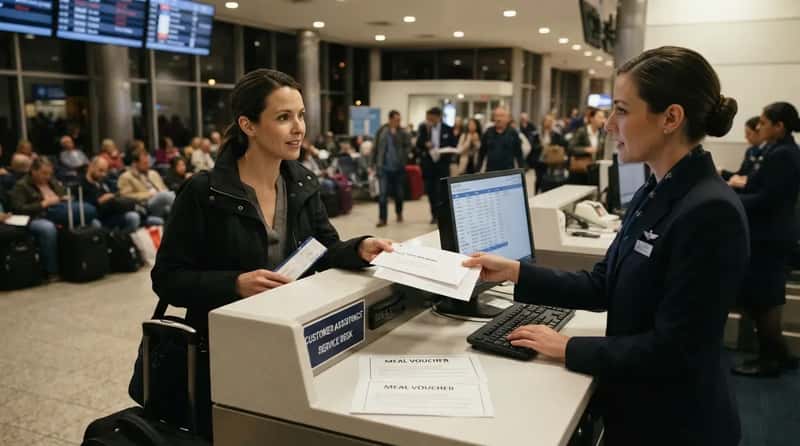
Plenty of travelers sit on terminal floors because nobody told them what the airline had already pledged to do. The Department of Transportation runs a customer service dashboard that shows what each major airline commits to provide for delays it controls. Depending on the carrier, those commitments can include meal vouchers, hotel rooms, and rebooking on the airline’s own flights.
Those promises vary a lot from airline to airline, and they usually apply only to delays or cancellations within the airline’s control. So ask a sharper question than “can you give me something?” Try “what does your plan cover for this delay?” and, if you know it, name the cause, such as a crew or maintenance issue.
The next request has a deadline most people never learn about.
#4 – The 24-Hour Escape Hatch for a Booking You Regret
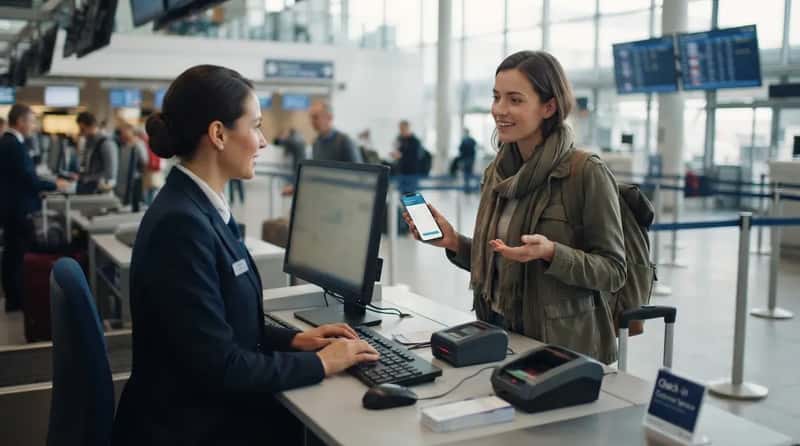
You hit “buy” and instantly spotted the wrong date. Don’t panic yet. Under a long-standing federal rule, airlines selling directly to U.S. customers must either let you cancel for a full refund within 24 hours of booking or hold the fare for 24 hours, as long as the flight is at least seven days away.
The wording matters. Tell the agent you booked within 24 hours and ask for a “24-hour cancellation,” which points them straight to the right policy. Fares bought through a third-party site often follow that site’s rules instead, so check where you booked. Act fast, and the answer is often yes.
At a Glance
- Window: 24 hours from the time of booking.
- Flight timing: The departure must be at least seven days away.
- Where it applies: Mainly fares bought directly from the airline.
- Magic phrase: “I’d like to use the 24-hour cancellation.”
Two disability-related requests come next, and neither is really about the seat.
#3 – The Priority Treatment for Your Walker or Folding Wheelchair
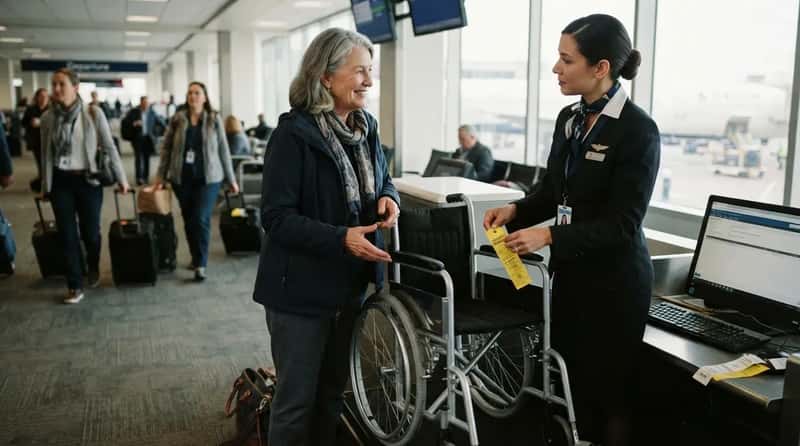
For many travelers, the scariest part of flying is whether a mobility device will arrive intact. The rules lean in your favor. Airlines are required to assist with loading and stowing assistive devices, and a wheelchair or walker isn’t supposed to be treated like ordinary luggage.
Tell the agent at the desk what the device is and whether it folds. Ask where it will be stored and where it will be waiting when you land. That one short conversation can prevent a missing-device nightmare.
#2 – The Slim Chair That Rolls You Right to Your Seat
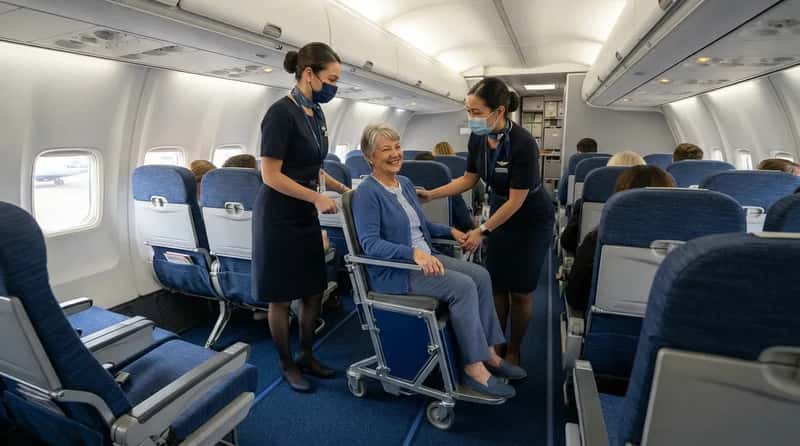
A regular wheelchair can’t fit down a plane aisle. That’s why airlines keep a narrow alternative on hand. For travelers who can’t walk the aisle, staff use a slim boarding chair to get you to your seat.
If you need it, say so when you book and again at the gate. It usually happens before the general rush, so there’s no audience and no pressure. Crews prefer to know ahead of time because it takes planning. Asking early turns an awkward moment into a smooth one.
And the last request is the one that can put real money in your pocket.
#1 – The Cash-Not-Voucher Counteroffer When You’re Bumped
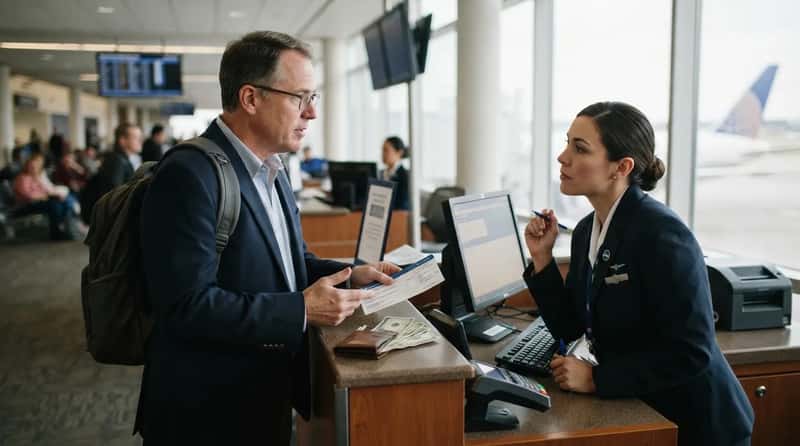
An oversold flight is the one place where U.S. law requires a payout on a domestic trip. If you’re involuntarily bumped, you’re owed compensation, and you can ask for it in cash or by check. If you volunteer to give up your seat, the offer becomes a negotiation, and agents often open with a voucher.
That’s where the right ask pays off. Vouchers come with restrictions that quietly eat their value. So try, calmly: “Would you consider cash instead?” Many travelers never say it, and that may be the most expensive silence in air travel.
The common thread isn’t charm or a magic phrase. It’s a calm, specific ask at the right moment, aimed at something the agent can actually grant. Some of these are legal rights, like free mobility help, refunds for cancelled flights, and cash when you’re bumped. Others are favors, like a better seat or an early board.
The biggest mistake is asking for a perk when you could be claiming something you’re already owed. Which of these have you actually tried at the airport, and what did the agent say?