You’ve probably heard the rumor: turn 65, and airport staff quietly start handing out perks. Here’s the twist. The counter doesn’t run on birthdays. It runs on need, and that gap is where most travelers lose out. Even the best-known age-based airport break, TSA’s gentler screening for older passengers, has been aimed at people 75 and up, not 65.
The good news is that the 16 requests below get a yes again and again, and almost none of them cost a dime. Most people never ask because nobody told them these options exist. They’re counted down from #16, and the one waiting at #1 stirs up a surprisingly emotional argument about pride.
#16 – Boarding Before the Crowd, With Just One Sentence
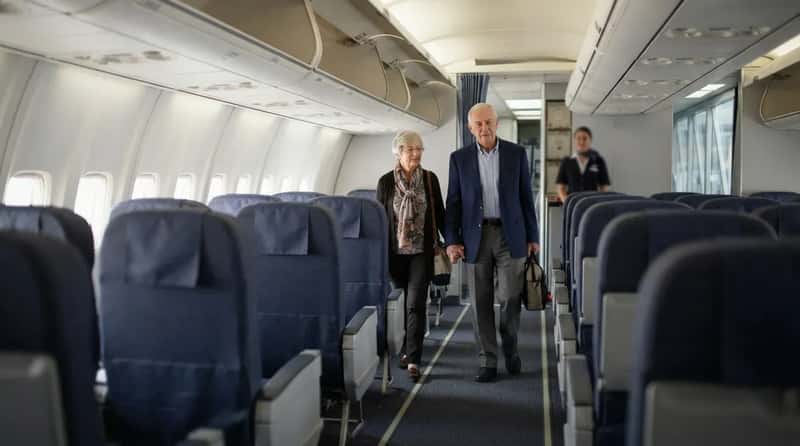
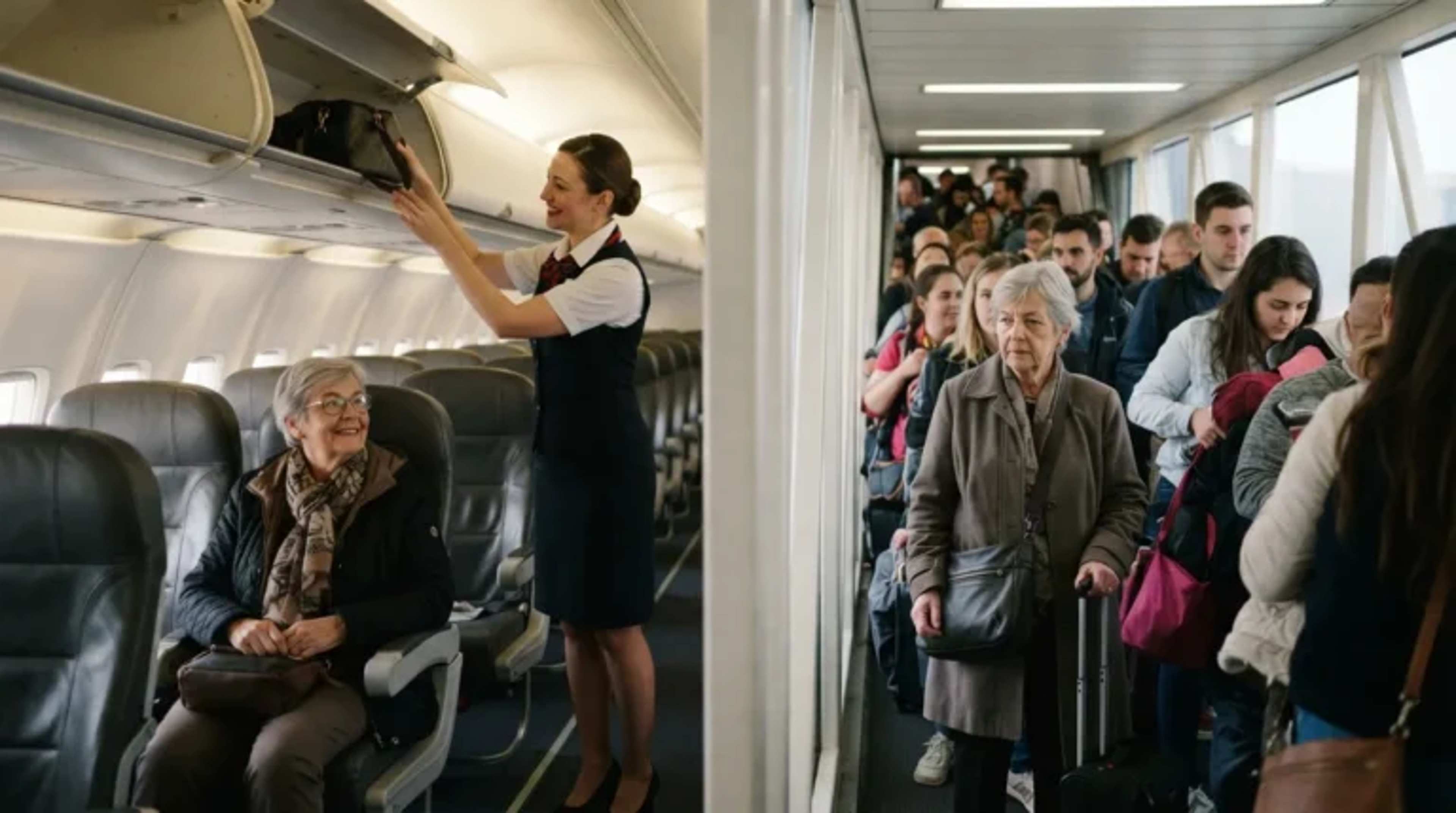
Most airlines let travelers request pre-boarding assistance for mobility needs. You can ask at check-in or at the gate. You don’t need a cane or a doctor’s letter. Agents usually just want to know you need a little extra time on the jet bridge.
The payoff is a calm walk down an empty aisle. Your bag is stowed and your seat belt is on before the stampede starts. Agents are far more likely to say yes when you name the need, such as “I walk slowly” or “I need time with the stairs.” A vague “I’m a senior” gets you less. The next request fixes a problem that splits up couples every single day.
#15 – Sitting Next to Your Spouse When the Seat Map Split You Up

This one surprises people. No federal law currently guarantees free family seating, and the proposed rule focuses on young children, not adult couples. Basic Economy fares often block advance seat selection, which is how married couples end up seven rows apart.
Agents can still fix it at the counter, especially when open seats exist. They can see the whole seat map and shuffle people around in minutes. Plenty of travelers think seat-assignment fees are pure junk. Whatever you think of them, ask politely before you pay anything. You’ll often get a yes, or at least a real try.
If you’re traveling with a caregiver or someone who helps you, say so. That request tends to get priority. And some airports will even let your companion walk you all the way to the gate.
#14 – The Gate Pass That Lets Your Helper Walk You In
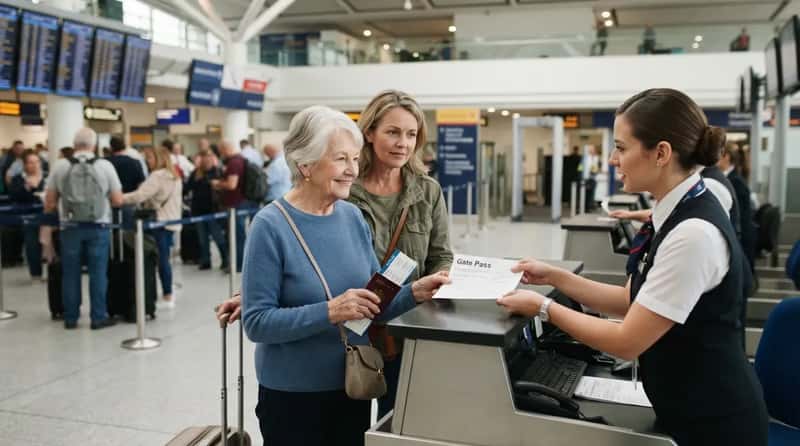
Normally only ticketed passengers get past security. But airlines can issue a gate pass to a non-flying companion who needs to accompany a traveler who needs help. Policies vary by airline and airport. The pass is at the airline’s discretion, and your helper still goes through screening.
Ask the agent at the counter, not at the checkpoint. The agent has to print the pass and see your companion’s ID. That pass can turn a stressful solo walk into a real goodbye at the gate. It’s one of the least-known yeses in the building. And what happens to your suitcase is next.
#13 – The Agent Who Lifts the Bag Onto the Scale
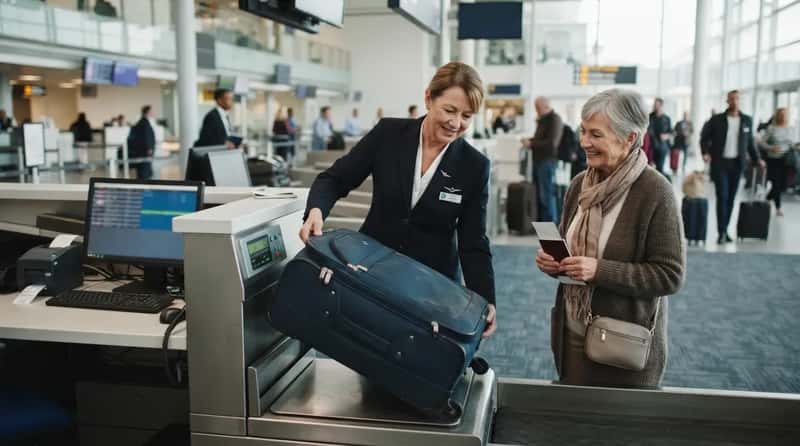
A heavy suitcase at the counter is a sore spot for a lot of travelers. Agents deal with it all day. They’ll lift your bag onto the scale and tag it. Many airports also have curbside skycaps who do the same thing right at the door.
Quick Compare
- Curbside skycap: Takes your bag at the door, so you skip the long walk inside. Tipping is customary.
- Counter agent: Lifts and tags your bag, and can check the weight before you pay a fee. No tip is expected.
- Availability: Curbside service varies by airport and airline, so the counter is the sure bet.
People often feel awkward asking. They shouldn’t. Lifting luggage is part of the job, not a favor, and most agents are happy to do it. If your bag is near the weight limit, ask them to check it before it goes on the belt. That way a surprise fee doesn’t ambush you. But that bag isn’t the only thing you can hand off.
#12 – Gate-Checking the Carry-On You Can’t Lift Overhead
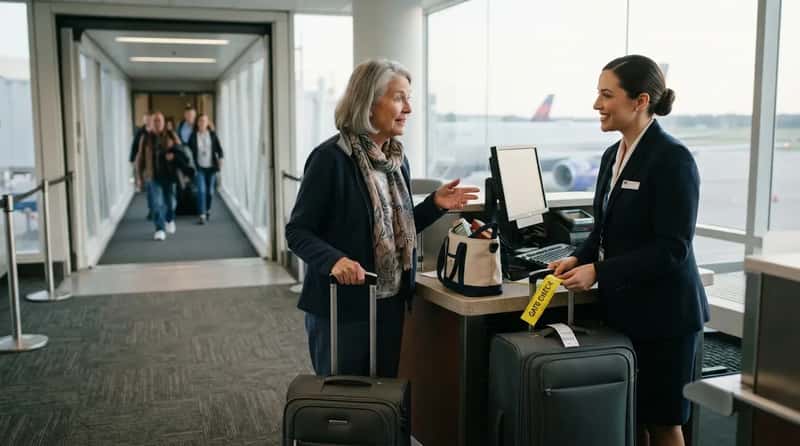
Overhead bins are a high shelf with a crowd breathing down your neck. If you can’t hoist a roller bag that high, tell the agent. Many will tag it at the gate and send it down to the cargo hold. Whether it’s free depends on the airline and fare, so ask before you commit.
The trick is to keep what you need on you. Pull medications, glasses, and chargers into a small bag first. A gate-checked bag usually comes back at the jet bridge or at baggage claim, depending on the aircraft. The agent will tell you which. And your mobility equipment gets even better treatment.
#11 – Checking a Cane, Walker, or Folding Wheelchair at No Charge
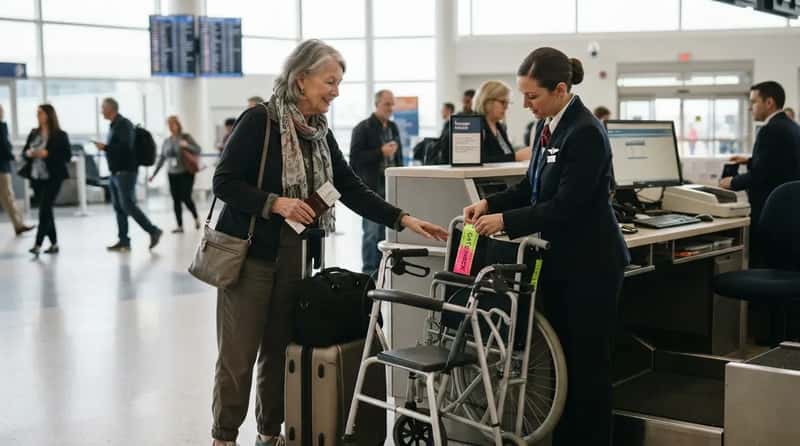
Mobility aids aren’t treated like regular luggage. Under federal accessibility rules, airlines carry assistive devices without charging baggage fees, and they don’t count against your allowance. Agents handle this constantly. Walkers and folding chairs usually go to the gate, then come back to you at the aircraft door.
Battery-powered devices take more planning. It’s best to arrange assistance with the airline at least 48-72 hours in advance. Tell the agent the make, weight, and battery type. Getting those details to the airline early is what keeps a device from being left behind. The next item is one people keep repacking.
#10 – The CPAP That Doesn’t Count as Your Carry-On
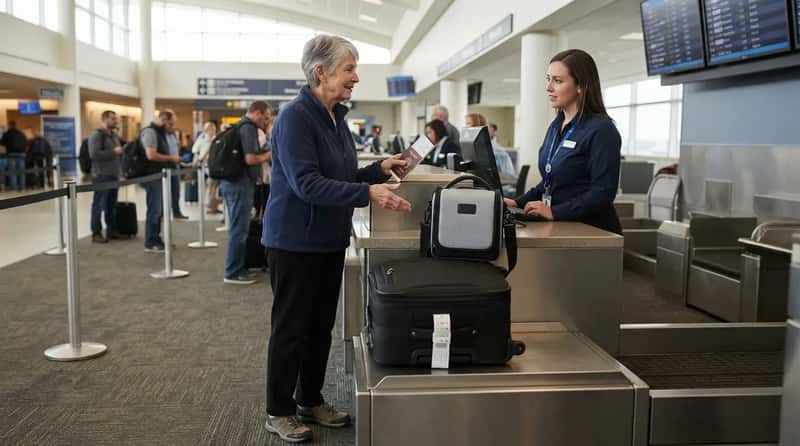
Many travelers cram their CPAP machine into their only carry-on. They don’t have to. Medical devices such as CPAP machines generally travel in addition to your normal carry-on allowance. Agents know this and rarely argue.
Fast Facts
- A CPAP machine is generally treated as a medical device, not as your carry-on bag.
- A separate case keeps it from being gate-checked along with your suitcase.
- Expect the machine to be screened at security, so keep it easy to reach.
- Small policy details differ by airline, so confirm before you fly.
The easiest way is to bring it in its own bag and say what it is. A separate case means you’re not stuffing a machine into a suitcase that might get gate-checked. Keep any prescription paperwork nearby in case someone asks. Now to a request for people who dread airport announcements.
#9 – Asking the Agent to Tell You Directly About Gate Changes
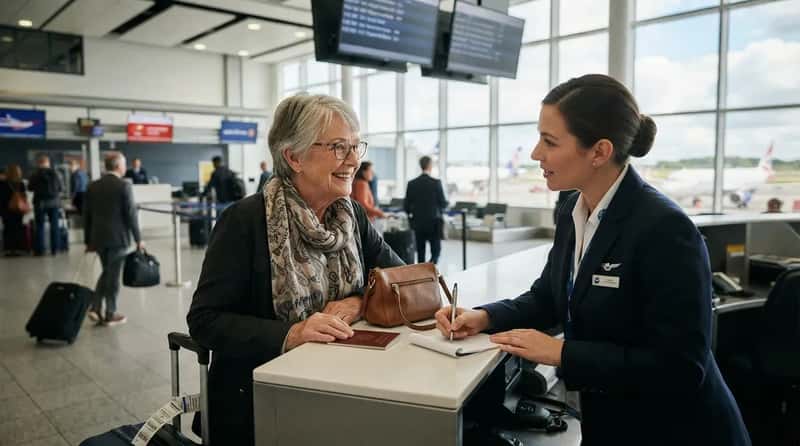
Gate changes get announced over a crackly speaker. If you have trouble hearing or reading signs, that’s a real risk. Tell the agent. They can note it on your record, write down the gate, and ask gate staff to tell you in person. Airlines are expected to communicate effectively with passengers who have hearing or vision limits.
A written note of your gate, boarding time, and seat helps too. Most agents will happily write it out if you ask, and some will walk you to the right area. Say it plainly: “I may not hear announcements. Can someone tell me in person?” That one question lifts a lot of worry. Your safety instructions can be personalized too.
#8 – A Personal Safety Briefing That Skips the Video
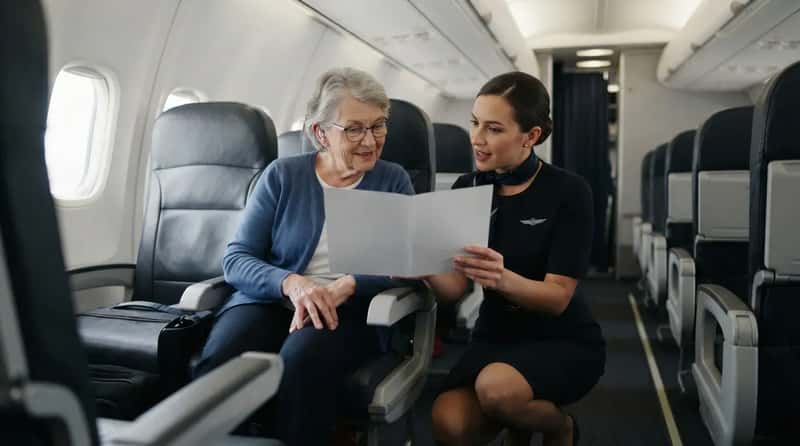
Safety demos are made for people who can see the screen, hear the speaker, and reach the exit. If that’s not you, you can ask for an individual briefing. Federal accessibility rules call for airlines to offer one to passengers with a disability who request it. Let the agent know at check-in so the crew is told before you board.
Worth Knowing
- You ask once, at check-in or the gate, and the crew is told.
- It’s a private, one-on-one talk at your seat, not an announcement.
- It can help with hearing, vision, or mobility limits.
The briefing covers where the exits are, how the seat belt works, and what to do in an emergency. Flight attendants usually give it quietly at your seat, so there’s no announcement and no fuss. It matters most if you use a cane or have limited hearing. Where you sit matters just as much.
#7 – A Seat Near the Front, or Close to the Restroom
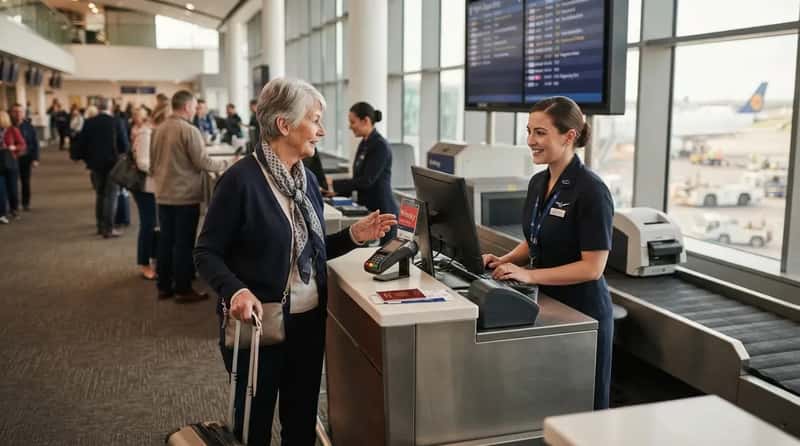
Seat location can make a flight easy or miserable. A front-cabin seat shortens the walk, and an aisle seat means you don’t climb over anyone. Agents can often move you when seats are open. Ask at the counter and explain why.
Seat maps change right up to departure, and the counter agent can see changes you can’t. A good seat can open up at the last minute when aircraft or crews swap. The agent can’t promise one, but they can try. That beats discovering at boarding that you’re in the last row.
When there’s a real medical reason, the answer changes. That’s next.
#6 – The Disability Seating Rules Most Travelers Never Use

Federal rules call for airlines to offer certain seating accommodations to passengers with a disability. Examples include an aisle seat with a movable armrest, or a bulkhead seat for someone whose leg won’t bend. It depends on the need, not on age. Tell the agent what you need and ask what they can do.
Many travelers just pay for extra legroom without asking. It’s worth asking whether a medical need qualifies you for an accommodation first. You may be asked to describe the need, but not to hand over a diagnosis. Spending money before asking is the easy mistake. Oxygen is a different level of planning.
#5 – Flying With a Portable Oxygen Concentrator, Approved Before You Arrive
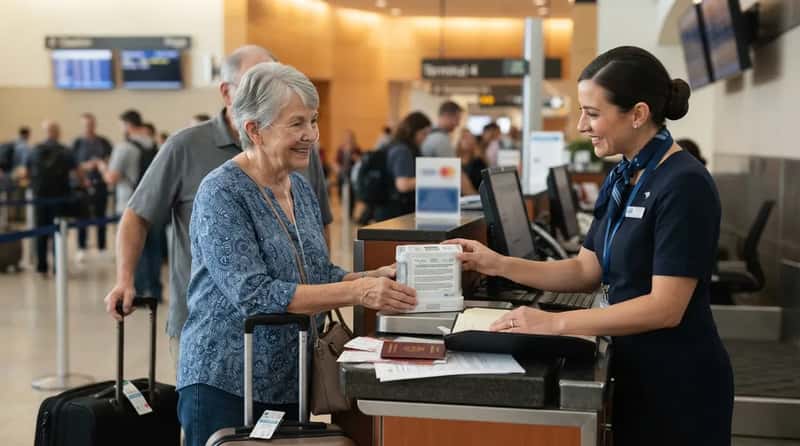
Airlines generally allow FAA-approved portable oxygen concentrators on board. But they usually want advance notice and a physician’s statement. Agents at the counter may ask to see the device label and your documents. If you’ve sorted this out ahead of time, check-in goes quickly.
Bring enough charged batteries to cover the whole trip, plus delays. Airlines often ask for extra battery time beyond the flight itself. Check your airline’s rules before you leave home. Agents aren’t trying to stop you. They’re making sure the device lasts the whole journey.
Security is the next hurdle, and one phone number can help.
#4 – The TSA Helper You Can Request Before You Ever Reach the Line
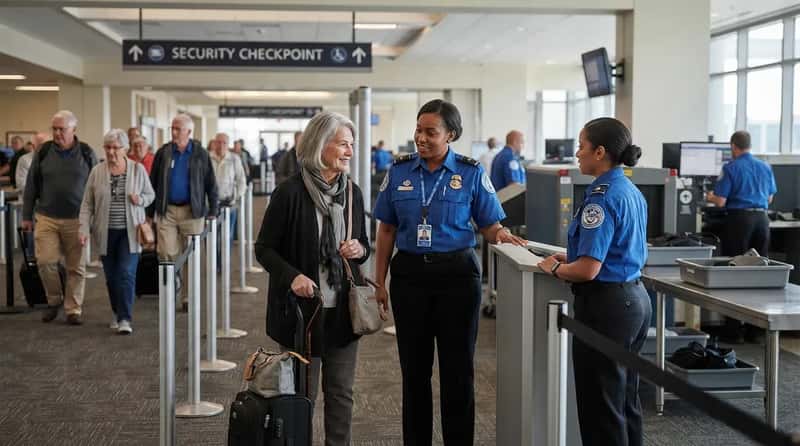
Within 72 hours of your flight, you can call TSA Cares at 855-787-2227 to request a Passenger Support Specialist. If you didn’t plan ahead, you can ask a TSA officer for one at the airport. Check-in agents can point you to the right checkpoint, but TSA runs security.
Here’s the age myth again. TSA ended its shoe-removal requirement on July 8, 2025, so everyone can keep their shoes on now. Turning 65 doesn’t unlock a separate lane. A support specialist is what actually helps. And there’s one more request about a plane you haven’t boarded yet.
#3 – An Escort to the Connecting Gate, Even on Another Airline
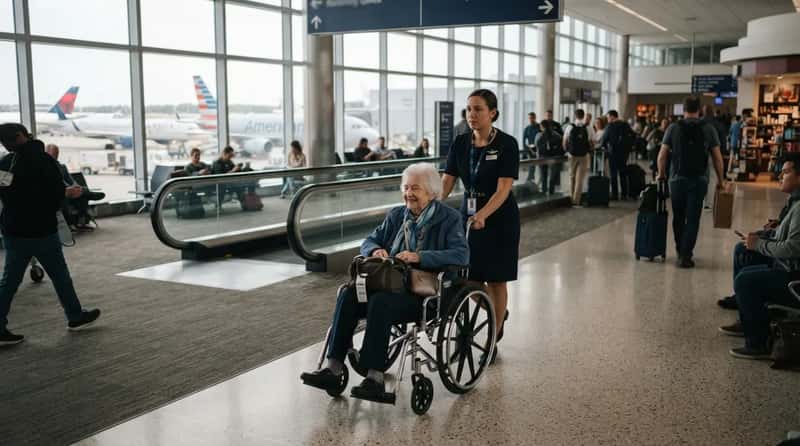
A missed connection is the fear that keeps many people from flying. Airlines plan for it. American Airlines, for one, provides wheelchair assistance for interline connections, with staff escorting the customer to the other carrier’s gate. Ask for this when you book and confirm at check-in.
At a Glance
- When you book: Add the assistance request to your reservation.
- At check-in: Ask the agent to confirm it shows on every leg.
- At the departure gate: Remind the agent about your connection.
- On a tight layover: Ask whether a longer connection is possible.
Don’t wait until you land to look for help. The assistance request can follow you across multiple flights if it’s in your record. If a layover looks too tight, ask the agent whether a longer connection is possible. Now for the request that works on the other end of the trip.
#2 – Arranging Help at Your Destination Before You Take Off
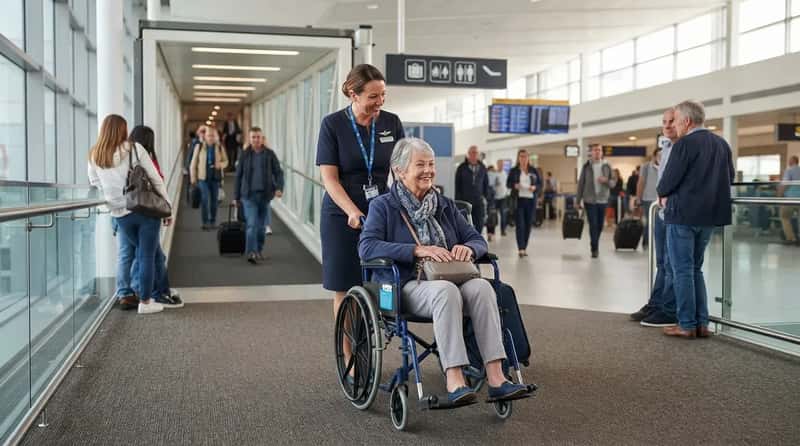
Assistance doesn’t end when the plane lands. When you request help at check-in, the airline can arrange for someone to meet you at the arrival gate. A chair or cart can be waiting there. It saves you the longest walk of the trip, right when you’re most tired.
Ask the agent to confirm that the request is in your record. Airline wheelchair assistance is free under federal law, though tipping the airport staff who help is customary. Confirming it at the counter takes ten seconds and can prevent a long wait at your destination. And the biggest request of all is the one many people feel shy about.
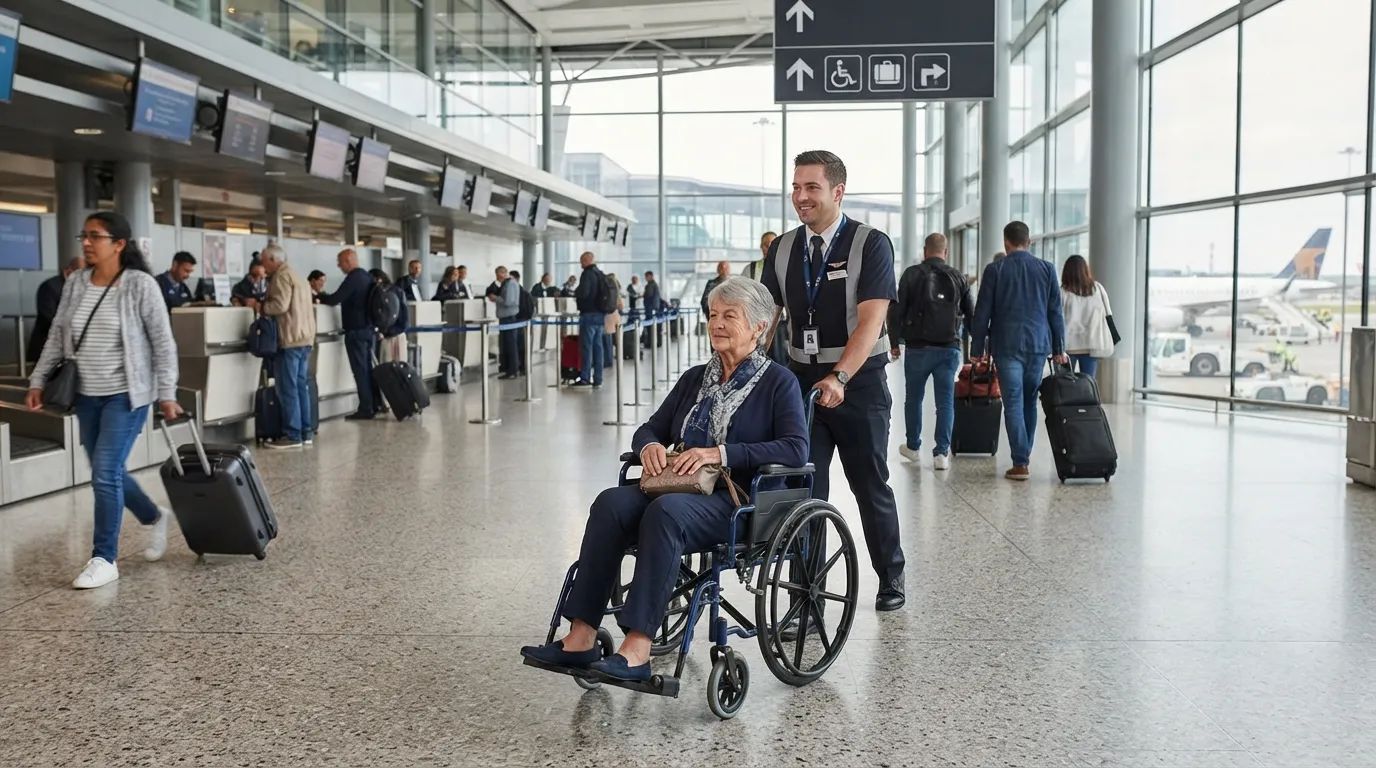
#1 – The Airport Wheelchair Ride That Needs No Diagnosis and Has No Age Limit
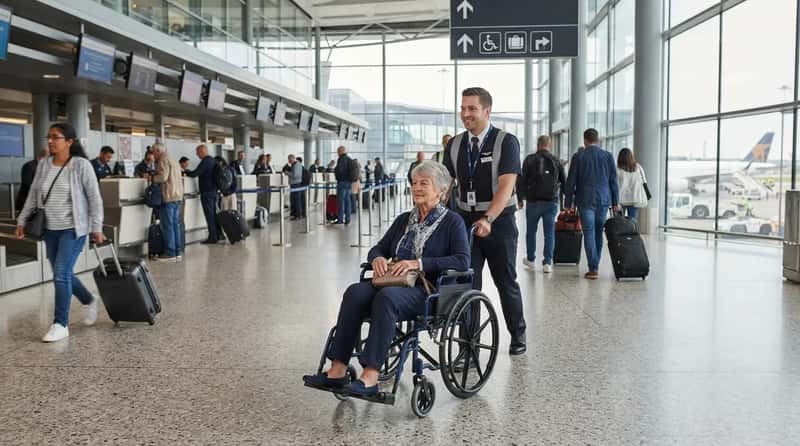
The Department of Transportation says to request an airport wheelchair when you make your reservation if you can’t walk long distances. Nothing in that guidance sets an age limit, and you don’t have to be unable to walk at all. Some terminals stretch for a mile or more, and plenty of travelers simply can’t cover that. The airline provides this service, not TSA.
Many travelers see accepting a chair as admitting defeat. Plenty of seasoned flyers see it the opposite way, as a way to arrive with energy left. An agent will almost never question why you need it. They’ll just ask where you’re going. If you only remember one request from this list, make it this one.
None of these 16 requests depends on turning 65. They depend on need, a clear ask, and a little advance notice. Agents tend to say yes to specific requests like “I can’t lift this overhead” or “I need help at my connection.” Rules vary by airline, so check yours before you go.
The real secret isn’t a perk. It’s that asking works far more often than most people think. Which of these has an agent said yes to for you?