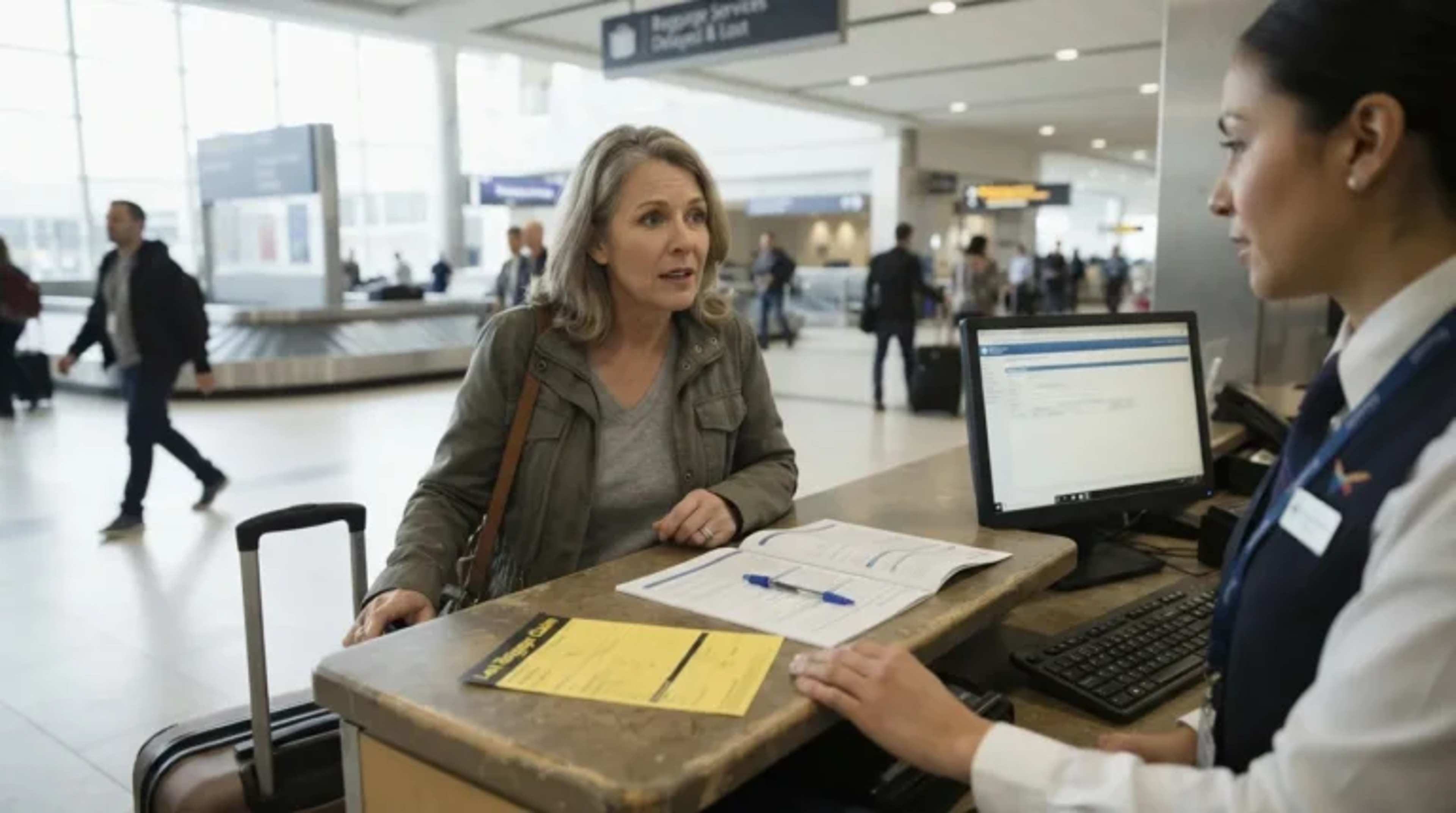
Here’s what most families assume: if grandpa needs help at the airport, someone has to ask for it. A gate agent, a wheelchair, a form filled out in advance. That’s the polite fiction everyone believes right up until the day a stranger in a vest quietly solves a problem nobody said out loud.
The truth is stranger and a lot more comforting. Ramp and ground crews have spent years reading passengers over 60 before they ever open their mouths, and they’ve built a whole invisible playbook around it. None of it gets announced over the intercom, and most of it only becomes obvious once you know exactly what to look for.
#16 – Your Connecting Gate Gets Worked Before You Land
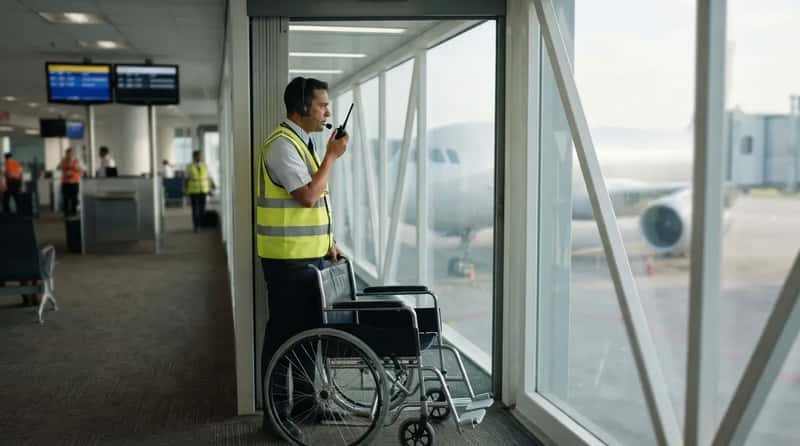
If your layover is tight, someone on the ground has already started solving it while you’re still in the air. Ramp staff radio ahead so a wheelchair and an escort are waiting the moment your flight touches down, not scrambled together after you’re already lost in a new terminal.
Most people assume this kind of coordination just happens automatically for everyone. It doesn’t. It only kicks in once someone confirms the request ahead of time, which is exactly why one traveler glides through a connection while another stands at the gate wondering where their help went.
#15 – The Wheelchair Swap Nobody Warns You About
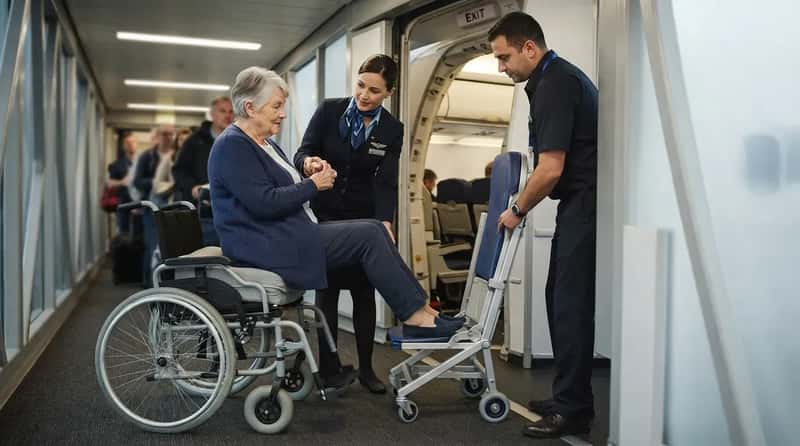
On plenty of aircraft, a standard wheelchair physically cannot squeeze down the aisle. So crews quietly bring out a second, narrower chair built specifically to thread through tight cabins, transferring you into it right before you board.
It’s completely routine to the crew and completely startling to first-time flyers over 60. Nobody explains it’s coming, so the first time you’re lifted into this skinny aisle chair, it can feel jarring even though it’s one of the most common accommodations in the entire industry.
Quick Compare
- Terminal wheelchair: wide seat, used from curb or check-in all the way to the gate
- Aircraft aisle chair: narrow frame, often close to 13 inches wide, built to fit down a plane’s aisle
- When the swap happens: right at the jet bridge, moments before boarding
- Who explains it: usually no one, unless you ask first
#14 – The Person Pushing Your Chair Doesn’t Work for the Airline
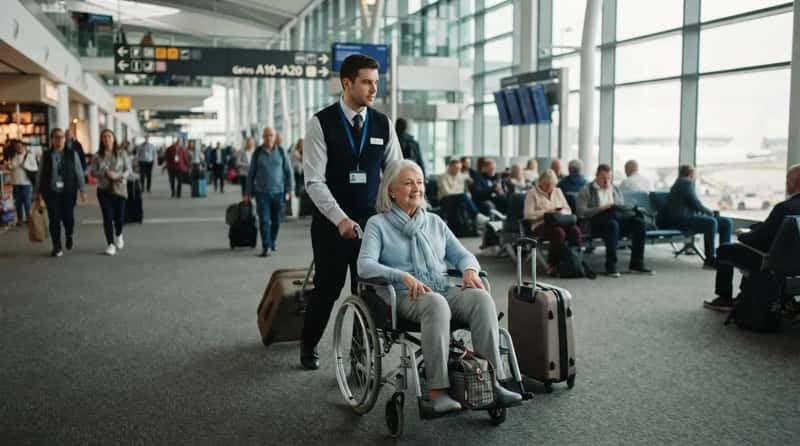
Here’s the detail that catches almost everyone off guard: that friendly attendant guiding your wheelchair through the terminal usually isn’t an airline employee at all. Most wheelchair service is handled by outside contractors the airline hires, not staff wearing the carrier’s actual badge.
That distinction quietly matters. Tipping is technically optional, but accessibility advocates note it’s commonly expected in this line of work, and it can shape how attentive your escort is with timing, bags, and transfers. Crews never mention the arrangement out loud, yet it’s been true the entire time.
#13 – A Quiet Comment at the Gate Follows You Onto the Plane
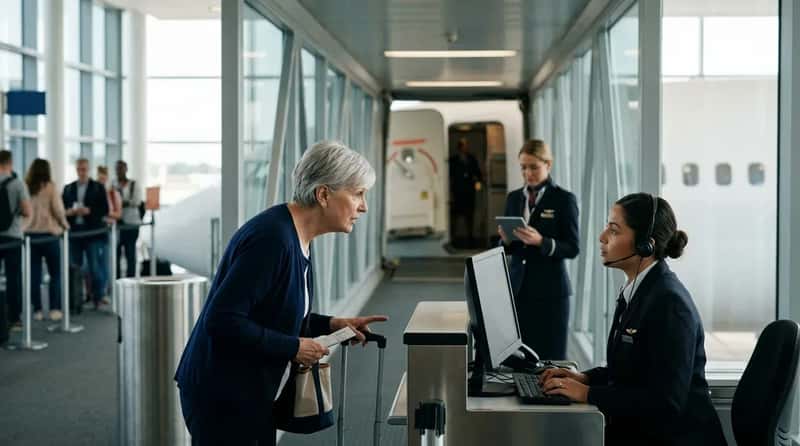
One low-key conversation with a gate agent can quietly rewrite your entire flight. Mention a comfort or medical need before boarding, and that note doesn’t stay at the desk, it gets attached to your record and passed straight to the flight crew.
That’s why a flight attendant sometimes checks on you within minutes of sitting down, unprompted. They already know to help with your bag or bring what you need, sparing you from flagging someone down mid-boarding while sixty people push past. The catch: that window closes fast once boarding is already underway.
#12 – The 30-Minute Rule Nobody Tells You About
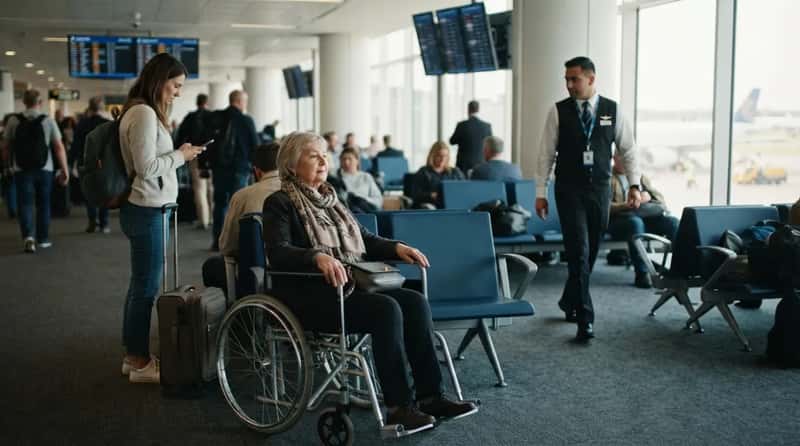
There’s a hard federal limit on how long you can be left alone in a wheelchair at an airport, and almost no passenger knows it exists. Staff are not allowed to leave someone unattended in a wheelchair or mobility device for more than 30 minutes, full stop.
That rule holds even if family is standing three feet away. Airlines still won’t leave you unattended past the limit unless you specifically say it’s okay, so crews keep quietly circling back on a clock you never even notice ticking.
Fast Facts
- Federal disability-travel protections cap unattended wheelchair wait times at 30 minutes
- The clock applies even when a relative is nearby, unless that relative says otherwise
- Staff are expected to physically check back before the window runs out
- Most passengers never notice the timer because crews rarely mention it exists
#11 – They Carry Your Bag Before You Have to Ask Twice
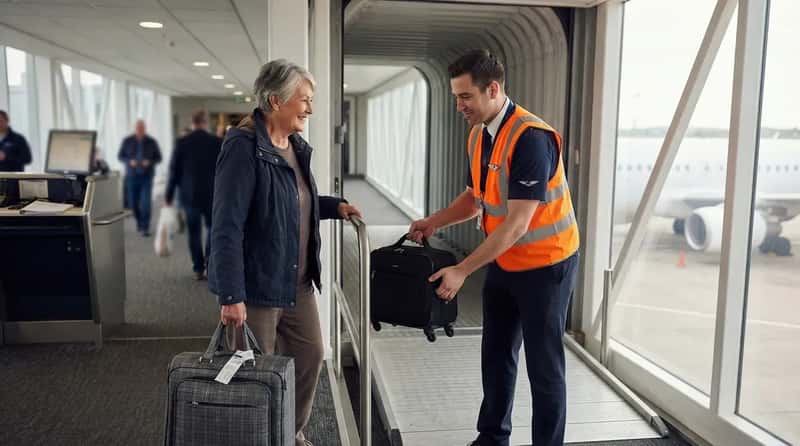
Struggling with a carry-on at the gate gets fixed faster than most people expect. If a disability makes it hard to manage your own luggage, federal rules require an attendant to carry it for you.
That obligation doesn’t stop at the jet bridge door, either, it covers gate-checked bags too. Most travelers over 60 try to muscle through it alone out of habit or pride, never realizing the crew was ready to step in the entire time, no request necessary.
#10 – One Continuous Escort, Not a String of Lucky Favors
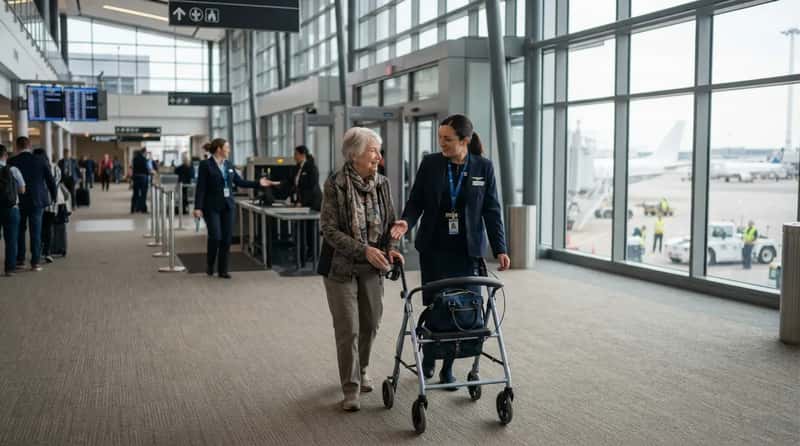
Help doesn’t quietly evaporate once you clear the ticket counter. Airlines are required to assist passengers through every key stretch of the terminal, from check-in to security to the walk down the jet bridge.
It’s handled as one tracked handoff between staff members, not a series of separate favors you have to renegotiate at each stop. That removes a huge, invisible source of stress most travelers over 60 never realize was even being managed for them.
#9 – Someone Is Waiting Right at the Aircraft Door
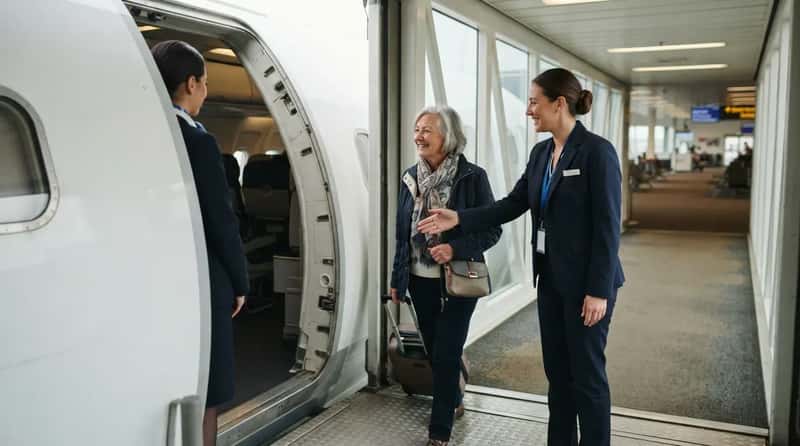
The accommodation doesn’t end the second you land, it often gets bigger. For connecting passengers, staff meet you at the aircraft door itself and walk you straight to baggage claim or your next gate.
It’s one of the most heavily used services in senior travel, yet it’s almost never mentioned in any announcement. Crews just show up at the door, which is exactly why so many travelers assume it happened by chance rather than by design.
At a Glance
- Meet-and-assist happens at the aircraft door, not just at the gate counter
- Available whether you’re heading to baggage claim or another connecting flight
- Used constantly at major hub airports with long terminal walks
- No extra paperwork needed beyond your original assistance request
#8 – The Courtesy Cart Isn’t Just for Wheelchair Users
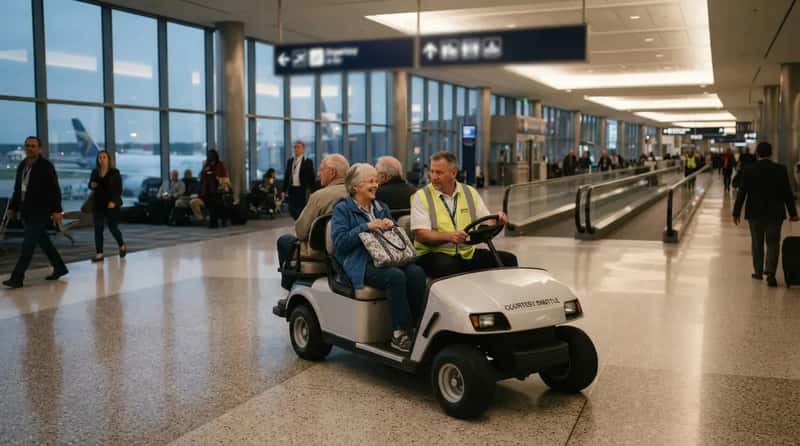
Plenty of travelers over 60 don’t need a wheelchair, they just need to skip a half-mile terminal hike, and crews know the difference instantly. Courtesy carts run constantly through big airports for anyone who needs extra help, not only for people using mobility devices.
It’s offered more often than passengers ever think to request it. Someone who can manage stairs fine but struggles with distance often gets waved onto a cart instead of a wheelchair, a quiet middle-ground fix that solves the actual problem without making anyone feel labeled.
#7 – Boarding Ahead of First Class, No Fanfare Required
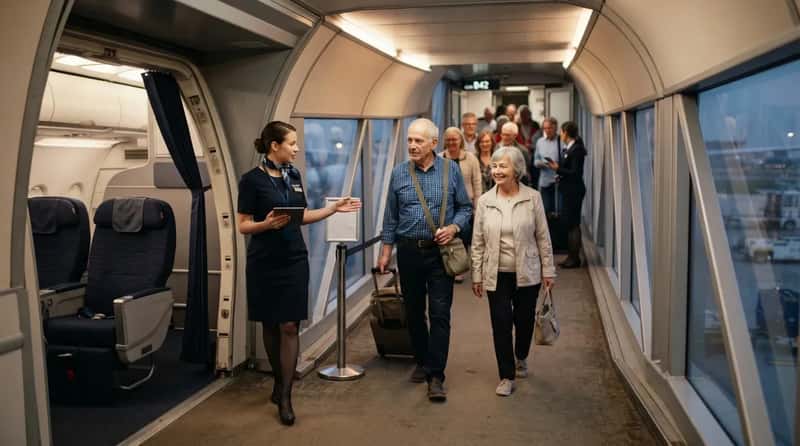
Once you self-identify as needing extra time or help, crews will quietly move you ahead of the entire boarding order. That includes ahead of first class, elite frequent flyers, military members, and families with small children.
Most travelers over 60 never realize this exists, so they never speak up and never get offered it. It’s not a favor crews hand out selectively, it’s a standing rule, but it only activates once you say the words out loud at the gate.
#6 – Your Companion Rides the Cart Too, Even If They Don’t Need To
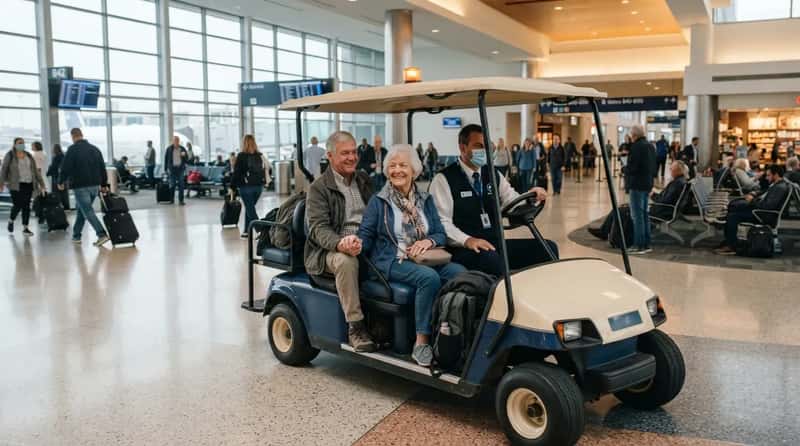
Crews rarely announce this one, but it changes the whole experience for couples and families traveling together. Whoever is walking with you can ride along on the electric cart, even if they have no disability of their own.
It’s a small courtesy with a real effect: it keeps people together instead of splitting a family across a crowded terminal. Most passengers never think to ask if it’s allowed until they watch it happen for someone else first.
#5 – A Person Without a Ticket Can Still Walk You to the Gate
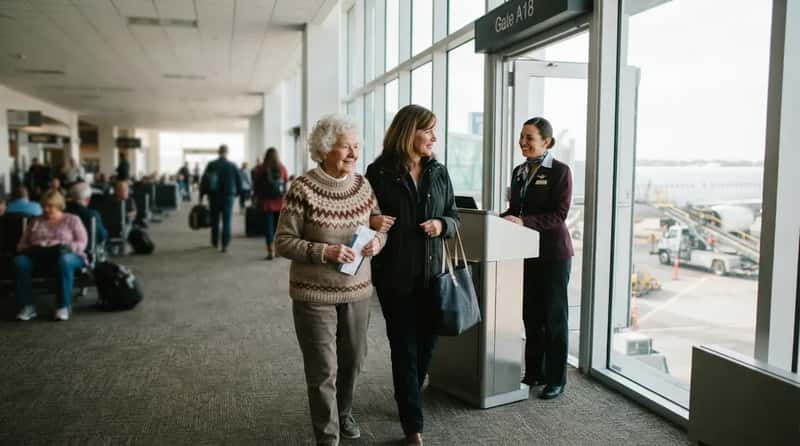
Families are often stunned that someone without a boarding pass can walk a parent or grandparent all the way to the plane door. An assistant, family member, or friend can be cleared to the gate with just a government-issued ID at the ticket counter.
There’s one limit worth knowing, though: it’s usually restricted to a single escort, so don’t expect the whole family to tag along. It helps to call the airline the day before to arrange it, since crews will confirm and escort, but the paperwork has to be requested first.
#4 – The Hidden Wheelchair Stored Just for Long Flights
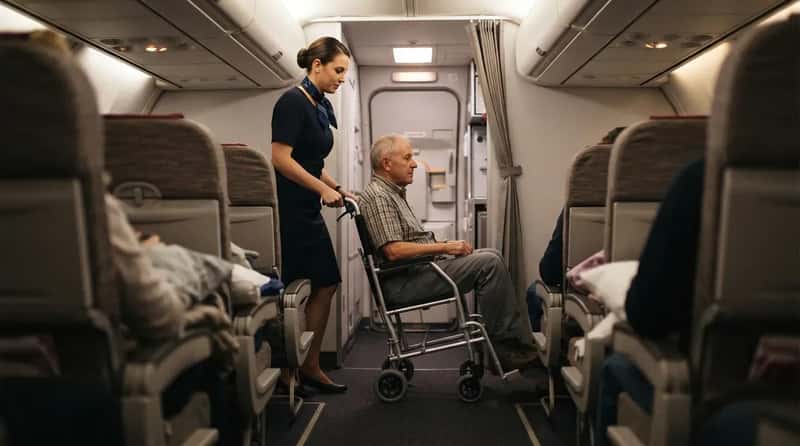
On larger jets without an accessible restroom, crews quietly keep a specific piece of equipment on hand just in case. With 48 hours’ notice, airlines will place a narrow onboard wheelchair on the flight so a passenger can reach the lavatory even if the restroom itself isn’t fully accessible.
Most people over 60 have never even heard of this device until a flight attendant wheels it up the aisle for the first time. It’s purpose-built and stored out of sight until needed. Crews treat the request as completely ordinary, even though almost nobody outside the industry knows to ask for it by name.
Worth Knowing
- Requesting the onboard wheelchair typically requires at least 48 hours’ advance notice
- It stays stowed out of sight until a passenger actually needs it mid-flight
- It’s built specifically to reach the lavatory on planes without a fully accessible restroom
- Most common on longer routes and wide-body aircraft
#3 – The Quiet Pass Around the Bag-Check Sweep
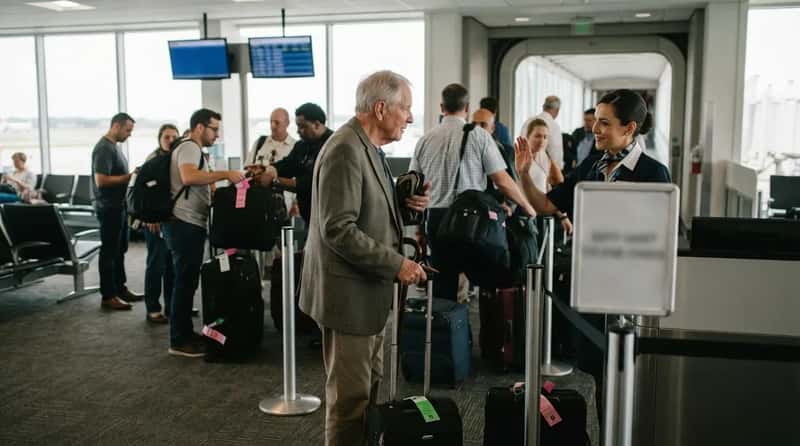
Gate agents have more discretion over last-minute carry-on bag calls than most travelers ever realize. Framing a request around medication or medical supplies changes the outcome far more than people expect.
Travelers over 70 who mention a medical need early are routinely waved straight past the gate-check sweep everyone else is stuck in. Crews aren’t announcing a special exception when this happens, they’re simply making a judgment call that was theirs to make all along.
#2 – Better Seats, Quietly Reassigned Without a Fee
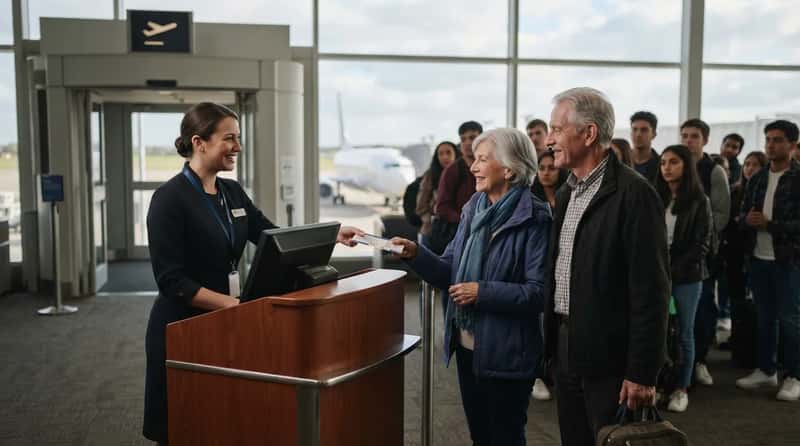
Seat assignments shift more often than travelers realize, and it’s not always because someone paid extra. Seats with more legroom or closer restroom access get quietly reassigned for comfort, no upgrade purchase required.
This usually happens alongside another accommodation most people never connect to it: pre-boarding privileges that give seniors extra time to settle in before the rush. The better seat and the early boarding call are often the exact same quiet decision, made by one agent standing at the podium.
#1 – The Handoff They Refuse to Rush
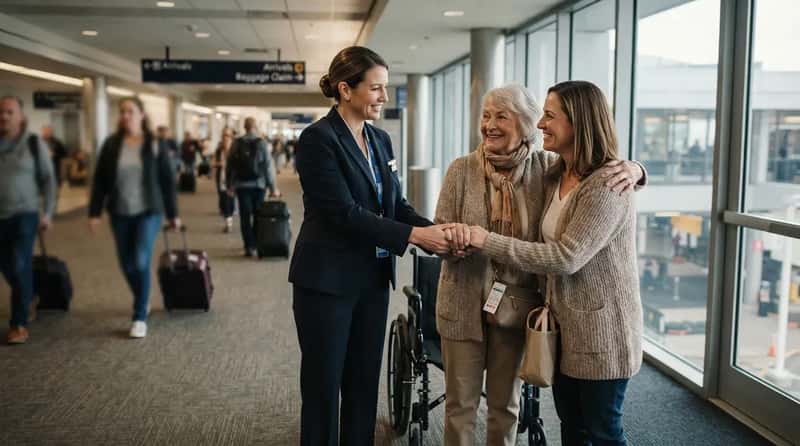
The single accommodation crews take most seriously is the one nobody ever sees. It ties directly back to the 30-minute rule, but in practice it goes further, with staff physically confirming a real person has arrived before they’ll step away from you.
Most travelers over 60 only notice this one the single time it almost didn’t happen, when a familiar face was running late and the attendant simply refused to leave. It rarely gets mentioned in any announcement, but it’s the accommodation with the highest stakes and the least room for error, and crews treat it that way every single time.
None of these 16 accommodations get read off a script, and none of them show up printed on a boarding pass. They exist because ramp and ground crews have learned, request by request, exactly what quietly makes a difference for passengers over 60, long before anyone has to ask twice.
If you’ve flown recently and caught one of these happening without asking, or noticed one missing when it should have been there, that’s worth remembering the next time you’re the one walking a parent to a gate.