Most people think a great cruise comes down to picking the right ship or scoring the cheapest fare. They’re wrong.
The cruisers who have the best trips, year after year, ship after ship, aren’t luckier than everyone else standing in line at the terminal. They just follow a short list of rules they never break, no matter how tempting the shortcut looks.
Most first-timers never learn these rules. Most occasional cruisers learn them the expensive way, usually somewhere around day five.
By the end of this list, you’ll know exactly why some passengers walk off the ship relaxed and richer, while others are still arguing with Guest Services on the last morning.
#16 – Never Book a Cruise on Price Alone

The most expensive mistake in cruising costs nothing at checkout. It costs everything once you’re already at sea on the wrong ship.
Every cruise line has its own personality. Some run loud and lively around the clock, others stay quiet and slow, and picking the wrong one for your taste is like booking a nightclub when what you actually wanted was a spa.
If you crave energy and nightlife, a sedate, adults-only ship will feel like a waiting room. If you want to unwind, a party boat will feel like a dorm hallway on a Friday night.
Some lines lean hard into family activities. Others cater almost entirely to retirees or couples chasing a quiet, upscale week, and the two crowds rarely overlap happily.
Booking the cheapest cabin on the wrong ship means spending seven days miserable while someone else enjoys the exact same ocean, just three decks away, on a completely different vacation.
Seasoned cruisers dig into reviews, look at the average age of the crowd, and study the ship’s layout long before they ever compare prices. The fare is the last filter, never the first.
Once you’ve picked the right ship, the next trap is waiting the moment you land at the airport.
#15 – Always Fly In the Day Before Departure

Experienced cruisers treat this rule like gravity. Break it, and you pay the consequences with no exceptions.
Flying in the morning of departure is technically possible. It’s also a gamble against delayed flights, missed connections, lost luggage, and traffic that has ruined more first cruise days than almost anything else.
A single weather delay or mechanical issue can turn a same-day flight into a missed ship, and cruise lines will not wait for a passenger who never bought a plane ticket through them.
Flying in a day early means you get to explore the port city, sleep in an actual bed, and walk onto the ship rested instead of frantic.
No seasoned cruiser gambles a five-thousand-dollar vacation on an airline’s on-time record. That single extra hotel night is cheap insurance against losing the entire trip.
You’ve landed safely with a day to spare. Now the real test starts the moment you reach the port, and most people fail it in the first hour.
#14 – Check In the Second the Window Opens

This habit looks obsessive from the outside and brilliant from the inside.
Seasoned cruisers don’t wait until the week before sailing to handle paperwork. Royal Caribbean, for example, opens online check-in 45 days before departure, and veterans are logged in the moment it unlocks.
Early check-in means first pick of your boarding time slot, before the good windows disappear. It also means your documents, photo, and credit card are already on file, so embarkation day becomes a confident walk instead of a sweaty scramble at a kiosk.
Veteran cruisers never count on finding WiFi the second they step aboard. The app can lag or crash entirely during the first boarding rush, when thousands of passengers try to connect at once.
So they screenshot the deck plan, the muster station number, and the dining times before they even reach the gangway.
Fast Facts
- Norwegian Cruise Line opens online check-in about 21 days before sailing and closes the window roughly three days out.
- Carnival’s window is one of the tightest in the industry, opening just 14 days before departure.
- Princess Cruises gives passengers a much longer runway, opening check-in a full 60 days ahead of sailing.
- Miss the cutoff on any line, and you’re finishing paperwork at a terminal kiosk instead of from your couch.
With your boarding time locked in and your documents saved offline, you’re ready to board early, which is exactly where the next rule takes over.
#13 – Board Early, Then Explore Immediately

The first two hours on a cruise ship are the most underused window of the entire trip, and most passengers waste them completely.
Arriving at the port early gets you through security before the line snakes across the entire terminal. Once you’re onboard, the pool is open, lunch is ready, and the ship still feels half-empty.
On many ships, staterooms aren’t accessible until mid-afternoon, and new cruisers who head straight there just end up standing outside a locked door.
Veterans skip that mistake entirely. They knock out the safety briefing early, grab lunch, and by the time both are done, the cabin is usually ready anyway.
Boarding early also means discovering the ship’s layout before the crowds settle in. Veterans find the quiet pool deck, the best lounge seat, and the specialty restaurant taking walk-ins, all before dinner on day one.
Knowing the ship inside and out is one skill. Keeping your spending from spiraling out of control is an entirely different game.
#12 – Know Exactly What’s Included Before You Board
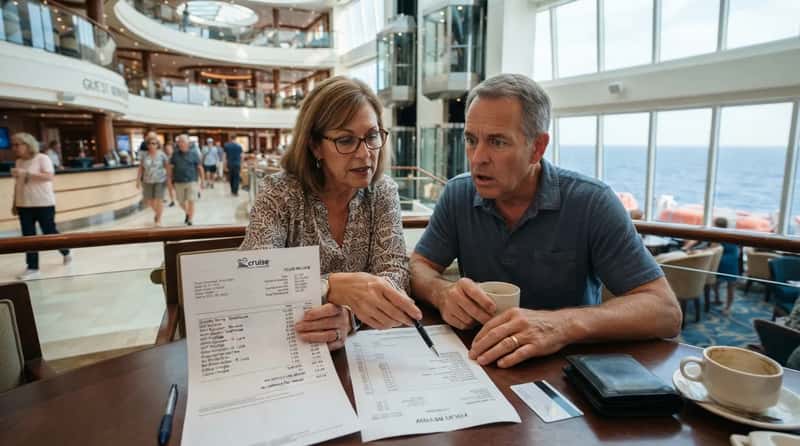
The sticker shock moment that ruins the last morning of a cruise is almost always completely avoidable.
Most travelers underestimate how fast extras add up. Gratuities, specialty dining, WiFi, drinks, casino chips, and shore excursions can quietly stack into hundreds of dollars.
Most cruise lines don’t include soda or WiFi in the base fare, and that single detail catches thousands of first-time cruisers off guard every year.
Seasoned cruisers build a second budget before they even pack. Call it the “extras budget,” and it exists specifically so nothing at checkout feels like a surprise.
They also know the fine print, like an eighteen percent service fee added on top of an already-purchased drinks package, or the fact that specialty dining is rarely covered by the base fare.
Many lines run limited flash deals on drink packages or entertainment before boarding. If you spot one, book it immediately, because it usually won’t reappear once you’re onboard.
Getting the finances sorted before you sail makes every onboard decision feel free. Speaking of finances, the gratuity system is where even experienced sailors still get confused.
#11 – Understand the Gratuity System Completely
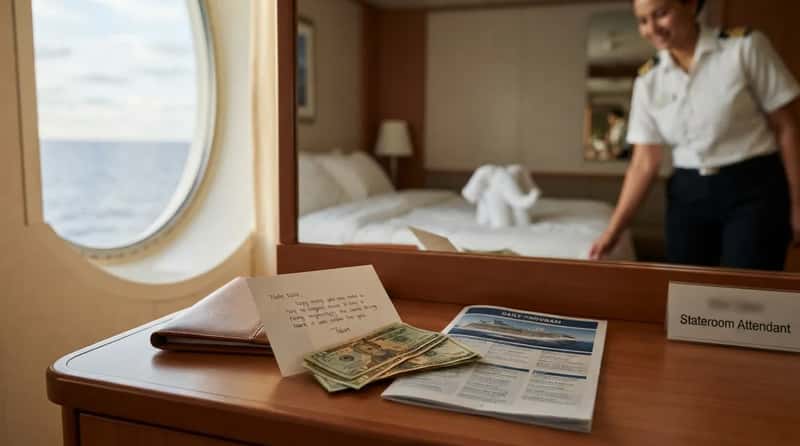
Gratuities are one of the most misunderstood parts of any cruise, and the confusion costs real money if you get it wrong.
Most lines automatically add a daily gratuity to your onboard account, typically sixteen to twenty-two dollars per person per day depending on the line and cabin category.
That charge covers your cabin steward, dining room staff, and other support crew. Unlike a resort service fee, it’s charged per person, not per room.
On a big line like Royal Caribbean, a family of four sharing one cabin can see more than seventy dollars a day in automatic gratuities alone.
Those automatic charges do not cover bartenders, spa therapists, specialty restaurant servers, or room service. Those all carry separate tipping expectations that catch people off guard.
Many cruisers unknowingly tip twice, because receipts often include a blank “additional gratuity” line even when one was already charged automatically.
Experienced cruisers prefer prepaying gratuities before the cruise. It removes the daily charge from their onboard account entirely and locks in the rate before any pre-sailing increase.
Once the money side is locked down, veterans turn to the decision that shapes the entire trip: the cabin itself.
#10 – Never Dismiss a Balcony Cabin

Most people book an interior cabin to save money, telling themselves they won’t be in the room much anyway. Seasoned cruisers call this the most expensive cheap decision in cruising.
A balcony isn’t a luxury add-on for people with money to burn. It’s private outdoor space that costs nothing extra to use once you’re already sailing.
Many veteran cruisers make a ritual of it: coffee and a croissant on the balcony every morning, watching the waves roll by before the ship even wakes up.
That specific morning ritual gets mentioned by repeat cruisers more than almost anything else on the ship, and it’s never listed as an afterthought.
Spread across seven days, the price gap between an interior room and a balcony often works out to less than thirty dollars a day per person.
Most cruisers spend more than that at the pool bar in a single slow afternoon. Veterans do the math and choose the balcony whenever they can.
The cabin is sorted. Now comes the decision that trips up even cruisers with ten sailings under their belt: what to do in port.
#9 – Never Freestyle in Port Without a Plan and a Watch

Going rogue in port feels adventurous. Missing the ship is a catastrophe, and seasoned cruisers are far more afraid of the second than excited by the first.
If you skip the ship-sponsored excursion to explore on your own, you need a plan, a sense of direction, and a healthy paranoia about time.
Cruise ships will wait for passengers on delayed ship-sponsored excursions. They are under no obligation to wait for anyone exploring solo.
It’s rare, but it happens, and the consequences of being left behind in a foreign port are exactly as expensive and stressful as they sound.
Veterans pad their return time so they’re back at least an hour before all-aboard, covering traffic, missed buses, or a walk that took longer than the map promised.
Worth Knowing
- “Ship time” and local port time can differ by an hour or more, especially in the Caribbean and Alaska.
- Cruise lines only guarantee a wait for excursions booked directly through them, not for independent tours.
- Missing all-aboard on a self-planned outing usually means paying your own way to catch the ship at the next port.
- Wearing your cruise lanyard around town is an easy tell to pickpockets that you’re a tourist carrying cash and cards.
Port days are managed down to the minute. But what about the days at sea? Most cruisers waste them completely. Veterans don’t.
#8 – Treat Sea Days Like the Main Event

First-timers spend sea days restless, counting down to the next port. Experienced cruisers look forward to sea days more than almost anything else on the itinerary.
Sea days are when the ship is quietest, the crew has the most time, and the good stuff actually happens: cooking demonstrations, discounted spa slots, behind-the-scenes tours.
Itineraries with more sea days tend to attract fewer families and more seasoned travelers, which changes the entire vibe onboard.
Some veterans rank this as the single biggest reason to choose one itinerary over another, calling it a floating retreat instead of a party boat.
Booking a cruise specifically because it has more sea days is a veteran move that most beginners would find baffling.
Sea days are also when you find the parts of the ship you’d otherwise miss entirely: the library at 3 p.m., the observation lounge at sunrise, the forward deck that’s empty before 8 a.m.
You’ve mastered the sea days. But there’s one item most cruisers ignore until the last port, and it might be the most important booking of the whole trip.
#7 – Pre-Book Shore Excursions, Specialty Dining, and Spa Slots

Showing up and figuring it out once onboard is one of the most reliable ways to miss the exact experiences you were most excited about.
On megaships carrying thousands of passengers, the most popular cooking classes, wine tastings, and spa packages sell out before the ship even leaves the dock.
Seasoned cruisers know this, and they book from home, sometimes weeks or months ahead of sailing.
Most also plan for at least one dinner in a specialty restaurant, whether that’s a teppanyaki table where chefs cook in front of you or an upscale steakhouse that feels nothing like the main dining room.
Some save the splurge for a special night at sea. Others book it for embarkation night, before jet lag and sunburn set in.
A thirty-dollar specialty dinner fee feels very different from your couch during pre-booking than it does at the front desk on the last night, staring at a “fully booked since day one” sign.
Pre-book or miss out. Veterans already know which one they prefer.
You’ve locked in every experience you wanted. Now protect every dollar of it with the rule most cruisers ignore until something actually goes wrong.
#6 – Never Sail Without Travel Insurance
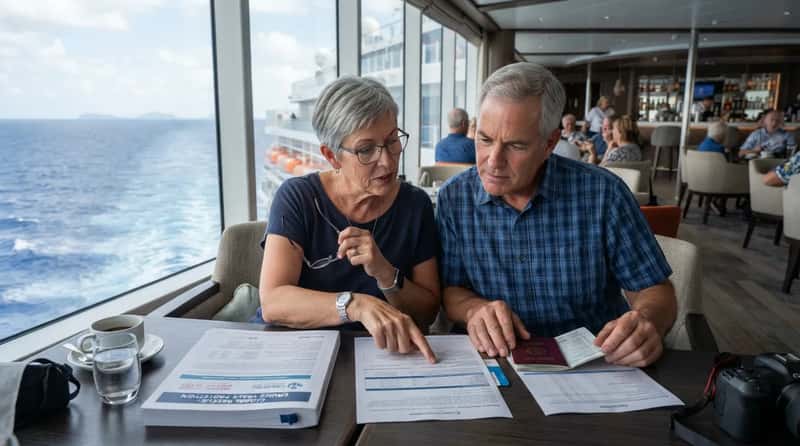
This is the rule that sounds optional right up until the day it becomes the only thing standing between you and financial disaster.
Showing up without the right documents, or without coverage during a medical emergency at sea, can put you in serious trouble before you’ve even set foot on the ship.
Medical evacuation from a cruise ship in international waters can cost between fifty thousand and a hundred and fifty thousand dollars. Standard health insurance in most countries doesn’t touch that number.
Cruisers who have been sailing for decades treat travel insurance as a fixed cost of cruising, the same as the cruise fare itself, never an optional upgrade.
The longer and more remote the itinerary, the more non-negotiable this becomes for anyone who’s actually done the math.
Quick Compare
- Domestic evacuation, North America: averages around $25,000 in claims data.
- International open-ocean evacuation: commonly $50,000 to $100,000, sometimes more.
- Complex, long-distance evacuations with air ambulances: can climb past $200,000.
- Basic cruise-line protection plans: often cap evacuation benefits as low as $25,000 to $50,000, far below the real cost.
A comprehensive policy covers trip cancellation, medical evacuation, missed connections, lost baggage, and cruise interruption, all the things that feel unlikely right up until they’re not.
Veterans don’t gamble. They insure, then they forget about it entirely and enjoy the trip.
The financial protection is sorted. Now comes the rule about what you actually pack, and most people get it embarrassingly wrong.
#5 – Pack Light and Pack Smart

Overpacking is a first-timer’s badge of honor. Experienced cruisers treat it as a rookie mistake they made exactly once and swore never to repeat.
New cruisers drag in extra shoes and outfits “just in case,” treating the ship like a fashion show they need to win.
Veterans stopped caring what anyone thinks of their outfit by day two. They’d rather be comfortable than coordinated.
Overpacking also means checked bag fees at the airport, hauling oversized suitcases through a crowded terminal, and cramming clothes into a closet the size of a small wardrobe.
Half of what gets packed never even gets worn, which makes every extra pound pure dead weight.
Veterans pack versatile, color-coordinated pieces that mix and match across multiple days and dress codes. One checked bag and one carry-on is the formula for a seven-day sailing.
You’ve packed efficiently. Now it’s time for the rule that separates casual cruisers from the ones the crew actually remembers by name.
#4 – Build a Real Relationship With the Crew
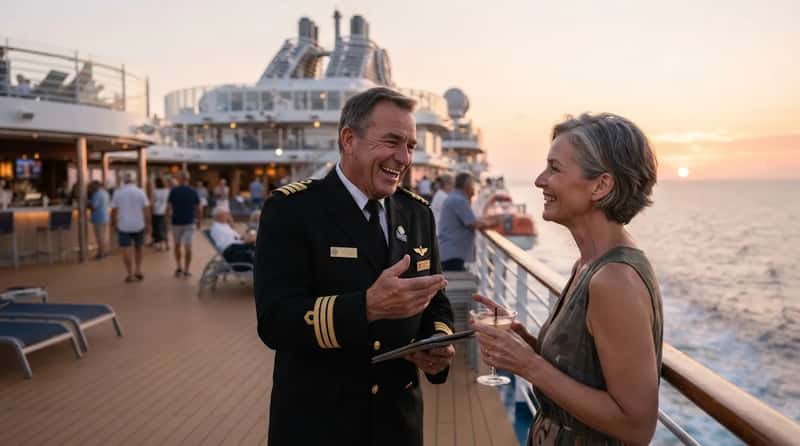
The difference between an average cruise and an extraordinary one usually comes down to a dozen small human interactions that most passengers never bother to have.
Cruise directors who’ve worked hundreds of sailings and live on ships most of the year will tell you the same thing: your experience is tied directly to how you treat the people running the vessel.
Some of the best events onboard, like dinner with the captain, are invitation-only and never advertised publicly.
Having a crew member who’s motivated to put your name on that list can turn an average week into an extraordinary one, and that motivation only exists when you’ve treated crew members like people instead of furniture.
Seasoned cruisers tip with intention instead of obligation. It’s rarely about the amount, it’s about knowing exactly who helped you and rewarding that specifically.
Learning your room steward’s name on day one is the single highest-return investment on the entire ship. Remembering it on day seven is what makes them go above and beyond for the rest of the week.
The relationships are built. Now for the rule almost no first-timer follows, but every veteran swears by once they’ve lived through the alternative.
#3 – Monitor Your Onboard Account Daily
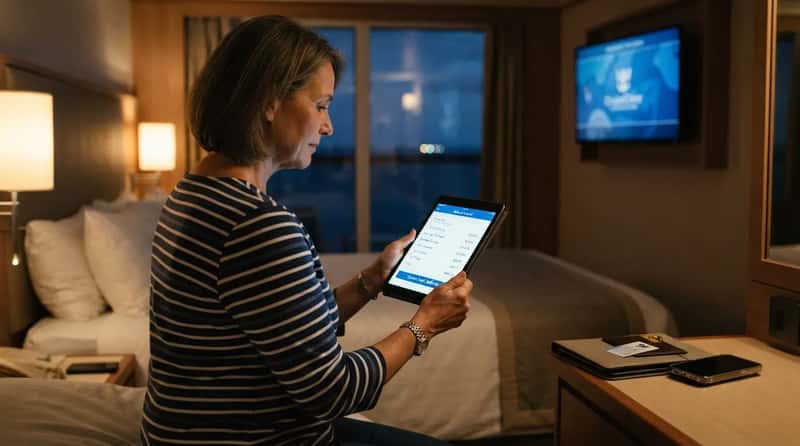
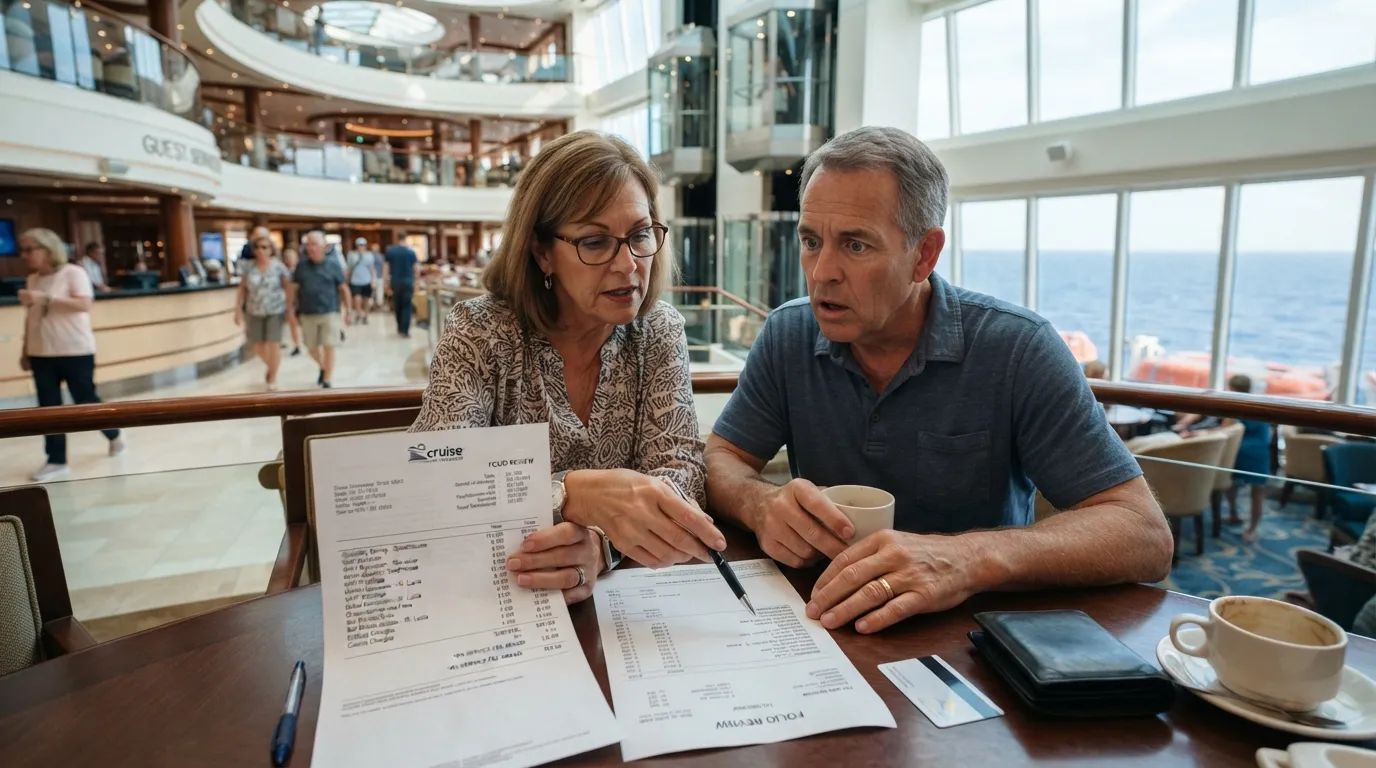
The final-morning checkout surprise is one of cruising’s most avoidable stressors, and veterans never experience it because they’ve been watching it coming for days.
Most travelers underestimate how fast extras stack up. Gratuities, specialty dining, WiFi, drinks, casino chips, and excursions can pile into hundreds of dollars without a single moment of sticker shock along the way.
Most cruise lines let you check your running balance through the ship’s app or the cabin TV. Veterans check it every single night before bed, and it takes about ninety seconds.
On a seven-day cruise for two people, an unchecked account can quietly accumulate eight hundred to twelve hundred dollars in charges that feel invisible in the moment and catastrophic at checkout.
Experienced cruisers also watch for billing errors: duplicate charges, drinks nobody ordered, excursion fees that were never actually removed.
These mistakes happen more often than cruise lines would like to admit, and the Guest Services line on the final morning is long, slow, and unforgiving.
Check the account on day two, day four, and every single night of the final stretch. The relaxed-looking cruisers ahead of you in the disembarkation line? This is their secret.
The finances are bulletproof. But there are two rules left, and they represent the deepest level of cruise wisdom, starting with the one almost nobody talks about publicly.
#2 – Use the Future Cruise Desk Before You Disembark

Most passengers walk off the ship and start browsing deals from their couch at home, paying whatever the public website charges. Veterans walk off having already booked their next cruise, at a noticeably better price.
Nobody advertises this loudly, but some of the best deals never make it to a public website at all.
Experienced cruisers visit the onboard Future Cruise desk while they’re still sunburned and half-packed, because it can unlock discounts, cabin upgrades, and even pre-cruise hotel stays that vanish the moment you’re back home.
It’s a loyalty play the cruise line is more than happy to reward, since it locks in future revenue before passengers even reach the gangway.
At a Glance
- Onboard credit for booking your next cruise before you disembark: commonly $100 to $300.
- Reduced deposits, sometimes far lower than the standard rate charged online.
- Early access to cabin selection before the sailing opens to the general public.
- Most of these perks disappear the moment you’re back home booking through the website.
The Future Cruise desk might be the most underused office on the entire ship, mostly because most passengers have no idea it works as a discount mechanism at all.
You’ve booked the next cruise for less than anyone else will pay online. Now for the rule that sits above every other one on this list, the one seasoned cruisers cite without exception as the most important thing they ever learned.
#1 – Protect Your Embarkation Day Like It’s Sacred

Everything good or bad about a cruise gets set in motion within the first six hours. Experienced cruisers learned this the hard way, and now they guard embarkation day with an intentionality that first-timers find almost comical, until they see the results.
From the moment they step onboard, veterans build small traditions that set the tone for the entire voyage.
They board early. They skip the buffet stampede and find a quiet table instead of fighting for a seat.
They walk every deck before the crowds settle in, and they introduce themselves to their room steward, noting one small personal preference along the way.
They check the daily program before sailaway and mentally plan out the first twenty-four hours before anyone else has even found their cabin.
It’s a set of small, almost invisible habits that seasoned cruisers follow automatically, without ever stopping to think about why. Skipping even one of them can turn a first afternoon at sea into a scramble.
The cruisers who have the best week are almost always the ones who had the best embarkation day.
They arrive rested because they flew in a day early. They board early because they checked in the second the window opened.
They explore immediately because they know the cabin won’t be ready until afternoon anyway. They tip their steward on day one because they know it matters for the rest of the week.
By the time the ship clears the harbor, they’re already three moves ahead of everyone else onboard.
None of it is complicated. All of it is deliberate, and the gap it creates between their vacation and everyone else’s grows enormous by day seven.
The Bottom Line

These sixteen rules aren’t secret knowledge. They’re the accumulated scar tissue of cruisers who made every mistake at least once and refused to repeat it.
Fly in the day before. Check in the second the window opens. Board early and explore before the crowds settle in.
Know exactly what’s included before you board, and never skip the Future Cruise desk on your way off the ship.
Treat embarkation day like the most important six hours of your entire trip, because it actually is.
The cruisers who follow these rules consistently rate their trips higher, spend less money, stress less, and come home having actually had the vacation they paid for.
The ones who wing it spend their last morning arguing with Guest Services over a bill they never saw coming.
Which cruiser do you want to be next time you walk up that gangway?