
Most people assume that rolling up to a hotel at midnight is no big deal – you booked the room, so it’s waiting for you, right? Turns out, the world between 11 p.m. and 7 a.m. runs on a completely different set of rules.
The person on the other side of that desk knows things about your stay that you’d never guess. Here’s what night porters actually say, do, and decide when late arrivals walk through that door – starting with the secret that can make your booking disappear before you even land.
#16 – Your Room Can Legally Disappear After Midnight
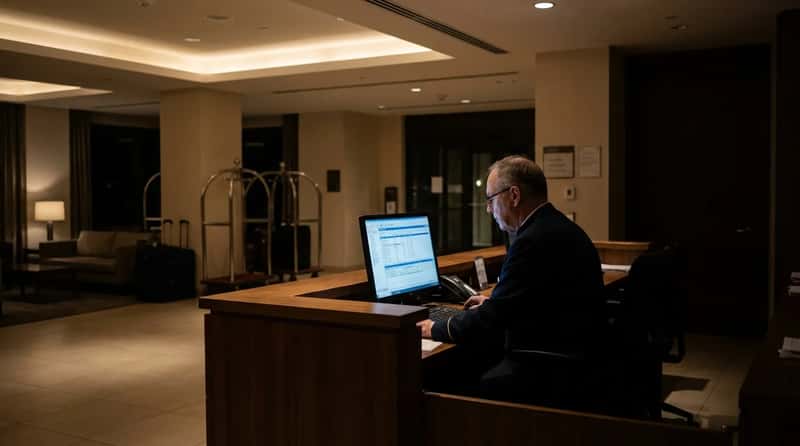
Most guests have no idea their confirmed booking carries a quiet expiry threat.
Most properties require advance notice – often 24 to 48 hours – so the front desk knows to expect a late arrival. Arrive without notice, and the hotel can mark you as a no-show and release the room.
That means the bed you booked weeks ago could be handed to someone else the moment the desk assumes you’re not coming.
This typically applies to guests who don’t turn up until around 2 a.m., before the night audit runs. Cancellation policies often expire well before that point too.
Fast Facts
- Typical notice window for late arrivals: 24 to 48 hours before check-in
- No-show cutoff often falls around 2 a.m., right before the night audit runs
- Cancellation deadlines usually expire before that cutoff too
- One phone call is often all it takes to lock the room in your favor
The fix is brutally simple: call ahead. One phone call before midnight keeps your name on the list and the room locked in your favour.
But that’s nothing compared to what we found about #15 – the secret system that decides who gets “walked” first…
#15 – The Night Porter Knows Exactly Who Gets Bumped If the Hotel Is Overbooked

Hotels don’t overbook by accident – and at night, the porter is the one holding the list.
Overbooking happens when a hotel sells more rooms than it has available for a given night. Many hotels do this deliberately to offset last-minute cancellations and avoid losing revenue.
If you booked the cheapest rate in the house, don’t expect first-class treatment. When only smoking rooms are left, staff won’t bump a higher-paying guest or a loyalty member to make room for you.
And if the hotel overbooked that night, guess who gets “walked” or moved elsewhere first.
The cheapest rate in the house is also the first name on the relocation list. Loyalty status and direct bookings quietly move you up the protection queue.
But that’s nothing compared to what we found about #14 – the financial close happening right above your head while you sleep…
#14 – A “Night Audit” Is Quietly Deciding Your Charges While You Sleep

The night porter isn’t just a friendly face. They’re running the hotel’s financial engine.
A hotel night audit is a daily accounting process that closes the business day. It verifies room charges, payments, and key totals before rolling over to the next date.
The audit covers three jobs: reconciling every charge to the right folio, rolling the date in the system, and verifying that no-shows are processed and arrivals resolved.
Arrive after the audit has “rolled,” and your charges can get posted incorrectly. Fixing it the next morning is far harder than you’d think.
Most guests never even know this window exists.
But that’s nothing compared to what we found about #13 – what the night porter is actually clocking the moment you walk in…
#13 – They Profile Every Late Arrival in Under Four Seconds

It isn’t judgment – it’s trained, rapid information processing.
Every guest who approaches the desk triggers a rapid, silent assessment. The receptionist is managing room inventory, the arrival list, and any special requests – all within seconds.
They’re working out whether the room is actually ready, whether anything on your reservation needs a conversation, and whether you’re a straightforward check-in or one that needs a little extra diplomacy.
Arrive calm, with your confirmation number ready, and you quietly move into the “easy” category. That category gets better treatment, faster – while arriving frantic or aggressive does the exact opposite.
But that’s nothing compared to what we found about #12 – why your booking source matters more at night than at any other time…
#12 – Third-Party Bookings Become a Nightmare at 2 a.m.

Booking through a third-party app felt smart at checkout. At midnight, it’s a different story.
Third-party bookings limit flexibility because hotels receive reservation details exactly as transmitted by the site. Errors in dates, room type, or payment must follow the platform’s rules, not the hotel’s.
Front desk teams simply lack the authority to override those third-party terms. During busy periods, corrections take even longer.
Quick Compare
- Direct booking: the front desk can fix errors on the spot, no outside approval needed
- Third-party booking: corrections must go through the platform’s rules, which can take hours at night
At 2 a.m., there’s no third-party call centre answering the phone in your favour. Night porters will try to help, but their hands are often genuinely tied.
Direct bookings give the desk real authority to fix things on the spot.
But that’s nothing compared to what we found about #11 – the “no-show” charge that fires automatically without anyone pressing a button…
#11 – The System Can Charge You for Not Showing Up – Automatically

You didn’t show. The system noticed – and it didn’t wait for permission.
The night audit processes no-shows automatically per policy, either charging the card or releasing the room. A pre-authorisation attempt fails, the booking gets marked no-show after the cutoff, and the room sits empty.
Many hotels charge the full first night as the no-show penalty. Others apply a flat fee or a percentage of the booking value instead.
This runs automatically in most modern hotel systems – no human needs to approve it. If your card is on file, the charge can land before sunrise.
Calling ahead doesn’t just save your room – it saves your money too.
But that’s nothing compared to what we found about #10 – what happens to your reservation when a fellow guest’s flight is three hours late…
#10 – Flight Delays Upstream Can Eat Into Your Room Allocation

You made it on time. Someone else didn’t – and that creates a chain reaction.
Most airport hotels ask guests for flight details so they can track delays and adjust shuttle timing. But when a guest with a premium booking finally lands at 3 a.m. – long after being marked a no-show – their reclaimed room may now be yours.
Night staff have to come up with a solution plan the moment problems appear, not the next morning. Waiting until check-in the following day would make an immediate fix nearly impossible.
The night porter is quietly solving these room chess puzzles all night long. What looks like a simple desk to you is a live logistics operation with delayed flights and impatient guests colliding constantly.
But that’s nothing compared to what we found about #9 – the log that night porters keep and hand over every single morning…
#9 – Every Suspicious Incident You Cause Gets Logged and Handed to Management

The night is quiet. The porter’s notes are not.
Night porters walk the premises on regular rounds and log anything suspicious they notice during the shift. That log gets handed straight to the duty manager the moment the night shift ends.
It includes noise complaints, aggressive behaviour at check-in, unexplained visitors, and anyone who causes a scene. If something looks wrong, the night porter is the first person on the scene.
Worth Knowing
- Noise complaints and disturbances get written up
- Aggressive behavior at check-in is noted by name
- Unexplained or unregistered visitors are flagged
- Anyone causing a scene in public areas makes the log
The log follows you. Frequent guests who cause problems at night often find the morning manager already knows their name before breakfast.
Nothing quietly evaporates overnight.
But that’s nothing compared to what we found about #8 – the one thing a polite late arrival can unlock that a rude one never will…
#8 – A Polite Late Arrival Can Unlock Upgrades That the System Never Offers

The lobby is empty, and the porter has real discretion. Attitude decides everything that happens next.
Hotel staff get asked for upgrades constantly, and most people ask like they’re entitled to one. A genuine greeting and a low-key opener – simply asking if the hotel is sold out – work far better.
At night, with no queue behind you, a calm and friendly exchange can land you a corner room or a higher floor – without a single loyalty point spent. This is the insider move frequent business travellers quietly use every time.
But that’s nothing compared to what we found about #7 – what happens to your cancelled reservation that you never officially cancelled…
#7 – “Ghost Bookings” Are a Real Problem – And You Might Be Guilty of One
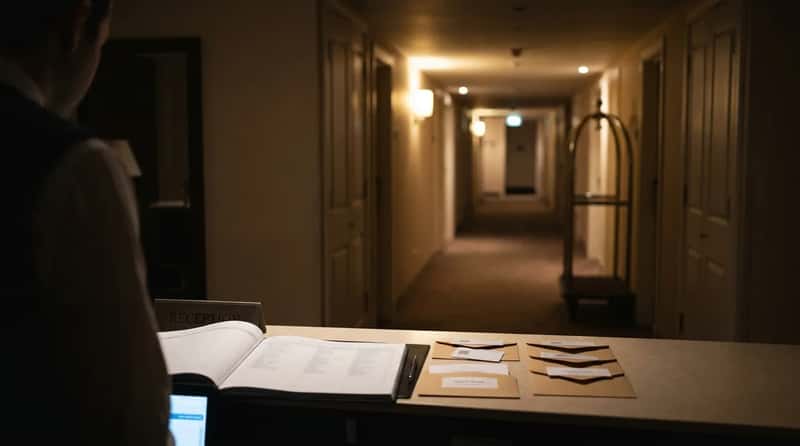
You booked two hotels, picked one, and forgot to cancel the other. Sound familiar?
Booking and cancelling online is so easy that travellers now routinely hedge their bets, reserving multiple hotels at once. When they finally choose one, they often forget to cancel the rest – inflating demand figures and leaving hotels holding empty rooms.
The impact is twofold: lost room revenue from the ghost booking itself, and the wasted chance to resell that space to someone real. Staff also lose real time preparing for arrivals who were never coming.
Night porters spend real hours prepping rooms, printing welcome notes, and holding amenities for guests who ghost them completely. It’s one of the most quietly costly habits in modern travel, and almost nobody talks about it.
But that’s nothing compared to what we found about #6 – the security sweep happening around your room right now…
#6 – The Porter Is Running Security Checks on Your Floor All Night

That quiet corridor isn’t unwatched. Not even close.
Regular patrols, constant CCTV monitoring, and checking that every door and window is locked are standard parts of the job. Night porters also conduct fire walks and report hazards or suspicious activity immediately.
Many hotels also run enhanced security overnight – well-lit entrances, monitored access points, sometimes dedicated security staff. It’s designed so guests feel safe arriving at unusual hours.
The night porter sees far more of the hotel than any daytime guest ever realises. If anything is out of place on your floor – a door left ajar, an unfamiliar face in the corridor – they already know.
But that’s nothing compared to what we found about #5 – the one thing they notice about late arrivals that guests never intend to reveal…
#5 – Night Porters Can Tell Exactly How Your Night Has Gone Before You Say a Word

Body language at midnight tells a very complete story.
The night porter is doing far more than handing out keys, and a handful of common guest habits can turn a routine check-in into a headache. A good relationship with the person behind the desk often decides how flexible they’re willing to be.
Experienced night porters say they can tell within moments whether a guest has had a delayed flight, a bad dinner, or a long argument. They calibrate their whole approach around it.
The ones who arrive grounded and brief get through check-in in under two minutes. The ones who arrive with a story get a longer, far more carefully managed experience.
But that’s nothing compared to what we found about #4 – who actually has the authority to make late-night problems disappear…
#4 – The Night Porter Often Has More Real Power Than You Think

Daytime managers make the rules. Night porters quietly bend them – when it’s warranted.
A night porter is a hospitality professional who manages overnight operations and acts as the primary contact for guests during non-standard hours. That means welcoming late arrivals, arranging transport, and handling reservation issues on the spot.
If a guest arrives late to find their reservation mistakenly cancelled, a skilled night porter can often find an alternative room and even arrange a late-night meal. They can personally make sure that guest is comfortable, no manager required.
With no senior management on site, the night porter carries real decision-making power over room moves and late-night requests. Treating them like a gatekeeper instead of a servant is the single biggest mistake late arrivals make.
But that’s nothing compared to what we found about #3 – the early-morning setup already in motion before you’ve even slept…
#3 – While You Sleep, They’re Already Preparing Tomorrow’s Hotel

The night porter’s job doesn’t pause while guests are sleeping.
They handle a rotating list of tasks that keep the hotel running through the night – setting up for the next day, fixing minor maintenance issues, prepping early morning service. Their work is essential to making sure everything is ready for the day shift.
If the hotel runs a breakfast buffet, the night porter makes sure that area is spotless and ready before service starts. If a guest needs an early breakfast ahead of the normal schedule, the night porter serves it personally.
The polished, fresh hotel you walk into each morning didn’t happen by magic. It was built between 2 a.m. and 6 a.m. by someone who never got a mention in your review.
But that’s nothing compared to what we found about #2 – the small request that separates guests who get remembered from guests who get forgotten…
#2 – Late Arrivals Who Ask for One Specific Thing Get Quietly Prioritised

It’s not about money. It’s about the right question at the right moment.
The best night porters anticipate a guest’s needs and quietly follow up on requests, turning a routine check-in into something memorable. The guests who trigger that response aren’t the loudest or most demanding ones.
They’re the ones who ask for one clear, reasonable thing – a quiet room, a specific floor, an early newspaper – and actually say thank you. Even something as small as a requested morning newspaper gets quietly noted and arranged from the guest list.
One polite, specific request signals that you’re a guest worth going the extra mile for. Night porters remember who was decent to them, and those guests tend to find the rest of their stay going smoother.
But everything leads to #1 – the secret that experienced travellers already know and almost nobody else does…
#1 – The Single Best Thing Any Late Arrival Can Do Has Nothing to Do With Money

No upgrade hack, no loyalty status, no app will beat this.
Front desk staff at good hotels are trained to process late check-ins efficiently, often prepping paperwork in advance once they know a guest is arriving on a delayed flight. That means tired travellers reach their rooms fast, with no unnecessary delays.
The guests who sail through late check-in without friction are the ones who called ahead, gave a realistic arrival time, and walked in with ID and confirmation number ready. This isn’t the desk agent being rigid for no reason – it’s a rule that exists to protect the guest.
At a Glance
- Call ahead and give a realistic arrival time
- Have your ID and confirmation number ready
- Keep the payment card on file current for pre-authorisation
- Stay calm and polite – it speeds up everything else
Simply telling the hotel you’re coming – and roughly when – is the single most powerful move any late arrival can make. It keeps your room held, primes the porter to expect you, and starts the whole interaction on solid ground.
Every other tip on this list is a bonus. This one is the foundation.
The Bottom Line

Night porters run security checks, financial audits, room-chess logistics, and guest psychology – all at once, all night, while most guests assume the building is simply asleep.
Your booking can vanish after midnight without warning. Your rate tier quietly decides who gets protected when rooms run short.
And one polite phone call beats every upgrade hack ever invented.
The person behind that desk between 11 p.m. and 7 a.m. holds more real power over your stay than any daytime manager ever will. Walk in like you know that, and watch how differently the night treats you.