The night train has a gorgeous reputation: clinking rails, a tiny bunk, a sunrise over a foreign city. Crews who work those hours describe something closer to a small town with paper walls, no curfew, and a few residents who forgot other people live there too.
No one publishes an official weekly tally, so take the title as shorthand for the patterns crews and operators keep describing. Some are petty. A few are jaw-dropping. The ones that made operators change their rules are waiting near the end.
#16 – Holding a Midnight Catch-Up Through Paper-Thin Walls
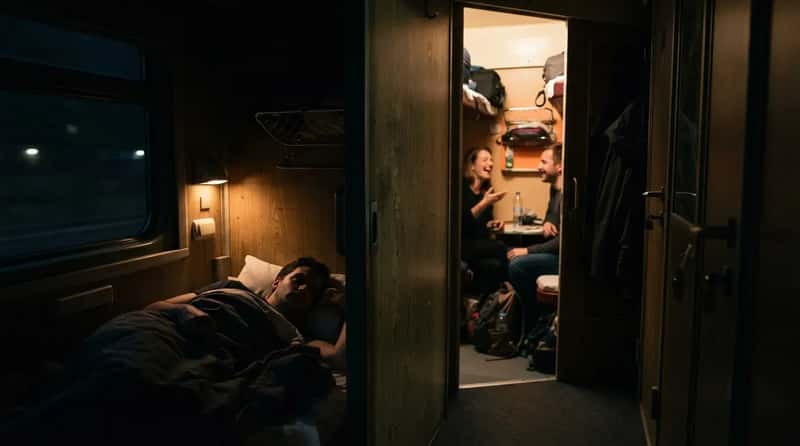
The most common offense in a sleeper car isn’t dramatic. It’s a conversation at midnight. A compartment feels private the second the door closes, but it often isn’t. One traveler on a Rick Steves forum complained of walls so thin they could hear the conversation in the next compartment.
Once the clatter of the tracks fades, a laughing group carries much farther than it thinks. Complaints often surface at breakfast instead of in the moment, because few people want to knock on a stranger’s door at midnight. So the loudest passenger rarely finds out who they kept awake.
The next one doesn’t even need a voice to wreck a night…
#15 – Turning a Phone Speaker Into a Living-Room TV
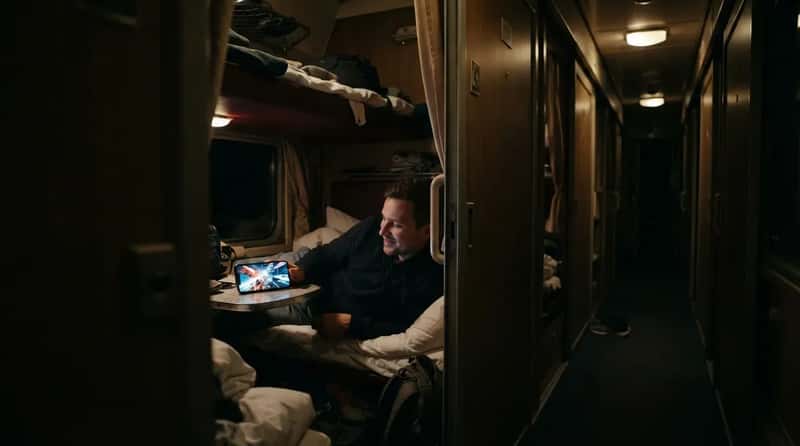
Nothing turns a quiet cabin into a group grievance faster than someone pressing play without headphones. Travel-site reporting on crew accounts says playing anything on speakerphone is the quickest way to do it. Movies, voice memos, and video calls all count.
The problem is the walls, not the volume. Sound carries through thin sleeper walls far more than passengers expect, so a “low” volume in your head can still reach the next door. Even a single video call can be heard by neighbors who are trying to sleep.
And if sound is bad, wait until you see what light does at #14…
#14 – Flipping On the Main Light at 2 A.M. to Find a Charger
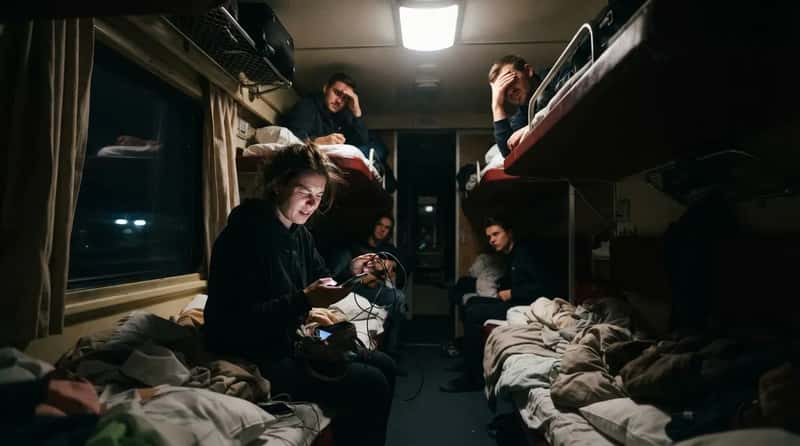
Picture a dark car where everyone has finally drifted off. Then one passenger decides the overhead light is the only way to find a dying phone’s charger. It takes one flick, and everyone is awake.
A travel-site roundup of crew accounts says this is one of the most common complaints heard the next morning. The fix is almost insulting in its simplicity: a phone’s built-in flashlight would solve most of these moments in seconds. Sleep experts generally agree that bright light at night is a bad idea for anyone trying to rest.
Then there’s the habit that starts at the door and ends on the seat at #13…
#13 – Putting Bare Feet Where Everyone Else Has to Sit
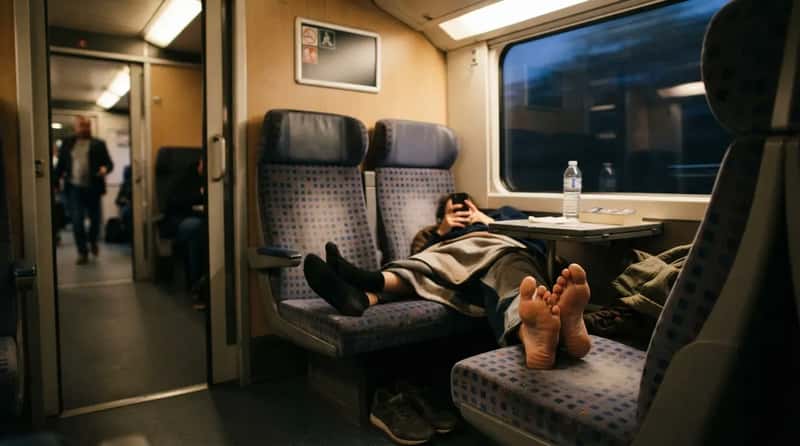
Shoes off is one thing. Feet on the seat is another. France’s rail operator SNCF once listed putting feet on seats, pulling emergency alarms for no reason, and playing music aloud among its biggest passenger complaints. It was a long list of small, common behaviors.
On an overnight run, that upholstery is where someone else will sleep, eat, or lean tomorrow. It’s the one rule almost everyone knows, and plenty of people still break it. That it made an operator’s list tells you how often crews see it.
Quick Compare
- Shoes off at your own berth: Usually fine, and often the most comfortable way to settle in.
- Feet up on a shared seat: Lands on complaint lists, since the next person sits right there.
- Bare feet in the corridor or toilet area: Technically allowed, but rarely a crowd-pleaser.
Speaking of things that wreck a night, #12 turned into a full-blown standoff…
#12 – Snoring So Loudly the Whole Compartment Staged a Revolt
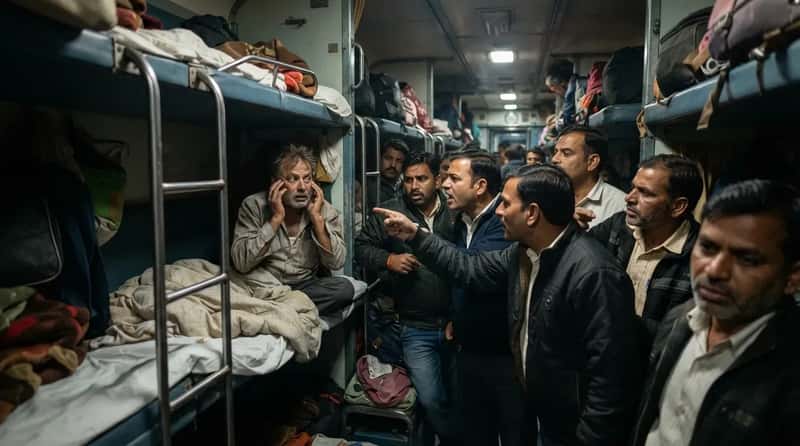
Snoring is the one offense the offender can’t even witness. In one widely reported incident in India, fellow passengers on a long-distance train gave a loud snorer a taste of his own medicine. They decided to keep him awake so they could finally catch up on their own sleep.
The report says he was kept awake for five to six hours, and a heated argument followed. The railway official who confirmed it said the snorer didn’t even file a complaint. It’s an extreme case, and not a tactic any operator recommends. Still, it shows how fast shared sleeping space turns tense.
Next up is a button that’s supposed to be for emergencies only…
#11 – Pulling the Emergency Alarm Like It’s a Doorbell
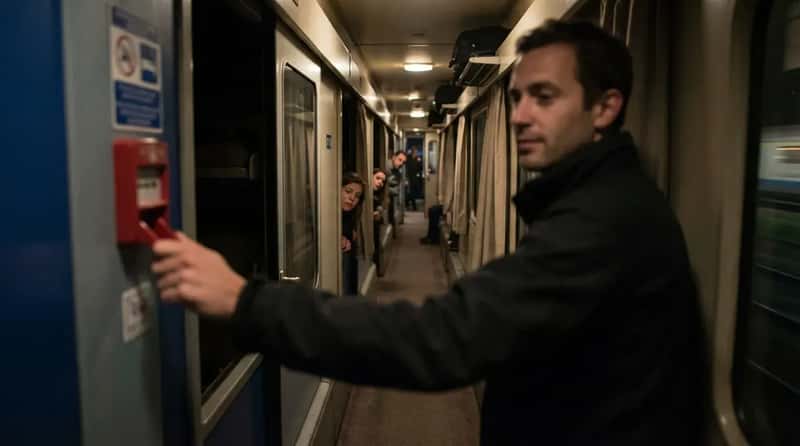
Emergency alarms exist for emergencies. Yet SNCF’s own complaint list included people pulling them without reason. On an overnight train, a false alarm wakes hundreds of people and can disrupt a schedule that’s already tight.
Crews have to treat every alarm as real until proven otherwise. That means stopping, checking, and explaining, usually in the dark. A single unnecessary pull can ripple through the timetable for the rest of the night, and everyone onboard pays for it.
But the next offense attacks a different sense entirely…
#10 – Unwrapping Something That Smells Like a Fast-Food Kitchen
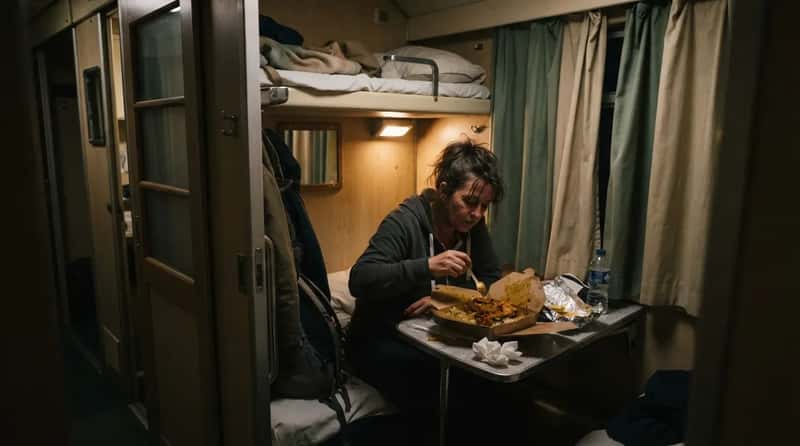
A closed cabin holds smells the way it holds sound. Sleeper etiquette, as described in reporting on crew accounts, comes down to a few basics: no overhead light after dark, no music through speakers, no smelly food. That last one is the rule people argue about.
Fish, eggs, and anything with strong spices are the usual suspects. The smell can linger long after the wrapper is gone. The worst part is that in a sleeper car, nobody can leave, and opening a window is rarely an option on modern trains.
The next offense blocks something far more basic than air…
#9 – Parking Luggage Across the Only Aisle
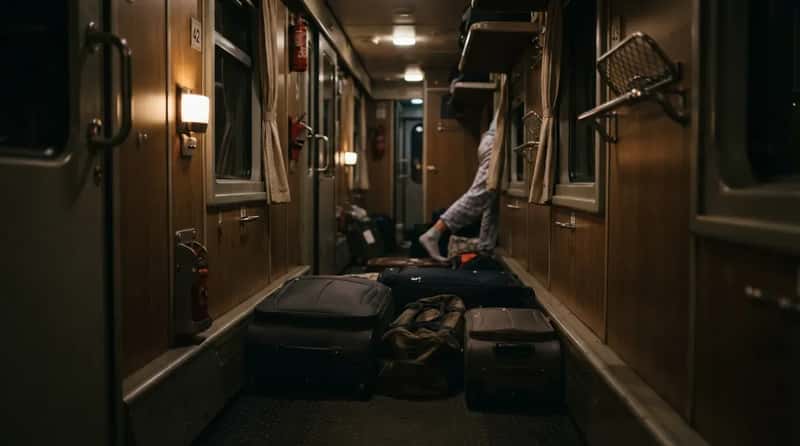
Overnight corridors are narrow, and everyone has to use them at some point. A suitcase left in the walkway might seem harmless at 9 p.m. At 3 a.m., it’s a trip hazard for anyone stumbling toward the toilet in the dark.
Luggage racks and under-bed space exist for a reason. The aisle is also the shared exit if something goes wrong. Blocking it affects crews as much as passengers.
At a Glance
- Walkway: For walking and for getting out fast in an emergency, so nothing should sit there.
- Luggage racks: The best home for large bags.
- Under-bed or in-room storage: Good for the small bag you’ll need overnight.
- Dark-hour rule of thumb: If someone half-asleep could trip on it, move it.
The next one tests the patience of the people who work all night…
#8 – Hammering the Call Bell for Things That Could Wait Until Morning
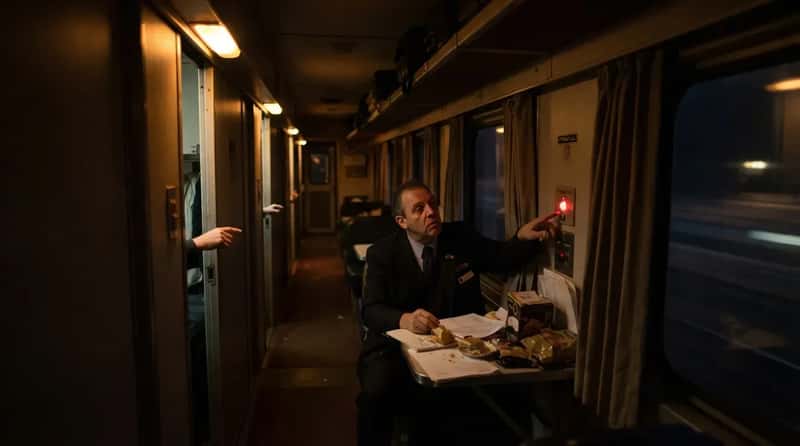
Overnight attendants are on call, but not for everything. Travel reporting on crew routines says nobody wants to be the one attendant answering every call bell at 3 a.m. Crews often divide the overnight work among themselves without announcing it.
That makes a non-urgent request at that hour more than a small ask. A medical issue or safety concern is exactly what the bell is for. Asking for a different pillow at 3 a.m. pulls the crew away from jobs that can’t wait.
The next offense is one many operators ban outright…
#7 – Sneaking a Smoke or a Vape in the Toilet
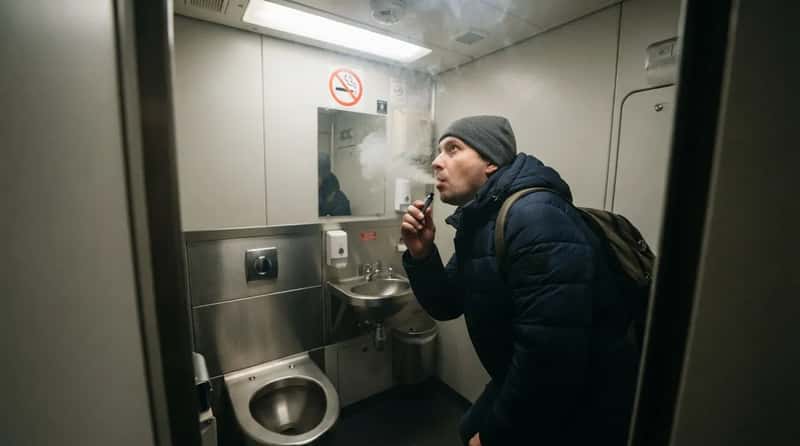
It’s one of the oldest rule-breaks in travel. Most rail operators ban smoking and vaping onboard, and a sleeper car is a sealed, shared space. A single puff can drift down the corridor.
Crews generally treat it as a safety issue as well as a courtesy one, because smoke can set off detectors and force a stop. The person who thinks nobody will notice is usually the one who triggers the alarm. Check your operator’s policy before boarding, since rules and platform exceptions vary.
Next, a mix-up that sounds innocent but gets awkward fast…
#6 – Settling Into Someone Else’s Berth and Refusing to Budge
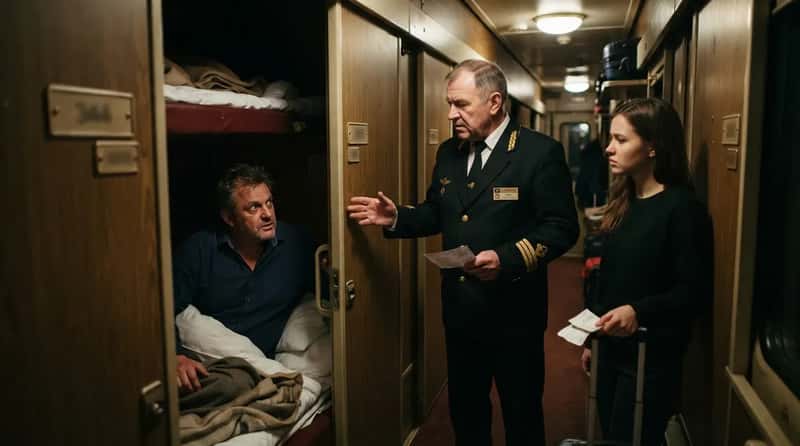
Every year, someone boards in the dark, climbs into the wrong bed, and falls asleep. Honest mistakes happen, especially at 11 p.m. in an unfamiliar car. The shameless part comes when the person refuses to move.
Crews then have to play referee between a sleepy passenger and the traveler who paid for the berth. The quickest fix is also the one people skip: checking the number on the ticket against the number on the door. That takes ten seconds. Skipping it can cost a conductor half an hour.
Worth Knowing
- Your ticket is your proof: The berth or compartment number on it should match what’s on the door.
- Late boardings cause most mix-ups: Dim lights and unfamiliar layouts make wrong beds easy to land in.
- Don’t argue it out: If someone is in your berth, the attendant can check the reservation and sort it fast.
- Keep your ticket handy: A quick look at the details settles most disputes without raised voices.
The next offense happens after the night is over…
#5 – Leaving the Cabin Looking Like the Night Before
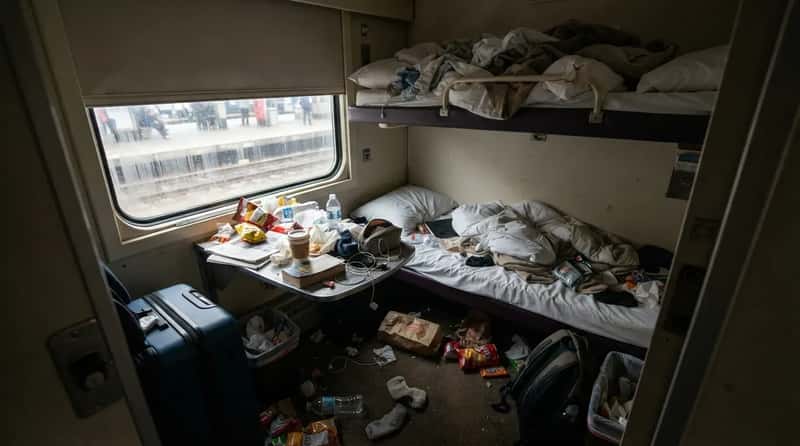
When the train arrives, the cabin has to be turned around for the next passengers. Crews often have very little time to do it. Cups, wrappers, and used items left everywhere make that job harder.
It’s easy to overlook because the person who made the mess never sees the consequence. The next passenger is the one who pays for it. A quick sweep of your own mess is the simplest courtesy on this list.
But the next one is where entitlement turns into real frustration…
#4 – Demanding the Door Open at a Stop Nobody Planned
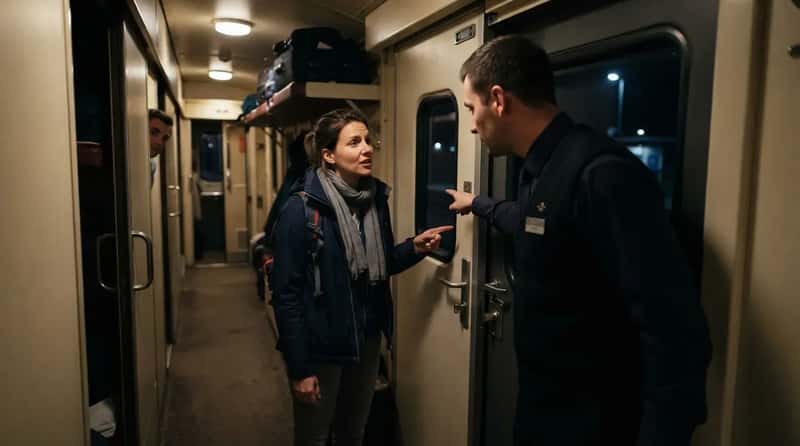
Not every stop is a stop for everyone. Travel reporting on overnight routes says that if nobody is expected to board or leave at a late-night station, the sleeper door may not open at all. It’s a practical choice to avoid waking people for nothing.
So a passenger who decides at the last minute to step off can run into a wall of locked doors. The attendant can’t open a door for a stop they were never told about. Tell the crew your plans early, not when the train is already rolling.
Now the list turns darker, starting with how some passengers treat the crew itself…
#3 – Shouting at the Crew Until the Operator Bought Body Cameras
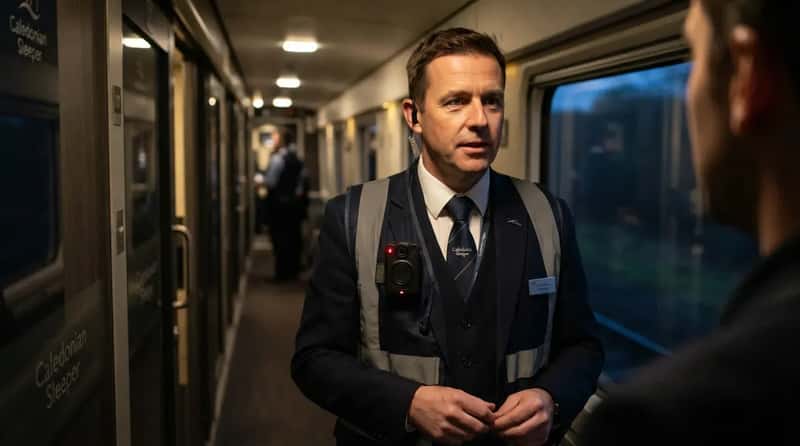
This is the one operators don’t joke about. In October 2024, Caledonian Sleeper crew were set to wear body cameras after an increase in verbal abuse on the London-Highlands service. The cameras were meant for all onboard and station lounge staff.
Officials were careful to stay balanced, and Transport Scotland said the vast majority of passengers behave responsibly. Even so, a famously romantic sleeper service decided its crew needed cameras to feel safe at work. The crew is up all night so everyone else can sleep.
And the last two get far worse than a raised voice…
#2 – Drinking Until a Sleeper Car Became a Bathroom
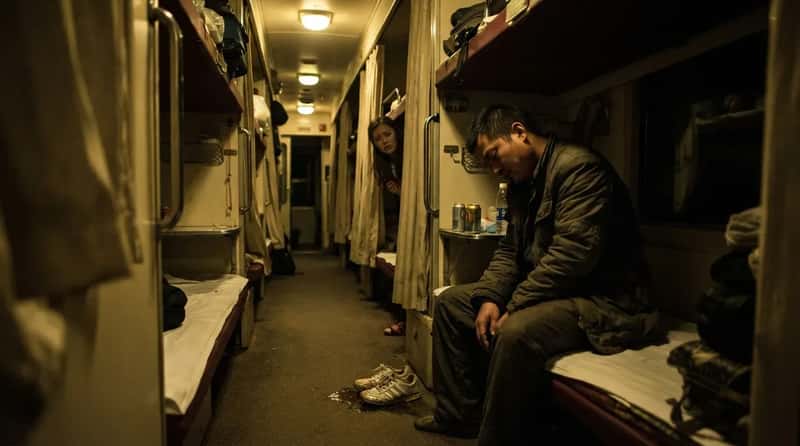
Alcohol and overnight travel are an old pairing, and it sometimes goes badly. Reporting from mainland China described a drunk man urinating on a female passenger’s shoes on a sleeper train. The report presented it as one of several recent cases of what it called uncivilised behavior.
A passenger in a bunk can’t easily get away from a drunk neighbor. Staff often have to handle it with little more than words and a locked door. It’s an extreme example, not a typical night, but alcohol is a common thread in the worst stories crews tell.
But nothing prepares a crew for what came next, at #1…
#1 – Using the Floor Beside the Seat as a Toilet
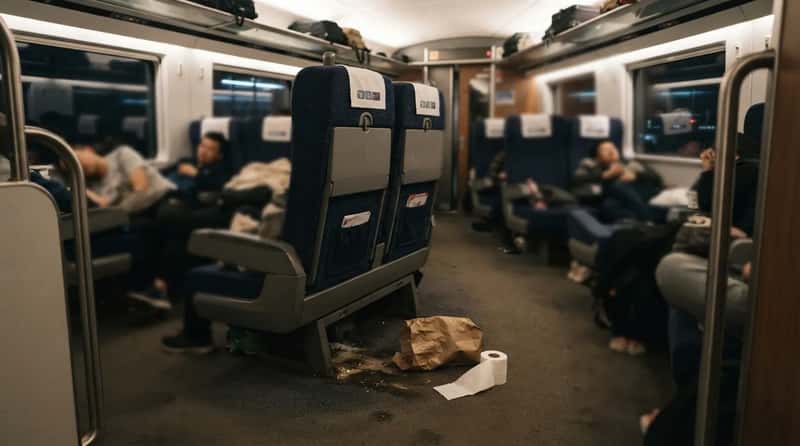
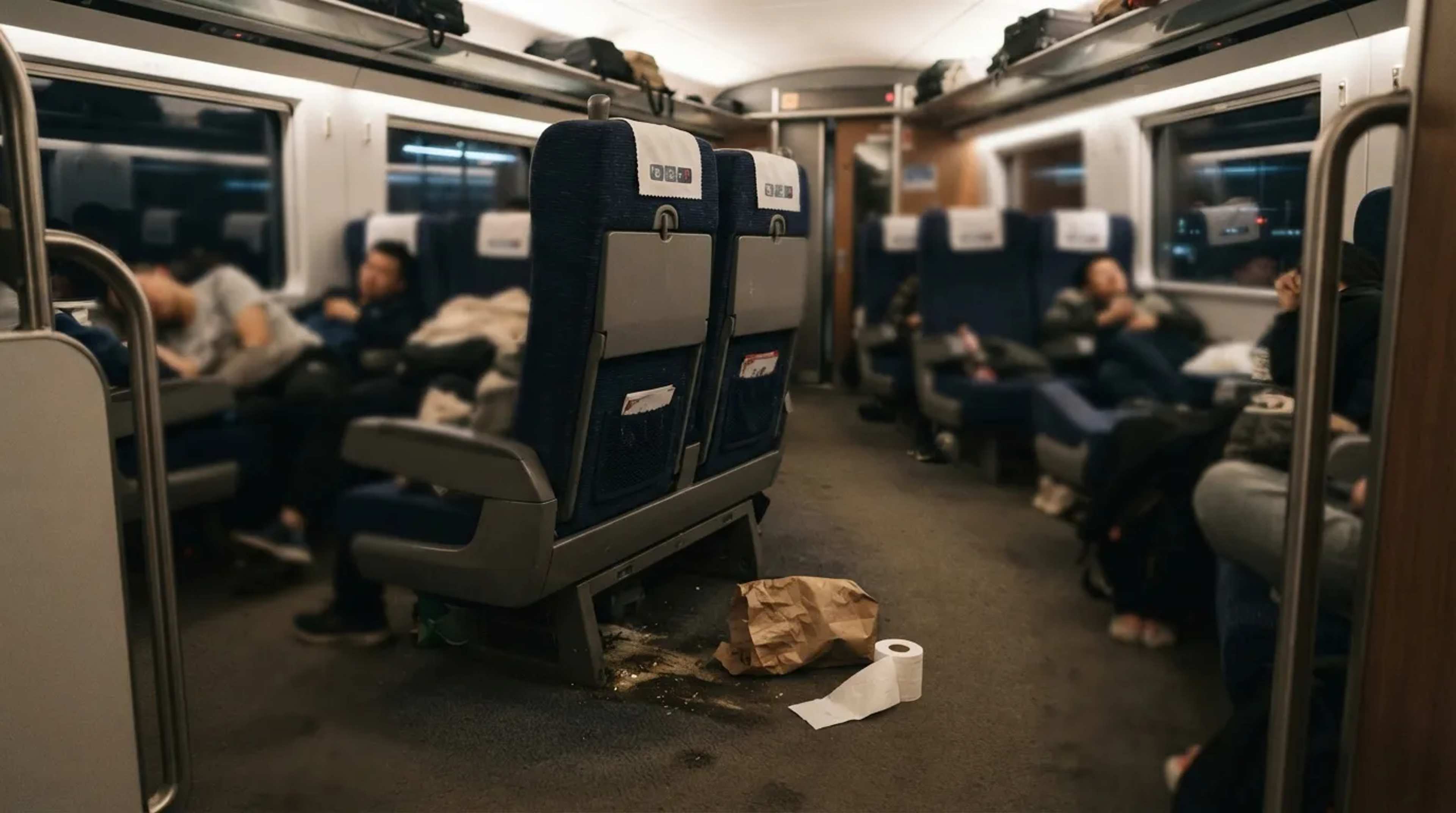
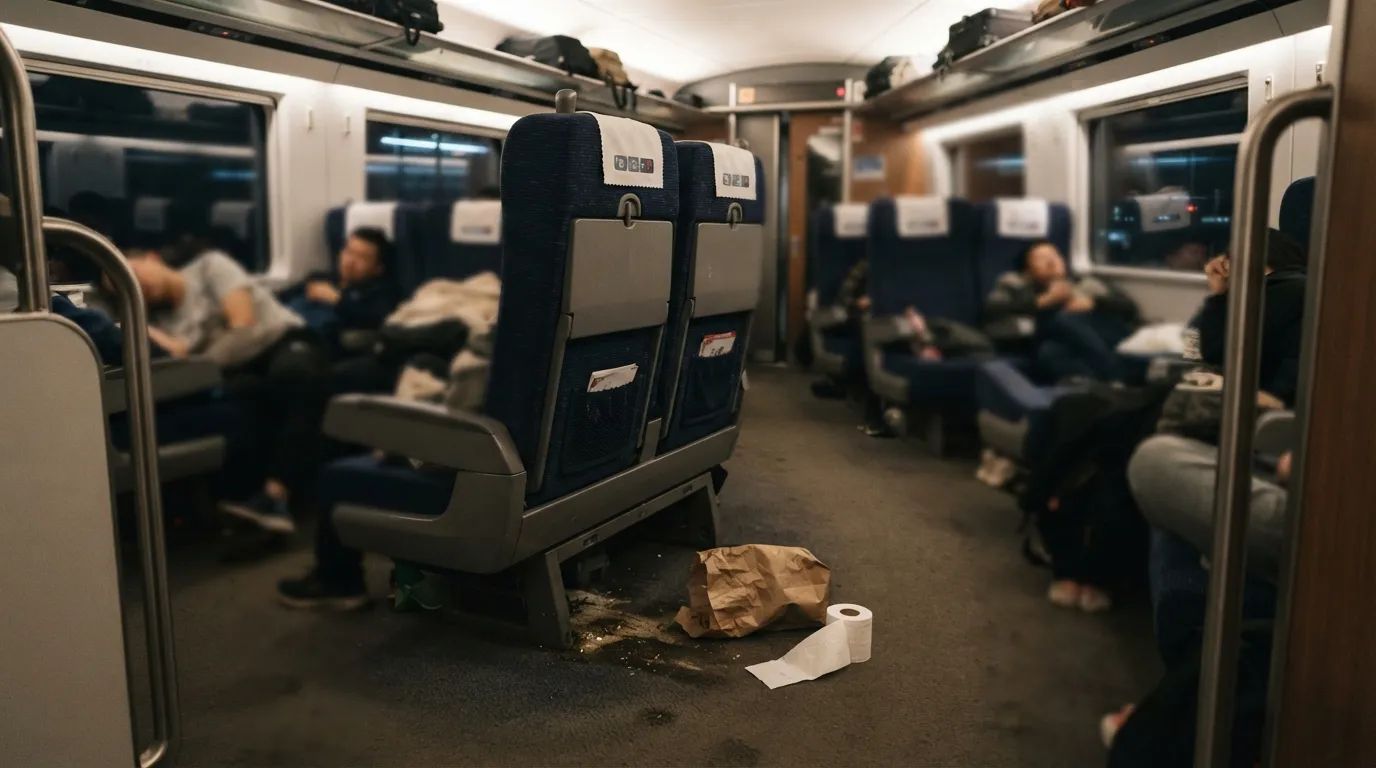
It sounds like an urban legend, but it was reported during China’s National Day holiday. A man defecated beside his seat on an overnight high-speed train, the G5899 from Shaoyang in Hunan to Guangzhou South.
Photos online showed the scene. The train attendant reportedly provided only toilet paper and a rubbish bag to clean it up. The report said it was one of several recent cases and that the rail operator lacked enforcement powers. It’s rare and extreme, but it shows how little a crew can do when someone ignores every social rule.
Most overnight passengers behave well, and operators say so themselves. The offenders are a small group who treat a shared, sleeping space as a private one. The petty habits, from loud calls to the 2 a.m. overhead light, show up everywhere, while the extreme cases are rare but impossible to forget.
Crews can’t fix any of it alone. They can’t control what happens behind a closed door at midnight. Which of these have you seen on a night train, and which one would you have reported?