Most travelers over 60 assume TSA screening is the same experience for everyone – shoes off, bins filled, hands up, done. But federal policy quietly treats older flyers differently at almost every step of the checkpoint, and officers are trained to notice things most passengers never think about. The gap between what actually happens and what anyone bothers to explain out loud is bigger than most people realize.
Some of these signs are physical. Some are simply about whether you know a rule exists before an officer has to spell it out for you. A few can shave ten minutes off your wait, and a few can add ten minutes if nobody says anything and you never think to ask.
#16 – The Rough Age Estimate Officers Make Before You Reach the Belt
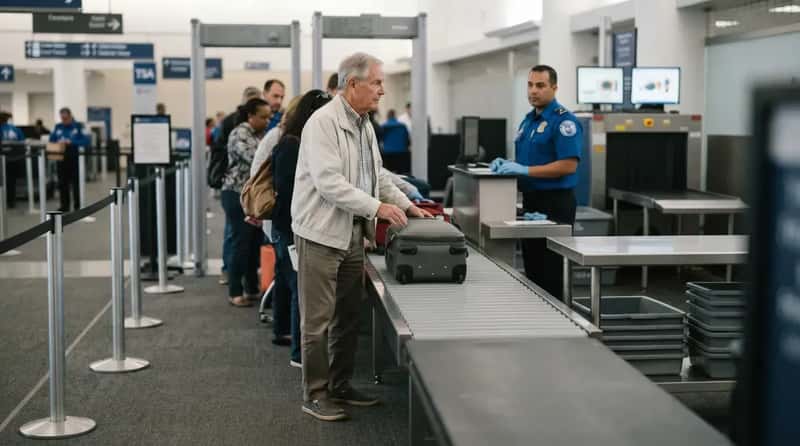
The first read a trained officer makes on an older traveler is silent: is this person 75 or older? That single visual judgment used to trigger a different tier of screening entirely, because passengers 75 and older who are unable to stand for screening will be screened through other security methods. Nobody hands you a form to prove your age – the assessment happens on sight, instantly.
For years this mattered enormously for footwear, but the ground shifted in 2025. Previously, children 12 and under and passengers 75 and older were exempt from the shoe removal policy, but now everyone can keep their shoes on, effective immediately, nationwide. The age-based exemption that once quietly separated older flyers from the rest of the line has effectively become universal – a detail almost nobody over 60 has caught up on yet.
#15 – Reading Your Gait and Balance Before You Even Speak
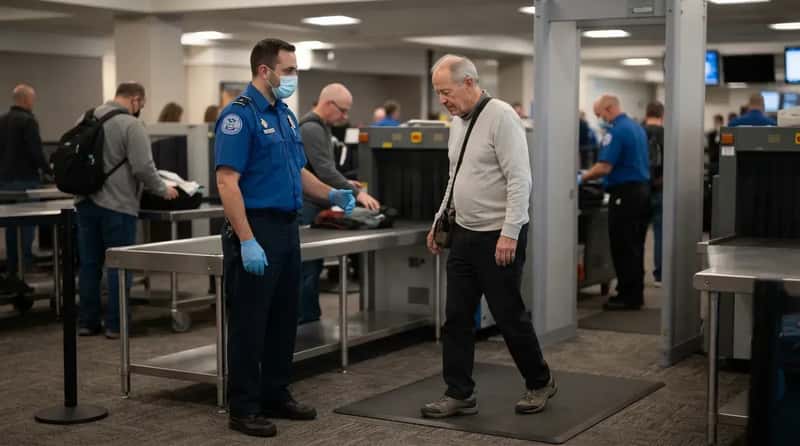
Long before an older traveler reaches the conveyor belt, officers are already clocking physical cues that most flyers assume are invisible. A slower walk, uneven weight distribution, or a flash of hesitation before stepping toward equipment all register instantly and shape how the entire lane gets set up.
This isn’t about suspicion – it’s logistics. Officers who spot mobility concerns early can quietly prepare a seated option, alert a colleague, or adjust the screening sequence before a traveler even has to ask. The frustrating part is that almost nobody explains this happens, so travelers who could request accommodations upfront never realize the option exists until they’re already standing at the machine.
#14 – Whether Your Hip or Knee Replacement Is About to Set Off the Alarm
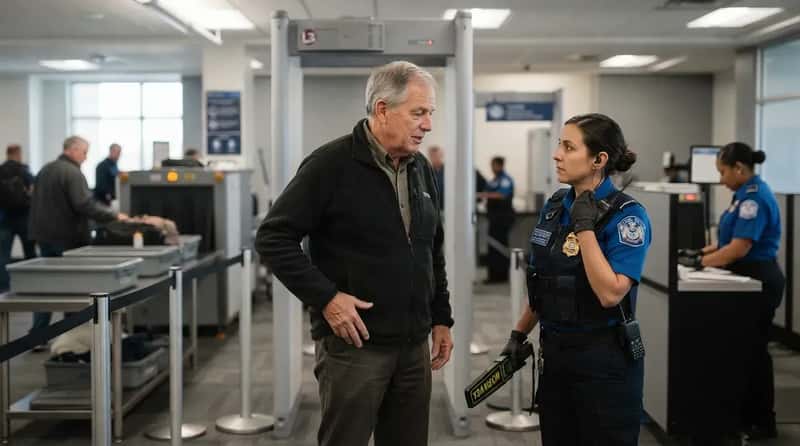
Officers screening anyone over 60 are quietly braced for this one, because joint hardware alarms constantly. Roughly 90% of all implants from total knee or total hip arthroplasty will most definitely set off the security alarms when passing through an airport security scanning system, even if the implant only contains small traces of metal. That statistic alone explains why officers barely blink when an older traveler alarms twice in a row.
The fix is simpler than most people expect. Patients should inform the TSA officer of the implant in their hip or knee before approaching the screening area, and a card or note from your physician is optional for identification of these types of implants. Most travelers still don’t know that disclosure alone speeds things up dramatically.
Fast Facts
- About 90% of hip and knee implants set off metal detectors
- A physician’s note is optional, not required, for identification
- Disclosing the implant before screening speeds up the entire process
- Advanced Imaging Technology can lower the odds of a pat-down
#13 – The Wheelchair or Scooter Check Almost Nobody Expects
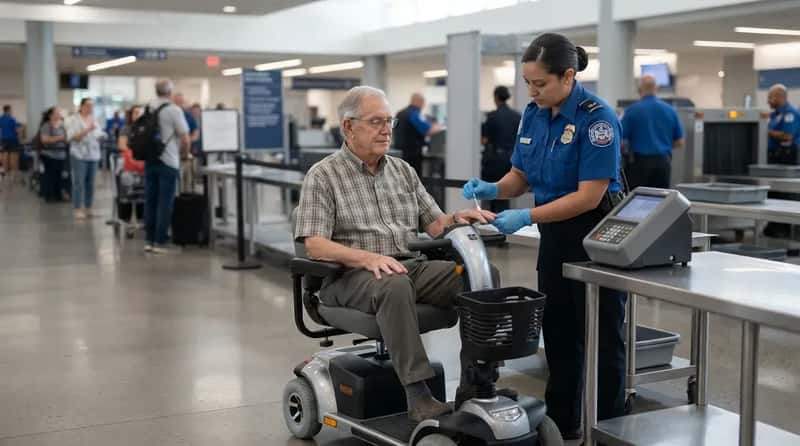
Mobility devices get more scrutiny than most riders assume, and it isn’t random. Because TSA has found some unauthorized items in wheelchairs and other mobility devices, TSA requires all people – whether they have a scooter, wheelchair, walker or cane – to be screened in some fashion. Officers are trained to check the device itself, not just the person riding it.
For travelers 75 and older, the process actually bends in their favor. If you are 75 years of age or older in a wheelchair or scooter, you may remain seated and the TSA officer will conduct a test of your hands for trace of explosives. Almost nobody realizes staying seated is an option, not an inconvenience they have to push through.
#12 – Pacemakers Change the Entire Screening Plan
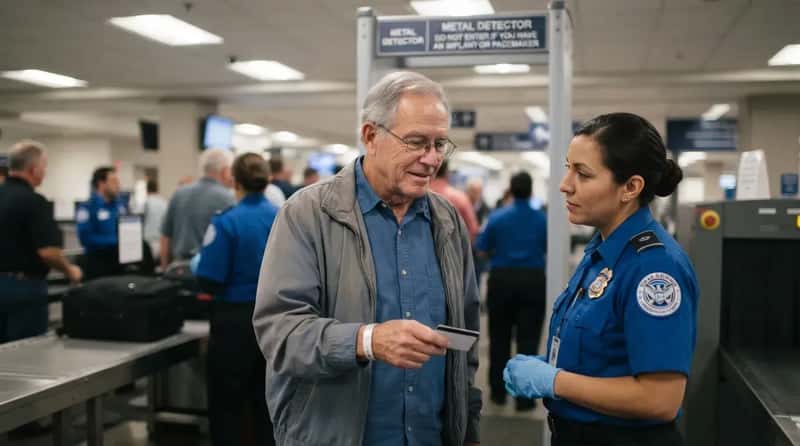
Officers treat a disclosed pacemaker completely differently than a disclosed joint implant, and the reason is medical, not procedural. Individuals with an internal medical device such as a pacemaker should not be screened by a walk-through metal detector. That single sentence reroutes the whole interaction the moment it’s said out loud.
What most travelers over 60 don’t realize is how much control they still have. Advanced Imaging Technology can facilitate your screening and reduces the likelihood of a pat-down, so travelers should inform the TSA officer that they have an artificial knee, hip, other metal implant, or a pacemaker. Saying it early, before ever stepping toward the equipment, is the entire trick.
#11 – Rolling Oxygen Into Line Sends a Silent Signal
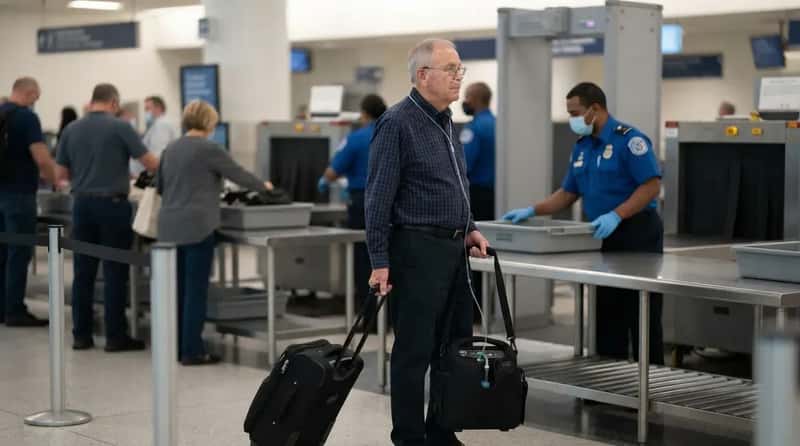
An oxygen tank or portable concentrator changes an officer’s plan before a single word gets exchanged. Oxygen and other respiratory devices have to be screened prior to going through a security checkpoint, and if the oxygen cannot be disconnected, travelers should tell the security officer, who can arrange for an alternate inspection process.
Here’s the part worth saying out loud: waiting until the checkpoint to mention it is the single most avoidable mistake older travelers make. Calling the TSA Cares hotline 72 hours before traveling gives officers time to prep the lane before you ever arrive – a step almost nobody takes until after a bad experience already happened.
#10 – Hearing Aids Don’t Need to Come Off, But the Myth Persists
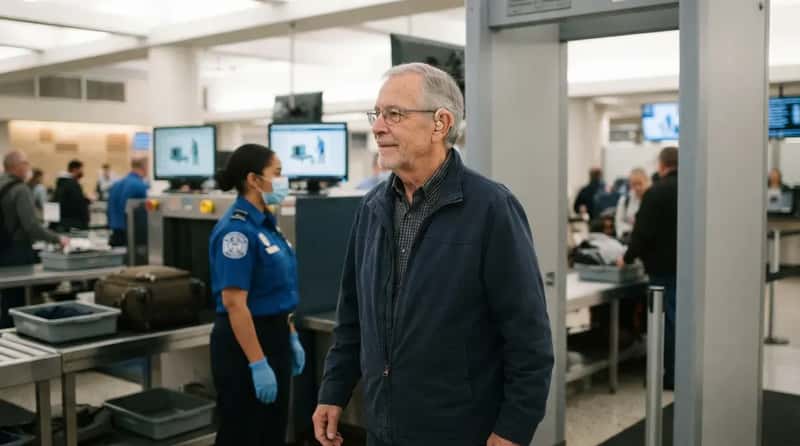
Plenty of older flyers still quietly remove hearing aids at the checkpoint, assuming it’s required. It isn’t. Hearing aids or exterior cochlear implants do not need to be removed, though they may require additional screening if they set off alarms during the process.
Officers see this hesitation constantly and rarely correct it unless asked directly. The safest move is simply stating you’re wearing one before stepping through, rather than fumbling to remove it in front of the whole line – a small detail that changes how smoothly the next ten seconds go.
#9 – The Clothing Choices That Guarantee a Pat-Down
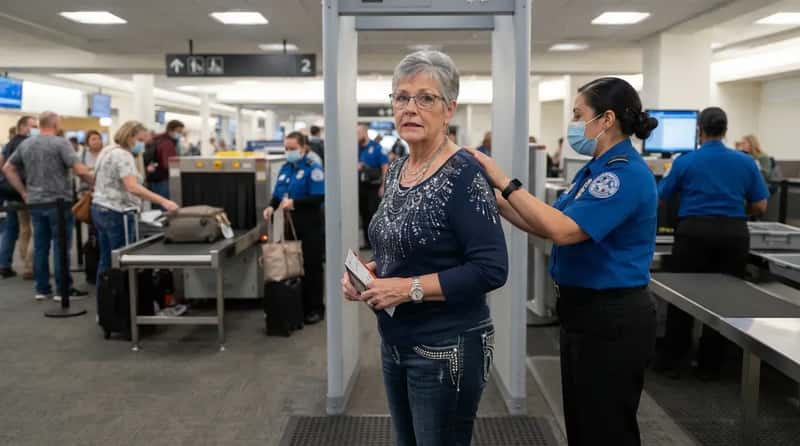
Officers can often predict an alarm before a traveler even reaches the scanner, just from the outfit. Sequined tops, blouses with decorative metalwork, and jeans with rhinestones on the back pockets reliably set off the Advanced Imaging Technology scanner – and reliably lead to pat-downs. None of it is prohibited; it just guarantees delay.
Here’s the slightly controversial part: dressing up for a flight quietly works against older travelers. The same goes for underwire bras, heavy belt buckles, and layered metal jewelry. A supervisor would tell you straight: wear slip-on shoes, elastic-waist pants, and a plain top on travel day.
Quick Compare
- Likely to trigger a pat-down: sequined tops, rhinestone pockets, underwire bras, heavy belt buckles, layered jewelry
- Likely to sail through: slip-on shoes, elastic-waist pants, plain tops, minimal jewelry
#8 – A Cluttered Carry-On Paints a Target on Your Bag
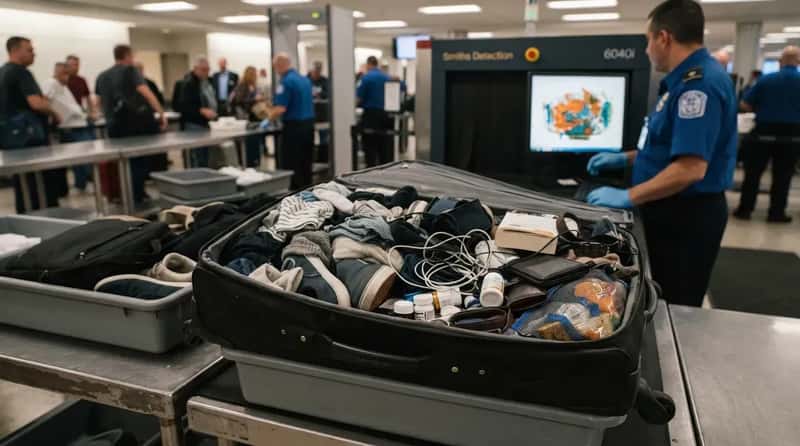
What’s inside a bag matters less than officers let on – how it’s packed matters more. The single biggest predictor of whether a bag gets flagged isn’t what’s inside it, it’s how organized it is, because TSA officers are reading X-ray images, and a disorganized bag produces a chaotic image that’s hard to interpret clearly.
A cluttered bag doesn’t just slow the process, it flags travelers for a hand search. The official recommendation is to pack items in organized layers: shoes, then clothes, then electronics, each in its own visual plane. Most travelers over 60 have packed the same disorganized way for decades without ever connecting it to their delays.
At a Glance
- Shoes on the bottom layer
- Clothes in the middle layer
- Electronics on top, separated and visible
- Organized bags are less likely to trigger a hand search
#7 – Medication Declarations Still Trip People Up
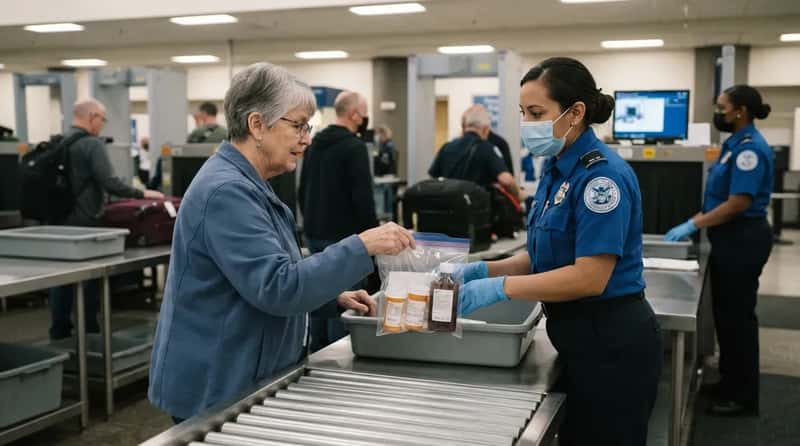
Officers expect medications, but they expect them handled a specific way. Pills and liquid medications should be clearly labeled, and if the quantity exceeds 3.4 ounces, it must be separated from other carry-on items and declared to a security officer as a medical necessity.
Most older travelers assume declaring is a hassle to avoid, when it’s actually protection. Officers will test liquids, gels, or aerosols for explosives or concealed prohibited items, and may open containers and transfer pills to another container for testing – a step that goes far faster when the traveler declares everything upfront instead of waiting to be asked.
#6 – When a Travel Companion Becomes Part of Your Screening
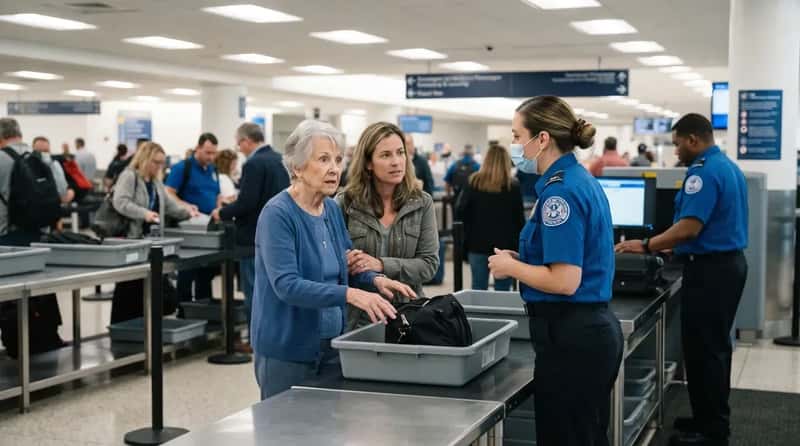
Officers watch companions almost as closely as the traveler they’re helping. If a companion provides assistance during screening, they will need to be rescreened – a rule that surprises families constantly and often causes the exact delay they were trying to avoid in the first place.
The workaround is simple but rarely mentioned upfront: you can stay with your companion during screening to ease their anxiety and confusion, and you can even ask to be screened in private if that makes things easier. Knowing this before you arrive changes the entire tone of the interaction.
#5 – The Quiet Protocol for Dementia and Memory Conditions
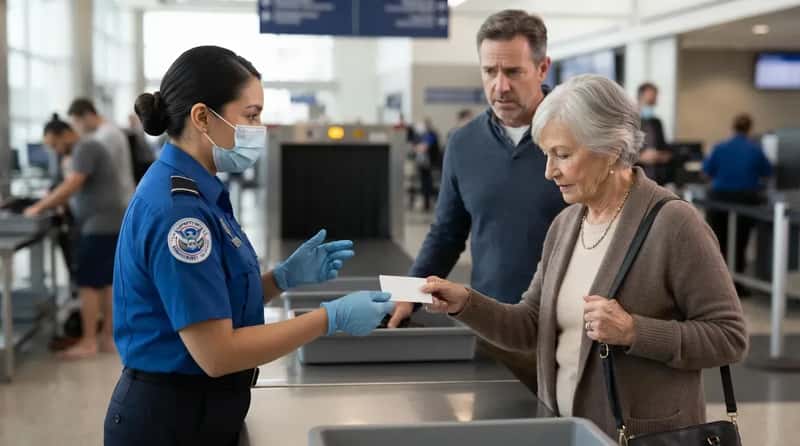
This is one of the more emotionally loaded signs officers are trained to catch, and it rarely gets discussed publicly. Passengers with non-visible disabilities and medical conditions such as Alzheimer’s, autism spectrum disorder, and dementia can be screened without being separated from their traveling companion.
Families rarely know a simple card can prevent the most stressful moment of the entire trip.
The person with me has Alzheimer’s Disease and may require a few extra moments.
Sample wording from a “Please Be Patient” travel card
Officers who see one of these cards adjust their pace and tone immediately – but almost nobody hands it over before an issue has already started.
#4 – Old Habits: Removing Things You No Longer Have To
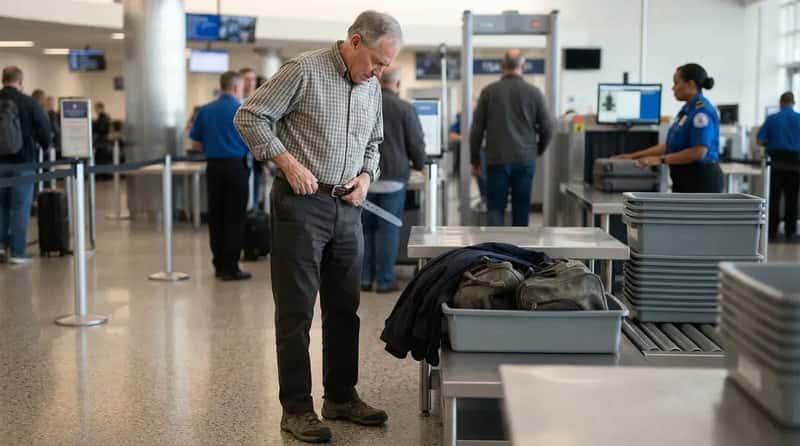
Officers watch this happen dozens of times a day: an older traveler reaching for a belt or shoe out of pure muscle memory. TSA eliminated the shoe removal requirement “effective immediately” nationwide in July 2025, meaning travelers no longer have to take their shoes off at security checkpoints.
Belts and light jackets are a different story. PreCheck members still get expedited screening without removing shoes, belts, or light jackets, while liquids and laptops can stay in bags – meaning standard-lane travelers, including many over 60, are still bending down to unbuckle a belt they may not technically need to remove for shoes anymore, purely from habit nobody ever corrected.
#3 – The TSA Notification Card Almost Nobody Uses
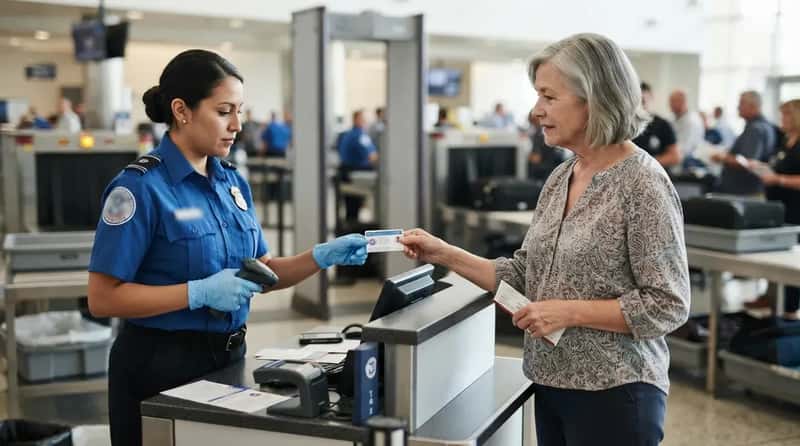
A small paper card quietly changes how fast an officer moves through your screening. Travelers may inform the TSA officer of a disability or medical condition verbally, by using the TSA Notification Card, or by providing medical documentation.
Officers see this card constantly from prepared travelers and almost never from first-time flyers over 60, even when it would help them the most. The card specifies health conditions, disabilities, or medical devices that may affect screening, and handing it over allows an officer to make special considerations without a long explanation.
#2 – Requesting a Passenger Support Specialist Changes Everything
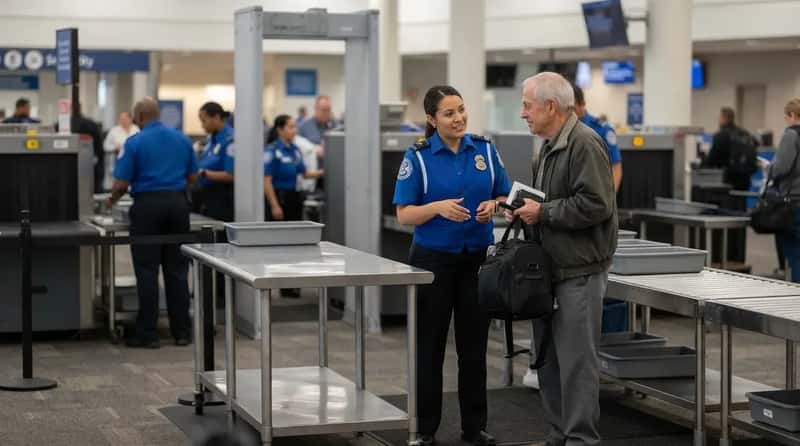
Almost no traveler over 60 knows this role exists, yet it’s designed specifically for them. If additional assistance is needed at the checkpoint, travelers can ask a TSA officer to request a passenger support specialist – someone whose entire job is answering questions, addressing concerns, and getting travelers on their way quickly.
Officers notice instantly when a traveler knows to ask for this by name versus when they’re simply confused and hoping for help. The TSA Cares hotline, at 1(855) 787-2227, exists specifically to answer questions about the security process for passengers with disabilities and medical issues, and travelers are encouraged to call 72 hours before flying. That single call, made days in advance, is the difference officers see every single shift.
Worth Knowing
- TSA Cares hotline: 1(855) 787-2227
- Call at least 72 hours before your flight
- Ask specifically for a “passenger support specialist” at the checkpoint
- The specialist’s sole job is helping travelers move through screening smoothly
#1 – Whether You Already Know Your Rights Changes the Entire Interaction
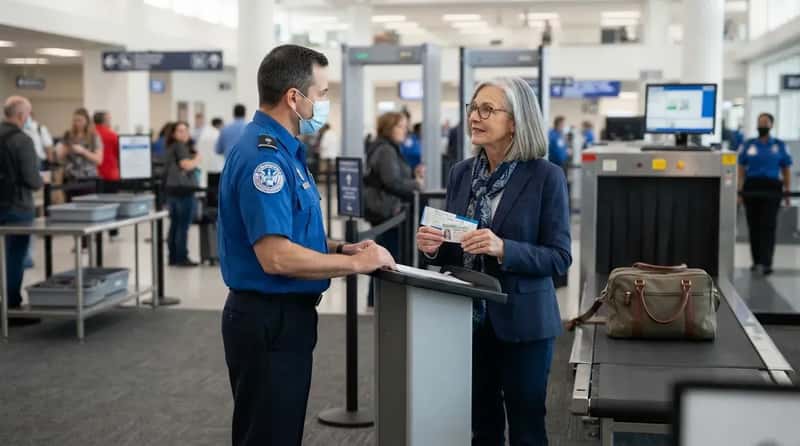
This is the sign that outweighs almost everything else on this list, and officers pick up on it within seconds. A traveler over 60 who walks up already stating their age-related accommodation, already holding documentation, and already aware of what can and can’t be requested moves through the line in a completely different rhythm than one who doesn’t know any of it exists.
If a screening experience didn’t meet expectations, travelers are encouraged to speak with a supervisor at the checkpoint – a right almost nobody over 60 exercises, simply because nobody ever told them it was on the table. Confidence at the checkpoint isn’t attitude. It’s information, and it’s the one sign officers say changes everything about how the next five minutes unfold.
None of these 16 signs are secret rules designed to catch anyone off guard – they’re policies and patterns that already exist, quietly, at every checkpoint in the country. The real surprise isn’t that TSA treats older travelers differently. It’s how few travelers over 60 know exactly how much that difference can work in their favor, from joint implants to memory conditions to a simple card tucked in a wallet.
Which one of these caught you off guard, or which one have you already lived through at the airport? Drop it in the comments – your experience might be exactly what another traveler over 60 needs to read before their next flight.