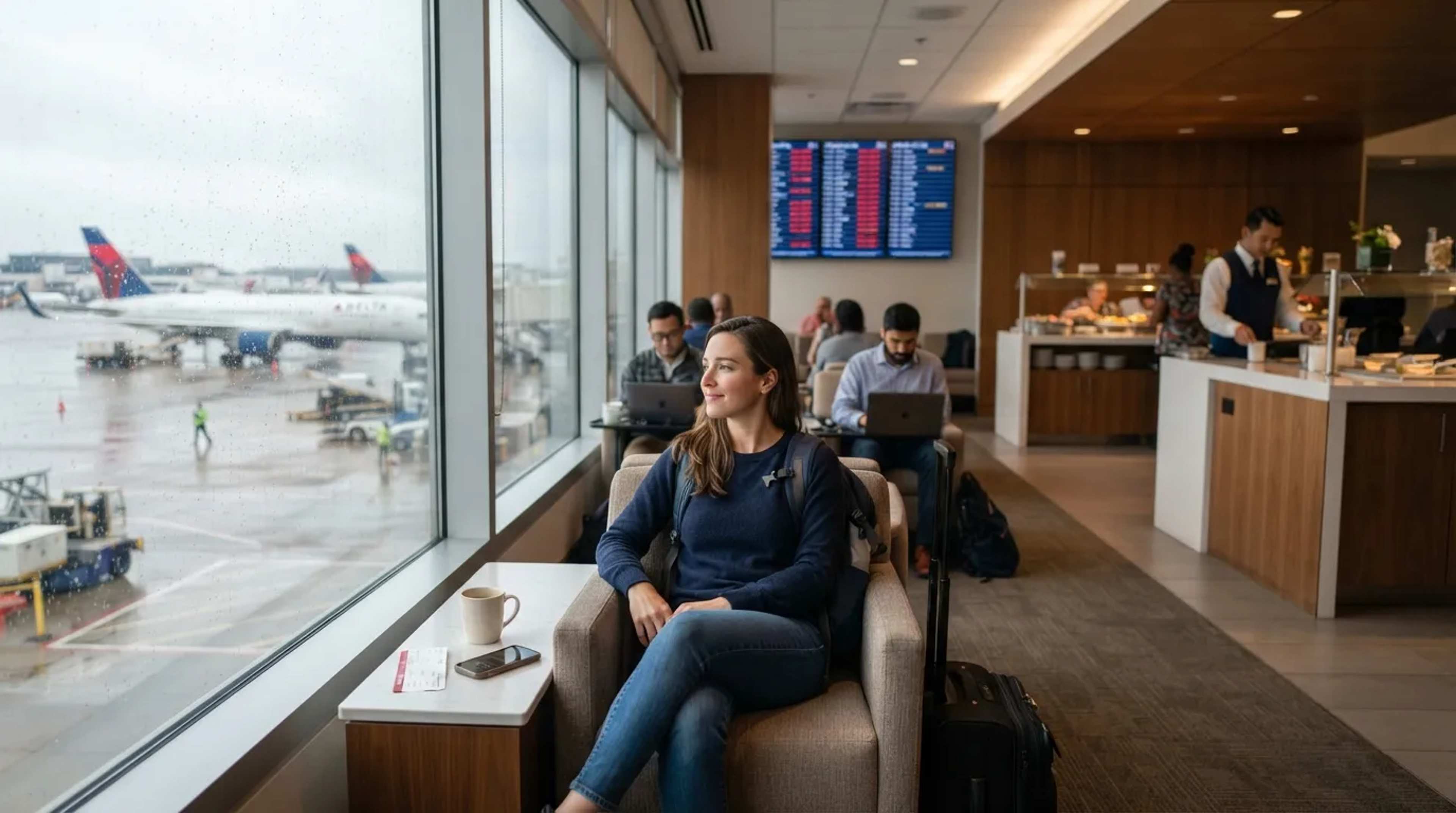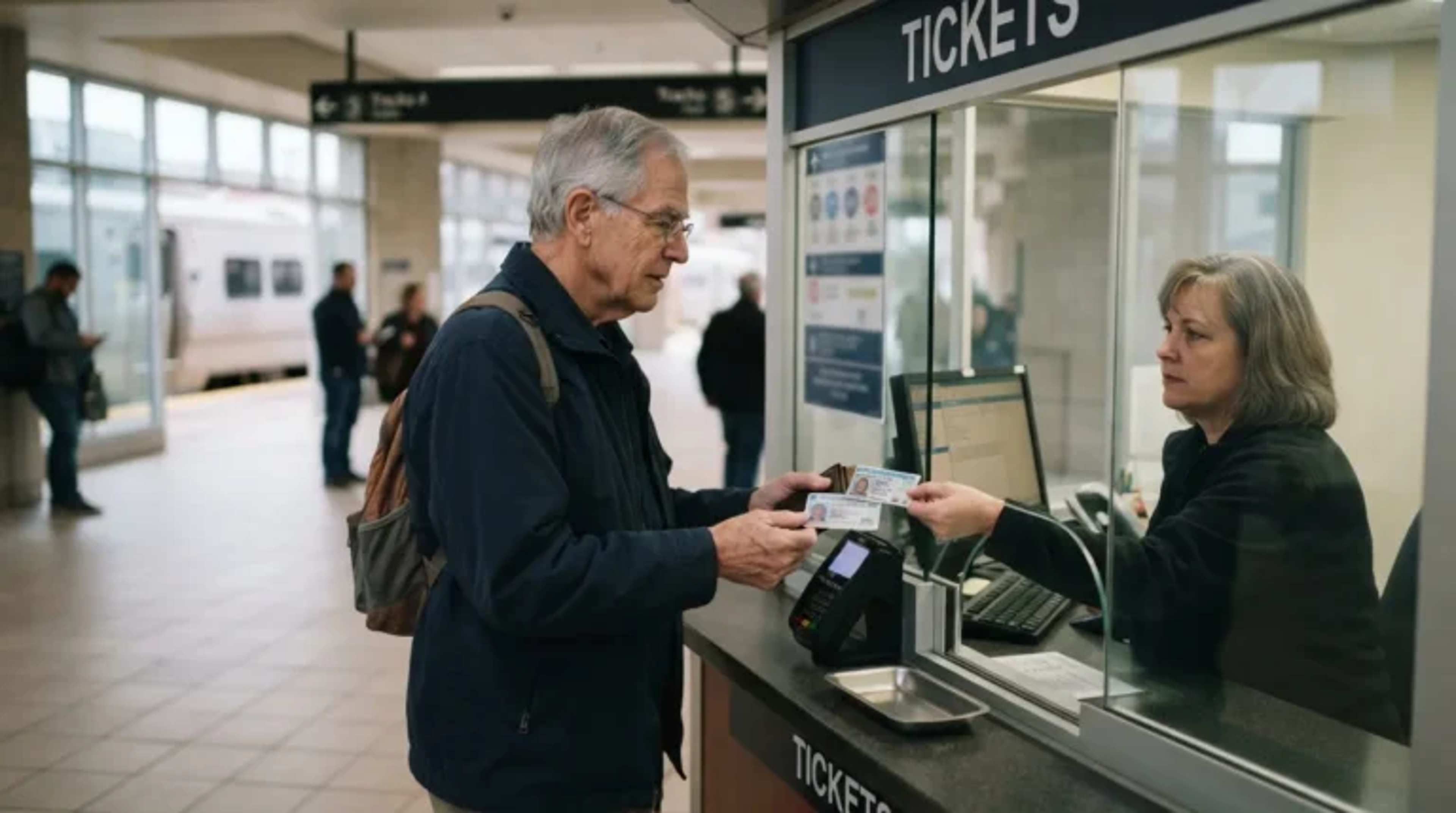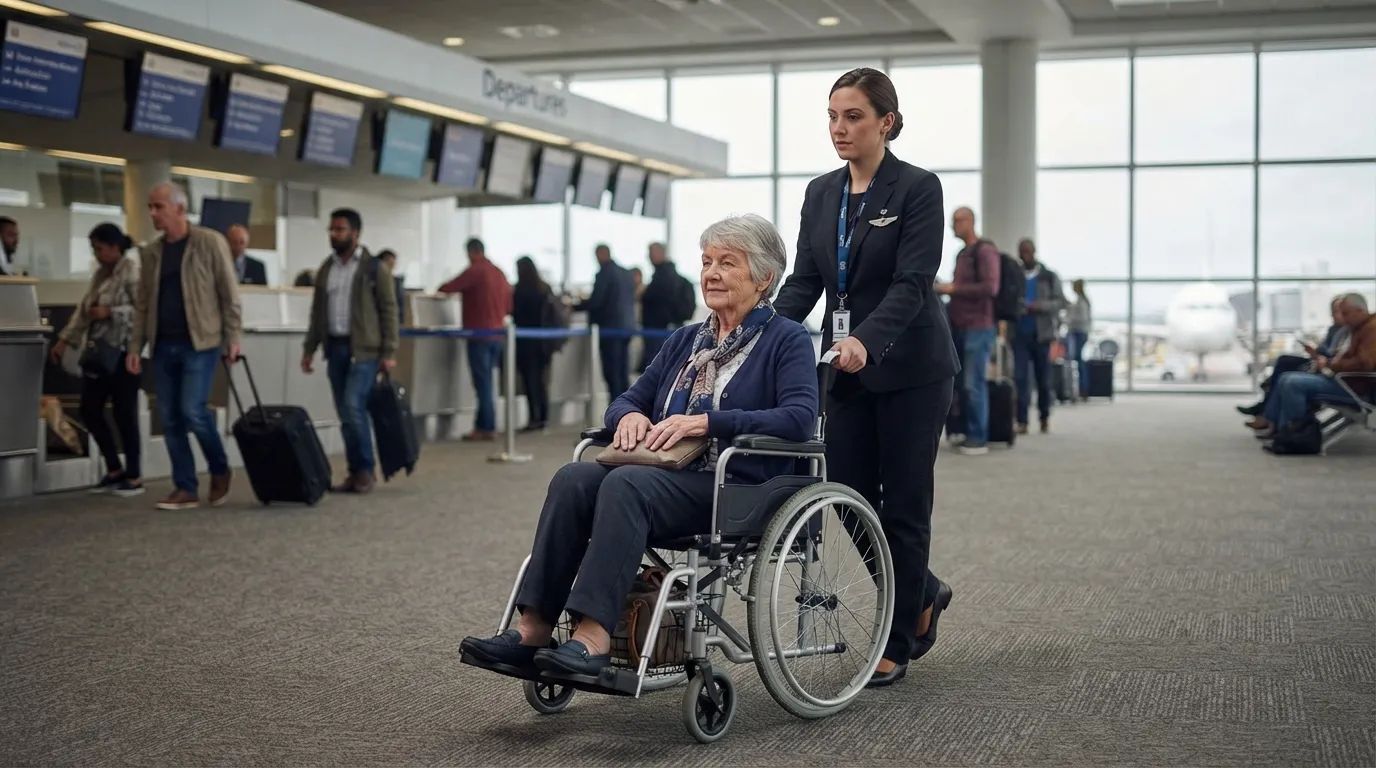
Picture a 72-year-old at the gate with a boarding pass in one hand and a carry-on in the other, surrounded by airline staff who all look far too busy to notice. That picture is mostly wrong. Gate agents, ground crews, and flight attendants spot, flag, and quietly work around older passengers every day, and some of it happens before you say a word.
Here’s the twist that makes this list more interesting than the headline. A few “senior perks” people swear by don’t exist at all. Some of the best help only shows up after one calm sentence at the right moment. We sorted the real from the rumor, and the biggest surprise is waiting at #1.
#16 – Your Name Is Already Flagged Before You Reach the Gate
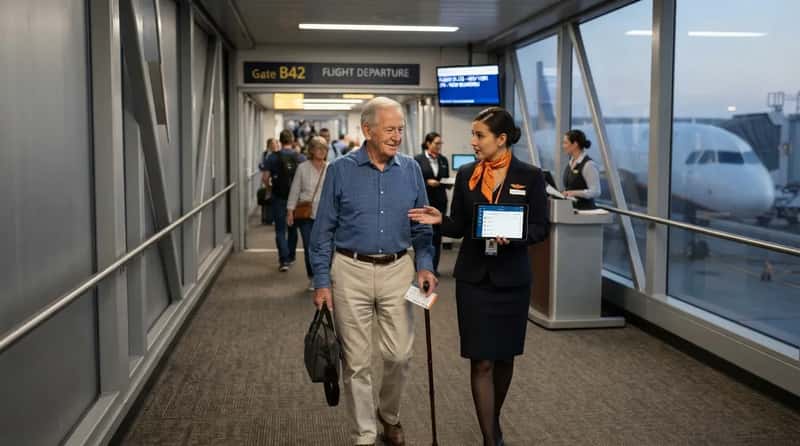
Long before boarding, the crew may already know you’re coming. Flight attendants get a manifest before boarding begins, and it includes notes on passengers who requested special assistance. That list lets a crew plan around you instead of guessing.
Here’s the catch. The flag only exists if help was requested, and most airlines ask for at least 48 hours’ notice. When a passenger clearly struggles but has no assistance note, the crew has to fill the gap on the fly. So “without being asked” often really means “asked once, days earlier.”
But the paperwork is only half the story, because #15 happens with no note at all.
#15 – Crews Scan the Boarding Line for Who Needs a Hand
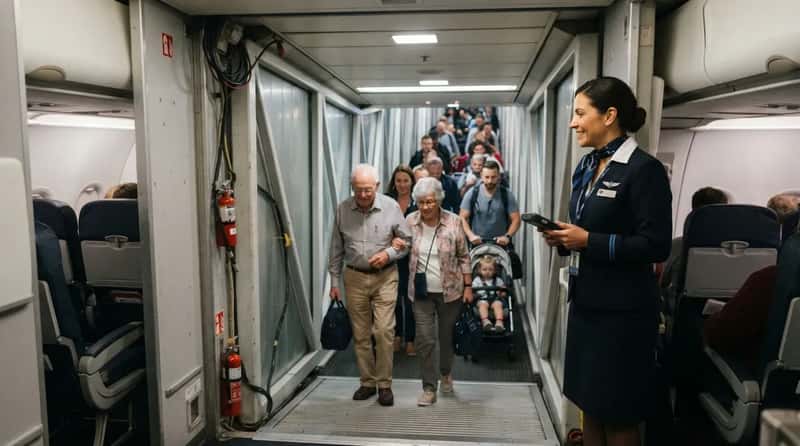
While you shuffle down the jet bridge, someone is watching. The first thing flight attendants look for is passengers who may need extra help during boarding or in an emergency evacuation. That watching starts before you’ve even found your row.
The crew’s mental list isn’t limited to wheelchairs. They also look out for the elderly, the injured, and parents with infants. Extra crew members are stationed along the cabin to help people find seats and stow luggage. Nobody announces any of it.
Fast Facts
- The scan covers boarding help and emergency evacuation needs.
- Older passengers, injured passengers, and parents with infants all make the mental list.
- Crew members are stationed along the cabin to help with seats and luggage.
- None of it is announced, so you may never notice it happening.
And the strangest version of that attention is #14.
#14 – The Discreet Check on the Passenger Who Looks Totally Fine
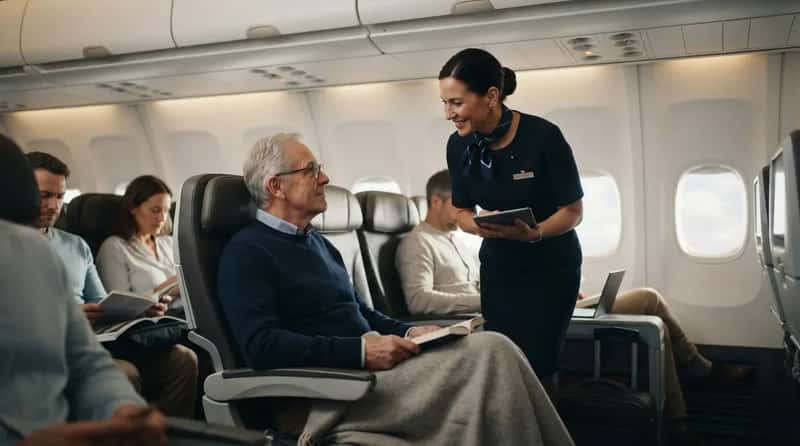
Not every checked-on passenger is struggling. A passenger who looks completely steady but has a special assistance flag on the manifest gets a quiet check. The crew would rather confirm than assume.
Many travelers in their seventies have spent decades being fiercely independent. A low-key check respects that. It’s help that doesn’t turn heads, and that matters more than most people realize.
Now for the free service that surprises people most, and it’s #13.
#13 – A Free Escort From the Curb to the Gate
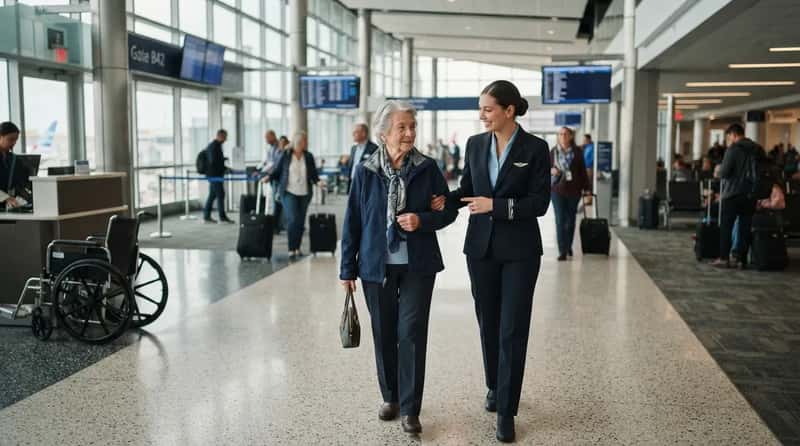
“Wheelchair assistance” covers far more than a chair. It can include ground, boarding, and on-board wheelchairs, plus a person to help you from the curb to the gate. You don’t have to be unable to walk to ask.
Airlines cannot charge for wheelchair services under the Air Carrier Access Act, including curb-to-gate escort. No doctor’s note is needed, and no paperwork. The catch is that someone has to request it.
Think you missed the deadline to ask? Item #12 might change your mind.
#12 – Show Up Without Calling and They Still Can’t Say No
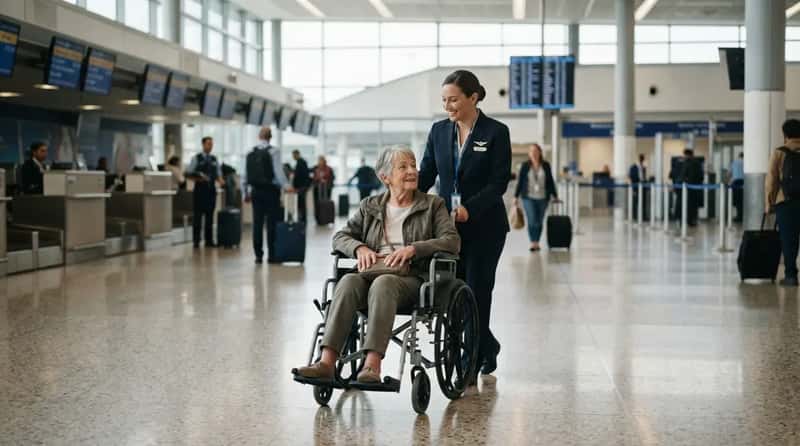
Airlines love to say “call 48 hours ahead.” Delta, American, and United recommend 48 hours, and Southwest says 24. But one airport guide notes that airlines can’t refuse wheelchair service just because you didn’t call ahead.
Day-of requests do work. The earlier you ask, the more reliably it’s arranged, but requests made at check-in are also accepted. Calling ahead makes the process smoother. It just isn’t a gate you have to pass.
Quick Compare
- Delta, American, United: 48 hours’ notice is recommended.
- Southwest: 24 hours’ notice is recommended.
- Day of travel: Requests at check-in are still accepted, just with less certainty.
The next one gets argued about at gates every day.
#11 – The “Senior Boarding Line” Mostly Doesn’t Exist, But Early Boarding Does
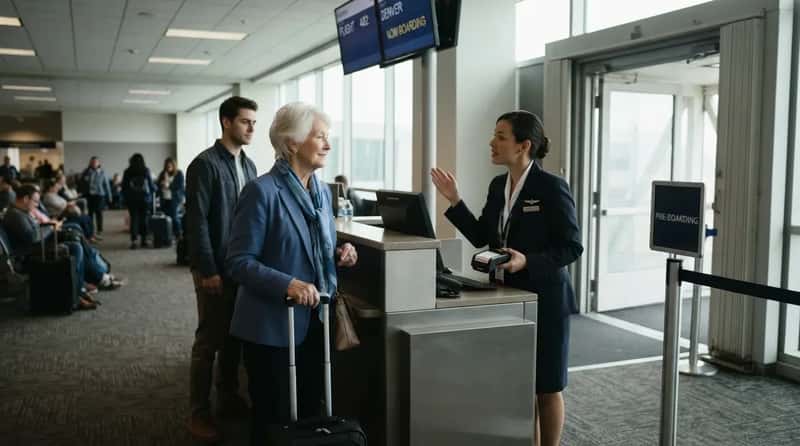
Here’s the myth: turn 70 and a special lane magically opens. It doesn’t. Southwest states it has no special boarding for seniors, and early boarding elsewhere is tied to need, not a birthday.
The need-based version is real, though. Carriers must offer preboarding to passengers with disabilities who self-identify at the gate as needing additional time to board. You have to make that request to the gate agent yourself.
And if you thought paying for help was the smart move, wait until you see #10.
#10 – The Cart Ride Plenty of Travelers Pay Extra For Is Actually Free
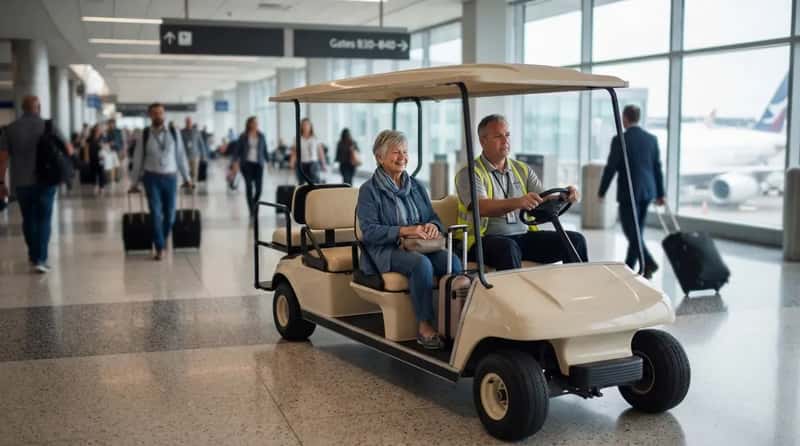
At most large hubs, cart transport and wheelchair service are provided free by contracted airport service providers. Yet some travelers still book outside companies. One consumer site says people hire “meet and assist” concierge services without realizing the same escort is available free by calling the airline.
Some will call that wasted money. Others like the reassurance of a private service. Either way, the free option is real, and many people never hear about it.
Next up is the moment many older flyers dread most.
#9 – Connections Without the Airport Sprint
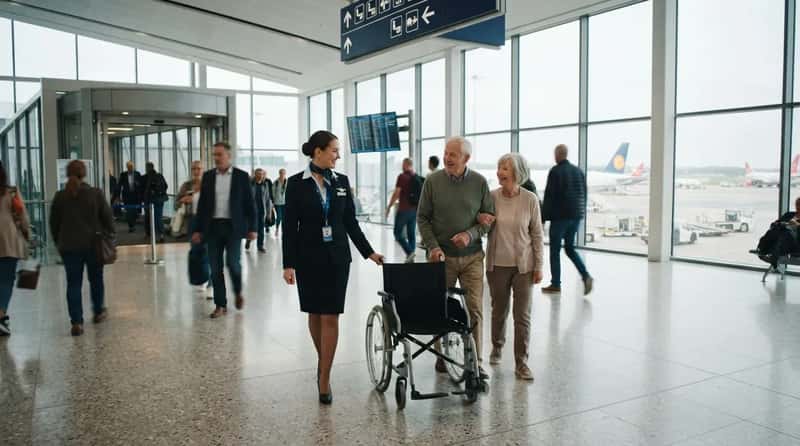
Tight layovers hit older travelers hardest, and a connection is where the dread usually peaks. The fix is quieter than people think. Staff can arrange help between gates so you aren’t sprinting through a crowd with a boarding clock ticking.
Gate-to-gate transfers for connections are among the free services. The DOT’s 2024 rule also calls for prompt enplaning, deplaning, and connecting assistance, including movement within the terminal. You can ask for it on every leg.
Then there’s the person who gets to stay by your side a little longer, and that’s #8.
#8 – A Loved One May Be Allowed to Walk You to the Gate
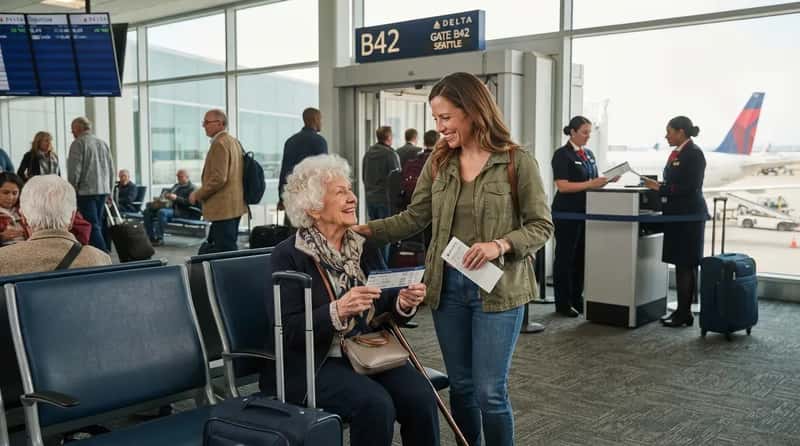
Facing an airport alone can feel like too much. Airlines can issue a companion pass that lets a non-traveling guest go through security and stay until boarding is complete. It’s a small kindness with a big emotional payoff.
It isn’t universal, though. Companion preboarding is offered by some airlines, not all of them. In a New York Times piece, a Delta spokesman suggested relatives call 48 hours ahead to notify the airline. Policies change, so check yours before the trip.
Some seating perks work the same way, and #7 may surprise you.
#7 – Seats Get Moved for Need, Not for Age
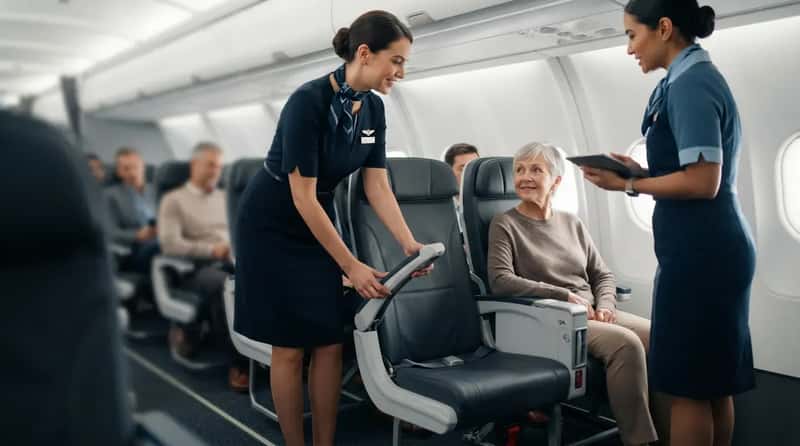
Staff really can fix a bad seat. But seating accommodations are tied to your specific need, not your age. A passenger who uses an aisle chair is entitled to a movable armrest if they can’t easily transfer over a fixed one.
If you travel with a personal care attendant, an adjacent seat must be provided. Southwest’s move to assigned seats changed the routine. The old trick of boarding early just to grab a good seat is gone, and now you ask an agent for the seat itself.
Then there’s the item crews themselves can’t agree on, and it’s #6.
#6 – The Overhead Bin Lift That Divides Flight Crews
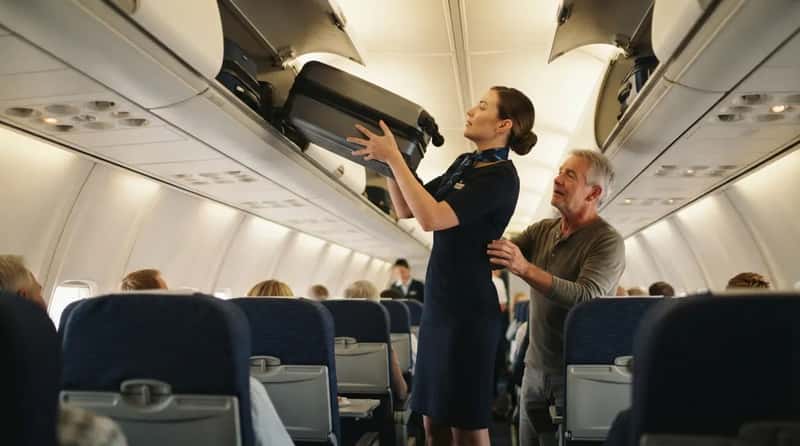
Many older travelers assume the crew will hoist the bag. Often they do, out of simple courtesy. For passengers with disabilities, in-flight personnel will help store and retrieve items in the overhead bins.
Not everyone thinks that’s a good deal. One crew-perspective piece says flight attendants sustain a meaningful number of injuries from lifting passengers’ heavy bags, and an injury can pull a crew member off the job for months. Is the lift basic hospitality, or an unfair ask? Crews don’t agree.
Mealtime has its own unwritten rules, and #5 spells them out.
#5 – Large-Print Cards and Meal Help Nobody Mentions
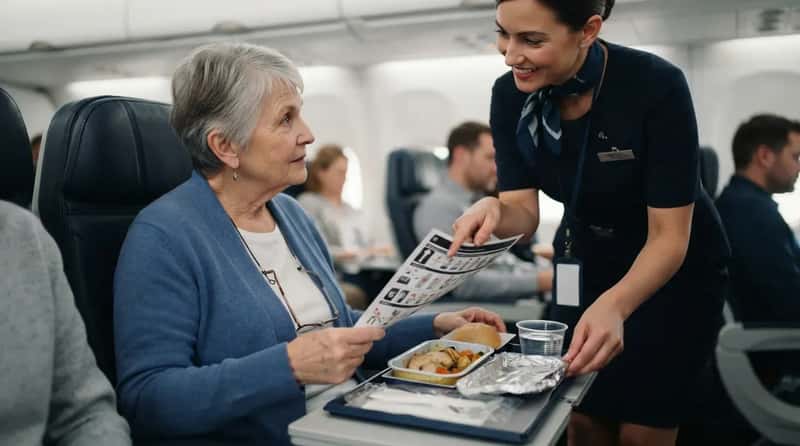
Not every kindness is dramatic. Flight attendants can give sight-impaired passengers safety information cards in large print or braille. It’s an easy fix that few people know to ask for.
Mealtime help has limits. In-flight personnel will help passengers open their meals and identify the contents, but won’t help with eating, personal hygiene, or medical equipment. Passengers who need that kind of help should travel with a ticketed companion. That’s good to know before you book.
Worth Knowing
- Large-print or braille safety cards are available for sight-impaired passengers.
- Crew will help you open your meal and tell you what’s in it.
- Help with eating, personal hygiene, and medical equipment is not part of the job.
- A ticketed companion is the plan for anyone who needs that level of care.
The next one involves a piece of equipment most passengers never see.
#4 – The Aisle Chair That Gets You to the Lavatory
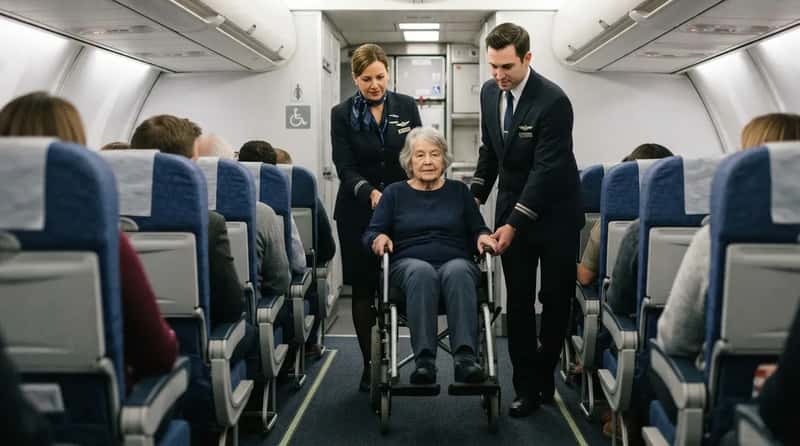
Planes are narrow, and flight attendants know it. They use on-board wheelchairs to move passengers to and from lavatories, and to and from their seats during boarding or exit. Many travelers never realize that option exists.
There are limits here too. Flight attendants help passengers transfer between seat and wheelchair, but generally don’t lift or carry them. They’ll help you move between your seat and the lavatory, but not inside it. Any plane with a wheelchair-accessible lavatory must make on-board wheelchairs available.
The end of the flight has its own hidden routine, and it’s #3.
#3 – You Get to Be Last Off, With Someone Beside You
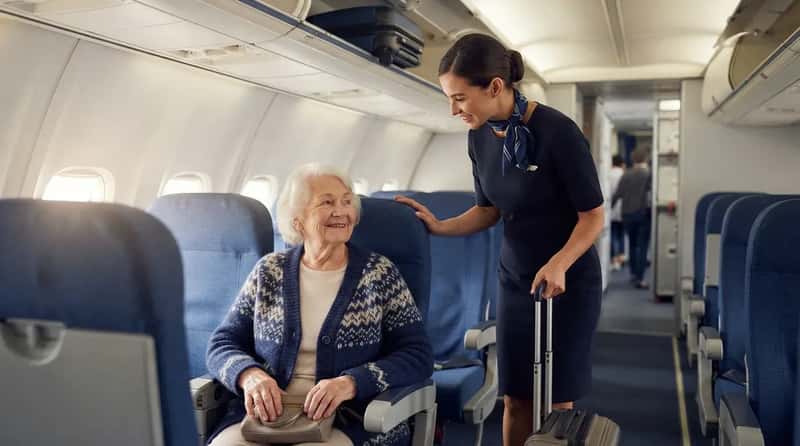
Everyone else is standing and fighting for bags. You don’t have to. One medical-travel expert said older fliers are usually better off waiting for others to leave so attendants can help with carry-ons and escort them from the plane.
The help doesn’t stop at the door. It may continue from the gate to baggage claim or a connecting flight, keeping walking and fatigue to a minimum. The rush to stand up is mostly habit. The quiet wait usually works better.
But what’s happening behind the scenes may be the biggest change of all, and it’s #2.
#2 – Staff Are Now Being Retrained on How to Handle You and Your Wheelchair
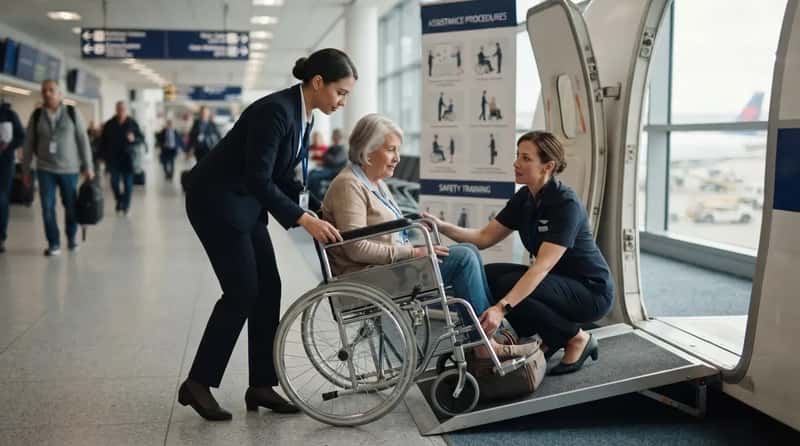
Airline wheelchair handling has had a rough record. DOT statistics showed the 10 largest U.S. carriers mishandle 1.4% of checked wheelchairs and scooters, more than double the rate for other baggage. American Airlines was hit with a $50 million penalty, the largest DOT fine ever for violating disability regulations.
The December 2024 rule responds to that record. Employees and contractors who physically assist passengers with disabilities must now get annual hands-on training, with a June 17, 2026 deadline to complete it. The industry has fought back, though. Airlines sued to overturn the rule.
And the biggest reveal is the one underneath all of it, at #1.
#1 – None of This Is a Favor, It’s Federal Law
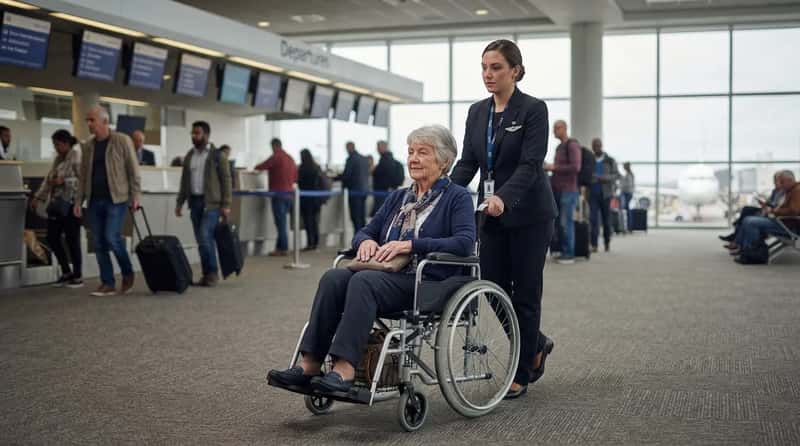
Many travelers over 60 treat airport help as a courtesy they request and hope for. That assumption is the most common mistake. The Air Carrier Access Act of 1986 prohibits airlines from discriminating against disabled passengers, and it makes services like airport wheelchair assistance a foundational civil right.
Age alone doesn’t unlock any of it. Need does. If service falls short, complaints can go directly to the airline or to the U.S. DOT. The staff helping you are usually just following the rules, and the only real secret is that the rules exist.
At a Glance
- The law: The Air Carrier Access Act of 1986.
- The trigger: Need, not age.
- The cost: Wheelchair services, including curb-to-gate escort, can’t be charged for.
- If it goes wrong: Complain to the airline or the U.S. DOT.
So the surprise isn’t that airline staff are secretly generous. Crews do notice, flag, and check on older passengers, and ground teams can escort you, connect you, and walk you out. But the best help usually starts with one sentence from you.
Say it once, say it calmly, and you may find the whole airport suddenly moving at your pace.