You walk into a bar convinced you blend right in. You don’t.
Within the first four seconds, an experienced bartender has already clocked your nationality, guessed your budget, and quietly placed a bet on your tip – all before you’ve said a word.
That’s not a lucky guess. It’s pattern recognition built shift after shift, in hotel lounges, cruise ships, and the tourist-heavy bars where the same behaviors repeat every single night.
The signals are small – how you stand, how you order, how long you hold eye contact – but they decide everything from pour size to how fast you get served. Here are the sixteen things the person behind the counter is actually reading.
16. How You Walk Through the Door
Your entrance is the opening move in a game you didn’t know you were playing.
One of the first things bartenders scan for is how intoxicated someone already is. If you’re disheveled, slurring your words, or moving strangely, they’ll quietly steer you toward water or a non-alcoholic drink instead of a strong pour.
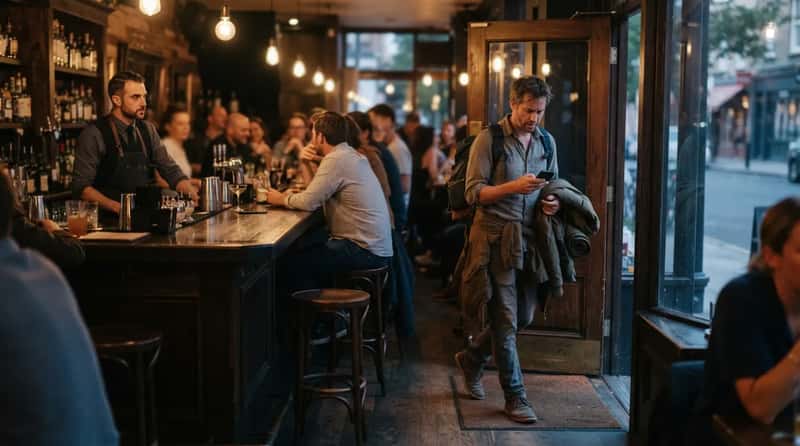
Travellers who barrel in scanning their phones are the easiest to spot. They look confused, not curious – and that reads as “tourist” louder than any accent ever could.
Pace and directness tell their own story too. Someone who walks in with purpose, scans the room, and picks a spot has done this before; someone who hovers near the entrance or immediately pulls out a translation app hasn’t.
Seasoned bar staff also use those first few seconds to assess group dynamics – who’s leading, who’s reluctant, and who’s already had one too many before arriving. All of that happens before a single drink is ordered.
But your walk is just the first data point. What your body does once you reach the bar sends a signal that’s even more precise.
15. Your Posture and Stance at the Bar
Before you open your mouth, your body has already placed an order.
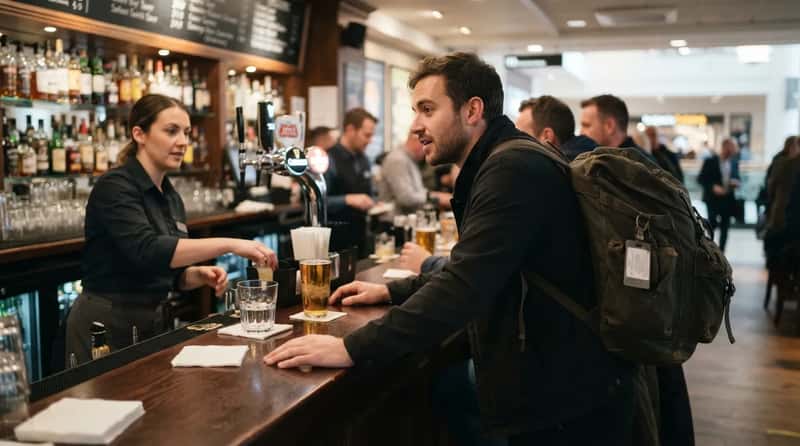
Most customers who actually want service position themselves directly at the bar and turn straight toward it. Those who don’t want to order yet keep their distance and angle away, often mid-conversation with a friend.
Travellers are trickier to read because they often arrive mid-chat with luggage still on their backs. Restlessness is common – a flight to catch, a connection to make, a group waiting outside – and bar staff adjust their entire service pace around that one cue.
A forward lean toward the bar surface is the universal “I’m ready” signal, and bartenders are trained to spot it without staring directly at you. A sideways stance, weight on the back foot, tells them you’re still deciding.
They also clock whether you look settled or restless. Constant shifting can suggest you’re about to leave, while calm, grounded body language signals you plan to stay – and that changes how they pace you.
Posture sets the tone. But the next tell is even faster – it happens the instant you make, or fail to make, eye contact.
14. The Eye Contact Exchange
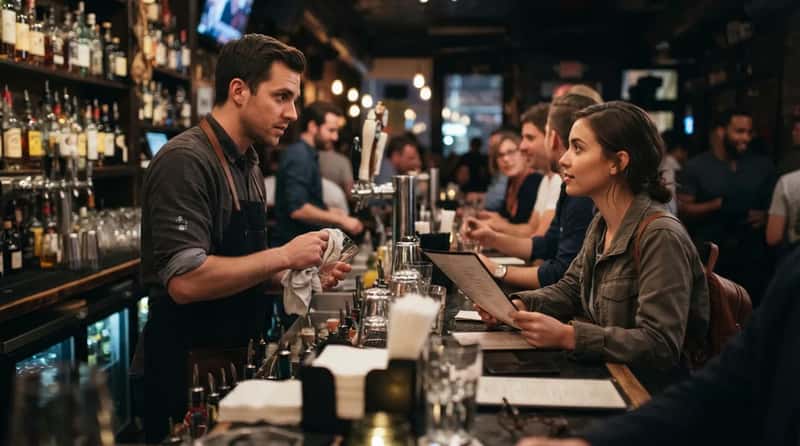
There’s an unspoken conversation happening at every busy bar, and eye contact is the language.
When you walk up, the bartender glances your way on purpose – it’s their version of saying “I see you, I’m coming.” Look away too soon, and you’ve just told them you’re not ready to order.
The next time you’re waiting at a busy counter, hold that gaze a beat longer than feels natural. It affirms intent and gets you into the queue faster.
Travellers, especially first-timers in a busy city bar, break this rule constantly without knowing it exists. They glance at the spirits on the back bar, check their phone, look at their travel companions – all of which reads as “not ready.” A local who’s been in ten times knows to hold the gaze until acknowledged.
Bartenders also use eye contact to read the room itself, avoiding interruptions during deep conversations that might be flirting – or a business meeting. The eyes tell that story too.
Eye contact is the handshake that starts the exchange. What you do with your hands next sends a very different message entirely.
13. How You Get a Bartender’s Attention
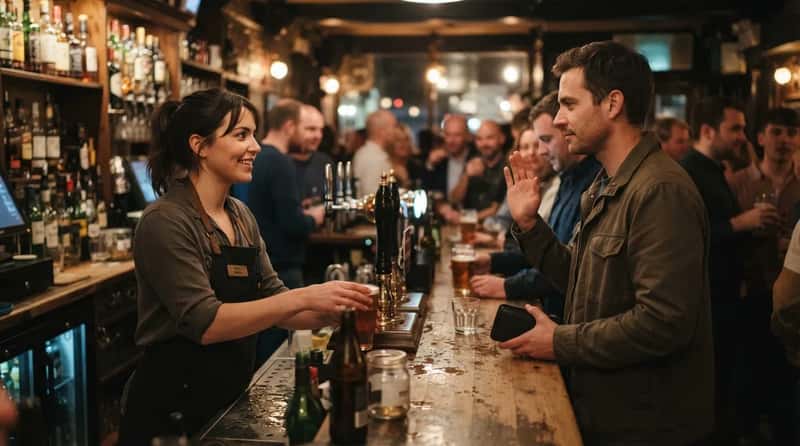
Nothing marks a traveller faster than the wrong way to flag down a drink.
Snapping fingers or shouting across the bar is one of the fastest ways to frustrate the person pouring your drink. Polite signals and patience go much further toward a good night.
The fix is simple: say excuse me, raise a hand without waving it around, and wait your turn. Bartenders see you – they promise – and snapping fingers just gets you ignored a little longer.
Tourists in unfamiliar bars tend to escalate faster because they don’t know the rhythm of the room. A local pub in London runs at a different tempo than a rooftop bar in Bangkok or a dive bar in New Orleans, and travellers who bring the same urgency they’d use at home usually misjudge it completely.
If you look like you’re about to vent frustration at bar staff, they’ll simply work around you until you’ve calmed down. That’s not pettiness – it’s self-preservation, and every experienced bartender does it.
Fast Facts
- Say “excuse me” and raise a hand calmly instead of snapping or waving.
- Hold eye contact until you’re acknowledged, then wait your turn.
- Match the room’s pace – a dive bar and a five-star lounge don’t move at the same speed.
- Staying calm during a wait gets you served faster than showing frustration ever will.
Once you finally get served, the next reveal is immediate: what you actually order.
12. The Drink Order Itself
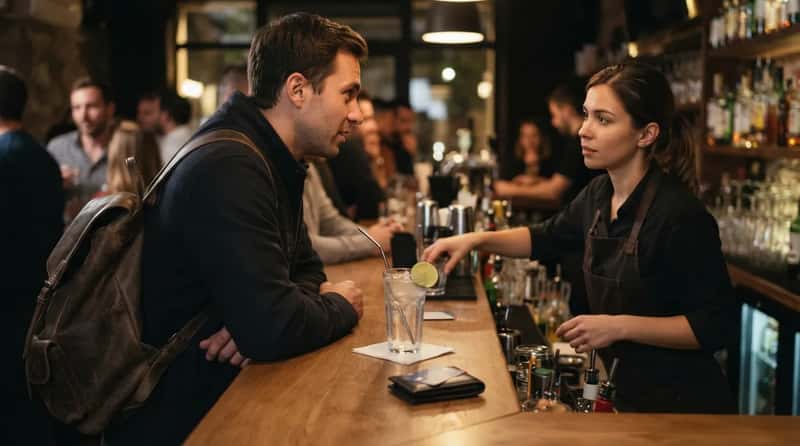
Your first order is a character reference. Bartenders read it like a resume.
Classic cocktails suggest certainty. Vacation drinks suggest leisure. Unusual or unfamiliar orders sometimes prompt a second look – and occasionally an age check.
Straightforward well orders – vodka soda, gin and tonic, rum and Coke – often signal a guest who knows exactly what they want, is price-conscious, or is more interested in the room than the glass.
Ask a bartender in almost any European capital what Americans order first, and vodka soda comes up constantly. It’s treated as a safe, neutral choice back home, and many travellers order it out of pure habit, not realizing it barely exists as a go-to option outside North America.
Order a Negroni instead, and you’re either an experienced drinker or trying hard to look like one. Bartenders usually clock the difference within the first question you ask – or don’t ask – about the menu.
The order reveals your experience. How you phrase it reveals something else entirely.
11. The Exact Words You Use to Order
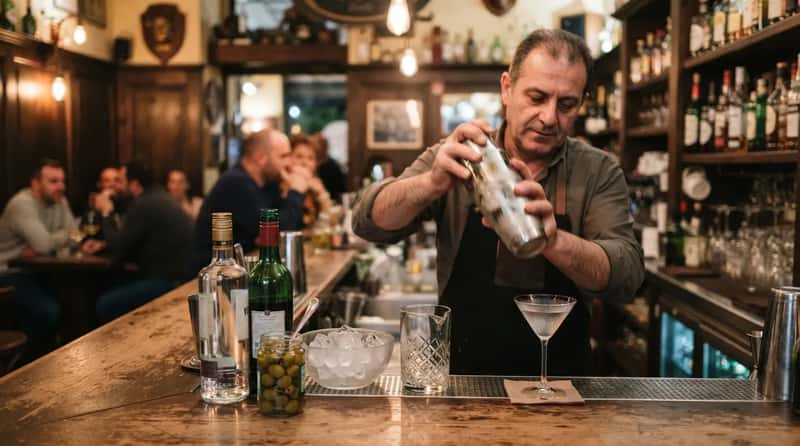
It’s not just what you order. It’s the precise phrasing you use to ask for it.
Walk into almost any bar in Lisbon, Prague, or Bangkok, and staff can often guess a customer’s nationality before a single full sentence is out. It usually comes down to the order itself or a small habit locals simply don’t share.
Bartenders in Rome and across Europe describe hearing near-identical requests from American visitors: an extra dirty vodka martini, shaken, not stirred. Most traditional martinis in Europe are made with gin, but Americans tend to prefer vodka and a saltier “extra dirty” profile, and “shaken, not stirred” often gets requested for the cool factor rather than technique.
Asking for something “strong” without naming a spirit is another instant tell. Experienced drinkers name the exact spirit or cocktail they want – a Negroni, an Old Fashioned – rather than leaving it vague.
Phrasing is cultural shorthand. Once it’s decoded, bartenders move on to reading something even more personal.
10. Your Ice Habits
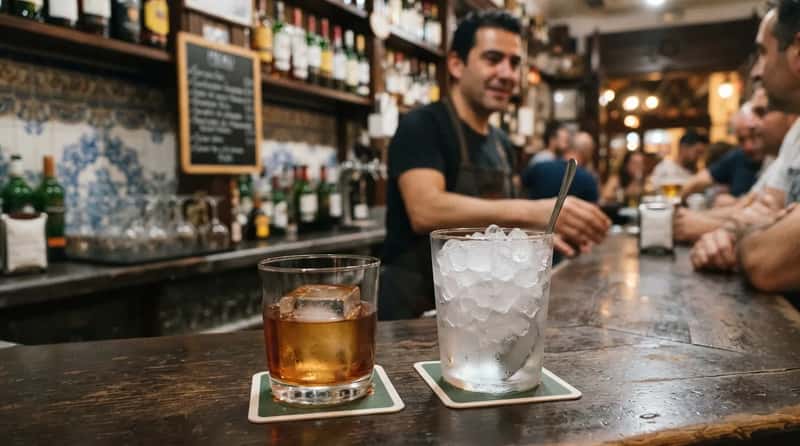
This one sounds made up. It isn’t.
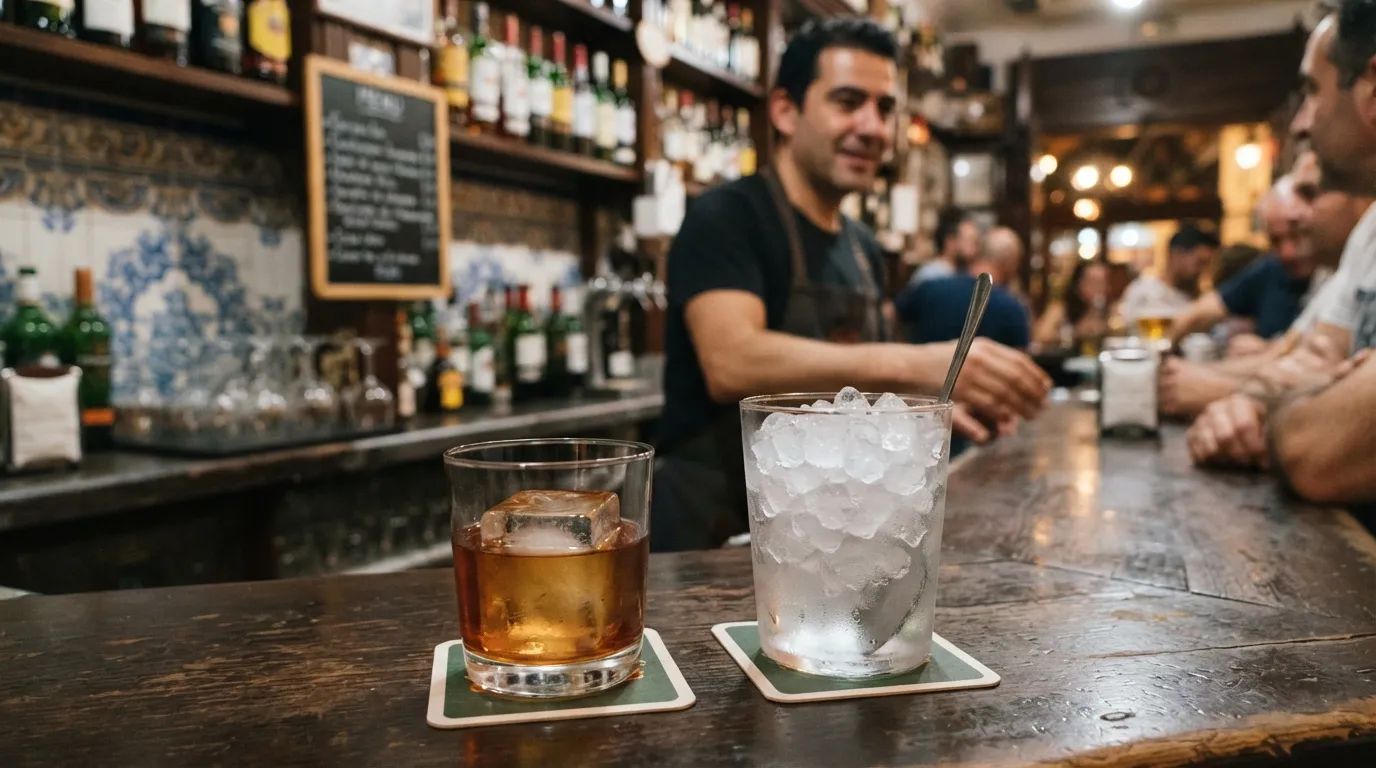
Ice habits are one of the most reliable tells in the entire drink world. Americans grow up with enormous ice machines and drinks that are practically half frozen, so asking for extra ice feels automatic.
In much of Europe and large parts of Asia, a single cube – or none at all – is the default. A traveller asking for a cup loaded with ice in a small bar in Seville or Hanoi signals where they’re from, and that they may need a gentle guide through the local menu rather than a quick pour-and-move-on.
It works in reverse too. A traveller who’s clearly done their homework and accepts the local pour as-is earns a quiet nod of respect from bar staff – and that respect tends to translate into faster service, better recommendations, and occasionally something that never made it onto the menu.
Quick Compare
- United States: a full glass of ice is the default, often with free refills.
- Western Europe: one cube or none at all is typical, even in mixed drinks.
- Much of Asia: ice is frequently served on the side or skipped for local spirits.
- Accepting the local pour as-is tends to earn a quicker, warmer response from staff.
Ice is just one of the micro-habits that give travellers away. How you handle paying is an even louder signal.
9. Payment Behavior
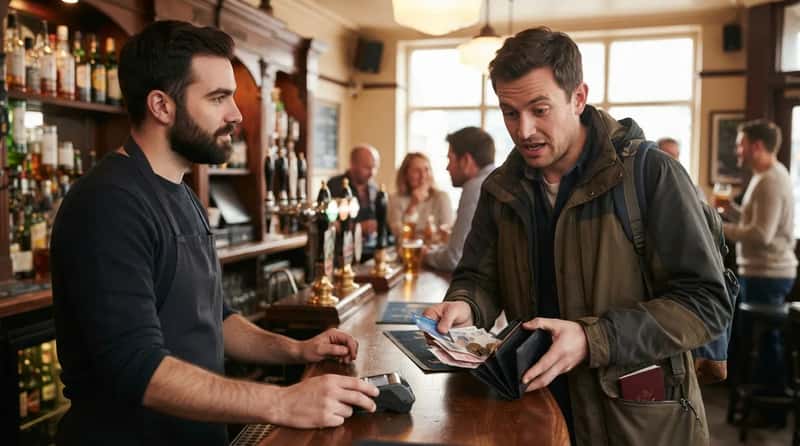
The moment you reach for your wallet, an entirely new read begins.
Payment behavior matters because it predicts the end of the interaction. Bartenders notice whether you open a tab smoothly, whether you know where your ID is, and whether you treat paying like a team effort.
Travellers often fumble here because payment norms vary so dramatically between countries. Whether to pay per round or run a tab, whether card is accepted, whether to hand cash directly or leave it on the bar – all second nature to a local, all a source of visible confusion for a tourist.
Tipping customs can be even trickier abroad. In England, for instance, you’d rarely tip in a pub – you’d buy the bartender a drink instead.
Guests who pay for the whole group and sort the splitting themselves are seen as generous and thoughtful, and bartenders say it makes their entire job easier.
How smoothly you navigate payment tells the bartender whether you’ve traveled before, whether you understand local norms, and, most revealingly, whether a good tip is coming.
8. Tipping Signals – Before You’ve Even Paid
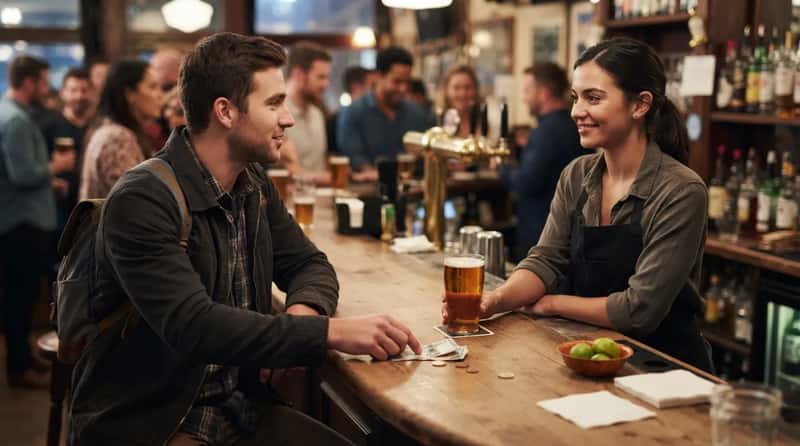
Experienced bartenders can predict what you’ll tip before the bill arrives. Most travellers have no idea this is happening.
The read comes from small behavioral cues accumulated over the whole interaction – eye contact, tone, whether you’ve acknowledged the bartender as a person, whether you’ve said please.
The guess isn’t always exact, but after thousands of interactions the hit rate gets high enough to shape how proactively a bartender serves you for the rest of the night.
Bartenders also notice whether you tip on each round or wait until the end. Both work, but travellers who tip early, even modestly, signal good faith, and the service they get afterward often reflects it right back.
At a Glance
- United States: 15-20% or $1-2 per drink is the norm, and bartenders often rely on tips to make up a lower base wage.
- United Kingdom: tipping at pubs is uncommon – buying the bartender a drink is the customary alternative.
- Japan: tipping isn’t part of bar culture and can come across as confusing rather than generous.
- Australia: gratuity is optional and relaxed, though a tip for standout service is still welcome.
A bartender’s local knowledge – the honest restaurant tip, the bar that isn’t in the guidebook – only opens up for people they’ve read as worth the investment. Tipping signals decide whether you’re in that group.
7. How You Treat the Staff
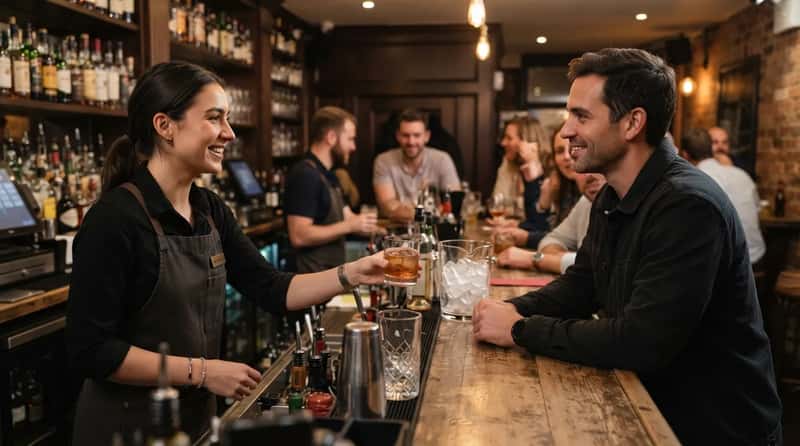
This is the one that follows you around the bar without you knowing it.
Bartenders spot difficult guests early simply by watching how they treat staff during a rush. Small phrases carry weight – “whenever you have a second” tells someone you see the workload, and bartenders remember that kind of courtesy.
The traveller who talks to bar staff like a vending machine is one of the most common sights in tourist-heavy bars. Not fondly remembered, either – bartenders talk to each other, and word travels faster than you’d think.
Eye contact, waiting your turn, and a genuine thank you generally buy better service. Bartenders in busy venues are frank about the fact that service quality is quietly calibrated to how respectful a guest is from the very first interaction.
A good tip will never make up for a bad attitude, so don’t treat it as a fix-all. Respect gets noticed first. Money second.
6. Whether You’re Actually Present
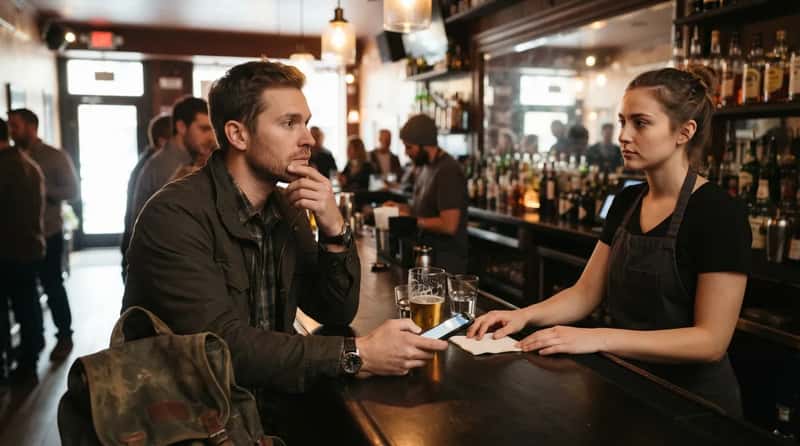
The traveller who’s mentally already at the next destination is one of the easiest reads at any bar.
Bar staff read vocal tone, eye contact, and small tells like checking a watch or touching your face – a full profile assembled in seconds.
Travellers are disproportionately guilty of the half-present interaction: at the bar physically, but already planning the next move, phone out, one eye on the door. Bartenders read that as a service cue – fast drink, minimal chat – and adjust accordingly, often skipping any off-menu suggestions they might otherwise offer.
The traveller who’s actually present – curious, chatting, genuinely interested in where they’ve landed – gets a fundamentally different night than the one treating the bar like a pit stop.
Presence shapes whether you get the real local knowledge or just the laminated cocktail menu. The next signal is one most travellers never even think about.
5. Your Relationship to the Menu
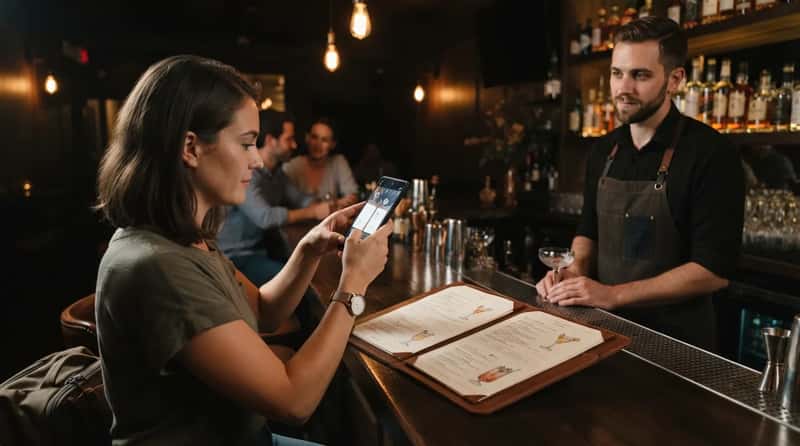
How you interact with the menu tells an experienced bartender almost everything about your confidence, both as a drinker and as a traveller.
Photographing every page of the cocktail list, then still asking “what do you recommend?” without any direction, signals you’re overwhelmed – and hands the bartender the wheel entirely. Good bartenders will take it, but it also tells them you’re unlikely to order confidently or know the difference between a house spirit and a premium one.
What looks like intuition in a skilled bartender is really a practiced set of observation skills, sharpened over thousands of guests. Reading a room is one of the most underrated skills in the job.
The traveller who skips the menu entirely and asks “what’s local, what’s made here, what do you actually like?” gets treated as a peer almost instantly. That question signals curiosity, not tourist-mode consumption.
Your menu behavior shapes the entire approach a bartender takes with you. Group dynamics, meanwhile, are something they’re reading at the exact same time.
4. The Group Dynamic
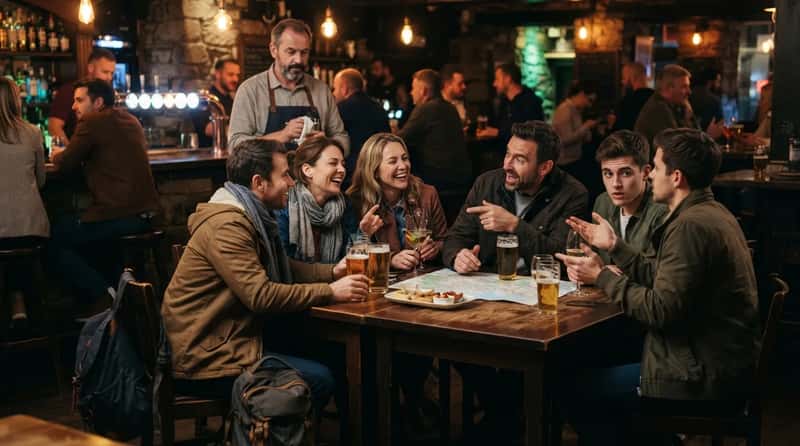
If you walk in as part of a group, the bartender isn’t just reading you. They’re reading all of you – and assigning roles within seconds.
Body language and social patterns help bartenders quickly identify who’s a couple, who’s celebrating something, and who might be open to meeting other people at the bar.
Within a travel group specifically, they watch for who defers to whom, who’s already unhappy, and who’s likely to over-order and then dispute the bill later. Those patterns shape how the whole table gets handled for the rest of the night.
Solo travellers get a different read entirely. Sitting at the bar itself, rather than at a table, signals openness to conversation – and the traveller who treats the bartender as a person, not just staff, is usually the one who walks out with a genuine local recommendation nobody else at the bar got.
Group dynamics are mapped fast. But the most revealing moment for any traveller is what happens once alcohol actually enters the picture.
3. How Alcohol Changes Your Behavior
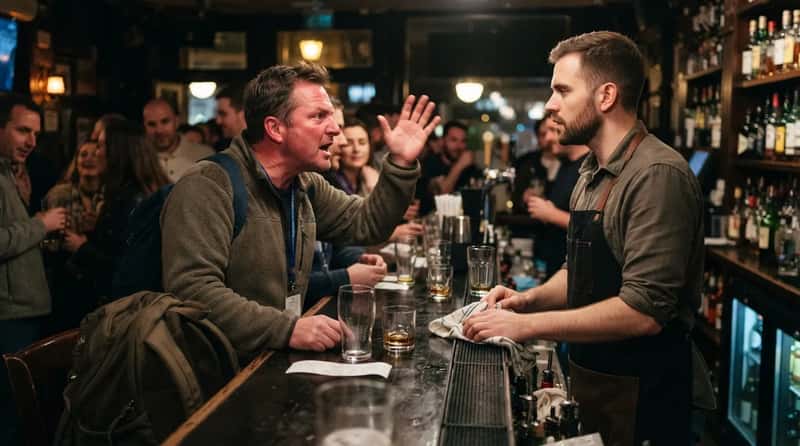
Sober behavior tells the bartender who you’re trying to be. Alcohol tells them who you actually are.
Lowered inhibitions bring out patterns people usually keep hidden. Bartenders watch closely for who gets kinder, who gets emotional, and who gets aggressive.
A bar is a relaxed social space, which makes real personality easier to see. For travellers specifically, being away from home – no colleagues watching, no routine to keep – tends to accelerate that shift, and bartenders in tourist-heavy venues see it play out every single shift.
The traveller who gets louder and starts treating staff like servants after the third drink is the single most common source of friction in tourist bars worldwide. The traveller who gets warmer and more generous as the night goes on is the one who quietly gets a free pour on the last round – not policy, just human nature.
Alcohol reveals character. But there’s one set of signals that cuts even deeper, and most travellers have no idea they’re broadcasting it.
2. Cultural Fluency – or the Lack of It
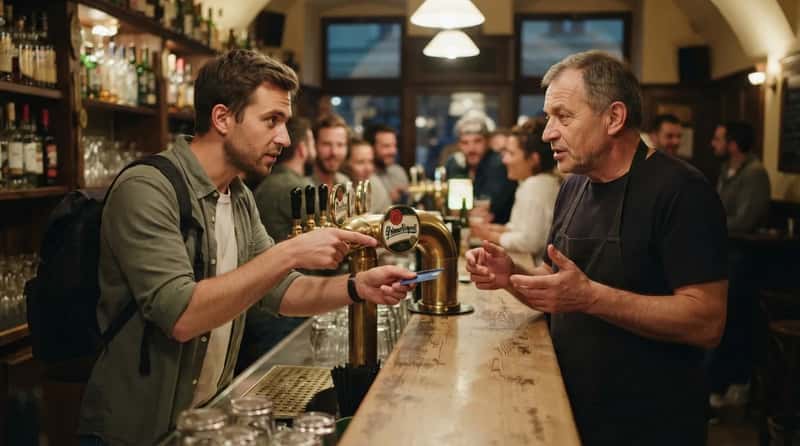
This is the one bartenders talk about most, and it goes far beyond drink orders.
In tourist-heavy neighborhoods, the patterns are remarkably consistent, and they have little to do with accents or clothing. It’s the specific habits that give travellers away – the ones that feel completely normal at home and stand out everywhere else.
Cultural fluency shows up in small details: whether you hand your card to the bartender or wait for a machine to come to you, whether you expect a cocktail napkin, whether you attempt the local pronunciation of the beer or just point at the tap. Whether you say hello in the local language, even badly, or address everyone in English and assume comprehension.
None of it means much on its own. But together, these small choices build an immediate picture of how much effort a traveller has made to understand where they are – and how much effort the bar will make in return.
Worth Knowing
- Attempting a local greeting, even badly, is one of the most noticed gestures a traveller can make.
- Handing over a card versus waiting for a machine to arrive varies by country and gives away where you learned to pay.
- Pointing at a tap instead of trying the local pronunciation is a common first-timer habit.
- Small courtesies add up faster than any accent does.
Cultural fluency is the deepest signal any traveller sends. And the final one determines the quality of the entire experience – it’s simpler than you’d expect, and far more powerful than most people realize.
1. Whether You See the Bartender as a Person
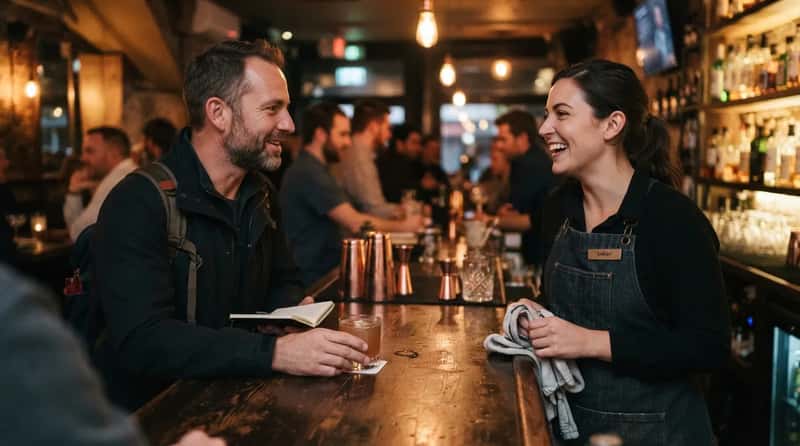
Every other signal feeds into this one. It’s the master read.
None of this is about judgment – it’s about anticipating what kind of service will actually make someone’s night better. But the travellers who get the best of that hospitality are always the ones who make a simple, human connection first.
Behind all that professional attention is a person doing an exhausting, social-on-demand job for hours at a stretch. Travellers who acknowledge that, even briefly, change the entire dynamic of the interaction.
Good bartenders know that people often just want to be heard, not fixed. Remembering a regular’s order, noticing a mood shift, catching a small change in body language – these are the details that make someone feel seen instead of served.
The travellers who ask the bartender’s name, respond to small talk instead of deflecting it, and thank them like they mean it are the ones who get the honest restaurant tip, the neighborhood bar that isn’t in any guidebook, and occasionally a drink that never made it onto the bill.
This is the signal that overrides every other one on the list. You can fumble the eye contact, mispronounce the beer, and ask for far too much ice, and still walk away with an extraordinary night – if you treated the person behind the bar like a human being first.
The Bottom Line
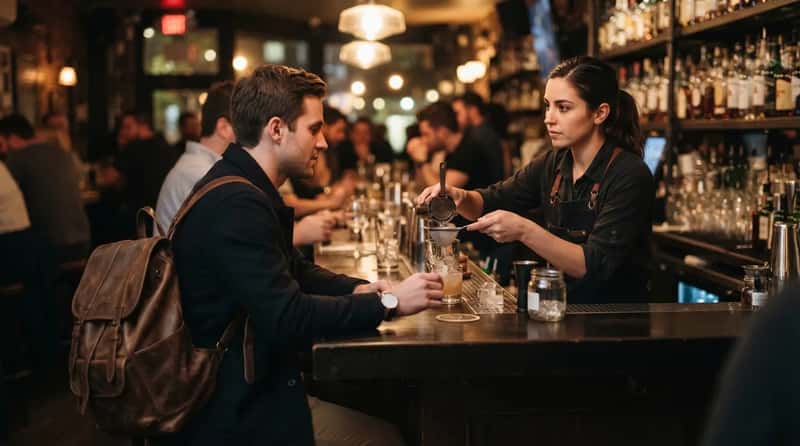
Bartenders are, by trade, some of the most practiced human-readers on the planet. You think you’re just ordering a drink – they’ve already half figured you out.
By the time you’ve chosen a cocktail, they’ve clocked your posture, your accent, and your patience, and quietly decided how the rest of your night is going to go.
From the way you walk through the door to how you behave after the third round, every signal gets absorbed, sorted, and acted on in real time. The good news is that most of it is entirely within your control, and the most important one costs nothing at all.
Be present. Be curious. Treat the person behind the bar like the local expert they actually are, and everything else on this list tends to sort itself out.