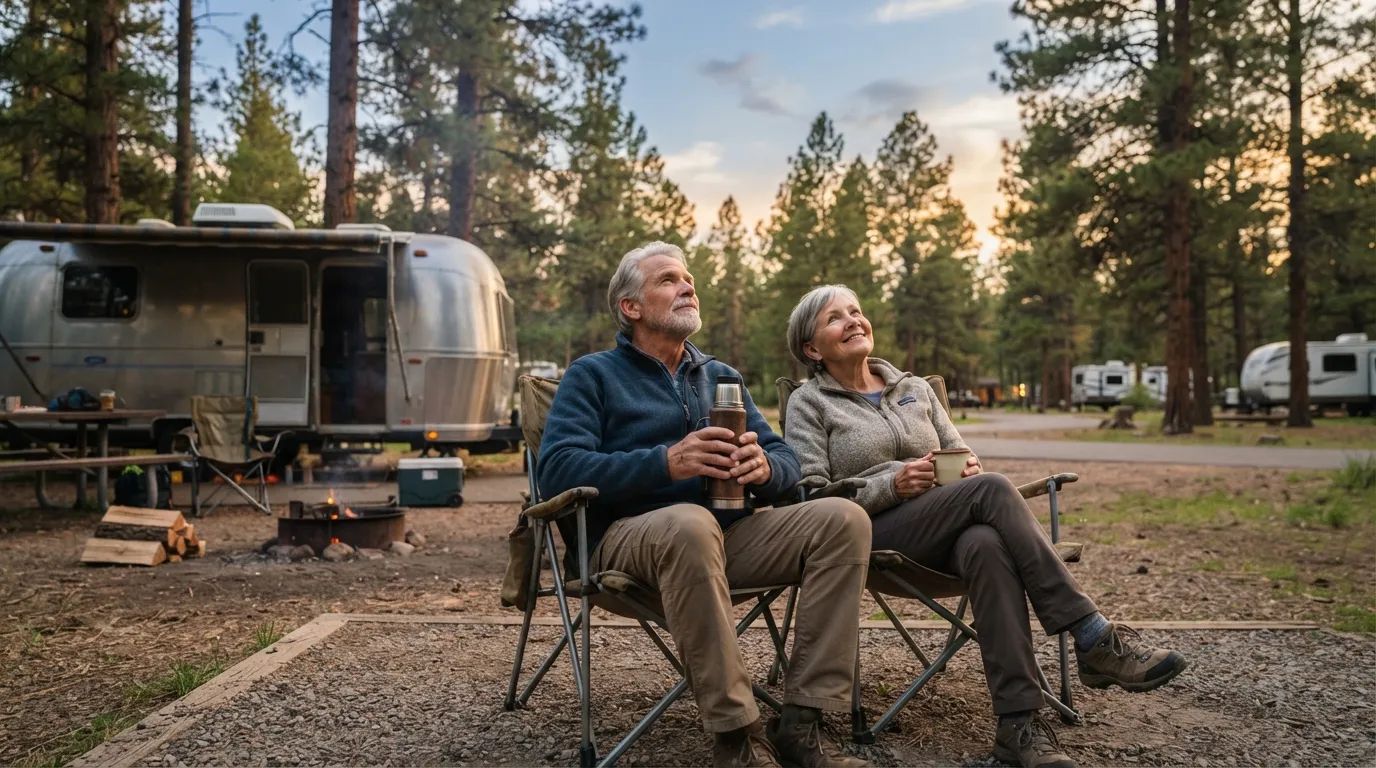
The stereotype says retirees pull in, park anywhere and settle into a lawn chair for a low-effort weekend. Then arrival evening begins, and the people watching from the host site see something far more deliberate. Participation among campers 65-plus has reached its highest level in eight years, according to KOA’s latest report, so hosts are watching more of these arrivals than they have in nearly a decade.
What they notice has little to do with age and a lot to do with habits younger campers often skip. One saves a roof. One protects a fridge. One is a ritual hosts say they could set a watch by. And the final item has nothing to do with gear at all.
#16 – They Roll In While the Sun Is Still High
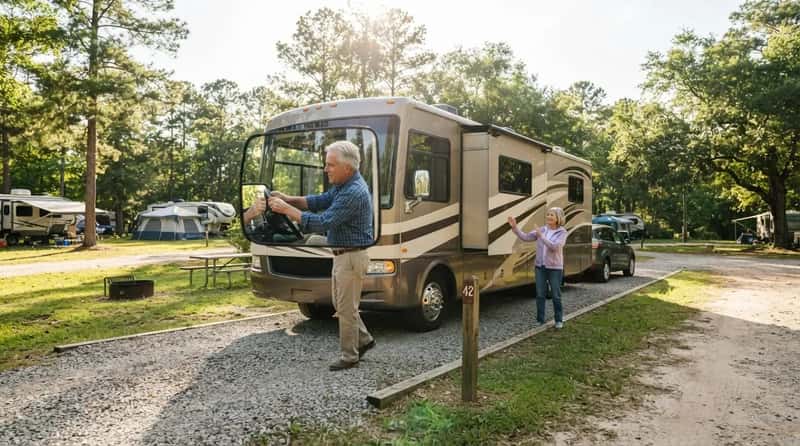
Hosts often say the over-65 rigs are the ones that show up with plenty of daylight left. That’s rarely luck. Backing a trailer or motorhome into a tight site is widely seen as the trickiest part of any arrival, and doing it by taillight is a gamble. Experienced travelers tend to plan their whole driving day around beating sunset.
At a Glance
- Best window: pulling in with a few hours of daylight to spare
- Biggest late-arrival risk: backing in blind next to posts, fire rings and hookups
- Host payoff: fewer after-dark knocks on the door
- Traveler payoff: time to size up the site before committing to it
For the host, the payoff is fewer surprises. Daylight arrivals mean fewer clipped fire rings, fewer bent water spigots and fewer late knocks on the host’s door. The traveler gets time to look at the site properly before committing to it. And what they do next, before they even unhitch, is where it gets interesting.
#15 – They Walk the Site on Foot Before Anything Else
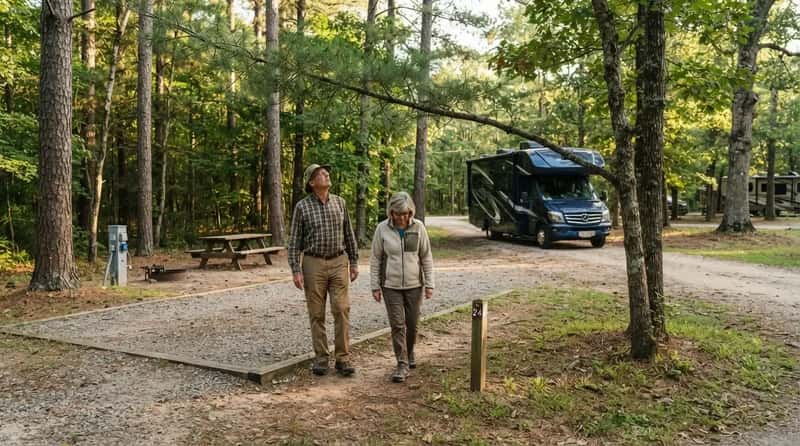
Before the engine is off, plenty of older travelers are already out of the cab and pacing the site. They’re not admiring the view. They’re checking which way the ground slopes, where the power pedestal sits and how low the branches hang over the roofline.
Hosts say this ten-minute scouting lap often saves an hour of rework. A single low limb can scrape an RV roof and leave a repair bill, and a pedestal on the “wrong” side can mean stretching a cord across the whole site. Walking it first lets them decide which way to park before the rig is committed.
Next comes a folder that hosts spot more often with this crowd than any other.
#14 – The Paper Folder Comes Out at the Check-In Window
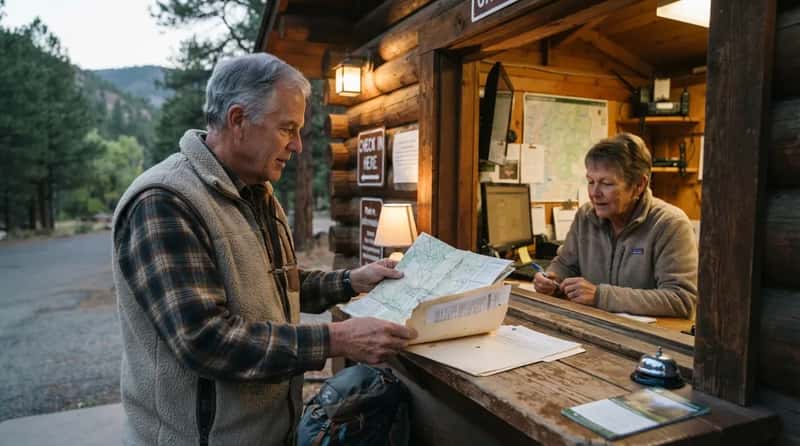
Many hosts describe the same scene. A traveler steps up with a printed reservation, a handwritten site number and sometimes a folded map. It looks old-fashioned. It also works when cell service drops, which happens often in campgrounds tucked into canyons and forests.
There’s a practical reason behind the printouts. Standard car GPS can send big rigs down roads that are too narrow, too steep or too low for them, so cautious drivers verify the final approach. Many call ahead about the last few miles too.
That folder usually holds one small card hosts see more than any other.
#13 – The Senior Pass Appears Before the Host Even Asks
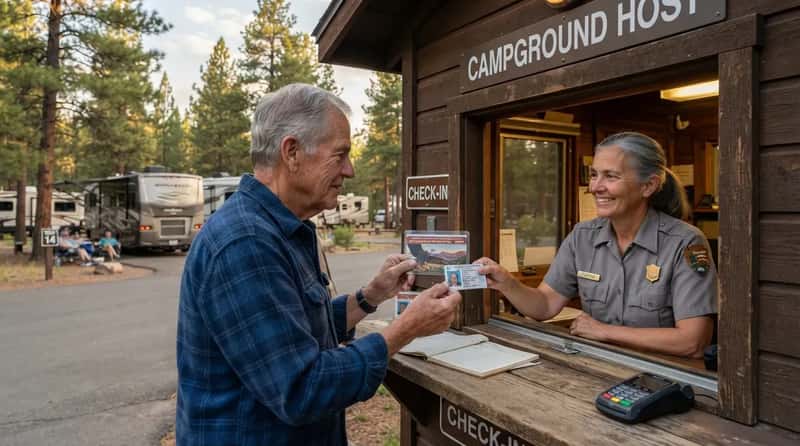
At federal campgrounds, the card hosts see most from this age group is the Senior Pass. It costs $80 for life or $20 a year, and it gives 50% off camping fees at sites run by six federal agencies. Travelers who have used it before tend to have it in hand with their photo ID, ready to prove their age.
Here’s the catch. The discount does not apply to utility surcharges, cabins or flat-rate group sites. Veteran pass holders know that, so they don’t argue at the window when the total isn’t exactly half. Newer holders sometimes find out the hard way.
Once the paperwork is done, the real ritual starts, and hosts say they could set a watch by it.
#12 – The Leveling Ritual Takes Longer Than You’d Expect
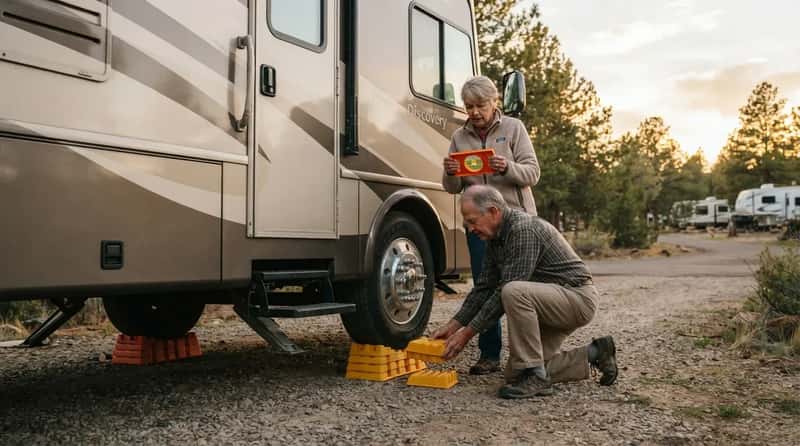
Hosts say the over-65 crowd treats leveling as a serious job, not a quick guess. Out come the blocks, the bubble level and a slow back-and-forth until the rig sits right. It can look fussy from across the loop.
It isn’t. Many RV refrigerators, especially the absorption type, don’t work well when the rig is out of level. Doors swing open on their own. Slide-outs bind. Sleeping on a slope is miserable. Careful leveling on arrival evening buys a better night and fewer problems the next day.
But leveling is nothing next to the power check hosts watch for next.
#11 – They Test the Pedestal Before They Trust It
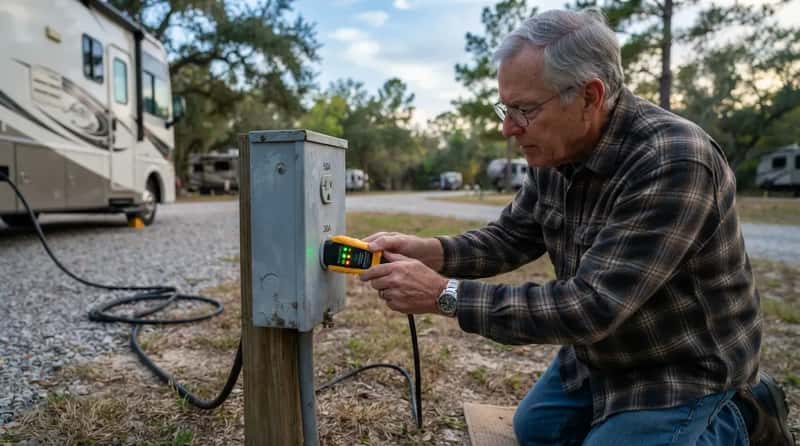
When the cord comes out, a lot of experienced travelers pause. They plug in a surge protector or a small tester first and check the readout. Only when it shows green do they connect the rig.
Hosts call it one of the smartest habits they see. Campground pedestals get used by hundreds of guests, and wiring problems do happen. A bad outlet can damage the electrical system of an RV that costs tens of thousands of dollars. A protector is a small price against that risk.
Fast Facts
- 30-amp pedestals deliver roughly 3,600 watts, while 50-amp service delivers roughly 12,000 watts.
- A basic plug-in tester uses its indicator lights to flag problems such as an open ground or reversed polarity.
- Many surge protectors with electronic management will also cut power if the voltage runs too high or too low.
- Switching the pedestal breaker off before plugging in is a common habit among careful campers.
The host rarely hears about the near misses, because the traveler simply moves to another site. It’s the people who skip the test that hosts end up hearing from. Then there’s the habit that makes hosts’ lives easier on every busy night.
#10 – They Actually Read the Rules Board
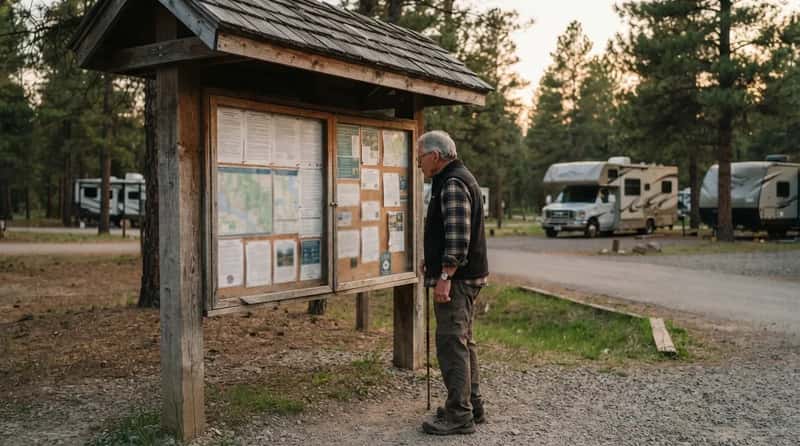
Walk by the camp bulletin board on arrival evening and you’ll often find an older traveler standing in front of it. Quiet hours, generator hours, pet rules, check-out time. They read all of it.
Hosts notice because most rule violations come from guests who never looked. Quiet hours at many campgrounds start around 10 p.m., but the exact time varies. Rules differ from one campground to the next, even within the same chain, so a quick read saves an awkward conversation later. This crowd tends to treat the posted sign as the contract it is.
It also tells the host something about the traveler. Someone who reads the board is likely to stay in their lane, literally. And speaking of lanes, the next one is the habit hosts mention most with a grin.
#9 – They Drive Through Camp at a Crawl, and Hosts Love It
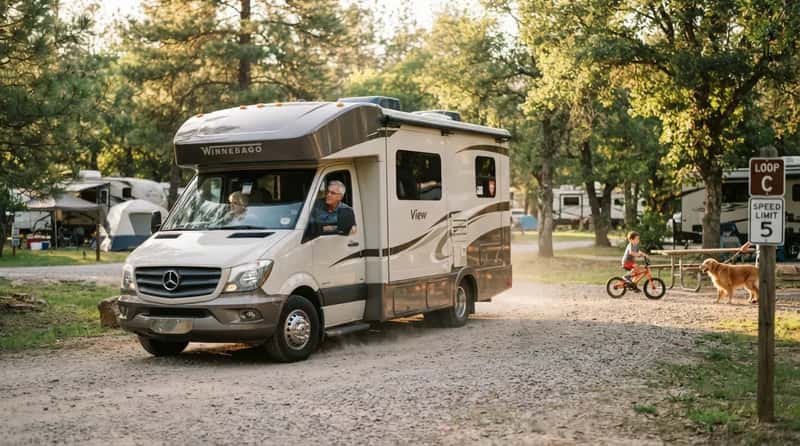
Campground speed limits are usually posted at 5 to 10 mph, and plenty of drivers treat that as a suggestion. Hosts say many older travelers treat it as a firm cap. They creep through the loops with the window down, watching for kids on bikes and dogs on leashes.
It sounds trivial. It isn’t. Campgrounds are full of small children, pets and people walking in the dark, and the road surface is often loose gravel. Slow driving is the cheapest safety feature in camp.
That same patience shows up in the next scene, which hosts say is oddly satisfying to watch.
#8 – Two-Person Backing Looks Like a Choreographed Dance
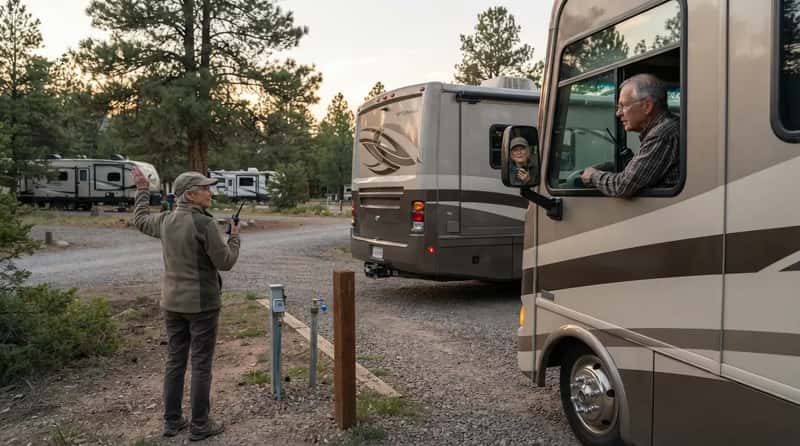
One person stands behind the rig. The other sits at the wheel. Hand signals, a two-way radio or a phone call keeps them in sync. Hosts say this teamwork is more common among long-married travelers than among solo drivers, and it’s worth watching.
The system is simple and it works. The spotter can see what the mirrors can’t, such as a stump, a post or a low hookup box. Most backing mishaps involve something the driver simply couldn’t see. A calm spotter turns a stressful five minutes into a routine one.
Worth Knowing
- The best teams agree on their signals before the engine ever starts.
- The spotter stays where the driver can see them in the mirror.
- If the driver loses sight of the spotter, the rig stops. No exceptions.
- Radios or phones keep the instructions calm and the volume low.
Hosts also notice what’s missing. There’s rarely any shouting. Couples who’ve done this for decades tend to agree on the signals in advance, and that same quiet competence shows up in the questions they ask next.
#7 – Their Questions for the Host Are Weirdly Specific
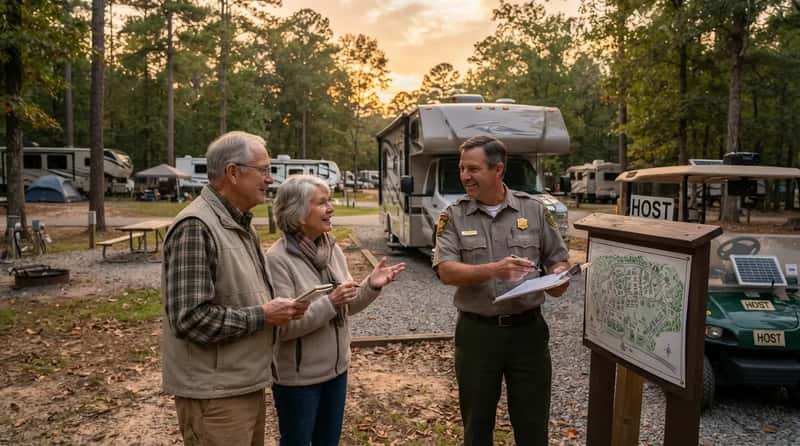
Younger campers often ask where the bathrooms are. Older travelers tend to ask about the dump station hours, the nearest pharmacy and which grocery store has the best prices. Hosts say the questions come from experience, not nerves.
These travelers plan for the unglamorous parts of a trip. Knowing where urgent care is before you need it is a habit hosts quietly respect. They also ask about local diners, scenic drives and the best time to catch a sunset, and hosts light up at that kind of question.
Once the answers are in, the setup begins, and it’s the most home-like moment of the evening.
#6 – The Outdoor Mat and String Lights Come Out First
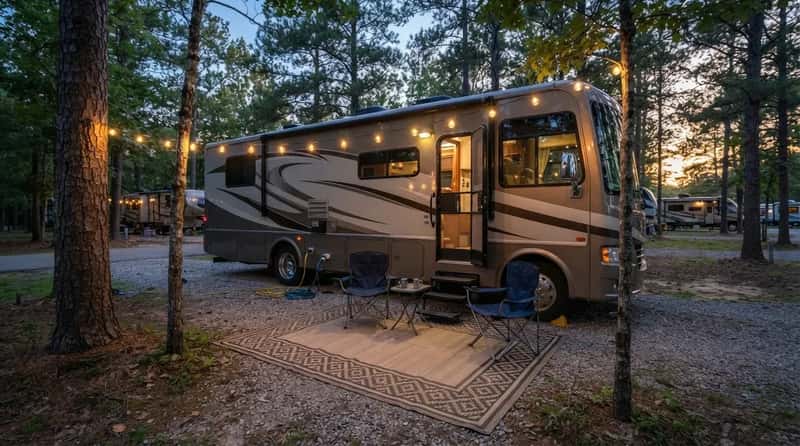
Within about twenty minutes of parking, a site can look like a small front porch. A mat goes down by the door. Chairs unfold. A string of lights goes up. Hosts say this is one of the clearest differences between short-stay campers and seasoned travelers.
The mat isn’t decoration. An outdoor rug keeps dirt and gravel from tracking into the rig, which makes the next week much easier to live in. The lights make the site easy to find in the dark and easy to walk around safely.
Why It Stands Out
- The mat turns the doorway into a clear “shoes here” zone.
- String lights help guests spot cords, hoses and chair legs after dark.
- Unfolded chairs quietly tell the loop that these neighbors are staying a while.
- The whole transformation takes about twenty minutes.
It’s a small ritual, but it tells the host something. These travelers don’t treat the site as a parking space. They treat it as a place to live for a while, and that mindset is why the next thing happens almost every evening.
#5 – They Learn the Neighbors’ Names by Dinner
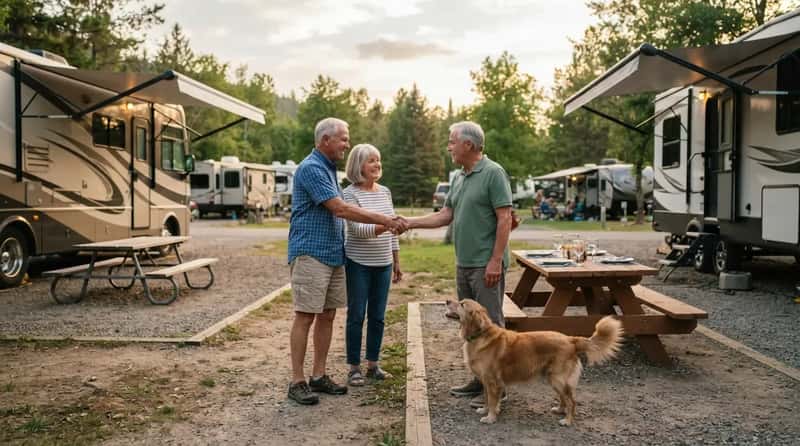
Hosts say the over-65 crowd is the group most likely to walk over and introduce themselves. A wave becomes a handshake. A handshake becomes a question about where the neighbor is headed next. By dinner, they know the name of the dog.
That friendliness has a practical side. Campers who know their neighbors are far more likely to get help with a stuck slide, a dead battery or a borrowed wrench. Hosts see these small networks form on arrival evening, and they often last the whole stay.
Still, hosts say the real test of a good camper comes after dark.
#4 – The Last Thing They Do Is a Flashlight Walk-Around
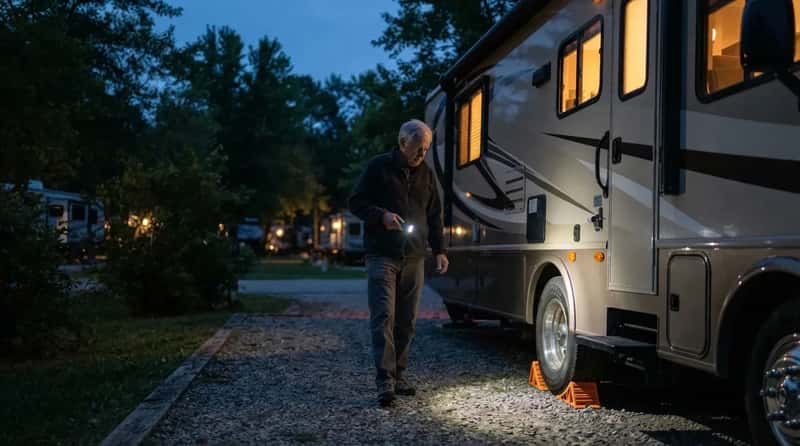
Just before bed, many older travelers walk a slow circuit of the rig. They check the steps, the wheel chocks, the water line and the awning. The flashlight beam sweeps across everything once, then the door closes.
The awning check is a smart one. A gust of wind can bend or tear an extended awning in seconds, and wind often picks up overnight. Rolling it in at bedtime is a habit hosts say saves a lot of mornings.
But the next finding is the one that surprised even longtime hosts.
#3 – A Surprising Number of Them Are Brand New to Camping
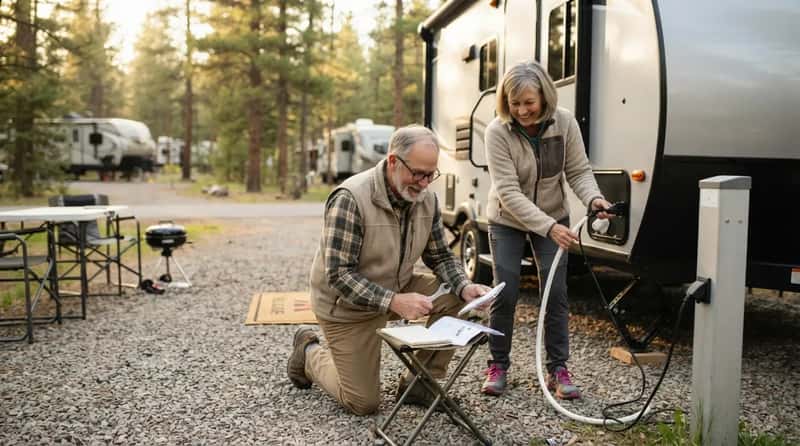
Here’s the twist. Not every confident-looking older traveler is a veteran. A quarter of all new campers in 2025 were Boomers, up nearly 10 percentage points from 2024, according to KOA. Some of the people hosts see parking their first rig are in their late 60s or 70s.
They seem to enjoy it, too. Nearly 90 percent of Gen X and Boomer new campers called their first camping experience “good” or “great.” Hosts say first-timers in this age group ask thoughtful questions, take notes and rarely rush.
If that’s a surprise, the next one may start an argument.
#2 – They May Be the Quietest Guests in the Whole Loop
Many hosts argue that older travelers are the easiest guests to have on a busy weekend. They tend to arrive, settle, eat early and go to bed. Quiet hours are rarely a problem, because they’re often asleep before they begin.
Not every host agrees. Some say this crowd can be the most particular about everything from site choice to the neighbor’s generator. Both groups can be right, because the same attention to detail that keeps them quiet also makes them notice everyone else’s noise. Hosts who’ve worked a full season usually just say they’d take a careful guest over a careless one.
And the final scene is the one hosts say stays with them longest.
#1 – They Sit Down, Look Up, and Don’t Reach for Their Phones
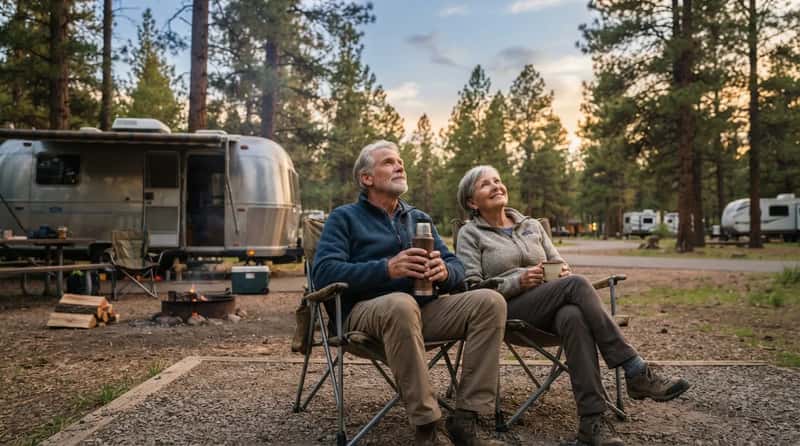
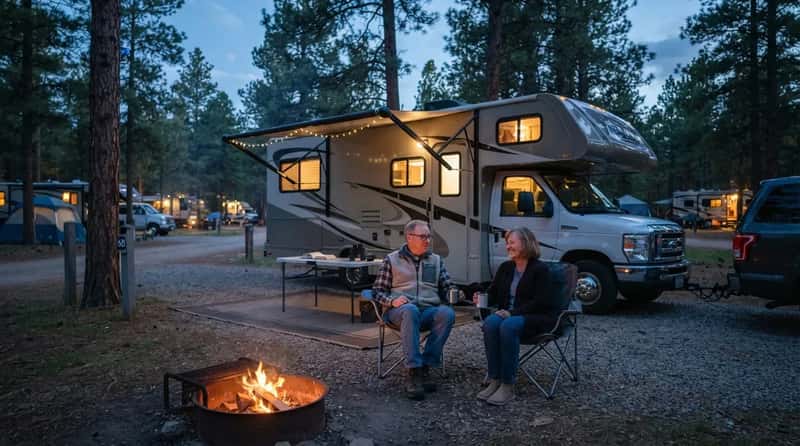
When the work is done, the chairs finally get used. Hosts describe the same picture across loops and seasons. An older couple, a thermos or a drink, and a long look at the sky. The phone stays in a pocket.
That moment is arguably why they came. Three-fourths of campers view campgrounds as modern “third places,” where genuine community happens. On arrival evening, that feeling takes shape. The drive is over, the rig is set, and the trip finally begins.
Arrival evening looks like a checklist from across the loop: daylight, scouting, leveling, power tests, a slow drive, a walk-around at bedtime. Up close, it’s something else. Every one of those small, careful steps is a way of earning the quiet that comes after.
Hosts say that’s the lesson they carry from the season. Everything before the chairs come out is preparation for sitting still.