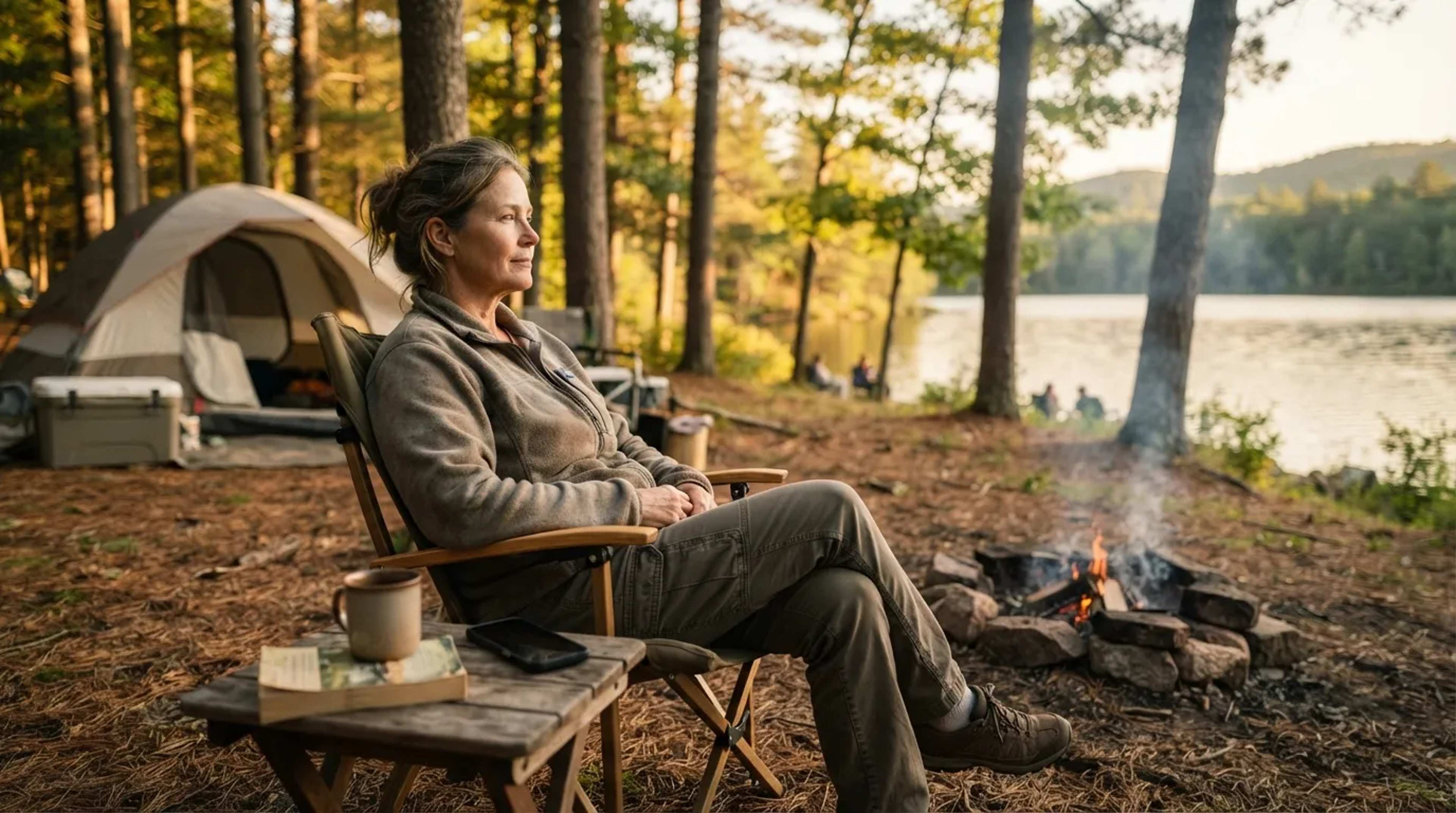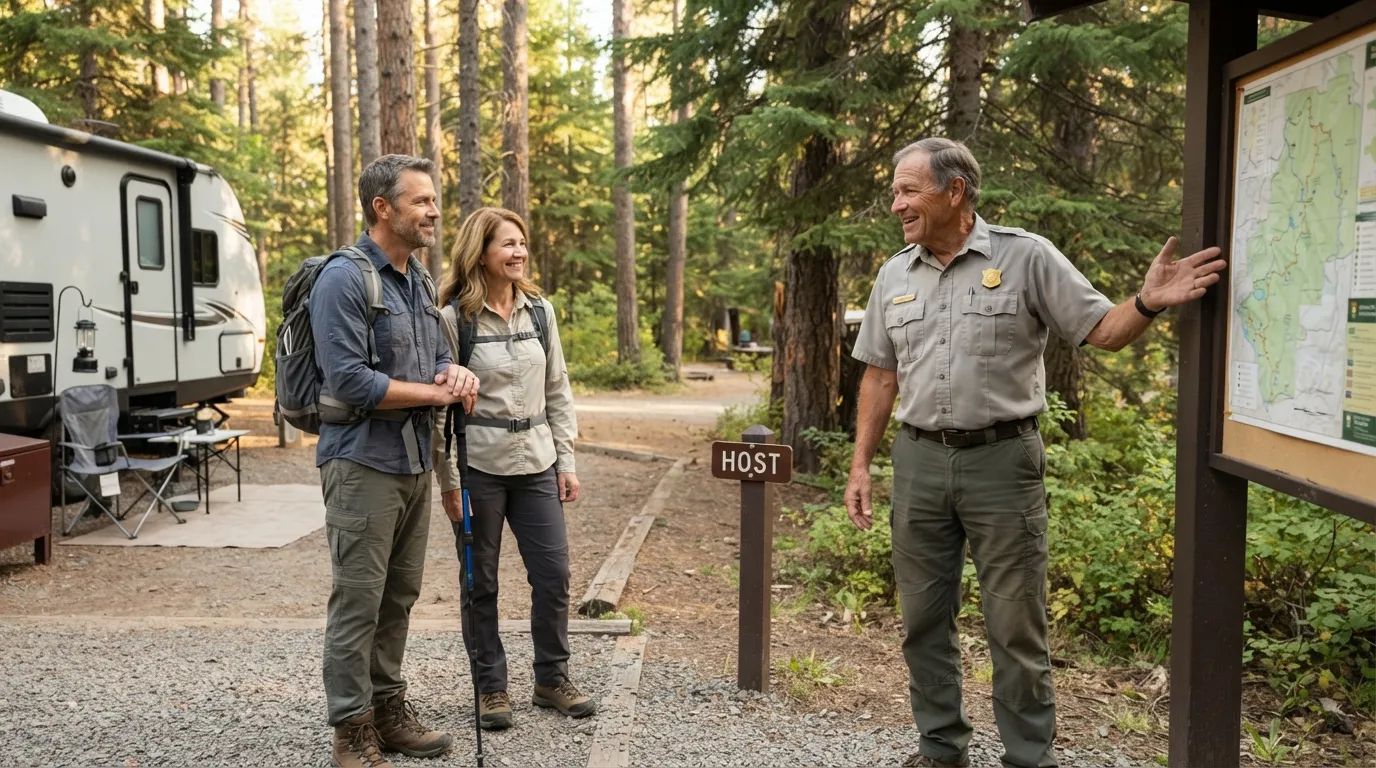
Most people picture an experienced camper as the one with the biggest rig, the priciest cooler, and a gear wall that looks like an outdoor store. Campground hosts say that’s backwards. They spend whole seasons watching hundreds of arrivals and departures, and the same small habits keep sorting people into two groups.
The gap rarely shows up in the equipment. It shows up at 8:45 p.m., at the fire ring, and in what a campsite looks like after someone drives away. Some of these tells are so small you’d never notice them, until you know what hosts are looking for. The first one happens before the tent even comes out of the bag.
#16 – They Roll In While the Sun Is Still Up
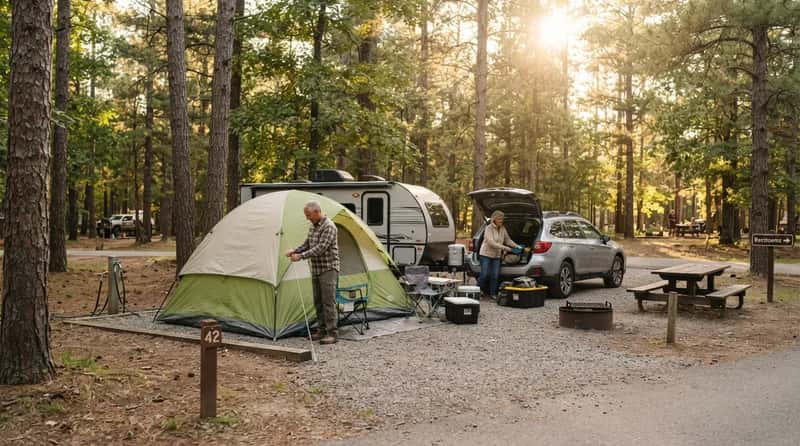
Rookies often show up after dark and start unloading by headlight. Hosts see it every weekend. Backing a trailer into an unfamiliar spot at night is how mirrors get snapped and tent stakes end up in the wrong place. Experienced campers treat daylight like a piece of gear and plan the whole drive around it.
Arriving early also takes the sting out of the boring parts. You can walk the site and find the water spigot and the nearest restroom before you desperately need either one. A tent goes up much easier when you can actually see the rock under the floor, instead of finding it at 2 a.m. If the day runs late anyway, many veterans pick a simple camp meal and a faster setup instead of fighting the dark.
But that’s nothing compared to what hosts notice about the ground itself in #15…
#15 – They Read the Ground Before They Read the Site Number
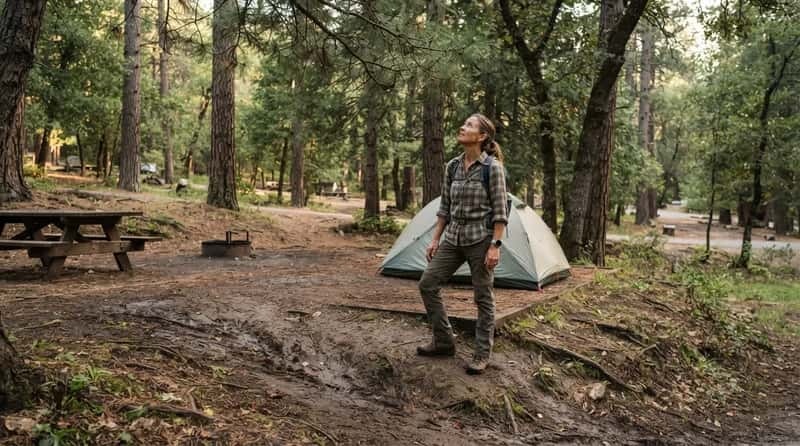
A flat-looking pad can turn into a puddle by midnight. Experienced campers look at the slope, the drainage, and where the water would run if it rained. They also look up, because dead limbs hanging over a tent site are a known hazard. Land managers regularly warn campers about “widowmaker” branches for exactly that reason.
Rookies tend to pitch wherever the picnic table points. Veterans often move the tent a few feet to dodge a low spot or an overhead limb. Many also skip the worn-down patch in the center of the pad and use the durable surface the campground has set aside for tents. It’s a two-minute check, and hosts say it often decides who wakes up dry.
Next up is a mistake that looks harmless but costs forests, as you’ll see in #14…
#14 – They Never Haul Firewood From Home
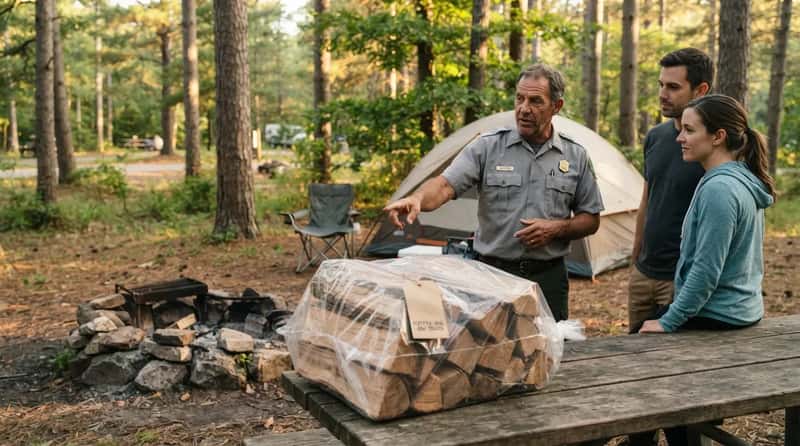
That free pile of wood from your backyard feels like a smart way to save money. It’s actually one of the quickest ways to spread tree-killing pests. Forest agencies and the “Don’t Move Firewood” campaign tell campers to buy wood near where they’ll burn it. Insects like the emerald ash borer have killed hundreds of millions of ash trees in North America, and moved firewood is one way they travel.
Rules vary by state and park, and some agencies set distance limits. Experienced campers check the campground’s policy first, then look for local or certified heat-treated bundles. They burn every last piece before they leave. Here’s the part that stings: the bundle you grabbed at a gas station two counties away may be the bigger mistake.
Fast Facts
- The emerald ash borer was first found in the U.S. in Michigan in 2002, and it has spread across much of the eastern half of the country since.
- Certified heat-treated firewood is heated until its core hits 160°F for at least 60 minutes.
- Tiny insects and larvae can hide under bark, so a pile that looks clean can still carry hitchhikers.
- Distance limits and bans differ by state and park, so check before you buy or load up.
And the next habit is the one that fills hosts’ complaint logs, in #13…
#13 – They Treat Quiet Hours as a Hard Stop, Not a Suggestion
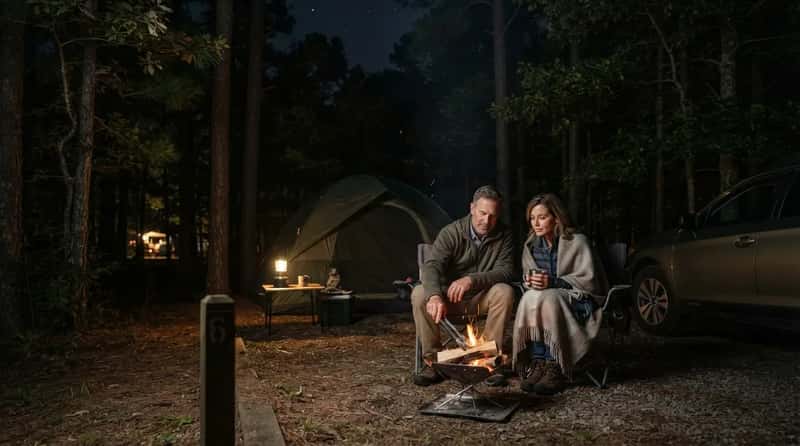
Many campgrounds set quiet hours in the late evening, with 10 p.m. a common start. Hosts say that’s where neighbors you’ll forget get separated from neighbors you’ll remember for the wrong reasons. Sound carries much farther at night, especially in forested campgrounds where little blocks it. A laugh that feels private at your fire can easily reach several sites away.
Experienced campers wind down on their own, well before the clock forces them. They lower the music and the voices, and they close car doors gently. Quiet hours usually cover the morning too, so slamming a truck door at dawn counts.
Still, the next one has less to do with sound and everything to do with invisible lines, in #12…
#12 – They Respect the Invisible Property Lines Between Sites
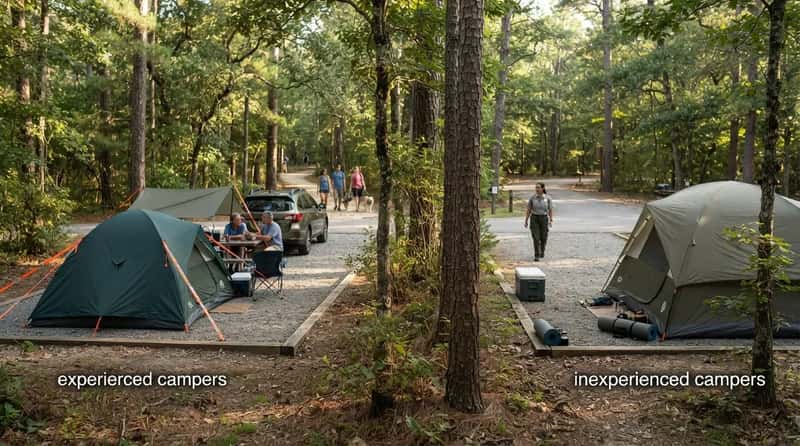
Campsites have boundaries, even when nothing marks them. Hosts regularly deal with kids, dogs, and adults cutting straight through someone else’s site. Parking an extra vehicle half on the neighbor’s pad does the same damage. It’s often the campers with the most gear who spill the furthest.
Seasoned campers tuck vehicles, tarps, and guy lines inside their own footprint. They walk around other sites, even when the shortcut is tempting. A line stretched across a path can trip a stranger in the dark, so veterans use brightly colored cord or flagging. Nobody gets hurt, and nobody has to knock on a door to complain.
But the next rule doesn’t just annoy neighbors. It can end badly for wildlife, as #11 reveals…
#11 – They Treat Food Like an Open Invitation to Wildlife
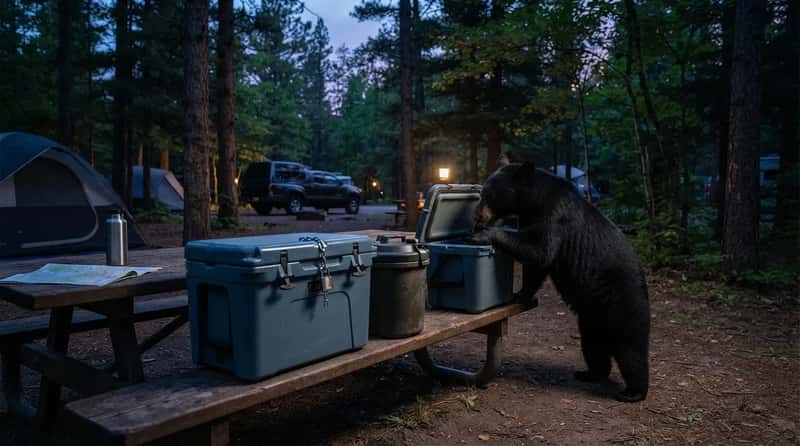
A cooler left on the picnic table overnight is a mistake hosts see constantly. In bear country, rules usually require food, trash, and scented items to go in a bear locker, a hard-sided vehicle, or an approved container. A fed bear is often a bear that eventually has to be removed, which is why wildlife agencies press this message so hard. Raccoons, squirrels, and mice cause plenty of damage too.
Experienced campers clean up right after dinner and wipe down the table. They keep toothpaste and sunscreen with the food. Hosts say the smart ones ask about local wildlife at check-in, because the rules vary by region. And nobody who’s done this a while leaves a “quick” snack in the tent.
Wildlife isn’t the only four-legged issue, though, and #10 stirs up real debate…
#10 – They Keep the Dog on a Leash, Even the “Friendly” One
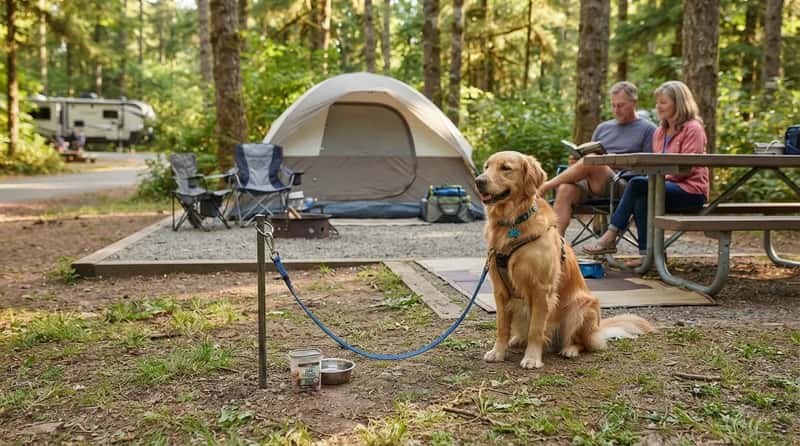
Here’s what hosts quietly argue about: the friendliest dog in camp can still be the biggest source of friction. Most campgrounds require pets to be leashed, and rules usually set a maximum leash length. “He’s friendly” is the line hosts say they hear right before a problem, because the other camper’s dog may not be. A dog barking at 6 a.m. makes the complaint list too.
Experienced dog owners bring a tie-out or a long line and actually use it at the site. They pick up after their dogs right away and never leave a dog alone in a tent or a hot vehicle. Many also read the trail rules first, because some parks restrict pets in certain areas. It’s not that they love dogs less. They just know a quiet dog is a welcome one.
The next habit sounds minor, but it can wreck a trip in an hour, as #9 shows…
#9 – They Pack for the Weather That Isn’t in the Forecast
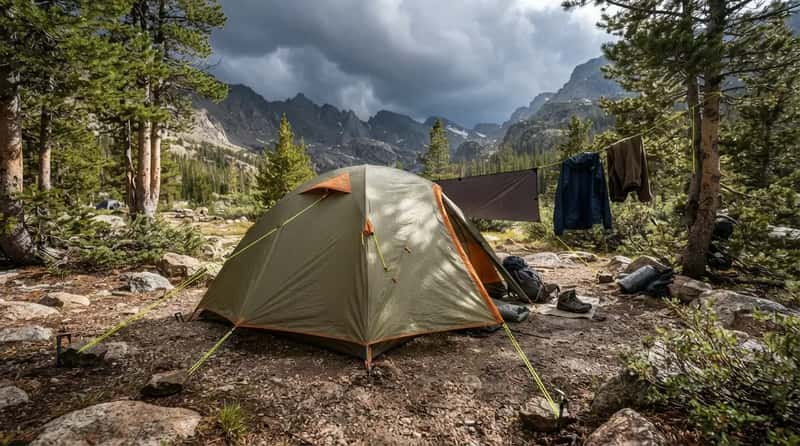
A clear forecast fools rookies every time. Mountain and desert campsites can swing sharply between day and night, and a sunny afternoon can become a shivering evening. Experienced campers pack a warm layer and a rain shell even for a “perfect” weekend. Hosts say a single gust can do more damage to a tent than a passing shower, and many have watched shelters tumble across a campground.
That’s why veterans bring real stakes, guy lines, and a tarp. The flimsy stakes that come in the box often fail in loose soil. They also stake everything down, even if they’re only leaving for a short hike. A tent left unstaked in a gust is a runaway.
But nothing triggers a campground argument quite like what comes next in #8…
#8 – They Think Twice Before Firing Up a Generator
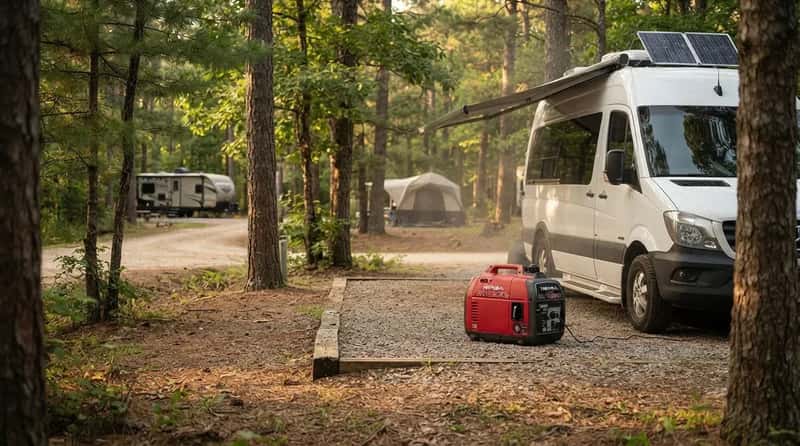
Some veterans say a generator belongs only in a true emergency. Many campgrounds limit generator hours, and some ban them entirely in tent-only loops. Hosts commonly name generator noise among their top complaints. The hum travels, and it spoils the one thing most people drove out there to find.
Experienced RVers check the posted generator hours at check-in and stick to them. Many invest in a battery bank, solar panels, or a quieter inverter model so they can skip the noise altogether. They also place the unit as far from neighbors as the site allows. A generator running all afternoon is the loudest “I’m new here” sign in the campground.
Quick Compare
- Standard generator: Powerful and familiar, but loud, fuel-hungry, and limited to posted hours.
- Battery bank: Nearly silent and usable any time, though capacity runs out and it needs recharging.
- Solar panels: Quiet and free to run, but output drops on cloudy days or in heavy shade.
The next habit runs on light, and hosts say it’s quietly rude when done wrong, in #7…
#7 – They Use a Red Light Instead of a Spotlight
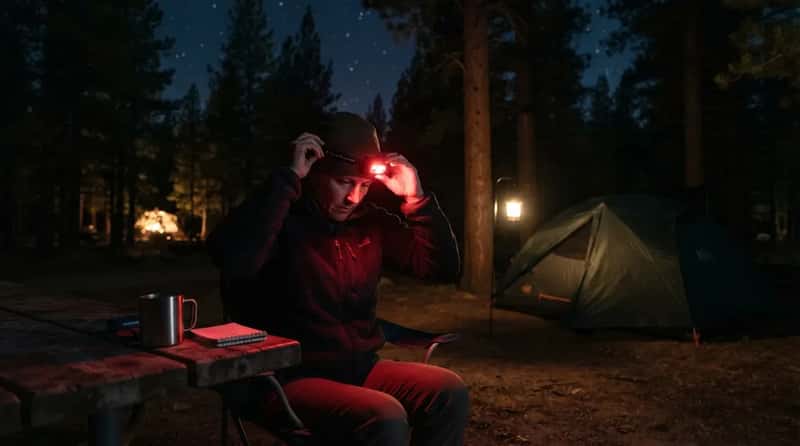
Walk through a campground at night and you can usually spot the experienced ones. They aren’t sweeping a white beam across other people’s tents. Many use a headlamp with a red mode. Red light helps your eyes stay adjusted to the dark, so the stars stay visible for everyone nearby.
Rookies point flashlights at faces and leave bright lanterns blazing past bedtime. Veterans choose warm, low lanterns and switch off floodlights once the evening winds down. The headlamp aimed straight at someone’s eyes mid-conversation is a small thing hosts hear about a lot. Tilt it down and the problem disappears.
Now let’s talk about a rule that has nothing to do with the woods, in #6…
#6 – They Read the Reservation Rules Like a Contract
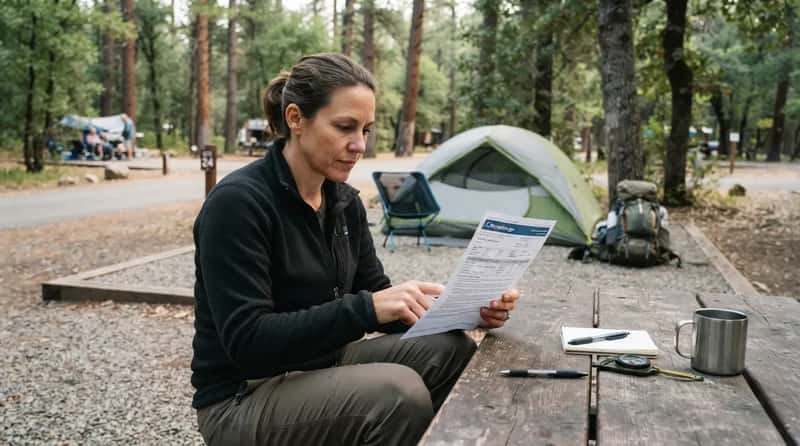
Hosts say a surprising number of campground problems start before the car doors even open. Check-in and check-out times, maximum vehicles, guest limits, and cancellation windows all matter. Many federal campgrounds on Recreation.gov release reservations on a rolling window, often months ahead, so popular sites fill early. The details differ by campground, which is exactly why they’re worth reading.
Experienced campers book as soon as the window opens and read the fine print on their confirmation. They know the check-out time and plan the morning around it. If plans change, they tell the campground so someone else can take the site. It’s not glamorous, but it’s the quiet reason their weekends go smoothly.
Next comes an opinion that gear fans may not love, in #5…
#5 – They Pack Less Than You’d Expect
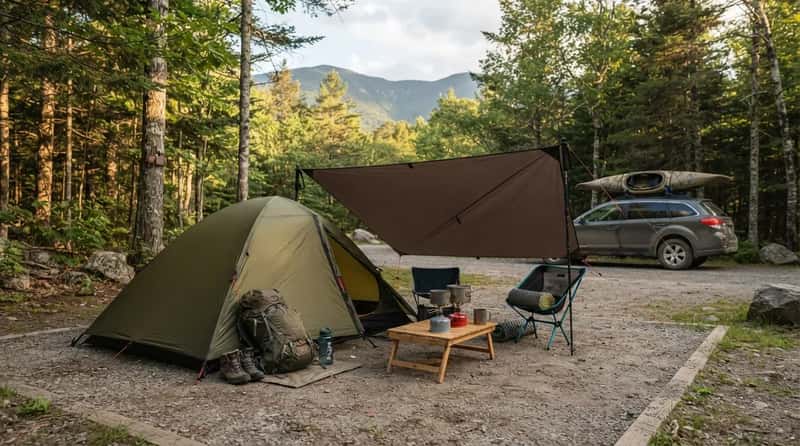
A mountain of gear is often a beginner’s tell. Many experienced campers carry less and know exactly what each item does. Some of the most capable campsites hosts see are surprisingly simple: a tent, a stove, a good tarp, and a tidy setup. The campers with the huge pile often spend the most time hunting for things.
Veterans build their kit from trips that went wrong. They add the item that would have saved them and drop the ones they never touched. That’s why a seasoned camper’s car can look plain next to a rookie’s overloaded one. The real flex is a camp that takes twenty minutes to pack up.
But the next habit shows up after everyone has left, and hosts notice it first in #4…
#4 – They Leave a Site Cleaner Than They Found It
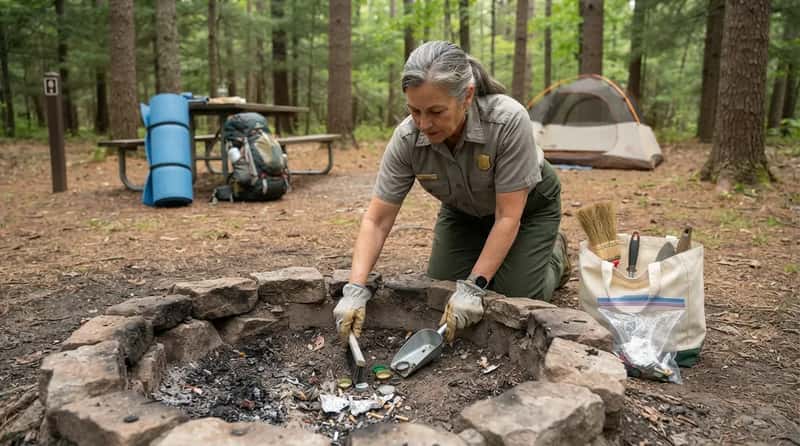
Hosts walk the sites after checkout, and they remember what they find. The worst offenders aren’t always the ones who leave a big mess. They’re the ones who leave a hidden one: bottle caps, bits of foil, and food scraps in the fire ring. Leave No Trace, the national outdoor ethics program, tells campers to pack out all trash and leftover food.
Experienced campers do a final sweep, sometimes on their hands and knees. They handle dishwater properly too, straining out food bits and dumping gray water where the campground says to. Many treat even “natural” scraps like apple cores as litter. Left behind, they just become a free snack for the next camper’s uninvited visitors.
Worth Knowing
- Leave No Trace is built on seven principles, and “Dispose of Waste Properly” is one of them.
- Aluminum foil and cans don’t burn away in a campfire, so they stay in the ring for the next person.
- Fruit peels and cores can take a long time to break down and still draw animals to the site.
- A final sweep in low evening light, or with a headlamp held low, shows tiny trash that daylight can hide.
That sets up the next habit, which hosts say protects the whole place, in #3…
#3 – They Never Hack at Living Trees
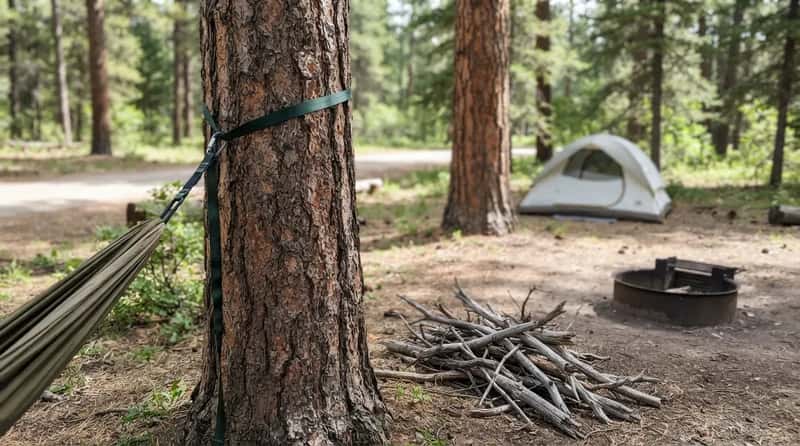
You’d think this one would be obvious. Hosts say campers still snap live branches for kindling, carve initials into bark, and nail things to trunks. Cutting live wood doesn’t just look bad, it also burns poorly, because green wood holds moisture and smolders.
Experienced campers use dead wood that’s already on the ground, where the rules allow it. Many campgrounds don’t allow gathering at all and require purchased wood. Veterans also use tree-friendly straps for hammocks and clotheslines. A healthy tree keeps shading the next camper’s site, too.
Which brings us to the one rule hosts repeat more than any other, in #2…
#2 – They Put the Fire Out Until It’s Cold to the Touch
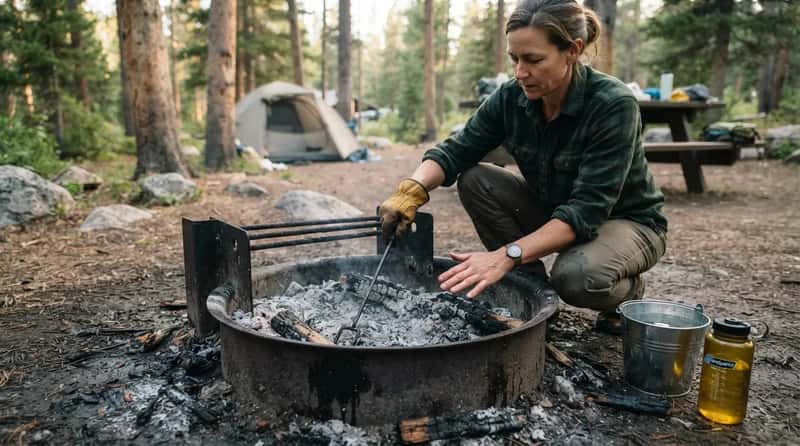
“Looks out” isn’t out. Hosts and fire agencies say embers can hold heat long after the flames disappear. A fire that’s only smoldering can reignite in a gust of wind. The standard guidance is to drown it with water, stir the ashes, and repeat until nothing is hot.
Experienced campers check the ring by hovering the back of a hand over it, not by touching. They never bury a hot fire under dirt, because the heat can keep burning underground. They also respect fire restrictions, even when the neighboring camper doesn’t. Many hosts say the best campers skip the fire entirely on windy or dry days.
At a Glance
- Drown: Pour water slowly over the whole fire, not just the glowing spots.
- Stir: Turn the ashes and half-burned wood so hidden embers meet the water.
- Repeat: Keep going until the hissing and steam stop.
- Feel: Hold the back of your hand near the ring. If you still sense heat, it isn’t done.
But the biggest difference hosts mention isn’t about gear or rules at all, and it’s in #1…
#1 – They Actually Talk to the Camp Host
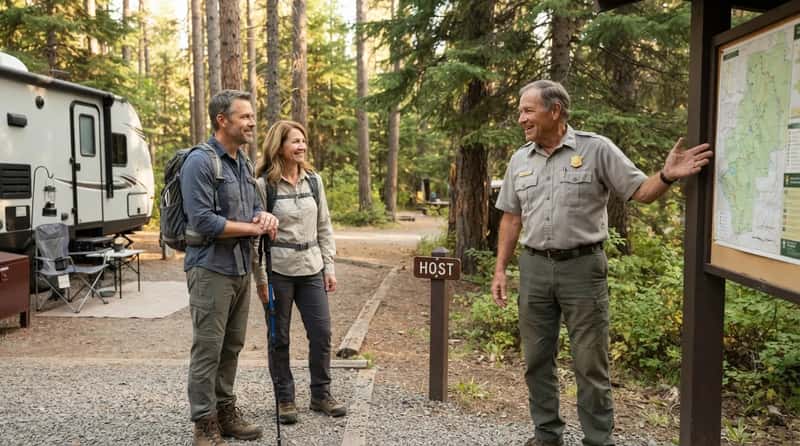
Here’s the part that surprises most people. Many hosts are volunteers who give weeks or months of their season in exchange for a campsite, and they often know the place better than any app. Experienced campers treat them as a resource, not a referee. They ask about trail conditions, closures, wildlife sightings, and the best sunset spot nobody posted online.
Rookies tend to avoid the host’s site until something goes wrong. Veterans say hello at check-in, follow the tips they’re given, and say thanks on the way out. Hosts say that small bit of friendliness changes the whole stay. They’ll often point you toward the best loop for next time.
Look back over the list and a pattern jumps out. Almost nothing on it can be bought. The habits that mark an experienced camper are a quiet evening, a cold fire ring, a clean site, and a hello at the host’s golf cart.
Hosts say the best campers leave almost no evidence they were ever there, except a neighbor who slept well and a host who remembers their name.