Every summer, campground hosts watch the same scene play out. A car rolls in packed to the roof with gear, and an hour later someone is walking the loop asking, “Anybody got a lighter?” Camping has boomed, with a KOA report showing 68% more active camping households than in 2014, so the list of repeat offenders keeps growing. These are the 16 things hosts say they wish every traveler had in the trunk.
Here’s the twist: the items hosts mention most are rarely the big, expensive ones. They’re small, boring, and stored in the wrong bag. A few of them also affect the neighbors, the wildlife, and the forest around your site, and the one at #1 can’t be bought at any store. Start at the bottom and work up.
#16 – The Hot Dog Buns Everyone Swears They Packed
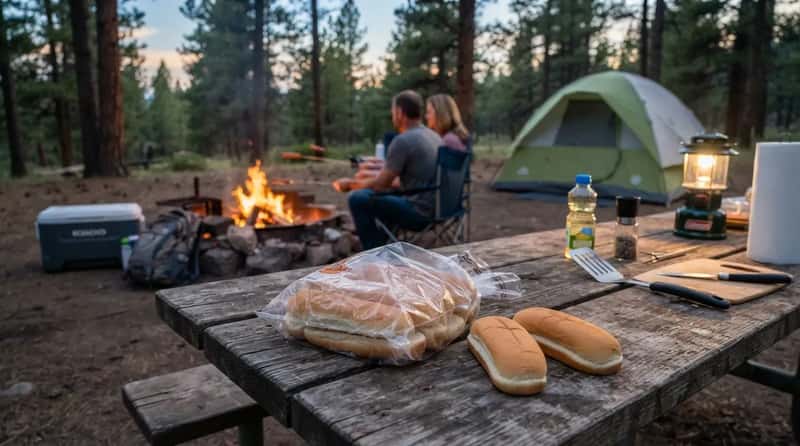
It sounds like a joke, but one longtime campground worker says buns are consistently among the items campers forget. Everyone remembers the hot dogs for roasting. The buns stay on the kitchen counter. The cooler gets packed in a rush, and the “obvious” item is the one that gets skipped.
The same goes for the supporting cast. Salt, pepper, cooking oil, knives, cutting boards, napkins and spatulas are staples at home, and many campers leave them behind. The nearest store can be 30 minutes away, so a missing spatula can cost you an entire evening. Check the unglamorous kitchen basics before you check the fancy gear.
#15 – The Tent Stakes Still Sitting in the Garage
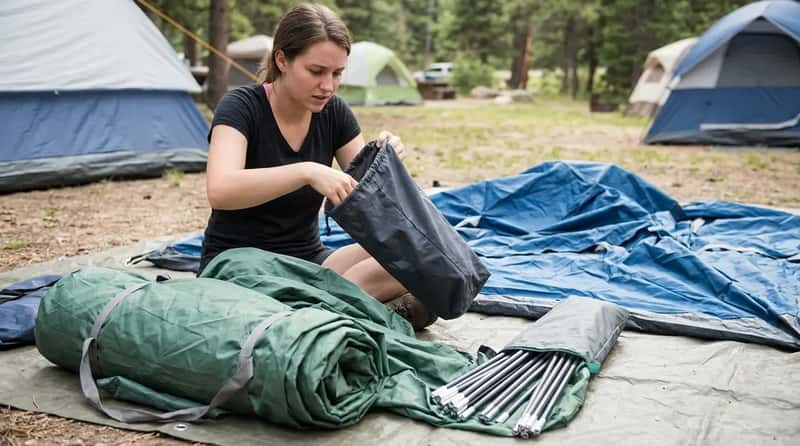
Stakes live in their own little bag, away from the tent. That’s exactly why they vanish. Without them, putting up your tent becomes nearly impossible. Even seasoned campers get caught, because they haven’t opened that bag since last season.
Poles are the other classic. One camper reported watching a group discover at the site, four hours from home, that someone hadn’t returned the poles to the bag after the last trip. A tent without poles is a tarp with ambitions.
Do the full-set check before you leave the driveway. Counting every piece takes two minutes. Finding out at dusk takes the rest of the night.
#14 – A Lighter That Isn’t Buried With the Stove Fuel
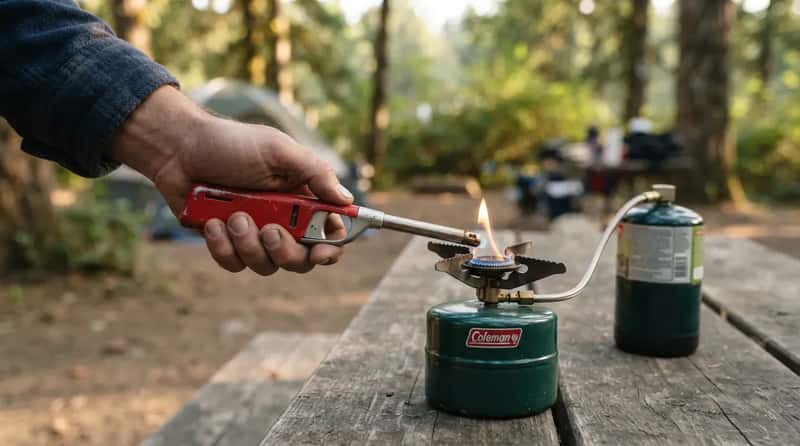
Ask people what they forget, and fire comes up again and again. One camping source calls a fire starter the most commonly forgotten item. People pack tents, sleeping bags and cooking gear, then arrive with no way to light a stove. Dinner ends up depending on one tiny item.
There’s a second trap. Matches or a lighter should be packed separately from the stove fuel. Pack two, and keep one in your pocket instead of the gear bin. That way a dead lighter or a lost bag doesn’t turn dinner into cold sandwiches.
At a Glance
- Pack two ways to make a flame, such as a lighter and a box of matches.
- Keep one on your body and the other in the kitchen bin.
- Store matches in a zip bag so a damp night doesn’t ruin them.
- Tuck in a fire starter or two for stubborn wood.
#13 – Trash Bags, and Way More of Them Than You Think
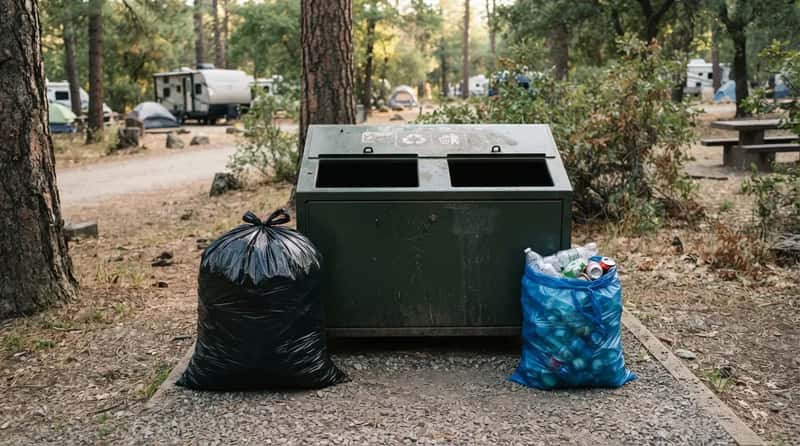
This one is simple, and it reaches well beyond your own site. Squirrels, raccoons, birds and bears treat your trash as treasure, and one outdoor guide says to pack more bags than you think you need. Overflowing garbage is an open invitation.
Sorting matters too. Campers toss wrappers, leftovers and plastic containers into bins meant only for bottles or cans, and the animals get an easy meal. Bring one bag for trash and a separate one for recycling. Read the signs before you toss anything.
#12 – More Bug Spray and Sunscreen Than a Weekend “Should” Need
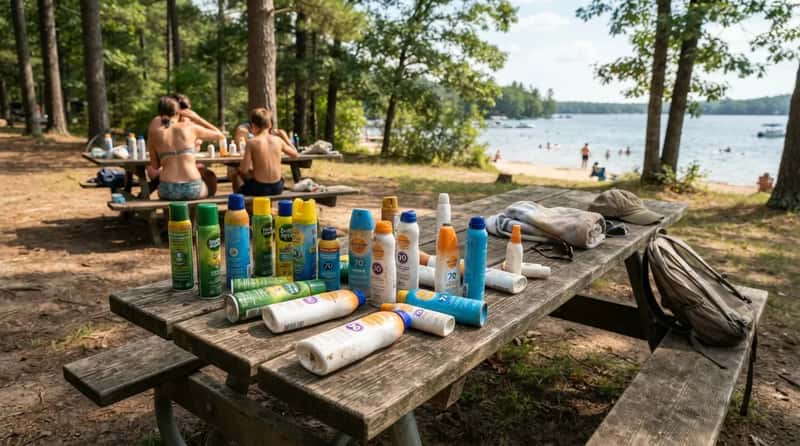
Most campers remember one bottle of each. That’s the problem. They often underestimate how much bug spray they’ll go through. Ticks, mosquitoes and chiggers don’t care how many cans you brought.
Sunscreen follows the same rule. The more time you spend outdoors, the more you’ll use. A lake day can empty a bottle by lunch. Pack a backup, because the camp store’s markup is real.
#11 – A Real Headlamp, Not Just a Phone Flashlight
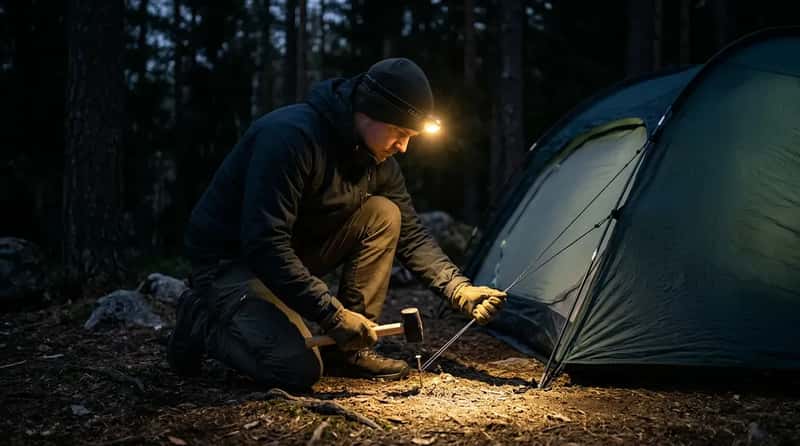
Hosts see the late arrivals, and they’re rarely graceful. Limited visibility at night raises the risk of tripping, missing steps, or forgetting to stake the tent. A low branch can catch you, too. And you’ll want both hands free while you work.
That’s why a headlamp beats a handheld flashlight. A headlamp and extra batteries are among the items campers commonly miss. Your phone is your map, camera and alarm, so don’t let the flashlight drain it. Put fresh batteries in before you leave home.
#10 – Dish Soap and a Sponge (Yes, Really)
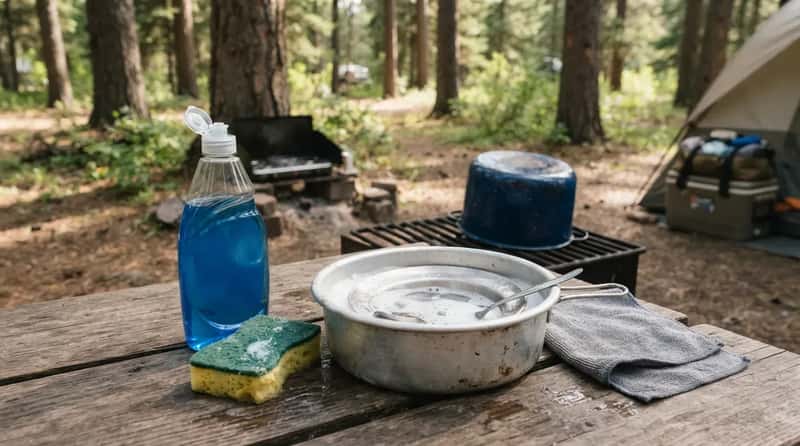
Campers plan meals in detail and forget how the dishes will get clean. Dish soap and a sponge are on one guide’s list of commonly forgotten items. Without them, you’re scrubbing a greasy pan with leaves.
It also affects the site you leave behind. Food residue lingers on tables and pans, and animals notice. A small basin, a sponge, and a bottle of soap fit in a corner of the bin. Never skip them to save space.
#9 – A Leash and Waste Bags for the Dog You Swear Is Well-Behaved
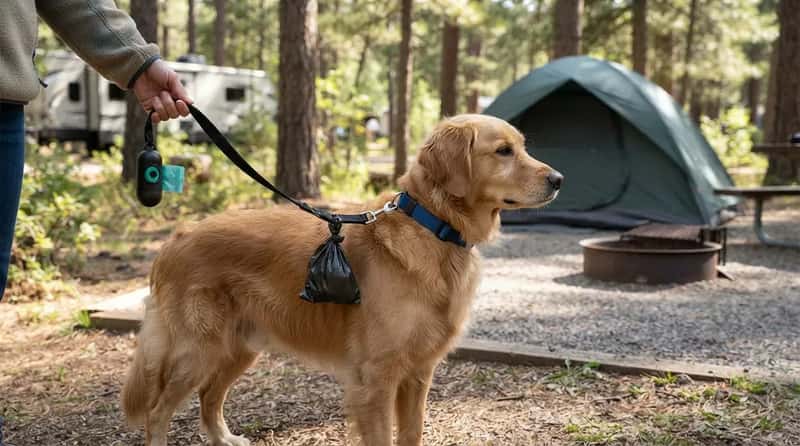
Hosts hear “he’s friendly” constantly, and it doesn’t settle the neighbors. Check the campground rules first, and keep your dog on a leash. Strange smells, other dogs and wildlife can change a calm pet’s behavior fast.
The packing list is short but easy to forget. Bring food, water and waste bags for the dog. Pet limits vary by park, so don’t assume this campground works like the last one. Confirm the rules before you load the car.
Worth Knowing
- Many parks require a leash of six feet or shorter.
- Some campgrounds limit how many pets can stay at one site.
- Barking counts toward quiet-hours complaints, even if your dog is friendly.
- Bag the waste right away and carry it out with your trash.
#8 – Toilet Paper and Hand Soap Nobody Promised You
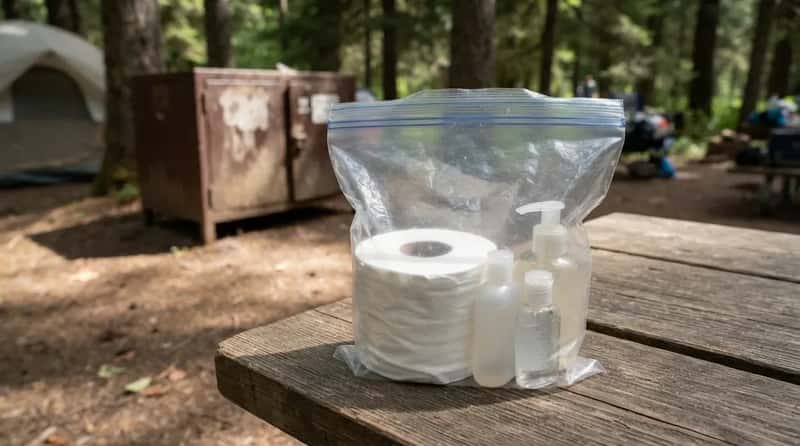
You’d expect a restroom to come stocked. Plenty of campground bathrooms aren’t. One camping guide says most campground bathrooms don’t have soap, so bring your own. That’s not a luxury when you’re cooking and handling food.
Toiletries are also among the commonly forgotten items. They seem to turn invisible during packing. People pack full meals and forget what they use every day. Toothbrushes, toothpaste and TP are cheap. Tracking them down at 9 p.m. is not.
#7 – The Rulebook You Never Opened
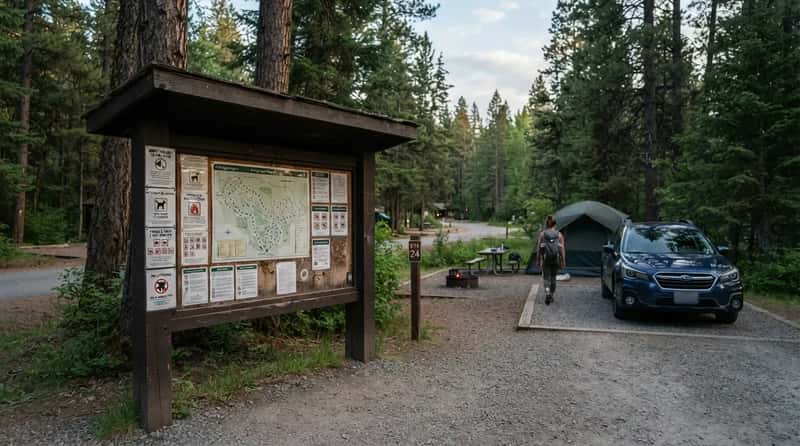
This one frustrates hosts more than any missing item. The confirmation email or reservation page usually spells out each campground’s rules. Quiet hours, pet limits, firewood policies and maximum vehicles all vary by park. Many people never open it.
The mistake is predictable. Hosts see campers assume this campground works like the last one. Save the rules offline before you leave, since service can be unreliable at remote campgrounds. Check the vehicle limit and quiet hours first.
#6 – The Warm Layer for a Night Colder Than the Forecast
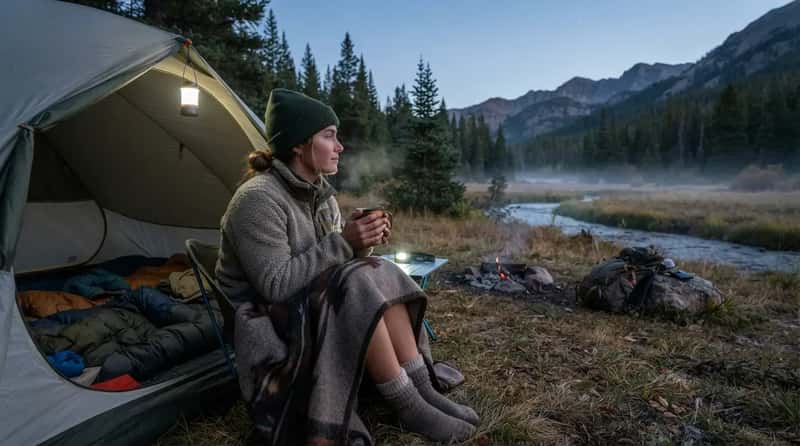
Campsites don’t always match the weather app. A site can be colder than the forecast said, and warm layers are on the commonly forgotten list. A cold night means sleepless hours and a miserable morning.
Pack a hat, a fleece, and warm socks even in summer. They take little room and can save the trip. If you never need them, nothing is lost.
#5 – A Tarp for the Rain Nobody Planned For
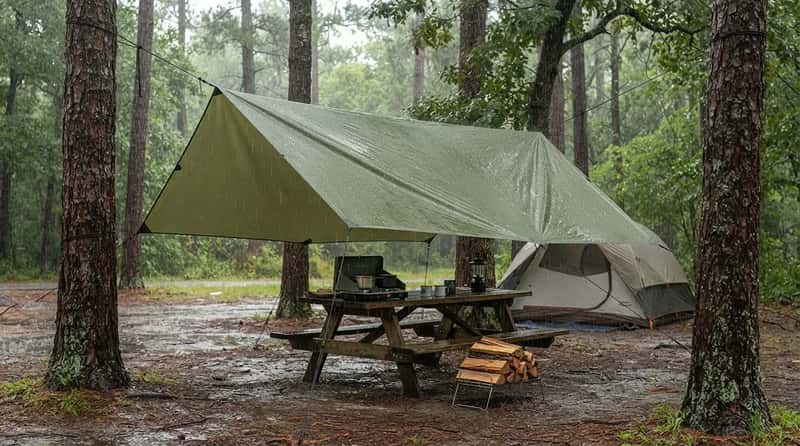
Rain is a bigger issue than most campers expect. A tarp for unexpected rain is on the list of items campers regularly leave behind. Without one, your table, firewood and gear get soaked.
A tarp turns a washed-out afternoon into a livable one. Rig it over the picnic table or the cooking area. Bring cord, and check the campground’s rules on what you can attach to trees. It’s a cheap addition with a big payoff.
Quick Compare
- Tarp and cord: Cheap, packs small, and can be pitched at any angle, but needs anchor points.
- Pop-up canopy: Goes up fast and covers more people, but it needs stakes and can flip in strong wind.
- Neither: Your picnic table becomes a puddle with legs.
#4 – A Food-Storage Habit That Keeps Bears From Learning Your Site
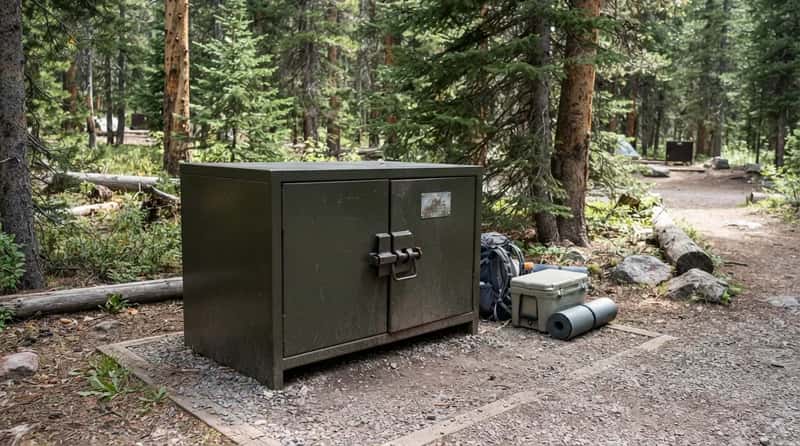
At bear-country campgrounds, food storage is a rule, not a suggestion. One host said that when campers use the bear boxes, they almost never see bear problems. The trouble starts when someone skips that step.
It takes very little for that to happen. Even a few minutes with the locker unlatched can be enough for a bear to learn where an easy meal is found. Once it makes that connection, it keeps coming back. Latch the box every time, because hosts are the ones who see the aftermath.
#3 – A Bucket of Water and a Plan for Putting the Fire Out
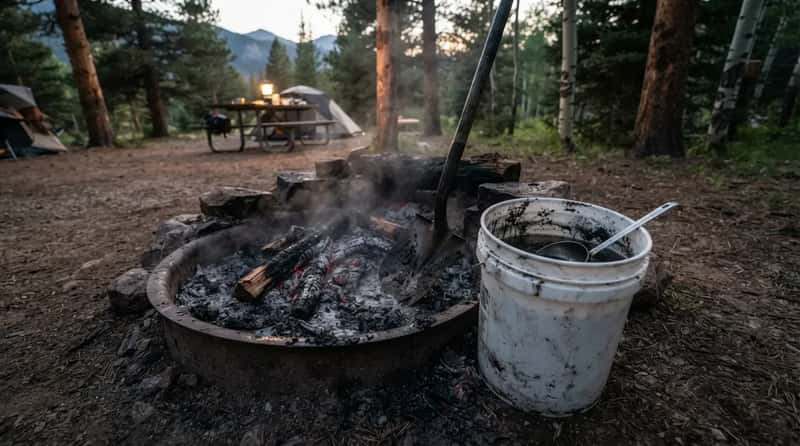
Fire is the other recurring issue. One Forest Service campground host says every season brings the same two problems: fire and trash. Dying embers can look harmless, which is exactly why they’re not.
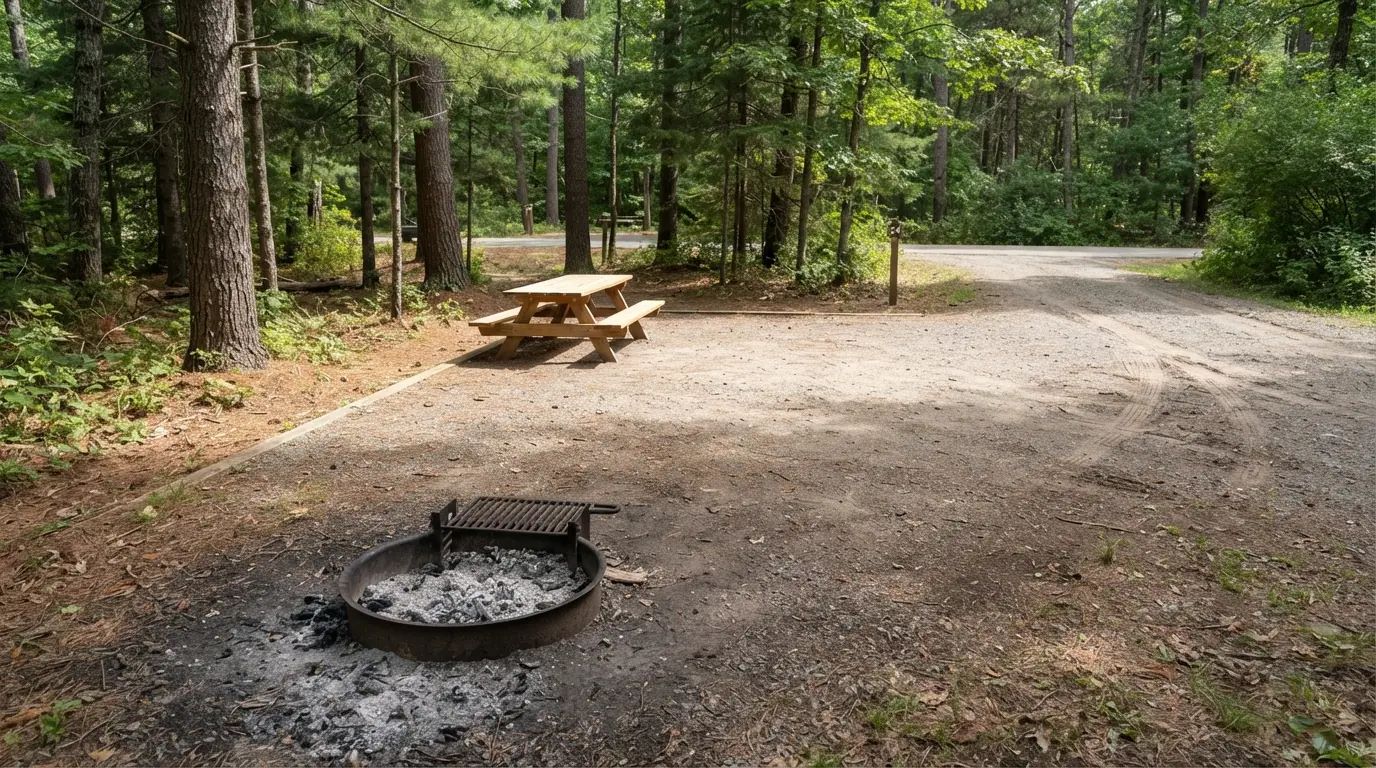
Some hosts leave reminders for this reason. At one California campground, white buckets labeled “Put Out Your Fire” sit beside campsites, hand-lettered by the host. Bring a bucket and a shovel, and soak the fire until it’s cold to the touch. Don’t walk away from it.
#2 – A Firewood Plan That Doesn’t Start in Your Garage
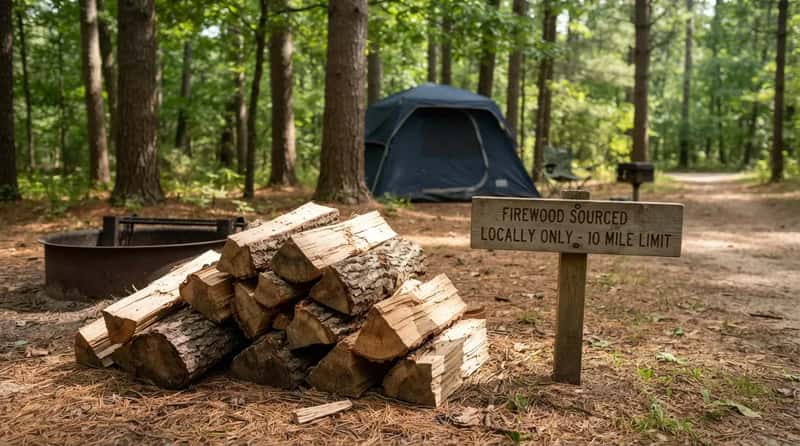
Firewood from home feels thrifty and harmless. Foresters disagree. Even one log of untreated firewood, moved away from where it was cut, can release pests and fungi that attack trees at the new location. That holds whether the new spot is the next town or hundreds of miles away.
The example is real. Scientists believe the Mediterranean oak borer spread from Napa Valley to Sacramento County on infested firewood. Rules vary by state, and Wisconsin’s state parks prohibit firewood from farther than 10 miles, unless it’s treatment-certified. Buy it where you burn it, and leave leftover wood for the next camper or the host.
#1 – A Departure Plan That Leaves the Site Better Than You Found It
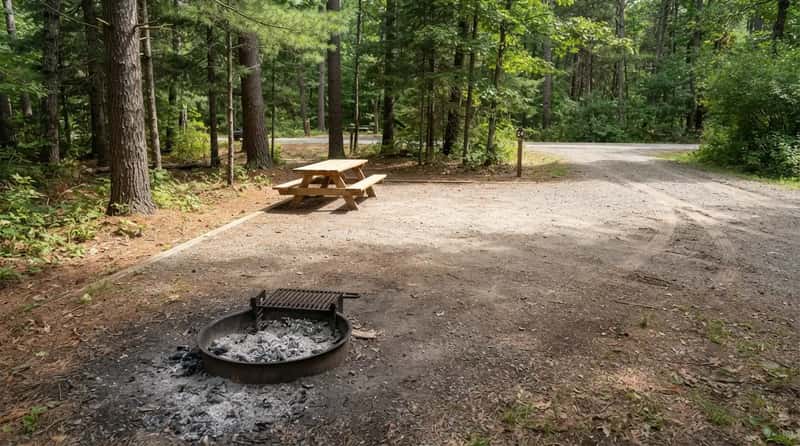
Here’s the part hosts remember longest. They check sites after departure, and the difference between a good camper and a bad one is obvious in about ten seconds. Your gear matters less than what’s left behind.
Timing counts too. Check-out is often around midday, and late departures can delay the next arrivals. Many hosts remember how you left long after they forget how you arrived. Pack your trash, douse the fire, and leave on time. It costs nothing.
Look back over the list and most of it is small stuff: buns, stakes, a lighter, a bag, a bucket. None of it is expensive, and every item has cost someone a good evening at a campsite. A checklist taped inside the bin lid handles most of it.
Hosts see the other side too. The campers they remember fondly are the ones who showed up prepared, followed the posted rules, and left a site that looked untouched. Those are the people hosts hope to see again next summer.