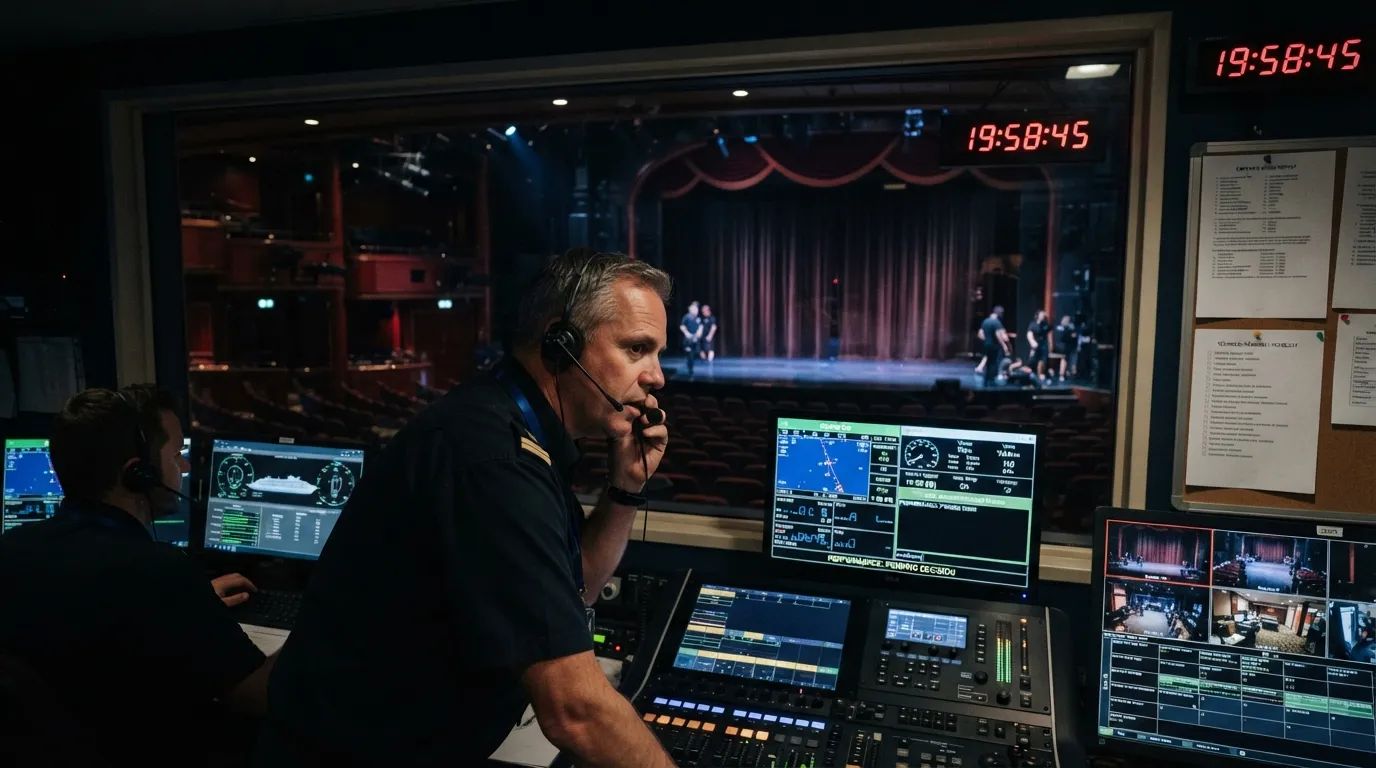
You sink into a velvet seat, the house music fades, and the show seems to appear out of nowhere. Backstage, the crew has been reading for hours. Some of it is on paper, some of it is on a screen, and one thing they read is the ocean itself.
Most guests never see this checklist, but job listings and a former stage manager’s own account show how much it shapes every performance. Some items are routine. A few are surprisingly high-stakes. And the very last one has nothing to do with sequins or spotlights.
#16 – The Line-Up Sheet That Tells Everyone Who Goes Where
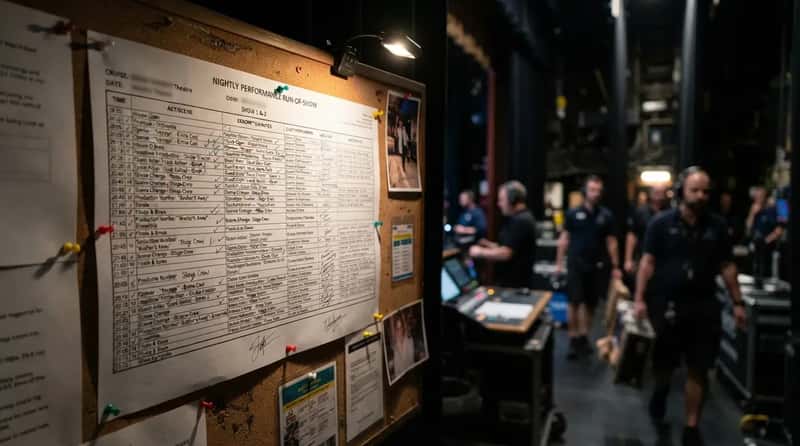
Before anyone steps into the wings, the cast reads the night’s line-up. Cruise stage-management listings say new performers must understand the schedule, the line-up, and the safety measures. The line-up covers the order of the show, the headliners, and the timing around them.
It sounds basic, but a ship is a moving workplace with a rotating cast. A shared written version of the night means nobody is guessing. On a ship, the line-up sheet is effectively the crew’s contract with the evening. It’s only the first line on a much longer list, and the next one is about the room itself.
At a Glance
- The order of the show is spelled out in writing.
- Headliners and the timing around them are on the same sheet.
- New performers are expected to know the schedule and the line-up.
- Safety measures are part of what they must understand too.
#15 – The Theatre Tour Every New Performer Gets on Day One
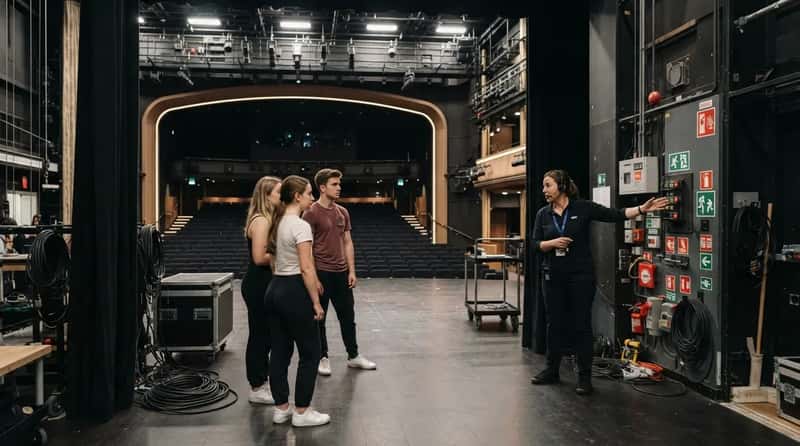
Walking into a ship’s theatre for the first time isn’t like walking into a land venue. One stage-management listing says the manager meets new performers to give them a theatre tour and a stage-management orientation. The tour covers exits, wings, and where things are stored.
It’s a safety measure as much as a courtesy. Performers dance close to moving parts, in heavy costumes, in the dark. The tour exists so a new cast member can find their way before the lights go down.
But a map of the room means little if everything in it isn’t tied down.
#14 – The Lashing List: What Gets Tied Down Before a Rolling Night
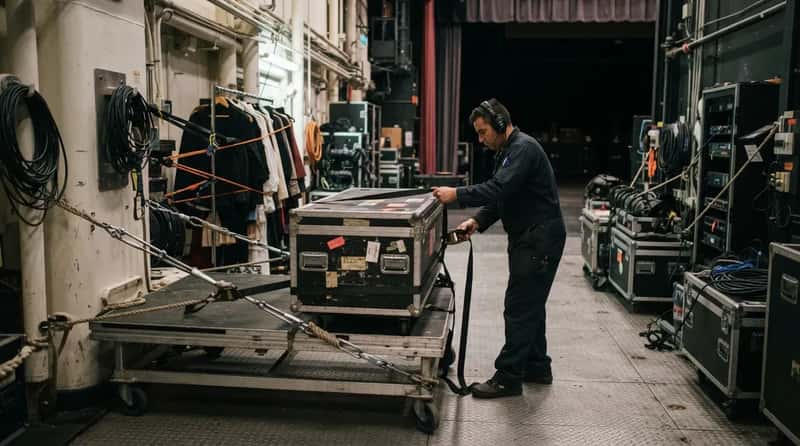
Backstage on a ship looks different from backstage on land. A production manager job description says entertainment equipment must be secured, attached, or properly stored to limit damage in rough seas or high list. Props, rigging, and loose gear all count.
One unsecured trunk can turn into a hazard in a swell. A prop table that is fine in port can slide when the deck tilts. The crew’s job includes preparing for movement that hasn’t happened yet.
Securing the gear is only half the battle, because the lights and sound have to survive the ride too.
#13 – The Sound and Lighting Standard Nobody Wants to See Slip
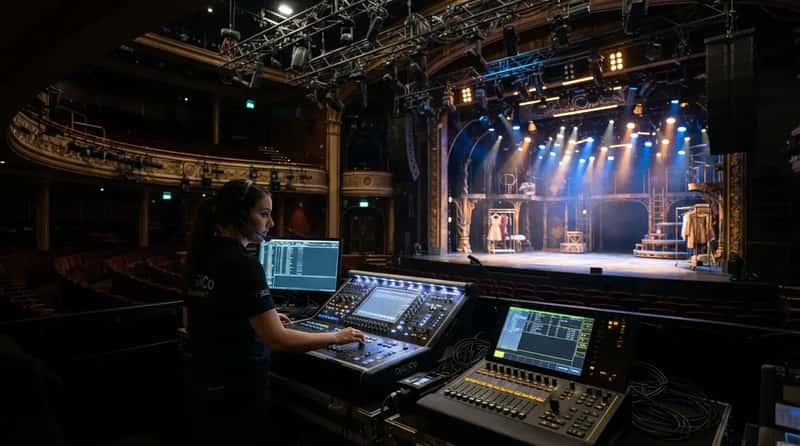
Crews check that the show still looks and sounds the way it was designed. Production managers are expected to keep sound and light equipment, sets, and props maintained to the show’s original design standards. That is a quiet kind of pressure.
A show can open strong and slowly drift. Lamps age, cables fray, and cues slide out of tune. The “original design standard” means a show in its eighth month is meant to match the one from opening week. Crews read the rig the way a mechanic reads an engine, listening for whatever sounds off.
Then there’s the equipment that doesn’t just glow. It flies.
#12 – The Fly Cue That Must Match the Stage Manager’s Call
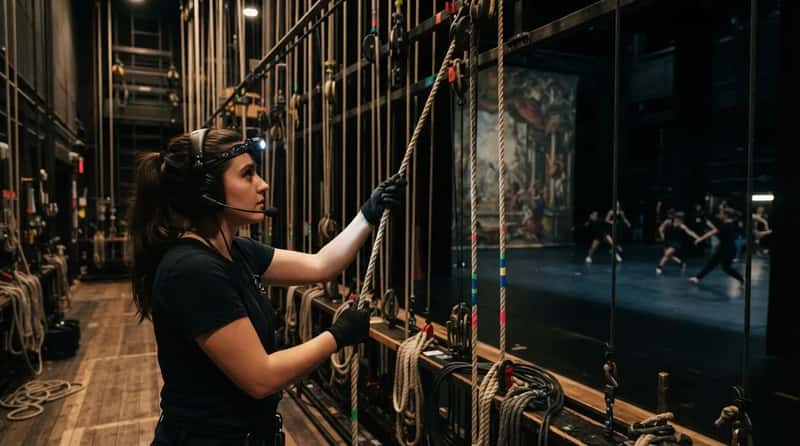
Overhead, scenery and curtains move on a fly system. Listings for deck leads say they operate the fly system and must execute every fly cue accurately and in step with the stage manager’s cues. Timing is everything.
There is a human chain behind each lift of a backdrop. One person calls it, another operates it, and performers sometimes stand beneath it. A cue that arrives half a second early is a safety issue as well as a visual one. The cue sheet is what keeps that chain tight.
Cues only work if the machinery behind them does, and that’s where things get messy.
#11 – The Repair Log Behind the Glamour
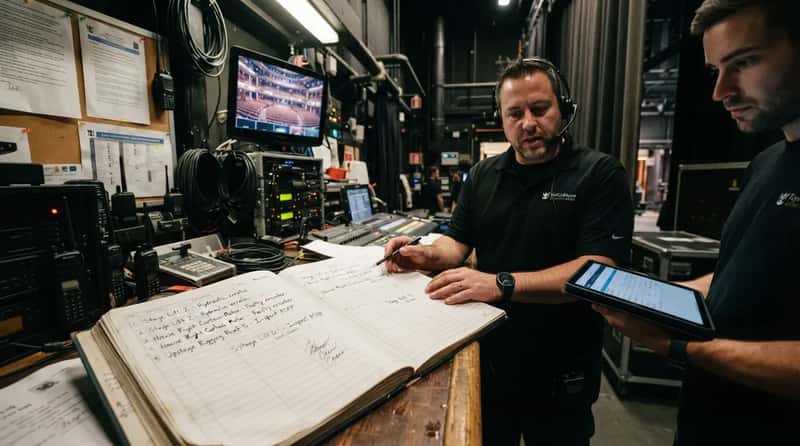
Not every system behaves every night. A former Senior Stage and Production Manager on Oasis of the Seas wrote that malfunctioning lifts, leaks, and rigging problems were a daily reality in that aging theatre. It was a candid look at the less polished side of the glitter.
Job listings also say broken or malfunctioning equipment is to be taken off the ship for repair as quickly as possible. That means the crew reads the repair log before the show, not after. Some of what looks like a seamless number is really a clever workaround.
Quick Compare
- From the seats: a smooth, seamless number. Backstage: a workaround for a lift, leak, or rigging problem.
- From the seats: a show that simply starts on time. Backstage: a repair log checked before curtain.
- From the seats: everything working. Backstage: faulty gear sent off the ship for repair as fast as possible.
And workarounds get harder when a show depends on an exact number of people.
#10 – The Headcount That Can Cancel a Performance
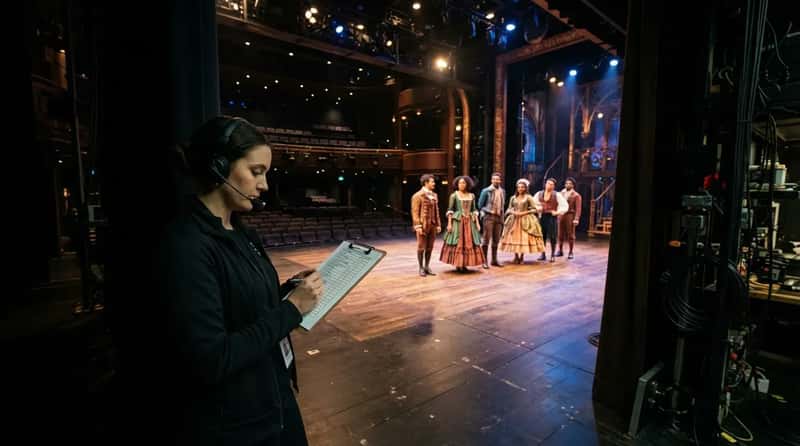
Some productions are built around a specific cast size. In one account from performers, a cast member said his show is blocked for six and that he’d rather postpone than perform with a missing voice. That’s one performer’s view, not a rule for every ship.
Still, it explains why crews count heads before curtain. Staging, harmonies, and quick changes are all set for particular bodies. One empty spot can unravel the whole choreography. Fans often assume the show must go on no matter what, but cast members don’t always agree.
Even when the headcount is right, the clock is ticking on something else: the costumes.
#9 – The Wig and Quick-Change Board Behind Every Fast Costume Swap
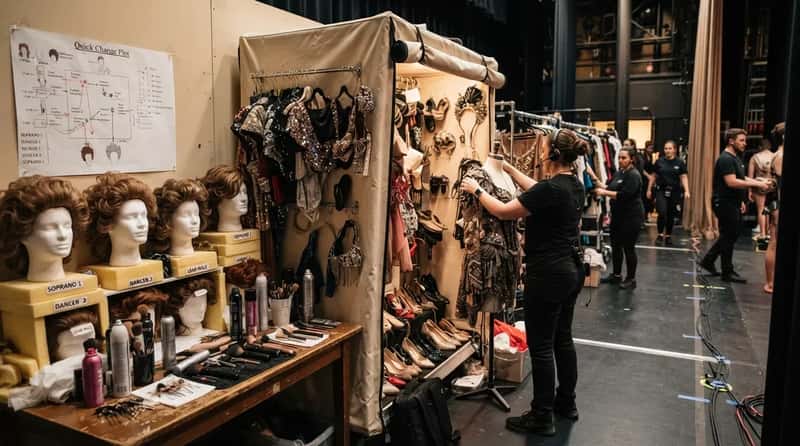
Production shows often rely on heavy costuming. Dance Informa’s look at cruise gigs says many shows use full stage makeup and wigs alongside “quite a few quick costume changes.” That puts a lot of weight on backstage prep.
Each change is rehearsed down to the second. Pieces are laid out in a set order so a performer can sprint offstage and be redressed within moments. A hairpiece out of place can mean a missed entrance. The crew checks the changes before the show, because there’s no time to fix them during it.
And if a performer can’t make it into costume at all, the whole show gets reshuffled.
#8 – The Sick Castmate Re-Block Nobody in the Audience Notices
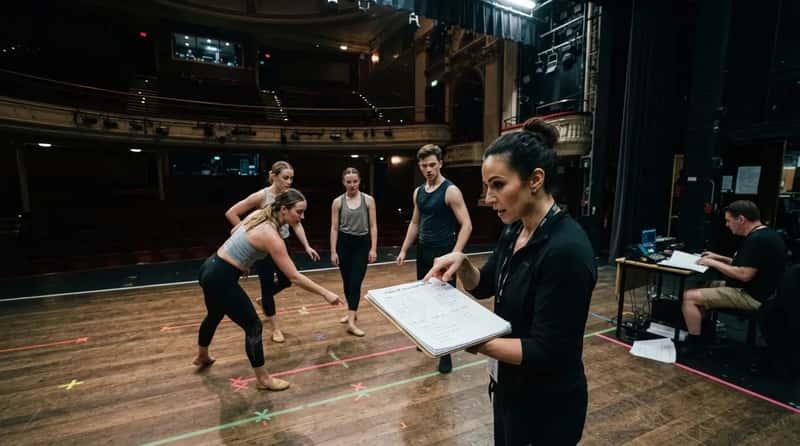
Living and working together at sea means illness spreads. Dancer Amanda Sherwin has described how you never know when you’ll have to re-block a show at the last minute for a sick castmate. That’s a big ask on short notice.
Re-blocking means changing where everyone stands, enters, and exits, often within hours. Dancers cover for each other and keep multiple tracks in their heads. Most guests who saw a flawless show never knew it was rebuilt that afternoon. The crew reads the sick list as closely as the schedule.
Beyond the stage, though, the same crew carries a very different kind of responsibility.
#7 – The Muster Role That Makes a Stage Manager Part of Ship Safety
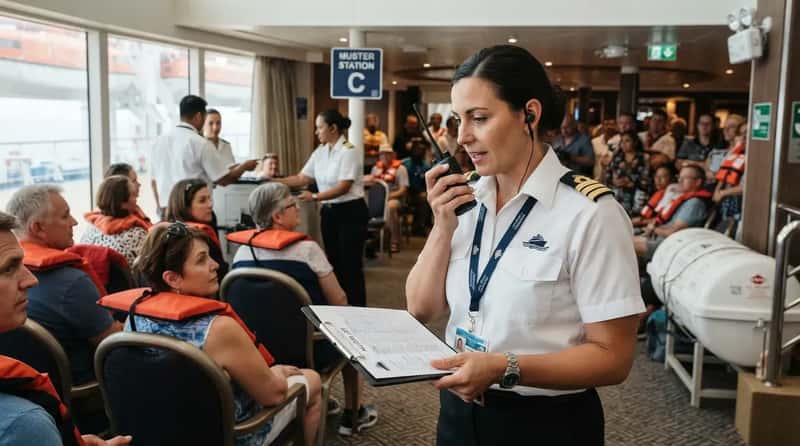
The theatre team isn’t only about entertainment. The former Oasis stage manager wrote that being a manager meant holding an officer rank with extra responsibilities tied to ship safety. It was a second job layered over the first.
That included being a muster station leader during drills and emergencies, and an emergency raft commander. The person calling your show may also be responsible for evacuating a section of the ship. Listings also commonly ask for basic safety training, so the theatre crew is prepared for both worlds.
And when the sea turns rough, that safety mindset can change the show itself.
#6 – The Backup Show Waiting in the Wings
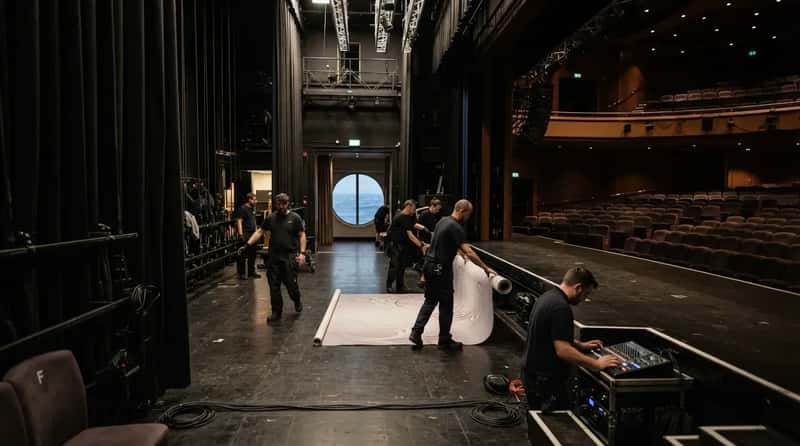
Sometimes the planned show can’t safely run. Celebrity Cruises once cancelled an acrobatic theatre show for performers’ safety and replaced it with a cabaret. A cruise travel site reported it during a rough-weather crossing.
From row F, a swap like that can feel like a letdown. Backstage, it looks like the smarter move, since a calmer show on a rolling night is the safer bet. A backup show is a plan, not an apology. The crew reads the sea first, then decides which version of the night fits it.
Worth Knowing
- The cancelled show was an acrobatic production.
- A cabaret took its place.
- The stated reason was performers’ safety.
- It happened during a rough-weather crossing.
Some shows, though, have almost no safe plan B once the water gets rough.
#5 – The Aqua Theater Dives That Weather Can Switch Off
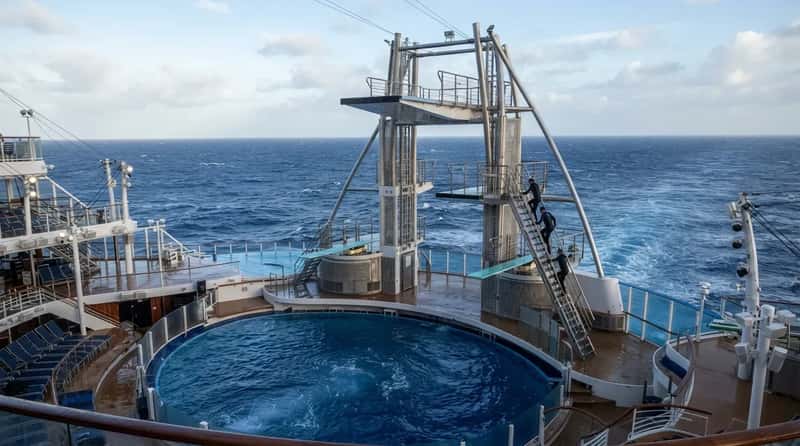
Outdoor spectacle is the most exposed kind. On Royal Caribbean’s Oasis-class ships, Aqua Theater shows have been cancelled for weather, and they feature divers jumping from 60-foot platforms at the back of the ship.
It’s easy to understand why. A heavy swell, wind, and a wet platform make a dangerous mix. Some of the most dramatic shows at sea are also the ones most at the mercy of the forecast. Crews watch the horizon the way pilots watch the sky.
Indoors, the pressure comes from somewhere else: the clock.
#4 – The Two-Show Clock and the Sprint Across the Ship
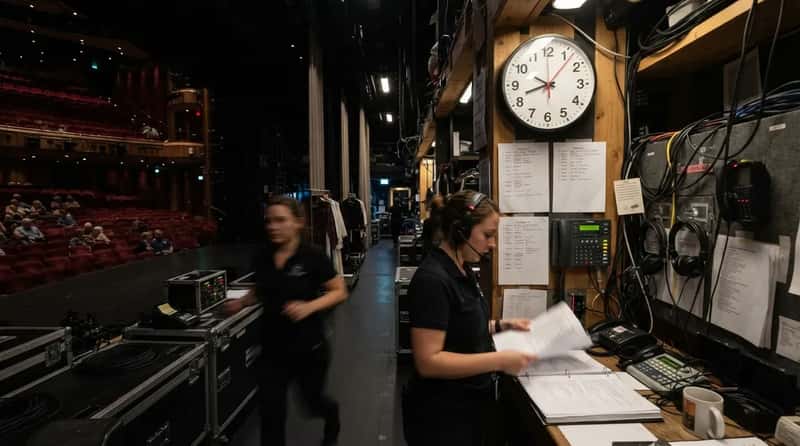
Many evenings have two performances. The Oasis stage manager wrote about a decision shortly before 8 pm, and another check before the 10:30 pm show. That’s a full cycle twice a night.
The gap between them is brutal. One former performer described having only an hour, changing quickly, leaving costume, and running from the front of the ship to the back to eat. Then they’d run back and do it all again. Crews read the clock as carefully as any cue.
But even a perfect schedule means little if the theatre itself won’t sit still.
#3 – The Moving Room: Why the Theatre Itself Is the Biggest Variable
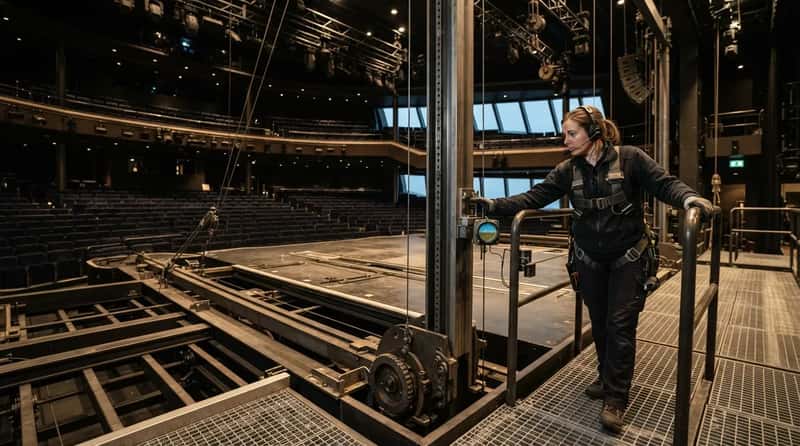
Land theatres stay put. Ship theatres don’t. One theatre production article points out that the entire theatre moves, and stage lifts, tracks, screens, and aerial systems must all keep working while it does.
The same piece notes that performer flying is still possible, but machinery, guides, locking systems, and procedures must account for forces a West End designer can usually ignore. Cruise theatres are built for a stage that rocks. Crews read the movement, not just the script.
All of that leads to one conversation that can change the whole night.
#2 – The Phone Call to the Captain
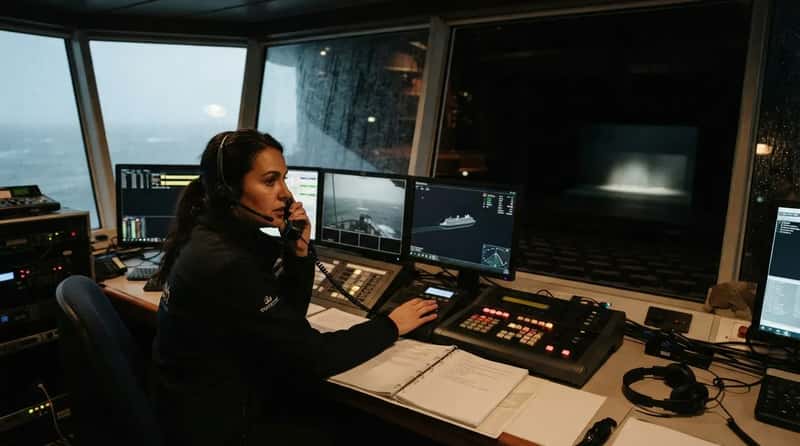
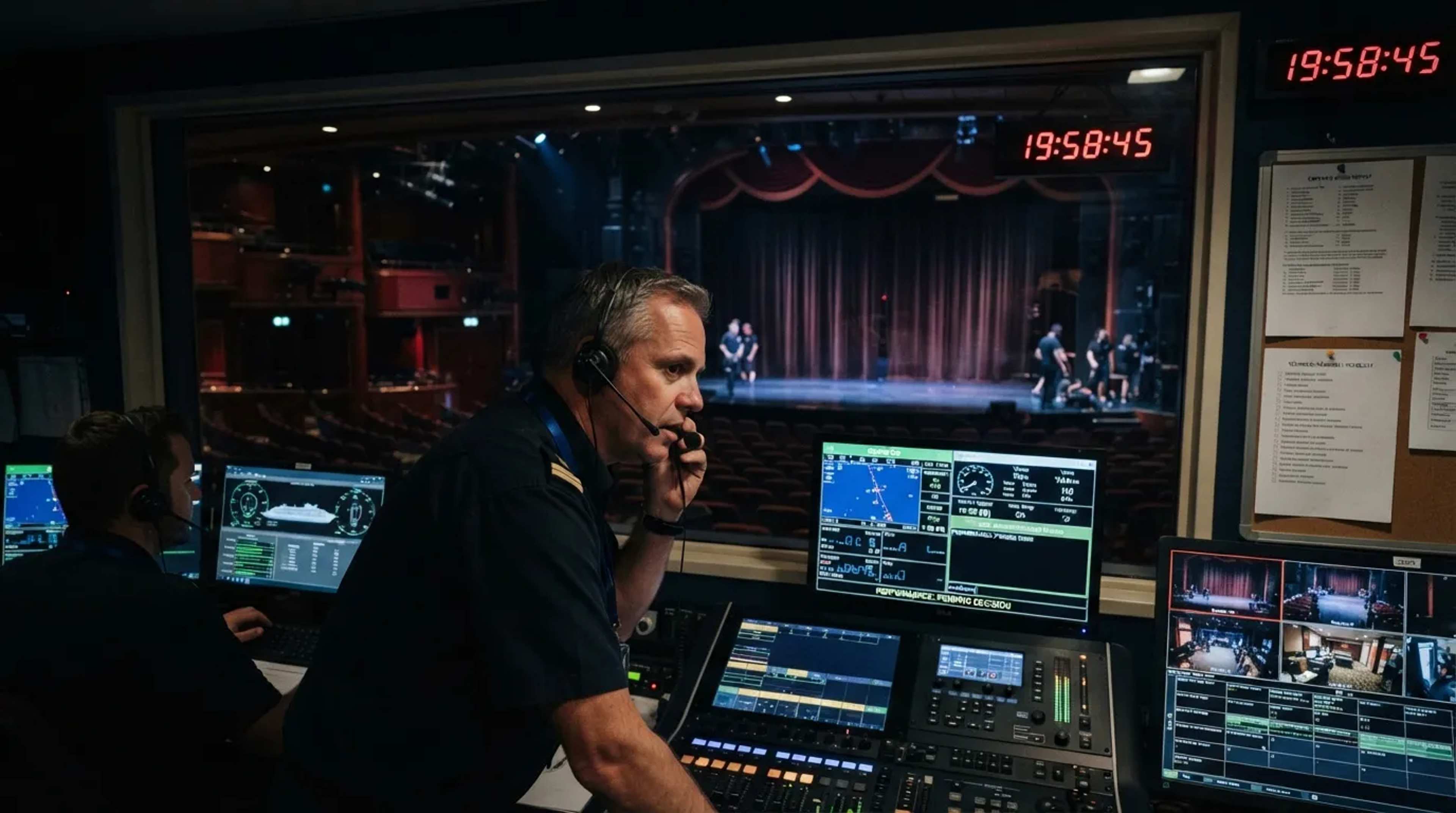
When the seas get rough, the theatre team doesn’t act alone. The former Oasis stage manager described heading back to the theatre to check weather and sea conditions, then calling the captain to see if he could help with the rough seas.
It’s an unusual partnership. The bridge controls the ship’s course and speed, and the theatre depends on both. Sometimes the show’s fate comes down to what the bridge can adjust. Passengers never see that call, but it may decide whether the curtain rises.
But the call is only input. Someone still has to make the final decision.
#1 – The Go or No-Go Call That Decides Whether the Show Happens
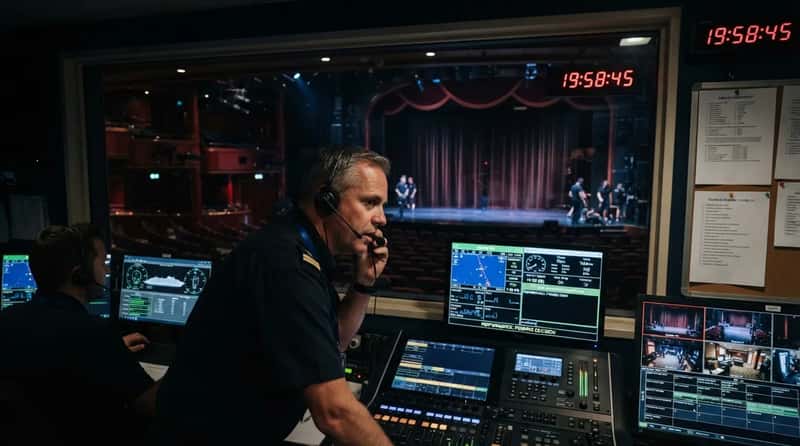
This is the real item at the top of the list. The Oasis stage manager wrote that, shortly before 8 pm, after speaking with the captain, the technical director, and the performers, he’d decide whether to cancel that night’s show or go ahead.
Carnival’s John Heald has said the decision not to perform a full production is most often made by the cast manager because of rough seas. It’s a safety call, since a rocking ship puts performers at risk of injury. The most important thing a crew reads before the lights drop is whether it’s safe to drop them at all.
Why It Stands Out
- The decision lands shortly before 8 pm, well before the first show.
- The captain, technical director, and performers all weigh in.
- Carnival’s John Heald says the cast manager most often makes the final call.
- The deciding factor is injury risk on a rocking ship.
A cruise show looks effortless because so much is checked in advance: the line-up, the gear, the cast, the cues, and the sea. Crews hold ship-safety duties, cast members cover for each other at short notice, and a rough night can swap a headline show for something calmer.
So the next time the lights drop and the music swells, remember that a whole team already made peace with the weather. The magic you’re watching is the version of the night that was safe enough to give you.