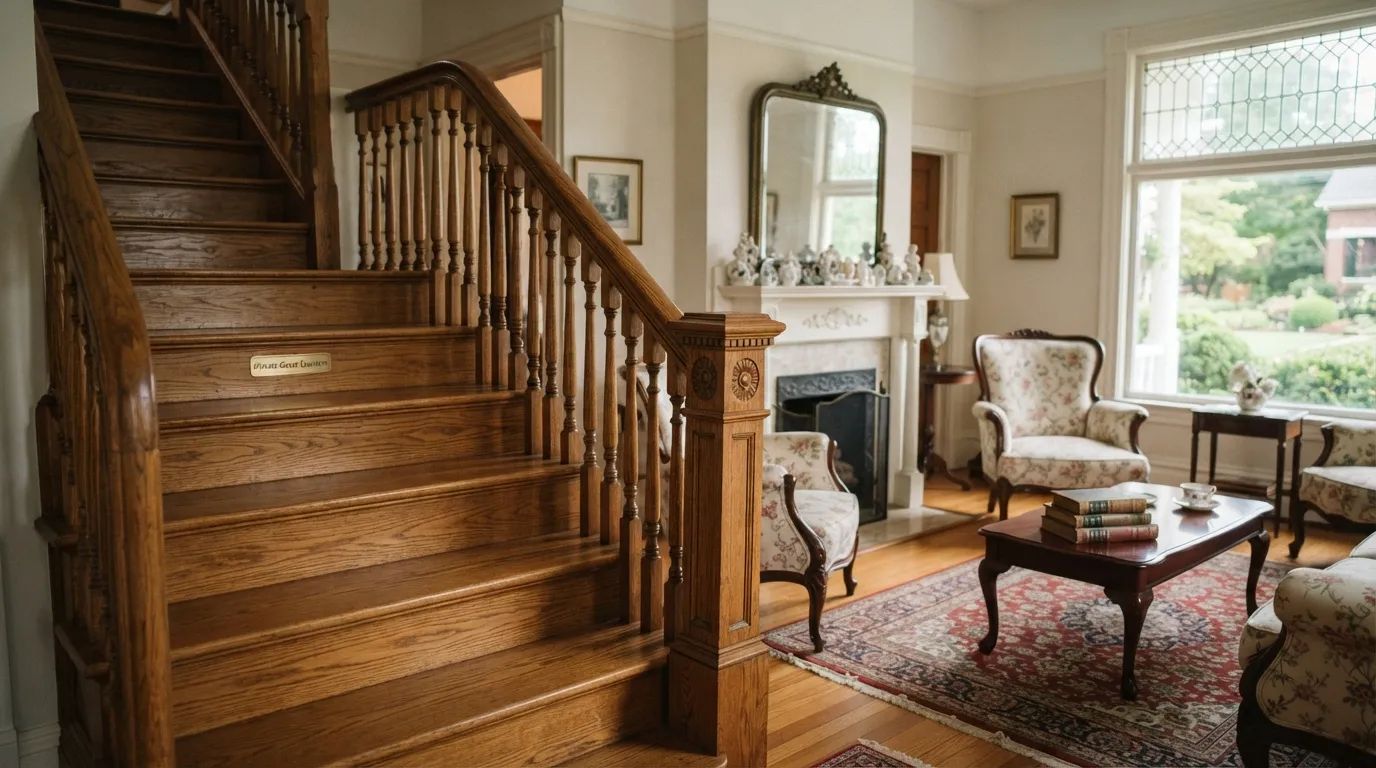
Most travelers book a bed and breakfast expecting a slightly fancier hotel room with homemade eggs on the side. Then they arrive – and suddenly there’s a locked front door, a breakfast seating they didn’t know existed, and a quiet house rule they’ve already broken before noon.
Nobody hands you the rulebook when you check in. But experienced guests, veteran innkeepers, and hospitality insiders all say the same thing: a B&B runs on a completely different set of expectations than a hotel ever will, and knowing them ahead of time changes how the whole stay actually feels.
#16 – You Need to Announce Your Arrival Time
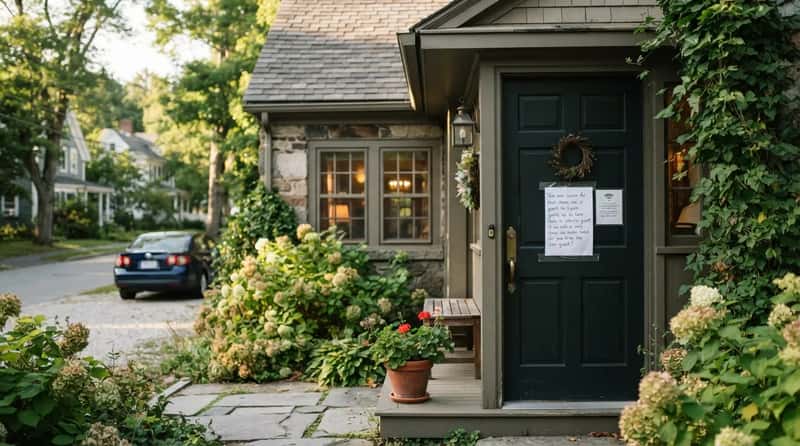
When you book a bed and breakfast, you’re usually asked to specify an arrival time – which throws off travelers used to strolling into a hotel lobby whenever they feel like it.
The reason is simple. B&B staff are small, often just one or two people wearing five different hats, and nobody can sit behind a front desk 24 hours a day waiting for you.
Confirm your arrival time before you leave home, and text an update the moment your plans shift. Often you’ll find specific instructions waiting for you taped to the door – a code, a key location, a note in your innkeeper’s own handwriting.
But arrival time is just the first surprise. What happens after you’re inside is where a B&B stops resembling a hotel altogether.
#15 – The Cancellation Policy Is Stricter Than You Think
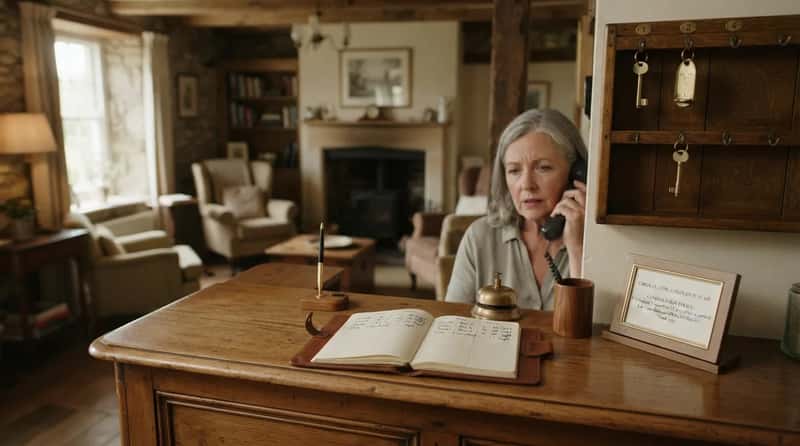
Most bed and breakfasts have five guest rooms or fewer – some have only three – so a single cancellation can wipe out 20% to 33% of the property’s entire inventory for that night.
Unlike hotel chains, B&Bs almost never overbook. They hold your room in good faith, and in return they expect you to honor the cancellation window.
At many properties, cancel 14 days out and your deposit comes back in full. Cancel inside that window, and it’s gone – no exceptions, no matter how good your excuse is.
Read that policy before you book, not after you’ve already paid. And speaking of policies, there’s one involving your guests that almost nobody thinks to ask about.
#14 – Unregistered Visitors Are Often Flat-Out Banned
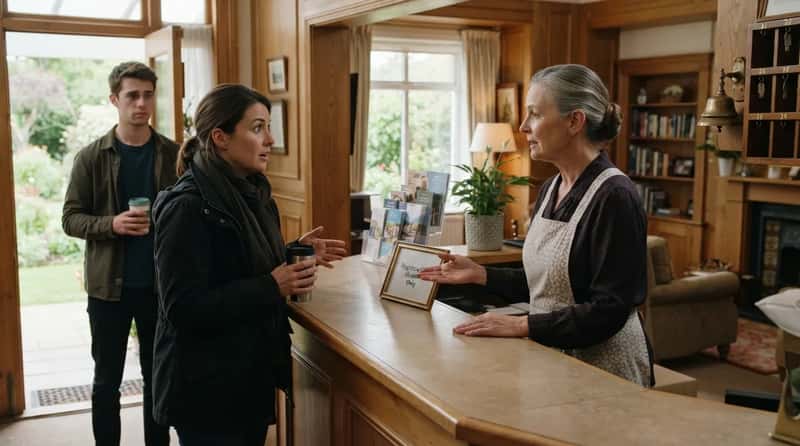
At many B&Bs, the property is reserved exclusively for registered guests. No visitors without advance approval, and no unregistered overnight stays, period.
Remember, you’re renting a private room, not the whole house. In plenty of cases the owners live right there, and every common area is shared with strangers you’ve never met.
This trips up couples and families constantly. A friend happens to be in town, stops by for coffee, and suddenly there’s an uncomfortable conversation at the front desk that didn’t need to happen. Always ask first.
And if you’re thinking you can quietly sneak someone in after dark, think again – the entire front-door situation at a B&B works nothing like a hotel.
#13 – Late-Night Returns Are a Whole Conversation
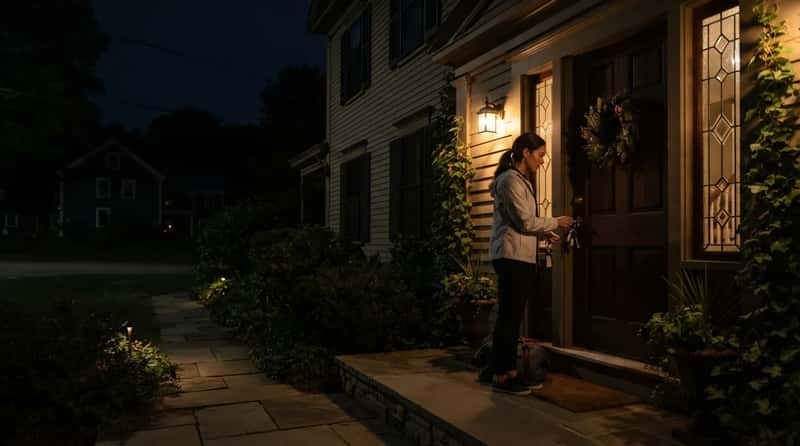
Planning to stay out late? Ask your innkeeper for the proper re-entry procedure. Some hosts wait up for every guest; most hand out a key or a door code instead.
Respecting that system means paying attention to quiet hours and locked-door policies too, because the inn is, at its core, someone’s actual home.
A hotel lobby runs 24/7. A B&B at midnight is a sleeping household – fumbling with an unfamiliar lock or knocking on the wrong door at 1 AM is genuinely mortifying for everyone involved.
Fast Facts
- Most hosts issue either a lockbox code, a spare key, or a marked doorbell for after-hours entry.
- Many inns set an informal courtesy window – often before 10 or 11 PM – for entry without a heads-up.
- Confirm the exact procedure at check-in, not the night you actually need it.
- A quick text letting your host know you’ll be back late is almost always welcomed.
That’s also why noise rules at a B&B get enforced far more seriously than anything you’ve ever seen in a hotel hallway. Which brings us to something most guests only learn the hard way.
#12 – The Noise Rules Are Real – And Enforced
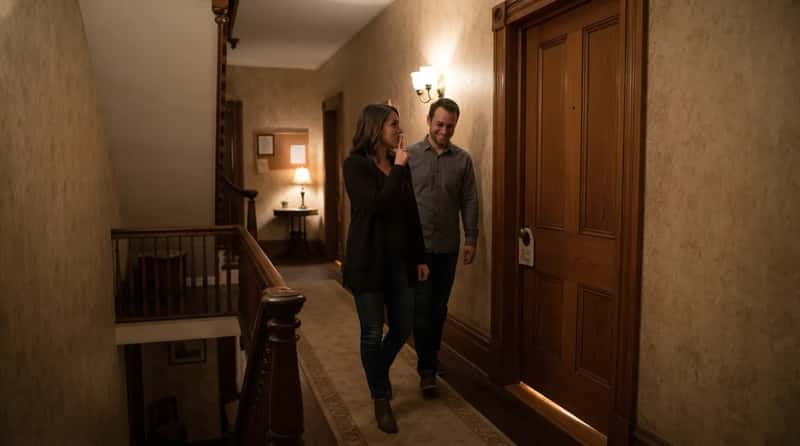
The inn is somebody’s home, so the television volume comes down and conversations get quieter once evening hits.
Noise policies aren’t just suggestions. Many properties issue one warning, and if it isn’t followed, guests can forfeit their entire stay and be asked to leave on the spot.
Walls in historic homes are thinner than most guests expect, and sound travels in ways a cookie-cutter hotel corridor never replicates. Someone might be sleeping on the other side of that wall – literally a few feet away.
Noise, handled. Now here’s a rule about your own belongings that catches almost every first-timer completely off guard.
#11 – You Can’t Treat the Linens Like Hotel Linens

Your innkeeper supplies the linens herself, and the supply is often limited. Stained sheets or towels may have to be thrown out entirely, so pack disposable makeup wipes and watch out for medications that could leave marks.
The same caution applies to furniture. Use coasters on what’s probably an antique side table, and tell your host immediately if something spills.
A big hotel replaces a stained towel without a second thought. A small B&B might only own six sets total, and careless treatment becomes a real financial burden on a tiny operation.
Linens, handled. But here’s one thing almost nobody thinks about until they’re sitting at the breakfast table wondering, silently, what just went wrong.
#10 – You Should Tell Them If You’re Skipping Breakfast
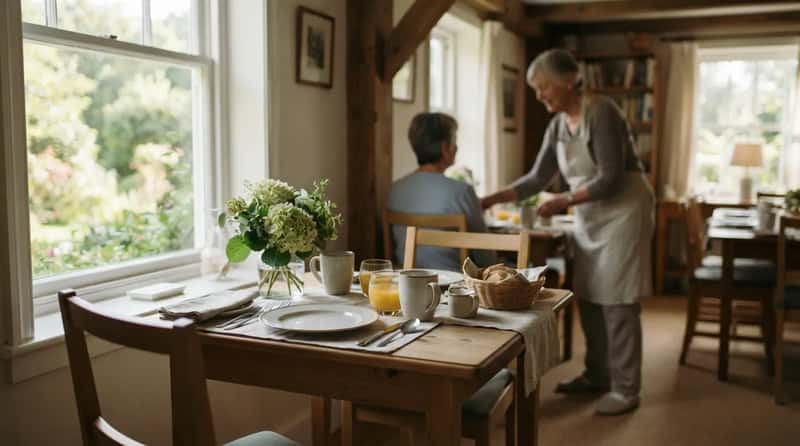
Most bed and breakfasts can only accommodate a handful of guests at once, so letting your innkeeper know you’re skipping breakfast keeps them from prepping food that just gets thrown away.
If you’re staying somewhere with a full restaurant and rotating staff, this matters less. At a small inn with limited seating and one cook, it’s considered basic courtesy.
It’s a two-minute conversation with a real impact. Innkeepers plan portions and timing around exactly how many people show up – a no-show wastes food and money at a scale hotels never have to think about.
Quick Compare
- Hotel breakfast: rotating staff, buffet-style, often open for several hours.
- B&B breakfast: one host, home-cooked, a single fixed seating.
- Hotel: skipping it costs nothing and requires no notice.
- B&B: skipping without a heads-up can waste a meal made specifically for you.
And speaking of breakfast – if you’re picturing a lazy sleep-in followed by eggs whenever you feel like it, prepare to be corrected.
#9 – Breakfast Has a Time Slot, and It Waits for No One

Your innkeeper serves breakfast during specific hours, and “room includes breakfast” doesn’t mean showing up at noon expecting a hot plate. Ask when the meal is served and plan to be there, not five minutes before the kitchen closes.
Most B&Bs serve at one set time, often in a dining room or outdoors when the weather cooperates, with homemade specialties you won’t find on a hotel buffet.
If breakfast starts at 8:30 sharp, aim to arrive a few minutes early. Respecting the schedule is what keeps the whole experience running smoothly for every guest in the house.
You made it to breakfast on time. Now here’s the social dynamic nobody warns you about before you even sit down.
#8 – The Breakfast Table Is a Social Event (Whether You Like It or Not)
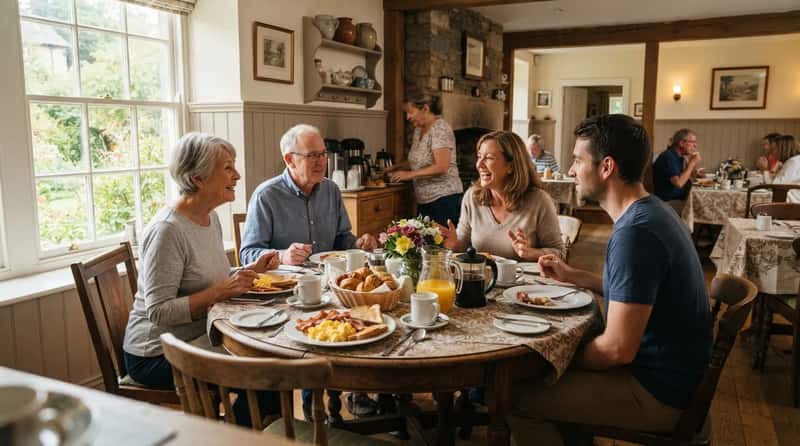
As one innkeeper put it, “part of the adventure with breakfast conversation is to see what happens with the combination of guests” – and strangers at a shared table can turn out to be fascinating.
Some innkeepers quietly advise steering clear of religion and politics with people you just met an hour ago. A little breakfast hobnobbing, though, is a genuinely great way to learn more about the place you’re visiting.
It’s also a myth that everyone has to eat together. Plenty of modern B&Bs offer multiple tables or separate dining nooks, so introverts can enjoy the same homemade food without the small talk.
Worth Knowing
- Many innkeepers seat guests together on purpose, hoping conversation sparks naturally.
- Religion and politics are generally considered off-limits with strangers you just met.
- Separate tables or private nooks are increasingly common for guests who prefer quiet mornings.
- A simple “good morning” is enough – there’s no obligation to make lengthy conversation.
Plenty of quiet travelers have loved a B&B without saying more than “good morning.” But knowing the social landscape ahead of time means you won’t be caught flat-footed when the couple across the table asks where you’re from.
#7 – Your Host Knows the Area Better Than Any Travel App
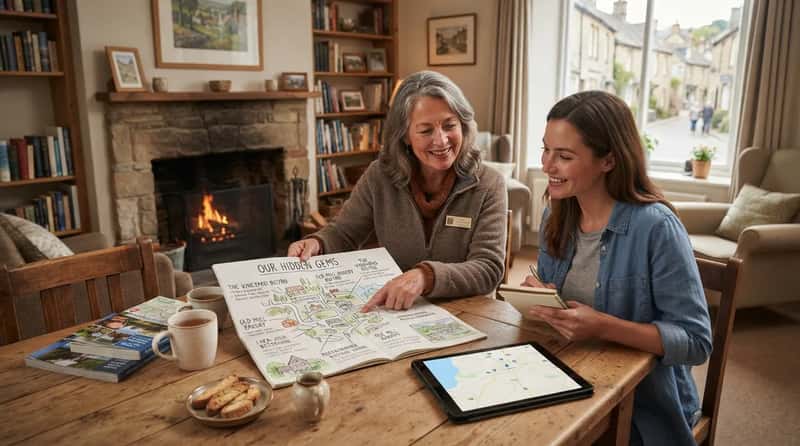
Most B&B owners are genuinely passionate about their town, and they love sharing what makes it special – local history, hidden restaurants, an event happening that very weekend that isn’t on any tourist site.
That local insight often turns into something closer to a personal concierge than a front-desk clerk.
If you’re unsure what to see or where to eat, just call and ask before you arrive. The recommendations that come back are rarely the ones you’d find on your own.
Use that knowledge – it’s one of the most underused perks in travel. But there’s another practical surprise waiting for you that has nothing to do with your host’s personality.
#6 – Not Every Room Has a Private Bathroom (Always Ask)
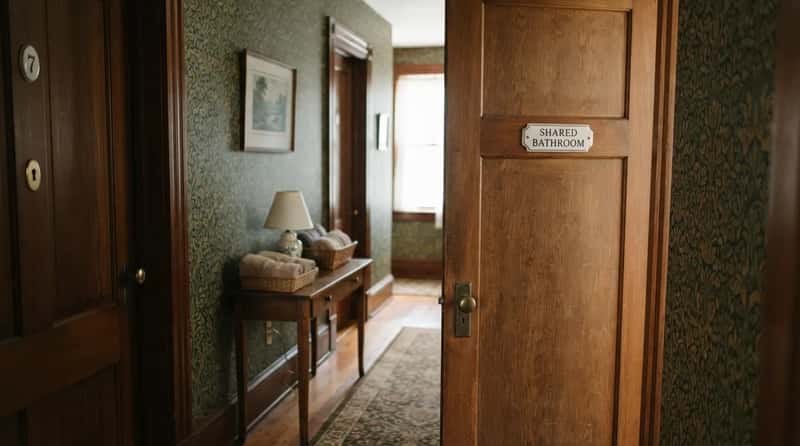
This genuinely surprises guests. At some B&Bs, especially older buildings, not every room comes with a private bathroom, and a shared hallway bathroom can be a dealbreaker if you don’t ask ahead.
Most modern B&Bs do include a dedicated bathroom, and sometimes it’s a genuine showpiece – not just a shower, sink, and toilet, but the kind of tile work that ends up in vacation photos.
One more detail worth knowing: rural properties sometimes run on well water, which can carry an unusual taste or smell that has nothing to do with cleanliness and everything to do with geography.
That’s a five-second question at booking that saves an enormous amount of awkwardness at 7 AM. And while bathrooms are a practical concern, the next one is far more invisible – and far more expensive if you get it wrong.
#5 – The Tipping Rules Are Genuinely Confusing
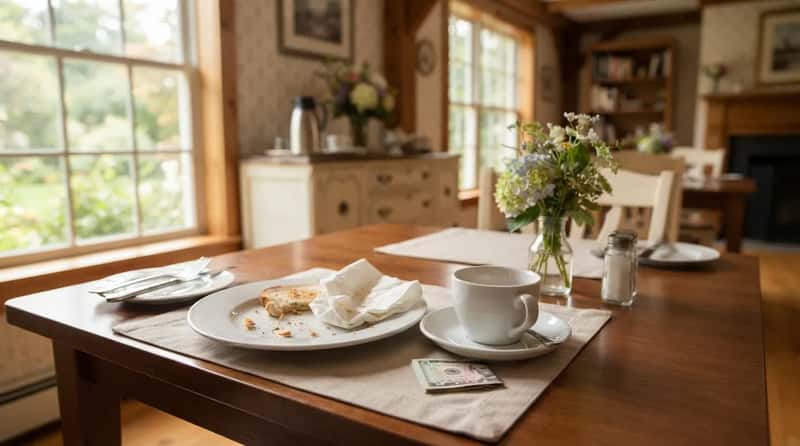
Tipping is a genuinely touchy subject at B&Bs. One hospitality consultant put it plainly: tipping your innkeeper directly is not expected, and it’s actually rare.
Tipping a housekeeper or staff member who goes above and beyond, though, is always appreciated – and if someone’s serving your breakfast table, a couple of dollars left behind is a fair gesture.
Remember that in a lot of cases, the innkeeper is doing all the cooking and cleaning herself. A tip in that situation isn’t just money – it’s real acknowledgment of the work.
Tipping, handled. Now here’s a surprise about the building itself that changes how the entire stay feels.
#4 – The Architecture and Decor Are Part of the Experience
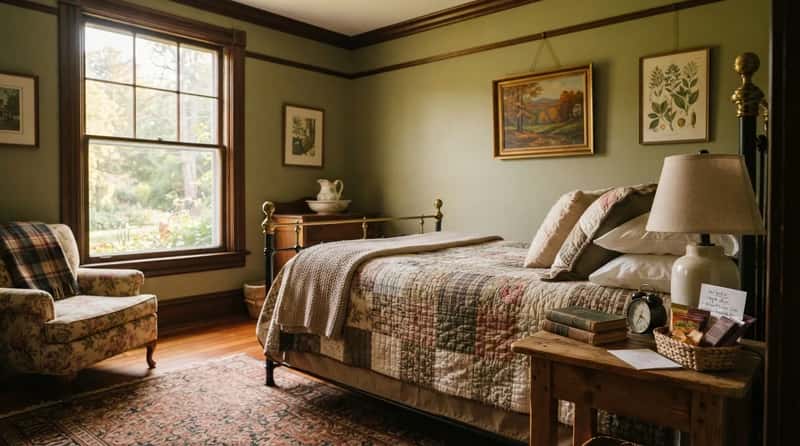
The first thing most guests notice about a B&B is how little it resembles a hotel – no sterile, cookie-cutter rooms, just a genuinely charming house or historic building where the owner went out of their way to make it feel lived-in.
Most B&Bs reflect the region around them: regional art on the walls, handmade furniture, snacks from a nearby vendor, architecture that ranges from a restored 1890s home to a rustic mountain lodge.
Decor is always a bit of a gamble, since every innkeeper has their own taste. Some lean into local history, others chase current design trends – but no two B&Bs ever look quite the same.
Why It Stands Out
- No two properties share the same look, unlike standardized hotel chains built from the same blueprint.
- Many B&B buildings are historic, with some dating back over a century.
- Furnishings often reflect local craftsmanship instead of mass-produced hotel decor.
- The building itself frequently becomes as memorable to guests as the stay.
That individuality is exactly what makes them memorable – but it also means researching your specific property matters far more than it ever would with a chain hotel. Which leads to what many repeat guests call the single most underestimated part of the whole experience.
#3 – Common Areas Are Shared – and That Changes Everything
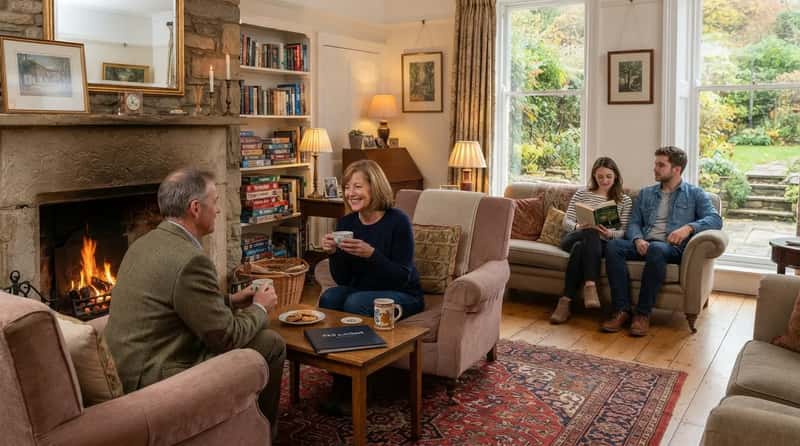
Most B&Bs have shared spaces – a living room, a patio, a garden – that belong to every guest on the property, not just you. If a couple is reading by the fireplace or sipping wine on the deck, the unwritten rule is to keep the volume down and the vibe peaceful.
Some hosts leave out board games, snacks, or books in these spaces. Use them freely – just remember the space was never entirely private to begin with.
Part of the charm is not knowing exactly how the day unfolds. Maybe another couple shares hiking tips over breakfast, or your host offers a surprise wine tasting nobody advertised on the website.
Common areas are one thing. But there’s a specific, practical rule about kids – and sometimes pets – that blindsides more travelers than almost anything else on this list.
#2 – B&Bs Are Often Not Ideal for Kids (and Sometimes Pets)
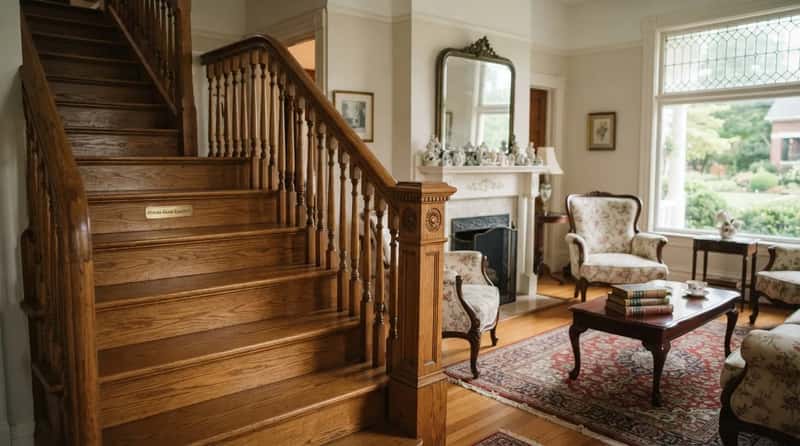
B&Bs tend to suit adults best – romantic getaways, anniversary trips, quiet couples’ weekends – so if you’re traveling with children, confirm the host actually allows them before you book anything.
Some properties state outright that kids under a certain age aren’t permitted at all, and even where they are, balconies and terraces built for adults may not be safe regardless of the official policy.
The same logic applies to pets. Many B&Bs ban them outright, sometimes because the owners keep their own animals, sometimes because antique furniture simply can’t survive claws and muddy paws. Check both policies explicitly before you pay a deposit, not after.
Everything up to this point has been real, practical, and genuinely useful. But none of it comes close to the one thing nobody tells you that actually changes how the entire stay feels.
#1 – A Great Stay Depends on Communication – Before You Even Arrive

The single biggest factor in a great B&B stay is communication, and it starts before you ever set foot on the property. Don’t hesitate to ask your innkeeper questions ahead of time.
Nut allergy? Need a white-noise machine? Have a mobility concern? Say so before arrival, so it’s already handled instead of you hunting for an outlet or dragging furniture around at midnight.
Most hosts reach out by email or phone before your stay to confirm the reservation and see if you have questions – that exchange is your best window to set expectations on both sides.
No hotel expects this kind of advance communication from you. At a B&B, it’s the entire foundation of a great stay – the guests who leave five-star reviews are almost always the ones who showed up informed, communicated early, and treated the property like what it actually is: someone’s home, generously shared with a stranger for a night or two.
The Bottom Line
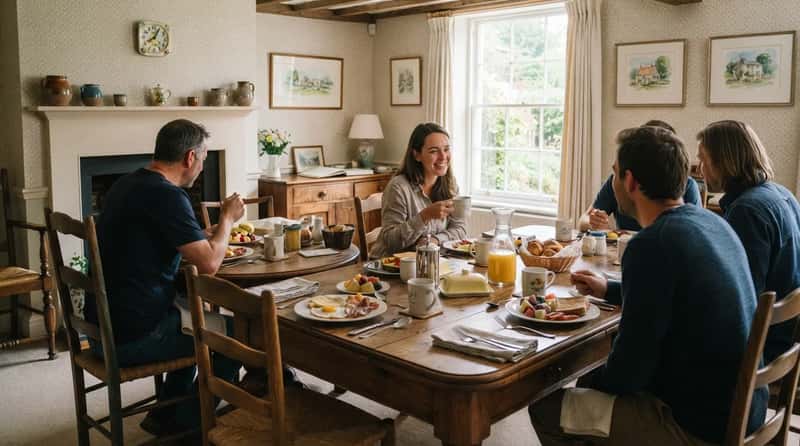
Staying at a B&B is genuinely one of the most rewarding travel experiences out there – but it rewards the prepared guest and quietly punishes the one who shows up expecting a hotel with better eggs.
The biggest surprises are almost never about the room itself. They’re the arrival time you forgot to confirm, the cancellation window that already closed, the breakfast seating you slept through, the quiet hour you broke without realizing it.
Communicate early. Read the policy before you book. Tip the person who goes above and beyond, and treat the place like what it actually is – somebody’s home.
Do that, and you’ll understand exactly why so many guests stop calling it a place they stayed and start calling it a place they go back to.