Most passengers assume the ship basically runs itself once it ties up to the dock – crew handles everything, the port handles the rest, and the gangway just drops like clockwork. That assumption is dead wrong. A single port call can involve more than 130 separate operations between ship and shore, and passengers never see a single one of them.
The person running most of that invisible machine isn’t anyone you’ll ever meet onboard. They were standing on the dock hours before you woke up, and they’ll still be filing paperwork long after your ship has sailed away. Here are 16 things port agents quietly handle that most passengers never even suspect exist.
16. Pre-Arrival Documentation Submitted Before You Wake Up
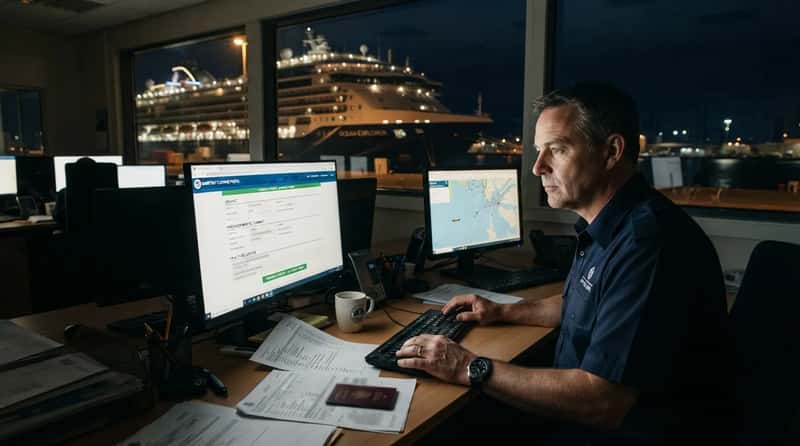
Vessel agents compile and submit required documentation to customs authorities 24 to 48 hours before arrival. Passengers are still asleep in their cabins when this paperwork battle is already won or lost. Miss a single document, and the entire ship can be held up before it even sees the dock.
Documents arrive at different moments, from different people, often across time zones. The agent is the only one who sees the full picture as it comes together. They’re reconciling information from the ship’s master, the cruise line’s back office, and multiple port authority departments – often in the middle of the night.
The agent double-checks that everything is current, legible, and accepted under local clearance rules. If something is expired or mismatched, the problem lands back on them – there’s no second office to escalate to. The agent fixes it, or the ship doesn’t clear.
What gets submitted in those pre-dawn hours is only the beginning – because the moment the ship reaches the harbor entrance, the real-time choreography begins.
15. Ordering the Pilot and Timing the Tugboats
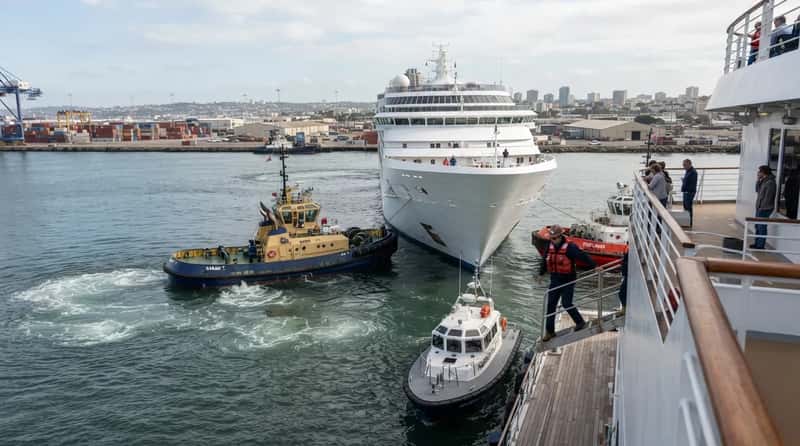
As the ship approaches port, the agent finalizes arrangements for its arrival – coordinating pilotage services for a safe route in, and lining up tugboats for the final approach to the berth.
A mismatch in timing between the pilot boat and the arriving vessel can throw off an entire port’s schedule. Passengers watching the tugboats nudge the ship into position have no idea those boats were contracted and timed by one agent, who might be juggling three other vessels that same morning.
The pilot – the local navigation expert who boards and guides the ship through the harbor channel – doesn’t just show up. Arranging the pilot and tugs is one of the core responsibilities baked into the job. Miss that window, and the ship sits at anchorage, burning fuel and burning time.
Once the vessel is safely tied up, the agent’s day is only getting more complicated – because now customs and immigration officials want to come aboard.
14. Managing Customs and Immigration Clearance Aboard the Ship
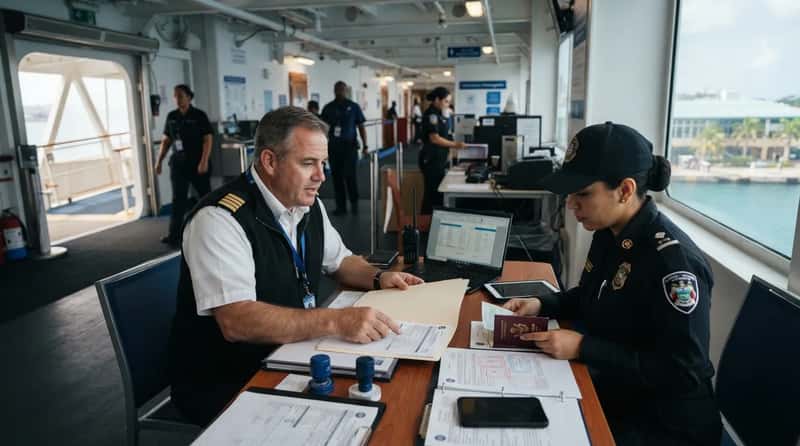
The moment the ship arrives, the agent manages customs and immigration clearance – submitting documentation, coordinating with officials, and making sure both vessel and crew are compliant.
Every port has different rules, and what clears easily in one country can trigger a full inspection in the next. An agent working a Caribbean itinerary might deal with five completely different regulatory regimes in a single week, each with its own forms and its own unwritten expectations.
Port health inspections – including checks for illness aboard – are part of this same clearance process. That means the agent is also quietly managing disease reporting obligations that passengers never hear a word about.
Clearing the ship legally is one thing. But the agent’s financial exposure from getting it wrong is something most people in the industry don’t fully appreciate.
13. Carrying Personal Financial Liability for Immigration Violations
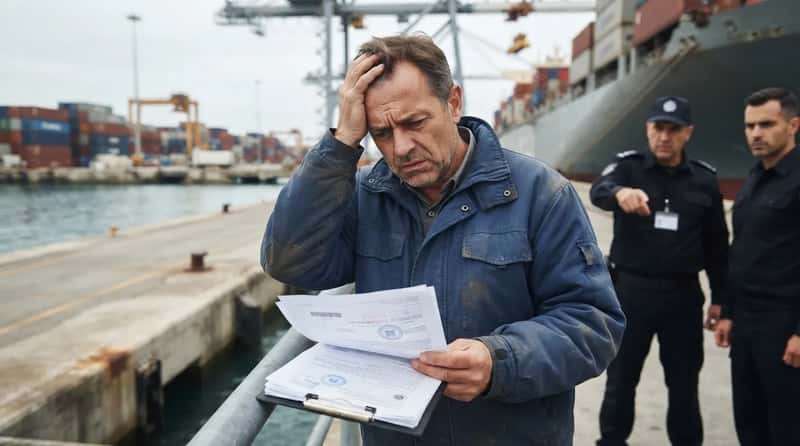
Failure to comply with immigration and customs rules can lead to penalties and charges against the port agent personally – and those penalties aren’t always recoverable from insurance.
This isn’t a theoretical risk. The shipowner is technically responsible for illegal immigration from the vessel, but in many jurisdictions authorities can also hold the agent financially liable if someone comes ashore without permission.
The financial skin in the game is real and personal, not corporate. An agent standing on a foreign dock is personally exposed to fines, legal proceedings, and reputational damage for something that happened on a ship they don’t own and never operated.
Financial exposure for immigration violations is serious enough – but stowaway situations add a layer of complexity that goes far beyond paperwork.
12. Coordinating Stowaway Discovery and Repatriation
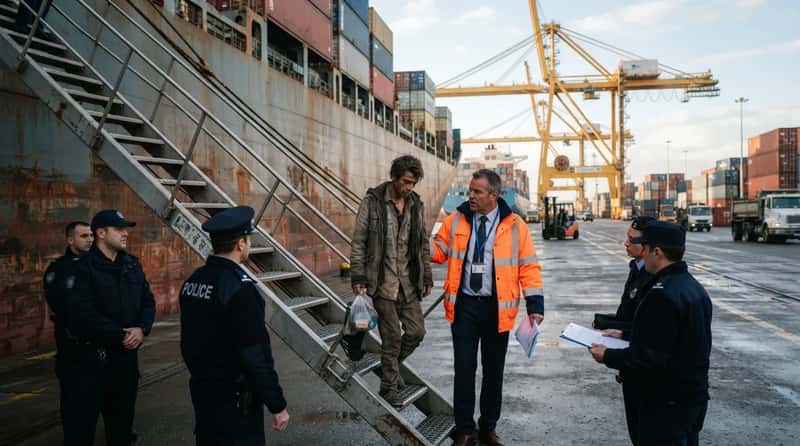
Stowaways are often discovered two or three days after a ship has already left port. When that happens, the company and the P&I insurer must be notified immediately.
The agent at the next port of call also has to be looped in fast, so they can prepare for identification and repatriation. In most cases, repatriation can’t even begin without that advance notice.
Repatriating a stowaway can be a brutally complex, expensive process involving masters, shipowners, port authorities, and agents – and the stowaway’s life can genuinely be at risk after days hidden without food, water, or air. The agent at the receiving port becomes the ground-level coordinator for a situation that’s part humanitarian crisis, part legal matter, and part operational nightmare, all while passengers are browsing shops a few hundred feet away.
Most passengers never suspect any of that is happening. They also don’t realize just how much effort goes into something as routine-sounding as where the ship parks.
11. Securing the Right Berth Before the Ship Is Even in Range
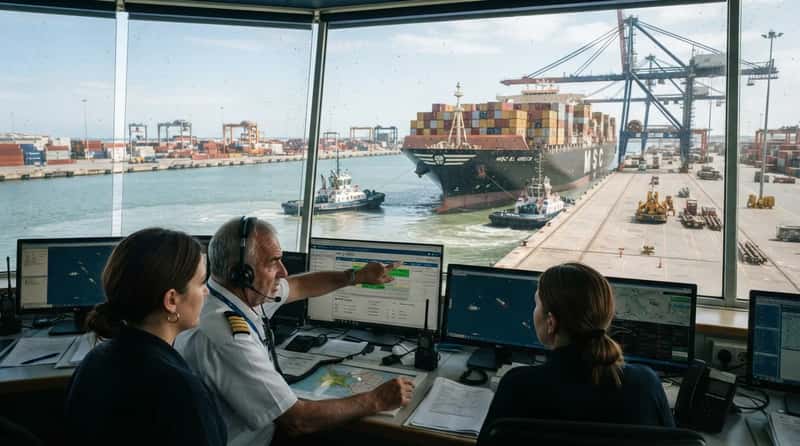
Agents work with ports to confirm ship call dates and set up berthing, fueling, provisioning, crew hotels, and every other service the vessel will need. Berth allocation at busy ports is a fiercely competitive process, and it starts long before the ship is anywhere near the harbor.
A wrong ETA, a wrong draft measurement, a missing certificate, or an overlooked terminal restriction can cause real delay and real cost. The agent has to know not just which berths are open, but which ones actually fit the vessel’s size, draft, and cargo needs.
Beyond the paperwork, the agent lines up pilots, tugs, and stevedores at the exact moment they’re needed. An idle pier can mean tens of thousands of dollars in demurrage charges per day – costs the cruise line eats, and costs the agent was hired to prevent.
At a Glance
- Berths are matched to a ship’s length, draft, and cargo or passenger type – not just availability
- Even a small ETA miscalculation can bump a vessel out of its reserved slot
- Pilots, tugs, and stevedores all have to be booked to align with the confirmed berth window
- Idle time at the pier converts directly into demurrage costs the cruise line pays
Getting the ship to the right berth at the right time is only half the equation. Keeping it fueled to leave on time is the other half – and that’s a surprisingly complex operation of its own.
10. Arranging Fuel Bunkering While You’re Ashore Sightseeing
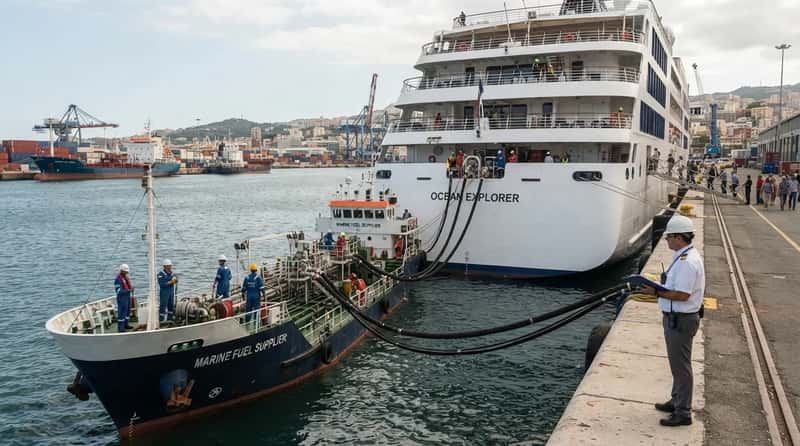
Agents coordinate fuel bunkering, fresh water, provisions, spare parts, and technical supplies – getting quotes, arranging delivery timing, supervising quality, and handling payment on the shipowner’s behalf.
Bunkering is the refueling of a ship, sometimes from another vessel right there in the harbor. For a large cruise ship, one bunkering operation can involve hundreds of tonnes of fuel, and it has to be timed precisely so it doesn’t collide with cargo operations or the ship’s departure window.
Agents have to apply to harbor masters at least 48 hours before bunkering begins. That window doesn’t pause for late paperwork, bad weather, or a competing ship’s schedule – so while your ship’s passengers are at a beach bar, the agent might be negotiating price, confirming quantity, and briefing the fuel barge crew in real time.
Fuel keeps the ship moving, but there’s another supply chain happening at the same time that passengers almost never think about – the one flowing off the ship instead of onto it.
9. Handling Sewage, Oily Waste, and Solid Garbage Removal
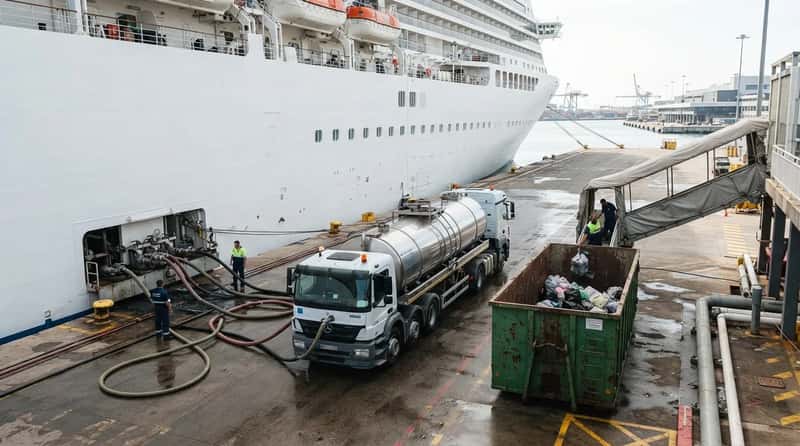
The agent often has to arrange a road tanker to collect black water, grey water, and oily slops. Whatever can’t legally be dumped at sea has to be landed and handled onshore, and the agent is the one who lines up that tanker and the skip near the gangway.
This waste system covers oily residue, sludge, bilge drainage, sewage, garbage, and cargo residue – all governed by the IMO’s MARPOL convention. MARPOL isn’t optional: violations bring major fines and can get a ship detained in port until it complies.
A large cruise ship can generate over 1,000 tonnes of sewage, garbage, and hazardous waste in a single voyage, and every bit of it has to be tracked, manifested, and routed through compliant contractors by the agent. Dumping any of it overboard within port limits is strictly forbidden.
Fast Facts
- MARPOL has six Annexes, each regulating a different source of ship pollution: oil, noxious liquid chemicals, packaged harmful substances, sewage, garbage, and air pollution
- Annex V prohibits the discharge of all plastics anywhere in the ocean, with no exceptions and no distance allowance
- Every ship above 400 GT has to carry a written Garbage Management Plan and a garbage record book logging every discharge or incineration
- Compliance is mandatory for all commercial ships flagged to any of the 156 contracting states
Getting waste off the ship is unglamorous work. What the agent does for crew members trying to get on and off the ship is considerably more human – and just as complicated.
8. Organizing Crew Changes, Visas, and Airport Transfers
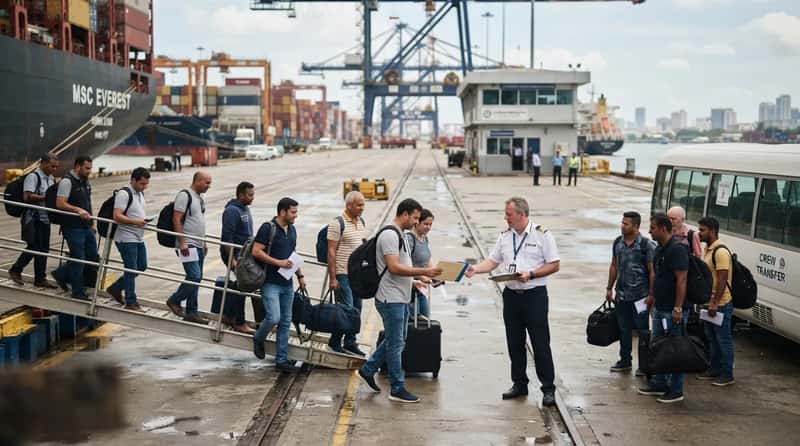
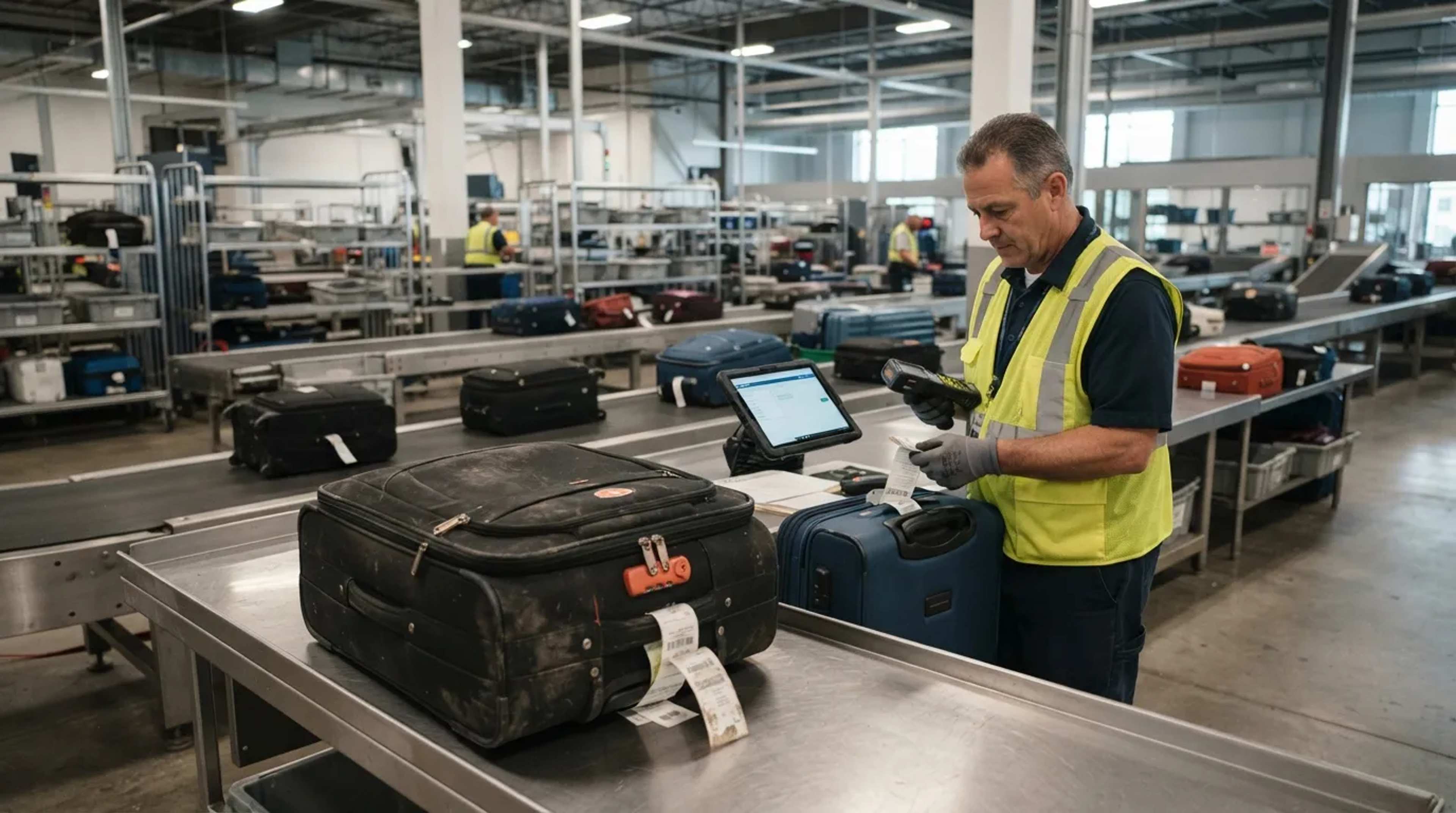
During a crew change, the agent arranges transport between the airport and the vessel, works with immigration and port authorities, clears crew baggage through customs, and makes sure everyone signing on or off completes clearance on time.
That includes booking hotel rooms, processing visas, and coordinating with manning agencies and consulates so rotations happen smoothly. The crew list has to clearly separate who’s arriving from who’s leaving, since immigration authorities often need separate paperwork for each group.
Incomplete or inconsistent crew documents are one of the most common causes of delay at the port gate. And a delayed crew change doesn’t just inconvenience seafarers – it can hold the whole ship at berth past its departure window, cascading into missed schedules at every port down the line.
Managing the crew moving through port is one thing. But the agent also acts as a lifeline for passengers stranded ashore – a role most travelers have genuinely never considered.
7. Acting as the Emergency Contact for Passengers Left Behind
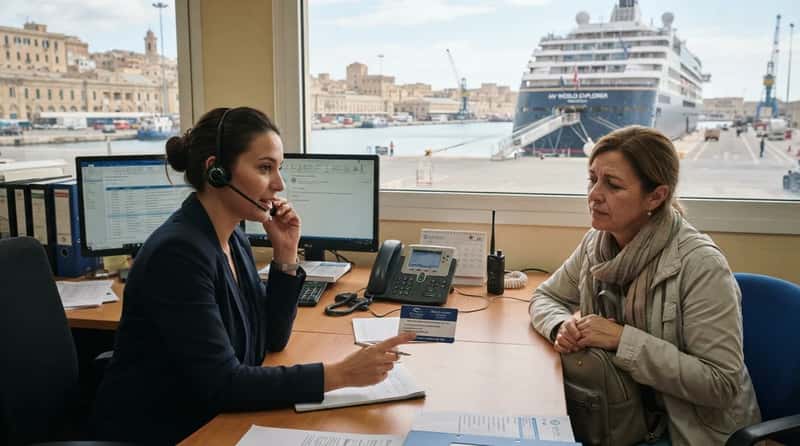
Here’s a duty that touches passengers directly: the ship’s agent is your emergency contact with the vessel if something goes wrong while you’re off exploring on your own.
Picture it – you’re wandering a port on your own, a medical emergency happens, and you end up in a local hospital. How do you actually reach your cruise line? In most cases, the answer is a phone number printed on the back of your shore excursion card, a number the vast majority of passengers have never once looked at.
If a passenger misses the ship entirely, the port agent becomes the first operational contact between that stranded traveler and the cruise line. They arrange local transportation, communicate with the ship’s officers, and help figure out whether the passenger needs to catch up at the next port. It happens more often than cruise lines like to advertise.
Stranded passengers are stressful. What the agent manages quietly on the financial side is a different kind of pressure – and it runs through every single port call.
6. Paying Every Port Bill and Reconciling the Disbursement Account
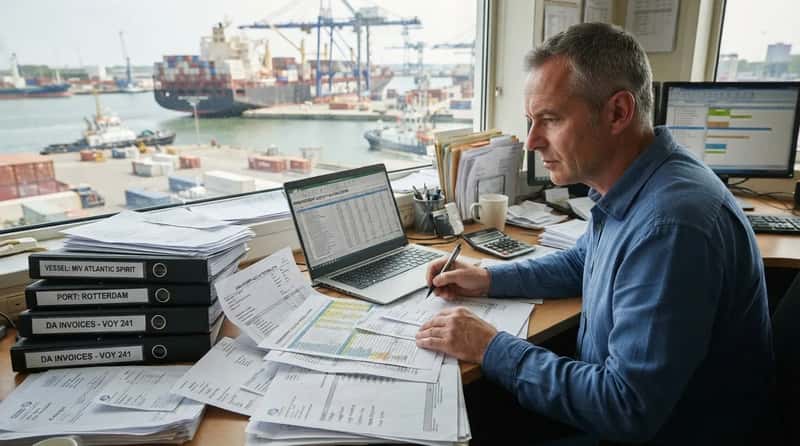
Every port stop generates a disbursement account – an itemized ledger of port dues, pilotage, towage, berth charges, cargo handling, customs fees, crew costs, supplies, repairs, and agency fees, all backed by supporting invoices.
The agent is often advancing this money out of their own accounts first – paying port authorities, fuel suppliers, stevedores, and waste contractors – and only getting reimbursed after everything reconciles. A mistake in that account is a mistake the agent personally has to answer for.
In a busy season, one agent might be juggling disbursement accounts for a dozen different vessels at once, each with its own vendors, currencies, and payment terms. It’s essentially running a small finance operation while simultaneously coordinating a dozen separate logistics streams.
The financial role is largely invisible to everyone except the shipowner’s accounting department. The security coordination the agent handles is invisible in a completely different – and higher-stakes – way.
5. Coordinating ISPS Security Compliance and Port Access
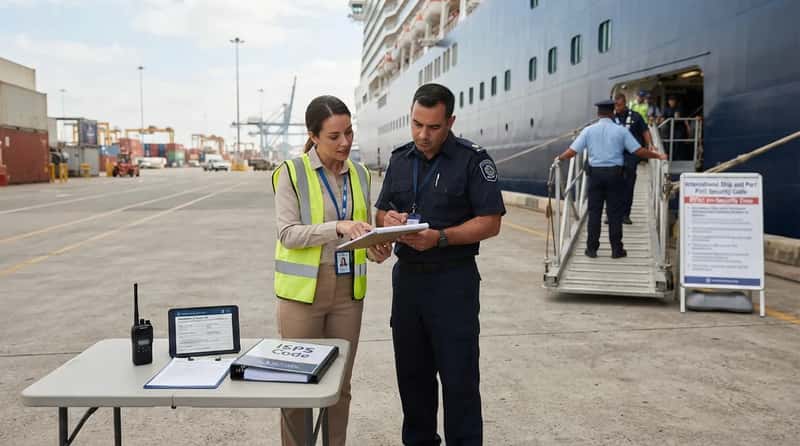
Every ship has to be formally “cleared” by the local maritime authority under the International Ship and Port Security Code, and the agent is the one who makes that happen.
Introduced after 2001, the ISPS Code mandates strict security protocols for every interaction between a ship and a port facility. The agent is the coordinating link between the vessel’s security officer and the port’s security officer, making sure declarations of security are exchanged and the ship’s security level actually matches the facility’s.
Failing an ISPS inspection can get a vessel barred from the port entirely – a disaster for a cruise itinerary that can’t just be rerouted on short notice. The agent is the one making sure every declaration and access log is in order long before an inspector ever sets foot on the gangway.
Worth Knowing
- The ISPS Code entered into force on 1 July 2004 under SOLAS Chapter XI-2, as a set of measures to enhance ship and port facility security
- It applies to passenger ships of any size, plus cargo ships and high-speed craft of 500 gross tonnes and upwards
- The Code has two parts – one mandatory (Part A) and one recommendatory (Part B)
- Every ship must have a Company Security Officer working alongside a Ship Security Officer for security purposes
Security compliance protects the vessel from being detained. Spare parts logistics protects it from breaking down completely – and that’s a story passengers never hear about at all.
4. Sourcing Emergency Spare Parts and Technical Repairs Under Time Pressure
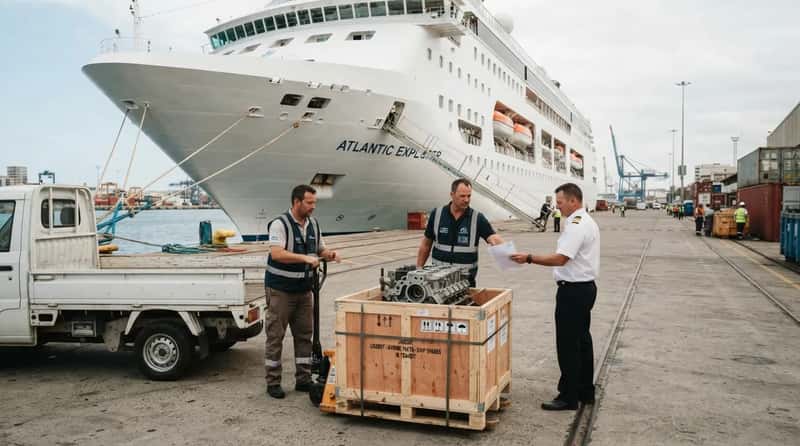
When a technical fault develops at sea and the chief engineer needs a replacement part waiting dockside within six hours of arrival, it’s the agent who makes it happen.
They track down local suppliers or expedited freight, clear the part through customs as ship’s stores, and get it to the gangway – all against the clock of the ship’s next scheduled departure.
This means knowing which local shipyards, engineers, and marine electricians can respond on short notice, and having relationships strong enough that the ship isn’t treated as a low-priority walk-in. A cruise line that misses a sailing because a part didn’t show up on time doesn’t call it a logistics failure – they call it a public relations crisis. The agent is the person standing between that part and the headline.
Technical emergencies test an agent’s local knowledge and vendor relationships. But a pandemic-era scenario revealed just how extraordinary those relationships sometimes need to get.
3. Getting Crew Members Home During Global Crises
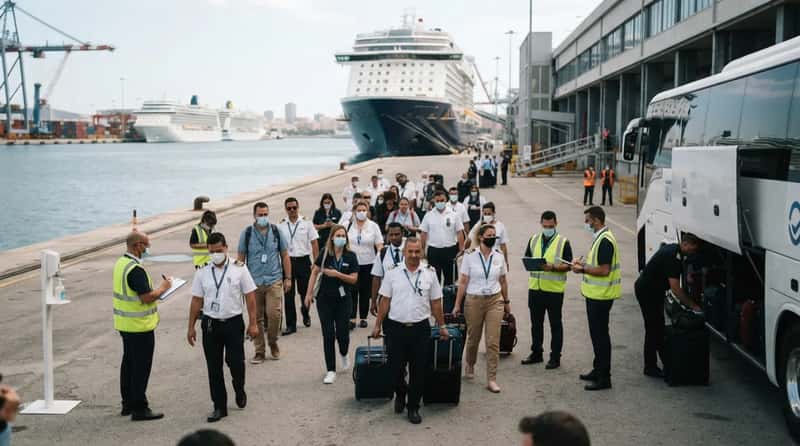
When COVID-19 shut down cruising almost overnight, port agents worked with cruise lines, embassies, and local health officers to get stranded crew members home. That meant chartering flights and coordinating with rival cruise lines and nearby ships just to get people seats.
At the height of the pandemic, dozens of vessels sat at anchor with thousands of crew stuck onboard – unable to disembark because borders were closed, unable to stay indefinitely because food and fuel were running out. Port agents in every affected region became de facto crisis coordinators, negotiating with health ministries and routing people through whatever border crossings remained open.
That crisis added new pre-arrival obligations that never fully went away – testing requirements, vaccination verification, health declarations. Port agents are the operational backbone that holds the entire maritime supply chain together when everything else breaks down.
Crisis management in extremis is one measure of what port agents are capable of. Their relationship with the ship’s master – built on daily, unglamorous routine – is what makes that crisis capacity possible in the first place.
2. Visiting the Master Twice a Day and Delivering the Things That Matter
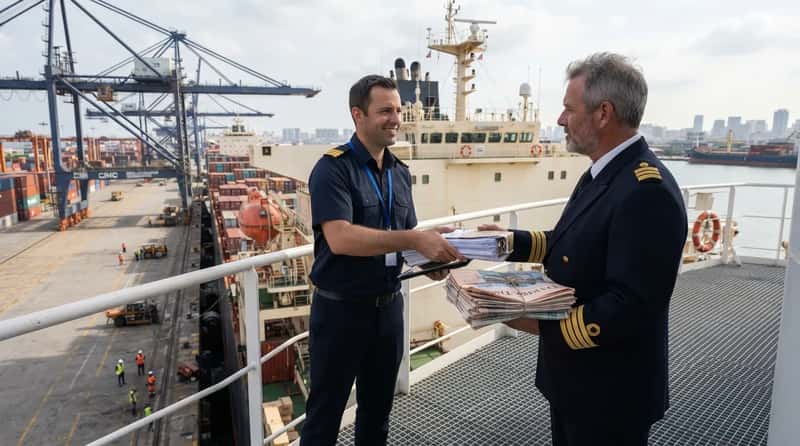
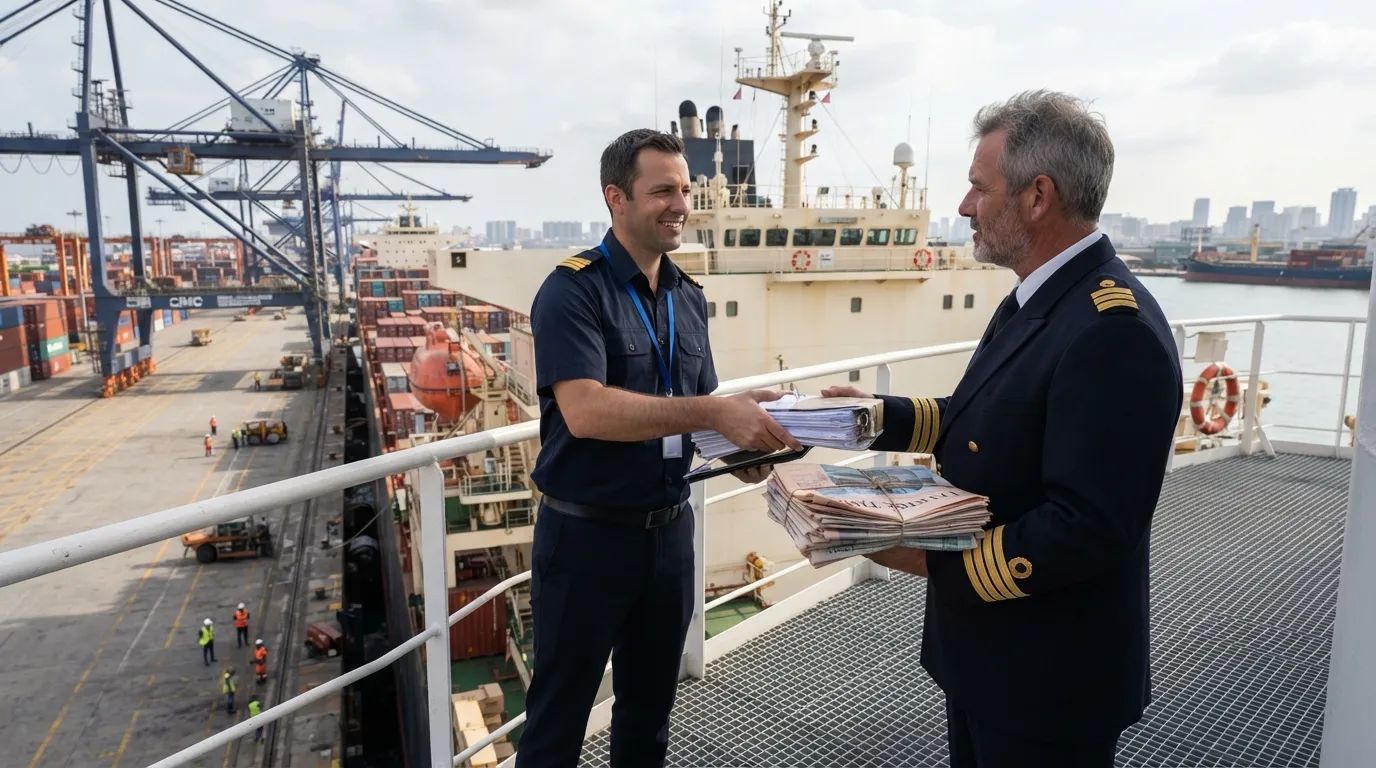
A good agent is on the wharf the moment the ship arrives, no matter the hour. They may not board until customs, immigration, and port health have cleared the vessel – but once they do, they hand the master every document needed and walk through everything ahead: cargo work, medical arrangements, bunkering, stores, waste removal.
They bring newspapers, mail, and magazines. They notify the owner the ship has arrived. And they check in with the master regularly, sometimes visiting the ship twice in a single day.
That rhythm matters more than it sounds like it should. It’s the channel through which the master flags overnight problems, confirms suppliers are on schedule, and gets whatever the ship needs next. For a crew that’s been at sea for weeks, that twice-daily visit is also their most reliable connection to the shore-side world.
Everything above is remarkable – but there’s one final role that makes the port agent genuinely indispensable, and it’s the one that connects them to every passenger onboard without a single passenger ever learning their name.
1. Holding the Entire Port Call Together as the Single Point of Contact for 130+ Operations
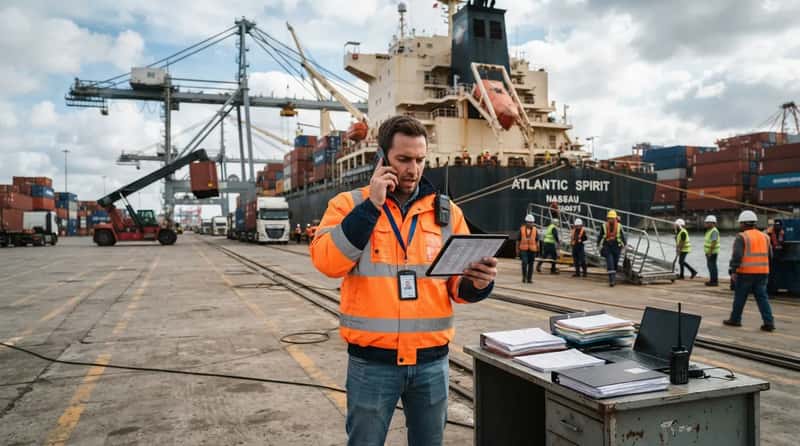
No commercial vessel can self-handle its own arrival, stay, and departure at a major port. Behind every clean port call – every smooth berthing, every successful cargo operation, every on-time departure – is one agent quietly coordinating dozens of moving parts.
A single call can involve more than 130 distinct operations between vessel and shore, and the agent is the one person who touches nearly all of them. They represent the shipowner’s interests in a foreign port, acting in the owner’s name and at the owner’s expense, answering to a boss who usually isn’t even in the country.
Every vendor, every official, every service provider, every small crisis routes through this one person. When the gangway drops smoothly, the ship departs on time, and nobody onboard notices anything at all – that’s the port agent doing the job perfectly.
And that, in the end, is the strange truth about the job: the better a port agent is, the less anyone will ever know they existed.
The Bottom Line
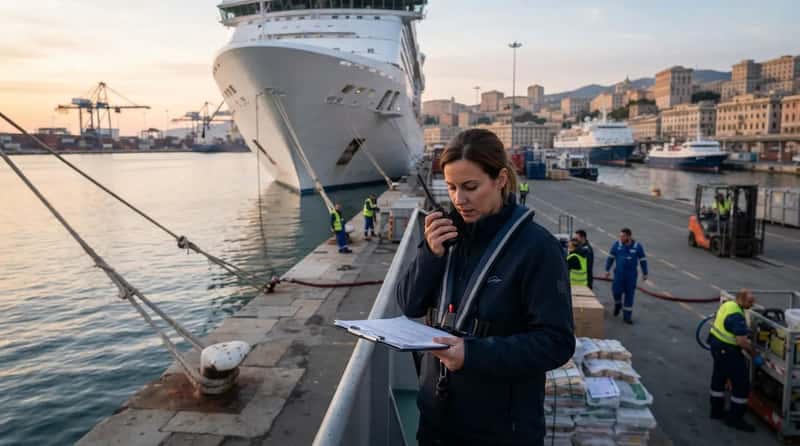
Port agents are the invisible professionals who make every port call actually function. The passenger experience runs entirely on their work, and most passengers will never learn their name.
They submit documentation before dawn, secure the berth, order the pilots, clear customs and immigration, arrange fuel and waste removal, coordinate crew changes, and source emergency spare parts under brutal deadlines. They stand ready to help any passenger who misses the ship, and they carry personal financial liability when compliance goes wrong.
They chartered flights during a global pandemic. They visit the master twice a day and bring the mail. A single port call involves more than 130 distinct operations, and one person holds nearly all of them together.
Most travelers will sail dozens of cruises without ever learning this role exists – which, if you think about it, means the agent did the job exactly right. Did we miss a responsibility that surprised you? Drop it in the comments.