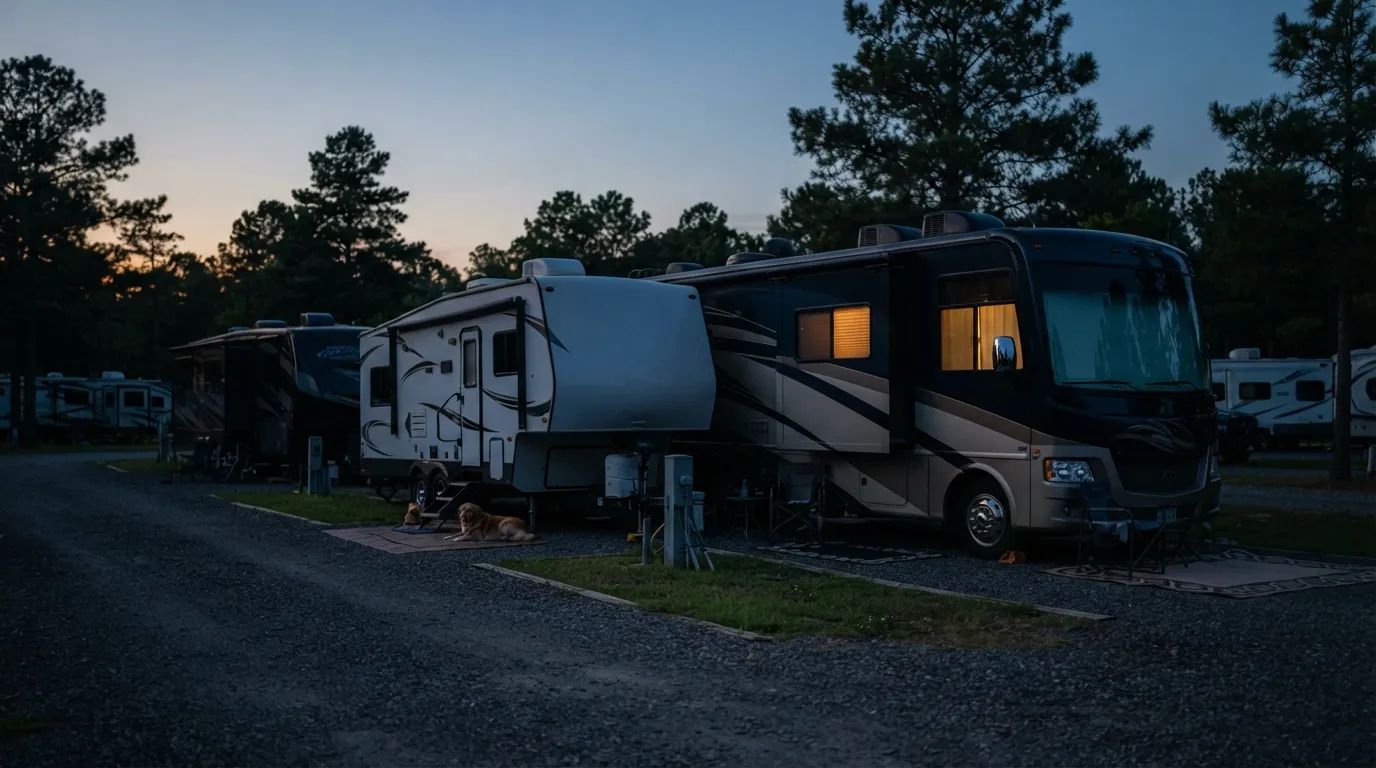
Most first-timers assume the scary part of RVing is the truck, the hitch, or the mountain pass. Ask the person at the campground office window and the worry list sounds different: the power box, the tree branch, the garden hose, the awning left out overnight. The costly mistakes tend to happen in the first twenty minutes on the site.
Check-in takes about three minutes. The briefing a manager would really like to give you would take thirty, and most of it never makes it onto the map they hand you. Here are 17 of those briefings, counting down to the one question that unlocks all the rest.
#17 – Arriving After Dark Turns Check-In Into a Guessing Game
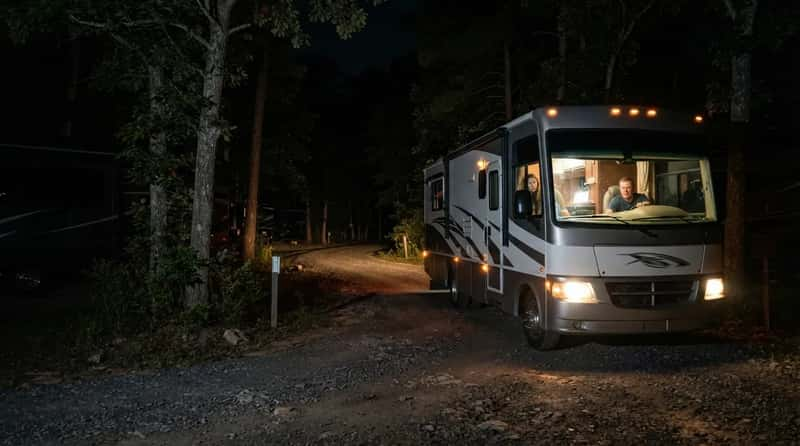
Rolling in at 9 p.m. on a “whenever we get there” plan is how a lot of first trips start badly. Check-in often opens mid-afternoon, and many office windows close well before dark. Some parks have an after-hours arrival process, like a posted packet and a lit map, but plenty don’t.
Park staff generally prefer a quick phone call over a mystery rig creeping in after dark. Picture narrow lanes, unlit loops and a site number you can’t read from the driver’s seat. Checkout is often late morning to noon, so the clock cuts both ways. One call before you leave home tells you where to go and who to look for.
At a Glance
- Check-in often opens in the mid-afternoon.
- Many offices close well before dark.
- Some parks leave a packet and a lit map. Plenty don’t.
- Checkout is often late morning to noon.
But the next briefing is about a number most newcomers get wrong before they even book…
#16 – The Length on the Listing Isn’t Your Real Length
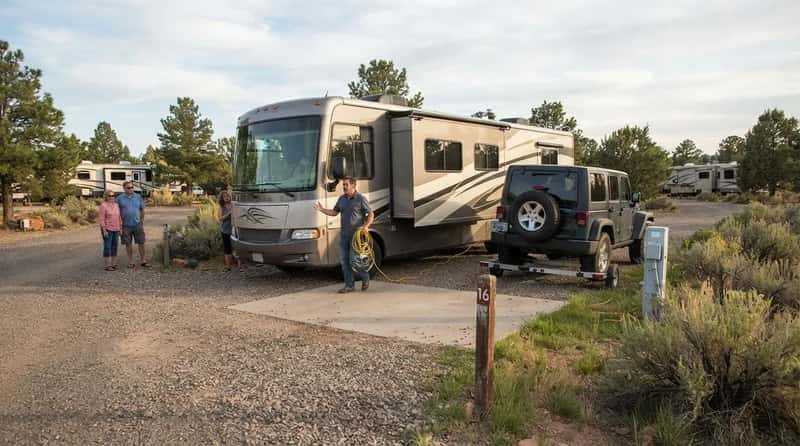
A site that “fits 35 feet” may not fit your 35 feet. Rig length on a spec sheet usually leaves out the hitch, a rear bike rack, or a spare tire mounted on the back. A hitch tongue and a rack can add several feet to what actually has to sit on that pad.
Slide-outs add width, and awnings add more once they’re open. Ask whether the listed length means the rig alone or the rig plus the tow vehicle. Measure your setup tip to tail at home, because five minutes with a tape measure beats a tense reshuffle at the gate.
But even a perfect fit can go wrong because of something hanging over your head…
#15 – The Pretty Shade Tree That Targets Your Roof
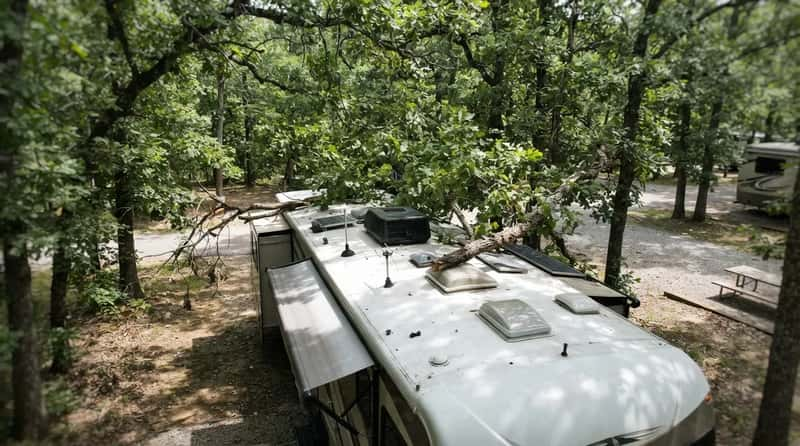
From the driver’s seat, a leafy site looks like a postcard. From the roof, it looks like an obstacle course. Air conditioner shrouds, vent covers, satellite domes and antennas all sit higher than most people expect.
A branch you never noticed from the ground can crack a roof vent cover in a single pass. Walk the site on foot before you pull in. Look up, then trace the path your slide-outs will take. Dead limbs are a separate worry on windy days, so check what’s hanging above your bed, too.
Once you’re past the trees, the very next step decides whether your fridge works…
#14 – The Tilt That Quietly Wrecks Your Refrigerator
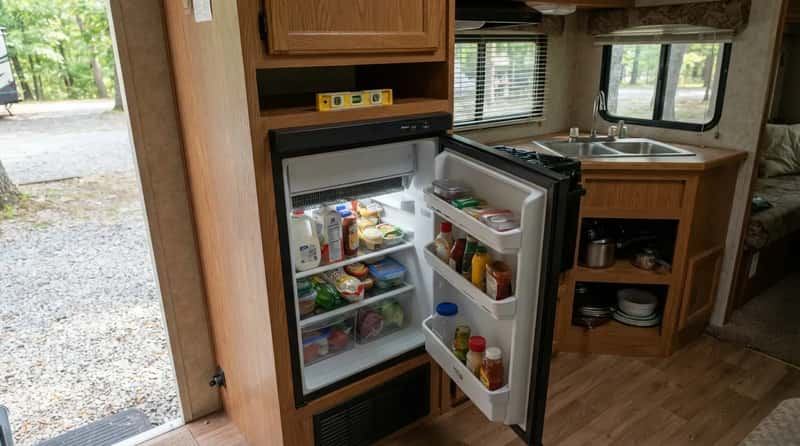
Newcomers level the rig for comfort. Experienced campers level it for the appliances. Many RV refrigerators use absorption cooling, and they’re designed to run on a reasonably level surface.
Chock the wheels first, then unhitch, then level side to side, then front to back. A badly tilted RV can leave an absorption fridge struggling to cool, and you may not find out until the groceries are warm. Check your owner’s manual for your fridge’s tolerance. A cheap bubble level is a tiny habit with a big payoff.
Now for the part that surprises almost everybody: the power box next to your site isn’t always trustworthy…
#13 – The Power Pedestal That Looks Fine but Isn’t
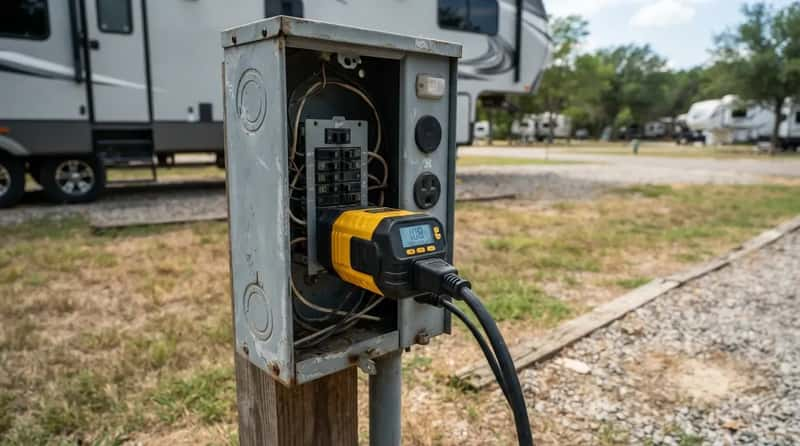
That metal pedestal has seen hundreds of plugs. It can look perfect and still be wired wrong, or deliver weak power when the park is full. Turn the breaker off before you plug in, then switch it on and check the reading.
Miswired or sagging power is a known risk, which is why many RV technicians recommend a surge protector with a diagnostic display. If the pedestal is bad, tell the office instead of working around it. A protector costs far less than replacing an air conditioner or a converter. Some campers call it overkill, but most technicians call it cheap insurance.
And even with clean power, there’s a limit most guests hit within minutes…
#12 – The Adapter Changes the Plug, Not the Power
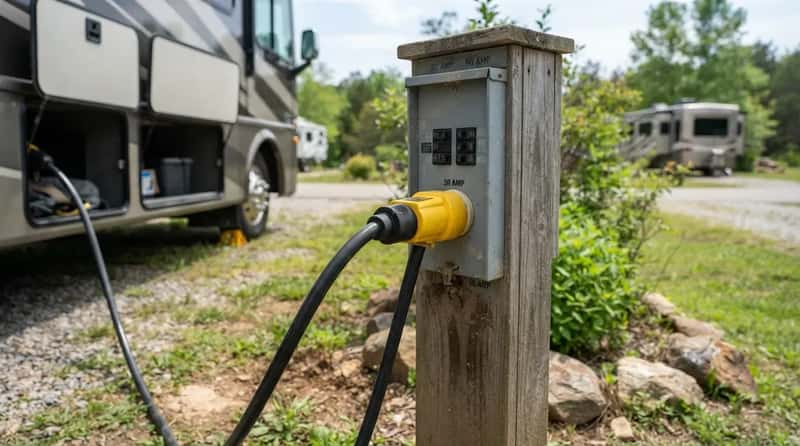
A 30-amp rig and a 50-amp rig aren’t just different plugs. They’re different power budgets. Adapters let you connect to the other type of outlet, but you only get what your rig’s own cord and panel can handle.
A 50-to-30 adapter doesn’t give you 50 amps of anything. On a 30-amp hookup, a roof air conditioner, a microwave and a hair dryer each take a big share. Run them together and the breaker trips, usually in the middle of dinner. Stagger your appliances, especially in summer.
Power isn’t the only thing that can overload your rig, though. Water can, too…
#11 – The Water Pressure That Can Burst a Pipe While You Hike
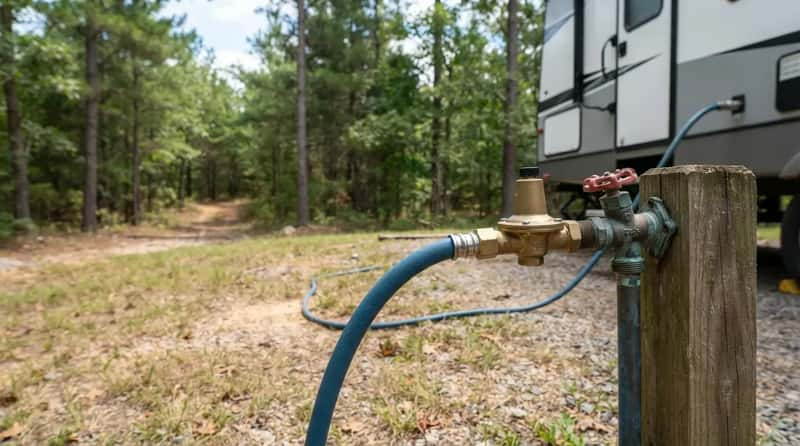
Campground water pressure varies from site to site. Many RV plumbing systems are built for far less pressure than a typical house line. Regulators commonly cap pressure around 40 to 50 psi.
A high-pressure surge can burst a fitting behind a wall while you’re out on the trail. Put the regulator right at the spigot, and open the water slowly. Plenty of RVers leave the water connected all day. Plenty of experienced campers argue that shutting it off when you leave is the safer habit.
Quick Compare
- Water left on: Convenient, with no fuss when you come back, but a failed fitting can leak for hours unnoticed.
- Water shut off when you leave: Takes seconds, and the worst-case leak is limited to what’s in the lines.
Next up: a small color choice that matters more than it looks…
#10 – Why the Hose Is White (and Why It Must Never Meet the Sewer Gear)
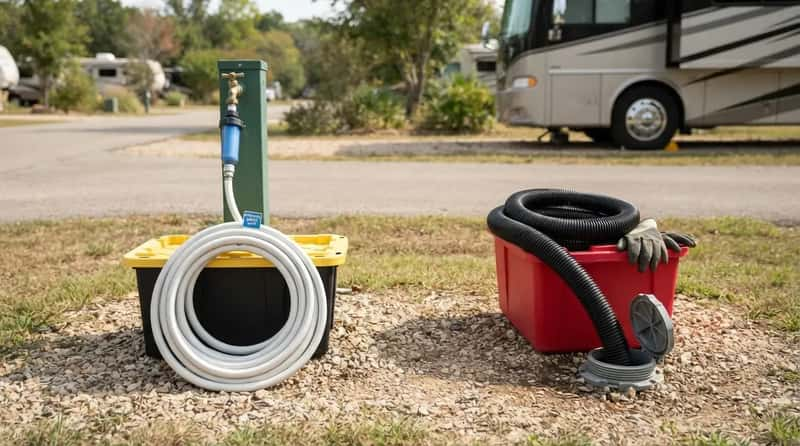
That white hose isn’t a style choice. Drinking-water hoses are made and labeled for drinking water. Many standard garden hoses aren’t, so check the packaging before you use one.
Water that sits in a hose in direct sun can get warm and taste like plastic. Keep your fresh-water hose far from the sewer connection. Use gloves for dump duty and store that gear separately. Coil each hose where it can’t touch the ground near the drain.
And speaking of the sewer side, the most common newbie mistake lives right there…
#9 – The Sewer Valve You Should Leave Closed
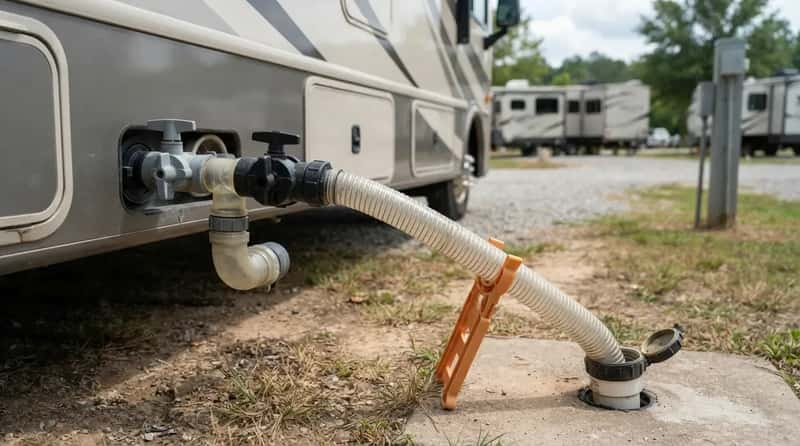
Hooking up the sewer feels like finishing a chore, so newcomers open the black-tank valve and leave it open the whole stay. Technicians commonly warn that this lets liquid drain away while solids pile up behind it. The result is a clog nobody wants to discuss.
The common advice is to keep the black valve closed until the tank is about two-thirds full, then dump it all at once. Dump black first, then gray, so the gray water rinses the hose. Never let gray water run onto the ground, because most parks prohibit it and some will fine you. Use a hose support so the line slopes downhill.
After the dirty work, you’ll want to get online, and here’s where expectations collide with reality…
#8 – The Wi-Fi Promise That Disappoints Almost Everyone
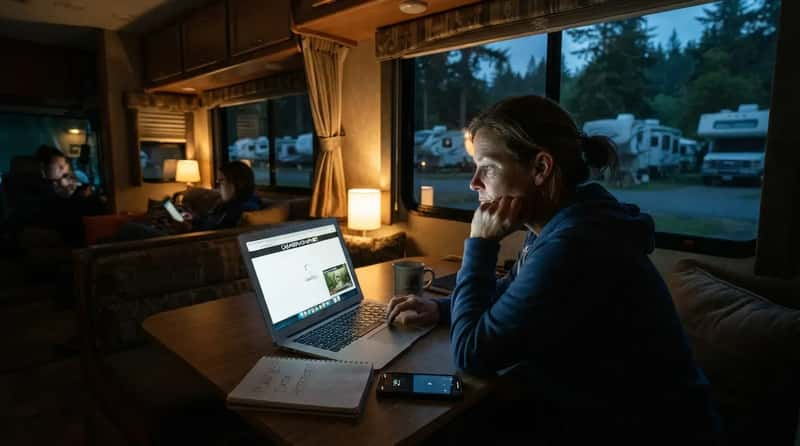
“Free Wi-Fi” on a campground listing can mean anything from solid to barely there. The network is shared by every site in the park. When everyone starts streaming at 8 p.m., it crawls.
This matters more now that many people want to work from the road. Plenty of campers argue park Wi-Fi is the most oversold amenity in the industry. Check your carrier’s coverage before you book, and download what you need ahead of time.
Then there’s the thing that goes wrong once the sun goes down, and it’s all about sound…
#7 – The Quiet Hour Rule That Ends Friendships Before They Start
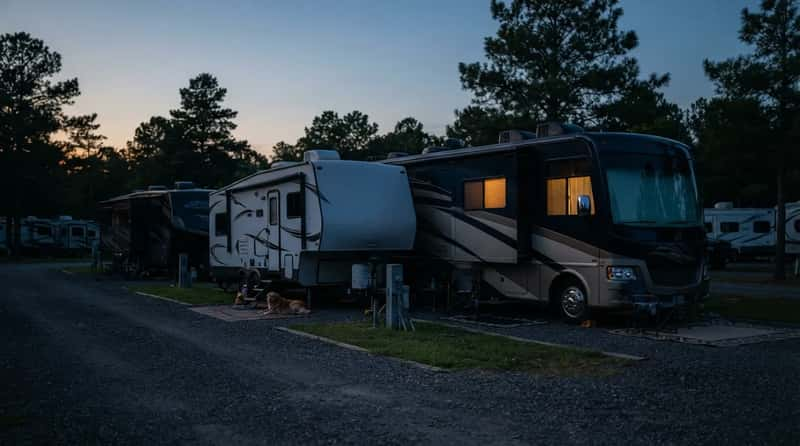
Quiet hours are often listed as something like 10 p.m. to the morning, but check your park’s exact times. Sites sit close together, and RV walls are thin. A door slam, a barking dog or an outdoor speaker travels farther than you’d think.
Some parks restrict generator use to set hours, and some ban generators outright. Ask at check-in, not at midnight. Pets fall under the same rules for leashes and barking. Your neighbors may be asleep at 8 p.m. because they’ve been up since 4.
Worth Knowing
- Quiet hours differ from park to park, so ask for the exact times.
- Generator rules range from limited hours to a full ban.
- Outdoor speakers carry farther than most people expect.
- Barking and leash rules apply to pets day and night.
The loudest problem isn’t always at night, though. In daylight, it’s about how fast you drive…
#6 – Why the Speed Limit Is Lower Than Anything You’ve Ever Driven
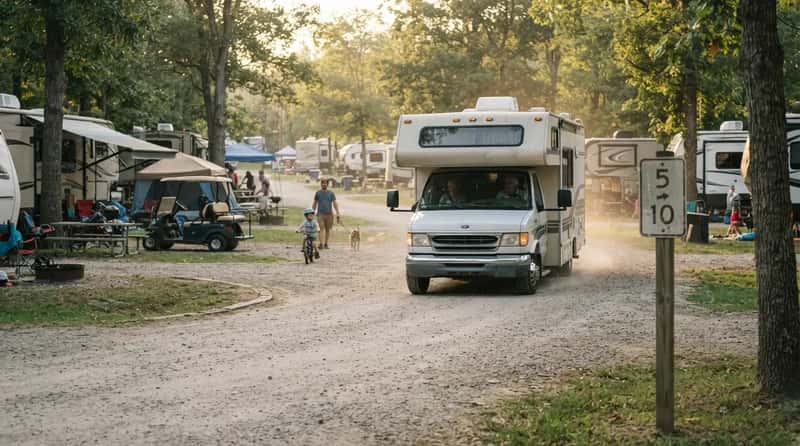
Park roads are often posted at 5 to 10 mph, and it sounds almost silly. But there are no sidewalks. Kids on bikes, dogs on leashes, golf carts and toddlers all share the same lane.
A long rig also swings its tail wide on turns, often into spaces the driver can’t see. Slow down for corners and keep checking the mirrors. Dusk is the riskiest time, when people are wandering back from the fire ring or the restrooms.
But the next rule involves something many people toss in the truck bed without a second thought…
#5 – The Firewood From Home That Can Carry a Hidden Invasion
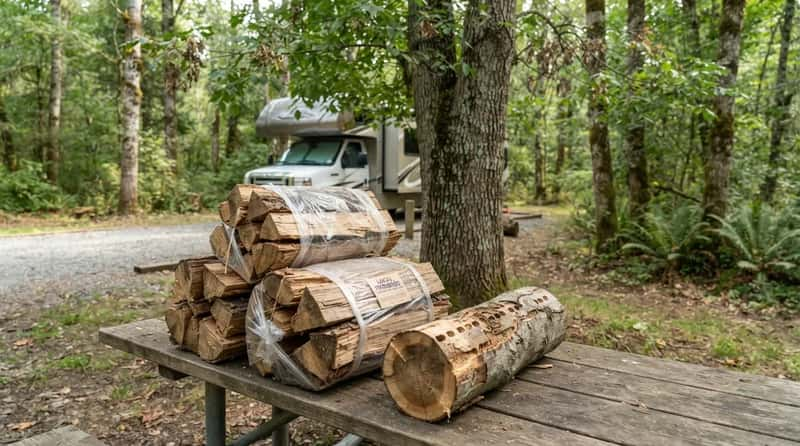
Hauling a bundle from home feels thrifty. It’s actually a way to carry insects and diseases across state lines. Many states and parks restrict outside firewood for exactly that reason.
Firewood can look clean and still hold insects and disease you can’t see. Buy it where you’ll burn it, or buy heat-treated wood. Don’t take leftovers home or to the next park.
And once that wood is burning, there’s one more step that people skip…
#4 – The Campfire That Isn’t Actually Out
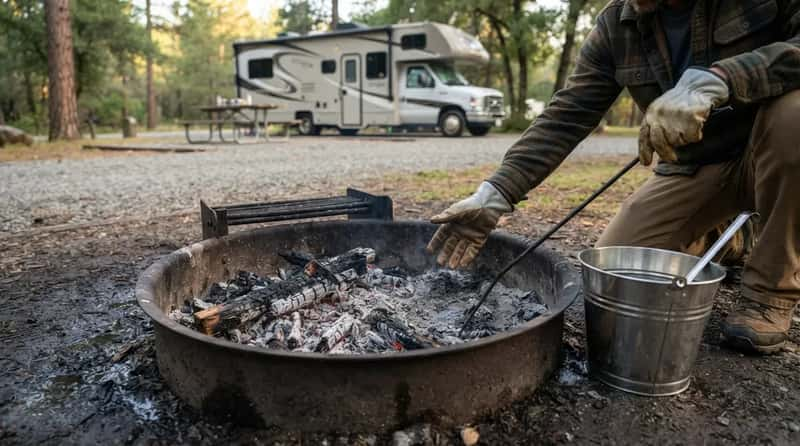
Flames gone doesn’t mean fire gone. Embers can hide in the ash and stay hot for hours. One gust of wind can bring them roaring back.
The standard guidance from Smokey Bear is to drown, stir and feel, until the ashes are cool to the touch. Use only the fire ring, and check for burn bans before you light anything. In wildfire season a ban can appear overnight.
Fast Facts
- Drown: Pour water on the embers, not just the flames.
- Stir: Turn the ashes and soak what’s underneath.
- Feel: If it’s still too hot to touch, it isn’t out.
- Burn bans can change fast, so check before you light.
Weather is the next thing that can change overnight, and it hits your gear first…
#3 – The Awning That Can Be Gone by Morning
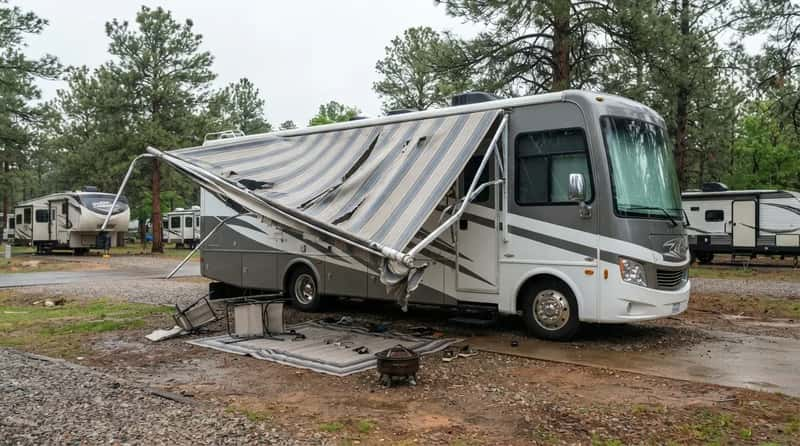
An awning looks like a patio roof. To the wind, it’s a sail. Many manufacturers advise retracting it when you leave or when gusts pick up, and a calm evening is no guarantee.
A single overnight gust can bend awning arms or tear fabric. Stow lightweight chairs, rugs and decorations too. Check the forecast before bed. If the awning is out and the wind rises, don’t wait to see what happens.
The last two briefings come down to people. First: the part of the trip that happens in front of an audience…
#2 – Backing In Is Where Pride Gets Expensive
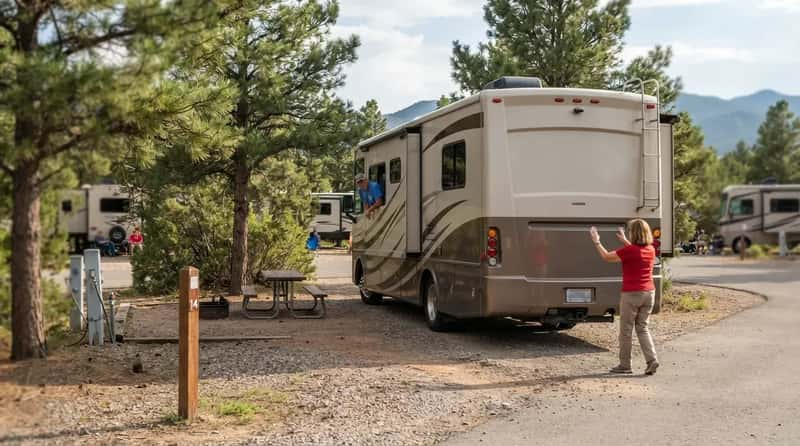
The most watched moment in any campground is a newcomer backing into a site. Everyone sees it, and nobody says a word. Daylight helps, and so does a plan.
“Get Out And Look” (often shortened to GOAL) is a real rule, and experienced drivers use it constantly. Use a spotter and agree on signals before you start. Phones or two-way radios help when voices don’t carry. Stop the moment you lose sight of your helper.
But the briefing that matters most is the one most guests never ask for…
#1 – The One Question That Unlocks Everything the Manager Knows
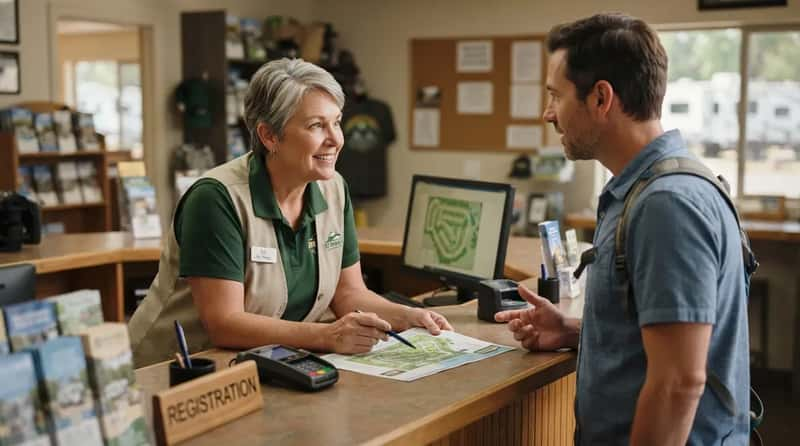
Every site manager carries knowledge that isn’t on the map. Which sites collect water in a storm, which corners stay quiet, which spigot runs slow, where the dump station gets crowded. They’d gladly share all of it if the line weren’t out the door.
The most useful briefing in the park usually isn’t printed anywhere. At check-in, say you’re new and ask what newcomers usually get wrong here. Most staff will answer, and it shows you respect their time and their park.
That one question can turn a stressful first night into a story you’ll tell for years.
The surprising truth is that most newcomer mistakes aren’t about the RV at all. They’re about the site: the power, the water, the sewer, the wind, the neighbors and the clock. A few minutes of preparation and one honest question at the office window can head off the worst of them.
Which briefing would you add to the list, or did we get one wrong? Drop it in the comments.