Most people picture a train dining car as a leftover from black-and-white movies, a place where nobody has eaten a real meal in decades. But Amtrak still runs full dining-car service, with sit-down meals at set times, on several long-distance routes. The crew working those cars sees things the rest of the train never does.
The biggest surprise isn’t the food. It’s the odd little rituals, the quiet tensions, and the moments that only happen inside a restaurant that’s rolling through the dark. Here’s what the crew deals with, from the first knock on a sleeper door to the last coffee refill.
1. The Knock on the Door That Runs the Whole Dinner Rush
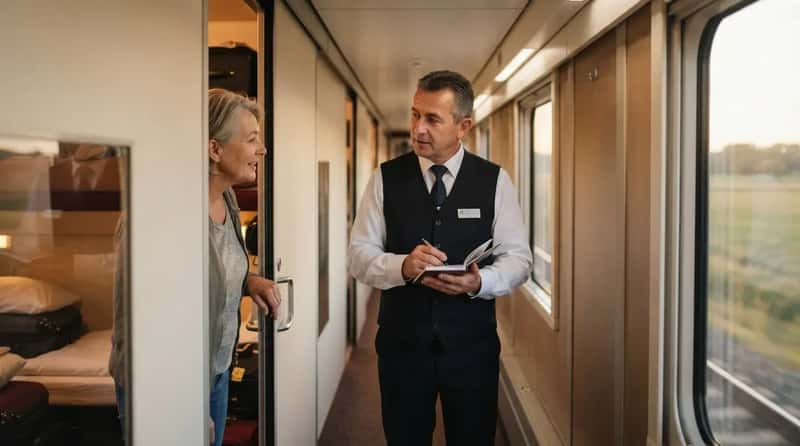
Before anyone sits down, the dining car runs on a walk-through. After boarding, a dining car staff member goes through the train asking passengers to pick a time to eat. Most riders never realize that this quick chat is how the whole evening gets organized.
The slots aren’t random. Reservations are taken in 15-minute increments to keep the dining car from overcrowding at peak meal times. A car with a fixed number of seats needs that schedule, or dinner turns into a stampede. The crew often has the evening mapped out before the train has even left the station.
And the strangest part of the setup is still ahead, because the table itself isn’t what you’d expect.
2. White Linen, Real Glassware, and a Dress Code Nobody Enforces
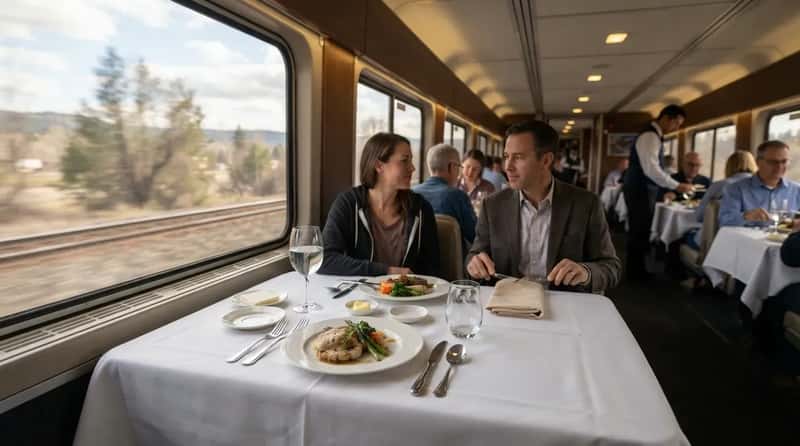
Walk into the car in sweatpants and you’ll still be served on a tablecloth. When Amtrak brought back traditional dining on its western routes, it promised table service with glassware, cutlery and white linen tablecloths. Ceramic dishware was set to debut later that year.
Staff say that contrast is half the fun. Someone in a hoodie and slippers ends up seated near a couple who dressed for the occasion, and nobody blinks. It’s one of the last places in America where a white tablecloth rides along while the landscape blurs past the window. Some riders think the formality is overdone for a train. Others say it’s the whole point.
Fast Facts
- Traditional dining means real table service, not a tray handed over a counter.
- Tables are set with glassware, cutlery and white linen tablecloths.
- Ceramic dishware was part of the rollout plan.
- Meal times are booked in 15-minute increments, so the car never floods all at once.
3. The Steak Order That Shows Up Every Single Night
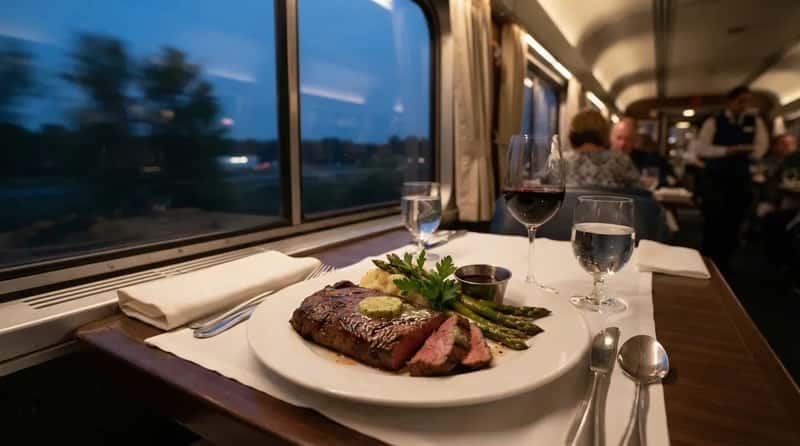
Ask around the dining car and one dish keeps coming up. On a sample long-distance dinner menu from fall 2024, the entrées included Amtrak’s signature flatiron steak, pan-roasted chicken breast, grilled Atlantic salmon, and pasta primavera. The steak is the one most people have heard about before they board.
What catches riders off guard is the range. The menu runs well beyond a single entrée, with appetizers and desserts on top. Plenty of passengers who expected a microwave tray are stunned to find a meal cooked to order.
But the bigger shock for a lot of riders comes when the check never arrives.
4. The “Free” Meals That Aren’t Actually Free
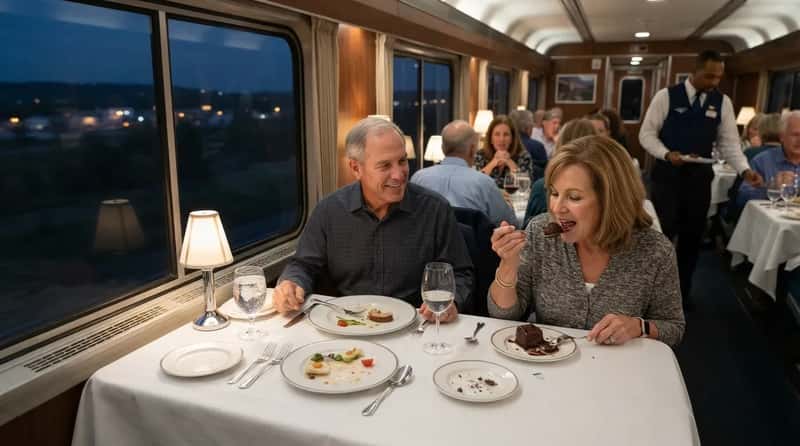
Sleeper passengers sit down, order whatever they like, and never see a bill. All meals for passengers with sleeping accommodations are included in the price of the ticket. Staff say first-timers keep asking where the catch is.
The catch is the fare. Sleeping rooms cost far more than coach seats, and the meals are baked into that price. The “free” food is really prepaid, tucked inside a much bigger ticket. Whether that’s a bargain depends on how hungry you get, and riders love to argue about it over dessert.
5. The Tiny Kitchen Hiding Below Your Feet
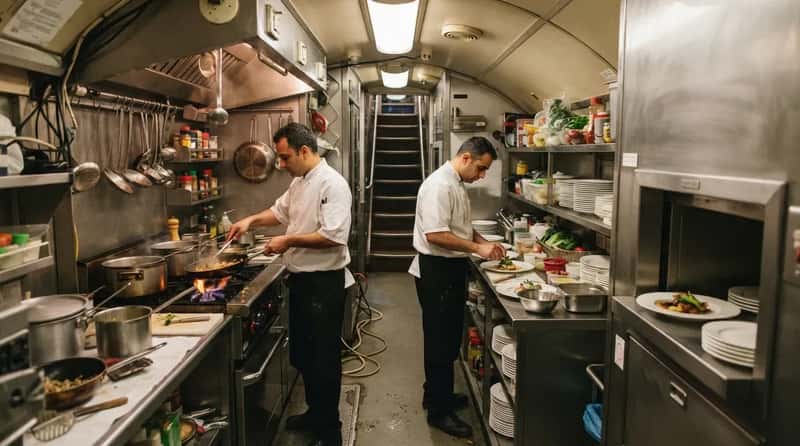
On many double-decker long-distance cars, the dining area sits on the upper level while the cooking happens downstairs. Food travels up and plates come back down. A real chef is turning out a full menu in a galley the size of a walk-in closet.
The crew works in a narrow space where every step has to count. Pans, plates, and ingredients all sit within arm’s reach. A full dinner service for a crowd comes out of a kitchen narrower than most apartment hallways.
And that’s before you add the one variable no restaurant on land has to handle.
6. The Art of Carrying Soup Through a Moving Train
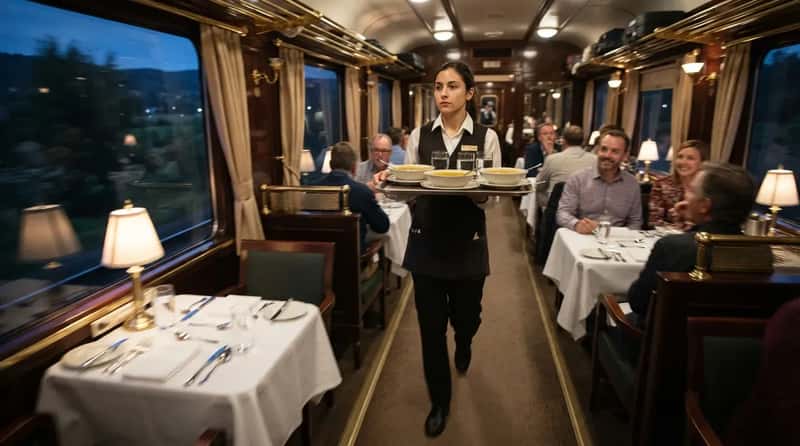
Every server in a dining car learns the same trick: move with the train, not against it. Curves, braking, and track joints all push on a loaded tray. A tray that’s steady on a platform can lurch the moment the car shifts.
Staff time their steps to the sway and pause before the big movements. Passengers often watch in quiet awe as a full glass crosses the car without a drop lost. A lower pour is a simple, smart habit when the floor is moving. The most common sight at dinner is a passenger quietly grabbing a table edge as the car rocks.
The sway is only one reason mornings in the dining car look so different from dinner.
7. The Sleepy Breakfast Crowd Nobody Warns You About
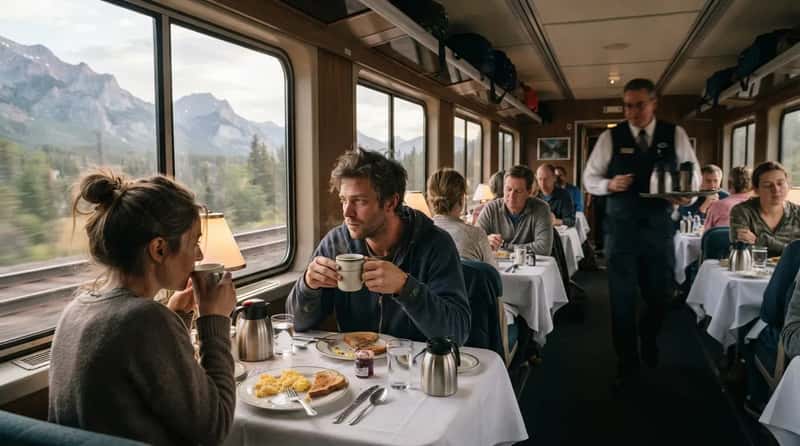
Breakfast in the dining car is its own species of chaos. One guide lists breakfast hours as 6:30 to 10 am, first-come, first-served. Riders stumble in wearing yesterday’s clothes and hair that tells the whole story of the night.
The first coffee request is a ritual in itself. People who barely spoke at dinner start chatting by the second cup, because the scenery has changed overnight. Passengers often wake up in a completely different landscape than the one they fell asleep in. The crew has usually been up for a while by then.
Worth Knowing
- Breakfast runs on a walk-in basis, unlike dinner, which is booked in time slots.
- One guide lists the window as 6:30 to 10 am, though hours can vary by route.
- Sleeper passengers’ meals are included in the ticket price.
- Arriving mid-window usually beats the first-light rush.
8. The Dietary Requests That Pop Up Mid-Journey
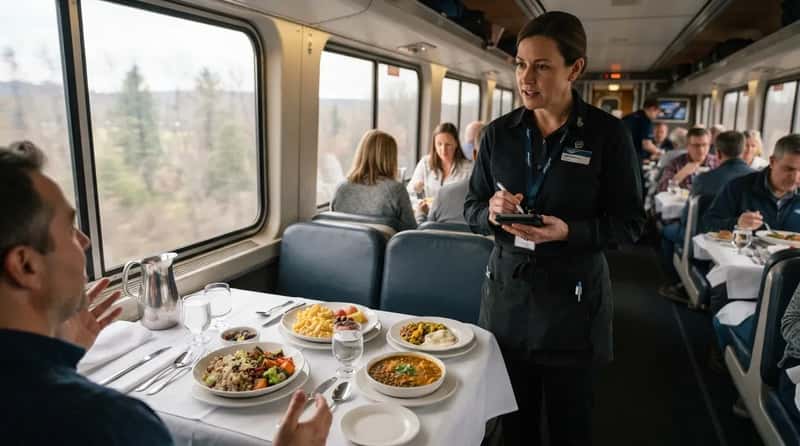
Allergies, vegetarian diets, and picky kids all land on the same small crew. On the booking side, vegan meals are available in limited quantities for traditional and flexible dining. That “limited” word matters, so letting the crew know early makes everyone’s night easier.
Families are a steady presence too. Amtrak’s dining cars have a kids’ menu with their favorites onboard. On a train, running out of an ingredient isn’t fixed by a quick trip to the store. The crew works with what was loaded at the start of the trip.
Then there’s the small gesture that changes the mood at nearly every table.
9. The Free Drink That Quietly Changes the Whole Dinner
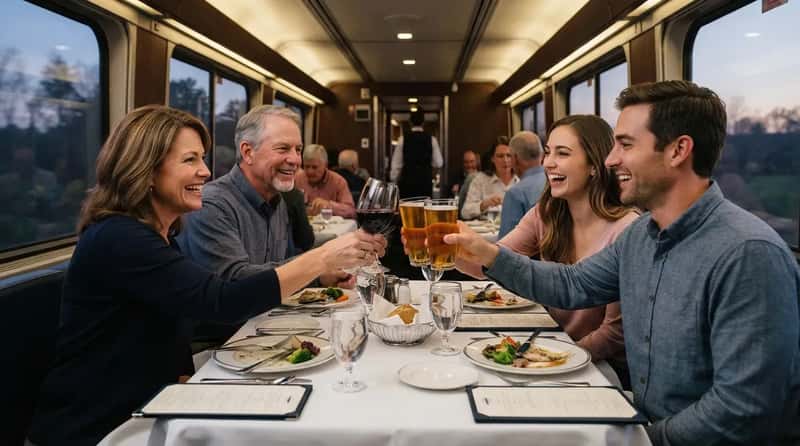
When dinner starts, the energy at the table shifts. The first adult beverage with dinner is complimentary on traditional dining routes, and it can loosen up even a stiff table. Strangers who were staring at their menus a minute ago start trading stories.
It’s a pattern crews see again and again. A toast, a laugh, and suddenly the car sounds like a neighborhood restaurant. One drink can do more to turn four strangers into dinner companions than any icebreaker ever could. The staff mostly refill water and let it happen.
10. The Window That Steals the Show at Dinner
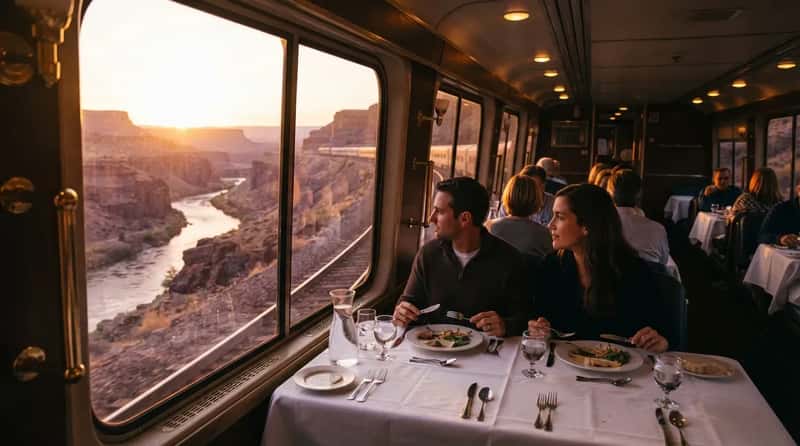
On routes like the California Zephyr, Empire Builder, and Coast Starlight, the view competes with the food. Those trains, along with the Southwest Chief, Sunset Limited, and Texas Eagle, are among the long-distance routes with full dining-car service. When the light hits just right, the whole room can go quiet.
Forks pause midair when a river, a canyon, or a sunset slides past. Staff learn not to interrupt those moments. The best seat in the dining car isn’t the best table. It’s the one facing the window at golden hour.
Of course, the scenery doesn’t always arrive on schedule, and neither does the train.
11. The Delay Nobody Planned For, and Who Takes the Heat
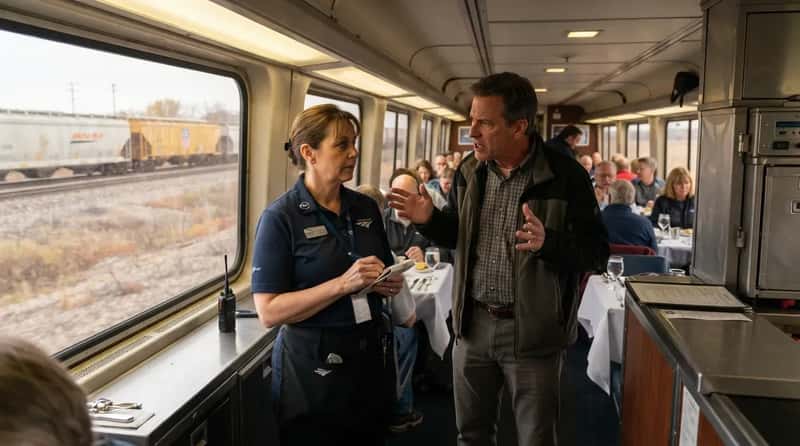
Overnight trains run late more often than riders hope. Amtrak runs much of its network on tracks owned by freight railroads, and freight traffic has long been a common cause of delays. When the schedule slips, the dining crew’s plan slips with it.
Dinner reservations shift, breakfast bumps back, and staff reshuffle on the fly. Most passengers are patient, but a few arrive furious about a train they don’t control. The crew often absorbs the frustration for delays that have nothing to do with the kitchen.
Some routes, though, lost the dining car long before delays became the main complaint.
12. The Lounge That Replaced the Dining Car on Some Routes
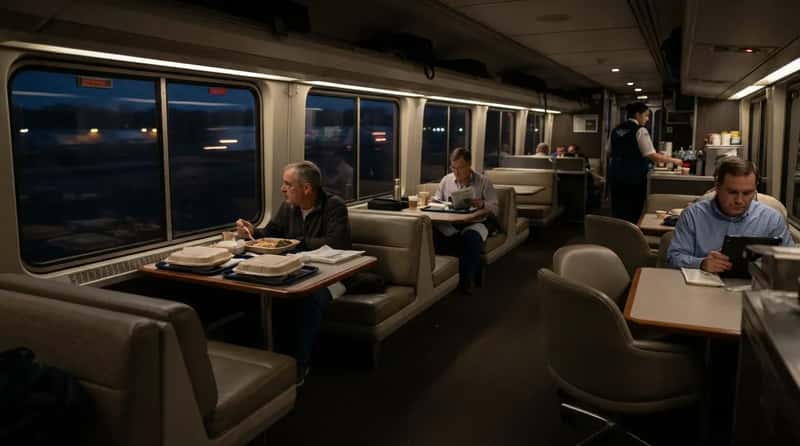
Not every overnight train has a traditional diner. On routes like the Cardinal, Crescent, and Lake Shore Limited, flexible dining for sleeping car customers includes hot, ready-to-serve menu choices, room service from the attendant, and a lounge space open around the clock. No reservations needed.
Staff on those trains see a different kind of dinner: quieter, faster, and more private. Fans call it convenient. Critics call it a downgrade from a real meal. Pre-prepared meals took the place of fresh-cooked eggs and steaks, and some riders still haven’t forgiven the change. It’s one of the loudest arguments in rail travel.
And who gets to sit in the real dining car at all is another source of friction.
13. The Coach Passengers Who Peek In, and the Ones Who Pay
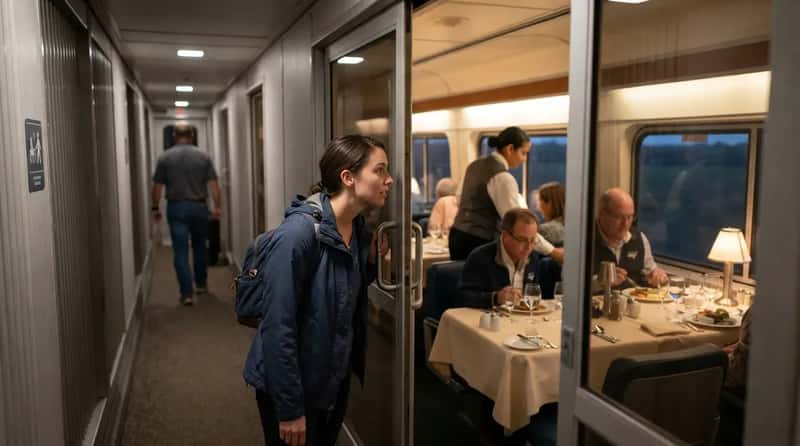
Coach riders walk past the dining car on their way to the café, and the staff notice every glance. On some trains they can eat there too. One recent guide lists coach prices of $20 for breakfast, $25 for lunch, and $45 for dinner. Space is limited.
Not every train allows it. Coach passengers weren’t allowed into the dining car on the Silver Meteor or Silver Star, at least as of the post-2023 rollout, unlike on the western long-distance trains. Access depends entirely on the route, and passengers are often caught off guard at the door. Prices and rules change, so check Amtrak before you go.
Some riders will tell you the real story isn’t about price at all, but about what almost disappeared.
14. The Riders Who Remember When Eastern Trains Lost Their Dining Cars
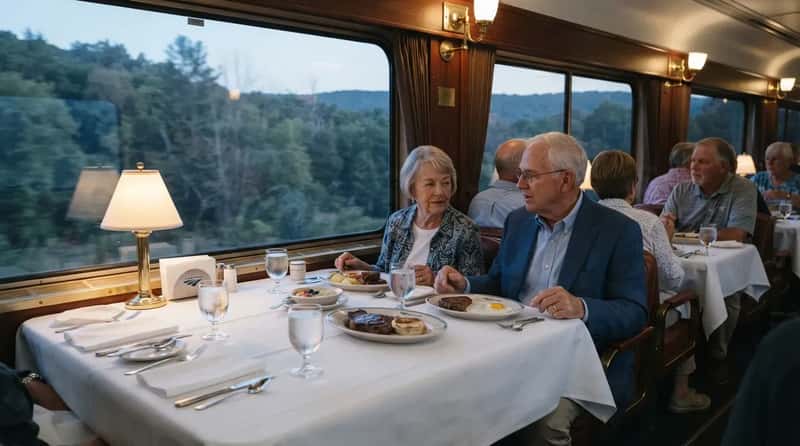
Staff on older routes hear the same wistful comment: “I remember when.” In 2018, Amtrak announced it was dropping the traditional diner on several eastern overnight routes in favor of flexible dining. The railroad expected to save about $2 million a year.
Passengers felt the loss immediately. No more eggs over easy, no more steak cooked to order. Longtime riders still bring it up unprompted, years later, as though it happened last week. Others admit they never liked sharing a table with strangers anyway.
Quick Compare
- Traditional dining: table service, white linen, communal seating, and a complimentary first adult drink with dinner.
- Flexible dining: hot, ready-to-serve choices, room service from the attendant, and a lounge open around the clock.
- The trade-off: a sit-down ritual and conversation versus speed, privacy, and no reservations.
But the story didn’t end there.
15. The Quiet Comeback on the Silver Trains
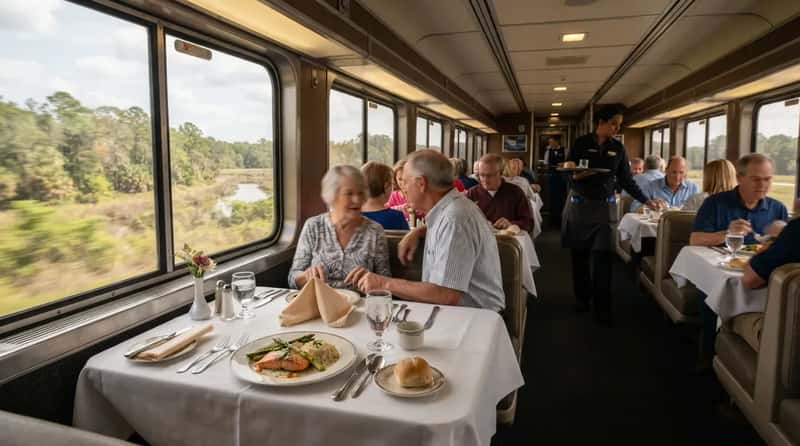
Here’s the twist staff love to share. Traditional dining came back on part of the East Coast. On March 15, 2023, it returned to the Silver Star as a pilot, and crews who’d been serving pre-prepared meals suddenly had a real kitchen to work with again.
After the pilot, the service was made permanent in June 2023, and the Silver Meteor followed. For riders who thought the old-school dining car was gone forever on the East Coast, it was a genuine surprise. Menus and rules shift with the route, so it’s worth confirming before you travel.
Which brings us to the thing crews say never gets old.
16. The Stranger Across the Table Who Turns Into the Best Part of the Trip
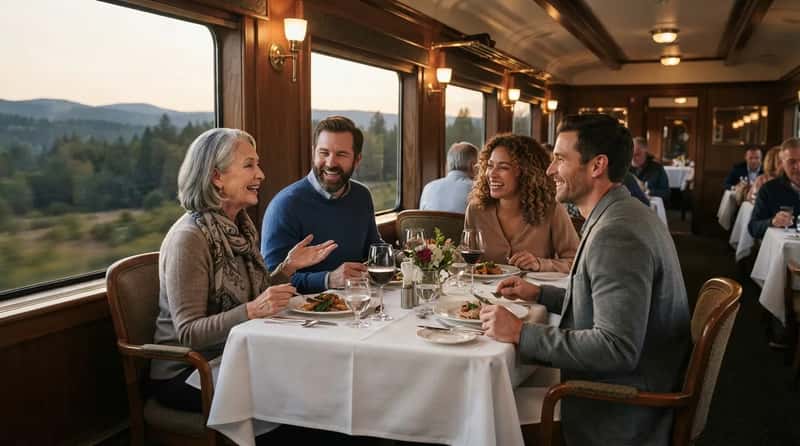
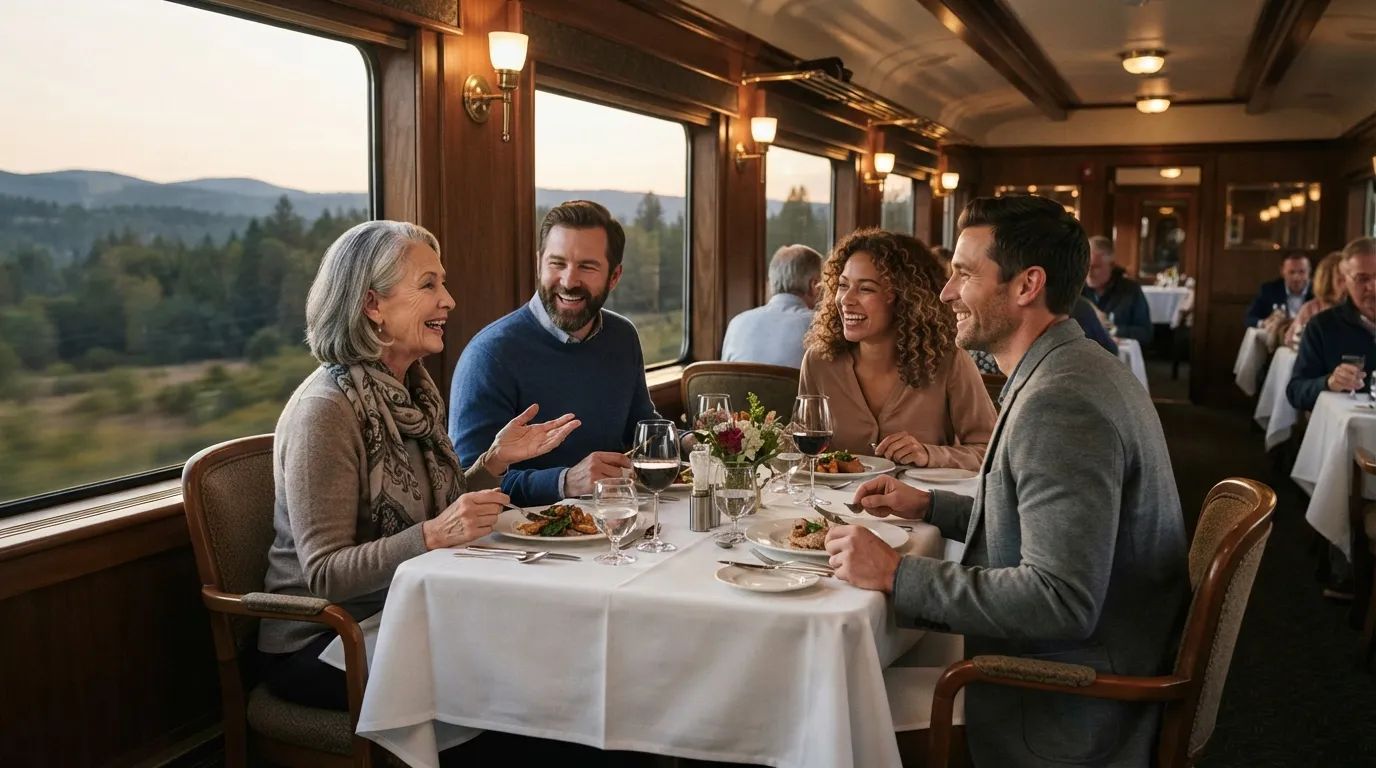
On traditional dining routes, you don’t choose your table partners. Communal seating in the dining car offers a chance to dine and socialize with fellow riders. Servers know the first few minutes can feel awkward. Then somebody asks where the other person is headed.
Staff say they’ve watched strangers swap travel tips, share family stories, and keep talking long after the plates are cleared. A table of four people who didn’t know each other at 6 pm can be laughing like old friends by dessert. Some riders hate the setup. Most remember it longer than the meal.
Why It Stands Out
- Few restaurants seat strangers together by design anymore.
- A shared window view gives everyone an instant conversation starter.
- A complimentary first drink helps break the ice.
- Everyone at the table is headed somewhere, which gives every story a destination.
The Bottom Line: The dining car isn’t really about the menu. It’s about a crew that keeps a moving restaurant running while the scenery changes outside, and a table that makes strangers talk. Skeptics call communal seating awkward and the whole thing overpriced. Longtime riders say it’s the best part of the ride. Which side are you on?