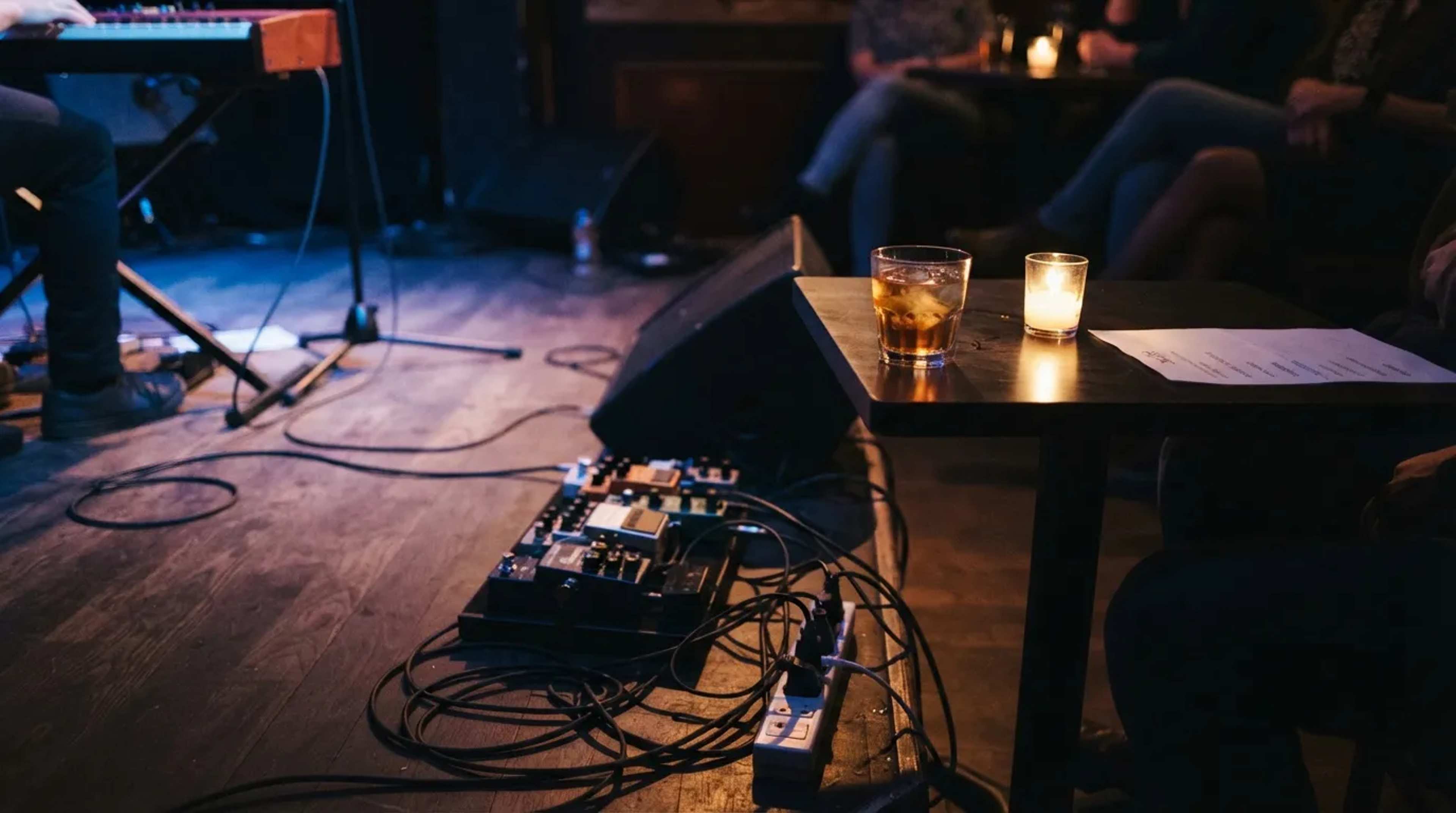
The front row looks like the prize seat. You get the closest view, the first look at every solo, and nobody’s head in the way. Ask the people on the stage, though, and the story gets a lot more complicated.
House-band players, lounge pianists and club regulars see the nearest tables more clearly than anyone. Some of what they notice is flattering. Some of it is awkward, and a few things might change where you sit next time. Keep counting down, because the last few are the ones players seem to feel most strongly.
#16 – The Band Can Read Your Face Before the Intro Ends

The front row is where a band gets its first real feedback. A resident musician plays the same room night after night, and most learn to scan the closest tables within seconds. A relaxed face says the room is with them. A blank stare says something needs to change.
They don’t usually take it personally. It’s just the fastest read they have on the night. Players often adjust the pacing of a set based on a handful of faces, not the whole room, and most guests have no idea their expression is doing that much work.
But faces are only the beginning of what the front seats reveal…
#15 – The Seats Closest to the Stage Often Get the Worst Mix

Here’s the unpopular truth: the front row is frequently not the best-sounding spot in the house. Speakers usually aim outward toward the room. Guests at the very front can end up hearing the drums, the amps and the stage wash more than the blended sound the band is chasing.
Many players say the sweet spot sits farther back, where the sound has had room to come together. Some musicians quietly wish guests would take a table in the middle. Others say they’d still rather see a full front row.
And that’s nothing compared to what the front seats can see on the stage floor…
#14 – Front-Row Guests Can See Every Note Taped to the Floor
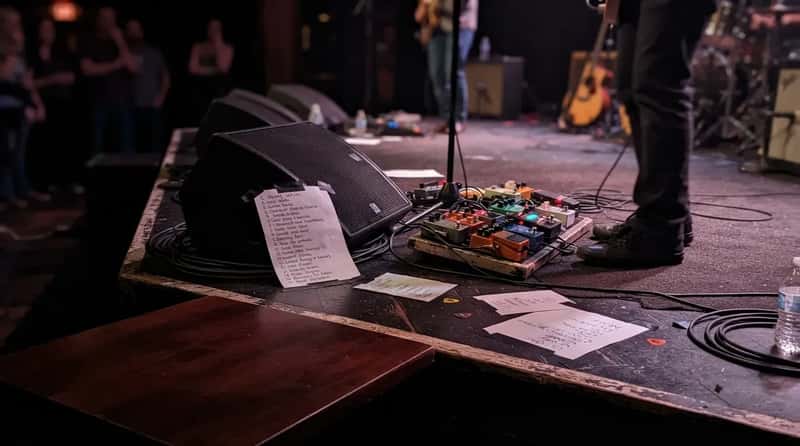
Guests at the front get a backstage peek without trying. Setlists get taped near monitors, and pedal boards sit in plain view. Cheat sheets, lyric notes and cue marks are sometimes right there on the floor.
Musicians say that’s usually fine, but it changes how they work. Some keep their notes tidy for exactly this reason. The front row is the one place where the show’s behind-the-scenes mess can’t hide, though most guests are too busy enjoying the music to notice.
Worth Knowing
- Taped setlists near the monitors are among the easiest things to spot from the first table.
- Pedal boards and cable runs sit in plain sight, so some players tidy them before the first note.
- Lyric cheat sheets are common, even among players who have done the song for years.
- Most musicians say guests rarely comment on any of it.
The bigger issue is what happens when something goes wrong right in front of them…
#13 – The Front Row Hears Every Mistake, and Every Musician Knows It

Every working player has made a slip that only the nearest tables could hear. A flubbed chord, a rushed fill, a lyric that vanished mid-verse. Musicians say the front seats make those moments feel enormous.
The good news is that most guests don’t care. Nearly everyone is there to enjoy the night, not grade it. The mistake the musician is replaying in their head is usually one the guest never registered, but the pros admit they feel it more when someone is a few feet away.
But one reaction from the front can change how a whole set feels…
#12 – One Genuine Smile Can Rescue a Slow Set

Musicians say a visible, honest reaction up front can lift an entire set. A grin after a solo or a nod on the downbeat is a small gift. It tells the band the room is paying attention.
The opposite is also true. A guest who stares at the table all night can drain the energy fast. Resident players often say they end up playing to the friendliest face in the room. It’s human nature, and it’s rarely personal.
Not every front-row habit helps, though, and one glowing example is next…
#11 – A Glowing Phone Screen Is the First Thing the Stage Sees
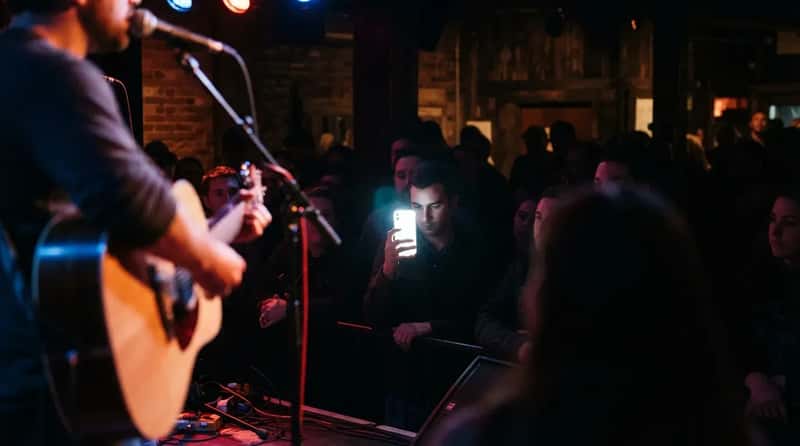
Under stage lights, a lit phone in the front row stands out like a flashlight. Musicians say they notice it right away. For most of them, the filming isn’t the problem. It’s the screen blocking the one face they were hoping to connect with.
Plenty of players are happy to be filmed for a song or two. Others find it distracting. The real frustration is the guest who films the whole set and never looks up. A quick clip is one thing, but a full evening behind a screen is another.
Even worse than a screen is what happens when guests start touching things…
#10 – The Gear Is Closer Than You Think, So Please Don’t Lean on It
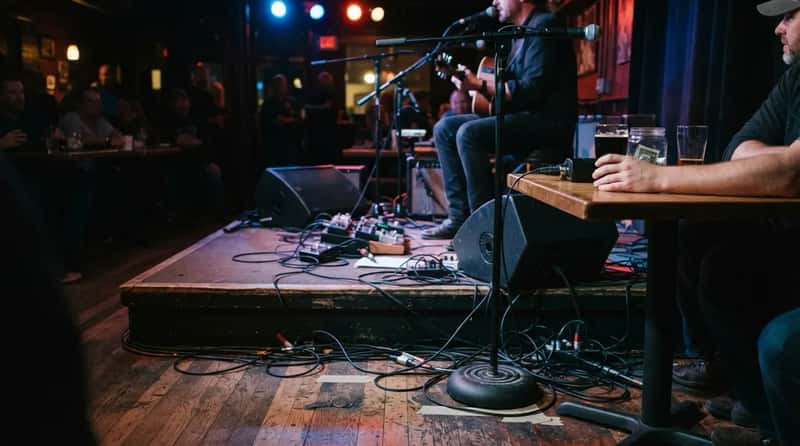
At small venues the front tables sit right beside the equipment. Cables run along the floor, and mic stands and amps are within arm’s reach. Musicians say a bumped stand or a drink set on a speaker can derail a song in seconds.
Most guests mean no harm. They just don’t realize how fragile a setup can be. A single kicked cable can cut a signal in the middle of a tune, and players tend to remember exactly who did it.
Quick Compare
- Front table: the closest view, but also the closest to cables, stands and monitors.
- Middle table: a more blended sound and a lot less risk of bumping anything.
- Back table: the most breathing room, though you’re farther from the eye contact players love.
Then there’s the request that always seems to come from the same seats…
#9 – Song Requests Almost Always Come From the Front Tables

Ask any lounge or piano-bar player. The requests almost always come from the closest seats. It makes sense, since the front row can reach the stage without shouting across the room.
Musicians have mixed feelings about it. Some love the interaction. Others get stuck politely explaining that they don’t know the song. Many working players say a request tucked into a tip jar gets a much warmer response, while a shouted demand mid-song rarely does.
Talking is another story, and the rules change depending on the room…
#8 – Talking Right Under the Stage Is the Biggest Divide

This one splits musicians. At a classical concert, silence is the expectation. A lounge or bar gig is a different world, where background chatter is simply part of the deal.
Still, the front row is where talking hurts most. Players can hear every word during a quiet ballad. Some musicians say a loud conversation a few feet away is harder to ignore than a loud crowd across the room. Others shrug it off as part of the job.
Believe it or not, some venues deliberately want people up front…
#7 – Venues Quietly Want a Full Front Row

An empty front row can make a room feel dead. Venue staff and musicians know this, which is why hosts often steer early arrivals toward the stage. It’s a well-known trick in live entertainment.
Open-mic and comedy hosts do the same thing, packing people close together near the performer. A tight crowd tends to cheer and laugh louder than a scattered one. A packed front can make the entire room feel more fun, even if the seats aren’t the comfiest.
But the people filling those seats aren’t always who you’d expect…
#6 – Other Musicians Are the Toughest, and Kindest, Audience in the House

Every working player has had a fellow musician show up and grab a front table. Most say it’s both flattering and nerve-racking. Another player hears things civilians miss, like timing, tuning and tone.
Still, most of them are on your side. They know how hard the gig is. The front-row musician is often the one who tips generously and compliments the most specific details, and players say that kind of praise sticks with them for weeks.
Why It Stands Out
- A fellow player notices details most guests never hear, like a tight rhythm section or a well-tuned guitar.
- Their praise tends to be specific, which makes it feel earned.
- They understand the grind of a residency because they’ve lived it.
- Many players say a nod from a peer means more than a loud cheer.
Next up is a front-row habit that can go either way…
#5 – A Dancer Up Front Can Make or Break a Room

One person dancing near the stage can give a shy room permission to loosen up. Musicians love that. It’s the closest thing to a free energy boost a band can get.
It’s also controversial. Some guests dislike being stuck behind people who stand up, and once the person in front of you is on their feet, you don’t have much choice. Whether front-row dancing is a gift or a nuisance depends entirely on who you ask.
And the biggest front-row problem isn’t dancing at all…
#4 – Drinks, Candles and Clutter Don’t Mix With a Stage
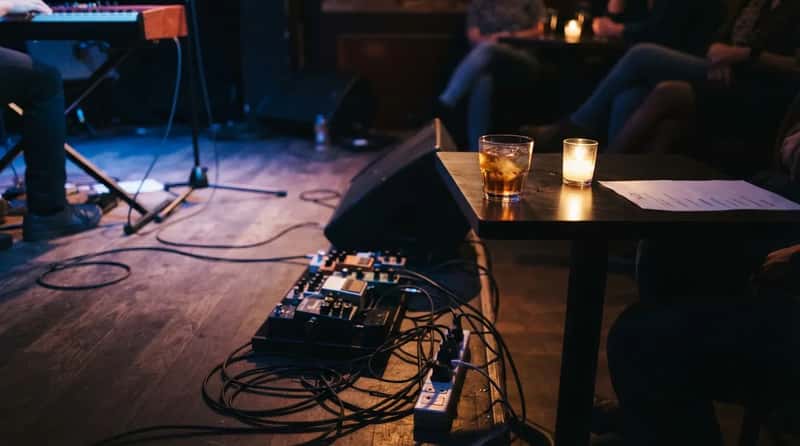
Front tables sit inches from where the music happens. A tipped glass can ruin a cable, a keyboard or a setlist. Musicians say the stage edge is the worst spot for a full drink.
Most of them have a spill story, and almost none of them blame the guest. Venues that place small tables right against the stage may be setting everyone up for an accident. That’s the part many players quietly wish would change.
At a Glance
- Most at risk: keyboards, pedal boards and power strips near the floor.
- Common culprits: full glasses, lit candles and bags tucked under tables.
- Usual result: a paused song, a scramble for towels and a very awkward apology.
- Easy fix: keep drinks toward the back of the table and away from the stage edge.
The next one is the least talked about of all…
#3 – The Weekly Regular in Seat One Is Practically Part of the Band

Resident musicians remember the person who shows up every week. Same table, same drink, same quiet nod at the start of the night. They never say much, but the band notices the moment they’re missing.
Many players say regulars are what keep a residency alive. A single loyal front-row guest can make a slow Tuesday feel like a real show. It’s not about the tip. It’s about knowing somebody came for the music.
But there’s one more type of guest, and musicians say it’s the one that matters most…
#2 – The Guest Who Never Looks Away Changes the Whole Night

Every musician talks about the person who actually listens. They aren’t filming or chatting. They watch the hands and nod at exactly the right moments.
Players say that kind of attention is rare and unforgettable. Many say they’ll play an entire set for one person who is truly listening. It turns a routine gig into something worth remembering.
Which brings us to the one thing musicians say most about the front…
#1 – They Don’t Need a Perfect Audience, Just One That’s Really There

Strip away the requests, the phones and the chatter, and the message is simple. Resident musicians say they don’t need a flawless crowd. They need people who are actually present.
The front row isn’t a status symbol to them. It’s a conversation. The best seat in the house is the one where you’re really listening, whether that’s up front or at the very back.
So the front row is closer than any other seat, and musicians feel every inch of that closeness. They hear the talking, see the phones and catch every genuine smile. Many say the sound up there is often the worst in the room, yet it’s the seat that shapes the room’s energy most.
Sit up front if you like. Just remember that the band will probably remember the face you bring with you long after they forget the song you asked for.