Most people treat a three-hour cushion at the airport like a punishment. They slump against a wall outlet, scroll their phone until it dies, and count down the minutes like they’re serving time. But frequent flyers know something the rest of us don’t: extra airport time isn’t dead time, it’s free time in one of the most entertaining, oddly generous public spaces in America.
From free spa treatments to actual therapy dogs on payroll, airports have quietly built entire micro-cities designed to keep you comfortable, entertained, and sometimes genuinely pampered. Here’s what seasoned travelers actually do with those hours everyone else wastes complaining about.
16. Track Down the Airport’s Resident Therapy Dog Squad
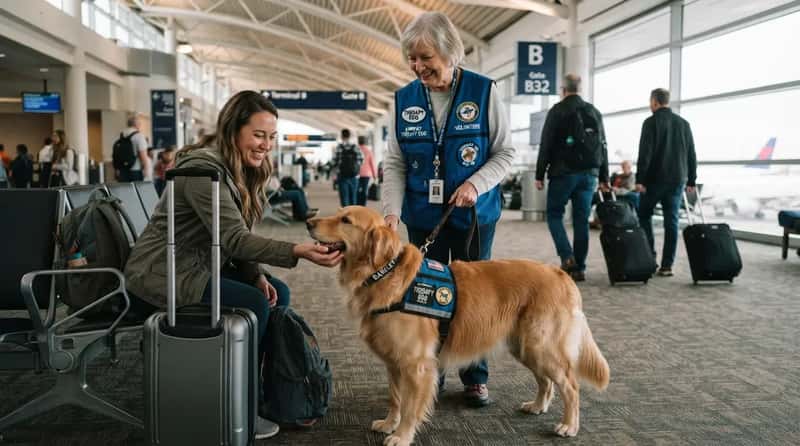
This isn’t a rumor – it’s an official program now running in more than 100 U.S. airports. The Akron-Canton Airport recently became the 100th U.S. airport to launch a therapy dog program, joining Phoenix Sky Harbor, Denver, LAX, Detroit Metro, and Houston’s two airports, where trained dogs and handlers walk the concourses on scheduled shifts. The idea is simple: a few minutes petting a golden retriever can knock the edge off even the worst travel day.
Denver’s version is especially wild – the airport’s Canine Airport Therapy Squad includes more than 90 animals, all dogs except for one very confident cat. Detroit’s program has grown just as fast, now running 29 dogs and 27 handlers across the terminals. Most of these dogs even carry their own trading cards, which handlers pass out to kids and stressed-out adults alike. If you spot one working the gate area, it’s worth the detour.
Fast Facts
- Over 100 U.S. airports now run official therapy dog programs
- Denver’s squad includes more than 90 animals, plus one cat
- Detroit runs 29 dogs and 27 handlers across its terminals
- Many handlers hand out collectible trading cards for each dog
15. Buy a Lounge Day Pass Even If You Don’t Have Status
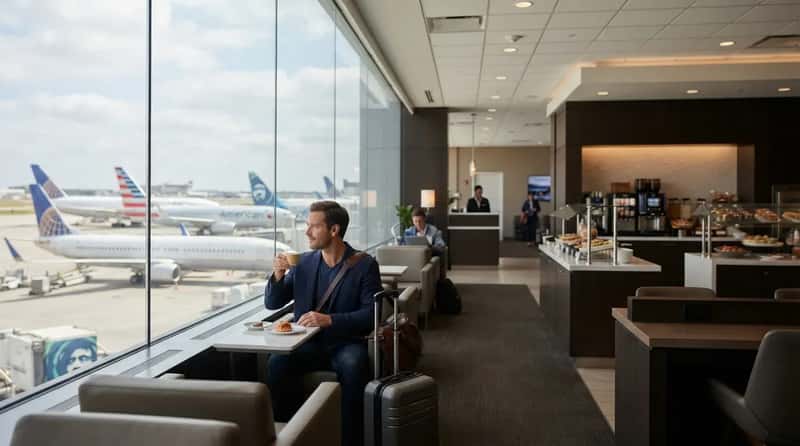
You don’t need elite status or a $550 credit card to sit in a quiet lounge with free food and a hot shower. Three major U.S. carriers will sell a walk-up day pass to almost anyone: United, American, and Alaska all let you buy access on the spot, with the United Club running about $59. American’s version costs a bit more but stretches further – the Admirals Club day pass runs $79 and works at any Admirals Club that same day, so it can cover a connection city too.
Delta quietly killed this option, pulling day passes after its lounges got too crowded to manage comfortably. If you’re stuck with three or more hours to burn, paying $60 to $80 for a comfortable chair, real food, and a workspace is one of the better trades in air travel. It turns dead time into something closer to a spa afternoon.
14. Nap in a Private, Lockable Sleep Suite
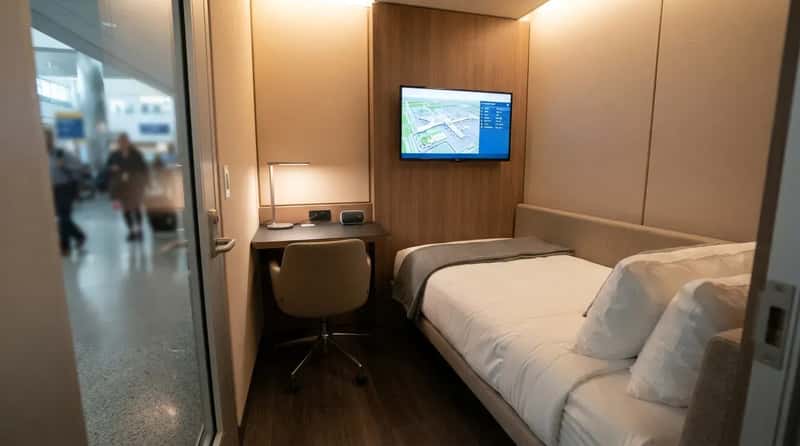
Sleeping upright in a plastic gate chair is optional now. Minute Suites runs private, soundproof pods with real daybeds inside major terminals, and the company has expanded fast – starting at Hartsfield-Jackson Atlanta, then spreading to Philadelphia and Dallas Fort Worth, and now covering 15 locations across nine airports.
Each pod is stocked better than most travelers expect: a daybed that sleeps two, a private workspace, a smart TV, free Wi-Fi, an Amazon Alexa, and actual pillows and blankets. Some credit cardholders can even redeem a lounge visit for a free hour inside one. If your layover stretches past two hours, this beats a coffee shop chair every single time.
13. Check the Real-Time Security Line Before You Panic
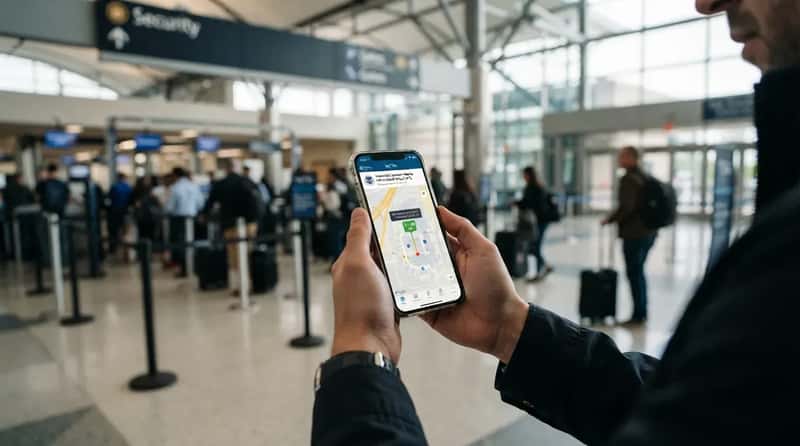
Half of the panic about arriving too early comes from bad guessing, and there’s an actual government tool that fixes it. MyTSA is a free mobile app that gives travelers real security wait times, letting users view – and post – crowdsourced updates on checkpoint conditions in real time.
It isn’t flawless. One outlet tested three different apps at Hartsfield-Jackson Atlanta at the same time and got wildly different results: 30 minutes from MiFlight, 24 minutes from App in the Air, and a range of 11 to 20 minutes from MyTSA. Still, checking gives you real leverage – if the line’s short, you just bought yourself an extra hour to explore instead of stand still.
12. Find the Airport’s Free Live Music or House Piano
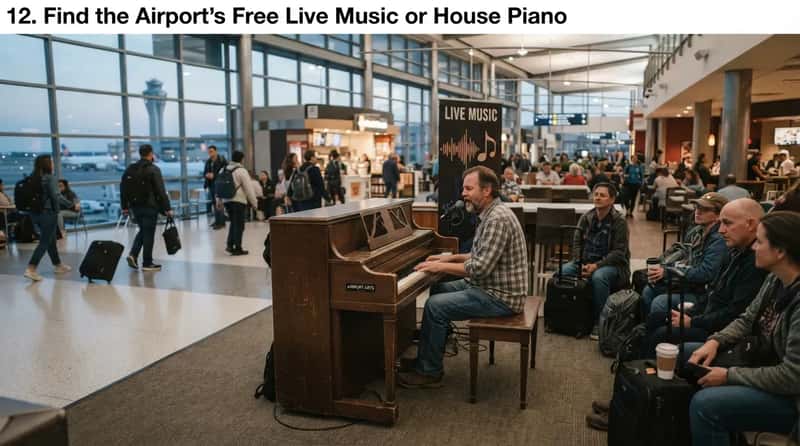
Some terminals have quietly turned into concert venues. A surprising number of major U.S. airports book local musicians for scheduled sets near food courts and atriums, often funded through arts-in-public-places programs most travelers have never heard of. Others keep a permanent piano out in the open that anyone can sit down and play.
The performances are completely free and the lineup changes weekly, so it’s worth checking your airport’s website or social feed before you land. It’s one of the only entertainment options in the building that isn’t trying to sell you something. Regulars say it’s the single most underrated way to burn thirty minutes without touching a screen.
11. Get a Chair Massage Without Booking Anything
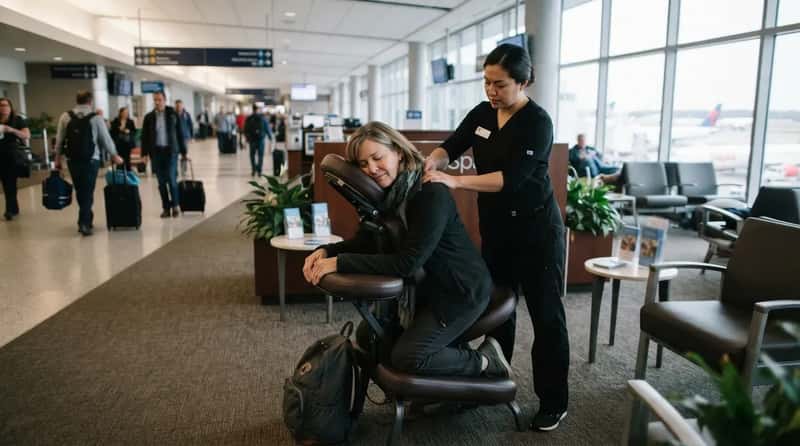
Airport spa kiosks have exploded over the last few years, and most of them run walk-up only – no appointment required. A ten-minute chair massage typically costs $20 to $40, while some full sit-down spas inside premium lounges bundle the treatment straight into the entry fee.
A handful of upscale lounges build it right into access, alongside complimentary drinks, snacks, Wi-Fi, and sometimes showers. Enough business travelers say the massage alone is worth the lounge day-pass price that it’s become something of a running joke among frequent flyers. If your feet are already wrecked from the terminal walk, this is the fastest fix in the building.
10. Hunt for the Terminal’s Hidden Art Collection
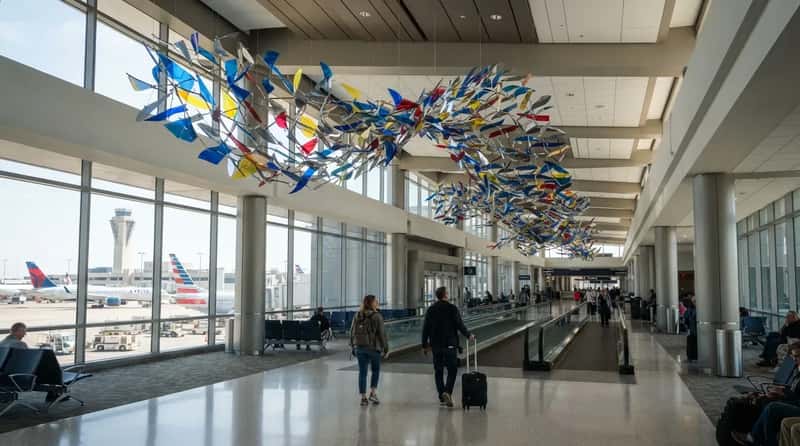
Several major U.S. airports run genuine public art programs, and most flyers walk right past the pieces without noticing. Rotating exhibits, sculpture installations, and even small museum-style displays sit tucked into connector hallways and pre-security atriums, placed there because airport authorities know they’ve got a captive, curious audience.
These collections change on a schedule, so whatever you see this year likely won’t be there next year. Most travelers never realize their airport even has a formal curator on staff deciding what goes up next. If you’ve got forty minutes to spare, it beats another lap past the same three gift shops.
Worth Knowing
- Many major airports run official public art programs, not just decoration
- Exhibits typically rotate on a set schedule, so pieces don’t stay long
- Some airports employ a dedicated curator to manage installations
- Art is usually placed in connector hallways and pre-security atriums
9. Order From the One Restaurant That Isn’t a Chain
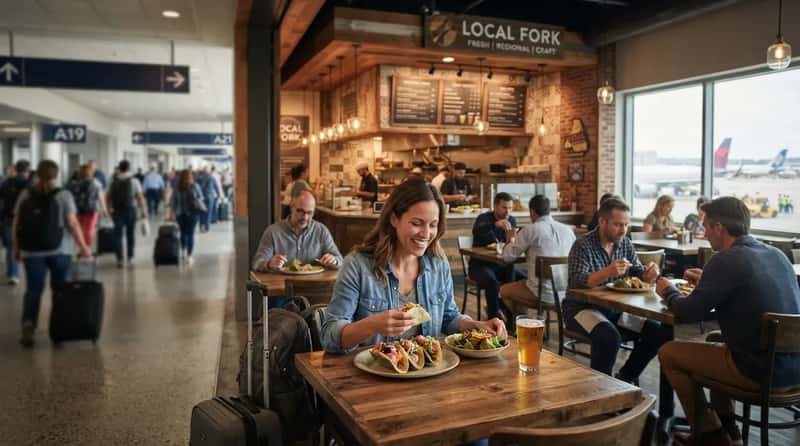
Every terminal has the same rotating cast of national chains, but tucked into most major hubs is at least one restaurant built around a local chef or regional specialty. These spots usually cost about the same as the chain next door but taste dramatically better, since airports increasingly court local restaurant groups to set their food halls apart from every other terminal in the country.
Frequent flyers treat hunting down this spot like a small scavenger hunt. The food quality gap between the local option and the fast-food chain three gates down is often bigger than travelers expect. Skipping the familiar logo for the unfamiliar one is a small gamble that almost always pays off.
8. Squeeze In a Real Workout, Not Just a Walk
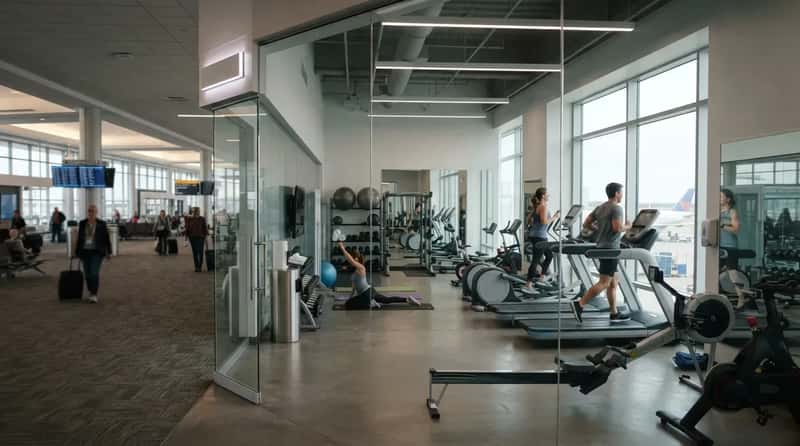
A handful of major airports have built real fitness spaces past security – yoga rooms, stretching areas, and in a few cases full gyms with cardio equipment. They’re usually tucked into connector corridors and built quietly, because most travelers never think to look for them.
Even without a dedicated gym, the terminal itself doubles as a walking track. Long concourses at big hubs regularly stretch over a mile round trip, meaning a single loop through your terminal can rack up more steps than an entire day at a desk job. For anyone about to sit still on a plane for five hours, moving now matters more than it feels like it should.
7. Duck Into the Chapel or Quiet Reflection Room
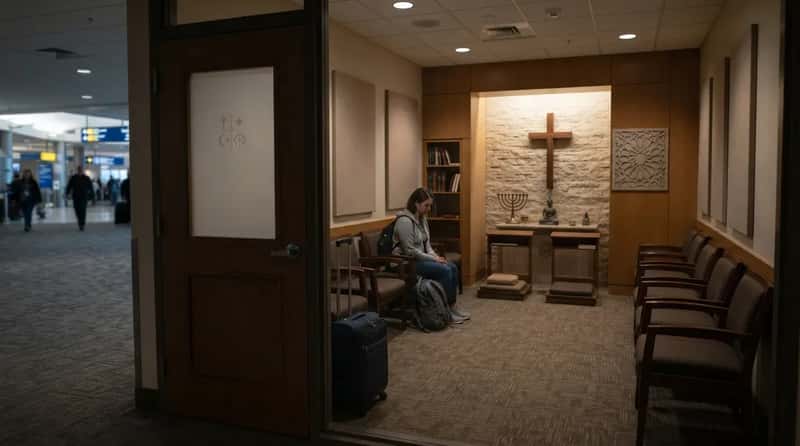
Most major U.S. airports have a small interfaith chapel or a designated quiet room tucked away from the noise, and almost nobody uses them. These spaces were built decades ago for exactly this purpose – a place to sit in silence, away from boarding announcements and the constant rumble of rolling suitcase wheels.
You don’t need to be religious to use one. Many travelers say it’s the only truly silent room in the entire building, which makes it oddly perfect for a phone call, a nap, or five minutes of not being surrounded by strangers. It’s one of the few airport spaces that costs nothing and asks nothing of you in return.
6. Test-Drive Perfume and Skincare You’d Never Normally Buy

Duty-free counters are built for browsing, not just buying, and the staff generally expect it. Testers of high-end perfume, skincare, and liquor sit out on purpose so bored travelers can sample things they’d never splurge on at a regular mall counter.
Prices are sometimes genuinely lower than retail, since duty-free pricing skips certain local taxes, but the real value here is the experience rather than the purchase. Even walking away empty-handed, spending fifteen minutes testing five different perfumes is a far more interesting way to kill time than another lap past the same phone-charger kiosk.
Why It Stands Out
- Testers are set out specifically for browsing, no purchase expected
- Duty-free pricing sometimes beats retail by skipping local taxes
- You can sample five different products in about fifteen minutes
- It’s one of the only zero-pressure retail experiences in the terminal
5. Watch the International Arrivals Gate for Reunions
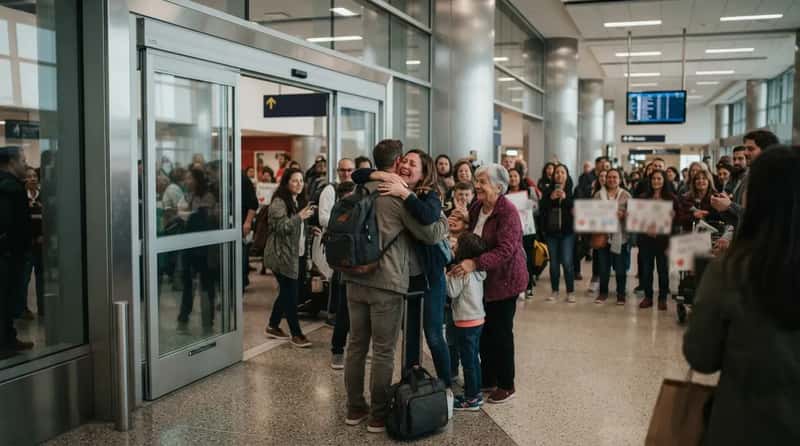
This sounds sentimental, but it’s become a genuine airport pastime. International arrivals areas are where families reunite after months apart, where soldiers come home, and where strangers spontaneously start crying and hugging people they’ve never met who just happen to be standing nearby.
It costs nothing, requires no planning, and turns out to be one of the most emotionally rewarding things you can stumble into by accident. People who’ve never even flown internationally will detour just to watch it happen. If your gate happens to be anywhere near arrivals, the short walk is worth it.
4. Ask the Gate Agent About an Early Standby Upgrade
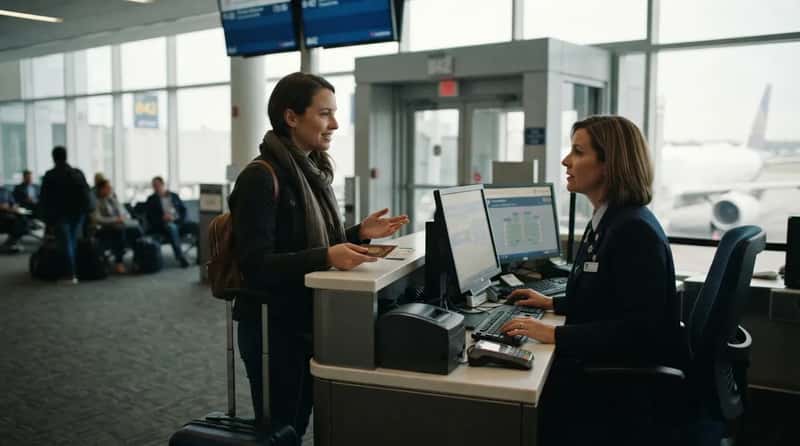
Arriving absurdly early isn’t just about killing time – it’s leverage. Gate agents process upgrade and seat-change requests in the order they arrive, and standby lists fill up fast once the crowd shows up closer to boarding.
This works especially well on flights with a lot of empty premium seats, which agents can usually see well before boarding even starts. Most travelers never ask, assuming upgrades are locked behind status alone, but a polite, early request costs nothing and occasionally turns a cramped middle seat into a much better one.
3. Charge Every Device and Back Up Every Photo
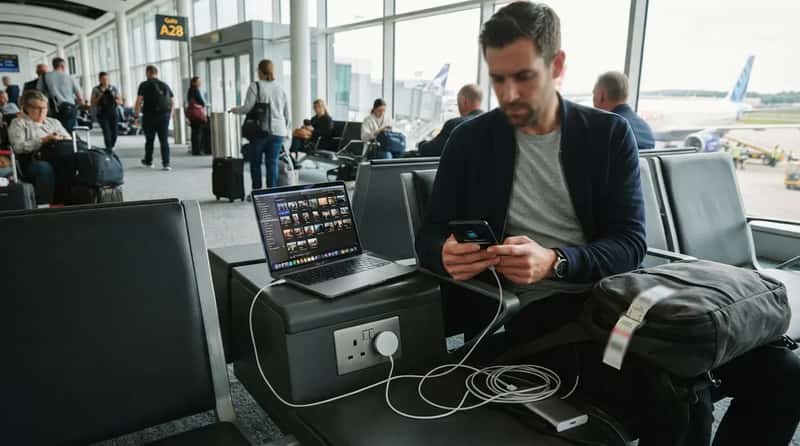
Airports have some of the fastest, most reliable free Wi-Fi you’ll find anywhere in public, and most travelers waste it scrolling instead of actually using it. This is the ideal window to back up phone photos, download shows for the flight, and top off every battery you own using the outlets built into nearly every gate area now.
Doing this before boarding avoids the dead-phone panic that hits mid-flight, when you realize your battery is sitting at four percent with no outlet in reach. It’s boring and completely unglamorous, but it’s one of the single most useful ways to spend a slow hour at the gate.
2. Buy the Overpriced Snack You’d Never Buy at Home
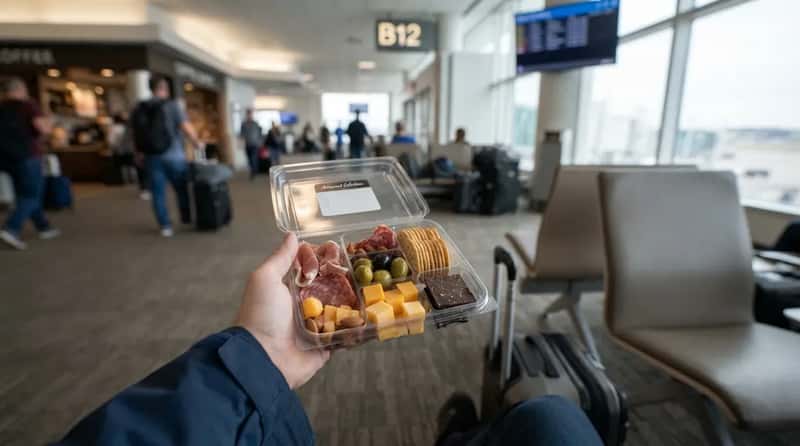
Airport food gets mocked constantly for its markup, but there’s a flip side nobody talks about: it’s also one of the only places you can justify a splurge without any guilt attached. That nine-dollar artisanal chocolate bar or fourteen-dollar charcuterie box feels absurd at a regular grocery store, but somehow makes total sense at gate B12.
Frequent travelers have turned this into a genuine ritual. The “airport treat” has become its own small tradition for a lot of families, especially with kids who end up associating the terminal with something fun instead of something stressful. It’s strange psychology, but it works every time.
At a Glance
- Airport markups make small splurges feel oddly justified
- Some families treat the “airport treat” as a built-in travel tradition
- Kids often end up associating the terminal with something fun
- The guilt-free splurge mindset is fairly unique to airport shopping
1. Just Sit Still and Do Absolutely Nothing
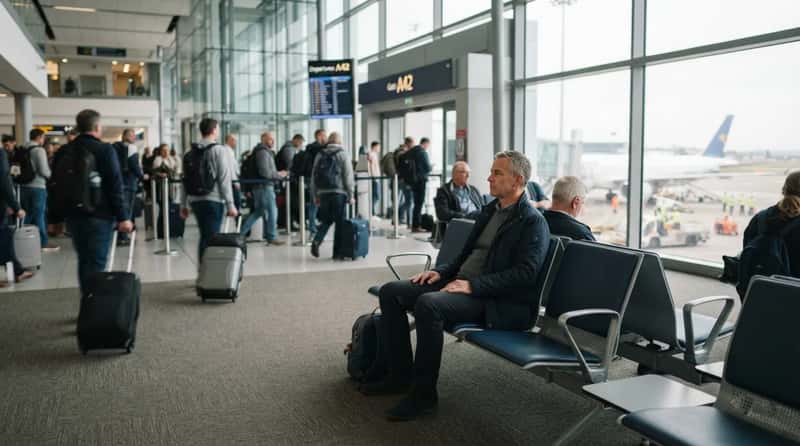
After fifteen entries packed with hacks, apps, and hidden rooms, the most controversial one might be the simplest: do nothing at all. No phone, no lounge, no scavenger hunt – just sit and watch a terminal function like the small, chaotic city it actually is.
Most people haven’t gone even ten straight minutes with zero stimulation in years, and an early airport arrival is one of the only socially acceptable places left to do it without anyone questioning why. Watching strangers race for gates, hug hello, or nap against their luggage is its own strange form of entertainment. Sometimes the best use of extra time is refusing to fill it at all.
Arriving too early at the airport isn’t the disaster most people treat it as – it’s a rare pocket of unstructured time in a world that almost never allows for one. Whether you spend it petting a certified therapy dog, napping in a soundproof pod, or just watching strangers reunite at arrivals, those extra hours often turn into some of the most quietly rewarding minutes of the entire trip.