You hand over the suitcase, the agent sends it off, and that’s the last you see of it. Most people picture one conveyor belt and one plane ride. What actually happens is a relay of tags, scanners, sorters, carts and hand-offs, and this list walks through all 16 steps.
The strange part is that about 5 billion passengers flew in 2025, and roughly 24 million bags still went astray. The step that causes the most trouble isn’t where most people point the finger. Keep going, because the biggest culprit shows up sooner than you’d expect.
#16 – The Tag Prints, and Your Suitcase Becomes a Barcode
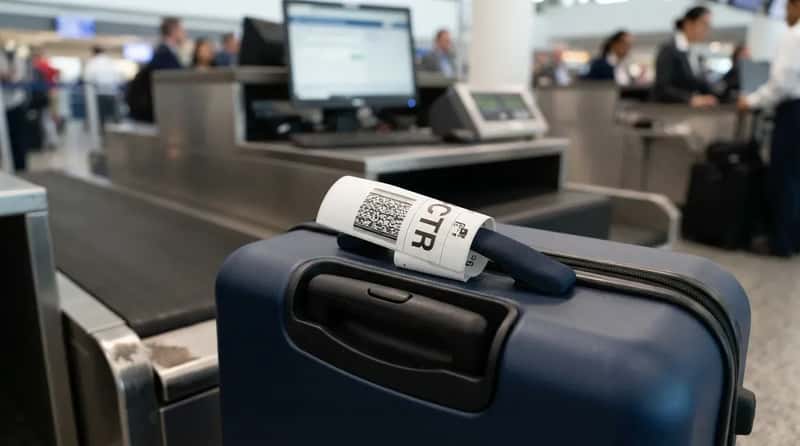
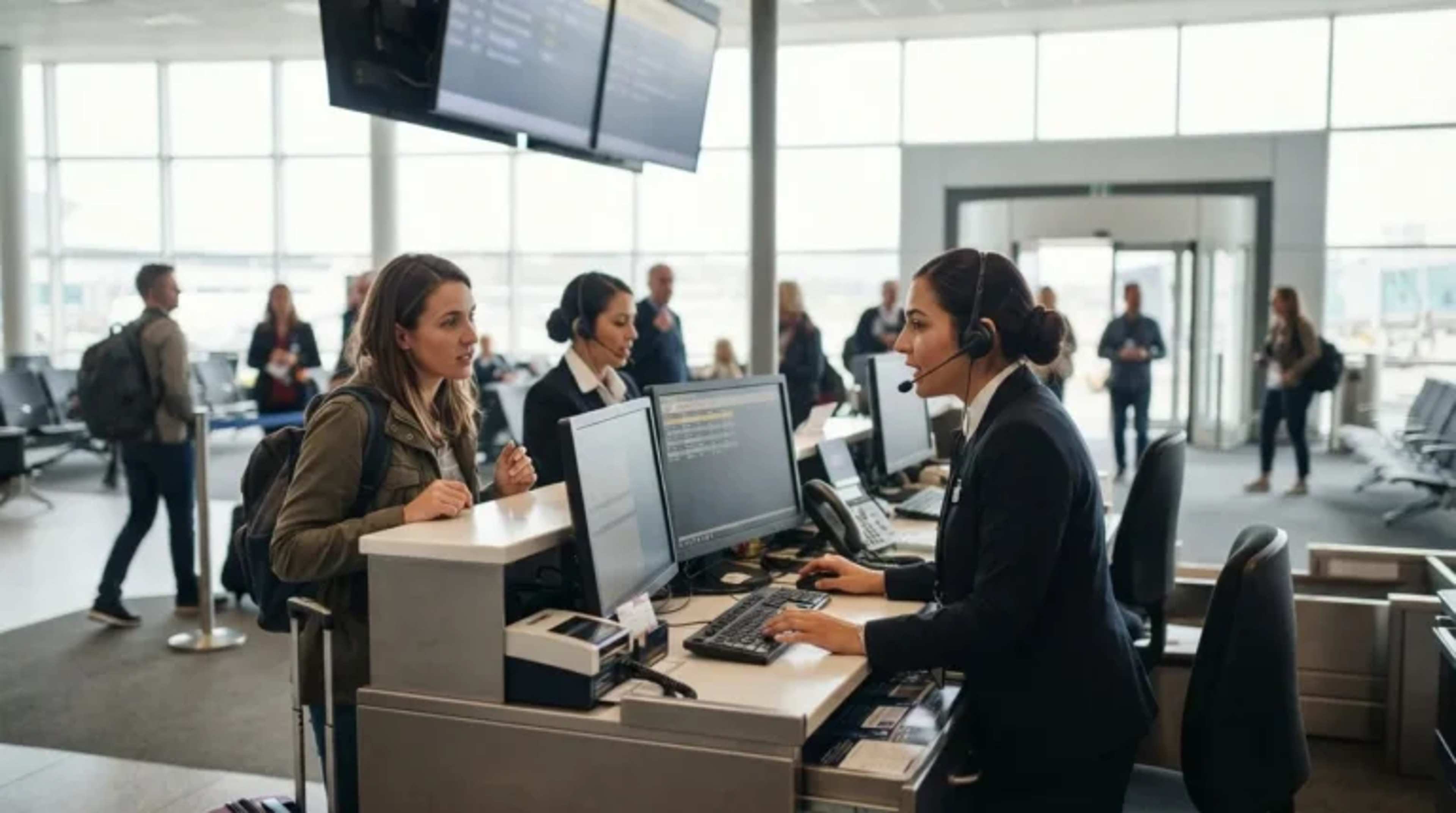
The moment the tag goes around the handle, your bag stops being “your bag” and becomes a code. The strip carries a barcode and a large three-letter code for the airport where the bag is headed. That little paper strip is the only instruction the system has for where to send it.
One wrong tag can send a suitcase to the wrong city without a human ever looking twice. Tagging errors show up as their own category in SITA’s breakdown of what goes wrong with bags. It’s a small slice, but it starts right at the counter. Next comes the moment where the first argument of the trip usually happens.
#15 – The Scale Decides Whether Your Bag Costs Extra
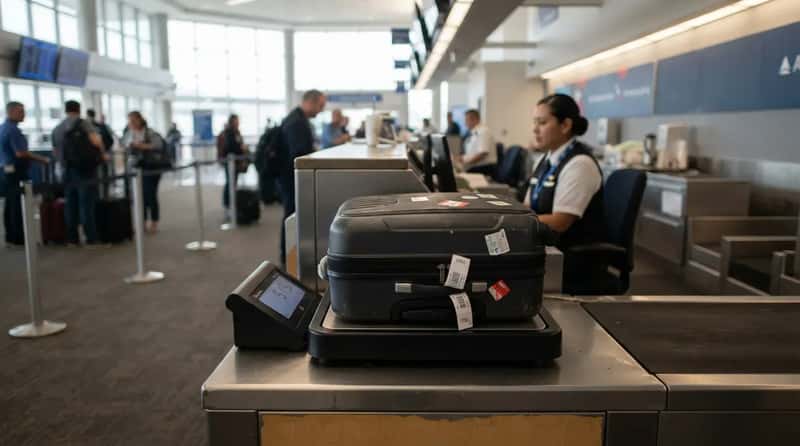
The weigh-in is the only step where your bag gets judged out loud. Many U.S. airlines cap standard economy checked bags at 50 pounds, and the scale doesn’t negotiate. A suitcase a pound or two over can mean a frantic repack on the terminal floor, or a surcharge.
Here’s where travelers split. Some say the scale is the fairest part of flying because the rule is posted and simple. Others say the fees are the least fair part of the whole trip. Either way, that number on the display is recorded before the bag moves an inch.
But the real disappearing act happens the second the bag leaves the agent’s hands…
#14 – The Rubber Curtain Swallows Your Suitcase
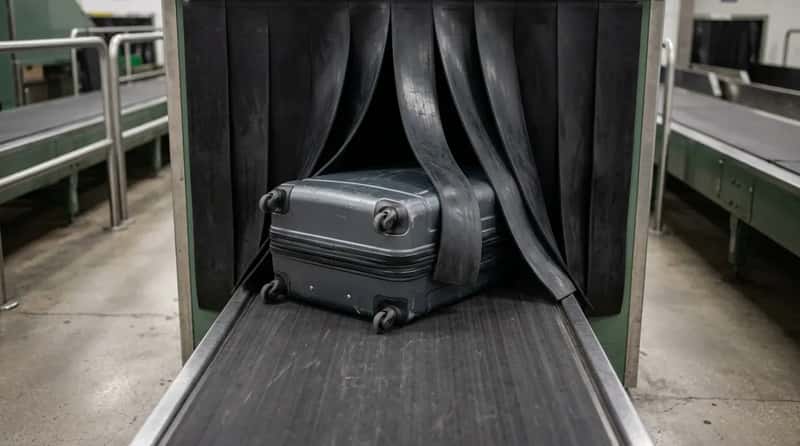
The bag slides onto a belt, pushes through the flaps, and you never see it again. At that point the agent’s job is basically done. A growing number of airlines now offer automated bag drop, so at some airports you’re the one tagging and sending it.
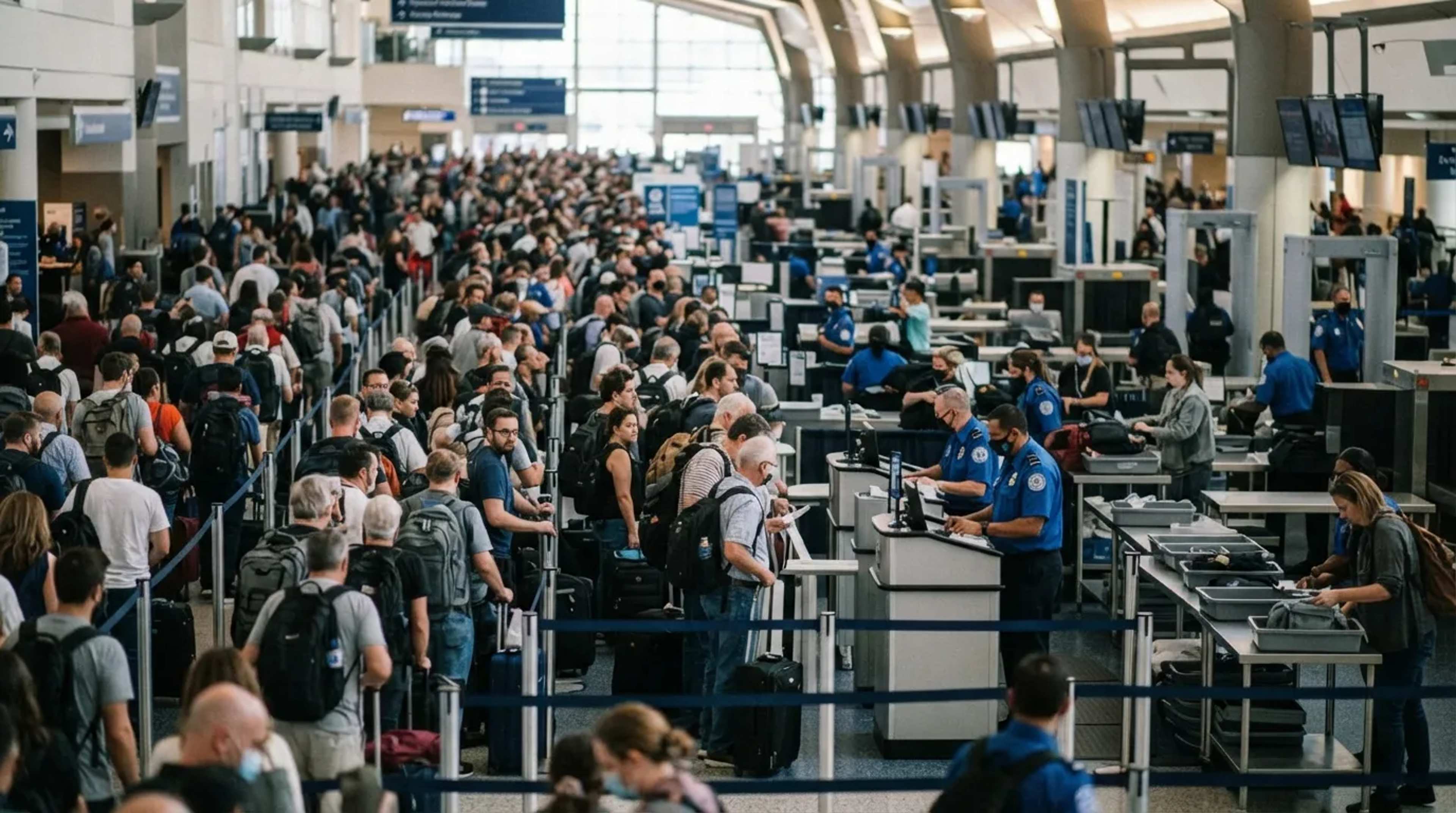
What happens next is out of the airline’s hands for a while. Your bag goes to TSA for security screening first. Only then does the airline move it toward your flight and, eventually, the baggage claim. For the next stretch, your suitcase is watched by machines, not people.
At a Glance
- The bag is tagged by an agent, or by you at an automated drop.
- It rides the belt through the flaps and out of your sight.
- TSA screening comes before the airline moves it any further.
- After screening, the airline routes it toward your flight.
#13 – Scanners Read the Tag While It’s Still Moving
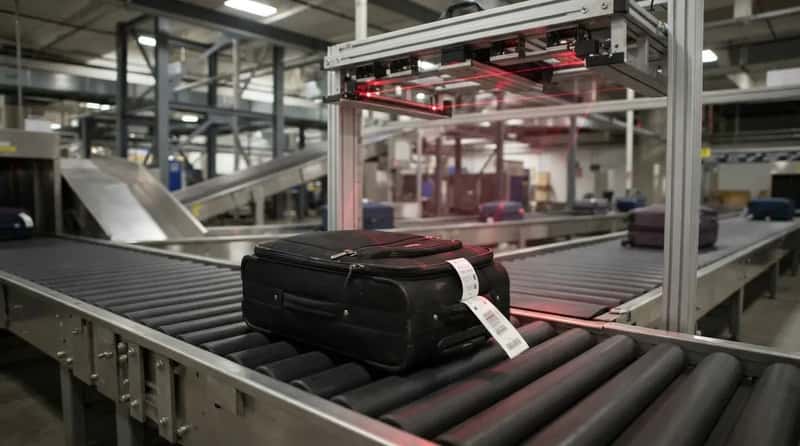
Your bag is being tracked before it finishes its first ride. At many airports, scanners along the belts read the tag at speed, so the system knows which bag is where. That data is what lets an airline say “it’s on the way” instead of guessing.
That first scan is one of the tracked steps under IATA Resolution 753. The rule calls for baggage tracking at four key stages: check-in, loading, transfer and arrival. Tracking exists at each of them, yet it isn’t universal. More on that gap shortly.
Scanned and tracked, your bag now heads to the machine most people never think about…
#12 – A CT Scanner Builds a 3D Picture of Your Packing
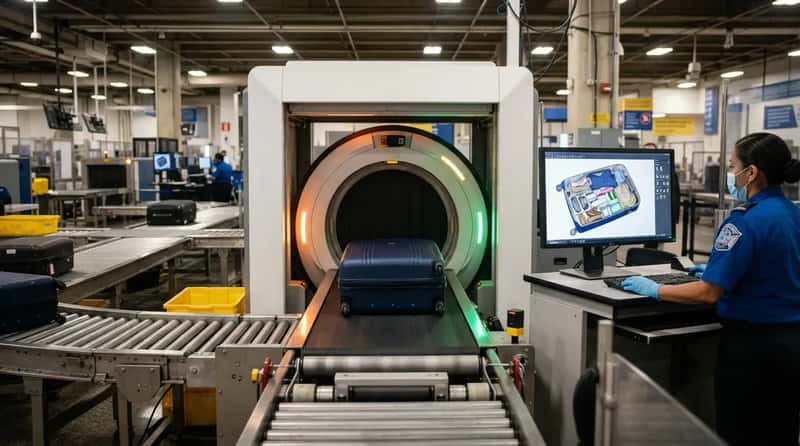
Your suitcase gets a medical-style scan without anyone unzipping it. TSA electronically screens 100% of checked baggage with explosives detection systems, and many of them use computed tomography to create detailed 3D images of what’s inside. Yes, that includes the socks you shoved in the corner.
TSA screens roughly 1.3 million checked bags every day. That volume is why the process is automated first and human second. No team of officers could open and inspect that many suitcases by hand.
Most bags sail through. The ones that don’t get a very different kind of attention…
#11 – Some Bags Get Opened, and Only a Slip of Paper Tells You
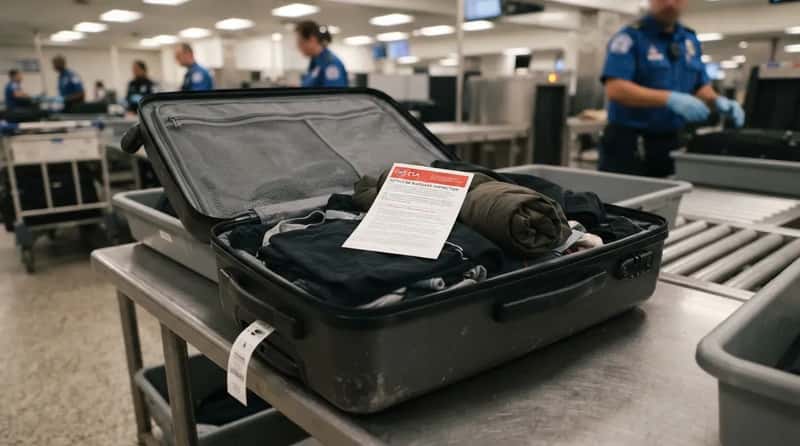
The bag you collect may not be exactly the bag you sent. Most checked bags are screened without a physical search. But when the machine or an officer wants a closer look, the bag gets opened.
Officers may also swab a bag and run the sample through a detector, testing for explosive residue. The only proof is a notice TSA places inside. TSA says it leaves a notice of baggage inspection in any bag it physically searches. If your lock isn’t TSA-recognized, officers may have to break it to get in, so finding that slip means someone has already been through your things.
Worth Knowing
- Every checked bag is screened electronically, but most are never physically opened.
- A hand search means a notice of inspection is left inside your bag.
- Swab tests look for traces of explosive residue.
- A lock that isn’t TSA-recognized may be cut to get inside.
#10 – A Sorting System Steers Your Bag Down the Right Chute
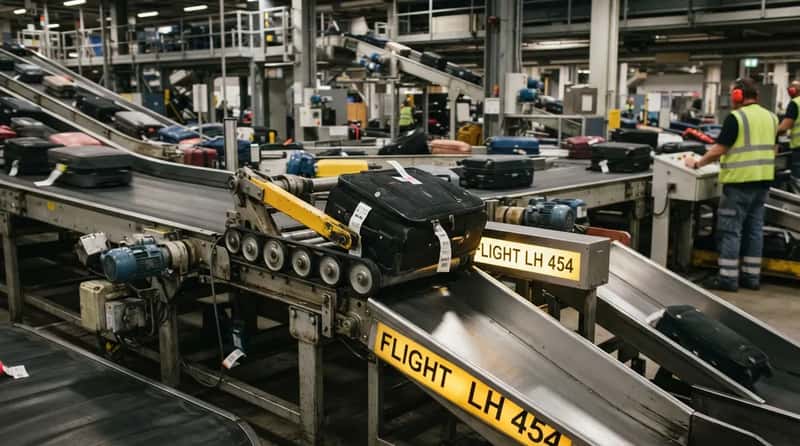
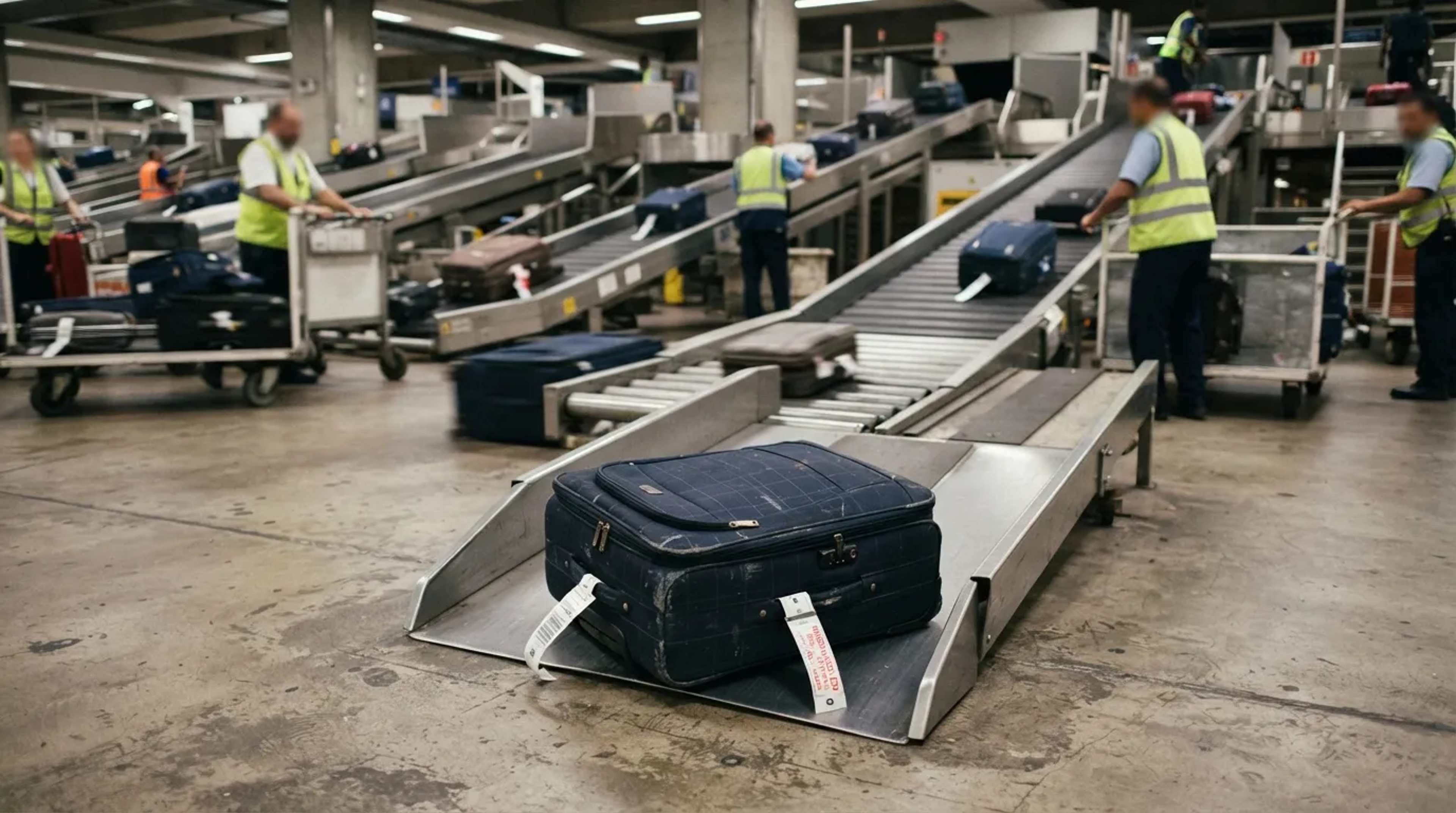
Your bag is now one of thousands, and a machine is picking its lane. The sorting system reads the tag and steers each bag toward the chute or carousel for its flight. It’s fast, mostly automatic, and invisible to everyone except airport staff.
It’s also a spot where bags can get sidetracked. A scuffed, torn or unreadable tag can knock a bag out of the automatic flow, so a person has to sort it by hand. That takes time your connecting flight may not have.
But sometimes the sorted bag doesn’t go straight to a plane. It waits…
#9 – Your Bag Can Sit in Storage Long Before Your Plane Shows Up
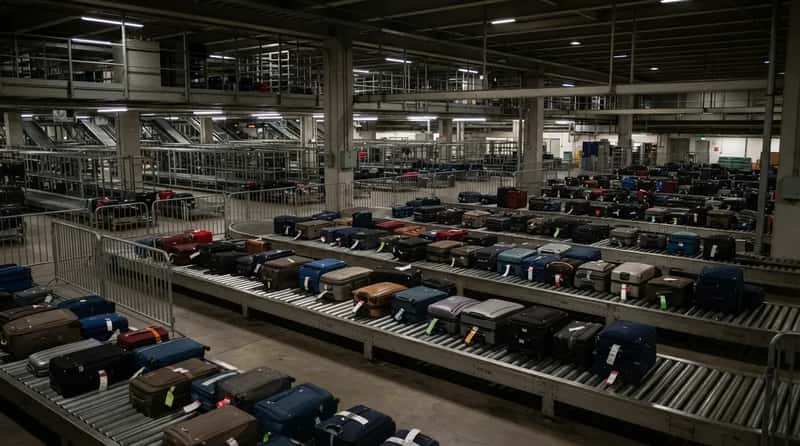
Your suitcase can spend hours somewhere you’ll never see. Some airports hold bags in early storage when passengers check in well ahead of departure. The bag waits in the system until the flight is ready to load.
Your bag can be in the building long before the plane is. That’s not a problem by itself. It does mean the bag has been screened and sorted while you were still holding a coffee at the gate. Whether early drop is a smart move or just extra waiting is a debate travelers haven’t settled. Next, the bag finally goes outside.
#8 – A Tug Pulls Your Suitcase Across the Ramp, Weather and All
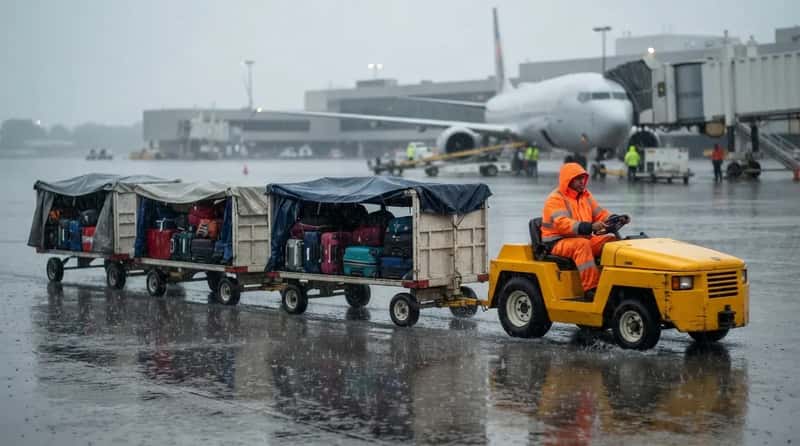
The next leg happens in the open, and it isn’t as controlled as the terminal. Bags are loaded onto carts or containers and pulled to the aircraft by a tractor. Everything out here runs on the airport’s schedule, and sometimes on the weather’s.
Weather and airport processes are formally counted as causes of mishandled bags. SITA puts operational factors such as airport processes, weather and aircraft space or weight limits at about 10 per cent of mishandling in 2024. A storm on the ramp can slow this leg down more than anything inside the terminal.
Then comes the step where a bag can quietly get left behind…
#7 – Ramp Workers Load Your Bag, and Sometimes It Just Doesn’t Make the Flight
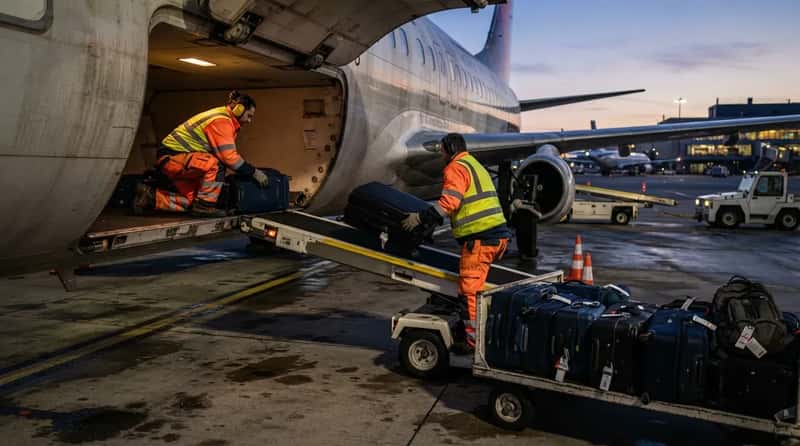
Loading is physical work, and it’s where a bag can get bumped. On many smaller jets, ramp crews load bags by hand. On larger aircraft, bags typically go in containers. Either way, the plane has hard limits on space and weight.
Roughly one in six mishandled bags in 2024 failed to get loaded. SITA’s breakdown puts failure to load at 16 per cent, while another summary puts it at 17 per cent. The gap between the two is small, and the takeaway is the same: a bag can pass every scan and still miss the flight.
#6 – The Loading Scan Is Supposed to Prove Your Bag Is on the Right Plane
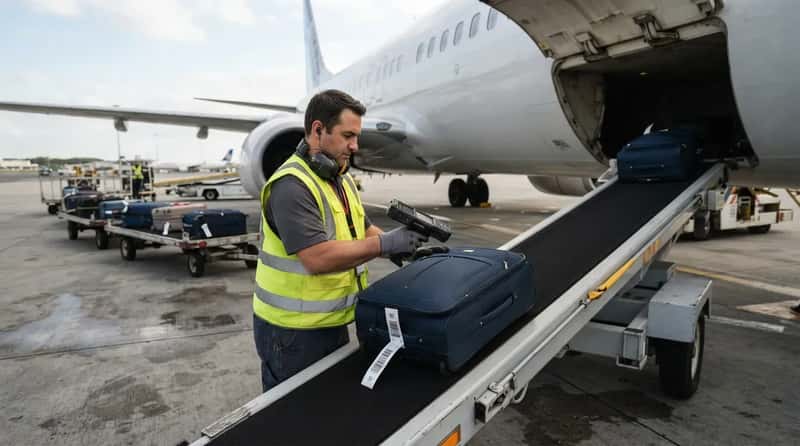
This is the checkpoint meant to end the “where did it go?” question. When a bag is scanned as it’s loaded, the system can confirm it’s on the right aircraft. It’s one of the four stages that IATA’s tracking rule covers.
Here’s the catch. Industry-wide baggage tracking under Resolution 753 has passed the 50% mark, with full compliance targeted for 2027. Some travelers argue this should have been standard years ago. Still, roughly half the industry’s tracking is now in place, and that’s why airline apps show more bag updates each year.
Now the bag is finally in the air, and the landing brings a different problem…
#5 – At the Carousel, Your Bag Has Look-Alikes
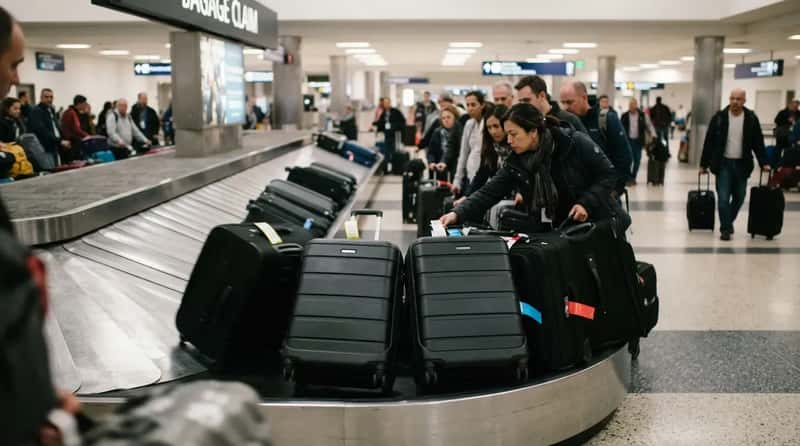
The last stretch is the most public. Ground crews unload the bag and send it to the carousel, where a crowd of tired people waits. Then you spot it, and it looks a lot like the bag next to it.
This is a known problem. SITA’s list of causes includes bag switches and arrival mishandling at about 4 per cent. Sometimes the wrong person walks away with the right bag. That’s why a name tag and a quick check of the number matter more than they sound.
Not everyone gets a clean arrival, though, and connecting flights are where the trouble piles up…
#4 – The Connection Dash Is Where Most Trouble Starts
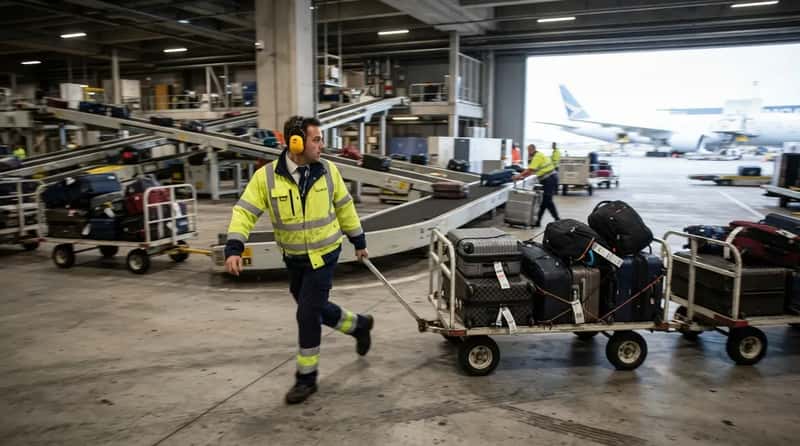
The single biggest source of mishandled bags isn’t the counter or the belt. It’s the connection. Transfers made up 39% of mishandling cases in 2025, down from 41% the year before. That’s still the largest share of any cause.
International trips make it worse. In 2025, international routes mishandled 9.12 bags per 1,000 passengers, against 1.65 on domestic routes. An international trip has more than five times the mishandling rate of a domestic one. Some frequent flyers say never to check a bag on a tight connection. Others call that overcautious. The numbers show where the risk sits.
Quick Compare
- Transfers: 39% of mishandling cases in 2025.
- Failure to load: 16% of cases in 2024.
- Airport processes, weather and weight limits: about 10% in 2024.
- Bag switches and arrival mishandling: about 4%.
And when a bag does go wrong, the truth is stranger than most people think…
#3 – Most “Lost” Bags Are Actually Just Late
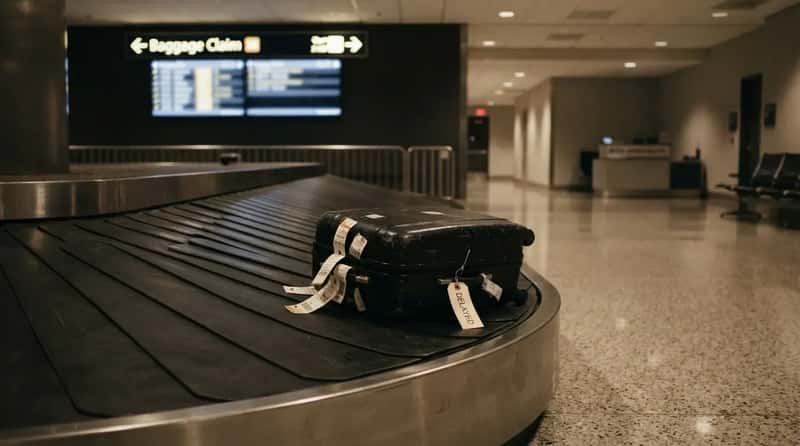
Everyone says “lost luggage,” but that’s usually the wrong word. SITA’s breakdown put delayed bags at 74%, lost or stolen at 8%, and damaged or pilfered at 18%. Most bags are late, not gone.
The recovery odds are good. Of the 33.4 million mishandled bags in 2024, over 66% were resolved and closed within 48 hours. Only about 8% of mishandled bags were lost or stolen. Region matters, too: Asia-Pacific came in lowest at 3.1 mishandled bags per 1,000 passengers, followed by North America at 5.5 and Europe at 12.3.
That’s why the next trick, tracking your own bag, changed the game…
#2 – A Tiny Tracker in Your Suitcase Can Talk to the Airline
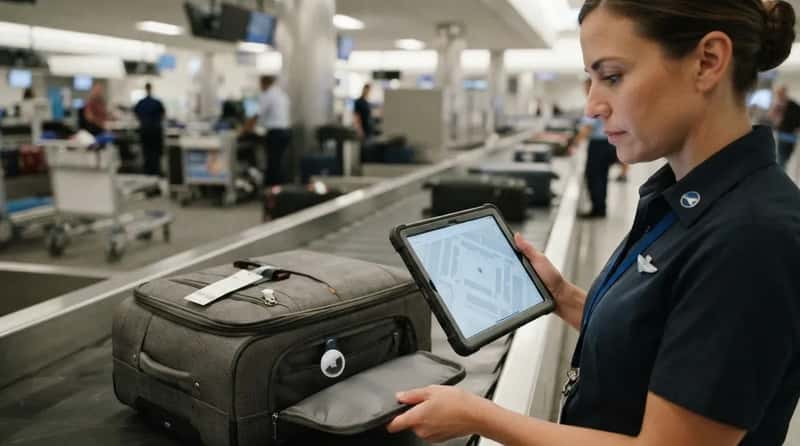
The most powerful tool for finding a bag might be sitting in your pocket. Apple’s Share Item Location feature was integrated with SITA WorldTracer, so passengers can share an AirTag’s location with airlines. That means staff can see where a bag is instead of relying on your description.
British Airways, Lufthansa, Qantas, Cathay and Virgin Atlantic are among the airlines that adopted it. And it’s not just tech fans asking: 47% of travelers said mobile tracking would make them more confident checking a bag. Some argue airlines should have tracked every bag on their own by now. The gap is real, and travelers are filling it themselves.
But the last item is the one airlines would rather you never think about…
#1 – One Mishandled Bag Can Wipe Out the Profit on 30 Seats
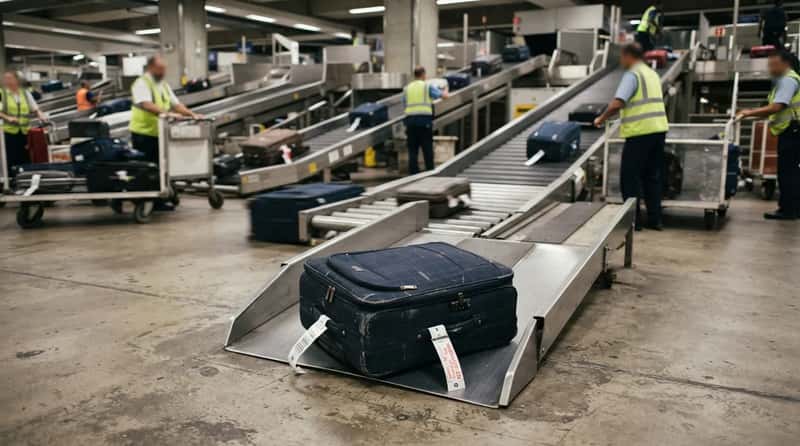
A missing suitcase is a bad day for you. For an airline, it’s a financial hit too. Mishandling costs the industry $6.3 billion annually, with an average cost of $260 per bag. That’s far more than most travelers assume.
One mishandled bag wipes out the profit from more than 30 seats sold. With net profit averaging just $8 per passenger, five mishandled bags erase the profit on well over a hundred more. For lost or damaged bags, up to 70% of the cost is compensation. That’s the real reason bag tracking is such a priority right now: every step you just read about is a place where money can leak out.
So the next time your suitcase vanishes behind that rubber curtain, remember it isn’t drifting off alone. It’s starting a chain of scans, sorts, carts and connections, and the riskiest link isn’t the one most of us would bet on.
Most bags that go wrong are only late, and most are back within two days. Tracking is finally catching up, with mishandled bag rates dropping 23% in 2025. Still, about 24 million bags went astray in a single year, and every one of them started at a counter just like yours.