Most people pack a suitcase the same way they always have – folding everything flat, hoping the lid closes, then standing on it, then removing three shirts and trying again. What they don’t realize is that the average traveler wastes nearly a third of their suitcase on bad technique alone. Experienced carry-on-only travelers aren’t traveling lighter because they have less stuff. They just know things most people never get told.
Some of these hacks feel almost too simple to be real. A few will make you genuinely angry you didn’t know them sooner. What they all share: once you try them, going back to the old way will feel like leaving money on the table. Here’s what the road-tested, never-check-a-bag crowd actually does – counting down from the most overlooked to the one that ties it all together.
#17 – Stop Folding Everything Flat (The Default Mode That Wastes the Most Space)
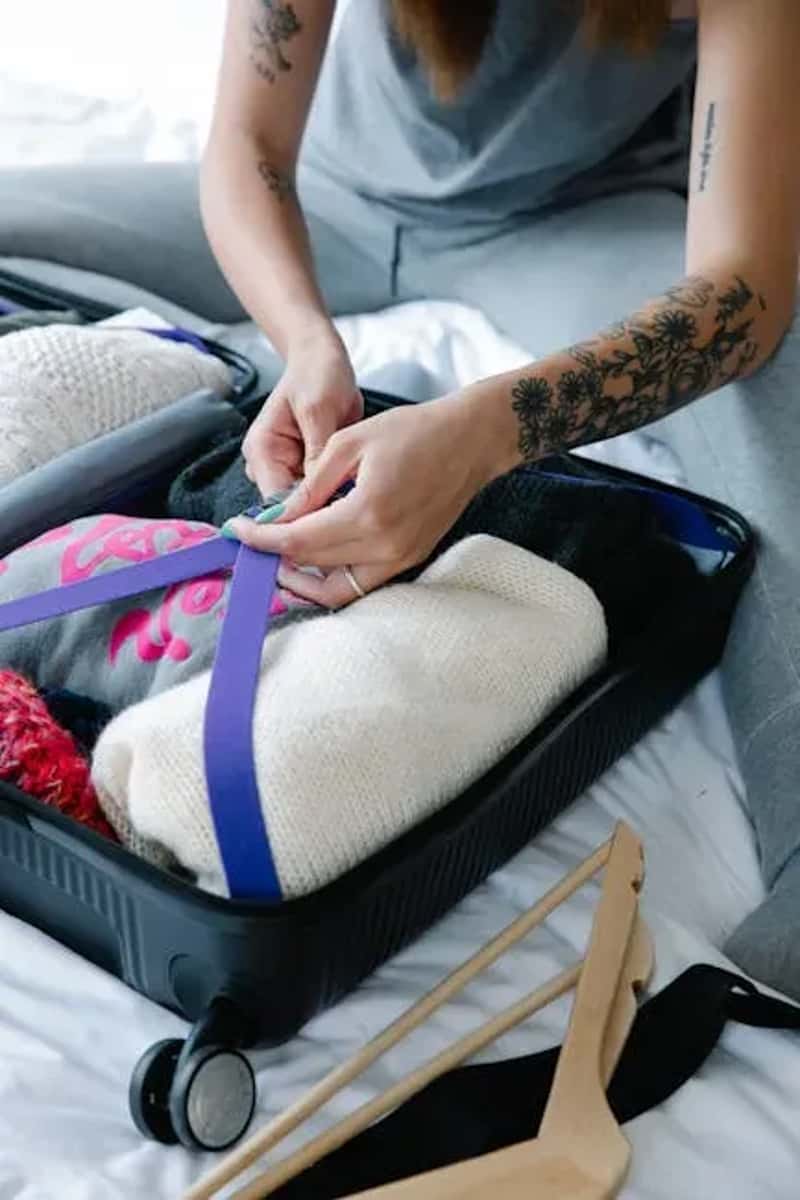
Folding clothes flat and stacking them in horizontal layers is the most natural packing instinct – and one of the biggest space wasters in existence. Those gaps between folded edges and suitcase walls are dead air you’re physically dragging through every airport. Flat stacking also means you can’t see what’s in your bag without lifting every layer, which leads to repacking chaos at 6 a.m. in a hotel room.
The fix isn’t complicated – it just means ditching your default. Even swapping a few items from flat-fold to rolled can free up a surprising amount of room. On average, rolling increases usable suitcase space by 10-20%, especially in carry-on luggage. The gains are real. The method just requires unlearning a habit most people picked up from watching their parents pack.
Fast Facts
- Flat-folded stacks trap dead air between every layer – space you’re hauling but not using
- Switching even half your items from flat-fold to rolled can free 10-20% more usable space
- Flat stacking makes visual inventory nearly impossible without unpacking everything
- Most people learned this method from their parents – not from anyone who actually packs efficiently
#16 – Roll Your Casual Clothes Into Tight Cylinders
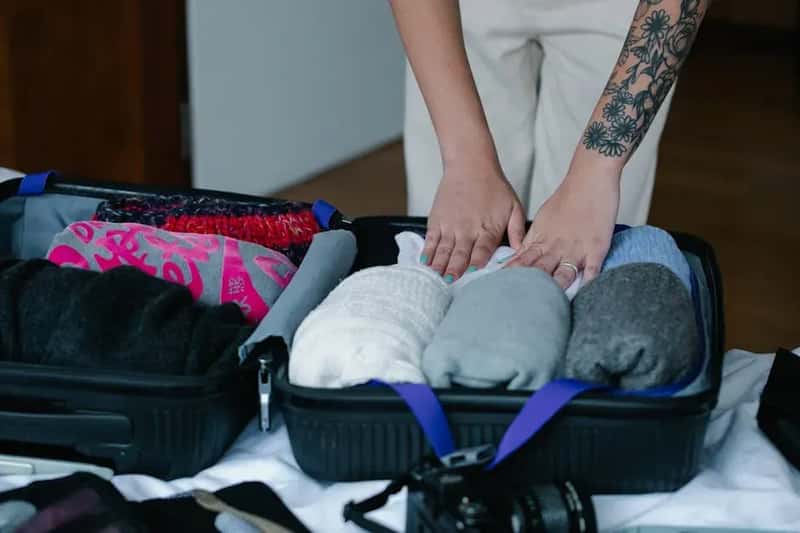
Rolling is the gateway hack – the one most people have heard of but still don’t do correctly. The key word is tight. Fold the garment into a rectangle first, then roll it into a firm cylinder roughly the width of a packing cube. A loose roll is nearly as bad as folding. A tight roll becomes a self-contained unit you can slot into gaps like a puzzle piece.
Rolling soft fabrics – cotton t-shirts, knits, lightweight pants, pajamas – can reduce their footprint by up to 30% compared to traditional folding. It also gives you a visual inventory the moment you open your bag. No more lifting layers to find one shirt buried at the bottom. For hostel stays or multi-city trips where you’re living out of your bag, this visibility alone is worth the switch.
#15 – Know Which Clothes Should Never Be Rolled
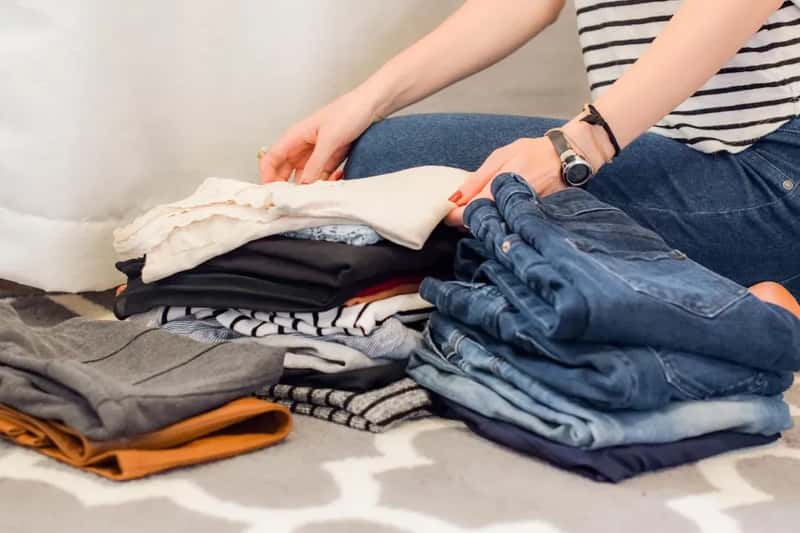
Rolling everything is the mistake people make right after discovering rolling. The method works brilliantly for casual, lightweight, synthetic fabrics – and creates a wrinkled disaster for everything else. Button-up shirts, blazers, dress trousers, and anything made from linen or structured cotton will come out looking like they were crumpled in a fist. Rolling bunches fabric in ways that folding simply doesn’t.
The rule is straightforward: roll synthetics, jersey knits, and anything stretchy; fold natural materials like cotton, linen, and wool, and use compression to handle the bulk. The smartest packers combine both methods in the same bag – rolled casual wear filling the gaps, folded formal pieces stacked flat with tissue paper between them. It’s not one-size-fits-all. It’s using the right tool for each fabric.
Quick Compare
- Roll these: T-shirts, jersey knits, synthetics, leggings, underwear, pajamas
- Fold these: Button-up shirts, blazers, linen, structured trousers, wool
- Compress these: Sweaters, fleece layers, bulky hoodies, thick joggers
- Bundle wrap these: Full formal outfits for weddings, conferences, or multi-night stays
#14 – Use the Military “Ranger Roll” for Maximum Compression
The standard roll is good. The ranger roll – the technique the U.S. military actually uses to keep uniforms compact and crease-free inside a pack – is on a different level. The difference is the cuff lock: you fold up the bottom edge of the garment before rolling, then use that folded cuff to wrap tightly around the outside of the finished roll, locking it in place so it can’t unravel when you dig through your bag.
The result is a dense, self-contained bundle that holds its shape under pressure. Compared to traditional folding, ranger rolling can free up 20 to 30 percent more space in your bag – enough to squeeze in an extra shirt, a second pair of shoes, or room for souvenirs without upgrading your luggage. It takes about 30 extra seconds per item the first few times. By the third trip, it becomes automatic – and your bag will look like it was packed by someone who does this professionally.
#13 – Pack Vertically, Not in Horizontal Layers
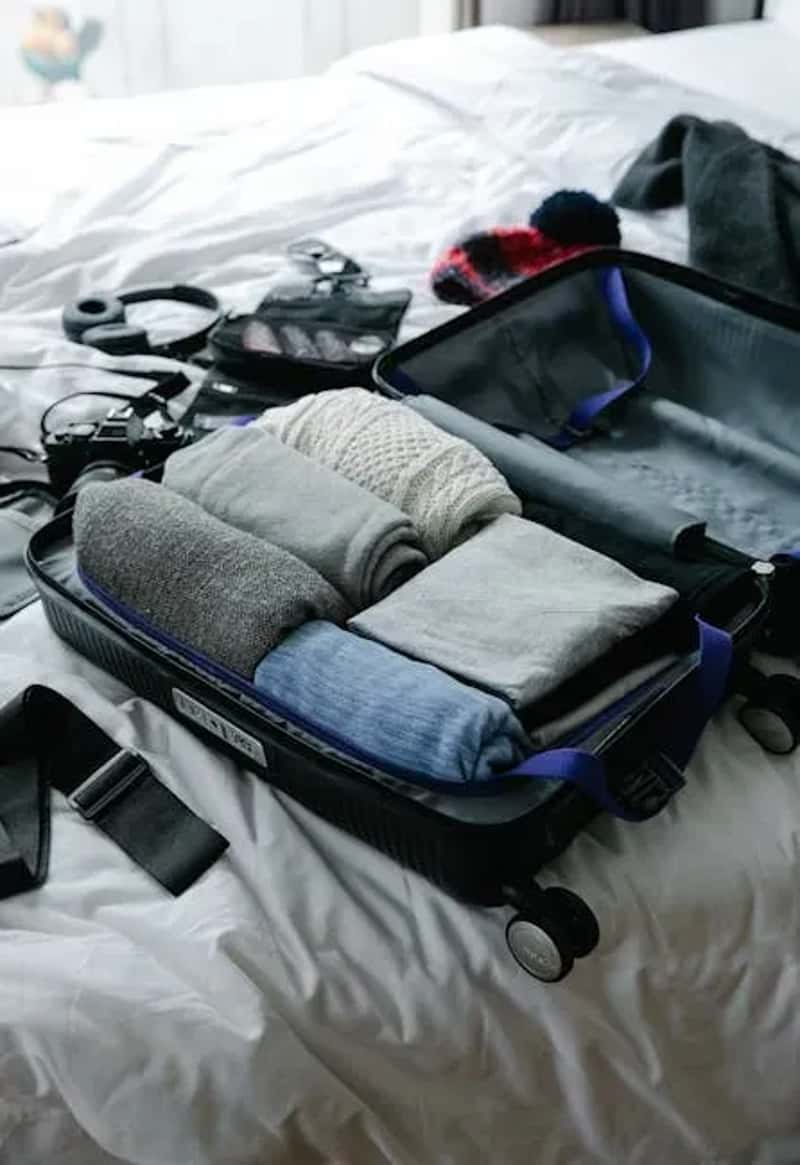
Most people load a suitcase the way they load a dishwasher – in horizontal layers, stacked on top of each other. The problem is that anything you need is buried under everything you don’t. Experienced packers flip the logic: instead of stacking horizontally, pack clothes standing upright from the wheels up, side by side like files in a drawer.
Pack vertically and you can see every item in your bag at a single glance without touching a thing. Take it one step further and pack complete outfits in order of use – the first day’s outfit at the front, the last day’s at the back. Getting dressed each morning becomes a grab-and-go operation. Repacking mid-trip takes half the time. It’s a small mindset shift that makes the entire travel experience feel more controlled.
#12 – Stuff Your Shoes (Seriously, Every Inch of Them)
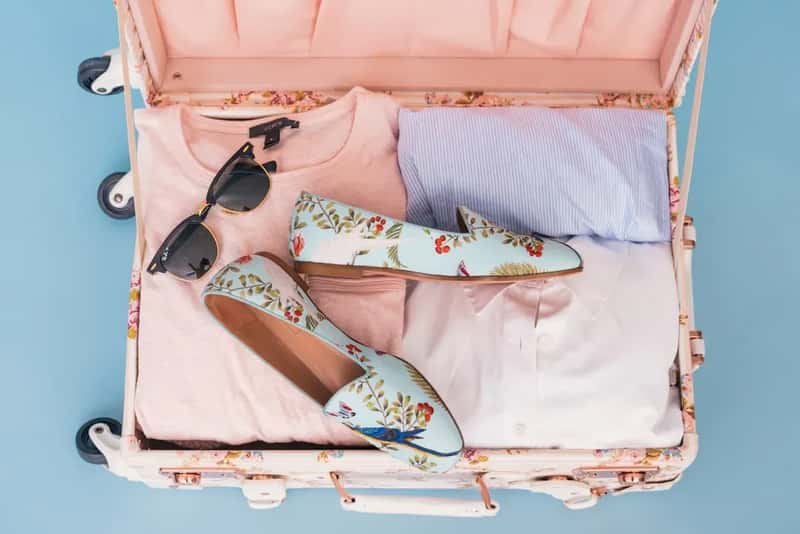
Shoes are the biggest source of unused space in most suitcases. Every pair you pack contains a hollow cavity that most people leave completely empty. That’s free storage you’re already carrying. Socks, underwear, a charging cable, a travel-size deodorant in a resealable bag – all of it fits inside a shoe with room to spare.
Place shoes heel-to-toe along the bottom of your suitcase, and before they go in, fill them completely. Cover the soles with disposable shower caps to keep grime off your clothes – a trick that sounds small until you’ve unpacked a shoe print on a white blouse. Treating your shoes as storage containers instead of just footwear is one of the simplest, most underused packing moves there is. Every pair becomes a bonus compartment.
At a Glance
- Every shoe cavity can hold 1-2 pairs of rolled socks plus small accessories
- Heel-to-toe placement along the bag base maximizes flat surface space above
- Shower caps over soles cost almost nothing and prevent sole prints on clothing
- Ranger-rolled socks fit more efficiently inside shoes than loosely balled pairs
- Limit yourself to 3 pairs maximum – wear the bulkiest pair on travel day
#11 – Wear Your Bulkiest Items on Travel Day
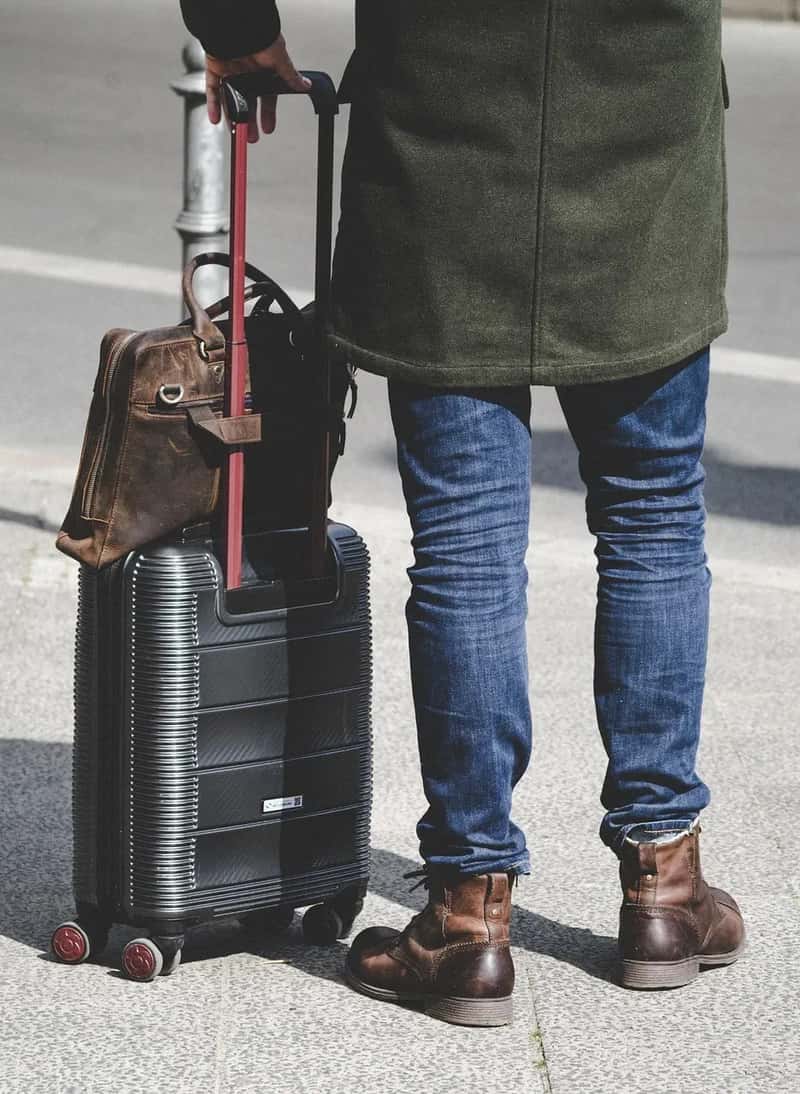
This is the hack that sounds obvious and yet most people forget to actually do it. Your bulkiest jacket, your heaviest jeans, your chunkiest boots or sneakers – wear them onto the plane or into the car. The clothes on your body count as zero suitcase space. That one decision alone can open up enough room to skip checking a bag entirely.
Jeans are a prime target. They’re heavy, they resist compression, and they take up real estate that three lighter items could share. A thick sweater you wear on boarding day is a sweater that doesn’t need to be folded, compressed, or stored. Limit yourself to three pairs of shoes maximum – wear the biggest pair while traveling, pack the other two. It feels almost too simple. That’s what makes it so effective.
#10 – Build a Capsule Wardrobe Before You Pack a Single Thing
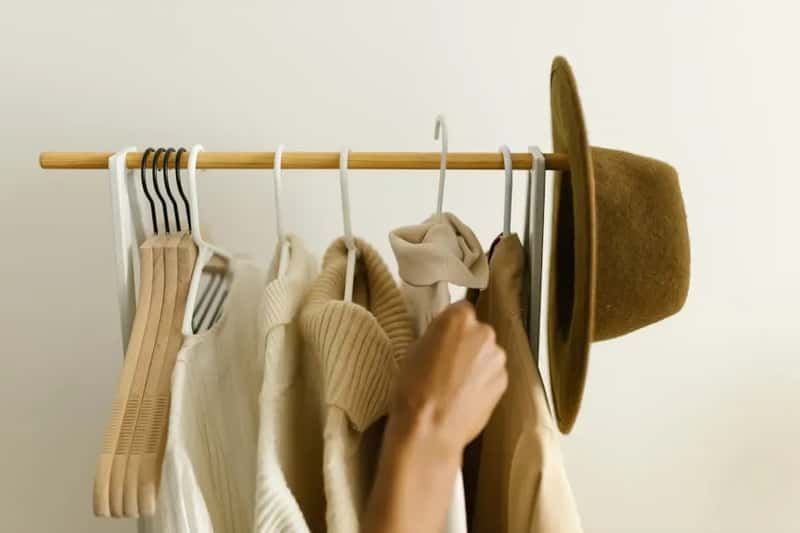
A capsule wardrobe for travel is a small collection of clothes where every item works with every other item. The concept sounds more involved than it is – it really just means choosing clothes intentionally instead of grabbing options. Pick a cohesive color palette – white, black, navy, and one neutral – and make sure every piece pairs naturally with at least three others.
This approach cuts your clothing volume in half while actually giving you more outfit combinations, not fewer. Most experienced travelers say they’ve never once missed the extra clothes they left behind. A good rule: once you’ve made your packing list, remove a third of it. If something made the list as a “just in case,” it probably won’t make it out of the suitcase.
#9 – Use Packing Cubes as Your Suitcase’s Drawer System
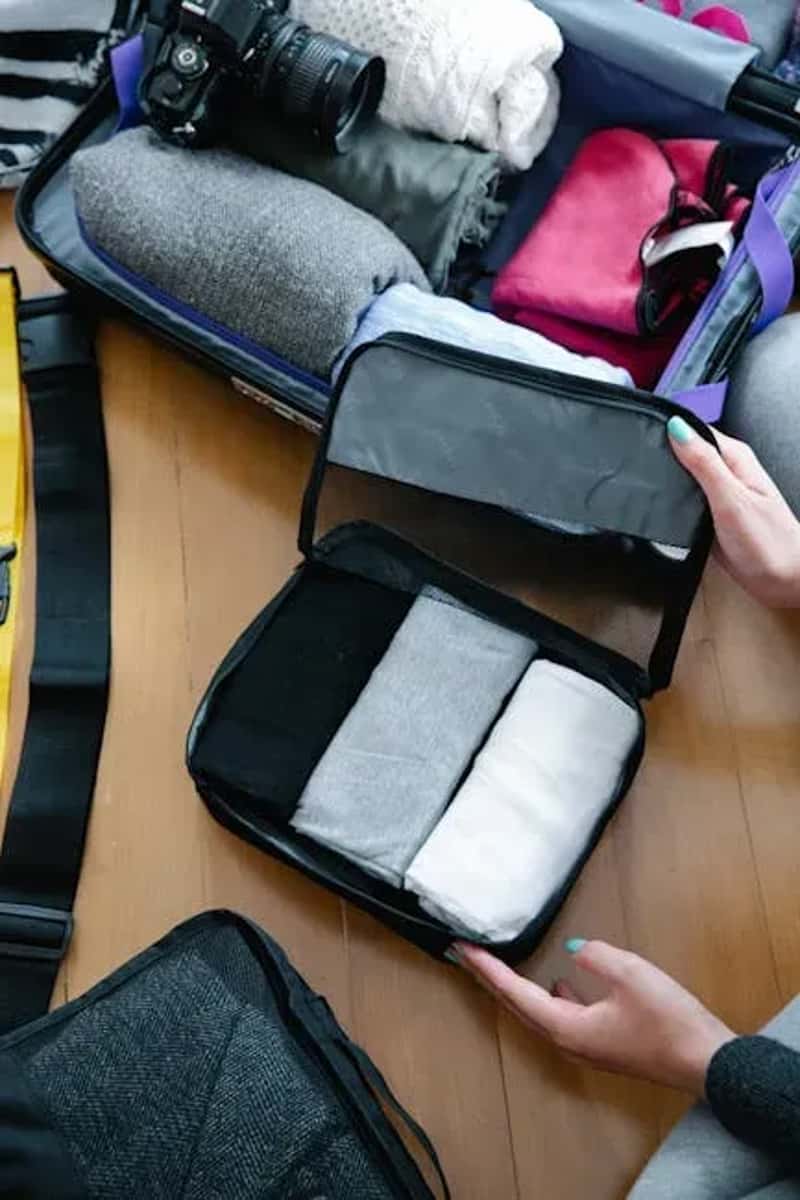
Think of packing cubes the way you think about dresser drawers – each one holds a category, everything has a home, and nothing migrates into everything else. One cube for tops, one for bottoms, one for underwear and socks. Or pack by outfit if that suits your style. Either way, the organizational benefit is immediate and the space savings are real.
Rolling clothes inside packing cubes saves roughly 10-15% more space than loose packing, because the rolls stack without air gaps. The organizational payoff may matter even more than the space savings – you know where everything is, packing is faster, and you’re far less likely to tear through the whole bag looking for one item. And when your bag is over the weight limit at check-in, you can calmly transfer one cube to your personal item instead of tearing through everything in the middle of a terminal.
#8 – Upgrade to Compression Packing Cubes for a Serious Size Reduction
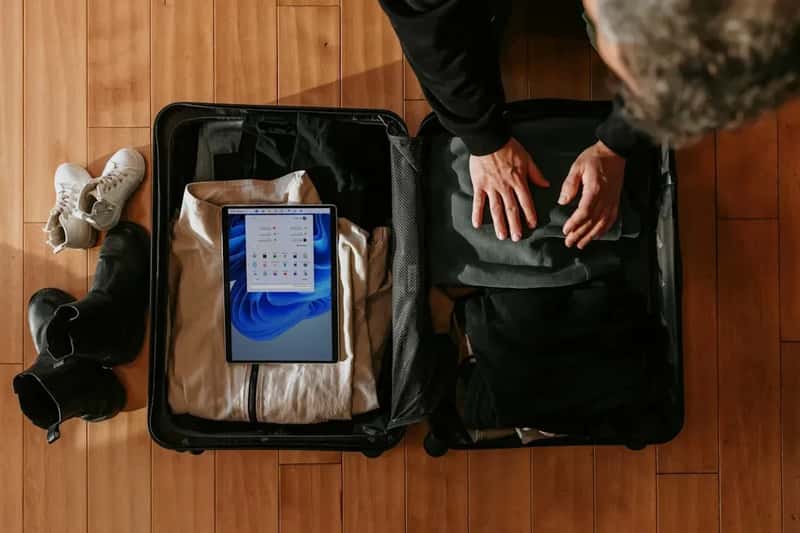
Standard packing cubes organize. Compression packing cubes organize and compress – and the difference is significant enough to change what size luggage you need. These cubes use a double-zipper mechanical compression system that forces air out without needing a vacuum pump, reducing clothing volume by 20 to 50 percent. Bulky sweaters and fleece layers are where the difference is most dramatic.
Travelers using compression cubes regularly report being able to downsize from a large checked bag to a medium, or from a medium to a carry-on – the same volume of clothes, just a fraction of the space. Cotton shirts stored in compression cubes also show fewer wrinkles compared to loose packing, because the compression holds everything flat and stable rather than letting it shift around. The cubes pay for themselves the first time you skip a checked bag fee.
Worth Knowing
- Compression cubes reduce volume by 20-50% – standard cubes offer about 10-15% through better organization alone
- The double-zipper system squeezes air out mechanically – no pump needed, unlike vacuum bags
- Best used for soft, bulky items: sweaters, fleece, hoodies, and thick knits
- Delicate fabrics like silk can get permanent creases – stick to casual wear in compression cubes
- A set of three compression cubes adds roughly 1 pound to your bag weight – usually worth the trade-off
#7 – Vacuum Compression Bags for Your Bulkiest Pieces
For winter travel – sweaters, fleece pullovers, heavy jackets – vacuum compression bags are in a completely different league from standard packing cubes. Five winter sweaters that would eat half your suitcase can be compressed down to less than a quarter of that space. The physics are simple: remove the air, remove the bulk. Vacuum compression can shrink bulky items like winter gear by up to 80%, making them one of the most dramatic space-saving tools available.
The tradeoff is real: vacuum bags require a pump to re-compress mid-trip, and clothes that aren’t properly folded beforehand will come out wrinkled. They also add a layer of planning – you can’t just grab and go. But for cold-weather packing or anyone trying to cram a week of winter gear into a single bag, they’re genuinely transformative. As a bonus, they protect clothes from moisture, odors, and the general chaos of checked baggage.
#6 – Use the Bundle Wrapping Method for Wrinkle-Free Formal Clothes
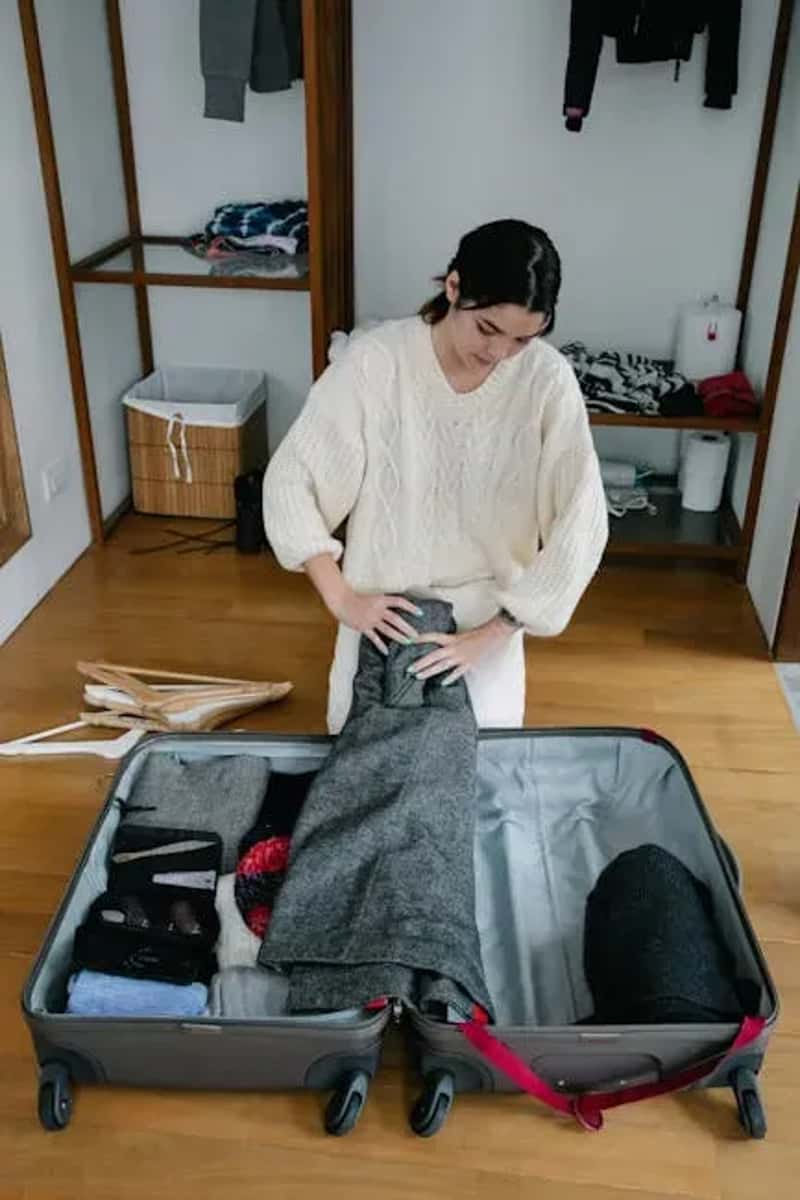
Bundle wrapping is one of the least-known packing techniques, and the results are almost hard to believe the first time you try it. The method involves laying clothes flat on a surface in a specific order – jacket first, then longer items, then shorter items – and wrapping them one by one around a central core, usually a packing cube filled with soft items like socks and underwear. Everything gets wrapped around that core like layers of an onion.
Because there are no folds, there are no crease points. The fabric wraps in long, gentle curves instead of sharp bends, and the bundle holds its shape under pressure. Unpack it on arrival and everything comes out looking flat and ready. It works best for trips where you’ll stay in one place long enough to fully unpack – think a five-night hotel stay for a wedding or a business conference where showing up wrinkled isn’t an option.
#5 – Line Your Suitcase Walls With Rolled Belts and Flat Accessories
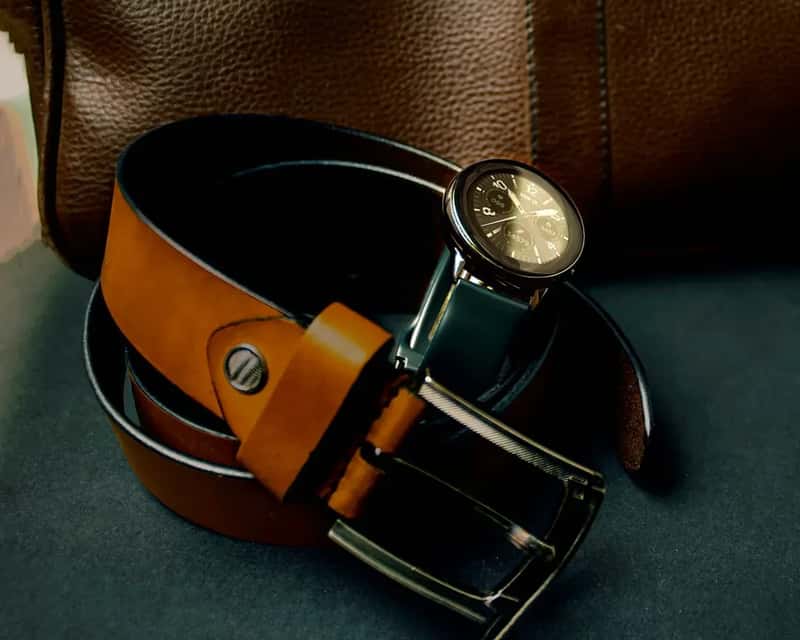
The edges and corners of a suitcase are the most consistently wasted real estate in most people’s bags. The dead zone along every interior wall is space that folded clothes simply can’t reach efficiently. Belts solve this perfectly – laid flat along the perimeter of the suitcase, they follow the curve of the bag, take up virtually no depth, and keep their shape far better than when they’re coiled in a spiral.
Scarves, ties, and thin lightweight layers can be tucked into the same perimeter gaps, turning the walls of your suitcase into active storage instead of wasted border. Small accessories – chargers, jewelry pouches, a travel umbrella – can fill the gaps between rolls in the main cavity. It’s the kind of detail that separates a mediocre pack job from one that somehow fits everything and still closes with room to breathe.
#4 – Use Dry-Cleaning Bags Inside Your Suitcase to Stop Wrinkles in Their Tracks
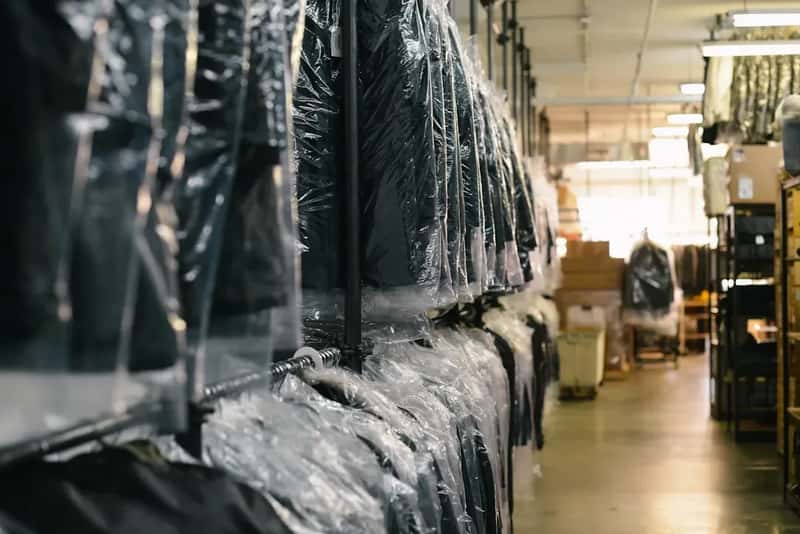
This one surprises people every time – and it’s completely free. Dry-cleaning bags, the thin plastic sheaths that come back with your clothes from the cleaner, dramatically reduce wrinkles when used between folded garments. The thin plastic layer reduces friction between fabric surfaces so clothes slide against each other instead of grinding and compressing into creases. It’s a physics trick disguised as a packing tip.
Layer a dry-cleaning bag between each folded dress shirt or pair of dress trousers and the wrinkle reduction is almost immediate. The clothes arrive looking like they were folded from a drawer, not survived a flight. Keep a few bags in your luggage drawer specifically for travel – they come free with garments you’ve already cleaned, they weigh almost nothing, and they solve one of the most frustrating problems of packing formal clothes without switching to a garment bag.
Why It Stands Out
- Costs exactly nothing – dry-cleaning bags come free with clothes you’ve already cleaned
- Works by reducing friction between fabric layers, not by adding padding or bulk
- Weighs almost nothing and folds flat – zero added bulk to your bag
- Especially effective for dress shirts, silk blouses, and linen pants
- One bag between each folded layer is all it takes – no special technique required
#3 – Apply the “Edit Twice, Then Edit Again” Rule Before You Zip
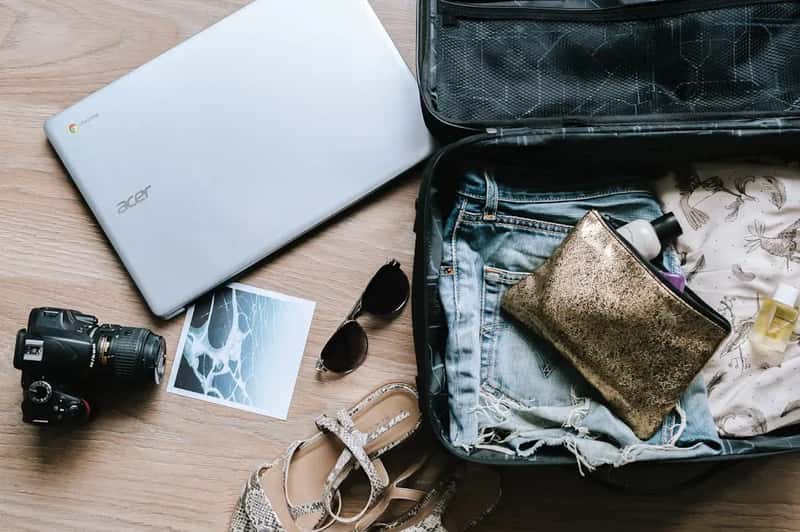
The single biggest space problem in most suitcases isn’t technique – it’s volume. People bring too much. Every packing method in this list gets undermined the moment you overload the bag. The most powerful space-saving move isn’t a fold or a roll or a cube – it’s putting something back in your closet before you ever leave. Lay everything out, look at it honestly, then remove at least three items.
Then edit again. The “just in case” clothes are the enemy – the backup outfit, the third pair of shoes, the jacket for a restaurant you might not even go to. Those items represent roughly 30-40% of most people’s packed volume, and they almost never get worn. No traveler has ever landed home and thought “I wish I packed more.” Edit ruthlessly before you zip, and the other 16 hacks on this list have room to actually work.
#2 – Pack Heavier Items at the Bottom, Rolled Items in the Middle, Fragile Things on Top
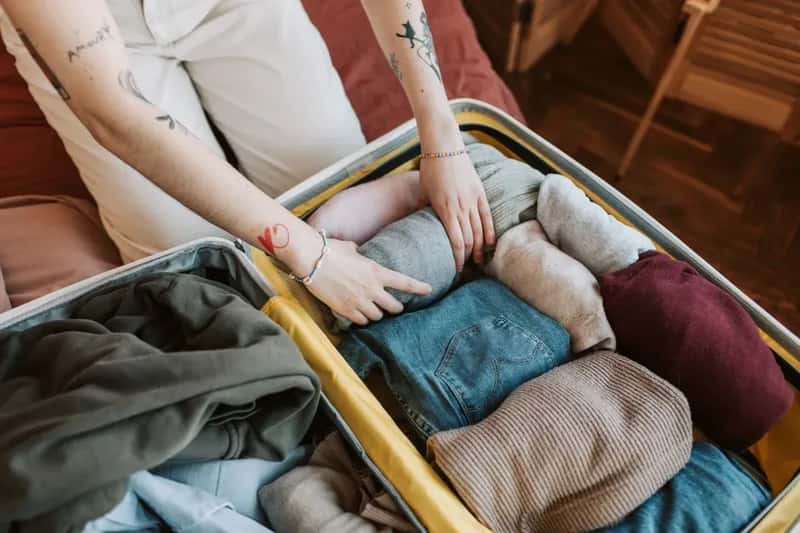
The sequence in which you load a suitcase isn’t just about organization – it’s about compression and protection. Heavy items at the bottom (shoes, jeans, toiletry bags) create a stable foundation. Rolled clothes fill the middle layer, slotting into gaps and standing upright when packed vertically. Folded formal wear and anything that wrinkles easily goes on top, sheltered from the weight pressing up from below.
When heavier items sit on top, they crush everything beneath and shift the whole load sideways whenever you tilt the bag. Getting the sequence right means your clothes arrive in roughly the same condition they left in – no cascading re-pack required at the hotel. One underrated trick: photograph your layout before closing the bag. That photo is your guide for repacking after a week of hotel swaps, late checkouts, and purchases you didn’t plan for.
#1 – Combine Every Method Into One System (The Real Reason Frequent Flyers Never Check a Bag)
The single biggest revelation in packing is that no one method wins alone. The travelers who consistently pack carry-on only – for two-week trips, for winter destinations, for business and leisure back-to-back – aren’t using one magic trick. They’re stacking every method into one deliberate system. Combining rolling, folding, compression, and strategic sequencing consistently yields more remaining space than any single technique, with less shifting and fewer wrinkles.
The full system in one pass: edit ruthlessly before you start; build a capsule wardrobe in a single color palette; wear your bulkiest items on travel day; ranger-roll casual clothes; fold dress items with dry-cleaning bags between layers; stuff shoes with socks and small accessories; line suitcase walls with belts; load compression cubes in the right sequence with the heaviest items at the base. Every square inch treated like real estate. That’s not a travel hack. That’s a system – and once it’s yours, you’ll never stand on a suitcase again.
The bottom line is that most suitcase space isn’t lost to bad luck or undersized luggage – it’s lost to old habits that nobody ever questioned. Pick two or three of these and you’ll feel the difference on your next trip. Go all in on the full system and checking a bag starts to feel like something other people do. Which of these surprised you most? Drop it in the comments.