
The brochure says Paris. The ship docks in Le Havre, and the Eiffel Tower is hours of road away. That gap between the name on the itinerary and the spot on the map is what this list measures, port by port.
Some of the gaps are small enough to forget. Others turn a “day in Rome” into a day on a bus, and one port is reachable only through a one-lane tunnel that shuts down overnight. We ranked 17 ports from “shorter than you’d think” to “wait, where exactly are we?” Start at the mild end and see how fast it escalates.
#17 – Rosyth: The “Edinburgh” Port That’s Across the Water
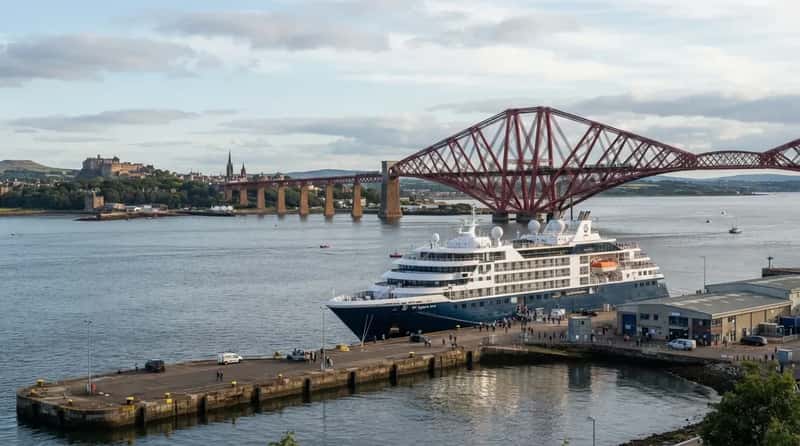
Rosyth is the gentle start to this list, and it still catches people off guard. Ships sold as “Edinburgh” tie up on the far side of the Firth of Forth, roughly 15 miles from the capital’s center. The red Forth Bridge you’ll glimpse nearby is a UNESCO World Heritage Site. Plenty of passengers never realize they’ve docked next to one.
Think of Rosyth as the baseline for everything below. A transfer still leaves you most of a day in Edinburgh. The real cost is the shuttle or taxi line, not the miles, and that makes this the mildest “wrong city” problem on the list.
The next port sounds like a quick hop into a capital. It isn’t.
#16 – Nynäshamn: Stockholm’s Stand-In Sits About an Hour Out
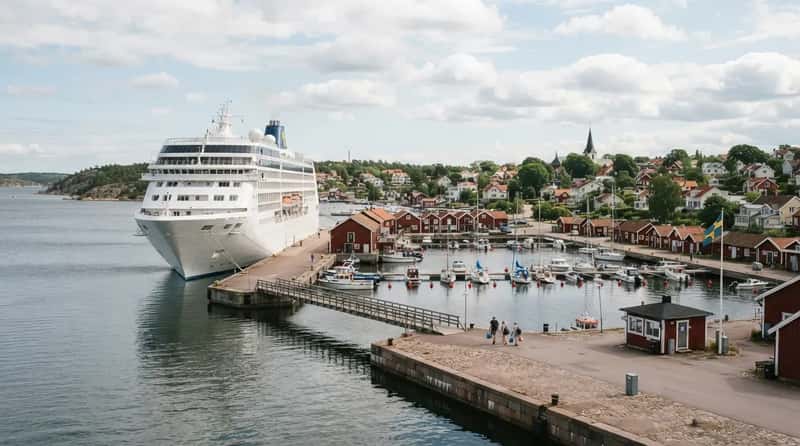
Some itineraries say “Stockholm,” but the ship may dock in Nynäshamn instead. It’s a harbor town roughly 35 miles south of the capital. Commuter trains link the two, and the ride typically runs about an hour each way.
The surprise isn’t the distance. You can spend more of your port day getting to the city than walking around it. If you stay put, you get a quiet harbor town with a small-ferry feel, which is not what the postcard promised.
Now picture a famous theme-park city that’s nowhere near the dock.
#15 – Port Canaveral: “Orlando” Is Roughly an Hour Inland
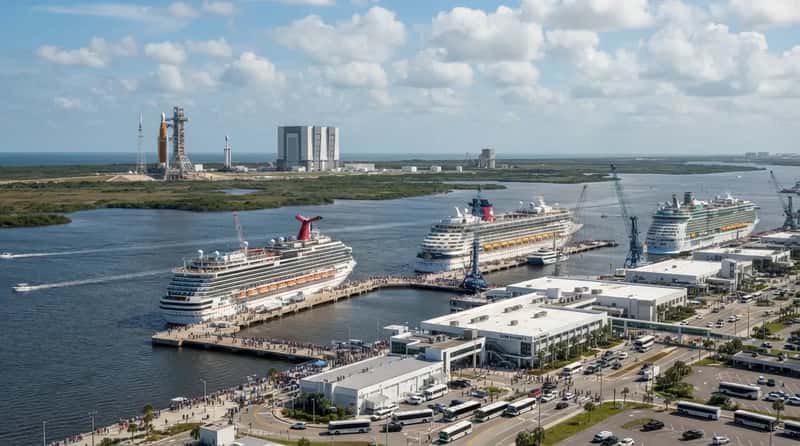
Port Canaveral is a major Florida cruise hub, and it’s often sold with Orlando in mind. But Orlando’s theme parks sit roughly 50 miles inland, about an hour by road in normal traffic. The ship’s real neighbor is the Space Coast, including Kennedy Space Center.
That’s why many cruisers book an Orlando hotel and ride a transfer to the ship. Rocket launches and cruise ships share the same stretch of Florida coast. The distance is manageable, but it adds a real leg to embarkation day.
Fast Facts
- Orlando’s theme parks: roughly 50 miles inland
- Normal-traffic drive: about an hour
- The ship’s real neighbor: Kennedy Space Center
- Common workaround: an Orlando hotel plus a transfer to the ship
The next port, in Texas, has the same “about an hour” feel and a nastier bottleneck.
#14 – Galveston: An Island Port With Houston Across the Bridge
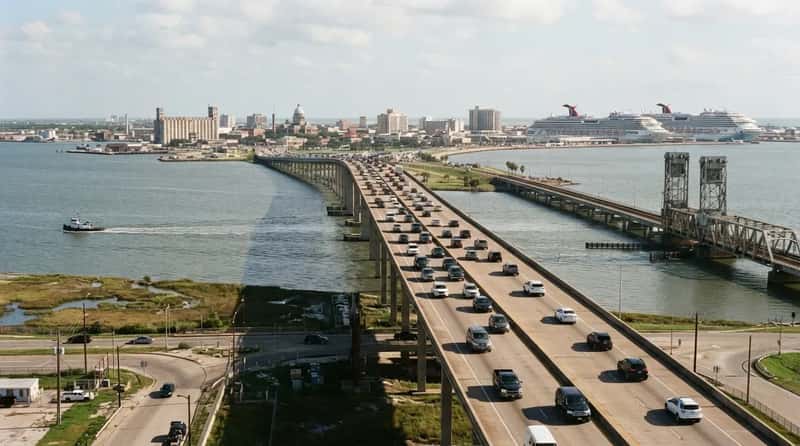
Galveston is its own island city, not a Houston neighborhood. Houston sits about 50 miles inland, roughly an hour on a good day. Travelers who fly into Houston often assume the ship is a short hop away, and that assumption shows up on a lot of embarkation mornings.
Highway traffic can stretch a simple drive well past an hour. The ship’s departure waits for no one, and the route between mainland and island can turn into a choke point. Arriving the night before is the usual fix.
The next port carries a nickname that sounds like a promise, and the map doesn’t back it up.
#13 – Civitavecchia: The “Port of Rome” Is 50 Miles From Rome
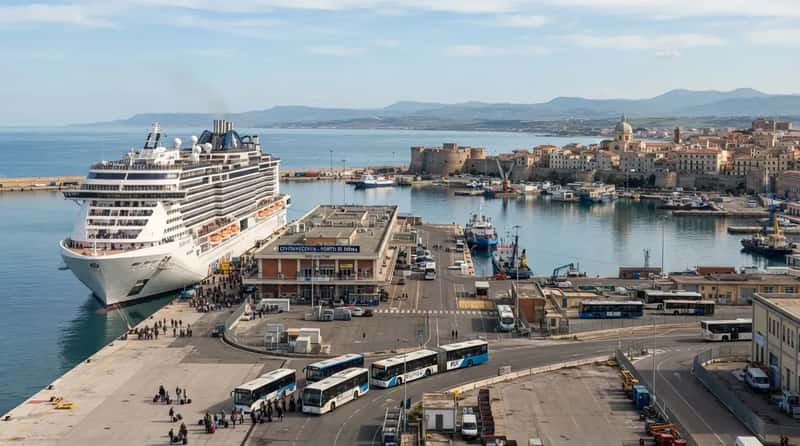
Civitavecchia is famously branded as the “Port of Rome.” Rome itself is more than 80 kilometers (about 50 miles) away. The trip by train or bus typically runs 60 to 90 minutes each way, depending on transport and traffic.
The Civitavecchia train station is only about 1.5 kilometers from the cruise terminal. That means a Rome day starts with a shuttle, a station, and an hour or more on rails. Once you’re there, the clock is already ticking toward the ride back. It’s a rushed way to meet the Eternal City.
The next port flips the whole story, because the obstacle isn’t distance. It’s a mountain.
#12 – Whittier: The Port Behind a One-Lane Tunnel
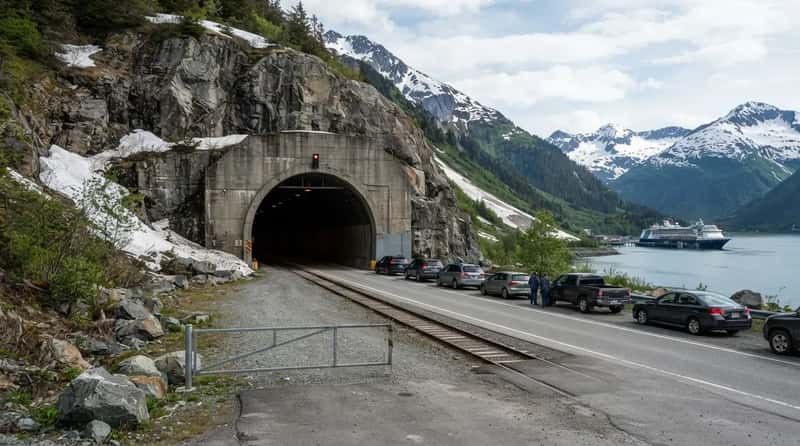
Whittier, Alaska sits about 60 miles from Anchorage. To get there you pass through the single-lane Anton Anderson Memorial Tunnel, the only road in or out of town. It shares its space with the railroad, so access runs on a timetable.
The tunnel closes overnight, so missing the last opening means you’re in Whittier until morning. Cars weren’t allowed through until 2000, and before that the town was reachable only by train or boat. It may be the strangest “access road” in cruising.
Next, a pretty Belgian port where the problem is a second city on the itinerary.
#11 – Zeebrugge: Bruges Is Close, Brussels Is the Catch
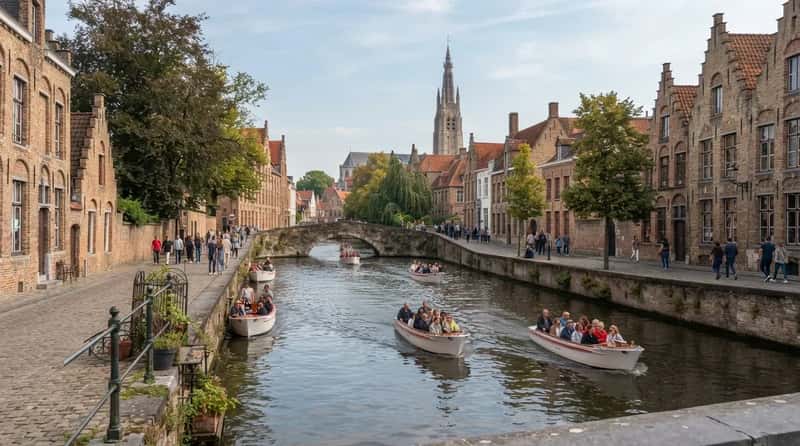
Zeebrugge is the port cruise lines list for Bruges, and Bruges is only around 10 miles away. That’s a genuine win on this list. The trouble starts when shore excursions also promise Brussels, which sits roughly 60 miles inland.
The combo day is mostly a bus ride. One port, two famous cities, and one of them is a long day trip. Pick the canals and cobblestones of Bruges and the day feels like a vacation. Add Brussels and it starts to feel like a schedule.
Quick Compare
- Bruges: around 10 miles away, with canals and cobblestones
- Brussels: roughly 60 miles inland, and mostly a bus ride
- The trade: Bruges alone feels like a vacation, and adding Brussels turns it into a schedule
Zeebrugge is the cheerful side of the list. Tuscany, up next, is where “close” gets complicated.
#10 – Livorno: Pisa Is Close, Florence Is a Commitment
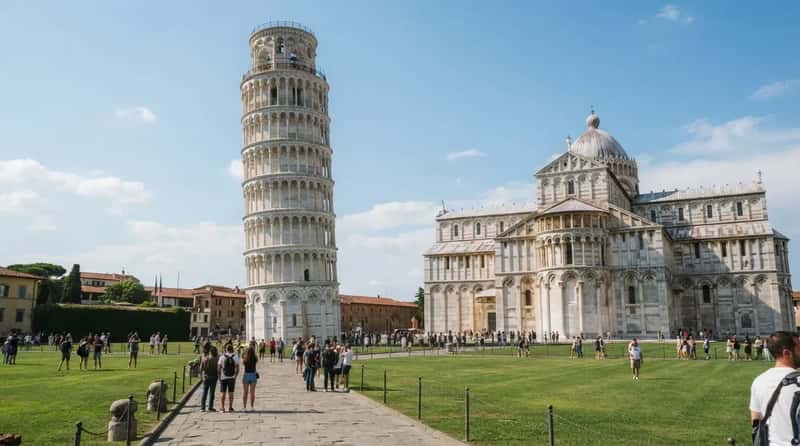
Livorno is the standard port for Tuscany. Pisa’s Leaning Tower is only about 12 miles away. Florence sits roughly 60 miles inland, usually around an hour and a half each way.
The temptation is obvious. Florence has Renaissance art, the Duomo, and the famous bridge. But plenty of travel writers argue that Pisa plus Lucca makes the smarter port day, and that Florence deserves its own trip. It’s a hot take, and the debate is real.
The next port sits on the east coast of England, and its London claim stretches the map.
#9 – Harwich: The “London” Port in Essex
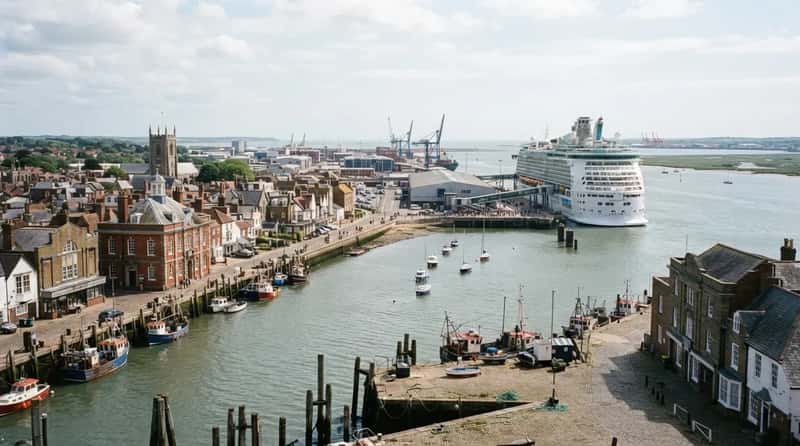
Harwich is listed for London on some itineraries, and the city is roughly 70 miles away. Trains typically take well over an hour, often with a change. That’s a very different ride from stepping off the ship into the capital.
Harwich is a working Essex port town with its own old-harbor character. Many travelers treat it as a gateway and never see the harbor itself. That can be the right call, but it’s a trade you should make on purpose.
The next stop is where the road starts to compete with the sightseeing itself.
#8 – Aqaba: Petra Is About Two Hours Away

Aqaba is Jordan’s Red Sea port, and for most cruise passengers it’s a launchpad for Petra. The ancient rock-carved city sits roughly 75 miles north. Plan on around two hours each way.
That’s a big commitment, but the payoff is a UNESCO World Heritage Site. Petra isn’t a stop in Aqaba. It’s an entire separate day with a ship attached. Most passengers book through the ship because the return time matters.
The next port is the one that really pretends to be a big city.
#7 – Laem Chabang: Bangkok Is About 80 Miles Off
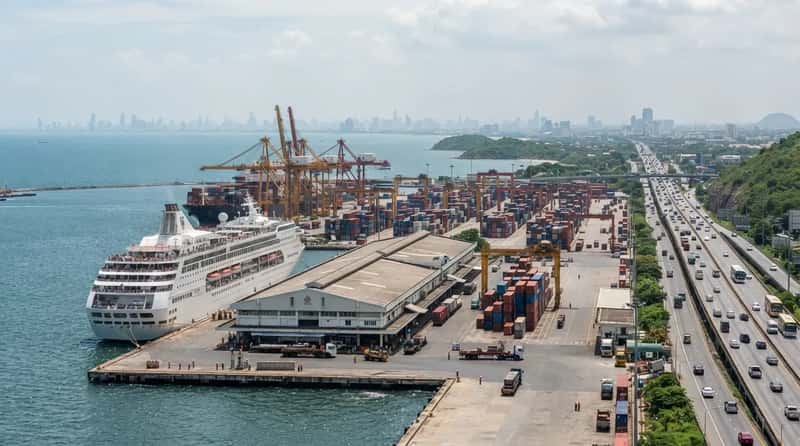
Laem Chabang is Thailand’s main deep-sea port, and itineraries label it Bangkok. The capital sits roughly 80 miles away, and the drive is usually around two hours each way, longer in heavy traffic. The beach resort of Pattaya is much closer.
Bangkok’s traffic is part of the story, and it can stretch a two-hour ride into something longer. Some cruisers skip the capital and choose temples and markets near the port instead. It’s a contrarian call, but it keeps the day relaxed.
Worth Knowing
- Bangkok is roughly 80 miles from the dock.
- Expect about two hours each way, and more in heavy traffic.
- Pattaya is the much closer option.
- Temples and markets near the port make a relaxed alternative.
The next one is among Britain’s biggest cruise ports, with a famous piece of history.
#6 – Southampton: Titanic’s Departure Port Is 80 Miles From London
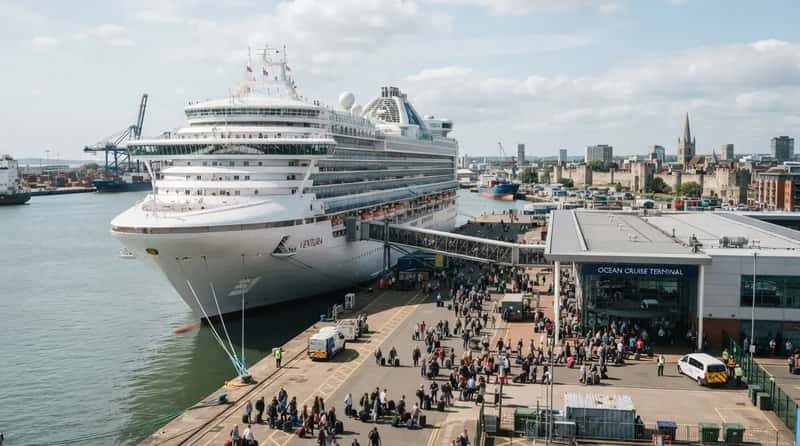
Southampton is one of Britain’s busiest cruise ports. Many ships departing from here are marketed as London cruises. The capital is roughly 80 miles away, typically around an hour and a half by train or car.
The Titanic left from Southampton in 1912. The city has its own maritime museums and medieval walls, so some travelers skip London entirely. Still, plenty of people book a London hotel the night before and forget about the transfer time.
The next port has a nickname that has started real arguments in cruise forums.
#5 – Le Havre: The “Paris” Port Is a 2.5-Hour Commute
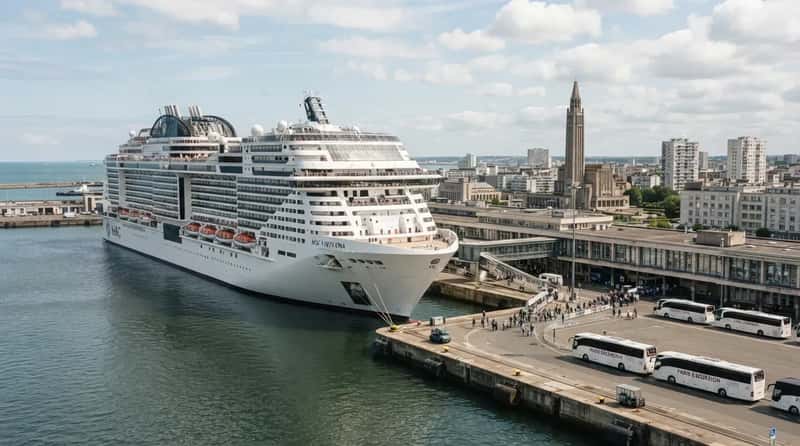
Le Havre is often billed as the port for Paris, but the commute runs about 2.5 hours each way. The road distance is around 195 km (121 miles), and the drive takes 2 to 2 hours 15 minutes in light traffic.
Do the math and a Paris day can mean roughly 5 to 6 hours on transport. That leaves a thin slice of the city for a long day. Honfleur and the Normandy coast are the obvious alternatives, and they don’t come with a ticking clock.
At a Glance
- Road distance: around 195 km (121 miles)
- Light-traffic drive: 2 to 2 hours 15 minutes
- Commute used for planning: about 2.5 hours each way
- Total transport for a Paris day: roughly 5 to 6 hours
For sheer drama of access, the next one is hard to beat.
#4 – Seward: Alaska’s Gateway Is Over 120 Miles From Anchorage
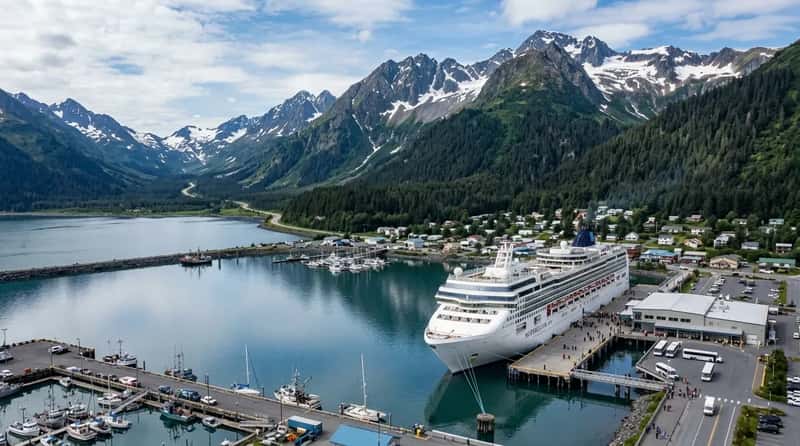
Seward is the other big Alaska cruise port tied to Anchorage. It sits about 127 miles away, a trip of roughly 2.5 hours. The scenery is a big part of why people accept the ride.
Seward is more than twice as far as Whittier. The drive down the Kenai Peninsula is itself a major attraction. Travelers who treat it as dead time often miss the point of the trip.
The next port sits in a country where a ship excursion is practically the only sane option.
#3 – Port Said: The Suez Canal Port With a Long Road to Cairo

Port Said sits at the northern end of the Suez Canal. Cruise lines sell it as a Cairo and pyramids day. The capital is well over 100 miles away, and the drive usually takes about three hours each way.
That can mean six hours of road for a few hours at the pyramids. The clock gets tight fast, and a late bus means a missed ship. That’s why this port is almost always done through the ship’s own excursion.
The next entry is a Baltic port with a very long way to go for a capital city.
#2 – Warnemünde: Berlin Is About 140 Miles Away
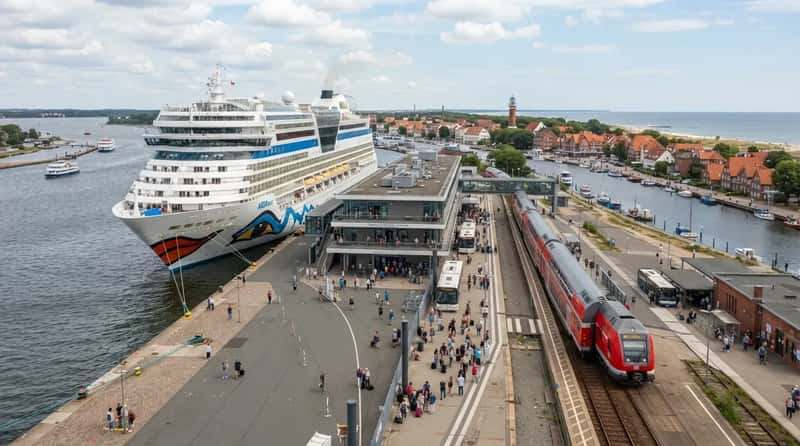
Warnemünde is the northern German port sold as Berlin. The capital is roughly 140 miles away. Cruise lines run trains or buses that take about three hours each way, leaving only around five hours in Berlin.
Transit and buffers can eat six to seven hours of a twelve-hour shore day. Berlin’s major sites are spread across a huge city. That leaves time for a few landmarks and not much else.
The last port is in Egypt, and it asks for the biggest commitment of all.
#1 – Safaga: Luxor’s Temples Sit Hours Across the Desert

Safaga is a Red Sea port in Egypt, and it’s the gateway for cruise passengers heading to Luxor. The temples of Karnak and the Valley of the Kings lie well over 130 miles away. The road crosses the Eastern Desert, and the trip generally takes several hours each way.
Few port days ask for a longer haul to reach a single group of attractions. That’s exactly why ship excursions here are long and start early. The history is staggering, but you have to accept a day spent mostly in a vehicle.
Run down the list and the pattern jumps out. Le Havre’s “Paris” is a 2.5-hour commute, Warnemünde’s “Berlin” is about 140 miles away, and Whittier hides behind a tunnel that closes overnight. Civitavecchia, Laem Chabang and Port Said all ask for hours of road, and even the “close” ports hide a transfer.
The itinerary names the destination. The map tells you how much of your day it will cost. Check the second one before you fall in love with the first.