Most people assume hotels have gotten better across the board. Bigger TVs, faster Wi-Fi, app-based check-in – it all sounds like progress. But here’s the thing nobody talks about: the Golden Age of American hospitality quietly died somewhere between the efficiency consultants and the loyalty point programs, and most travelers have no idea what was traded away to get here.
Some of what vanished was replaced by better technology. But a surprising number of these luxuries were simply cut because they were expensive, inconvenient for management, or didn’t survive the shift from experience to throughput. Once you see what was lost, that contactless room key starts to feel a lot less impressive. A few of these will genuinely sting.
#17 – The Magic Fingers Vibrating Bed
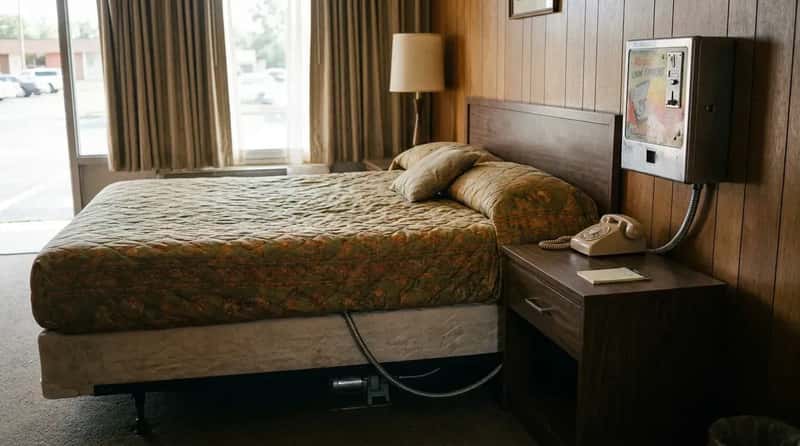
Drop a quarter in a box on the nightstand and your bed would hum and vibrate for 15 minutes straight. It sounds absurd now, but in the 1960s and ’70s, more than a million hotel and motel beds across the United States were equipped with these contraptions – the invention of a man named John Houghtaling. At their mid-decade peak, 250,000 Magic Fingers units were installed nationwide, each averaging eight quarters a week and collectively pulling in $2 million in monthly gross revenue. Road-weary families on cross-country highway trips genuinely loved them.
The device worked simply: an off-center weight spun by an electric motor, sending a steady oscillating vibration through the mattress. The tide turned as the kitschy ’70s gave way to the luxury-obsessed ’80s, and hotels chose fluffy towels and pillow-top mattresses instead. Coin-box theft became a growing headache for operators, and by the 2000s the presence of a Magic Fingers unit was seen as a throwback curiosity rather than a genuine amenity. The Magic Fingers disappeared – and nothing quite replaced the experience of paying a quarter to feel, briefly, like the whole world was humming just for you.
Fast Facts
- Invented in 1958 by John Houghtaling, a WWII veteran tinkering in his New Jersey basement
- Peak popularity: 250,000 units installed across the U.S. in the mid-1960s
- By the 1970s: over 1 million units in hotels and motels across North America and Europe
- Cost per use: just 25 cents for 15 minutes of vibration
- Pop culture reach: referenced in Kurt Vonnegut’s Slaughterhouse-Five, National Lampoon’s Vacation, and The X-Files
#16 – Complimentary Branded Matchbooks at Every Turn
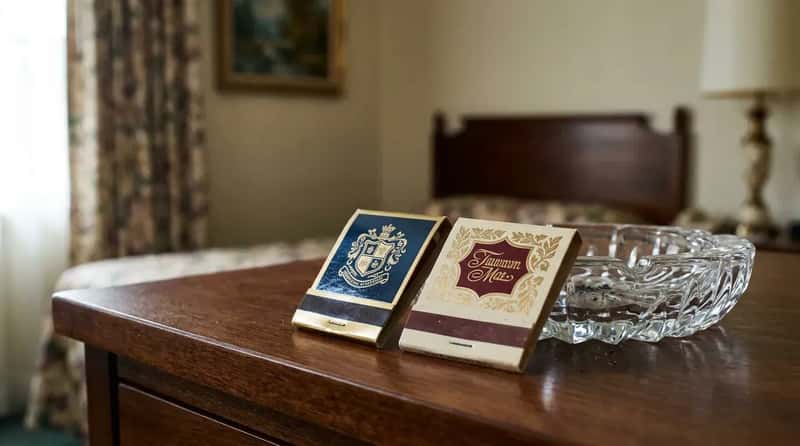
Walk into any mid-century hotel room and a glossy matchbook was waiting on the dresser or beside the ashtray – stamped with the hotel’s name, logo, and address. It was free advertising guests actually wanted to pocket and keep. Hotels competed on the quality and design of their matchbooks the way they now compete on thread counts. Designated smoking rooms came standard, complete with glass ashtrays and complimentary matchbooks treated as part of the room’s visual presentation, not an afterthought.
As awareness of smoking’s health risks grew, the smoking room disappeared, and the matchbook went with it. For many people who experienced that era, the nostalgia isn’t really about the smoking – it’s about a time when hotels stocked rooms with small, tactile souvenirs that felt genuinely personal and worth keeping. Today’s equivalent is a card on the desk with a QR code telling you to download the hotel app. One of these felt like a small gift. The other feels like homework.
#15 – The Heavy Brass Key With a Fob
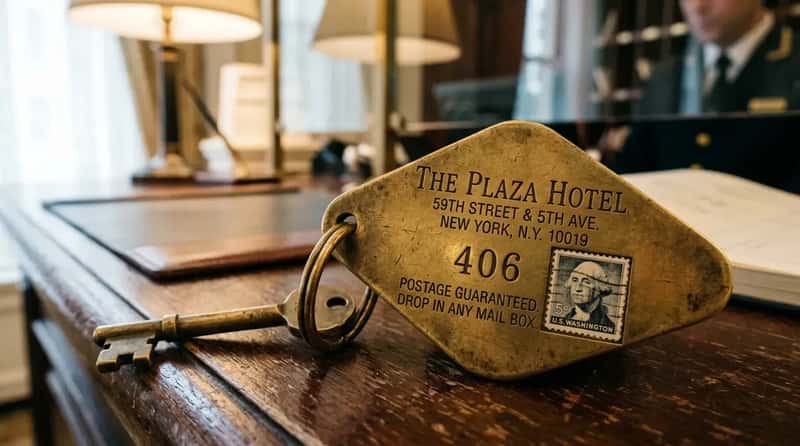
There was real weight to checking into a hotel in the 1960s – literally. The front desk clerk handed you a genuine metal key attached to a fob large enough that it practically dared you to try putting it in your pocket. The fob listed the hotel’s name, address, and your room number. That bulk was intentional: a gentle, elegant nudge to leave it at the front desk before heading out rather than lug it around the city all day.
Here’s the detail most people don’t know: many of these keys also came with a pre-paid postage stamp attached, so guests who forgot to return their key on checkout could simply drop it in a mailbox. That is a level of logistical thoughtfulness modern hotels never bother with, because plastic keycards cost pennies and get thrown in the trash. Some boutique hotels in Europe now offer actual physical keys as a retro-luxury signifier – which tells you everything. Something that was once standard has become a novelty. And the specific satisfaction of a real brass key landing in your palm? Gone for good.
#14 – The Bellhop as a True Personal Escort
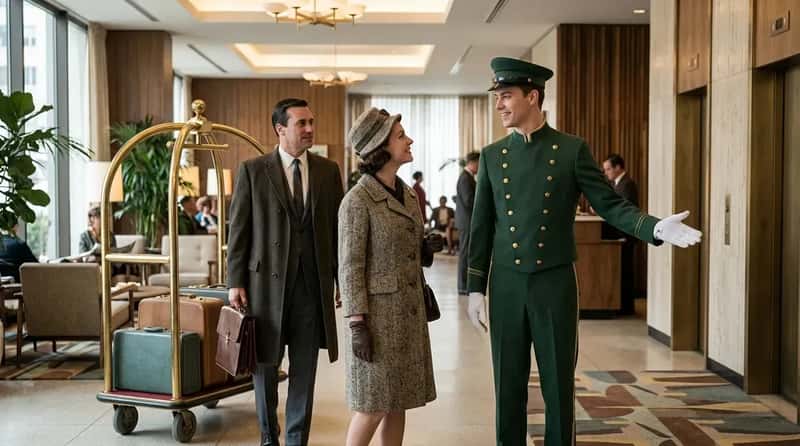
The bellhop of the 1960s wasn’t just someone who moved your bags. He was the first face of the hotel, and the experience was fully choreographed. Structured jackets, polished brass buttons, a cap, sometimes gloves – their look was designed to signal that you had arrived somewhere that took your arrival seriously. Greeting a guest was a performance that extended well beyond carrying luggage. The goal was to make you feel important, even briefly glamorous, from the moment you stepped through the door.
Today most mid-range hotels have no dedicated bellhop at all, and at the ones that do, it’s a transactional exchange rather than a curated welcome. The whole arrival ritual has been flattened into a kiosk touchscreen or an app notification telling you your room is ready. The theater is gone. What replaced it saves money and feels like nothing. That gap – between being welcomed and being processed – is something every traveler senses even if they can’t name it.
#13 – The Hotel Lobby Barbershop and Shoe-Shine Stand
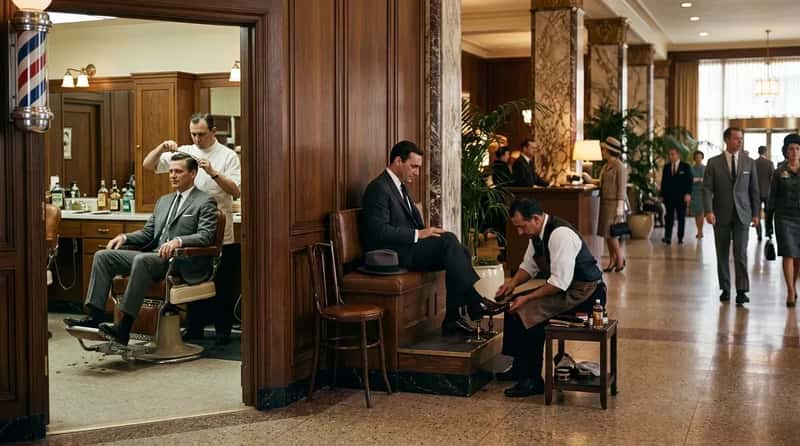
Walk into a great American hotel in the 1960s and the lobby was a functioning village. Barbershops and shoe-shine stands were common features, reflecting a commitment to personalized service that made guests feel genuinely looked after without ever needing to leave the building. A traveling businessman could check in, get a haircut, have his shoes buffed to a mirror shine, and walk into a dinner meeting without stepping outside. The lobby was the amenity.
Today spas and fitness centers have taken over that role – but a spa is a scheduled, expensive, separately booked activity. The barbershop and shoe-shine stand were casual, immediate, and woven into the natural rhythm of a hotel day. Polished shoes once signaled that you took the trip seriously, and the hotel helped you keep up appearances as a matter of course. What survived is a disposable shoe-shine mitt in the bathroom drawer – and that’s the watered-down version. The real stands, with real attendants, are effectively extinct in American hotel lobbies.
At a Glance: What the 1960s Hotel Lobby Offered
- Barbershop with a house barber, walk-ins welcome
- Shoe-shine stand staffed by a dedicated attendant
- Newsstand stocked with papers, cigarettes, and postcards
- Telephone switchboard and message center staffed around the clock
- Supper club or cocktail lounge just steps from the front desk
#12 – 24-Hour Human Telephone Operators
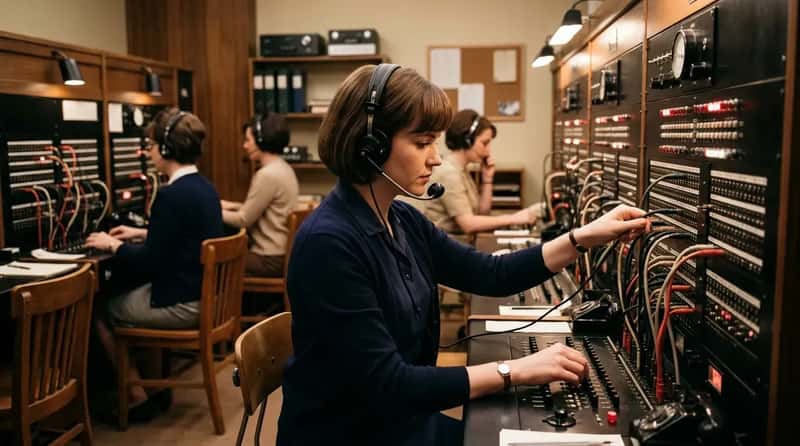
Before mobile phones, the hotel telephone operator was an essential lifeline and a genuinely skilled professional. Hotels ran on PBX phone systems that required an operator to connect external calls, track down guests within the building, and manage transatlantic connections with minimal fuss and maximum discretion. The best ones knew guests by name before the phone even finished ringing. They anticipated needs. They were the invisible infrastructure of a well-run hotel – and they worked around the clock.
Today there are no hotel operators to speak of. You tap your own contacts on your own phone, and the hotel’s internal phone system is largely ignored. What’s lost isn’t just the convenience of a human intermediary – it’s the sense that the hotel was actively working on your behalf at every hour. That feeling of being attended to rather than checked in and left alone was baked into the 1960s hotel experience in ways that are genuinely difficult to replicate. An automated chat function is not a voice that already knows your name.
#11 – Nightly Turndown Service With Real Theater
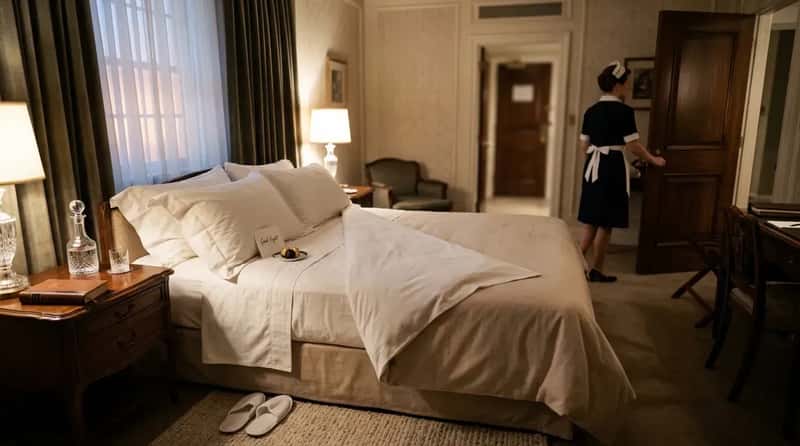
Turndown service technically survives at some high-end hotels, but what it meant in the 1960s was a different experience entirely. Staff entered the room in the early evening, folded back the bedcovers at a precise angle, fluffed the pillows, dimmed the lights, drew the curtains, set out slippers, and left a small treat on the pillow. The whole room was reset like a stage between acts. There’s a well-worn story about the Mayfair Hotel in St. Louis: preferred guest Cary Grant once requested a trail of chocolates leading to his bed for a lady friend he was expecting. Management loved the idea so much they began leaving chocolates on every guest’s pillow – creating an enduring tradition out of one man’s whim.
That story captures exactly what made 1960s luxury hotels different: staff who improvised to delight guests, and managers who institutionalized those improvisations into ritual. Most chain hotels dropped full turndown service as a cost-cutting casualty long before the pandemic accelerated its disappearance further. What remains at budget and mid-range properties is, at best, fresh towels left on the bathroom counter. The nightly ritual – the room as a stage being reset for your return – is over.
#10 – The Grand Hotel Supper Club With Live Entertainment
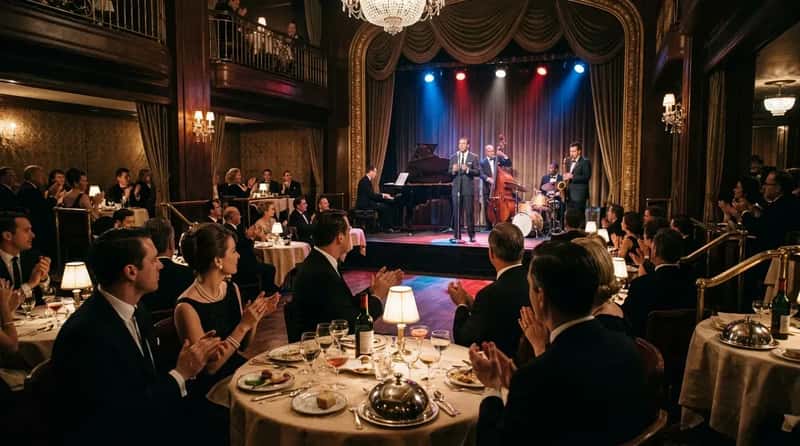
In the 1960s, the great American hotels weren’t just places to sleep – they were destinations for an entire evening. Nearly every major urban hotel had a supper club: a restaurant, ballroom, or lounge where guests and locals alike would dress up, sit down to a proper dinner, and watch a live act. Singers, jazz trios, full orchestras, comedians – live entertainment was built directly into what a hotel stay meant at the cultural level. You didn’t go out to find entertainment after checking in. The entertainment came to you, elegantly.
The hotel supper club is one of the most genuinely irreplaceable losses in American hospitality – not because live music has disappeared, but because the specific combination of formal dining, curated entertainment, and hotel setting created an atmosphere no standalone restaurant or venue fully replicates. The financial model stopped making sense as labor costs rose and guests began prioritizing convenience over ceremony. Today’s hotel bar with a weekend DJ playing to a half-empty room is not, by any honest measure, the same thing. The dressed-up, candlelit supper club is a casualty of a less patient era, and the absence is felt most sharply by anyone old enough to remember.
Quick Compare: 1960s Hotel Evening vs. Today
- Then: In-house supper club with live jazz, full orchestra, or comedian – included in what the hotel was
- Now: Hotel bar with a weekend playlist and a $22 cocktail minimum
- Then: Guests dressed for dinner as a matter of course; the hotel dining room rewarded the effort
- Now: Most hotel restaurants compete directly with the Seamless app on your phone
- Then: The hotel was the evening’s destination
- Now: The hotel is where you sleep before the actual evening out
#9 – Complimentary Hotel Postcards Printed With the Property
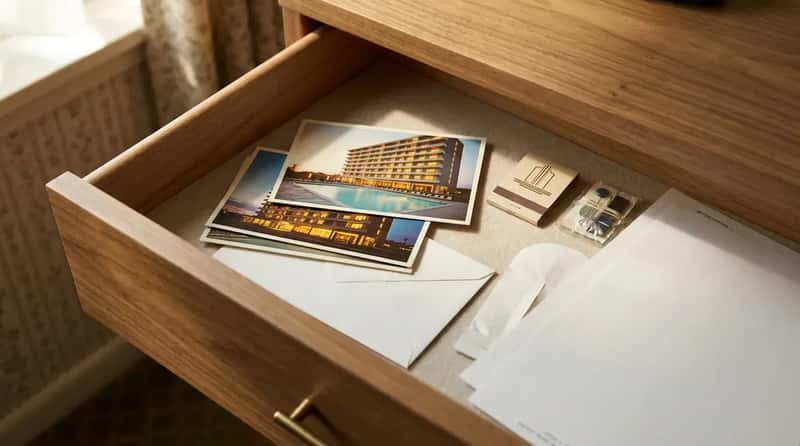
Every hotel room in the 1960s stocked a small stack of postcards printed with a photograph of the property – an architectural shot, the pool at sunset, sometimes an aerial view of the building at night with every window lit gold. They were free, they were beautiful, and they were part of the implicit contract of a hotel stay: you are somewhere worth writing home about. The dresser drawer held a whole little hospitality kit – sewing set, shoe-shine mitt, stationery, and those postcards already stamped with the hotel’s pride.
Something is genuinely lost when a hotel no longer believes its own property is worth commemorating in print. The postcard represented a kind of confidence – a pride of place – that the modern hospitality industry has mostly abandoned in favor of brand-neutral efficiency. Why mail a card when you can post an Instagram story? The logic tracks, and yet the replacement feels hollow. An Instagram story disappears in 24 hours. A postcard from a trip in 1963 can still be found tucked inside a book, 60 years later, holding a moment that survived everything else.
#8 – The Physical Guestbook at the Front Desk
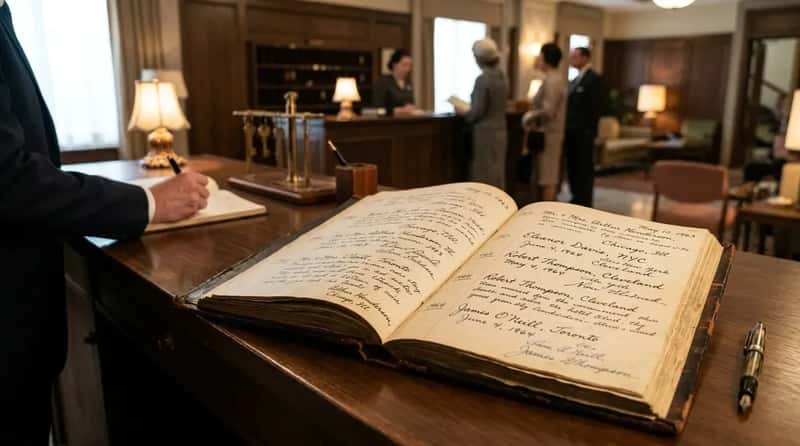
Long before review platforms, hotels kept physical guestbooks near the front desk – heavy ledgers where guests signed their names, wrote their hometowns, and often added a sentence or two about their stay. It was public, visible, and deeply human. Guests could read what others had written in the weeks and months before them: a honeymooning couple from Ohio, a traveling salesman from Chicago, a family celebrating a grandmother’s birthday. You could trace the whole living history of a place through one leather-bound book.
Many historic hotels still preserve their old guestbooks in archives – some containing famous signatures, beautiful observations about travel, doodles from bored children, and the occasional dramatic complaint rendered in fountain pen. That is a living document. It placed every guest in a community of travelers who had slept in the same rooms and looked at the same views. Online star ratings are individually useful and collectively soulless by comparison. The rating system measures satisfaction; the guestbook captured something closer to memory. You notice the absence most sharply when you stumble across one in a historic hotel’s glass display case and feel it pull at something you can’t quite name.
#7 – Afternoon Tea Service as a Daily Hotel Ritual
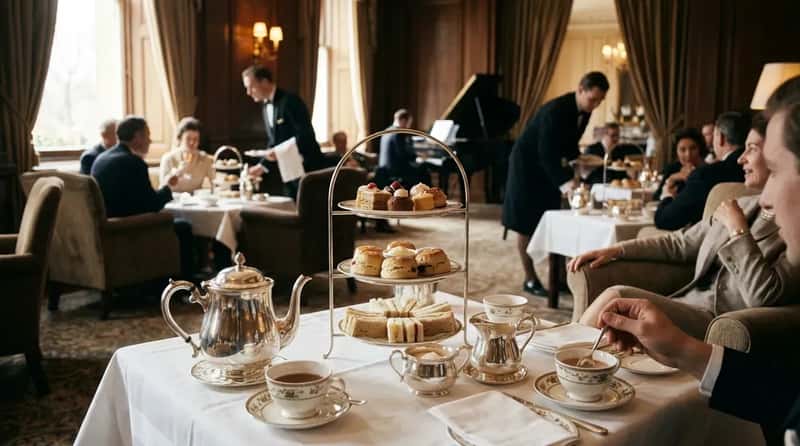
In the great hotels of the 1960s, afternoon tea wasn’t a special event you booked three weeks in advance – it was simply what happened every afternoon in the main lounge. Fine china, tiered trays of finger sandwiches and pastries, silver teapots, perfectly pressed linens. Guests wandered down between sightseeing and dinner, settled into armchairs, and were attended to without fanfare. It was the unhurried middle of the day, built directly into the rhythm of a hotel stay rather than sold as an optional upgrade.
Today this survives as a novelty – and the operative word is novelty. At the handful of luxury hotels that still offer proper afternoon tea, it costs upward of $60 to $109 per person at top U.S. properties, requires an advance reservation, and draws more guests documenting it for social media than people genuinely settling in for the ritual. When something that was once ordinary becomes a ticketed event with a waiting list, that’s not preservation. That’s the last gasp. The casual, included, unremarkable dailiness of afternoon tea was exactly what made it a luxury in the truest sense – and that quality cannot be bought back at any price point.
#6 – The Dedicated In-Room Butler
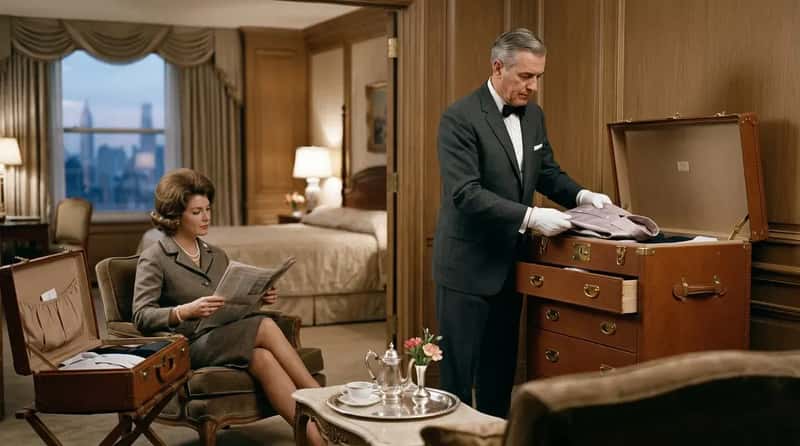
At the top tier of 1960s hotel hospitality, guests in premium suites were assigned a personal butler for the duration of their stay. Not a shared concierge. Not a hotline. A specific person, familiar with your preferences, available to you specifically. At elite properties like the Ritz or the Plaza, that butler unpacked your luggage, drew your bath at the requested temperature, arranged your wardrobe, coordinated your meals, and managed every logistical detail of your stay invisibly and without being asked twice. The best ones made the whole operation feel effortless because they did their work before you thought to ask for it.
A handful of ultra-luxury properties still offer butler service today, but the category is so rare and so expensive that it’s effectively inaccessible to all but a tiny fraction of travelers. The 1960s version existed at a broader range of high-end hotels as a genuine standard of the upper tier – not an exotic upsell. What’s truly been lost is the philosophy underneath it: the idea that a hotel’s highest obligation was to make a guest feel as though the property existed specifically for them. That philosophy has been replaced, across the industry, with tiered loyalty programs and points that expire. They are not the same thing, and everyone quietly knows it.
#5 – Mid-Century Modern Hotel Interior Design as a True Design Statement
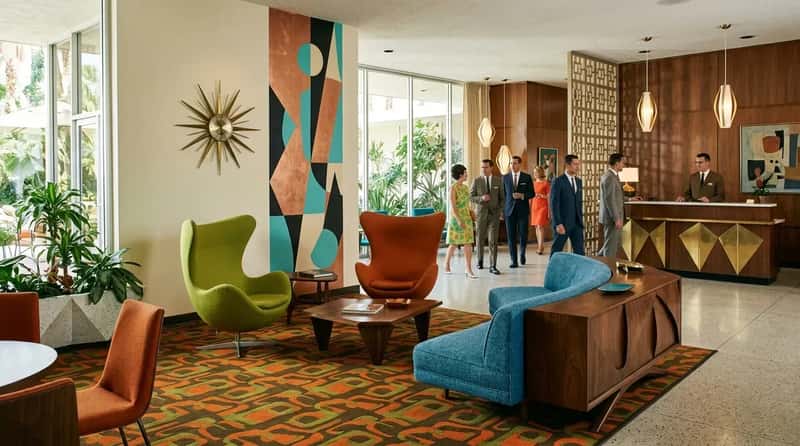
Today’s hotel aesthetic tends toward one of two poles: generic greige minimalism or trendy-industrial with exposed concrete and Edison bulbs. Neither was the dominant language of 1960s hotel design, which was genuinely bold and architecturally committed. Egg chairs, starburst clocks, geometric patterns, abstract art on the walls, futuristic furniture built with the optimism of the Space Age – hotels embraced it all without apology. Colors like avocado green and warm copper weren’t accidents; they were a coherent visual vision, and the rooms felt alive with it.
For decades this aesthetic was mocked as kitsch. Now it’s being carefully reproduced in boutique hotels at significant expense – because designers have finally admitted it had a vision worth returning to. The difference is that the original rooms had that confidence organically, built into the era, not assembled as a nostalgia product for guests who vaguely remember it from their parents’ vacation slides. Staying in one of those rooms when they were new – fresh with the bold certainty of a decade that believed the future would be better and dressed accordingly – was a completely different experience. No renovation can honestly recreate that feeling. The rooms can be copied. The conviction cannot.
Worth Knowing
- Space Age optimism directly shaped 1960s hotel design – rounded forms, futuristic materials, and bold color palettes were deliberate choices, not trends
- Architects like Morris Lapidus (Fontainebleau, Eden Roc in Miami Beach) built hotels as theatrical experiences, not just places to sleep
- Mid-century hotel interiors are now actively studied and replicated by boutique designers – the aesthetic costs more to recreate authentically than it did to build originally
- What made those rooms feel alive wasn’t just the furniture – it was the era’s genuine belief that modernity was something to celebrate
#4 – Westin’s True 24-Hour Room Service at Every Hour
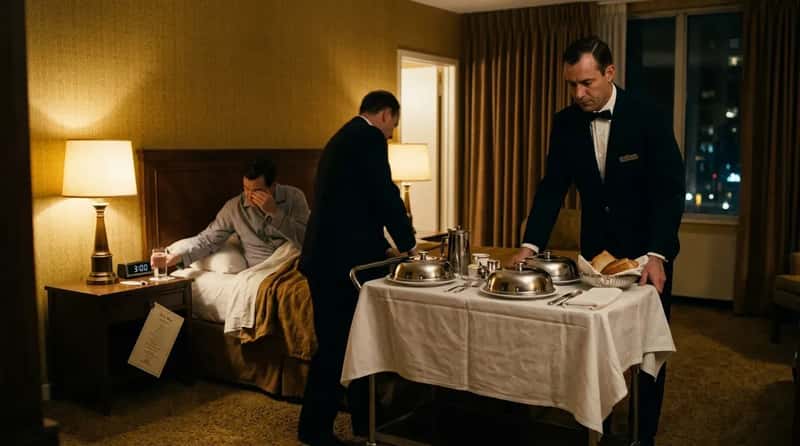
Round-the-clock room service sounds like it should be standard at any serious hotel. In reality, it was a genuine landmark when Western Hotels (later Westin) became the first hotel chain to implement true 24-hour room service in 1969. The idea that a guest could order a full meal – not a sad late-night menu of reheated options – at 3 a.m. and have it delivered with proper table service was considered a revelation in hospitality. Other chains rushed to match it because guests immediately grasped the value. It communicated something powerful: the hotel is never closed to you.
The deep irony is that decades after Westin pioneered it, 24-hour room service is now quietly disappearing. The COVID-19 pandemic accelerated the shift: hotels suspended traditional room service in 2020 and began recommending third-party delivery apps instead. Resorts World Las Vegas opened in 2021 as the first resort to officially partner with a food delivery app – Grubhub – in place of traditional room service, with other major hoteliers following suit. The full arc runs from no room service to white-glove 24-hour service to “here’s a DoorDash code.” The 1960s peak – proper food, proper presentation, any hour, included in what staying there meant – is the part of that arc most travelers today will never experience firsthand.
#3 – The Minibar in Its Original, Stocked-With-Care Form
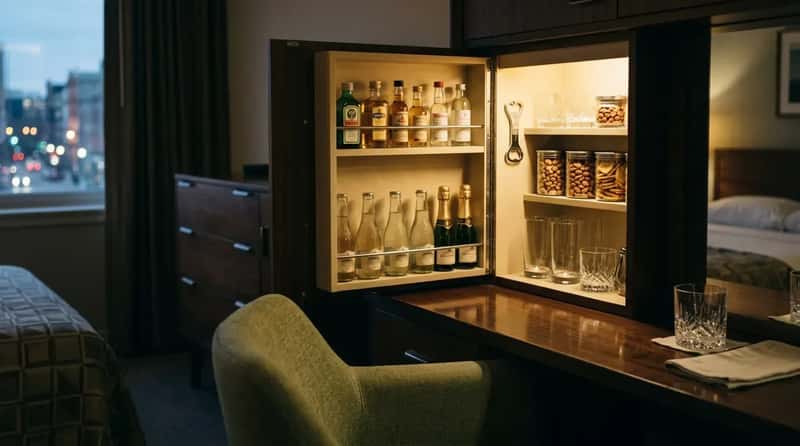
The minibar gets mocked today for overpriced nuts, inexplicable sensor charges, and the paranoia of touching something and immediately wondering if you’ll be billed for it. But the original minibar was a genuine luxury innovation worth taking seriously. Invented by the German company Siegas in the early 1960s and first installed in the U.S. at Washington D.C.’s Madison Hotel in 1963, it was stocked with real thought: quality spirits, proper mixers, premium snacks. Arriving in a room that was already ready to celebrate with you – no calls to the front desk, no waiting – was the whole point. When the Hong Kong Hilton fully stocked its 840 rooms with liquor minibars in 1974, in-room drink sales skyrocketed 500% and boosted the company’s overall revenue by 5%.
At its best, the stocked minibar meant the room was already on your side before you unpacked. It was a welcome, not a revenue trap. By the mid-2000s minibar sales had dropped 28% as guests wised up to the markups and opted to walk to a corner store instead. Now many hoteliers have moved in the opposite direction entirely, removing the minibar and leaving an empty mini-fridge for guests to fill themselves. An empty fridge is the philosophical opposite of a welcome. That was emphatically not the original idea – and the distance between those two versions of the same appliance tells you a great deal about how the industry’s relationship with its guests has changed over sixty years.
At a Glance: The Minibar’s Rise and Fall
- 1963: Siegas-designed minibar debuts at the Madison Hotel, Washington D.C.
- 1974: Hong Kong Hilton stocks all 840 rooms – drink sales jump 500% overnight
- 1980s–90s: Minibar becomes a standard luxury perk at high-end chains worldwide
- 2007–2012: Minibar sales drop 28% as guests revolt against markup pricing
- Today: Many hotels have replaced it with an empty mini-fridge – or nothing at all
#2 – The Inter-Continental’s Signature In-Room Innovations
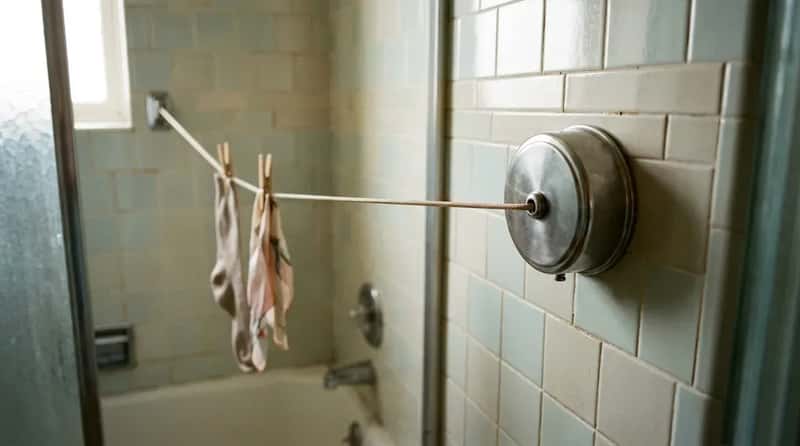
One hotel chain in the 1960s was solving problems guests didn’t even know they had yet – and most travelers today have never heard the story. Inter-Continental was among the first to introduce retractable drying lines in guest showers, ice and vending machines in guest corridors, and dedicated business lounges. These sound modest in isolation, but together they represented a complete rethinking of how a hotel could serve a traveler’s actual daily needs: not just offer a room with a bed, but anticipate the small, practical frustrations of travel and solve them quietly, in advance, without being asked.
The retractable shower drying line is the perfect emblem of this philosophy – a luxury that is also completely practical, solving a real problem for business travelers hand-washing clothes overnight, at zero visible cost to the guest. It has almost entirely vanished from modern hotels. The 1960s were an extraordinary competitive environment for the industry: over 2,000 motels and 80 hotels were built in the United States in 1962 alone, fueled by the post-war economic boom and expanding middle-class travel. In that landscape, innovative chains won loyalty through genuine problem-solving. That model has been largely replaced by loyalty point systems and app-based “personalization.” They are not the same thing, and the drying line that quietly disappeared from your shower is the proof.
#1 – The Feeling That a Hotel Stay Was an Event in Itself
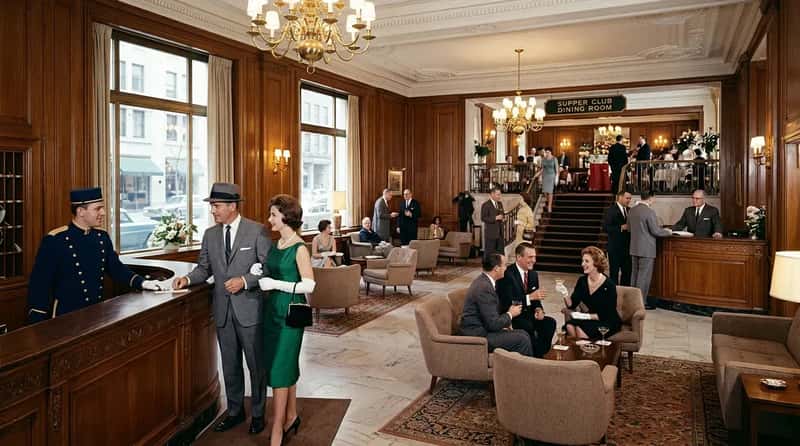
Every item on this list is a symptom of the same root loss. In the Golden Age of American hospitality, the hotel itself was the destination – not just the place you slept before doing whatever you actually came to do. Guests dressed for dinner in the hotel dining room. They lingered in the lobby because the lobby was worth lingering in. They talked to the staff because the staff knew things worth knowing – not scripted upsells, but genuine local knowledge shared by people who took pride in it. The hospitality staff enriched a guest’s experience in ways no algorithm has replicated.
The 1960s hotel at its best was a complete world: barbershop, supper club, live music, butler, guestbook, postcards, turndown ritual, brass key, vibrating bed and all. Every element communicated the same message – you are somewhere, this stay matters, and we have thought carefully about your comfort. Modern hotels are often safer, more sanitary, and more technologically capable than their 1960s counterparts. But they have almost entirely lost the quality that made checking in feel like an occasion. That specific, irreplaceable feeling – a hotel that believed a guest’s stay was worth celebrating – is the one luxury from the 1960s that no renovation budget, no rebrand, and no loyalty program has ever successfully brought back.
Which of these hit closest to home? The ones that stung the most are probably the ones worth fighting to bring back – and some of them genuinely deserve the noise.