
Most drivers assume a road trip is just a longer commute. It isn’t. Somewhere around hour four, the small stuff you ignored in the driveway starts collecting interest.
The wrecked trips almost never come from one dramatic decision. They come from a stack of quiet habits – the kind every driver has done at least once without noticing the cost. Here’s what actually derails , starting with the one almost nobody checks before pulling out of the garage.
#17 – Skipping the Pre-Trip Vehicle Check
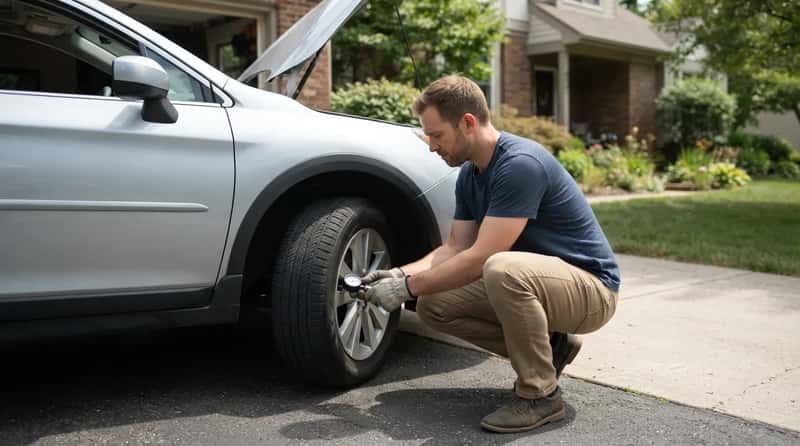
You wouldn’t run a marathon without checking your shoes. Most drivers pull out of the driveway without a second glance at their car.
According to Zebra, 41% of vehicles nationwide aren’t fully maintained. That’s not a fringe problem – that’s nearly half the cars on the highway right now.
Tire pressure, oil, coolant, brakes, lights. None of it takes more than 15 minutes, and all of it is invisible until it fails at 70 mph.
But the car check is only half the story. The thing most people skip before they even pack is far more consequential – and it’s hiding in #16.
#16 – Ignoring Tire Pressure
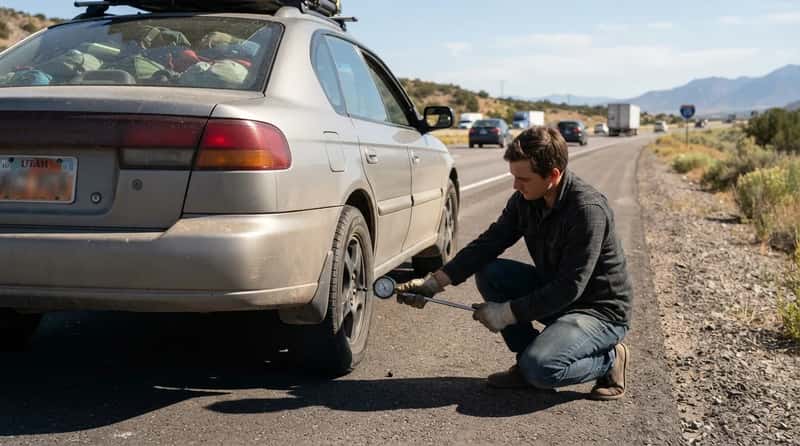
Tires look fine. That doesn’t mean they are.
A tire doesn’t need a puncture to lose air – all tires bleed pressure naturally over time. Underinflation is the leading cause of tire failure, and vehicles underinflated by more than 25 percent are three times more likely to be in a tire-related crash.
Three times. For a two-minute check with a $5 gauge.
Tire blowouts spike between mid-May and October, and the NHTSA links roughly 11,000 crashes a year to tire failure. Hot pavement and highway speed can push internal tire temps past 180°F – and an underinflated tire has nothing left to give.
#15 – Not Sleeping Enough the Night Before
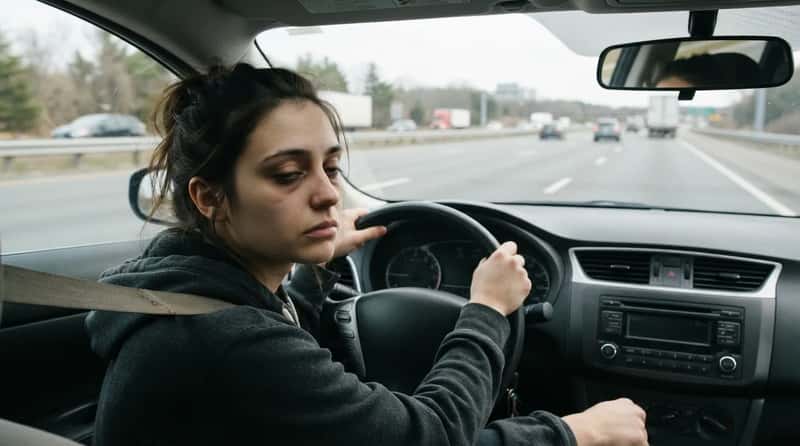
Everyone stays up too late packing, too wired to sleep. It feels harmless. It isn’t.
The AAA Foundation for Traffic Safety found that drivers who sleep seven hours or less in the past 24 hours carry a significantly elevated crash risk. Fatigue doesn’t always announce itself – it shows up as drifting attention and slower reaction time long before anyone actually nods off.
A AAA Traffic Safety Culture Index found over 40 percent of drivers get less than 6 hours of sleep on a typical night. Most people start a long drive already in the hole – and it only gets worse from there.
#14 – Driving Too Long Without a Break

There’s an unspoken badge of honor in covering the most ground before stopping. That mindset is dangerous.
Stopping every 100 miles or every 2 hours helps fight fatigue. Most drivers wait far longer than that, and drivers who push through 10–12 hour stretches see reaction times slow and attention wander – plus stiff muscles and rising passenger tension.
The NHTSA notes drowsy-driving crashes cluster between midnight and 6 a.m., and again in the late afternoon. Set a hard stop-timer, because your gut at hour six is not a reliable judge.
At a Glance
- Recommended break: every 100 miles or 2 hours
- Highest drowsy-driving risk windows: midnight–6 a.m. and late afternoon
- 10–12 hour stretches measurably slow reaction time
- Stiff muscles and rising tension are early warning signs, not just discomfort
#13 – Relying Entirely on One GPS App
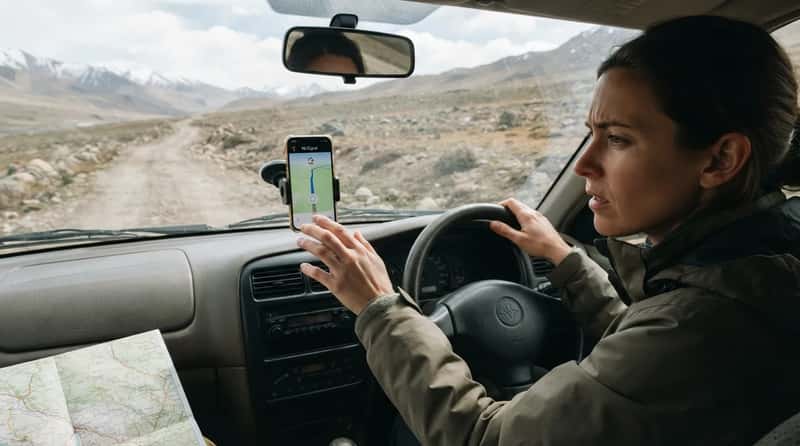
A single navigation app feels like a complete solution. It isn’t.
Digital maps fail in remote areas without service and can route drivers straight into seasonal road closures. Dead zones and sudden reroutes can strand you miles from help with no signal and no backup plan.
Download offline maps before you leave, and keep a second app ready. Think of it as a digital spare tire – one you’ll be grateful for exactly once, at exactly the worst moment.
#12 – Overpacking the Vehicle
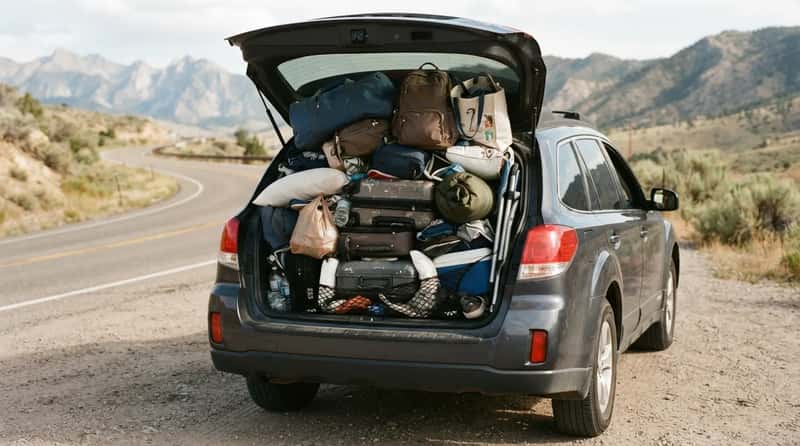
More stuff feels like more preparedness. It’s actually more risk.
A survey by Upgraded Points found 45% of travelers admit to overpacking on purpose. That extra weight makes tires and brakes work harder – both already running hotter in warm weather.
A heavier car stops slower and handles worse. And anything unsecured in the back becomes a projectile the moment you brake hard.
#11 – Reaching for Your Phone While Driving

Everybody knows not to. Almost everybody does it anyway.
Distracted driving – phones, food, fiddling with passengers – claimed 3,208 lives in 2024. Texting at 55 mph is like driving the length of a football field with your eyes closed.
Long, monotonous highway stretches practically invite it. Set your route, start your playlist, and put the phone face-down before you shift into drive – every notification can wait.
#10 – Not Accounting for Sun Glare

Nobody lists sun glare as a trip-ruiner. Experienced drivers know better.
Morning and late-afternoon sun sits right at eye level, cutting forward visibility to near zero for a few seconds – exactly long enough for a crash. A dirty windshield turns that glare from annoying into genuinely dangerous.
Keep a microfiber cloth in the door pocket and clean the inside of the glass before you leave. It’s a five-second fix almost nobody thinks of.
#9 – Running the Tank Too Low
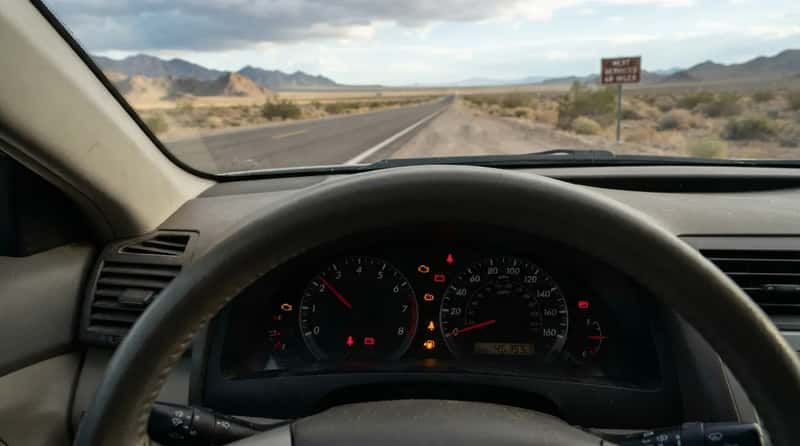
The logic is: there’s always another gas station ahead. Sometimes there isn’t.
AAA fielded nearly 700,000 emergency calls during the 2024 July 4th week alone, and empty tanks were a top category – right alongside dead batteries and flat tires. On remote highways, gas stops can be 50 miles apart with zero warning.
The rule road veterans swear by: never let the tank drop below a quarter. Refuel on your break, not when the warning light finally forces the issue.
#8 – Ignoring Warning Lights
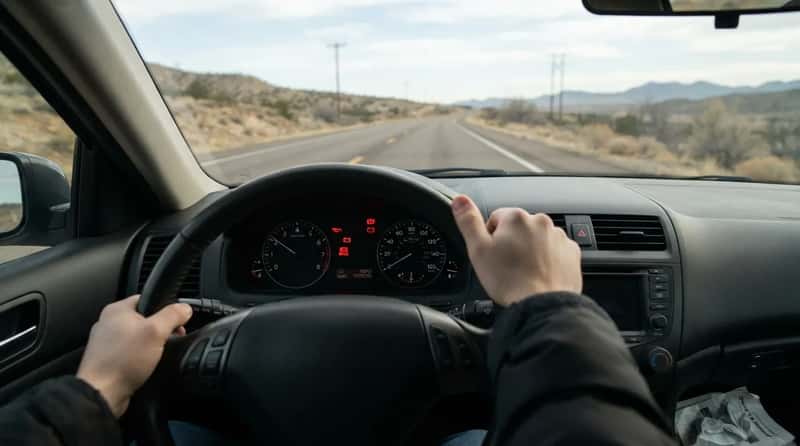
A warning light comes on. The driver makes a mental note to deal with it later. Later never comes.
Some lights are genuinely low-priority. Others – oil pressure, engine temperature, brake system – signal failure that’s already underway, and most drivers can’t tell the difference without checking.
Spend three minutes with the owner’s manual before you leave. Ignoring a warning light doesn’t make the problem disappear; it just moves the problem somewhere with worse cell service.
#7 – Not Staying Hydrated

Dehydration on a long drive is almost universally underestimated.
Losing just 1–2% of body weight in fluids has been linked to measurable drops in concentration and reaction time. Sitting still in a climate-controlled car hides the feeling – you don’t notice you’re losing fluid, but you are.
Many drivers mistake dehydration fatigue for regular tiredness and push through both at once. Keep water within reach and drink at every stop, on purpose, every time.
#6 – Speeding to Make Up Time
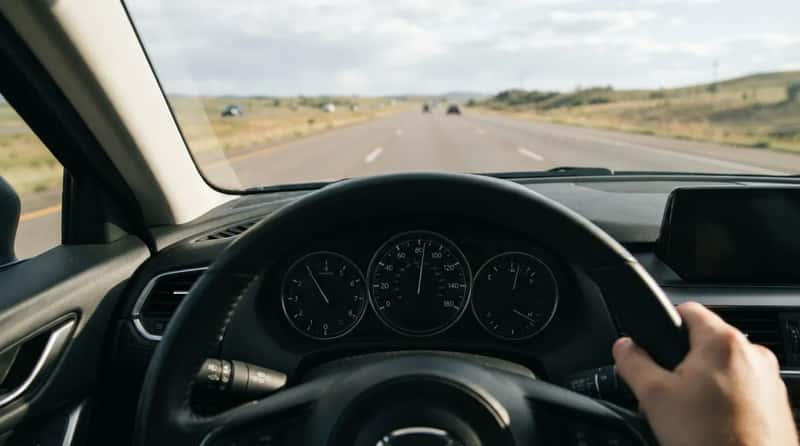
You’re behind schedule. The road is empty. The speedometer creeps up.
Speeding was a factor in about 29% of all traffic fatalities nationwide in 2024 – the single largest contributor to fatal crash risk on record. And the payoff barely exists: going 80 instead of 70 over 300 miles saves roughly 32 minutes.
Quick Compare
- 70 mph over 300 miles: about 4 hours 17 minutes
- 80 mph over 300 miles: about 3 hours 45 minutes
- Time actually saved: roughly 32 minutes
- Trade-off: speeding factored into 29% of 2024 traffic fatalities
Cruise control is the simplest fix there is. Use it aggressively on open highway and let the math, not the impatience, set your speed.
#5 – Driving With an Aggressive Following Distance
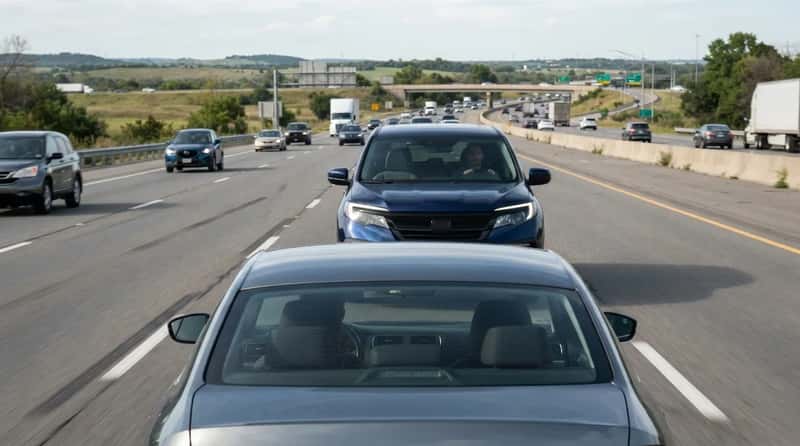
Tailgating on a long drive isn’t just rude – it’s one of the most statistically dangerous habits at highway speed.
The rule is simple: leave at least three seconds of following distance in normal conditions, and more for rain, ice, night driving, or a loaded car with longer stopping distance.
Three seconds feels uncomfortably large at first, because most people are used to driving too close. That discomfort is the entire point.
#4 – Skipping Real Rest-Stop Stretching

Pulling over just to use the bathroom doesn’t count as a real break. Most drivers are back in the car within three minutes.
Sitting still for hours tightens the hip flexors and restricts leg circulation, and it builds a kind of fatigue that doesn’t feel serious until it’s already affecting focus. Deep vein thrombosis – blood clots from prolonged sitting – is a real, documented risk on very long drives, especially for drivers over 40.
Actually step away from the car for five minutes. Walk, stretch, shake out your hands – it resets circulation in a way gas station coffee never will.
#3 – Over-Relying on Caffeine to Stay Alert
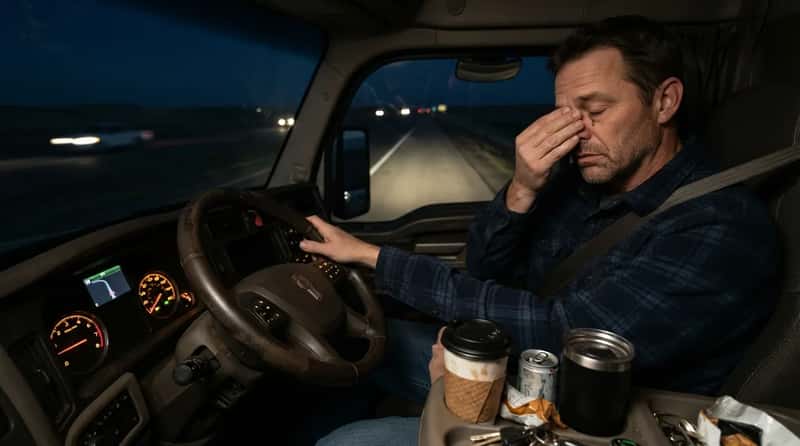
Coffee works. Until it doesn’t – and the crash, when it comes, hits hard.
Caffeine masks fatigue, but it doesn’t restore the cognitive function that sleep loss takes away. AAA lists a caffeinated drink as one tool among several – alongside real sleep and scheduled breaks every two hours or 100 miles.
Drivers who lean on caffeine alone tend to misjudge their own impairment, feeling sharp when their reaction time has already slipped. Use it as a supplement to rest, never a replacement for it.
#2 – Trying to Cover Too Much Distance in One Day
The plan looks fine on paper. Then mile 400 arrives and everything falls apart.
It’s tempting to squeeze in one more stop because it’s “only 30 minutes away.” But a few innocent-looking detours can quietly eat an entire afternoon – and force drivers to skip breaks and drive straight into the most dangerous overnight hours.
Experienced long-haul drivers cap it around 350–400 miles a day, with two real stops built in. Anything extra is a bonus, not a target.
#1 – Leaving Without a Contingency Plan
This is the one that turns every other mistake on this list from annoying into catastrophic.
Most ruined road trips trace back to the same root cause: something that felt safe to assume turned out not to be. Time, fuel range, road conditions, and car readiness all carry more weight than they appear to on a map.
No emergency kit. No offline map. No roadside assistance membership. No idea what to do if a warning light appears 200 miles from the nearest city.
Worth Knowing
- Emergency kit basics: jumper cables, flashlight, first-aid kit, blanket
- Offline map saved before you lose signal
- Roadside assistance membership or app ready to go
- Full tank and charged phone before entering remote stretches
The best trips aren’t the ones with the most detailed schedule – they’re the ones with enough structure to keep moving and enough flexibility to absorb the unexpected. Spend 20 minutes before you leave asking what happens if things go wrong, and you’ll already be ahead of almost everyone else on the road.
The Bottom Line
Long drives rarely fail from one big catastrophe. They unravel through a stack of small, ignored habits – a low tire, a missed hour of sleep, a phone glance, a skipped stretch.
NHTSA, AAA, and CDC data all point to the same handful of culprits: fatigue, distraction, poor prep, and overconfidence in a plan with no backup. Fix the small stuff before you back out of the driveway, and the big drive tends to take care of itself.
Fast Facts
- 41% of vehicles nationwide aren’t fully maintained
- Speeding factored into 29% of 2024 traffic fatalities
- Distracted driving claimed 3,208 lives in 2024
- AAA fielded nearly 700,000 emergency calls in one holiday week alone
Which of these have you been guilty of? Drop it in the comments – we won’t judge.
Bonus – The Insider Safety Setup Nobody Mentions
Every mistake above assumes someone finds out something went wrong. The single best fix is making sure help finds out automatically, even if you can’t make a call.
- Before you leave the driveway, turn on Crash Detection (iPhone 14 and newer) or Car Crash Detection (recent Pixel and Galaxy phones) in your phone’s safety settings.
- Add at least one Emergency SOS contact directly to your lock screen so first responders can reach someone instantly, even if your phone is locked.
- Turn on live trip sharing in Google Maps or Apple Maps and send it to one trusted person, not a general “text you when I get there.”
- Agree on a specific check-in time; if you’re more than 30 minutes late with no contact, that person calls the non-emergency line for the state patrol covering your route.
This setup takes about three minutes and costs nothing. It’s the one thing on this whole list that keeps working even after every other precaution has already failed.