Room service tickets aren’t supposed to change based on age. But ask anyone who’s worked a late shift in hotel food service, and they’ll tell you the order quietly rewrites itself the moment a guest looks like they’ve been checking into hotels since long before room service had its own phone line. It’s not written into any policy. It’s just something staff have learned to do without being told.
What’s stranger than the fact that these little accommodations happen is how specific, how consistent, and how invisible they are to everyone outside the kitchen door. None of it shows up on a receipt. By the time you reach the last one on this list, you’ll understand exactly why nobody in the industry wants to put it in writing.
17 – The Bread Basket That Always Arrives, No Matter What’s Ordered
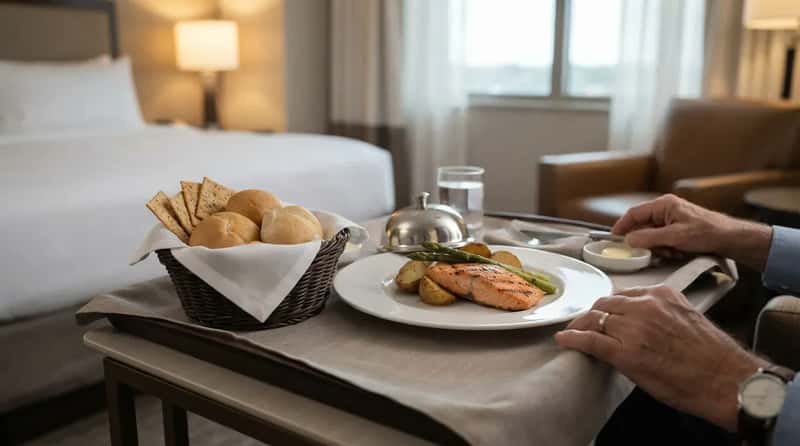
Kitchens quietly add a small side of bread, crackers, or plain rolls to orders from older guests even when nothing on the ticket calls for it. Servers say it’s rarely about hunger. It’s a buffer for guests managing blood sugar or taking medication that requires food, and staff have learned to anticipate that need without asking.
Nobody puts this on the receipt as a courtesy. It just shows up, tucked to the side of the plate like it was always part of the order, and guests notice but rarely question it. That’s exactly how the kitchens like it to stay.
16 – The Knock That Comes Twice, Never Once
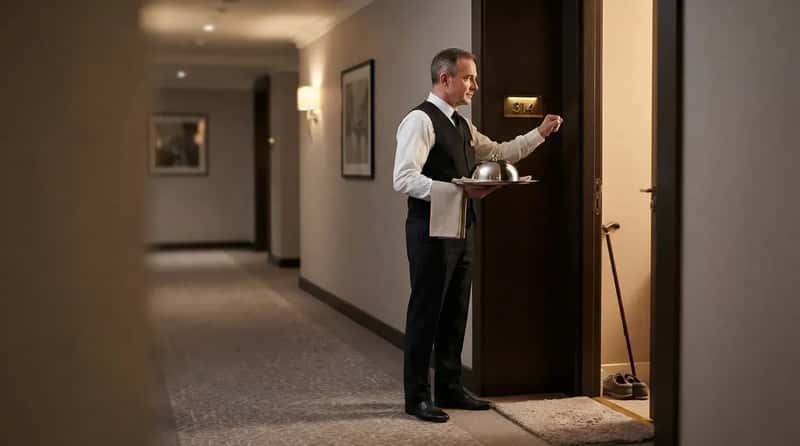
A single knock and a quick “room service” announcement works fine for most guests, but staff have learned that older travelers often need a second, slightly louder knock before they make it to the door. Rather than assume no one’s home, trained servers wait a beat longer and knock again before treating the delivery as a miss.
It sounds like a small thing, but it prevents a surprisingly common problem: a hot meal getting sent back to the kitchen as “unclaimed” when the guest was simply moving slower than expected. That double knock has quietly become its own unofficial standard.
Fast Facts
- More than one in four adults 65 and older experiences a fall every year, according to the CDC.
- Falls remain the leading cause of injury-related death among older Americans.
- Slower reflexes and balance changes mean a few extra seconds at the door can prevent a real accident.
- Hospitality trainers teach staff to expect a longer response time at the door, not a no-show.
15 – Salt Quietly Disappears From the Kitchen Ticket
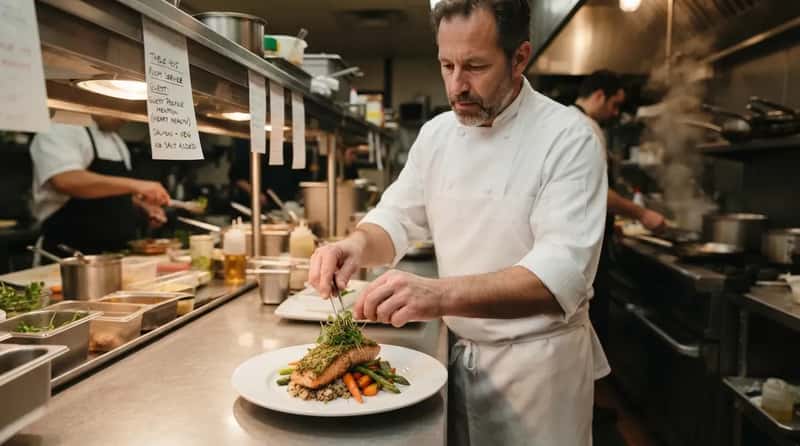
When an order comes in from a guest whose profile or past requests mention heart health, some kitchens will dial back the salt without flagging it as a special request. It’s never listed as a “low-sodium meal” anywhere on the menu, and the guest usually never even notices the substitution happen.
This mirrors a bigger shift already happening across hotel food service. More than 55% of hotels report a rise in vegan and plant-based orders, a sign that kitchens have simply gotten faster at reading dietary needs guests never spell out loud. That same instinct makes it easy to quietly cut sodium too.
14 – The Tray Nobody Sees Anymore, Replaced By a Real Plate
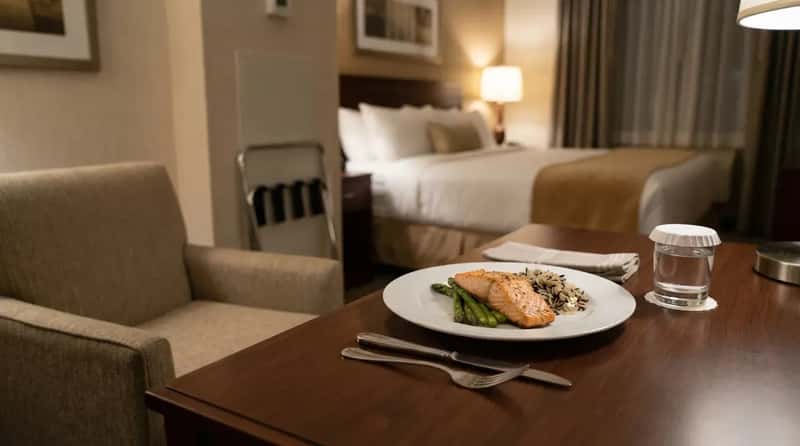
Standard room service arrives on a covered tray with legs that fold out over a bed or chair. For guests over 60, especially those with mobility concerns, many hotels quietly swap that setup for a plated meal placed directly on the room’s existing desk or table instead.
It sounds minor, but it removes a real fall risk. Balancing a hot plate on a wobbly folding tray is harder than it looks, and a server who’s watched a guest struggle with one tends to remember it permanently for that room.
13 – A Nightcap That Isn’t on Any Menu

Warm milk, chamomile tea, or a cup of decaf sent up around 9 or 10 p.m. isn’t printed on most in-room dining menus, but it’s one of the most quietly requested items from older guests trying to wind down in an unfamiliar bed. Staff have learned to just say yes without checking a price list.
It rarely gets charged as a separate line item. Most servers treat it as a five-minute favor rather than an official order, which is part of why almost nobody outside the industry knows it’s even a common ask.
12 – The Fork Swap Nobody Has to Ask For
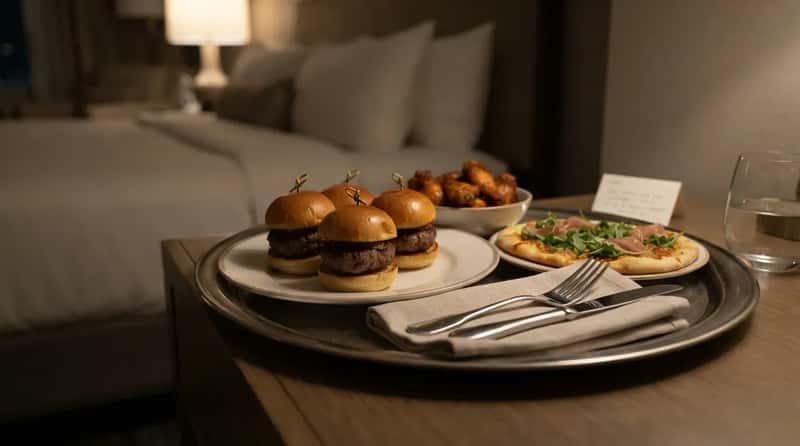
Finger foods like sliders, wings, or flatbread are built to be eaten by hand, but kitchens have noticed that older guests frequently prefer a fork and knife instead, especially late at night. Servers now often include full utensils automatically rather than waiting for a guest to request them.
It’s a tiny adjustment that avoids an awkward moment: nobody wants to call back down to the kitchen because their meal arrived without the right tools. Staff would rather over-prepare the tray than risk that second phone call.
11 – Portions Get Cut in Half Before They Leave the Kitchen
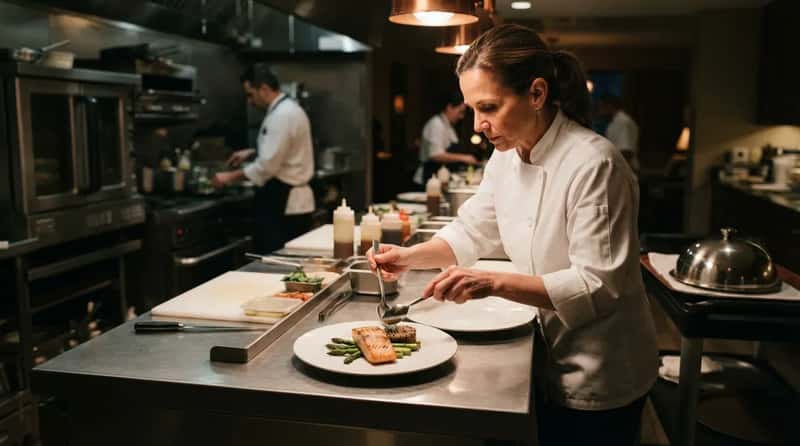
A full entrée can be more food than some older guests want late at night, and kitchens have quietly started offering half portions for regulars without ever making it a formal menu option. It’s an unofficial accommodation, but a steady one.
This lines up with what industry surveys have already found about in-room dining habits. One international guest survey found that a third of travelers spend at least €116 on room service per night, with the busiest ordering window falling between 7 and 8 p.m. Smaller, later orders from older guests fit neatly into that same pattern, just scaled down to match a lighter appetite.
10 – The Extra Pause Before the Door Ever Opens
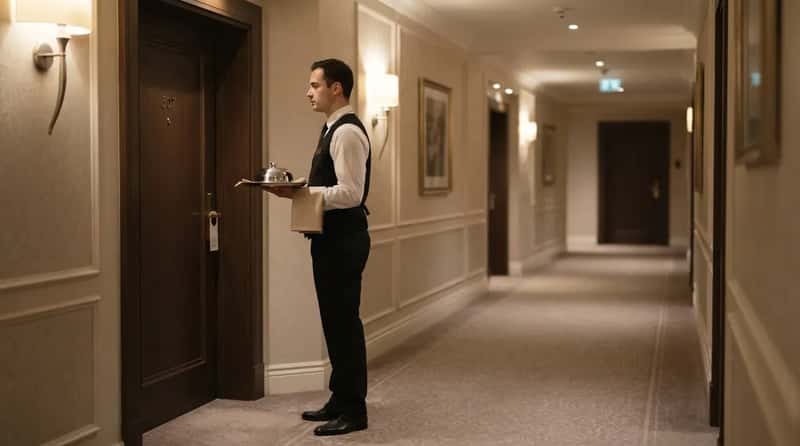
Room service staff are trained to identify themselves clearly, but many have quietly extended how long they wait after knocking before assuming a guest isn’t coming. For older travelers who may need a cane, a walker, or simply more time to stand, that extra ten or fifteen seconds matters more than most guests realize.
Anticipating a guest’s needs and helping them meet those needs quietly is considered one of the most basic jobs of any hotelier, and that patience at the door is one of the plainest examples of it in action. It’s a habit trainers describe as reading a need before it’s ever spoken.
9 – Lights Go Up, Then Back Down, Without a Word
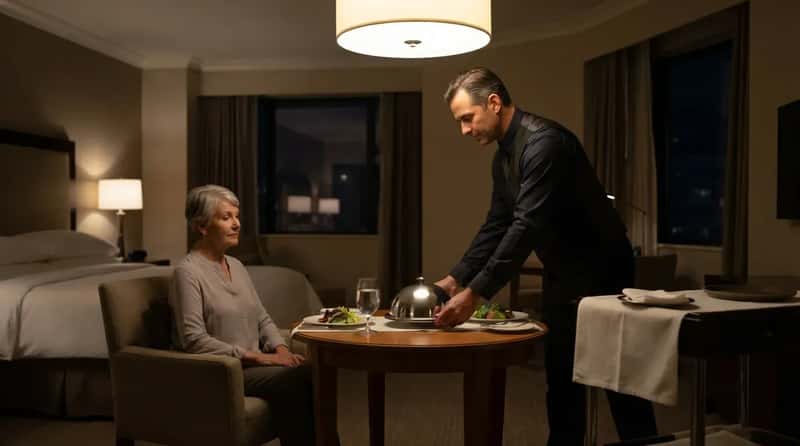
When a server enters a dim room to deliver food, many will quietly turn the main lights up while setting the tray down, then dim them back before leaving, matching however the guest had the room set. It’s a small courtesy aimed at helping older eyes see the food clearly without asking the guest to adjust anything themselves.
Nobody announces this as a service. It happens in the same twenty seconds as unloading the tray, which is exactly why so few guests ever clock that it happened at all.
Quick Compare
- Standard delivery: folding tray, a single knock, lighting left exactly as found.
- Age-aware delivery: plated meal on a stable table, a second knock if the first goes unanswered, lights briefly raised to check the order.
- Standard delivery: finger food served as-is, full portion, one short wait before assuming a miss.
- Age-aware delivery: utensils added automatically, smaller portions available quietly, extra seconds built into nearly every step.
8 – Spice Gets Dialed Down Before the Order Ever Ships
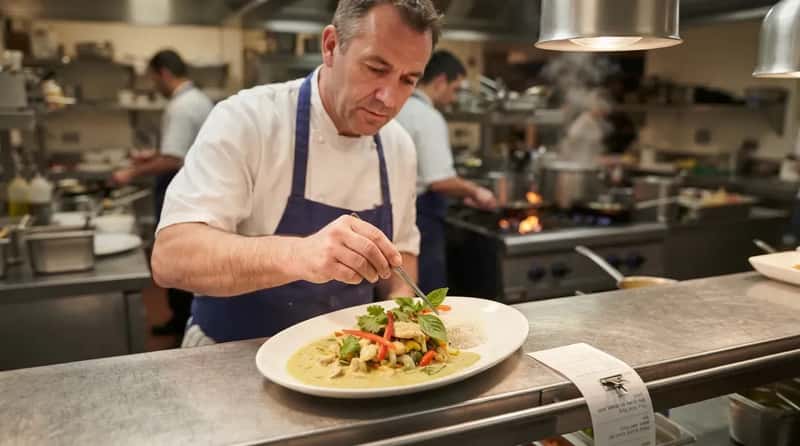
Kitchens that know a guest’s history, or simply notice a hesitant tone when ordering something labeled “spicy,” will often quietly reduce the heat level without mentioning it. It’s less about assumption and more about avoiding a returned plate and an uncomfortable conversation later.
Staff describe this as reading the room rather than following a rule. It’s one of the more controversial habits among servers, since a few argue guests should always get exactly what they ordered, spice level included, rather than a version someone else quietly decided was safer.
7 – Reading Glasses Ride the Tray, Just in Case
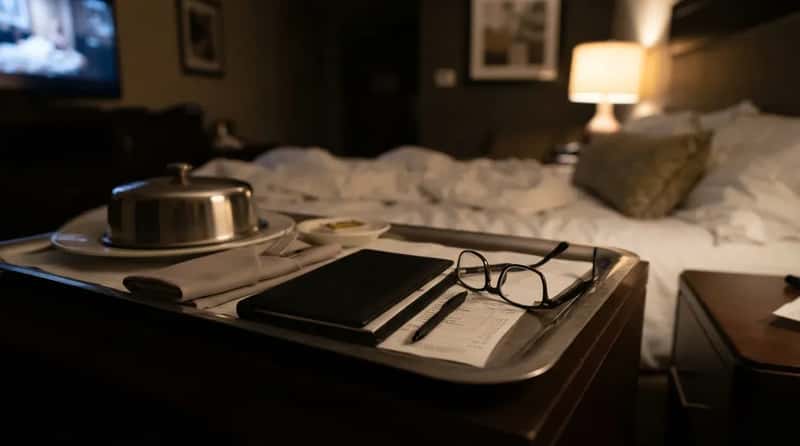
Some room service teams keep a small stash of basic reading glasses near the kitchen specifically for late-night deliveries, since printed menus and bill totals are often too small to read comfortably in low light. A pair gets set beside the check without being asked for.
It costs the hotel almost nothing and it solves a problem guests rarely bring up out loud. Most older travelers would rather squint through a signature line than admit they forgot their glasses upstairs.
6 – Food Arrives Already Cut Into Bite-Sized Pieces
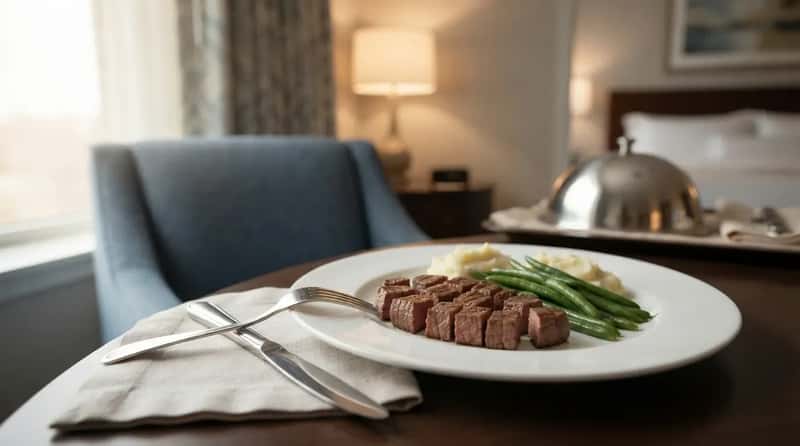
For guests who mention arthritis, dental issues, or simply struggle with steak knives, some kitchens will pre-cut proteins into smaller pieces before the plate ever leaves the kitchen. It’s rarely offered outright. It’s something staff pick up on after one or two visits and start doing automatically after that.
This kind of tailored attention echoes long-standing hospitality guidance around older guests specifically. Standard practice calls for arranging a calm, quiet corner with a comfortable chair for elderly guests and always serving them first with care and respect. The pre-cut plate is simply that same instinct, carried straight into the kitchen.
Worth Knowing
- Nearly half of U.S. adults age 65 to 74 have been diagnosed with arthritis, and the rate climbs even higher after 75.
- Joint pain and reduced grip strength often make twist caps, foil lids, and steak knives harder to manage than they look.
- Some trainers describe pre-cutting food as “reading the hands,” not just the order.
- None of it appears on a menu insert or a bill, which is exactly why so few guests realize it’s a pattern.
5 – Someone Always Opens the Jar First
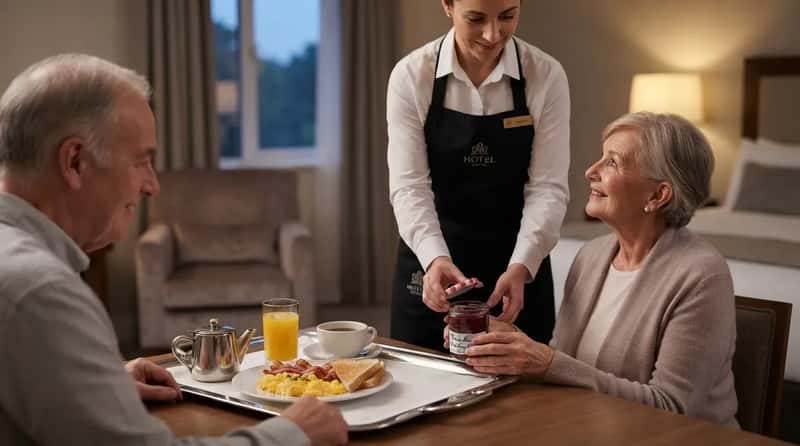
Condiment packets, sealed juice bottles, and twist-cap sauces are notoriously hard to open with arthritic hands, and room service staff have quietly started opening these items before they ever leave the kitchen, or right at the door. It saves an awkward callback and a cold meal waiting on a stuck lid.
Staff who’ve worked hospitality for years point out that guests rarely realize how much flexibility exists behind the scenes. The staff at a hotel exist to make a stay as comfortable as possible, and they often have far more room to bend the rules than guests assume, which is exactly why something as small as a pre-opened jar barely raises an eyebrow internally.
4 – The Order Nobody Has to Repeat

Return guests over 60 are far more likely to order the same meal, at the same time, night after night, and staff have gotten quietly good at remembering it without a reminder. Some kitchens keep informal notes just to make sure the next shift knows too.
It builds a strange kind of loyalty that never shows up in a rewards program. Guests feel recognized in a way that has nothing to do with points or status, and staff say that recognition often matters more to older travelers than any official perk the hotel offers.
3 – A Second Knock, Ten Minutes Later, Just to Check
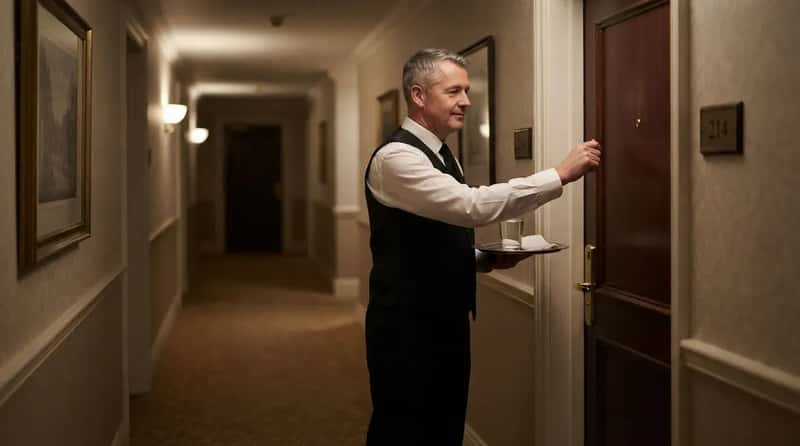
After delivering a late-night meal to an older guest traveling alone, some staff will quietly circle back ten or fifteen minutes later with a light knock, just to confirm everything arrived correctly. It’s framed as a routine follow-up, never as a welfare check, even when that’s closer to the real reason.
This habit tends to be more common at smaller, independent hotels where staff know their regulars personally. It’s rarely written into training manuals, but plenty of veteran servers describe it as something they simply started doing on their own and never stopped.
2 – Delivery Times Quietly Shift Around Medication, Not the Clock
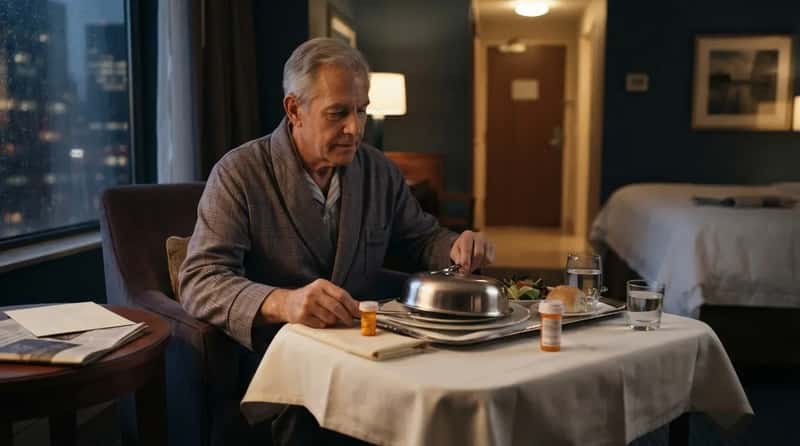
Guests who mention needing to eat before or after taking medication often get their delivery windows quietly prioritized ahead of other orders, even during a kitchen’s busiest stretch. Staff will move a ticket up the queue without flagging why, treating it as an internal judgment call rather than a policy.
It’s one of the clearest examples of hospitality workers making decisions above their pay grade because the alternative feels wrong. No manager tells them to do this. They just do, and it rarely gets mentioned again once the tray is delivered on time.
1 – Staff Slow Down and Repeat the Order Back, Every Single Time

The single most common accommodation isn’t food at all. It’s pace. Staff taking phone orders from older guests routinely slow their own speech, speak more clearly, and repeat the full order back before hanging up, even when it adds an extra thirty seconds to the call.
Industry observers note this same pattern shows up across the entire guest journey, not just room service. A guest who digs through a purse or an overstuffed wallet is often signaling they need a slower pace, and trained staff pick up on it immediately, slowing down and volunteering information instead of waiting to be asked. The real trouble starts when a guest feels embarrassed by the pace difference and rushes to catch up, and that’s exactly when small errors creep in and special requests go unmentioned. Repeating the order back solves that problem before it ever has a chance to start.
Why It Stands Out
- It costs the hotel nothing extra, yet it’s the accommodation guests remember longest.
- It has nothing to do with loyalty tiers, points, or upgrades on a rewards account.
- It works both ways: guests relax, and staff avoid the small errors that rushed orders tend to create.
- It’s taught by example, not policy, which is why it varies so much from one hotel to the next.
None of these seventeen habits are printed in a training binder, and almost none of them show up on a bill. They exist because the people delivering meals at 9 p.m. notice things guests never say out loud, and they’ve decided, quietly and consistently, that noticing is part of the job.
Whether that’s generous hospitality or something hotels should simply put on the actual menu is a fair question. Have you ever gotten one of these quiet accommodations without asking? Tell us which one in the comments.