Most people spend hours hunting for the cheapest fare, then take about eleven seconds to pick their seat. That snap decision – usually defaulting to whatever looks open – is quietly responsible for some of the worst flying experiences imaginable: five hours next to a flushing toilet, a “window” seat with no actual window, an exit row that won’t recline, or sprinting through a connection because you landed at the very back of a packed plane. Every single one of those situations was preventable. And almost nobody learns the fix until after it’s already happened to them.
The tricky part is that the worst seat mistakes feel completely logical in the moment. The exit row looks like free legroom. The back of the plane looks quiet. The airline’s own seat map looks like all you need. Turns out, what you see on that little colored grid barely scratches the surface of what you’re actually agreeing to. Here’s what frequent fliers, former seat-map specialists, and airline insiders actually know – counting down from the most common to the one mistake almost nobody talks about.
#17 – Letting the Airline Assign Your Seat for You

This is the most widespread mistake of all, and it costs nothing to fix. When you skip seat selection entirely, the airline fills you in algorithmically – and that algorithm is not optimizing for your comfort. It’s balancing weight distribution, boarding efficiency, and operational needs. The result is usually a middle seat, the back of the plane, or a spot directly beside the lavatory.
Even if your fare technically includes seat selection, ignoring that step hands your entire flying experience over to a system that genuinely does not care where you end up. By the time you reach the gate, the good seats are long gone – picked clean by the passengers who took two minutes to choose. Skipping selection to save a small fee is one of the most reliably regretted decisions in air travel.
#16 – Only Using the Airline’s Own Seat Map
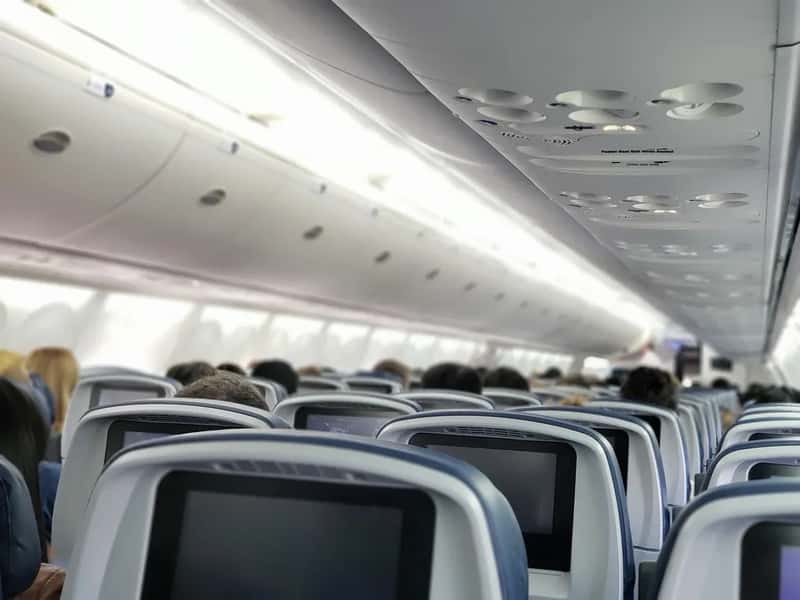
The airline’s seat map is a starting point, not the full picture. Those maps routinely omit critical details – which seats have misaligned windows, which have reduced width because the tray table is built into the armrest, and which are close enough to the galley that sleep becomes nearly impossible. The map shows you a grid. It doesn’t show you what it’s actually like to sit there for six hours.
Third-party tools like SeatGuru and ExpertFlyer fill that gap with passenger-verified reviews and detailed notes for specific aircraft configurations. Cross-referencing your flight and aircraft type against those databases takes five minutes and can completely change which seat you choose. The airline’s map tells you a seat exists. SeatGuru tells you whether you’ll regret picking it.
#15 – Assuming the Same Seat Is Good on Every Plane

Row 12, window seat. Sounds consistent. It isn’t. Airlines operate dozens of different aircraft, and the same seat number can mean totally different things depending on whether you’re on a 737-800, a 737 MAX, or an older 757. One configuration might give you a proper window and normal legroom. Another might put you beside a blank wall panel with two inches less width than you expected.
Travel expert Gilbert Ott put it plainly: “Fly one, have an antiquated experience from the Nineties; fly another on the same airline, you’ll be living it up with streaming Wi-Fi. Same goes for seating layouts: one plane might offer 3-3-3 or 3-4-3, where many more people are getting middle-seated.” Always look up the specific aircraft type assigned to your route before you lock in a seat. The seat number means nothing without that context.
#14 – Picking a “Window” Seat Without Confirming There’s Actually a Window

Yes, this is a real thing that happens to real people who paid real money. Windowless window seats exist on multiple carriers – Ryanair’s 11A, 11F, and 12F are among the most notorious, but the problem is widespread on 737s because of where air conditioning ducts run through the fuselage. You can book a window seat, pay a premium for it, and end up staring at a blank wall panel for the entire flight.
“For those who actively seek window seats, it pays to check first that the seat isn’t one of those that doesn’t actually have a window. Yes, these do exist,” travel expert Gilbert Ott has noted. A thirty-second check on SeatGuru will flag these seats before you commit. Skip it and you might spend a six-hour flight looking at insulation foam instead of the clouds. It’s the kind of thing you only need to experience once to never forget.
#13 – Sitting in the Back Row Without Knowing What That Really Means
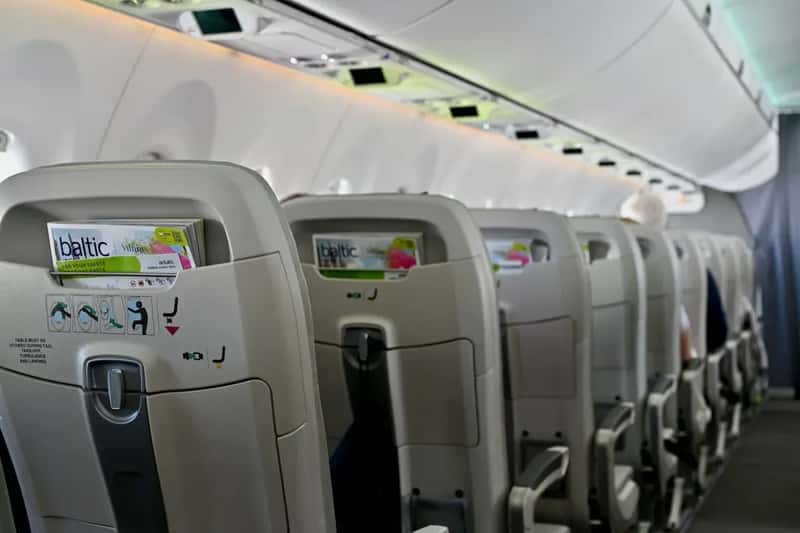
The back row feels strategic – fewer people walking past, easy bathroom access, maybe a row to yourself. The reality is considerably grimmer. David Duff, former Content Specialist at SeatGuru, described it directly: “The seats there more than likely have limited recline, and the proximity to the lavatory and galley are going to be bothersome since you are dealing with noises, smells, people queueing to use the lavatory. Many times, the windows are missing at these seats as well.”
On top of all that, the rear of the aircraft amplifies turbulence more than any other section, and you’ll be last off the plane – a real problem if you have a tight connection. The back row is arguably the single worst seat cluster on any commercial flight: no recline, maximum noise, maximum turbulence, last to deplane. And yet thousands of travelers pick it every day by default, simply because it looked available.
#12 – Ignoring the Row Directly in Front of the Exit Row

The exit row is famous for its legroom. The row directly in front of it is a trap. Those seats have their recline mechanisms physically disabled – by design, so that people can access the emergency exit row behind them without obstruction. Nothing on a basic seat map warns you about this. The seat looks completely normal until you push the recline button at 30,000 feet and nothing happens.
This is one of the most reliably frustrating surprises in economy class, especially on overnight flights. The row behind the exit is the prize – the one in front of it is the penalty. Always check one row above any exit row before you commit. Five seconds of awareness here saves hours of discomfort later.
#11 – Choosing the Same Seat Regardless of Flight Duration
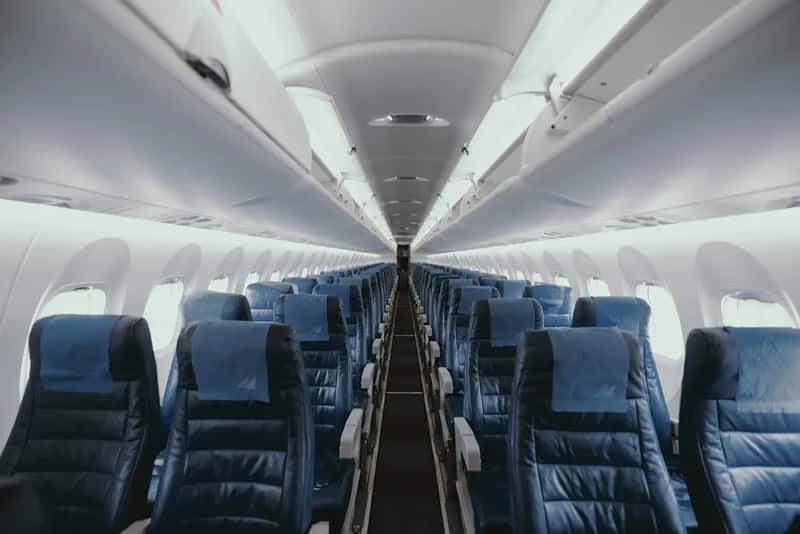
An aisle seat perfect sense for a two-hour hop. It’s often the wrong call for a twelve-hour overnight haul where you actually want to sleep against the fuselage wall without strangers climbing over you every hour. Defaulting to the same seat type regardless of flight length is one of the quietest ways to make a long flight significantly worse than it needed to be.
Kaleigh Kirkpatrick, CEO of The Shameless Tourist, a luxury travel planning agency, recommends matching your seat choice to the specific flight’s demands. A long international overnight calls for a window – lean against the wall, control your headrest, sleep without interruption. A short domestic leg where you’ll be working or moving around calls for the aisle. The habit of picking one type and sticking to it permanently is costing you comfort on at least half your flights.
#10 – Sitting at the Back of the Plane When You Hate Turbulence

If bumpy air your knuckles white, where you sit genuinely matters – and most people choose the wrong section. Maria Fagerström, a 737 captain in Europe, told AFAR: “The best seats to experience the least amount of turbulence are close to the wings. This has to do with where the center of gravity is located on the aircraft. The further away from it you are, the more turbulence you feel.”
The rear of the plane is the worst possible place to be during rough air. It’s like standing at the end of a whip – small movements at the center become dramatically exaggerated motions at the extremity. If you’re prone to motion sickness and you keep choosing seats at the back of the plane out of habit, you’ve essentially been making your own turbulence worse every single flight. Mid-cabin, over the wings, is where the smoothest ride lives.
#9 – Underestimating How Loud the Galley Really Is
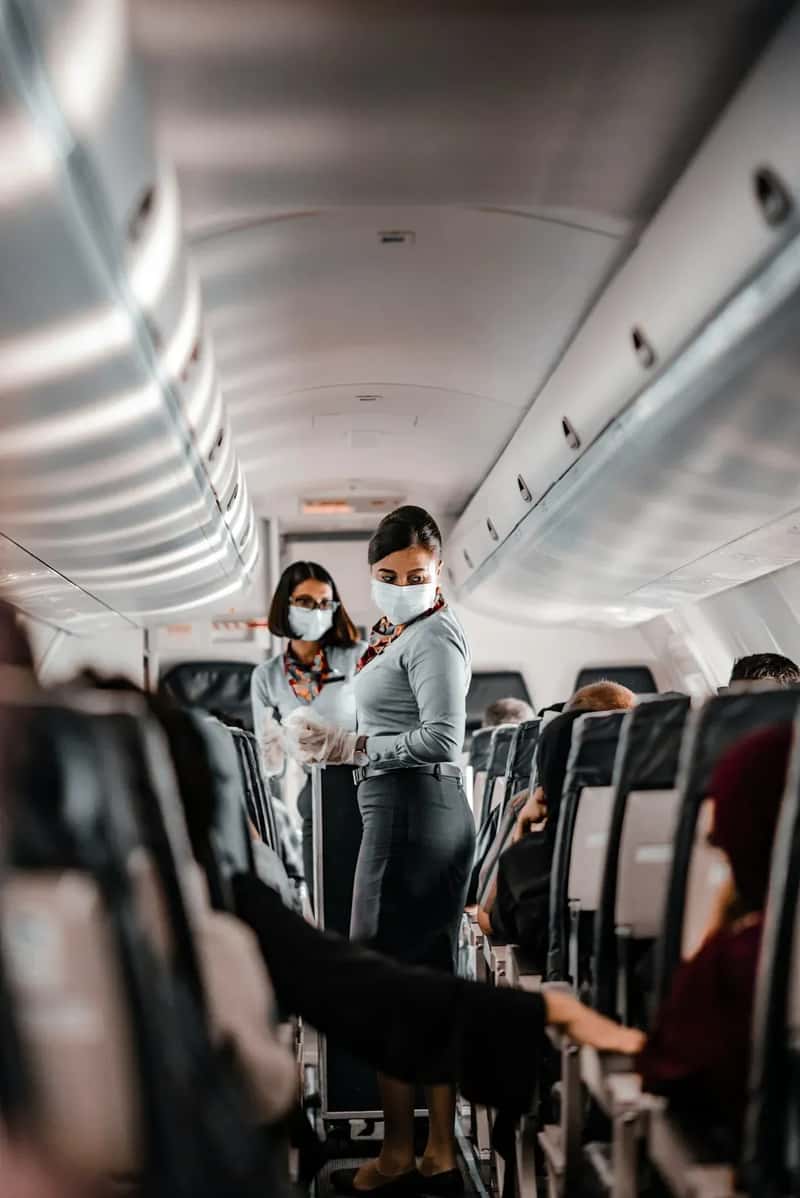
A galley is essentially a commercial kitchen crammed into an aircraft fuselage – and it runs nonstop. Carts rattling in and out, coffee brewers cycling, flight attendants coordinating, passengers lining up, overhead bins slamming at odd hours. From the outside, galley-adjacent seats look perfectly normal on the seat map. From inside them, the noise is relentless in a way that’s hard to appreciate until you’ve sat there.
“Most flyers focus on avoiding the middle, but the back of the aircraft – near toilets and galleys – tends to be consistently worse for comfort,” one Managing Director at a major airline booking platform has said. “You get engine noise, foot traffic, odours, and you’re the last to get off the plane.” One row of distance from the galley can be the difference between sleeping soundly and staring at the ceiling for six hours. It’s a variable most people never think to check.
#8 – Picking a Bulkhead Seat Without Reading the Fine Print
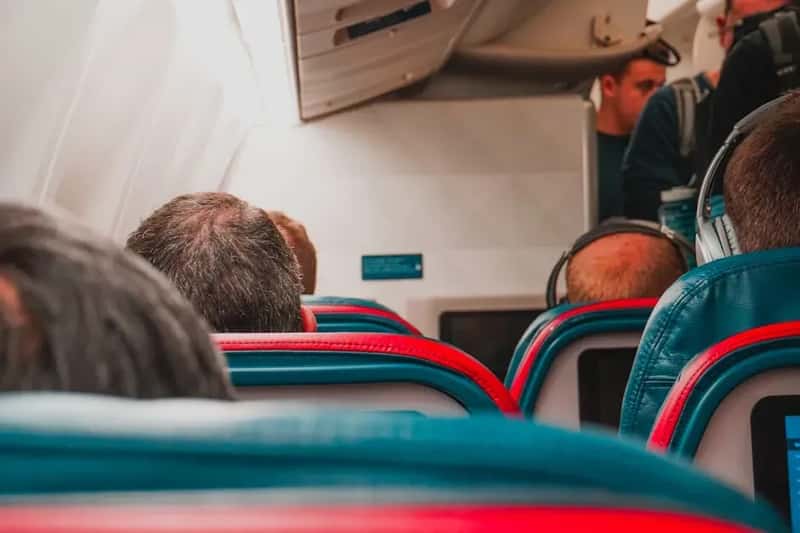
Bulkhead seats – the ones directly behind a cabin dividing wall – look like a jackpot: more knee room, nobody reclining into your face. But the trade-offs are real and they don’t appear anywhere on the basic booking screen. On almost all airlines, bulkhead tray tables are built into the armrests rather than the seatback in front of you, which reduces seat width by roughly an inch. More importantly, your carry-on bag has to go into the overhead bin during takeoff and landing – no exceptions.
That last point is more disruptive than it sounds. Need your headphones, medication, laptop, or a snack during ascent or descent? You can’t access any of it. Bulkhead rows are genuinely excellent for parents with lap infants, since the bassinets attach to the wall in front. For everyone else, those trade-offs deserve a clear-eyed look before you grab what looks like a free upgrade.
#7 – Booking a Rear Aisle Seat Thinking It’s the Smart Move
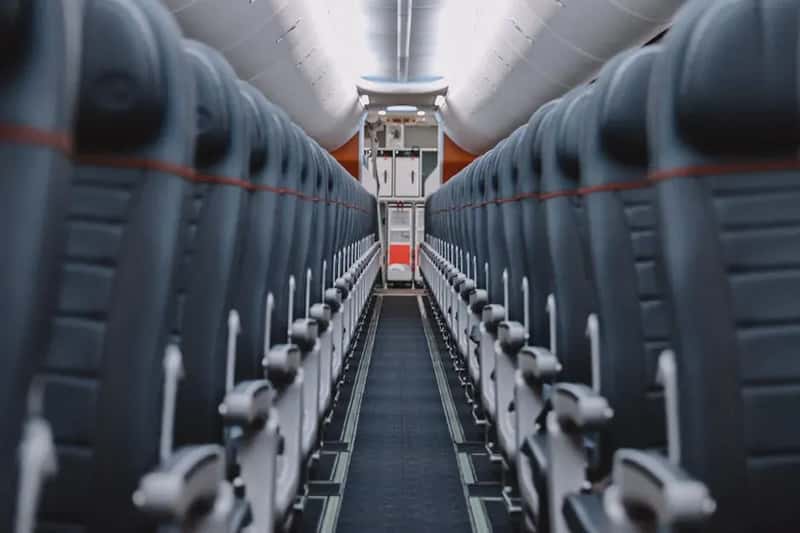
A rear aisle seat feels strategic – easy bathroom access, quick stretch breaks, no climbing over anyone. The actual experience is often the opposite. “These passengers are often the last to receive meal and drink service, increasing the chances of missing preferred options altogether,” one booking platform expert has noted. Rear aisle seats also tend to become staging areas for service carts during meal service and turbulence, boxing you in at random intervals.
So you chose the aisle for freedom of movement – and end up with less mobility than the person in the middle seat, who at least isn’t getting a cart parked directly beside them. This is one of those mistakes that’s almost impossible to fully appreciate until you’ve lived it once. The rear aisle feels like a smart workaround right up until the beverage cart parks next to you for twenty minutes and the smell from the lavatory drifts forward.
#6 – Skipping Seat Selection Just to Avoid the Fee
Airlines charging $15 to $30 to pick a seat feels like a shakedown – and it kind of is. So passengers skip it out of principle. The problem is that the math almost never works out in your favor. You save $25 on seat selection and spend the next five hours in a non-reclining middle seat at the back of the plane, next to the lavatory, wondering why you didn’t just pay the fee.
Travel experts are consistent on this point: if you care where you sit at all, paying a little upfront is almost always worth it. The seat selection fee is usually the cheapest upgrade available on any flight – and the one most travelers stubbornly refuse to buy. Skipping it out of principle is a completely understandable impulse. It’s also one of the most reliably regretted decisions people make before a flight.
#5 – Not Checking Whether Your Seat Actually Reclines

Not all economy seats recline – not even close. Seats in the last row, seats directly in front of exit rows, and certain bulkhead-adjacent configurations all have non-reclining mechanisms, and airlines often don’t volunteer this during booking. The seat looks perfectly standard on the map. You won’t find out it doesn’t recline until you push the button somewhere over the Atlantic at midnight.
SeatGuru flags non-reclining seats clearly, but only if you check. If you haven’t looked, you have no way of knowing that the seat you chose – maybe the one you paid extra for – is physically incapable of reclining. On a six-hour red-eye, that’s not a minor inconvenience. That’s the difference between arriving rested and arriving wrecked. This one takes thirty seconds to verify and somehow still catches thousands of travelers by surprise every day.
#4 – Not Thinking About Which Side of the Plane Faces the View
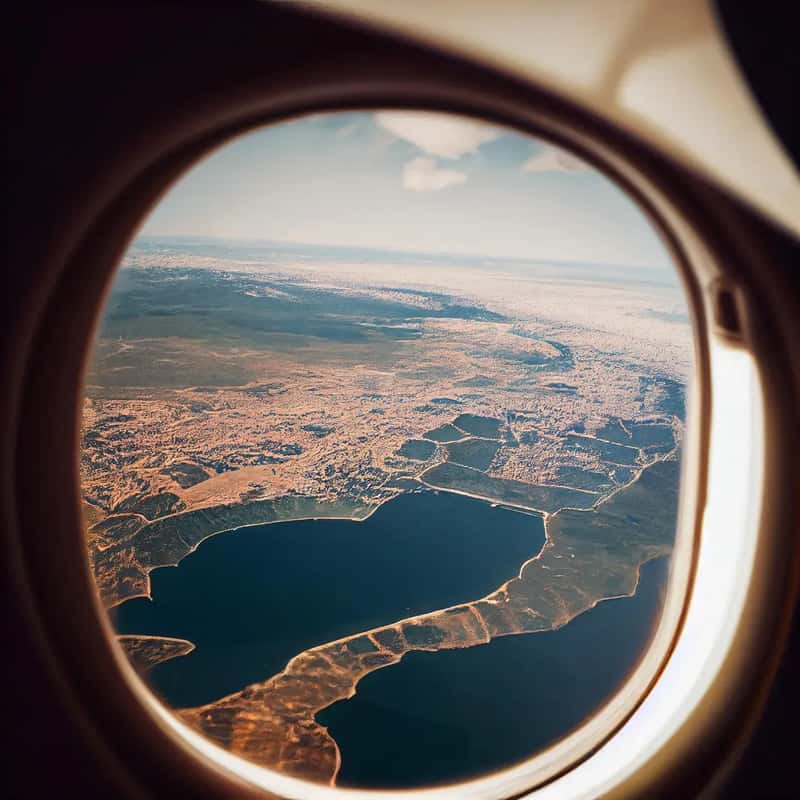
Window seat people often have a strong left-or-right preference – and almost none of them have ever checked whether their preferred side actually faces the interesting scenery on their specific route. On a flight over the Grand Canyon, the Alps, or the Manhattan skyline at sunset, you either have the view or you’re looking at flat grey nothing. That’s determined entirely by which side of the plane you’re on, and it’s completely knowable in advance.
There are websites specifically designed to tell you which side of the plane faces the best views for thousands of routes worldwide – and most travelers have never heard of them. Flights into Los Angeles, for example, often offer stunning city views on the left side during approach. Picking the wrong side on a route known for spectacular scenery is the kind of mistake that’s impossible to fix once the door closes. Two minutes of research before booking is all it takes.
#3 – Treating the Exit Row as an Automatic Free Upgrade
Exit rows are widely treated as a legroom hack. They do deliver more space. But they come with restrictions most passengers don’t fully think through until they’re already seated. Passengers in exit rows must be physically able to assist in an emergency, willing to operate the exit door, and capable of understanding crew instructions. Flight attendants assess this at boarding – and they can move you if you don’t meet the criteria, sometimes without much notice.
Beyond eligibility, the comfort trade-offs are real. Exit row armrests are often dramatically shortened to keep the evacuation path clear, which affects your seated width and comfort for the entire flight. You might pay a premium to sit there, get reassessed at the gate, and end up in a worse seat than you started with – having already paid extra for the privilege. Always read the fine print before you pay for that row. The legroom is real. So are the conditions attached to it.
#2 – Traveling in a Group and Not Locking In Seats Together Early
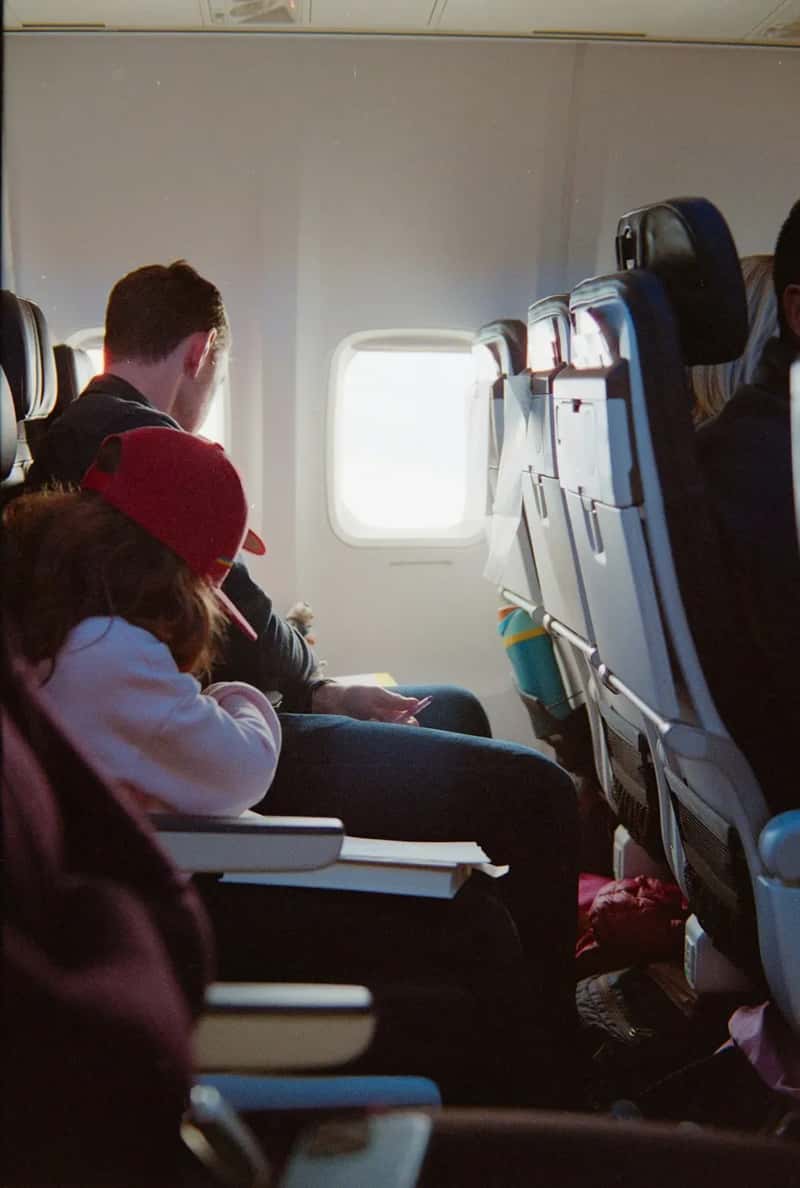
Groups and families routinely assume the airline will seat them together, or that they can sort it out at the gate. This is one of the most stressful and entirely avoidable mistakes on this list. Many airlines make good-faith efforts to seat families together, but availability depends entirely on when you book – and “trying to” is very different from “guaranteeing.” On a packed flight, there may simply be nothing adjacent left by the time you arrive.
A family of four that doesn’t select seats at booking can end up scattered across four separate rows, with gate agents who genuinely have limited options to help. Trying to sort it out in the aisle while other passengers are boarding is as stressful as it sounds. Lock in connected seats the moment your booking is confirmed – especially when traveling with kids, elderly family members, or anyone who can’t comfortably manage alone. The seats exist when you book. They may not exist later.
#1 – Never Going Back to Check Your Seat Assignment Before the Flight

This is the mistake almost nobody talks about, and it might be the most costly one on the entire list. Booking a seat once and never revisiting it means missing one of the most powerful free upgrades available to any economy traveler. In the 24 hours before departure, elite passengers get upgraded to business class, groups reshuffle, and entire rows can open up that were completely unavailable at the time of booking.
Airlines often release premium economy and preferred seats when online check-in opens – typically 24 hours before departure. The passengers who log back in and check the map are the ones who grab them. The passengers who don’t stay exactly where they were assigned months ago. Set a reminder, pull up the seat map one more time at the 24-hour mark, and you might be genuinely surprised by what’s suddenly sitting there unclaimed. This single habit has moved people from middle seats at the back to aisle seats near the front at zero cost – and it takes about ninety seconds.
Seat selection is one of the few parts of flying you actually control. Most people treat it like a checkbox and move on. The travelers who spend five extra minutes cross-referencing seat maps, checking aircraft types, and revisiting their assignment before departure consistently have better flights than everyone around them. That’s not luck. It’s just knowing which eleven-second decision is worth a little more than eleven seconds.