Most people over 60 walk into the airport security line the same way they always have – shoes already half off, belt loosened, quietly hoping the scanner doesn’t beep. What almost none of them realize is that trained TSA officers are already running a specific mental checklist the moment an older traveler steps into view. Some of it is standard threat detection. But a surprising amount of it is about spotting travelers who qualify for accommodations, exemptions, and modified procedures that nobody ever announces out loud.
The gap between what most travelers over 60 actually experience at the checkpoint and what agents are quietly watching for is wider than almost anyone talks about. There are age-based rights you likely don’t know you have, medical signals agents are trained to flag, and behavioral tells that mean something completely different for a 68-year-old than they do for a 35-year-old in a business suit. Here’s what TSA’s own published procedures – and years of documented policy – actually reveal, counting down to the one agents say matters most.
#17 – Whether You’re 75 or Older and Automatically Qualify for Modified Screening
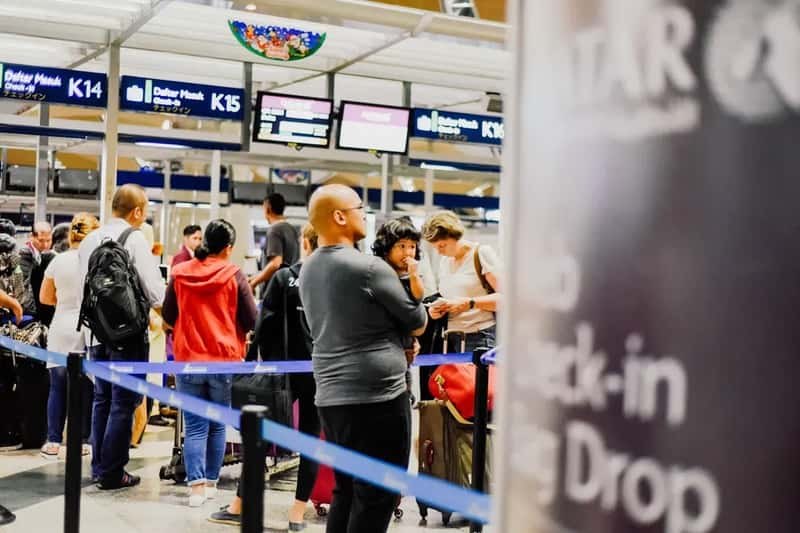
The very first thing a seasoned TSA officer quietly clocks when an older traveler steps into line is whether they appear to be 75 or above. This matters more than most people realize. Passengers 75 and older are entitled to expedited screening under TSA’s risk-based security policy – no PreCheck enrollment required, no special request needed in most cases. That means shoes can stay on, and the process is designed to move faster. Yet the majority of qualifying seniors still remove their shoes out of pure habit.
As of July 2025, a sweeping new TSA policy now allows all travelers – regardless of age – to keep their shoes on at standard checkpoints nationwide, ending a nearly 20-year rule. Light jackets still need to come off for Advanced Imaging Technology screening, and you may still be asked to remove shoes if the scanner alarms. But for travelers over 75, this adds to a layer of accommodations that was already in place. Agents who notice a qualifying traveler automatically stripping off their shoes often want to step in – they just don’t always get the words out before the line presses forward.
Fast Facts
- Passengers 75+ have been entitled to expedited screening under TSA risk-based security policy for years – no PreCheck needed.
- As of July 8, 2025, all U.S. travelers can now keep shoes on at standard TSA checkpoints.
- Light jackets still must come off for Advanced Imaging Technology (AIT) screening at standard lanes.
- If the scanner alarms, shoes may still be requested for secondary screening.
- TSA screened over 904 million passengers in 2024 – a record high.
#16 – Whether Your Stress Level Actually Matches the Situation
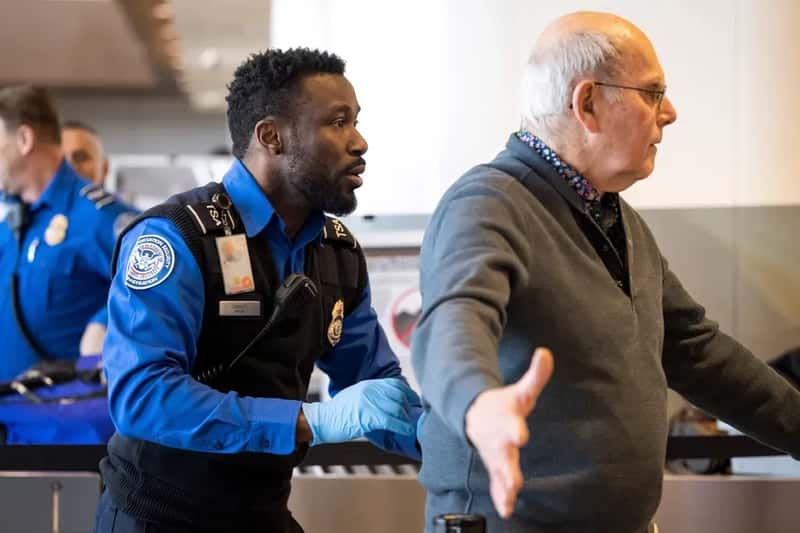
Every experienced TSA agent knows airports make people nervous. That’s completely normal, and agents factor it in. What they’re actually watching for is nervousness that doesn’t fit the context – stress that seems wildly disproportionate to simply standing in a security line. TSA uses behavioral detection as part of its screening approach, and involuntary physical signs of anxiety are part of what trained officers observe across all travelers, not just older ones.
Agents are trained to watch for telltale stress signals – sweaty palms, exaggerated yawning, whistling, displays of sudden arrogance – and may engage you in conversation not out of friendliness, but to gauge your reactions. For travelers over 60 specifically, agents are also calibrating whether that anxiety points to something else entirely – which leads directly to sign #15.
#15 – Signs of Confusion That Go Beyond Ordinary Travel Stress

For older travelers, agents are watching for a different stress signal altogether: confusion or disorientation that seems to go beyond the normal checkpoint scramble. Trained officers are specifically alert to cognitive signs – disorientation that doesn’t resolve when instructions are repeated, or a traveler who seems genuinely unsure of where they are or what they’re being asked to do. This is a welfare observation, not a threat assessment, and it can trigger a very different response from staff.
When an agent spots these signals, the appropriate response under TSA guidance is to slow down, simplify instructions, and consider calling a Passenger Support Specialist rather than pushing the traveler through the standard process. Travelers can inform the TSA officer of a disability or medical condition verbally, by using the TSA Notification Card, or by providing medical documentation. This is one of the least-discussed but most meaningful parts of what agents are trained to notice – and most families traveling with older relatives have no idea it exists.
#14 – Whether You’re Traveling With a Companion Who Can Relay Instructions

TSA agents immediately scan whether an older traveler has someone with them – and that changes the entire calculus of how they run the screening. A companion isn’t just emotional support. They’re a communication bridge. When an agent sees a traveler who appears hard of hearing or cognitively slower, they will often redirect instructions to whoever is standing beside them rather than repeating themselves and creating a bottleneck.
What almost no one traveling with an elderly parent or spouse knows: you are explicitly permitted to stay with them through additional screening if you ask. You may request private screening accompanied by a companion of your choice at any point in the process. Agents don’t always volunteer this information. But the moment they see a traveler over 60 arrive with someone, they’re already factoring that person into the plan – and whether they’ll be able to assist if something flags.
#13 – Whether You’re Wearing Clothes That Will Definitely Trigger the Scanner

This one catches travelers over 60 more than any other age group, and agents know it the second they see you in line. Sequined tops, blouses with decorative metalwork, and jeans with rhinestones on the back pockets reliably set off the Advanced Imaging Technology scanner – and reliably lead to pat-downs. For travelers who favor these wardrobe staples, especially on vacation days when you want to look put-together at the airport, this is an almost guaranteed slowdown at the checkpoint.
The same applies to underwire bras, heavy belt buckles, and layered metal jewelry. None of these items are prohibited – they just reliably trigger alarms. Experienced agents can often predict, just by looking at what a traveler is wearing, exactly which part of the scanner image is about to flag and who’s about to get pulled aside. The traveler is almost always surprised. The agent almost never is.
Quick Compare
- Almost always flags: Sequined tops, rhinestone-studded denim, underwire bras, heavy metal belt buckles
- Often flags: Layered metal necklaces, decorative metalwork on blouses, thick-framed metal eyeglasses cases in pockets
- Rarely flags: Plain cotton layers, soft-soled slip-ons, small stud earrings, lightweight knit scarves
- Bottom line: None of these items are banned – they just make a pat-down far more likely
#12 – Whether You Have a Metal Implant That’s About to Set Off the Alarm

Hip replacements, knee replacements, shoulder implants – these are far more common in travelers over 60, and agents have a practiced eye for the subtle physical tells: a slight favoring of one side, a visible scar, a gait that suggests a fairly recent surgical procedure. The vast majority of joint replacements trigger TSA metal detectors. That means the alarm isn’t a surprise to the agent – but it almost always is a surprise to the traveler, who often doesn’t know how to respond when it goes off.
TSA instructs travelers to inform the officer about any artificial knee, hip, or other metal implant before stepping through – and to flag internal medical devices like pacemakers or defibrillators, since those individuals should not be screened by a walk-through metal detector at all. Proactively telling an agent before you step through the scanner – not after the alarm sounds – is the single fastest way to resolve this and keep the line moving. Agents are watching for signals that tell them whether to expect this conversation or not.
#11 – Whether You Can Actually Stand Upright for the Full Screening
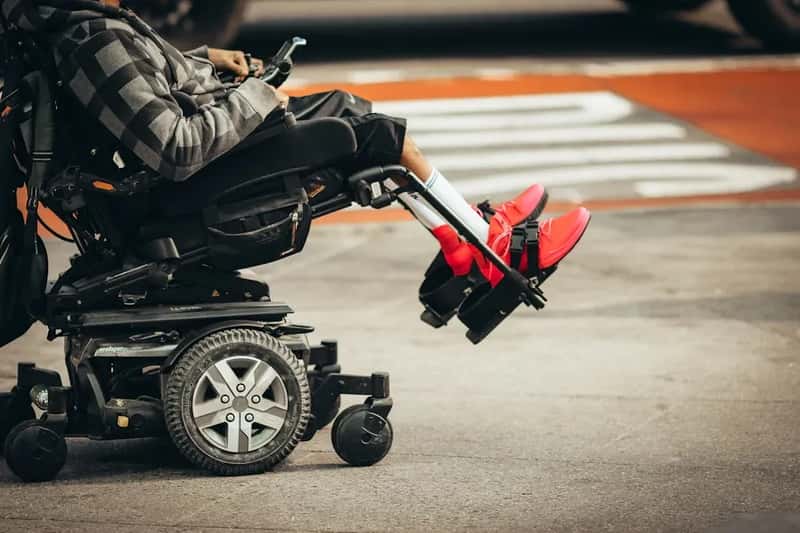
Before you ever reach the scanner, agents are quietly assessing your mobility. Can you hold both arms raised above your head for five to seven seconds? Can you stand with your feet shoulder-width apart without support? These aren’t arbitrary questions – they directly determine which screening method you’re eligible for. To qualify for AIT screening, a traveler must be able to stand unassisted with arms raised for that full window without leaning on anything.
What most travelers don’t realize is that if you can’t do this, you don’t have to announce it – agents are trained to spot it and offer alternatives. Passengers 75 and older who are unable to stand for screening will be routed through other security methods. Agents watching a traveler shuffle toward the scanner with a cane are already mentally routing them toward a different process – one the traveler usually doesn’t know exists and nobody thought to mention.
#10 – Whether Your Medications Are Going to Create a Liquid Rule Problem

Older travelers statistically carry more medication than any other age group. Agents know this and are watching for the telltale signs: a small bag clearly stuffed with prescription bottles, insulin pens, liquid medications, or medical equipment that doesn’t fit the standard 3-1-1 rule. The 3-1-1 rule limits carry-on liquids to 3.4-oz containers – but most travelers have no idea there’s an explicit medical exception baked into federal policy.
Larger amounts of medically necessary liquids, gels, and aerosols are permitted past the checkpoint – but you must declare them separately before they hit the belt. TSA officers may open containers and transfer pills to another container for testing. If you don’t want your medication X-rayed or opened, you can say so and agents will use alternative screening steps. Declaring your medications before an agent pulls them out of the bag cuts the average checkpoint delay for this issue by several minutes – and agents are watching the moment that bag goes on the belt to decide how to proceed.
#9 – Whether You’re Using a Mobility Aid That Requires a Separate Screening Protocol
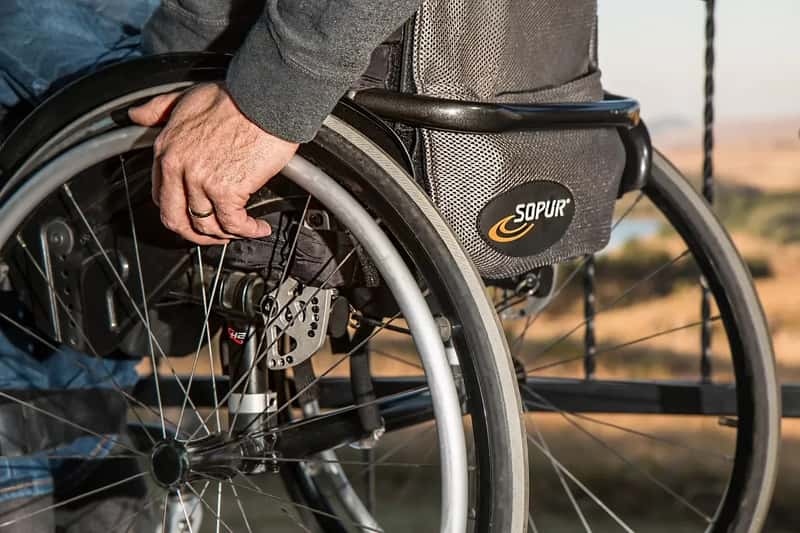
Walkers, canes, crutches, motorized scooters, and wheelchairs don’t just roll through security. Every single one of them requires its own screening, and agents begin preparing for that process the moment they spot one approaching the lane. TSA requires all mobility aids to be X-rayed or hand-inspected – this isn’t discretionary, it’s standard procedure at every U.S. checkpoint, because unauthorized items have been found in wheelchairs and other devices.
The part that trips people up: all bags or satchels attached to mobility devices must be removed and placed separately on the X-ray belt. Agents watching a traveler approach with a walker loaded with a bag are already signaling to a colleague to assist. The delay almost always happens because the traveler wasn’t expecting this step – not because the process itself is complicated. A five-second heads-up makes the whole thing go smoothly.
#8 – Whether You Know You Can Ask for a Seated Pat-Down

Most people assume a pat-down means standing with your arms out and feet apart for the entire duration. That assumption causes real problems for older travelers with hip pain, balance issues, or post-surgical limitations. What agents are watching for – and what most travelers never think to say – is whether someone is visibly struggling to stand, because that triggers a specific accommodation that very few people know to ask for.
You have the right to request a chair at any point during the pat-down, and TSA is required to accommodate it at every U.S. airport, in every screening lane, without exception. Agents who notice someone visibly struggling to stay upright often want to offer a chair – they just don’t always manage to say it before the traveler has already locked their knees and committed to standing through the whole thing. Knowing to ask changes the entire experience.
Worth Knowing
- You can request a seated pat-down at any U.S. airport – no doctor’s note required.
- You may request a private screening room and bring one companion of your choice.
- You can ask for a same-gender officer to conduct any pat-down.
- If you feel a procedure was handled incorrectly, you can ask to speak with a TSA supervisor on the spot.
- TSA’s Cares helpline fielded calls from 69,000 travelers with disabilities and special needs in 2024 alone.
#7 – Whether You Have a Hearing Aid or Cochlear Implant That Could Affect Communication
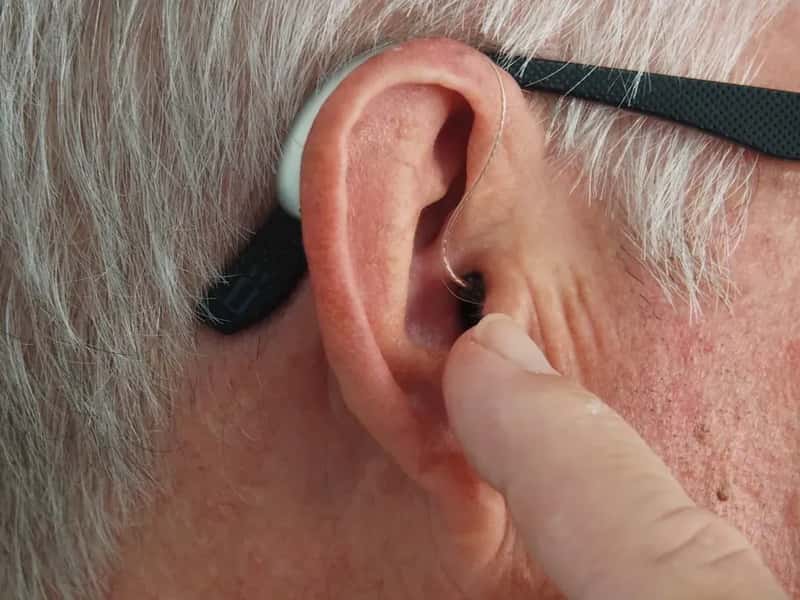
Communication breakdowns at the checkpoint are one of the most common sources of avoidable delays for travelers over 60 – and agents are trained to watch for the signs that one is about to happen. A traveler who doesn’t respond to verbal instructions, who asks for things to be repeated multiple times, or who looks confused when an agent gestures is almost certainly hard of hearing. Agents are supposed to adjust immediately – but only about half of travelers in this situation think to announce it upfront.
TSA instructs travelers to inform the officer if they are deaf or hard of hearing and require assistance. Hearing aids and cochlear implants do not need to be removed. If a device alarms in the metal detector or AIT scanner, additional screening – including a pat-down or inspection of the device – may follow. One sentence said before you step forward changes the entire tone and pace of the interaction for everyone involved.
#6 – Whether You’ve Pre-Arranged a Passenger Support Specialist Through TSA Cares
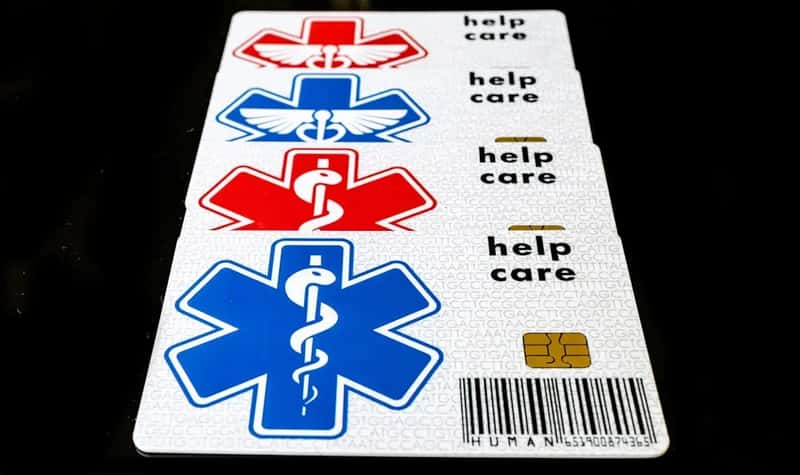
Most travelers over 60 have never heard of TSA Cares. Agents have. And the moment a traveler with a visible disability, medical device, or clear mobility challenge steps into line without one, experienced agents quietly wish that traveler had called ahead. TSA Cares is an official federal program that assigns a personal Passenger Support Specialist to guide travelers with disabilities, medical conditions, or other special circumstances through the entire screening process – completely free of charge.
The specialist meets you at the security entrance, helps organize your items, and stays with you all the way through to the other side. You can call TSA Cares at (855) 787-2227 or submit an online request at least 72 hours before your flight. In 2024 alone, the TSA Cares helpline assisted 69,000 travelers with disabilities, medical conditions, and other special needs – a program that remains one of the best-kept secrets in air travel. One phone call before your trip changes everything.
“Every passenger should be offered some sense of compassion without compromising security.”
Julia Perry, TSA 2023 Passenger Support Specialist of the Year, Denver International Airport
#5 – Whether Your ID Triggers an Age Flag in the System
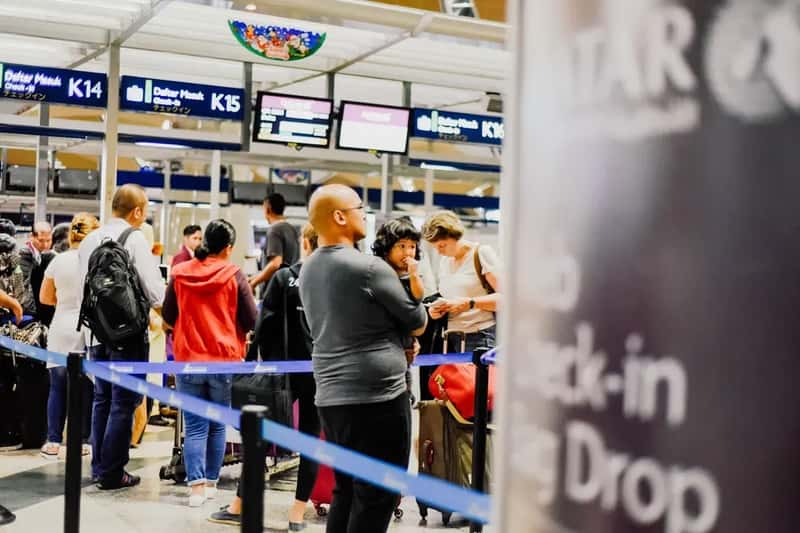
When your boarding pass is scanned at the credential authentication station, age data from your ID can automatically populate certain screening parameters – including the 75-plus expedited screening flag. The system doesn’t always catch it perfectly, especially if your date of birth on your ID doesn’t match your booking exactly, or if you’re processed through an older terminal. Agents at the document checkpoint are trained to recognize the flag when it populates – but they’re also supposed to visually confirm it when a passenger clearly appears to qualify.
If the system doesn’t flag your age automatically, you can self-identify to the TSA agent and request expedited screening. This applies at every U.S. airport with no enrollment fee and no exceptions. The catch is that you may need to speak up. Agents watching travelers who look well over 75 being directed into a full-removal lane often step in – but not always before you’ve already kicked your shoes off and started on the belt buckle.
#4 – Whether Your Behavior Fits a Pattern That Warrants a Casual “Conversation”
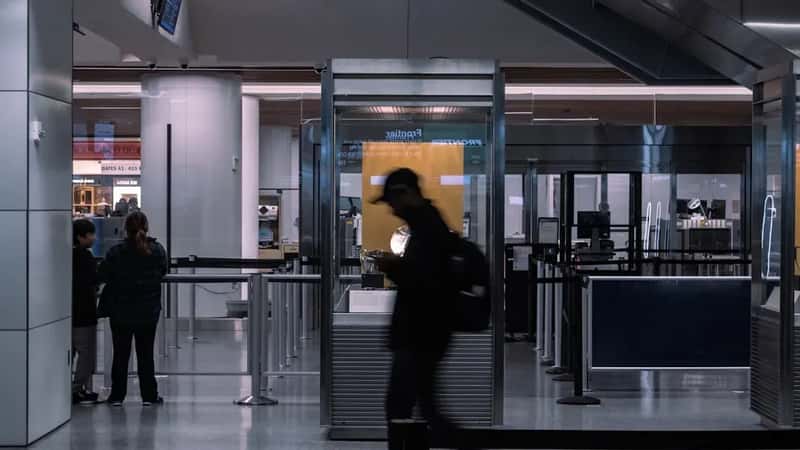
Here’s the one most people never realize is happening. TSA has deployed behavior detection officers at security checkpoints and in plainclothes throughout airports, specifically watching for travelers exhibiting behaviors that might betray fear, stress, or deception. According to TSA documents, these officers engage in “casual conversations” designed so passengers don’t realize they’ve undergone any deliberate line of questioning. These spotters can flag people for extra screening, refer them to law enforcement, or in serious cases, block them from boarding.
For travelers over 60, agents are specifically trained to distinguish between the kind of anxiety that’s common to older first-time flyers and the kind that genuinely doesn’t fit the context of a normal security interaction. The difference is subtle – and most travelers never know the friendly small talk was anything more than that. If the conversation feels oddly specific about your travel plans, there’s a reason.
#3 – Whether You’re Traveling With Oxygen or a Respiratory Device
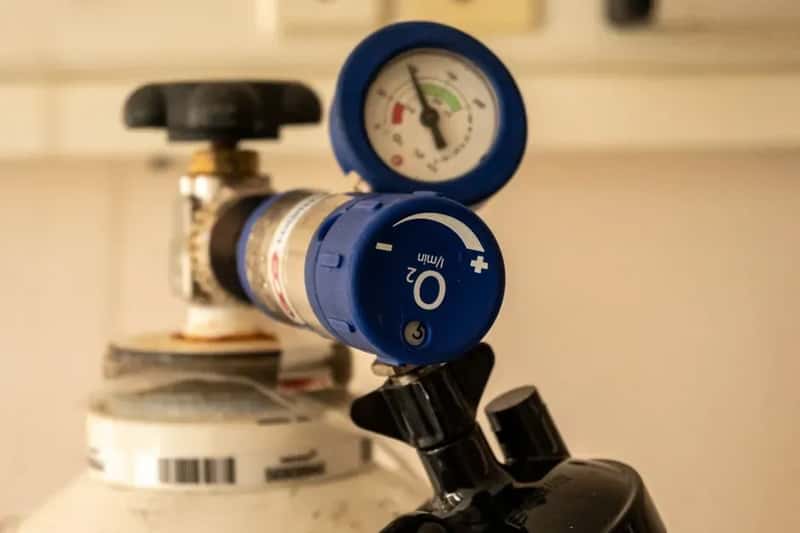
Portable oxygen concentrators, nebulizers, and CPAP machines don’t just add items to the X-ray belt – they require a specific handling protocol that agents identify and prepare for the moment they spot the equipment. Oxygen and other respiratory devices must be screened before going through a security checkpoint. If the oxygen cannot be disconnected, the traveler needs to tell the security officer immediately, who can arrange for an alternate inspection process.
Travelers who try to send a respiratory device through the X-ray without flagging it first almost always end up pulled aside – and the delay is far longer than it would have been with a five-second heads-up. Agents who spot a traveler with oxygen equipment approaching a standard lane are already signaling to a supervisor before that traveler even reaches the bin area. The screening process for these devices is well-practiced. It only goes smoothly when both sides know it’s coming.
#2 – Whether Your Nervousness at the Document Check Is Disproportionate
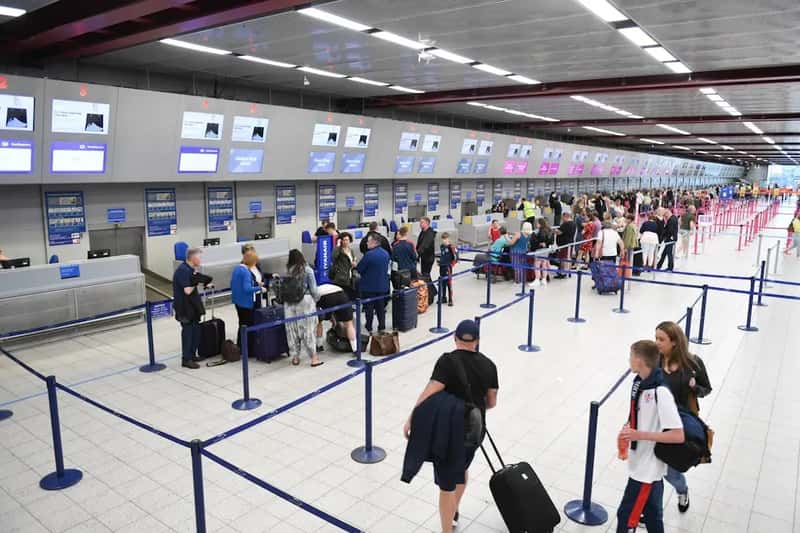
The document check – the very first interaction, before you even reach the bins – is where agents perform some of their most important observation. Verbal cues might include conflicting explanations of travel plans or nervous responses to routine questions. Officers are trained to engage travelers in casual conversation while watching for signs that warrant a closer look. For a traveler over 60, agents at this station are also watching for something separate: signs that the traveler is struggling to locate their ID, understand what’s being asked, or recall basic travel information.
The document check interaction is the fastest and most information-dense observation point in the entire checkpoint – and most travelers treat it like a tollbooth. An older traveler who is calm, organized, and makes brief eye contact moves through in seconds. One who is visibly flustered, confused, or argumentative gets flagged – not necessarily as a threat, but as someone who may need additional attention further down the line. Agents make that call in about three seconds, and they’re almost never wrong.
#1 – Whether You Actually Know Your Rights – Because Agents Can Tell Instantly When You Don’t
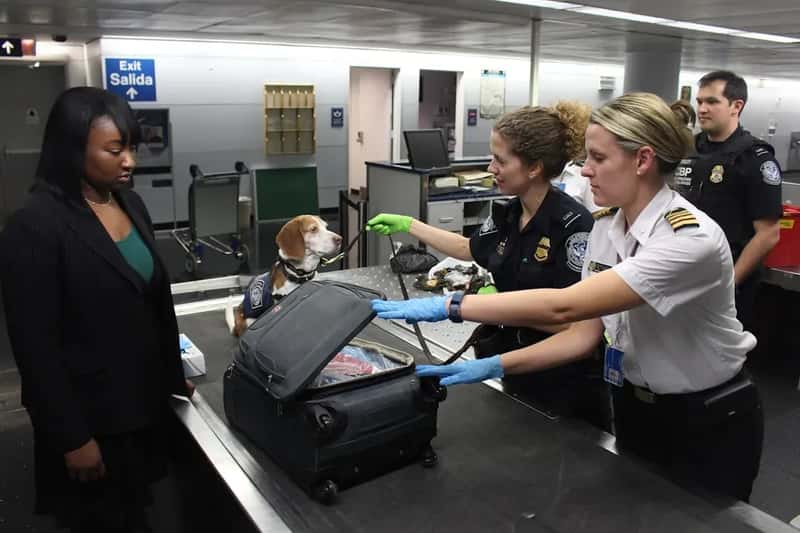
This is the one agents notice most, and the one with the biggest practical consequence. Most travelers over 60 walk up to the security checkpoint the same way they have for twenty years – shoes off, belt in the bin, quietly hoping the line moves fast. What they don’t realize is that TSA has an entire layer of accommodations, exemptions, and quiet adjustments built specifically for older travelers that almost nobody announces out loud. The traveler who knows their rights moves differently. They hold their shoes. They step to the side before being asked. They speak first.
The traveler who doesn’t know their rights removes everything, waits longer, and often ends up in additional screening they were never required to go through in the first place. If you’re 75 or older, you were already entitled to keep your shoes on long before the July 2025 rule change made it universal for everyone. Every experienced TSA agent can tell within seconds which travelers know the system and which don’t. The ones who don’t almost always take longer – and walk away more frustrated – for no reason at all.
At a Glance: Rights Most Travelers Over 60 Don’t Know They Have
- Shoes on: As of July 2025, all travelers keep shoes on at standard checkpoints – no age requirement needed.
- Seated pat-down: You can request a chair at any point during secondary screening.
- Medical liquids: Medically necessary liquids over 3.4 oz are permitted – declare them before the belt.
- TSA Cares specialist: A free personal escort through the entire checkpoint – call (855) 787-2227 at least 72 hours before your flight.
- Companion access: A person of your choice can accompany you through additional screening if you ask.
- Notification Card: TSA offers a discreet card to communicate disabilities or conditions without speaking aloud.
The checkpoint was never designed to be a mystery – but for travelers over 60, an enormous amount of it operates on information that nobody posts on a sign. The seated pat-down right, the TSA Cares specialist, the medical liquid exception, the right to a companion – all of it is real, documented federal policy that most older travelers have simply never been told about. What agents are quietly watching for the moment you step into line is often less about threat assessment and more about figuring out who needs help and who already knows exactly what they’re doing. Knowing which one you are makes all the difference.