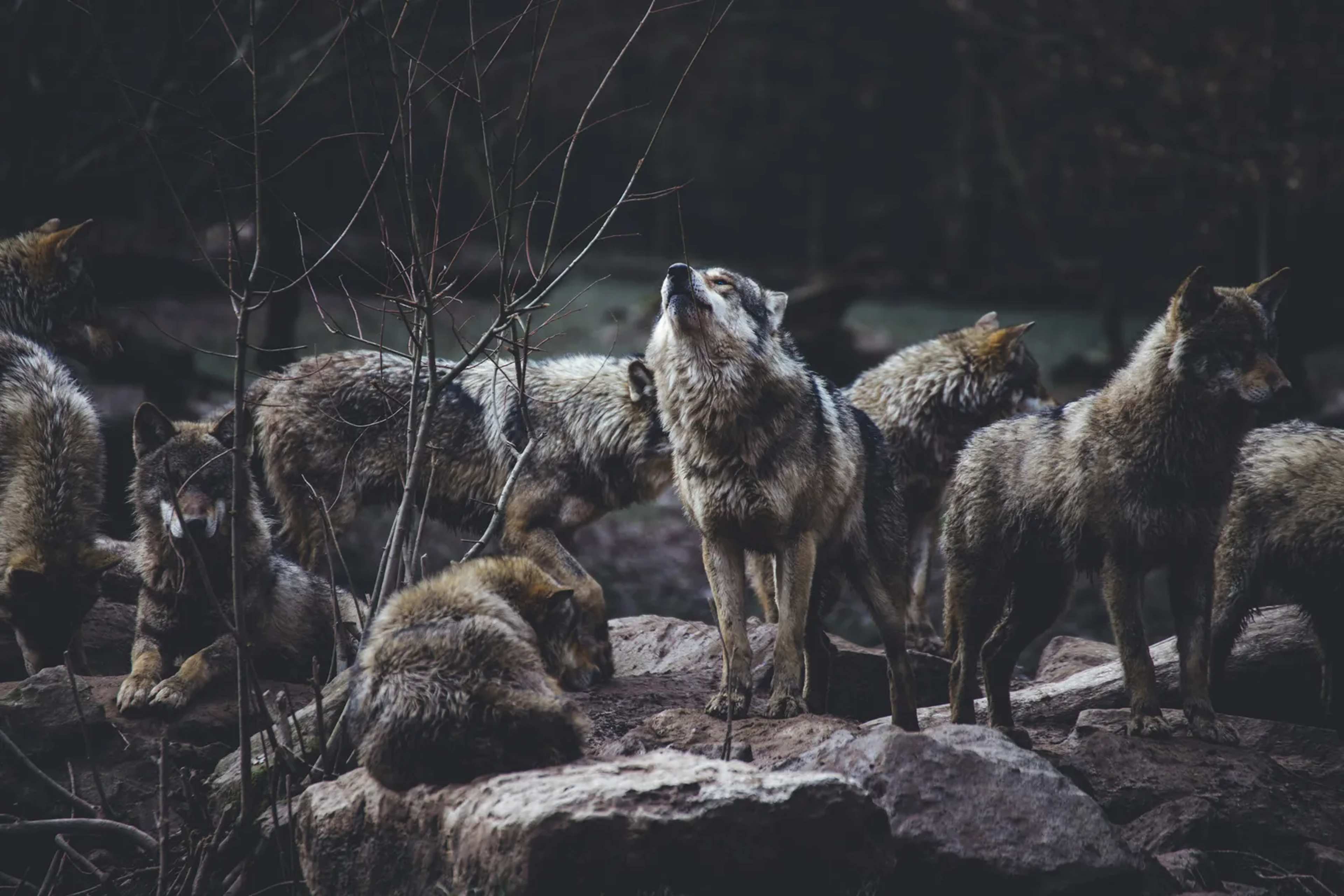
Gray wolves were nearly eliminated from Western and Central Europe during the 19th and 20th centuries. Strict protection measures across multiple countries have reversed that decline, producing a reported 58 percent population increase between 2012 and 2022. ([1])The rebound marks a clear conservation gain, yet it has also revived longstanding tensions over how people and wolves share the same landscapes.
Recovery Driven by Policy
Legal safeguards introduced in recent decades halted the long slide toward local extinction. National and European Union rules limited hunting and habitat loss, allowing packs to reestablish in areas where they had vanished for generations. The result is a measurable rise in numbers that conservation groups track through field surveys and genetic monitoring.
Stakeholders now face the practical task of managing a species that had been absent for so long. Farmers, rural communities, and wildlife agencies must adapt practices that were shaped during the period of near absence. The timeline of recovery shows steady growth rather than sudden explosion, giving authorities time to adjust rules and support programs.
Impact on Livestock and Rural Livelihoods
Wolves occasionally prey on sheep, cattle, and other domestic animals, creating direct financial losses for some producers. Compensation schemes exist in several countries, but delays in payment and disputes over verification can strain relations between farmers and authorities. The economic pressure falls unevenly, hitting smaller operations harder than larger ones with better fencing or guard dogs.
Practical responses include reinforced enclosures, livestock guardian animals, and adjusted grazing schedules. These measures add costs and labor, yet many farmers report they can reduce losses when implemented consistently. The challenge lies in scaling solutions across diverse regions with different terrain and farm sizes.
Public Views Prove More Nuanced
Media coverage often frames attitudes as sharply divided between opponents and supporters. Social scientist Emu-Felicitas Ostermann-Miyashita, who has examined perceptions in Germany, found the picture less polarized. “Some people hate wolves, some people love wolves, but that was also something which I wanted to look into whether that’s true or not,” she says. “And all of my studies which I’ve conducted so far on … the public perception or social side hint to a much more like gray [area regarding] public attitudes or public perception towards the species.”
Surveys and interviews reveal a spectrum of views shaped by personal experience, local history, and economic ties to the land. Urban residents tend to express stronger support for protection, while those in rural areas weigh daily risks more heavily. The data suggest room for dialogue that moves beyond simple opposition or endorsement.
Policy Adjustments Under Debate
The European Union recently voted to ease the strict protected status of the Eurasian gray wolf. Proponents argue the change reflects improved population numbers and the need for more flexible management. Critics warn that any relaxation risks reversing gains achieved over the past two decades.
Future decisions will likely hinge on continued monitoring and transparent compensation systems. Regional differences in wolf density and farm practices mean uniform rules may not fit every setting. Effective coexistence will require ongoing data collection and adjustments that balance species recovery with the realities of working landscapes.