Most travelers assume boarding for older passengers is just a courtesy: an early wave-through and a friendly smile at the podium. The truth is messier and far more organized than that. Behind the scenes, gate agents, ramp crews, and TSA officers are running a quiet system of federal rules, seat holds, equipment swaps, and timed handoffs that most passengers over 60 never even notice is happening on their behalf.
Some of it is written into federal law. Some of it is pure agent discretion that depends entirely on whether you ask the right question at the right counter. Either way, almost none of it gets announced over the speaker system. Here’s what airline insiders and federal travel programs actually say happens before general boarding even starts.
#17 – The Help Starts Before You Ever Look Like You Need It
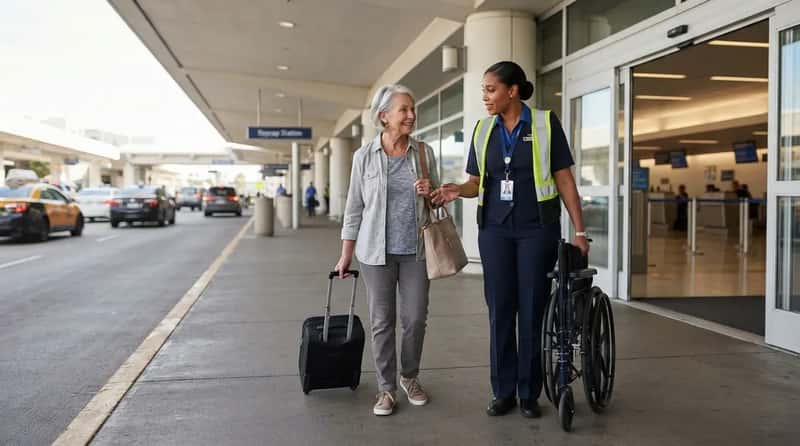
Here’s the part that catches most people off guard: you don’t have to appear frail, use a cane, or carry any paperwork to qualify for real assistance. The Air Carrier Access Act gives any passenger who needs extra time or physical help a legal right to free assistance from curb to gate. That’s federal law, not an airline doing you a favor.
You don’t need to use a wheelchair at home, you don’t need to look like you need help, and you just need to ask. Most people over 60 never say the words out loud, so the help simply never gets offered. The system exists whether or not you use it – and most people don’t.
#16 – A Specially Trained Officer Can Walk You Through Security
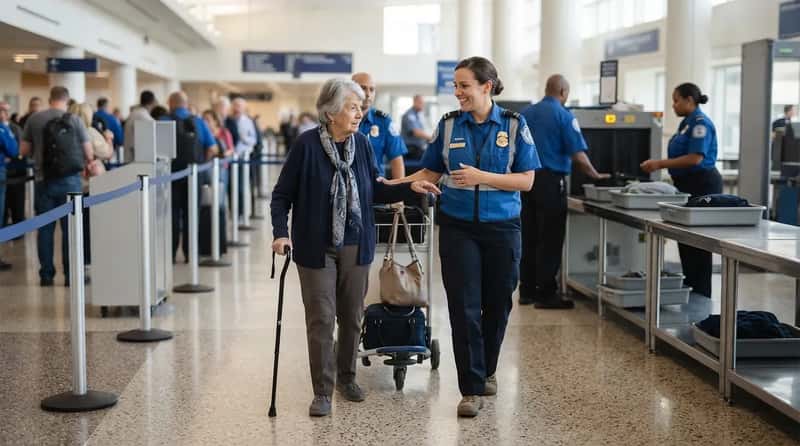
TSA doesn’t just wave older travelers through faster. The TSA Cares program provides assistance to travelers with disabilities, medical conditions, and other special circumstances to ensure a smooth security screening experience. That includes a dedicated escort, not just a sign pointing you to a lane.
Passengers may request the services of a TSA Passenger Support Specialist, a TSA officer who has received specialized training in how to effectively assist and communicate with individuals with disabilities or medical conditions. Most flyers over 60 have never heard the term “PSS” in their life. It’s a real, trained role – not a volunteer or a favor.
Fast Facts
- TSA Cares can be reached directly at (855) 787-2227.
- The agency recommends you contact them at least 72-hours prior to your departure by completing the TSA Cares form or calling.
- Phone hours run Weekdays 8 a.m. to 11 p.m. ET, Weekends/Holidays 9 a.m. to 8 p.m. ET.
- The same specialists can help with medically necessary liquids, gels, or aerosols over 3.4oz, and traveling with a service animal.
#15 – Turning 75 Quietly Changes the Screening Rules Themselves
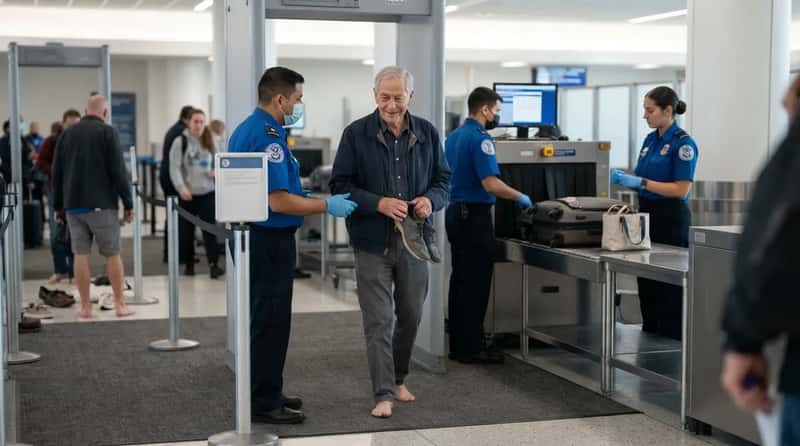
This one surprises even frequent flyers: the screening process itself legally shifts once a passenger crosses a certain age. Passengers 75 and older can receive some form of expedited screening through risk-based intelligence-driven security that allows TSA to better focus resources on passengers who more likely pose a risk.
Screening allows these travelers to leave on their shoes, though removal of light jackets is still required for Advanced Imaging Technology screening. Nobody announces this at the checkpoint. You have to already know the age cutoff to benefit from it.
#14 – You’re Allowed to Sit Down for the Entire Screening Process
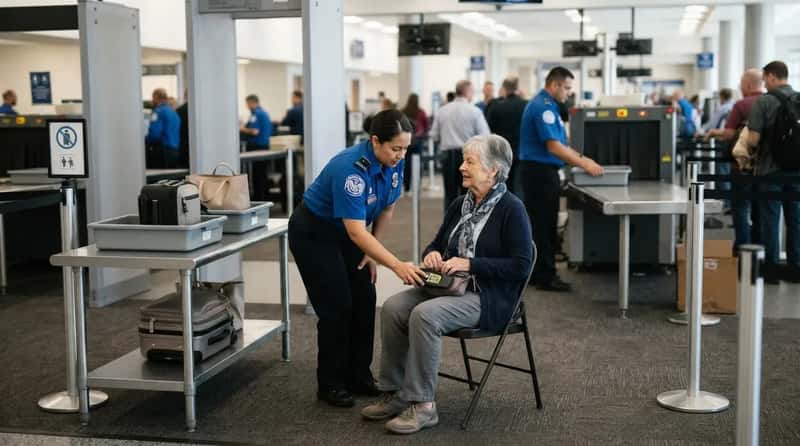
Standing through a full security screening is genuinely hard for a lot of older travelers, and most don’t realize there’s an alternative. TSA officers can accommodate a seated screening for passengers who can’t comfortably stand through the process, especially those who’ve contacted the program ahead of time.
What most people don’t realize is this option exists without a doctor’s note in hand – you simply have to say it out loud at the checkpoint. Silence is the only real barrier here, not eligibility. Passengers who ask are consistently accommodated more smoothly than passengers who try to push through discomfort quietly.
#13 – Your Escort Is Required to Stop at a Bathroom Along the Way
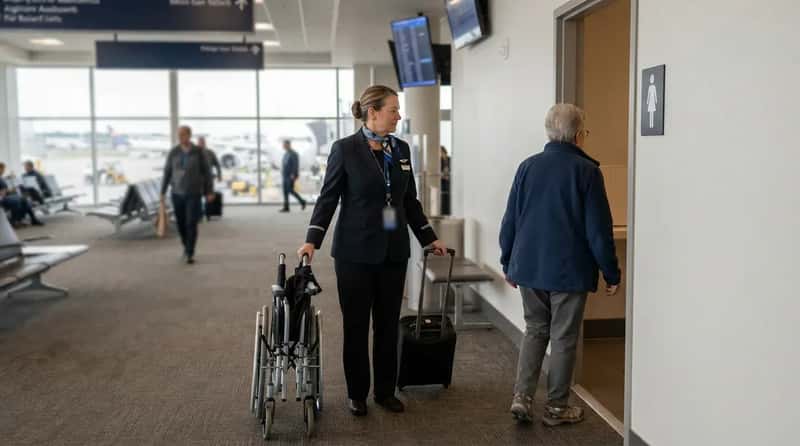
Long terminal walks are brutal on joints, and gate staff are actually obligated to account for that. If a passenger requests to stop at the bathroom on the way to a departing flight, the airline personnel assisting them is required to stop at the entrance to a bathroom, as long as the bathroom is on the way and the stop can be made without an unreasonable delay.
This is one of those details that rarely gets mentioned unless a passenger asks directly, and escort staff are used to the request and typically build in the extra minute or two without complaint. Nobody warns you this is a right, not a favor.
#12 – Your Wheelchair Gets Swapped for a Different One Right at the Plane
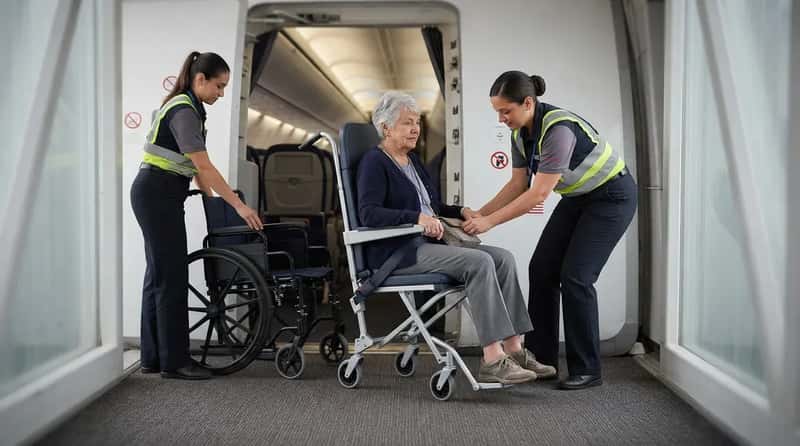
The wide wheelchair that got you through the terminal is not the one that gets you onto the aircraft. If you’re unable to walk long distances or climb stairs, the wheelchair agent escorts you to the end of the jet bridge, and aisle chairs are available if you need help boarding the plane from the jet bridge and getting into your seat.
Staff arrange a narrow aisle chair that safely transports a passenger from the gate onto the aircraft and directly into their seat, built specifically to fit down a narrow airplane aisle that a regular wheelchair simply can’t navigate. The swap almost always happens minutes before the crowd arrives, on purpose.
#11 – A Private Pat-Down Can Replace the Body Scanner Entirely
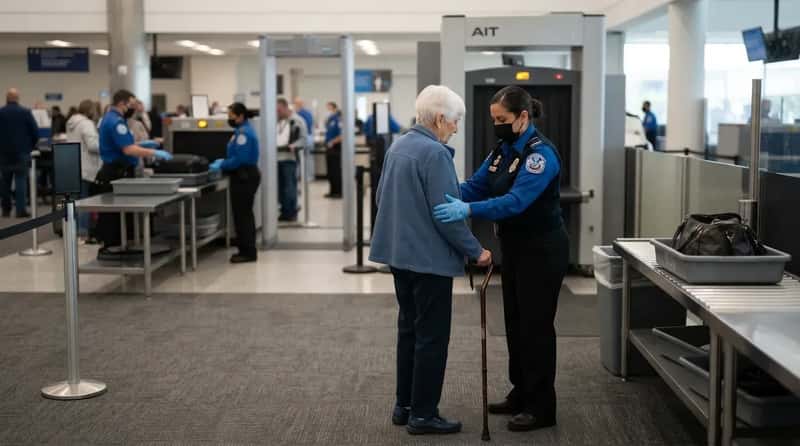
Most travelers assume everyone funnels through the same scanning machine, but that’s not how it actually works for older passengers with mobility limits. Passengers who can’t walk through the screening device without assistance are offered a pat-down search instead, and it’s arranged quietly rather than announced.
This is one of those quiet courtesies that never makes an overhead announcement, so most people simply never ask. The default is the scanner – the alternative only appears if you request it. Plenty of passengers over 60 stand through discomfort they never had to.
#10 – Your Mobility Device Doesn’t Touch Your Carry-On Limit
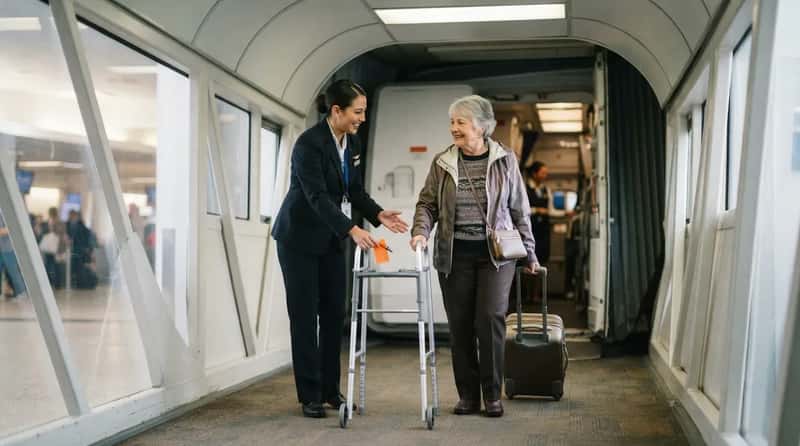
A huge number of older travelers quietly pay bag fees they never actually owed. Gate-checking a personal mobility device is a completely separate allowance from baggage – always free – yet many seniors are either paying for extra bags unnecessarily or leaving their own equipment at home out of fear.
This means a walker, cane, or wheelchair travels with you from the curb to the jet bridge without ever counting against your two-bag limit. Most gate agents won’t volunteer this – you have to ask before check-in, not after. It’s a detail that quietly saves real money on every single trip.
Worth Knowing
- Wheelchairs, walkers, and canes never count toward your carry-on or checked-bag limit.
- The allowance applies whether the device is manual, electric, or collapsible.
- Requesting it at the check-in counter, rather than at the gate, usually means smoother handling and less last-minute scrambling.
- The same free allowance applies on the return leg of your trip, not just the outbound flight.
#9 – Your Collapsible Wheelchair Skips the Overhead Bin Fight
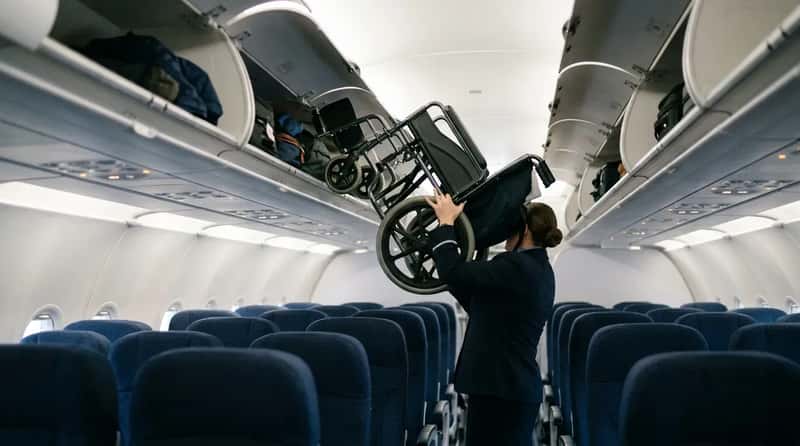
Anyone who’s watched the overhead bins fill up by row six knows the panic of running out of space. Passengers with mobility devices don’t have to compete for it. Collapsible wheelchairs and other assistive devices get priority for in-cabin storage over other passengers’ bags when the traveler chooses to pre-board, a detail gate agents enforce quietly rather than broadcast.
This priority holds even when the cabin is already crowded, because collapsible wheelchairs have priority for in-cabin storage space over other passengers’ items whenever the passenger chooses to pre-board. Nobody explains this rule – agents just quietly enforce it before doors close.
#8 – A Bulkhead Seat Gets Held Without You Ever Seeing a Waitlist
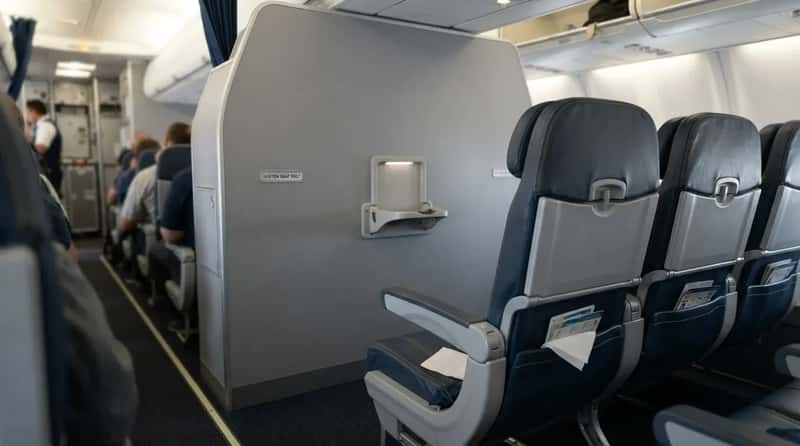
Here’s a controversial truth: not every “sold out” front-row seat is actually sold out. Under federal rules, airlines that offer advance seat assignments must block an adequate number of bulkhead seats, or designate them as priority seats for passengers with a fused leg or similar mobility need.
Those seats may already be held on a flight you’re booked on right now, and while the answer isn’t always yes, agents do have discretion – they simply can’t say yes to someone who never asked. Most passengers over 60 never ask, so the seat quietly goes to someone else.
#7 – Crews Quietly Try to Keep the Seat Beside You Empty
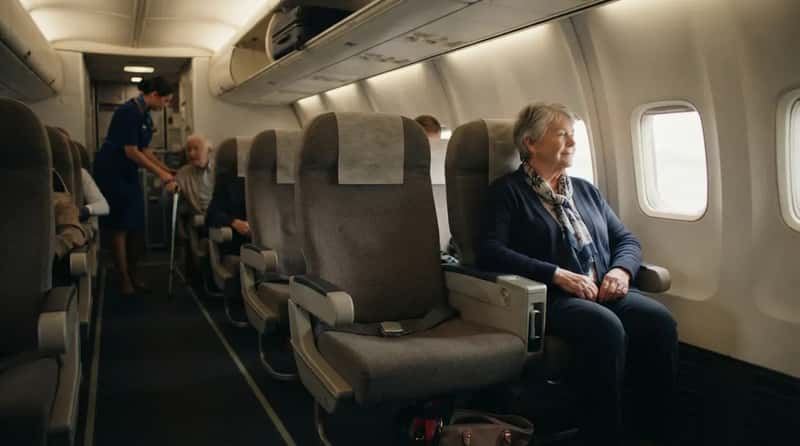
This one is never guaranteed, but it happens more often than most flyers realize. Delta offers wheelchair and mobility assistance during every stage of a flight, and will allow a passenger to board with other passengers or pre-board them and try to help ensure there is an empty seat next to them for extra space.
United follows a similar approach, offering assistance to those with mobility and medical issues. It’s discretionary, not promised – but the request costs nothing and works surprisingly often. Some experts now argue this quiet perk matters more for comfort than any paid seat upgrade.
Quick Compare
- Delta: tries to hold an open seat next to mobility-assistance passengers and offers pre-boarding at every stage of the flight.
- United: offers similar mobility and medical assistance, applied case by case rather than as a guaranteed policy.
- Both airlines: treat it as discretionary, not contractual – meaning it can be pulled back on a packed flight with zero notice.
#6 – Your Travel Companion Gets to Board Early With You, Free
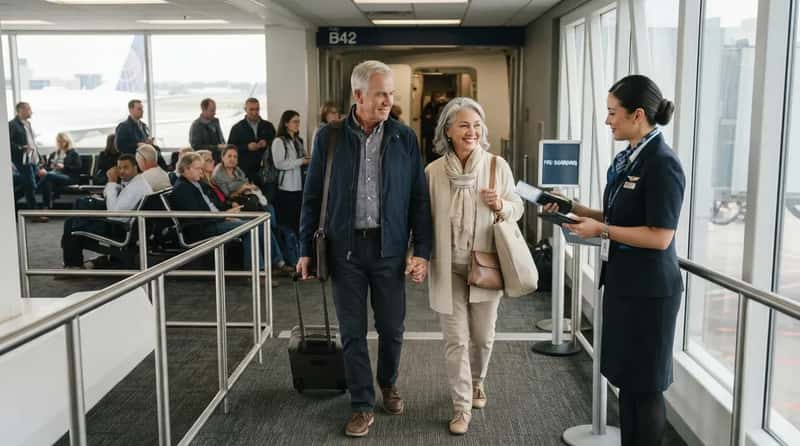
Most couples assume pre-boarding is a solo perk, something used quietly while a spouse or adult child waits behind in the general line. Here’s where it gets genuinely useful for anyone traveling with a partner, adult child, or friend.
In practice, gate staff routinely let the person assisting an older traveler board at the same time, at no extra charge. This single detail gets missed by more couples than almost any other boarding rule. It only takes mentioning it when you check in with the agent.
#5 – The Escort Doesn’t Stop at Your First Gate
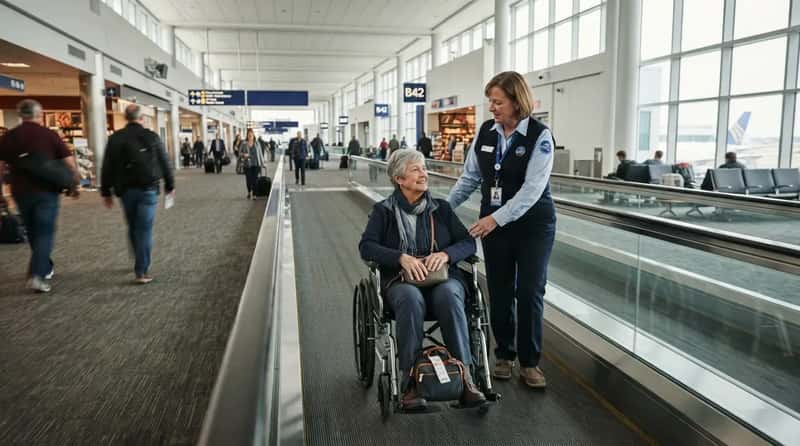
A lot of travelers assume assistance ends the second they reach their departure gate. It doesn’t. Department of Transportation guidance on wheelchair and guided assistance covers helping a traveler move between gates during a connection, and through the aircraft using an aisle chair when necessary.
Meet-and-assist happens at the aircraft door, not just at the gate counter, and it’s available whether you’re heading to baggage claim or another connecting flight. Long layovers at massive hub airports are exactly where this quietly saves people the most stress. Most flyers never request it because they don’t know it extends this far.
#4 – Your Own Wheelchair Reappears at the Plane Door, Not Baggage Claim
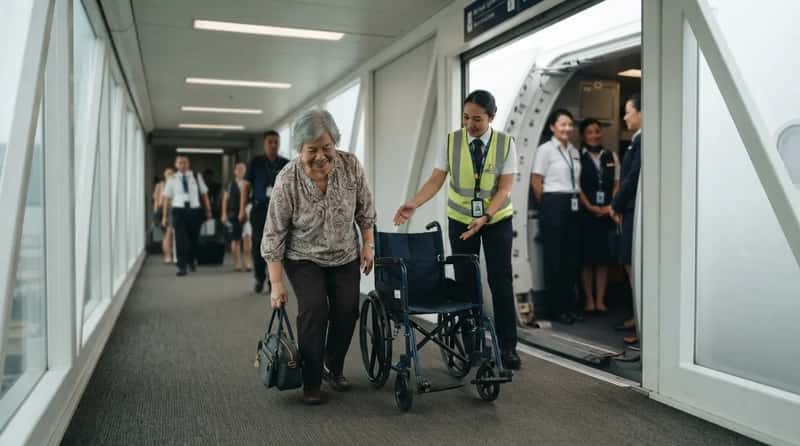
Passengers who bring their own wheelchair often brace for a frustrating hunt at baggage claim after landing. That’s not actually how it’s supposed to work. Travelers who use their own wheelchair do not have to give it up the moment they walk into the terminal – they’re entitled to stay in it until the gate, where it’s taken and, if they cannot walk, they’re transported to the seat in an aisle chair instead.
The chair then reappears right at the door on arrival, not somewhere back at baggage claim, since it’s returned at the gate once the destination is reached. Most first-time senior flyers assume the opposite, and it causes needless panic on arrival.
#3 – Someone Is Already Waiting at the Aircraft Door When You Land
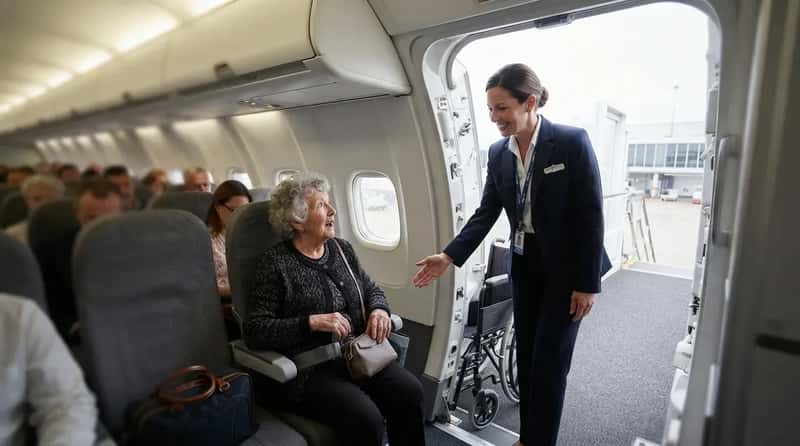
The assistance doesn’t quietly end the moment the plane touches down, which surprises travelers who assume the service stops there. Wheelchair help is available on arrival to guide passengers to baggage claim and pickup areas, and staff coordinate this the moment the aircraft door opens, often before the rest of the cabin has even stood up.
For connecting passengers, the escort goes even further – staff meet the traveler right at the aircraft door and walk them to baggage claim or their next gate. You’re often being met before you’ve even unbuckled your seatbelt, and most passengers never notice the timing was intentional.
#2 – When a Flight Gets Cancelled, You Don’t Have to Stand in That Line
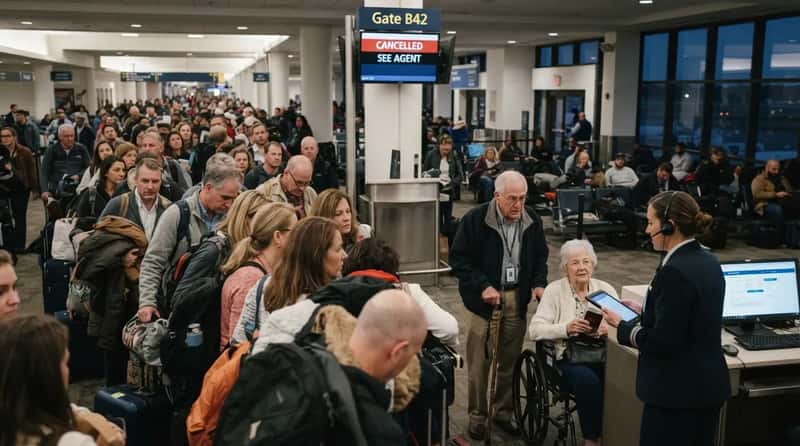
Anyone who has flown during a mass cancellation knows the scene at the gate podium instantly. When a flight gets canceled, a mob forms at the gate podium instantly, and most people stand in that crowd for 45 minutes.
Passengers who’ve already been flagged for mobility or age-related assistance are frequently pulled aside for rebooking help instead of waiting in that scrum. This is one of the least talked-about perks of registering assistance in advance. It’s discretionary and never guaranteed, but insiders say it happens quietly, constantly, and almost never by request from someone who didn’t already have a note on file.
At a Glance
- A canceled flight can create a 45-minute-plus wait at a single gate podium.
- Passengers already flagged for mobility or age-related help are often pulled aside separately.
- The rebooking help is discretionary, not a written policy, so tone and timing matter.
- Having assistance noted on your reservation before departure day makes this far more likely to happen.
#1 – Boarding Happens Without a Single Form, Note, or Explanation
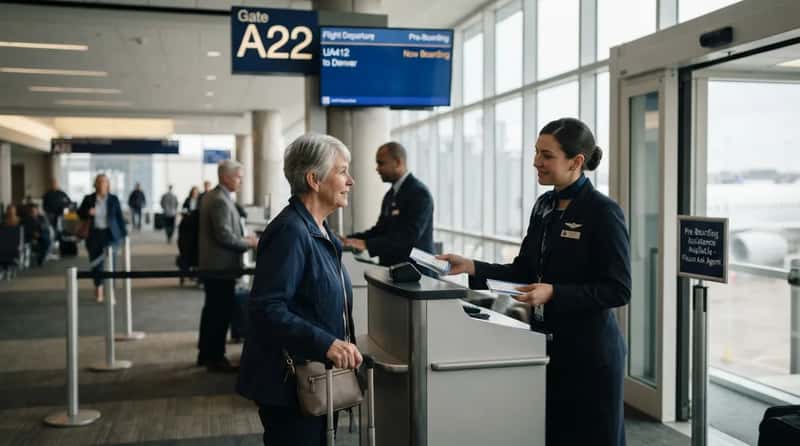
The single biggest myth about pre-boarding is that it requires proof. It doesn’t. Whether a traveler is carrying a mobility aid, medical equipment, or simply prefers a slower pace, early boarding is available the moment they self-identify to a gate agent, with no doctor’s note required.
Gate crews handle this transfer quietly, usually a few minutes before general boarding starts so there is no audience for it. The key phrase isn’t “Can I board early?” – it’s closer to simply describing needing a little extra time. No paperwork, no scrutiny, no explanation required – just a sentence spoken quietly at the podium. It’s the single most-used, least-understood accommodation in the entire boarding process.
None of this is secret exactly – it’s just never advertised. Federal rules cover far more than most people assume, and agent discretion covers even more beyond that. The pattern across almost every one of these 17 items is the same: the help exists quietly, consistently, and only reaches the people who actually ask for it out loud.
Turning 60 doesn’t automatically unlock any of this on its own; preboarding is reserved mainly for travelers needing special assistance and passengers with a child under age 2, which means the real key isn’t your birth year – it’s whether you speak up at the counter. Have you used any of these without realizing what was actually happening behind the scenes? Drop your experience in the comments.