Most people assume the cruise director is just the guy with a microphone, cracking jokes about towel animals and shouting “are we having fun yet?” during the welcome show. That’s the character everyone sees. Behind that headset, though, cruise directors are running a second, unspoken program – one built around timing, memory, and small mercies that guests over 60 receive constantly without ever realizing it’s happening on purpose.
Ask a veteran cruiser who’s sailed a dozen times and a different picture emerges: seats that always seem open near the front, names remembered by day two, schedules that shift by an hour for no obvious reason. None of it gets explained on the daily program. Here’s what’s actually going on behind the scenes.
#17 – They Quietly Save the Best Seats Without Ever Calling It a Favor
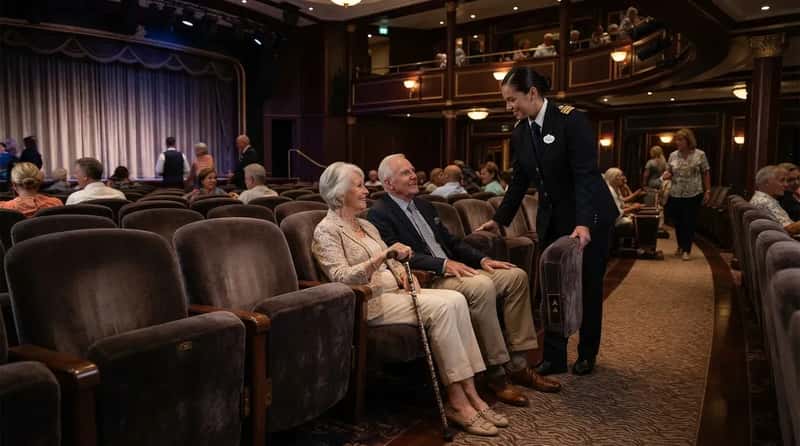
Cruise directors steer certain guests toward front-and-center seating at every major show, and it’s rarely random. Theater teams learn early which guests move slower on the aisle steps, and staff are quietly told to seat them before the room fills up rather than let them struggle during a packed house.
Nobody announces this system – it just happens, night after night, show after show. It’s not written into any onboard policy. It’s a habit passed from one activities staffer to the next, contract after contract, until it becomes invisible.
#16 – They Slow Down Trivia the Second They Recognize a Regular Face
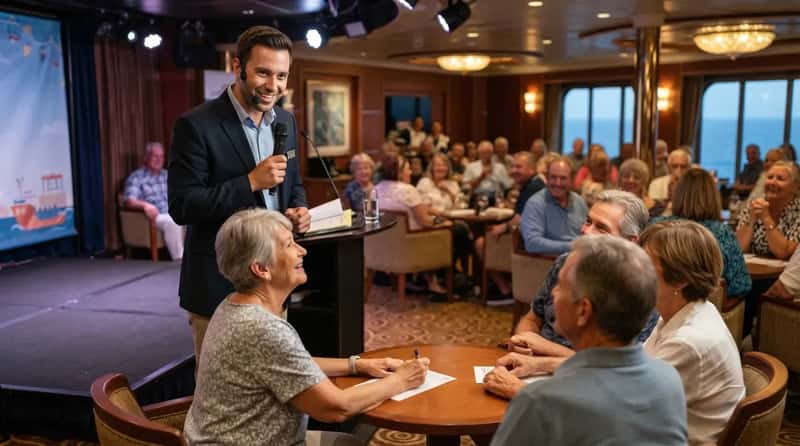
Reading a room fast is basically the job description for a cruise director – the same instinct that lets them run bingo, host wooden horse races, and talk reluctant executives into karaoke also tells them who’s struggling to keep up. When a familiar face from day one shows up at day-four trivia, hosts often pause half a beat longer before flashing the answer.
It’s a tiny mercy most guests never register as deliberate. It just feels like a friendly host taking his time with the crowd. Multiply that pause across a full cruise and it adds up to something guests remember long after they forget the actual trivia questions.
#15 – They Turn the Welcome Show Into a Memory Test They Actually Pass
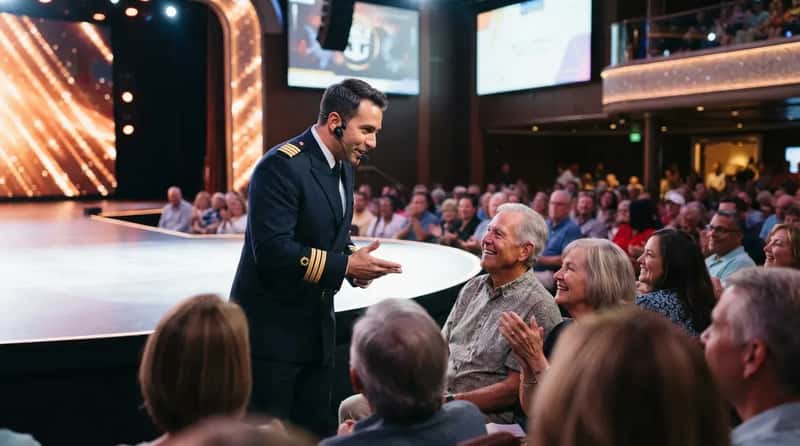
A cruise director is technically the senior officer in charge of all onboard hospitality and entertainment, and the public face of the cruise line – which means learning names fast is part of the job whether anyone admits it or not. Guests who’ve sailed the same line multiple times often get greeted by name within the first two days.
It rarely happens by accident. Someone on the entertainment team reviewed the passenger manifest ahead of time, flagging loyalty members and repeat names. Older repeat cruisers get flagged more often simply because loyalty tiers skew heavily toward them.
Fast Facts
- Royal Caribbean cruise passengers have a median age in the low 40s, skewing younger on 3–4 night cruises and older on cruises of 10+ nights.
- The intent to cruise, on a global basis, is strong, with 82% of those who have cruised saying they plan to cruise again.
- Longer, slower-paced itineraries are exactly where loyalty recognition programs concentrate the most attention.
#14 – They Run the Captain’s Q&A Like It Was Built Around You
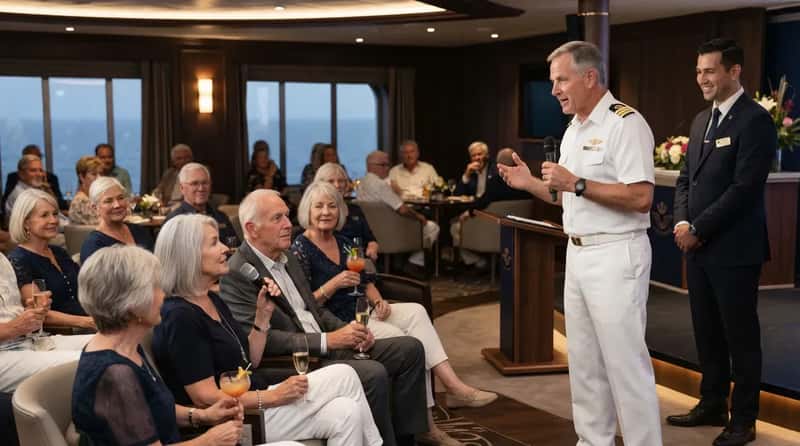
The welcome drink with the captain is one of the signature events a cruise director emcees, and it’s rarely treated as a throwaway formality. Directors often position longtime, older guests near the front of that gathering, knowing they’re the ones most likely to ask the captain a real question instead of just posing for a photo.
The seating near the podium isn’t accidental – it’s crowd management dressed up as hospitality. It keeps the whole event feeling like an intimate reception instead of a press conference, and it rewards the guests who show up early and actually care.
#13 – They Quietly Rebuild the Daily Schedule Around Slower Mornings
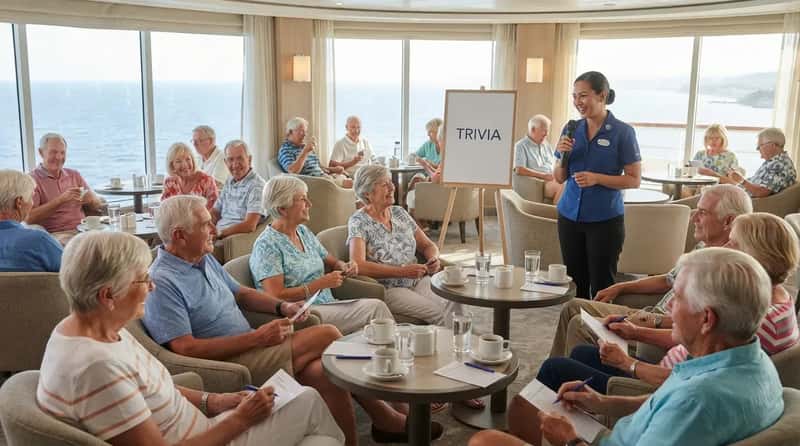
Cruise directors oversee the entire activity program – announcements, disembarkation logistics, problem resolution, all of it – which means they see attendance patterns nobody else on the ship notices. When morning trivia consistently draws a bigger crowd at 10 a.m. than at 9, directors quietly shift the start time within days.
Most guests assume the schedule was locked in before the ship even left port. It wasn’t. It gets rewritten in real time based on who actually shows up, and older guests who prefer a slower morning routine end up shaping it more than they realize.
#12 – They Personally Run the Safety Drill So Nobody’s Left Standing Too Long

Cruise directors serve as the vocal leader of the mandatory safety drill, and that role comes with more discretion than most passengers assume. Directors who’ve run hundreds of these drills know exactly how to keep the pacing tight so older guests aren’t stuck standing on a hot deck any longer than absolutely necessary.
It’s one of the only truly mandatory events on the entire cruise, and experienced directors treat it that way on purpose. A drill that moves fast and stays organized isn’t just efficient – it’s a small courtesy dressed up as a regulation.
Worth Knowing
- Under SOLAS, all passenger ships must conduct a muster drill before or immediately upon departure from the first port of call.
- These updated regulations replaced older guidelines that allowed cruise lines up to 24 hours to complete the drill.
- A tighter, well-run drill isn’t just about compliance – it’s one of the few onboard moments every single guest is required to attend together.
#11 – They Push the Loudest Parties Away From Where You Actually Sleep
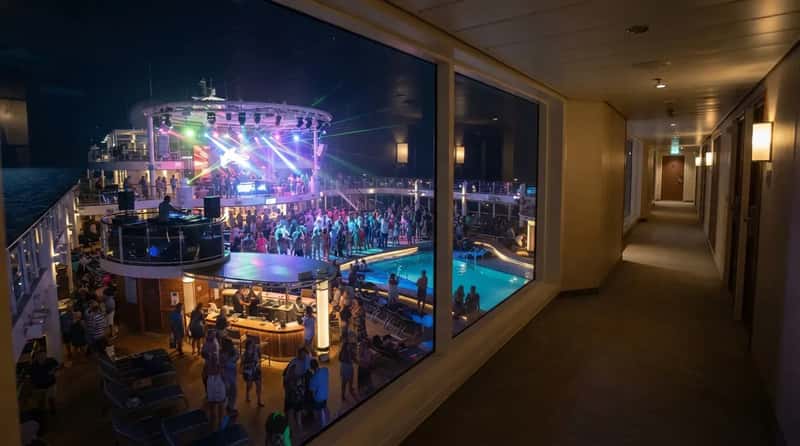
Because directors control the master entertainment schedule, they also quietly decide which deck hosts the late-night DJ set and which one stays calm. Cabin location gets factored into that decision more than most guests assume, especially on ships with a heavier concentration of older travelers in certain corridors.
The pool deck party that runs until 1 a.m. rarely lands directly above the quietest cabin block, and that’s not luck. It’s a routing decision made weeks in advance, long before anyone books a room expecting peace and quiet.
#10 – They Flag Your Milestone Cruise Before You Even Mention It
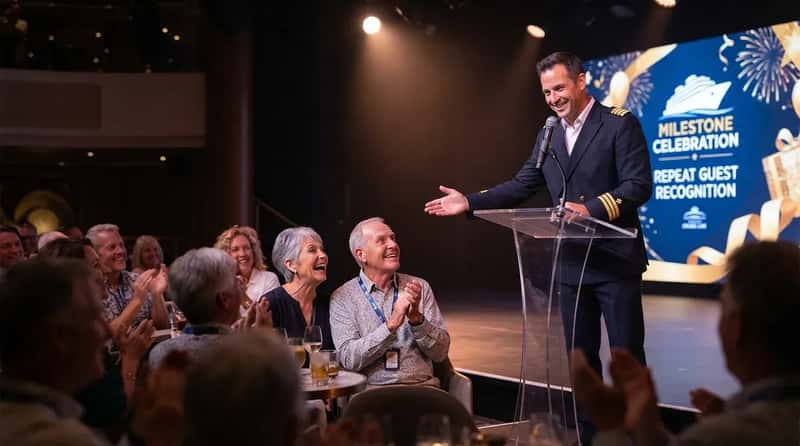
As the public face of the cruise line, part of a director’s job is recognizing loyalty milestones during scheduled events. Guests hitting their 10th, 20th, or 50th sailing with a line often get a subtle shout-out during a show or gathering, timed to loyalty data the director pulled ahead of time.
It’s rarely spontaneous – someone on the entertainment team checked the passenger list first. Older, repeat cruisers hit these milestones far more often than first-timers ever will, which is exactly why the recognition lands so consistently on that crowd.
Quick Compare
- Royal Caribbean: Crown & Anchor Society
- Celebrity Cruises: Captain’s Club
- Carnival: VIFP Club
- Princess Cruises: Captain’s Circle
#9 – They Personally Walk You Through Disembarkation Instead of Pointing at a Screen
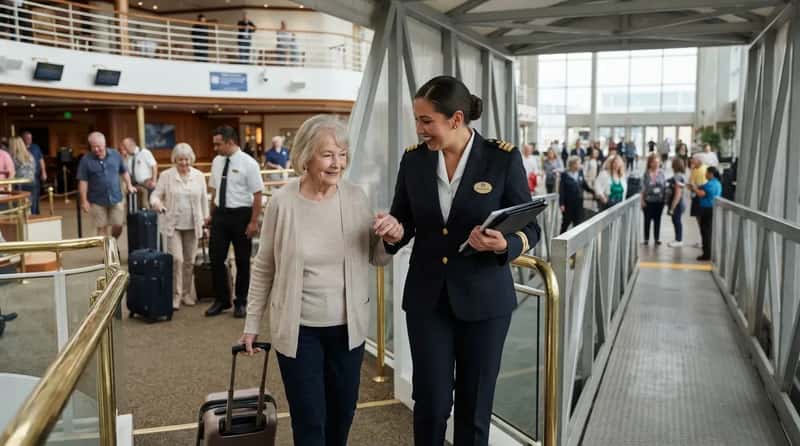
Handling disembarkation is one of a cruise director’s core duties, and it’s one of the last chances to leave a strong final impression. Directors and their teams often make a point of physically checking in with older guests during the chaos of the final morning instead of just broadcasting instructions over the PA and hoping everyone hears them.
Most first-timers never notice they got a few extra seconds of personal attention on the way off the ship. It costs the crew nothing, but it’s often the very last thing a guest remembers about the entire cruise.
#8 – They Save the Gentler Games for the Time Slot Older Guests Actually Fill

Since directors plan and execute every piece of onboard entertainment, they know exactly which games skew rowdy and which ones draw a calmer crowd. Slower-paced trivia, card games, and name-that-tune sessions tend to land in the exact windows where older guests are already gathered and settled in.
It’s not a coincidence that the loudest game shows almost never run right after lunch. That slot quietly gets reserved for the crowd that wants conversation and a laugh, not chaos and a microphone in their face.
#7 – They Introduce You to the Captain Like You’re the Guest of Honor
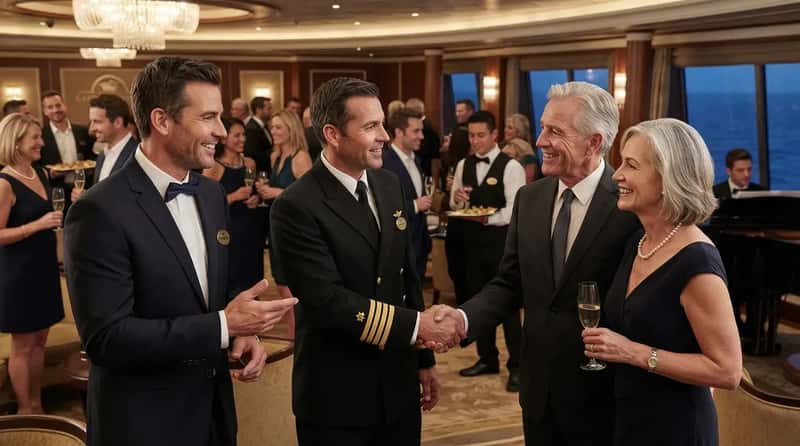
Cruise directors host the big official events on board, including the captain’s cocktail party, and during those events they often make a visible point of personally introducing loyal, older guests to the captain rather than leaving the interaction to chance.
It’s a small orchestration that turns a random handshake into a memorable moment – the kind of thing guests bring up years later. First-timers usually assume it was luck. It almost never is.
#6 – They Adjust the Mic and Lighting the Moment the Room Skews Older
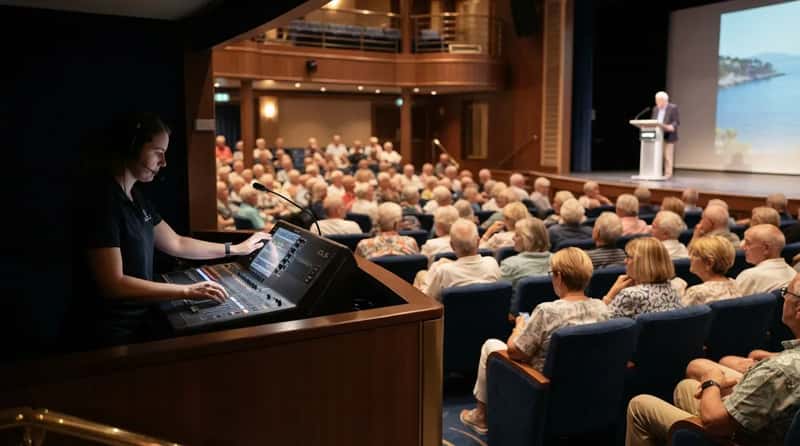
Because cruise directors control the scheduling and setup of every event, they also quietly control the sensory experience of the room. Volume gets pulled back and house lights stay slightly brighter for events that draw an older crowd, especially afternoon lectures and enrichment talks.
Most guests never realize the same theater sounds and looks noticeably different depending on who’s sitting in the seats that day. It’s a quiet adjustment that never makes it onto the printed daily program.
#5 – They Quietly Ease Off the Sales Pitch So Nobody Feels Pressured

Cruise directors are expected to drive both guest satisfaction and revenue through their announcements and appearances, which puts them in a genuinely tricky spot. Experienced directors deliberately soften the pitch during events that skew older, easing back on spa promotions and art auctions in favor of straightforward hosting.
It’s a controversial balancing act, and not every director gets it right. Critics still argue cruise lines push sales too hard regardless of the crowd in the room, and that tension never fully disappears – even when a good director tries to shield guests from it.
#4 – They Remember Your Anniversary Without a Single Form Being Filled Out
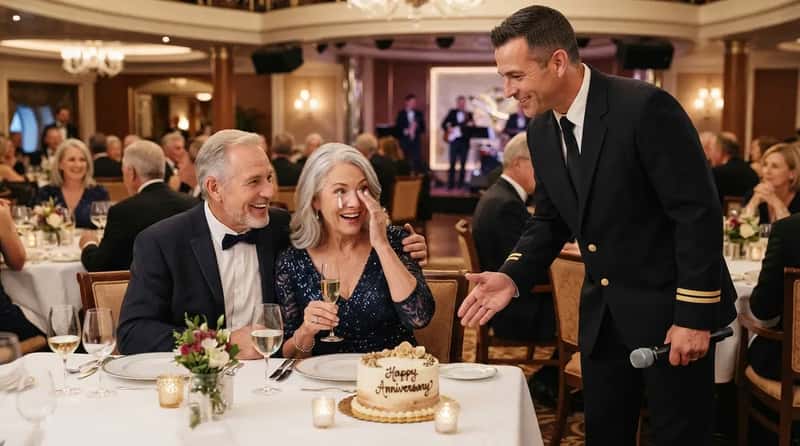
Because directors are the main guest-facing representative of the entire ship, they end up absorbing details from casual conversations that never make it into any official system. A wedding anniversary mentioned during a pool chat on day two sometimes resurfaces as a surprise shout-out during the final gala.
It feels spontaneous, but it’s usually the product of someone quietly jotting a note days earlier. Older couples celebrating milestone years tend to be the ones this happens to most, mostly because they’re the ones who mention it in passing at all.
#3 – They Keep a Mental List of Who Needs the Slower Version of Every Announcement

Delivering daily announcements sounds simple, but experienced directors quietly repeat key details – muster times, elevator closures, tender schedules – a beat slower and a touch louder than the script actually requires. It’s a habit built from years of watching who struggles to catch fast-paced PA messages the first time around.
Most guests assume every announcement is delivered identically to the whole ship. It isn’t. The pacing shifts slightly depending on who the director senses is actually listening closely that day.
#2 – They Turn a Random Pool Chat Into a Standing Invitation

Cruise directors spend an enormous amount of their downtime socializing with passengers, and that socializing is never evenly distributed. Guests who strike up a genuine conversation by the pool – especially older travelers with stories about past sailings – often get quietly looped into smaller, less publicized gatherings later in the week.
It’s not written anywhere that this happens, and it’s not offered to anyone who simply asks for it. It happens for the guests who made a real impression early on, not the ones angling for special treatment.
#1 – They Make Sure Your Loyalty Number Gets a Nod Nobody Else Notices
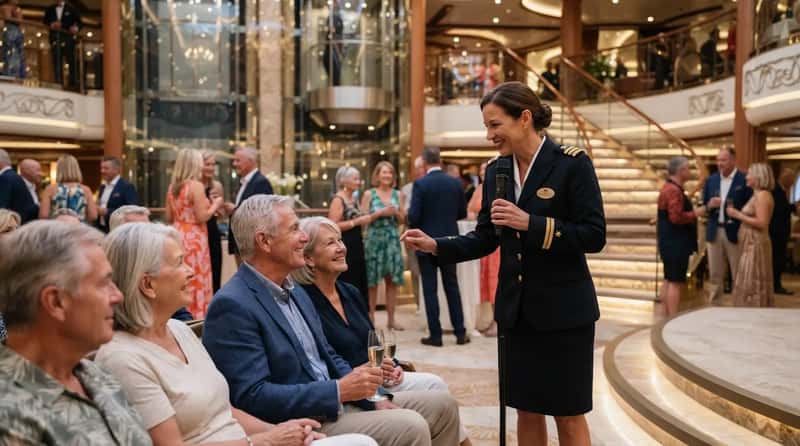
At the top of the entertainment hierarchy, the cruise director carries real authority on board, and that authority gets used most visibly during loyalty-tier moments. Top-tier repeat cruisers – a group that skews heavily toward guests over 60 – often get personally acknowledged by the director during an event, not just through a form letter slipped under the cabin door.
It’s the single most consistent pattern veteran cruisers describe, and it’s almost never advertised as a perk. The recognition isn’t about the cabin category or the fare paid – it’s about how many times that person chose to come back, and directors are the ones who quietly make sure that history gets noticed.
Why It Stands Out
- The 65+ years old group accounted for 32% of all persons cruising within the year, even as just 13% were over 70.
- That older loyalty base tends to sail the same lines repeatedly, which is exactly why staff learn their names and histories so fast.
- Recognition tied to loyalty tiers rewards history with a line, not the price of the cabin – which is exactly why the same faces keep getting the nod.
None of these 17 habits show up in a brochure, a loyalty chart, or a pre-cruise email. They’re built from years of directors reading a room, adjusting a pace, and remembering a face – the kind of quiet attentiveness that stops working the moment someone announces it out loud. Guests over 60 tend to benefit the most simply because they cruise more often, notice more, and stick around long enough for the pattern to become visible.
First-timers rarely catch any of it. Veteran cruisers almost always do – they just stopped mentioning it, the same way nobody points out the safety net they’ve come to expect.