Picture a special desk where a ship’s staff greets guests over 70 with a checklist of senior perks. It doesn’t exist. No major cruise line we checked hands out arrangements by birthday.
What actually happens is quieter, and it matters more. Terminal reps, Guest Services and accessibility teams settle a long list of practical details, usually the moment a guest says “I need this.” Some of it is free, some is limited, and some catches people off guard at the pier. Count down with us to the item that carries the biggest price tag of all.
#17 – The Free Wheelchair Ride From the Terminal Door to the Ship
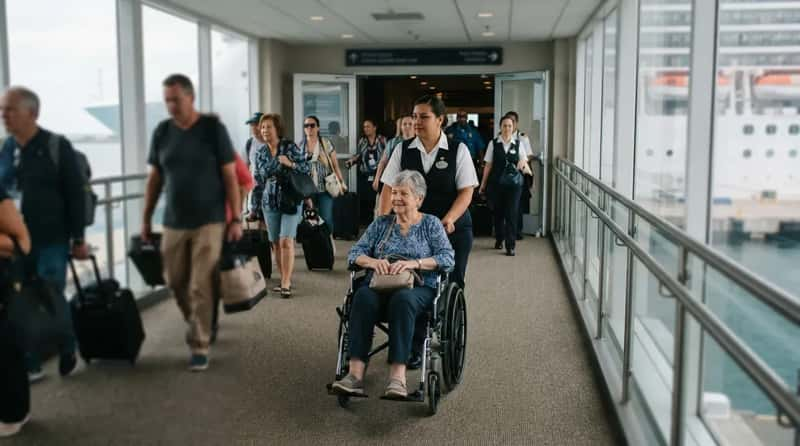
Royal Caribbean provides complimentary wheelchair assistance for embarkation and disembarkation only. Carnival draws the same line: wheelchair assistance is available during embarkation and debarkation at the home port, not on board or at ports of call. That surprises many guests who assume the help follows them around the ship all week.
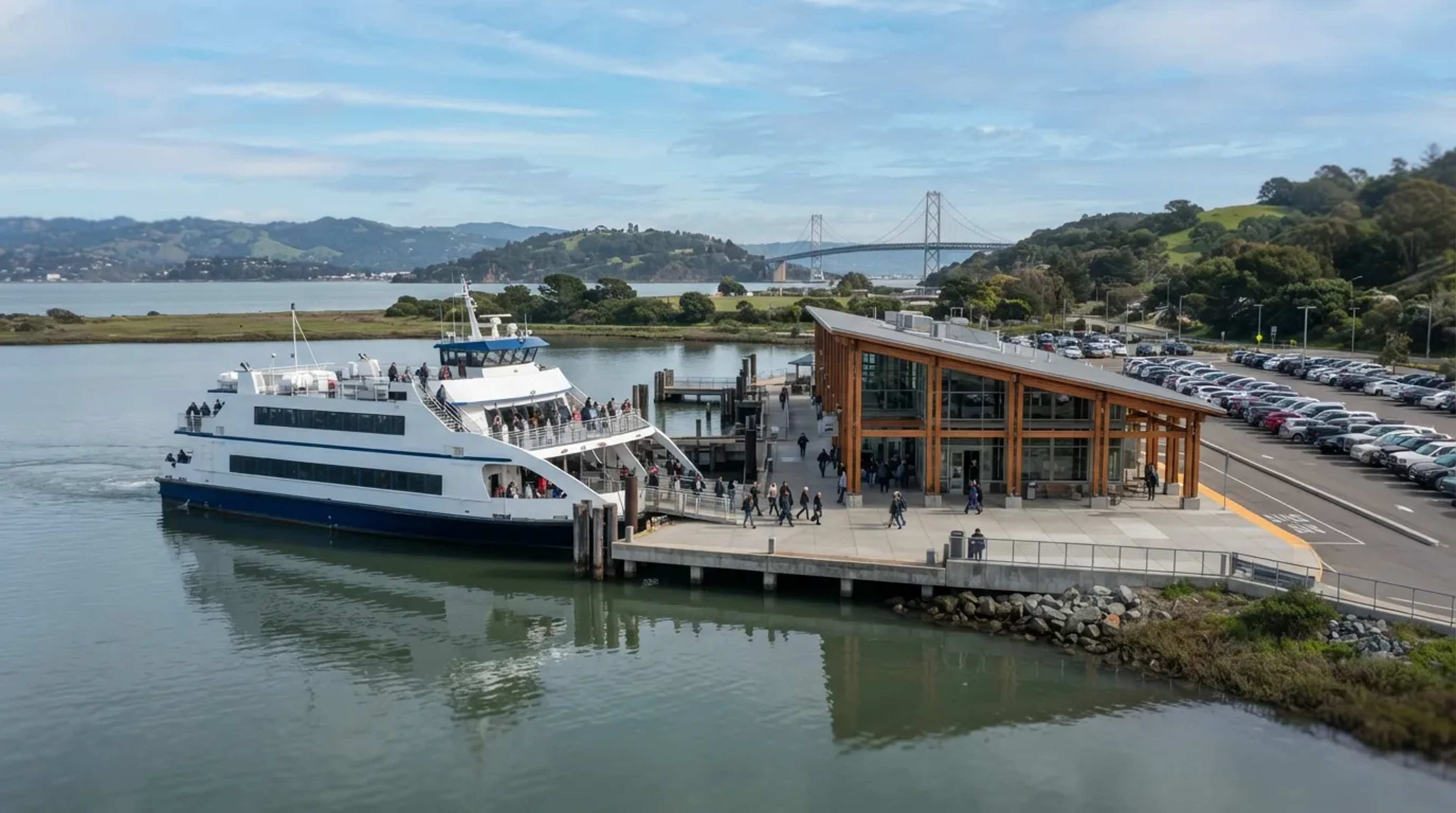
Guests who didn’t pre-book can still ask. Carnival says to contact one of its representatives once you arrive at the cruise terminal. At MSC, staff provide wheelchair assistance from the check-in counter inside the terminal to the ship. Between check-in, security and the gangway, that walk is often the longest stretch of the whole day, which is why this request comes first.
#16 – Early Boarding: The Quiet Request That Skips the Crush
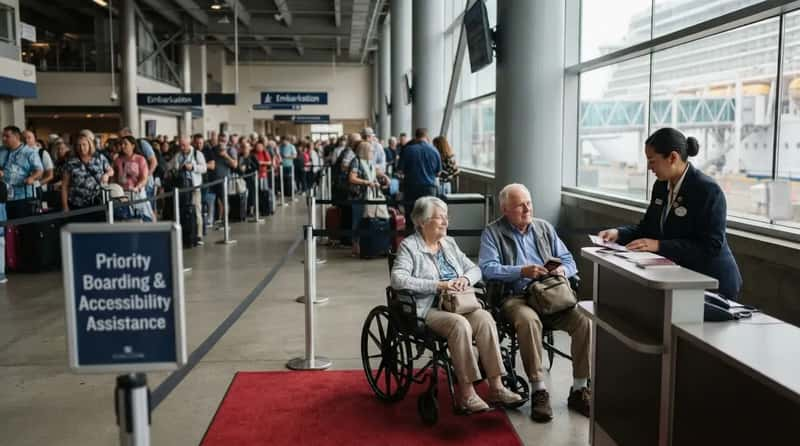
Early boarding is one of the most requested accommodations, and it isn’t advertised like a perk. Royal Caribbean offers early boarding along with boarding and departure assistance. Azamara lists the same services under its special needs process.
The catch is that it’s tied to a stated need, not an age. MSC’s accessibility form includes a box for guests who need priority upon embarkation and disembarkation because of a medical condition. That quiet, shorter line at the pier is built from paperwork, not from a birth year.
At a Glance
- Who lists it: Royal Caribbean and Azamara both include early boarding among their accessibility services.
- What unlocks it: A stated need, not a birthday.
- Where to ask: MSC’s accessibility form has a priority embarkation box for medical conditions.
- Best move: Put the request on the form before sailing, not at the pier.
And that paperwork has a deadline most people miss.
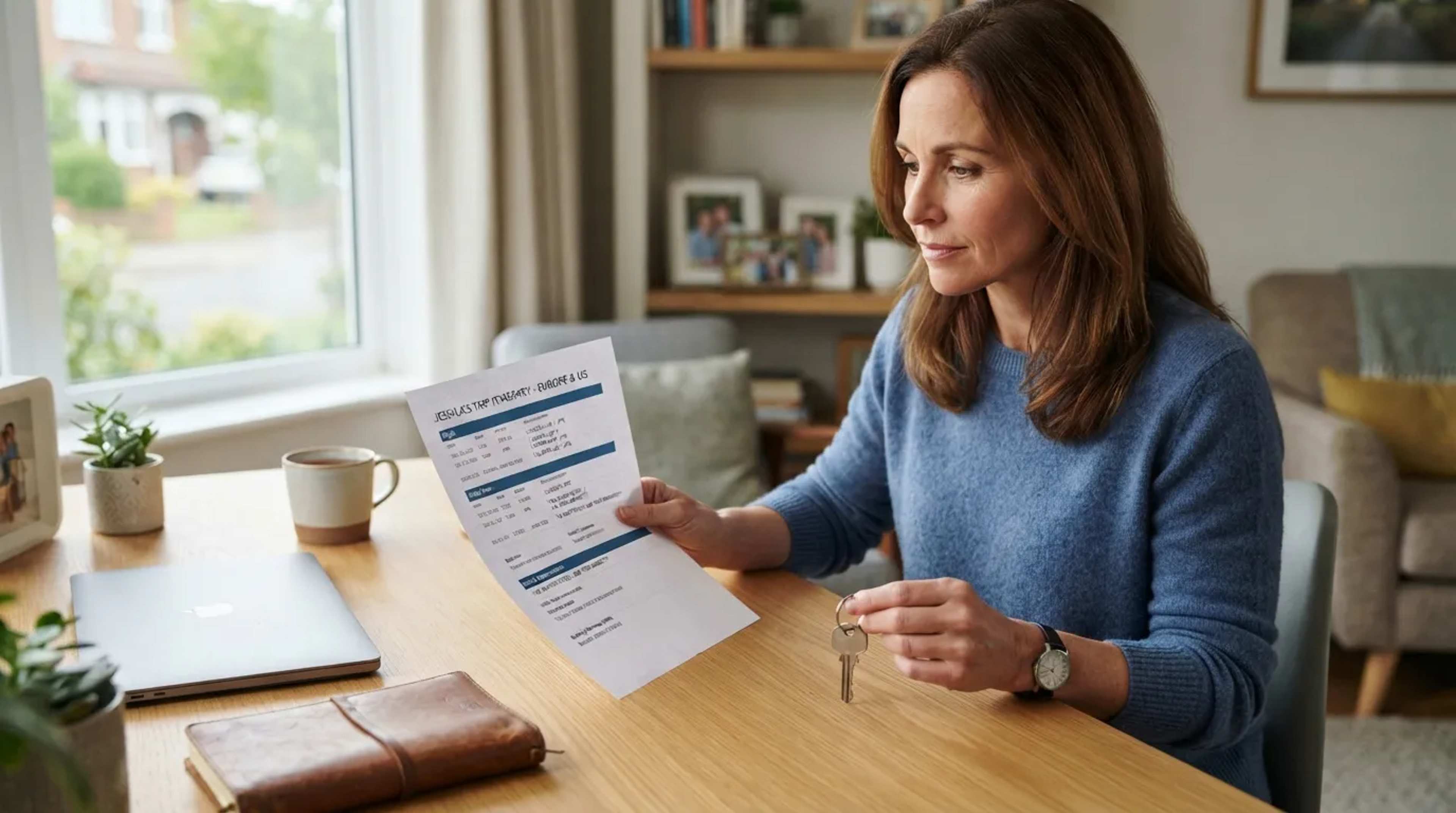
#15 – The Special Needs Form Already Waiting in a File
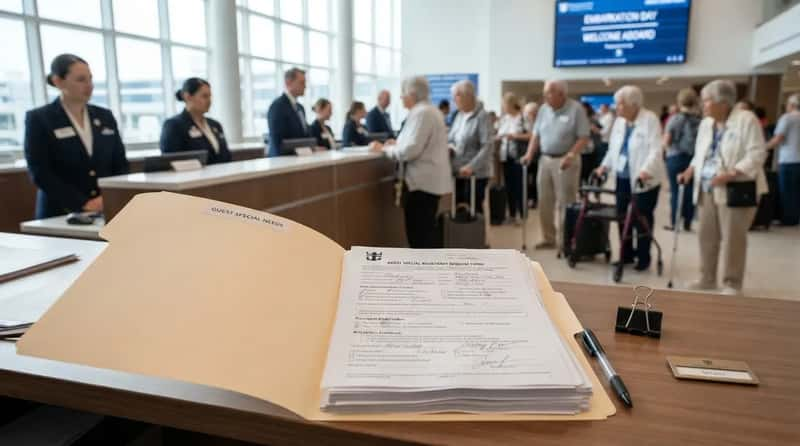
By embarkation day, most of the “quiet settling” has already happened on paper. Royal Caribbean says to complete its Guest Special Needs Form to customize your accommodations, and it encourages guests to tell the line at booking to guarantee specific equipment or services.
Deadlines vary. Royal asks for 30 days’ notice for special equipment or services. Celebrity uses the same 30-day window, but says that within 30 days it will make a reasonable effort to accommodate your request. Reasonable effort is not a guarantee, and that gap is where plans quietly fall apart.
#14 – The Original Documents Reception Wants in Hand
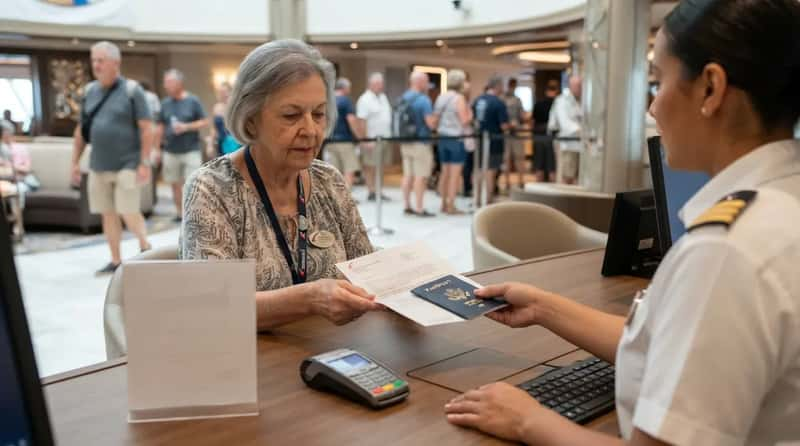
Some arrangements run on paper that has to be physical. For special accommodations, Carnival says original documents must be presented at embarkation and submitted to Guest Services once on board. That way every port of call has the required information before the ship arrives.
Imagine realizing your doctor’s letter is sitting in a drawer at home, or in a suitcase already rolling toward the cabin. A photo on a phone may not satisfy a port requirement. Keep the originals with your passport, not in a bag you won’t see until dinnertime.
Speaking of bags, here’s where embarkation day gets tricky.
#13 – Why Crew Won’t Touch Your Medical Gear at the Pier
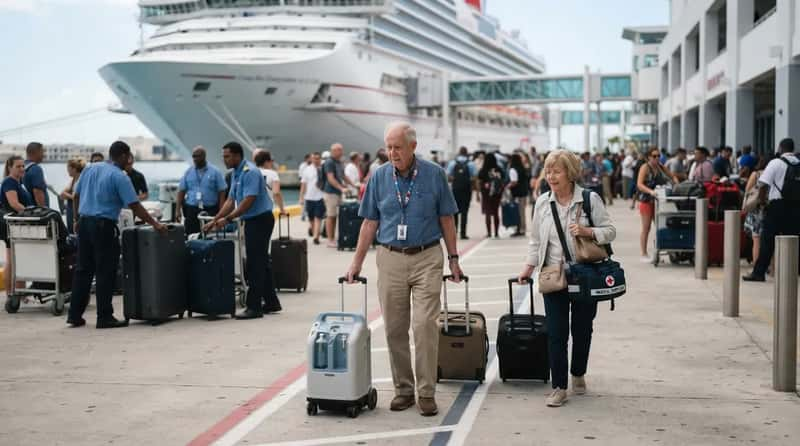
Many guests assume porters handle everything. For medical equipment, they don’t. Carnival says crew aren’t permitted to handle medical equipment during embarkation and disembarkation, so guests carry their own equipment and supplies.
There’s a second reason to keep medication close. Checked luggage can take hours to reach your cabin on embarkation day. An evening dose can’t wait for a bag that’s still sitting on a cart, which is why the cruise lines’ own guidance says to carry it on.
One device in particular needs extra planning, and few people see it coming.
#12 – The CPAP Conversation Nobody Mentions Until the Cabin
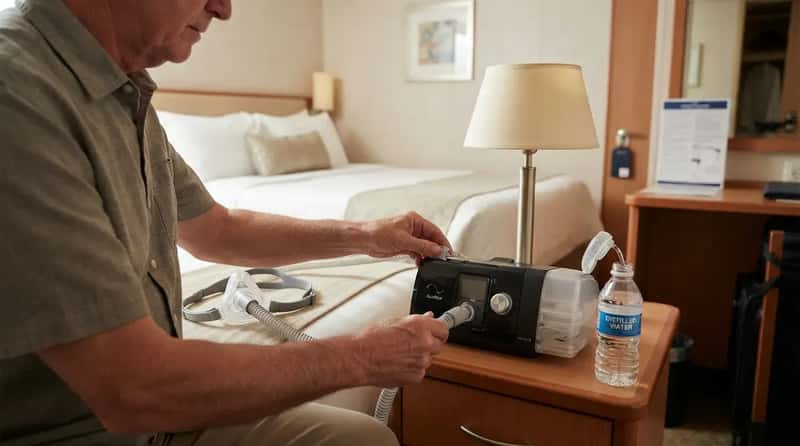
CPAP, BiPAP, oxygen concentrators and nebulizers are generally allowed. Carnival lists oxygen concentrators, CPAP, BiPAP, APAP, nebulizer and ventilator machines as permitted on board. But supplies for the device aren’t available on board, so filters, tubing and masks have to come with you.
Power is the other practical worry. Princess recommends notifying the line in advance so appropriate power access is available in your stateroom. It’s a small detail that quietly decides whether the first night is restful or miserable.
#11 – Oxygen: The One Item That Never Goes in a Checked Bag
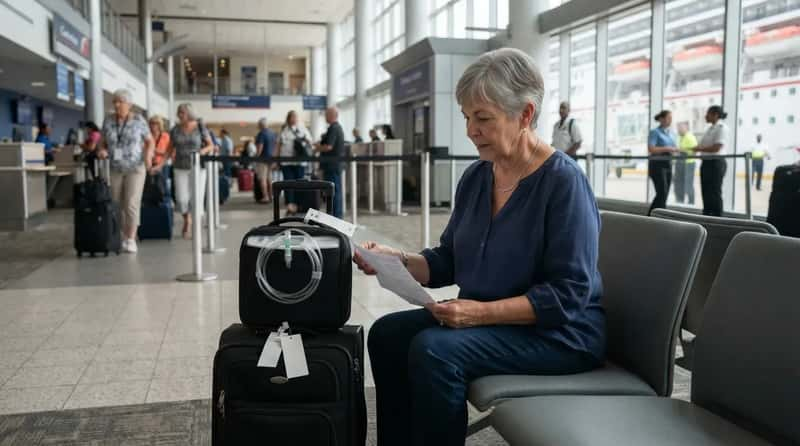
Carnival asks guests who need oxygen to contact its access team before sailing. Princess is blunt about the logistics: don’t place oxygen equipment in checked luggage, because staff and crew aren’t permitted to handle it.
Guests also need to bring their paperwork. Carnival says to travel with your oxygen prescription and all required supplies. Policy on cylinders and storage varies by line, so the pier is a bad place to find out what yours allows.
#10 – Sharps Containers and Fridges That Aren’t Cold Enough
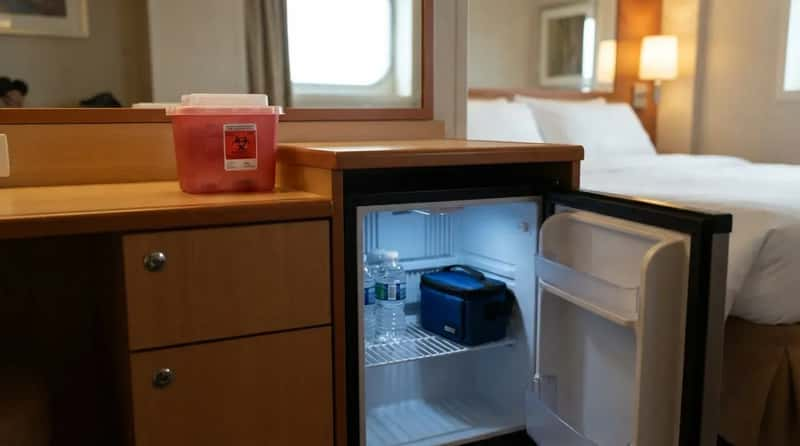
Insulin users get a practical answer on board. Any medical sharp must go in a sharps container, which you can request from your housekeeping steward. Nothing gets tossed in the regular trash.
Refrigeration is trickier. Most staterooms have mini-fridges, though they might not keep temperatures cold enough for insulin. Carnival tells guests whose cabin fridge isn’t cold enough for their medication to notify the ship before boarding through the pre-cruise medical forms. The fix is easy if you raise it early, and a headache if you don’t.
Worth Knowing
- Sharps containers come from your housekeeping steward, on request.
- Cabin mini-fridges may not stay cold enough for insulin.
- Carnival wants to hear about fridge concerns through its pre-cruise medical forms.
- Medical sharps never belong in the regular trash.
#9 – Where Your Scooter Actually Lives Once You’re Aboard
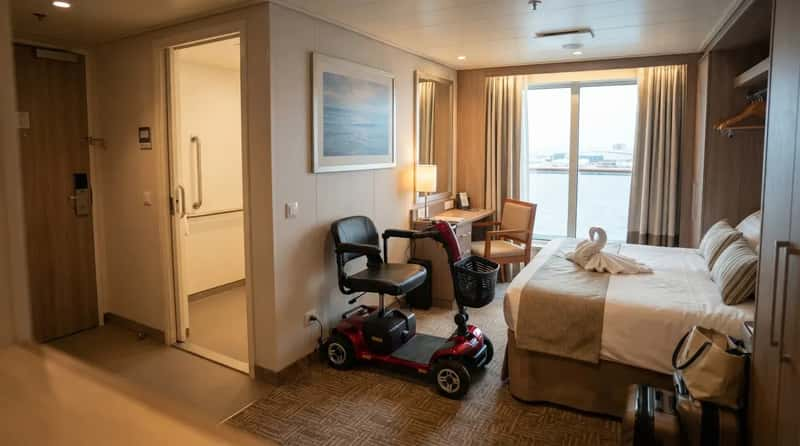
Mobility devices come with a surprising rule. Celebrity’s form states that any wheelchair or scooter must be stored inside the stateroom. Disney’s policy says the same, and it notes that wheelchair-accessible staterooms have 32-inch-wide doorways.
If you don’t own a scooter, you don’t have to buy one. Carnival’s form lists rental options, including Care Vacations and Special Needs at Sea. Royal Caribbean confirms that guests may bring and use wheelchairs, mobility scooters and other assistive devices onboard.
#8 – The Accessible Cabin Check That Isn’t Just a Box to Tick
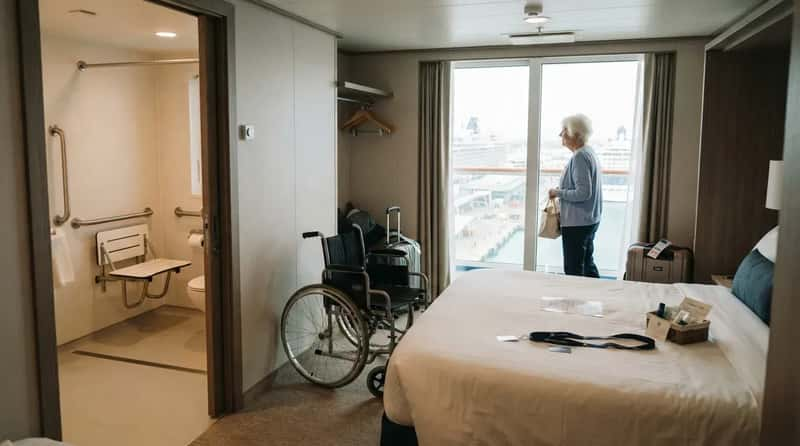
Accessible staterooms aren’t handed out on request alone. Celebrity’s paperwork includes a written attestation for an accessible stateroom, with questions like whether you can transfer from a wheelchair to a seat.
The cabins are designed for a reason. MSC says its accessible staterooms are larger and come with extra facilities and equipment for special needs. Reception staff match the room to the stated need, not to a guest’s age, so a vague request can end in a standard cabin.
The next one is a safety matter, and the options are more flexible than most people think.
#7 – The Private Muster Drill Few Guests Know to Ask For
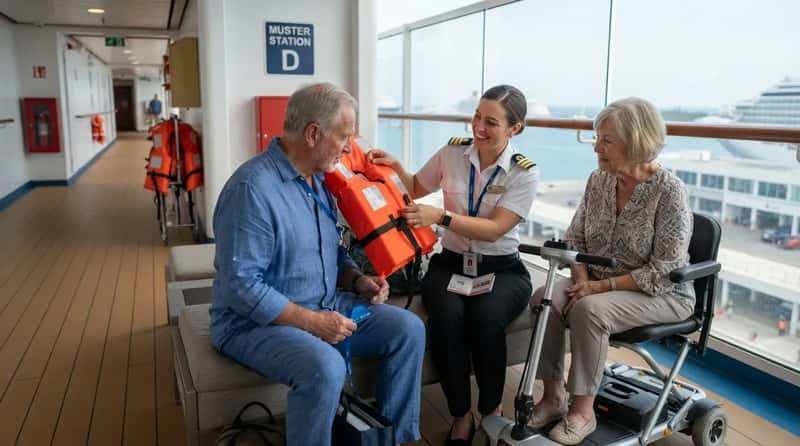
The safety drill is the part of embarkation day that worries many guests. Some lines offer alternatives. Margaritaville at Sea says that upon request, a private muster drill will be provided. Carnival says if you need assistance with the safety briefing, contact Guest Services once on board.
Mobility guests aren’t excused from the drill. One guide says muster drills apply to wheelchair users the same as everyone else, and crew help if reaching your station is hard. It also notes that some ships run a separate station for wheelchair or scooter access.
#6 – The Tender Port Reality Check Nobody Wants on Day One
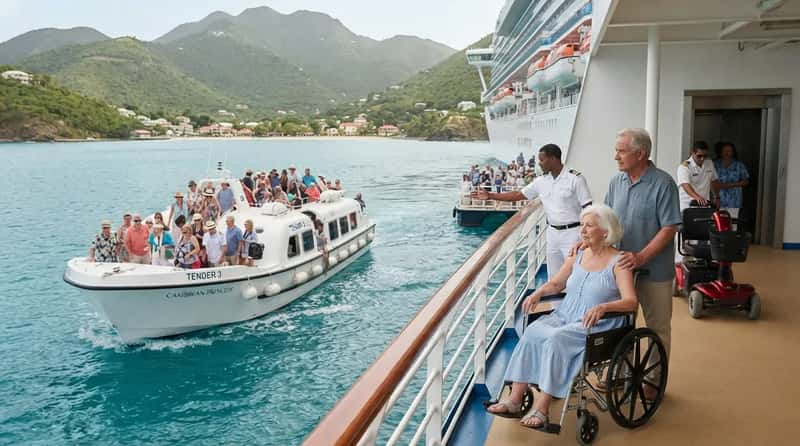
Many guests learn this at the desk, not from the brochure. Most cruise lines have a blanket policy that mobility scooters and power wheelchairs can’t be transported on tender boats. Manual wheelchairs may be allowed at the captain’s discretion, depending on sea conditions, but that’s never guaranteed.
Here’s the sting. Tender ports often include some of the prettiest island stops on an itinerary, and those are the stops a power chair user may have to watch from the deck. Some accessibility advocates call tender ports the biggest risk on any itinerary for guests using power mobility, so it’s worth knowing before you pick your route.
The next truth is less about equipment and more about people.
#5 – The “Bring Someone Who Can Help” Talk
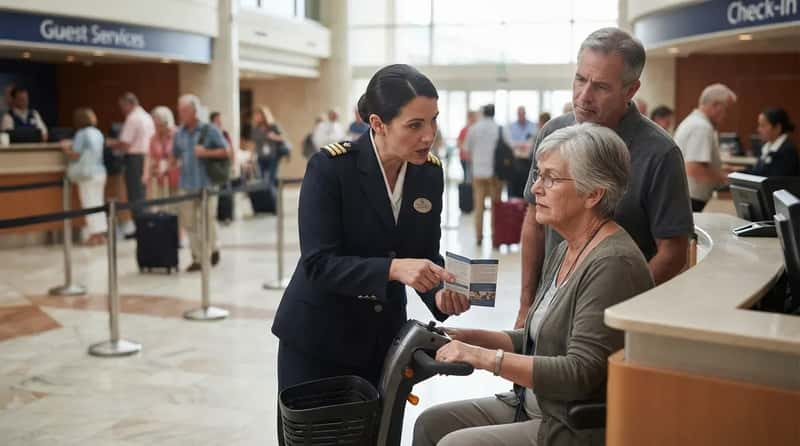
Some lines say it outright. Princess strongly recommends that guests using a mobility device travel with a person physically fit to assist with needs onboard and ashore. Disney gives similar advice, and MSC says that, for safety reasons, guests who need help may be asked to travel with a caretaker.
Carnival is just as direct: it provides attentive service, but does not provide sighted guide services or one-on-one assistance. Crew can help with logistics. They can’t be your personal aide for seven nights.
#4 – The Embarkation-Day Meet and Greet That Isn’t on the Schedule
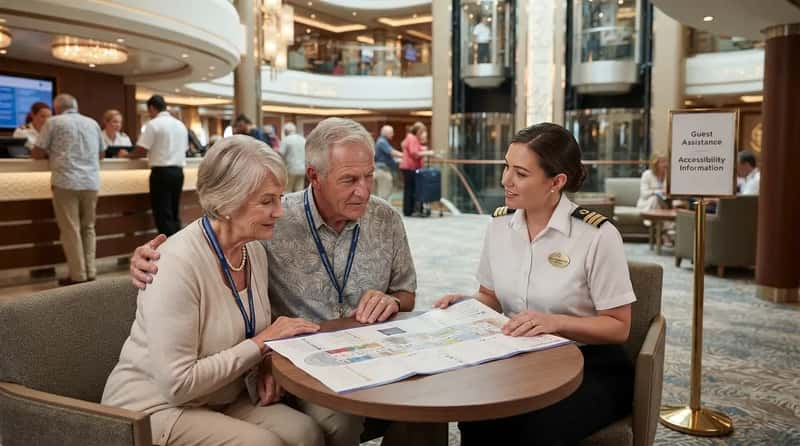
Some lines will actually sit down with you. Margaritaville at Sea offers an embarkation day meet and greet with staff to discuss your accessibility needs during the cruise, upon request. Royal Caribbean lists an accessible Guest Relations Desk among its services.
Carnival offers help of a similar kind: if you want an orientation of the ship’s layout, contact Guest Services once on board. Nobody comes looking for you. You have to ask, and asking on day one beats finding out on day three.
Fast Facts
- Margaritaville at Sea: an embarkation day meet and greet, on request.
- Royal Caribbean: an accessible Guest Relations Desk.
- Carnival: a ship layout orientation through Guest Services once on board.
- The common thread: the conversation starts when you do.
Not every need is about walking, though, and the next one is easy to overlook.
#3 – Captions, Large Print and Alarms You Can Actually See
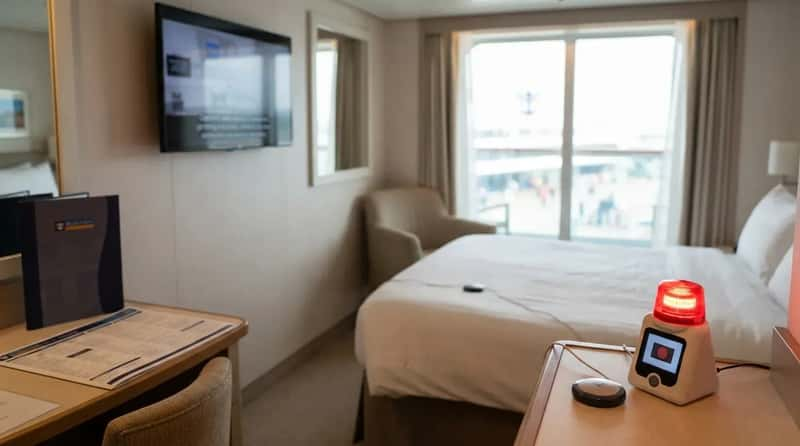
Hearing and vision accommodations are part of the same quiet process. Disney’s special services form lists captioned television and movies and assistive listening systems for hearing disabilities. For visual disabilities, it offers larger print on select communications.
Royal Caribbean mentions large-print menus, visual tactile alert systems and wheelchair assistance. These items often have to be requested before the ship leaves port, so embarkation day is the moment to raise them at the desk.
Now we reach the two items that carry the real financial weight.
#2 – The Medicare Surprise That Follows You Aboard
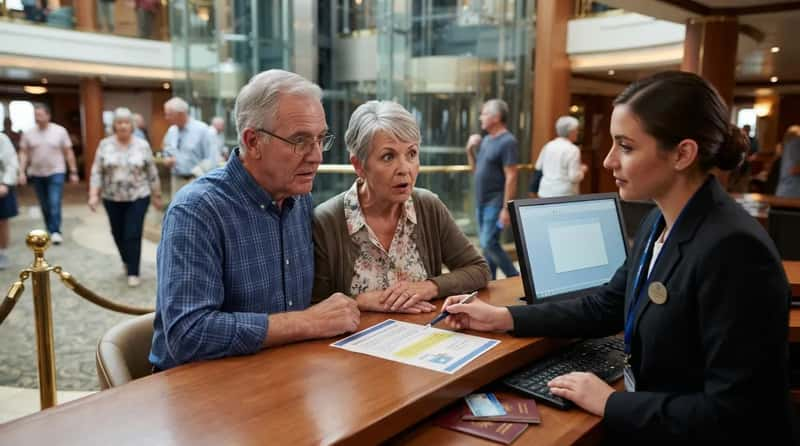
This is the conversation that stings. Medicare doesn’t cover services received when the ship is more than six hours away from a U.S. port. A narrow exception exists, but most ship medical centers work like private clinics.
One 2026 guide notes that ship medical centers generally don’t accept land-based health insurance or Medicare, and you usually pay the full amount through your room account before disembarking. It puts a basic consultation at roughly $150 to $300 before tests or treatment. Treat that as a guide’s estimate, not a fixed price.
And that’s before the single number that changes how many guests plan.
#1 – The $100,000 Question Hiding Behind the Insurance Check
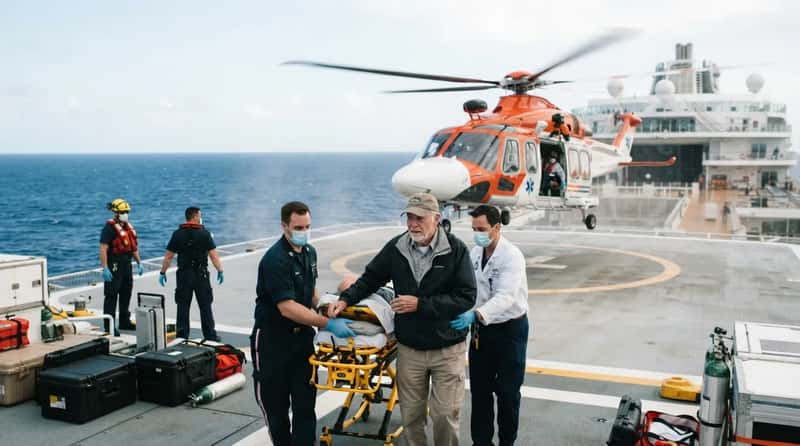
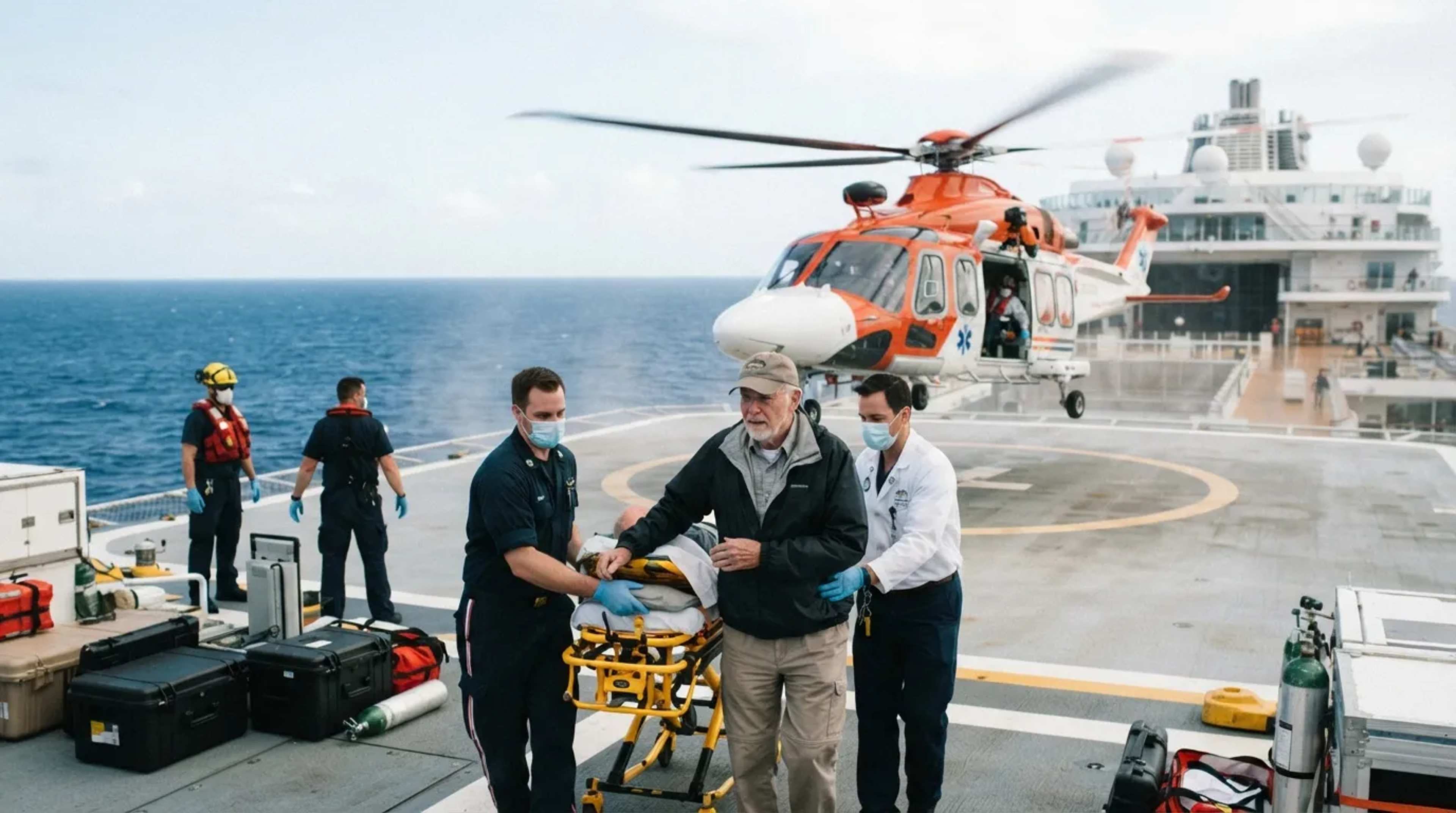
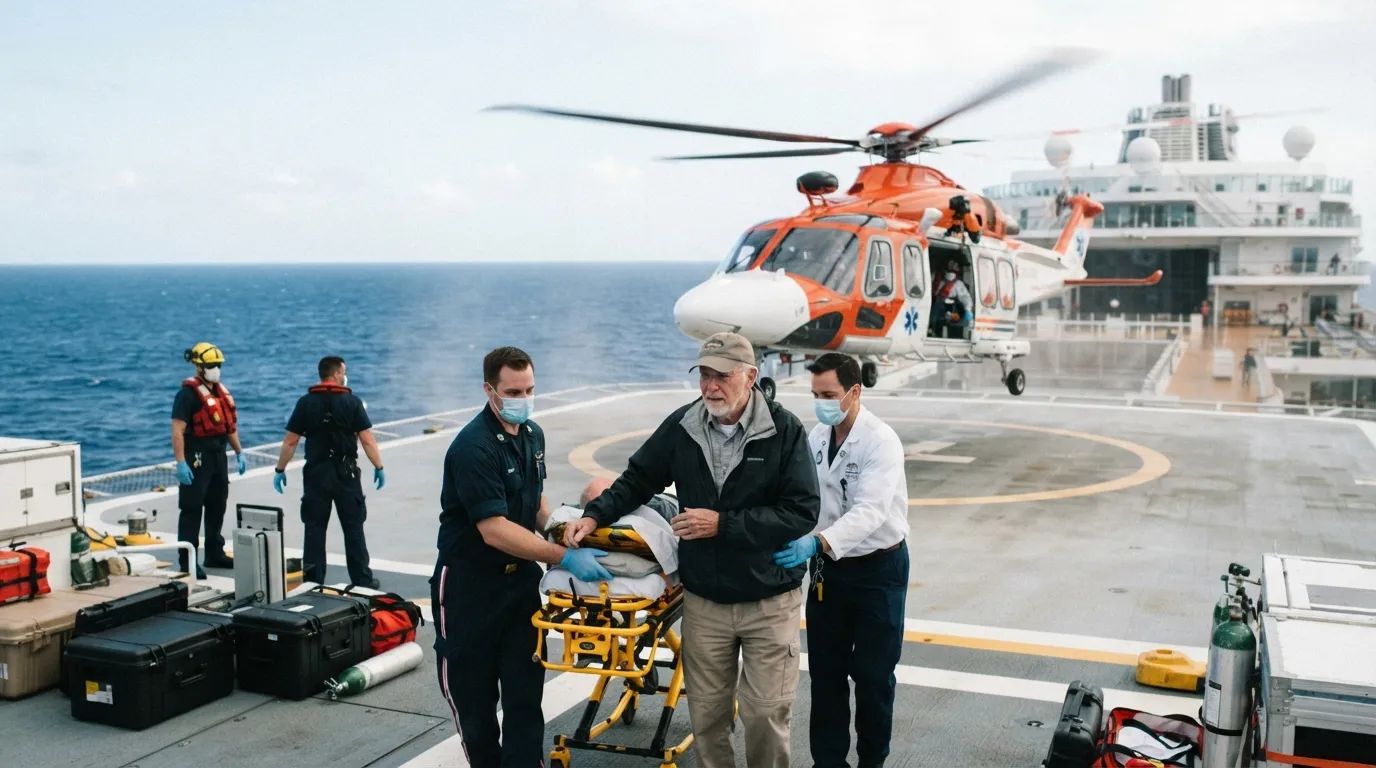
Here’s what rarely comes up at the pier. One insurer says a single medevac from a cruise ship can cost $120,000 or more. A separate source notes that the CDC says medical evacuations can cost upward of $250,000. Estimates vary widely, but every one of them is large.
Most cruises don’t legally require insurance, but some cruise lines and international destinations may require proof of medical and evacuation coverage before boarding. Cruise line plans may also offer more limited evacuation coverage than standalone travel medical policies. Compare both before you accept the first option.
Quick Compare
- Ship medical consult: roughly $150 to $300 for a basic visit, per one 2026 guide, before tests or treatment.
- Medevac, one insurer’s figure: $120,000 or more.
- Medevac, CDC figure cited by a separate source: upward of $250,000.
- Coverage catch: cruise line plans may offer more limited evacuation coverage than standalone policies.
So no desk hands out perks for turning 70. What cruise reception actually settles is need: wheelchair help at the terminal, early boarding, medical gear, private safety briefings and a clear picture of tender ports. The least glamorous items matter most, because Medicare generally doesn’t follow you out to sea, and a medical evacuation can run into six figures.
Details differ by line, so confirm yours directly. The best embarkation day is the one where the hard conversations happened weeks ago, and the only thing left to settle is which deck chair gets the sunset.