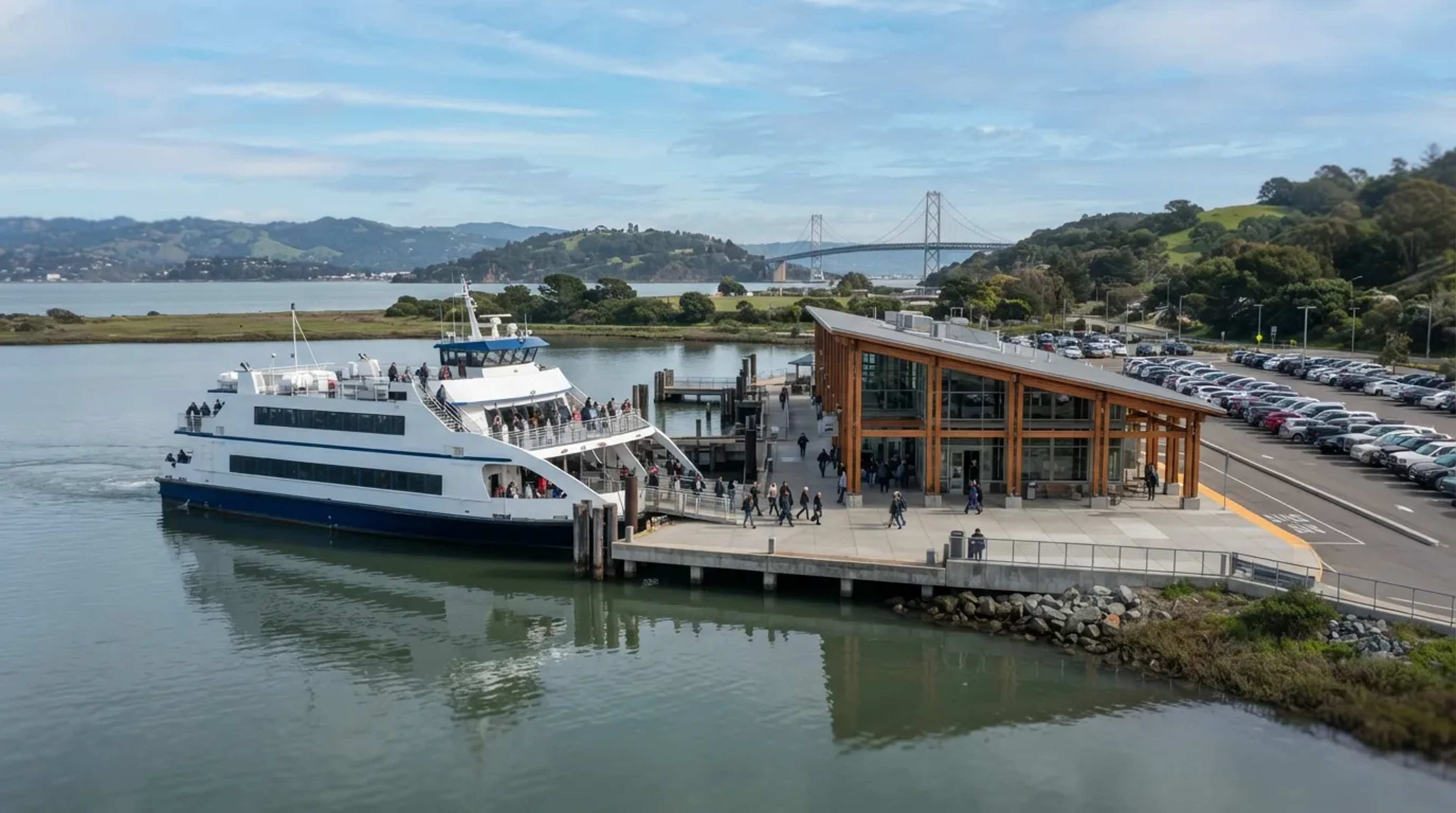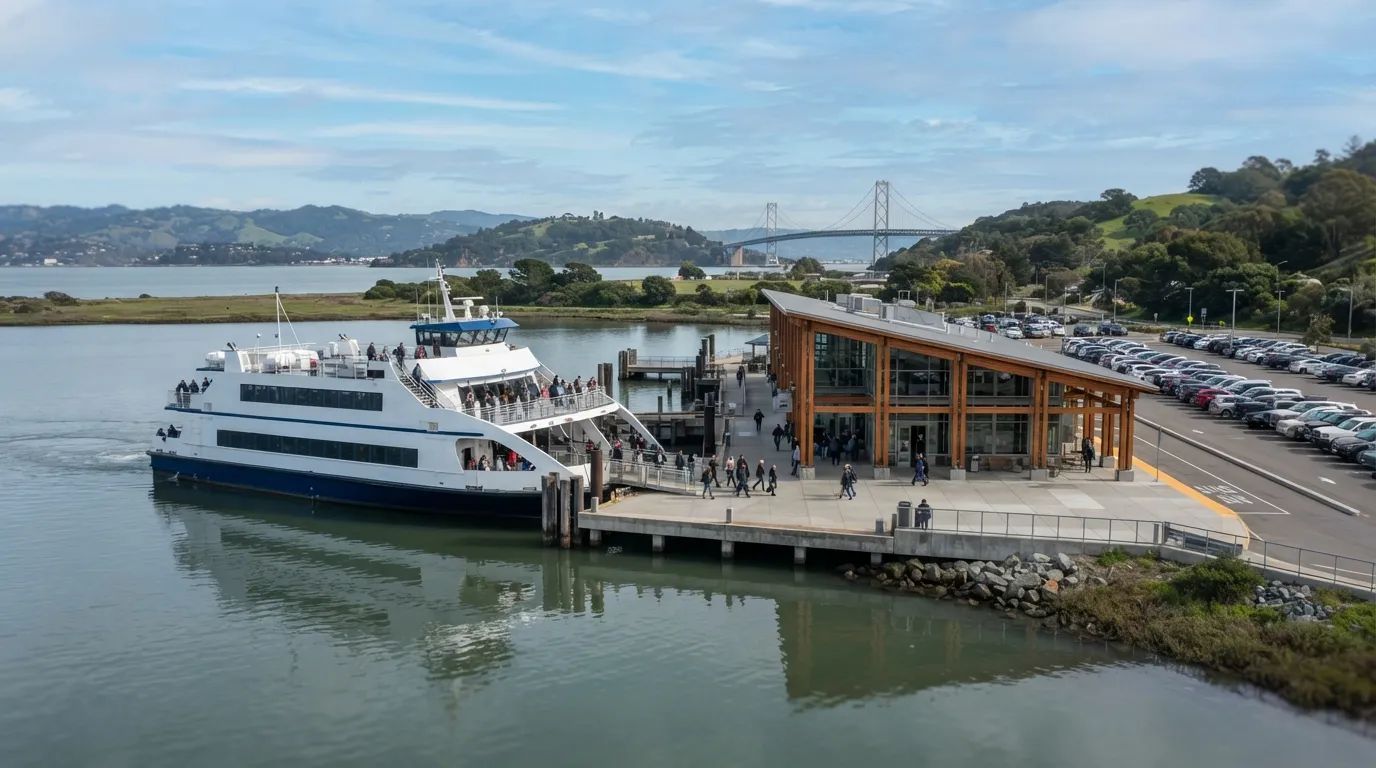
Most people assume everyone pays the same price at the ferry ticket window. Not so. San Francisco Bay Ferry cuts fares 50% with a Senior Clipper card, Seattle’s busiest crossing charges riders 65 and older about half the adult price, and one Delaware Bay route starts its discount at 62.
But the biggest discount isn’t always the best deal. Fares crept up in 2025 and 2026, and some senior prices held steady while others quietly jumped. A few of these fare tables hide a twist that changes who actually pays the least, and the one waiting at #1 surprised us most.
#16 – The Seattle–Bainbridge Ride That Costs About Half at 65
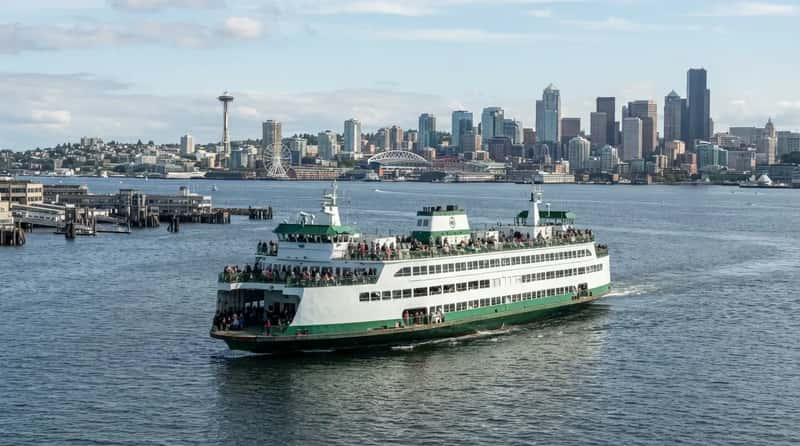
One of the busiest ferry crossings in the Pacific Northwest quietly slashes its walk-on price. WSDOT’s fare page for Seattle to Bainbridge Island lists an adult (19–64) at $11.35 and a senior (65 and over) at $5.65. Same boat, same skyline, roughly half the cost.
Riders 18 and under pay nothing at all. That means only the middle of the age range pays full price on this route. Washington State Ferries raised fares about 3% in October 2025 and planned another 3% for May 1, 2026, so check the current number before you go.
But the motorcycle line on the same page hides a twist at #15.
#15 – The Senior Motorcyclist Discount Nobody Mentions
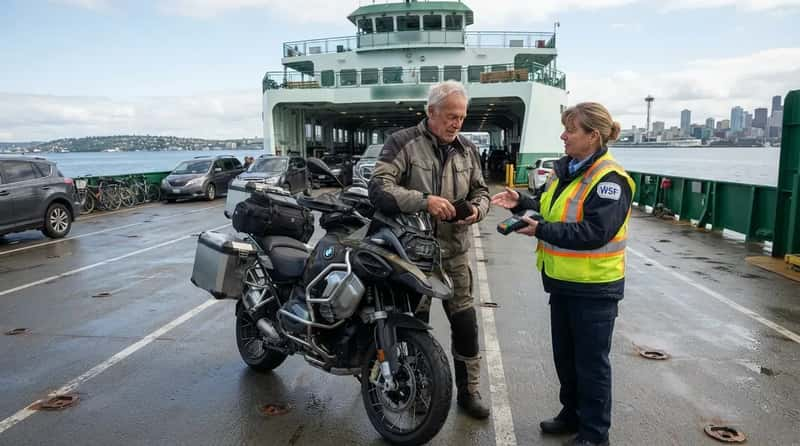
Not every discount shows up in the passenger column. The same Seattle–Bainbridge listing shows a motorcycle and driver stowage fare of $9.00, and a lower $6.15 for a senior or disability driver. That’s a gap of $2.85 each way.
It’s buried in a long table, so plenty of riders scroll right past it. Even the bicycle surcharge is a separate $1.00 line for riders 19 and over.
The takeaway: ferry fares are built from line items, and the senior price sits on specific ones. Someone who assumes “senior” applies to everything can end up paying the wrong amount at the booth. The table is public, and the right line takes thirty seconds to find.
But the San Juan Islands crossing at #14 comes with a catch tied to the calendar.
#14 – San Juan Islands: Senior Rates, Plus a Summer Surcharge
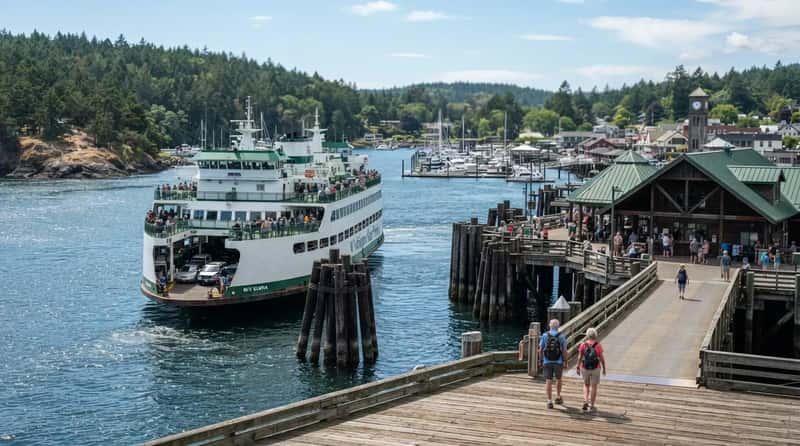
The Anacortes–Friday Harbor run looks like a postcard, and the pricing has fine print. Seniors 65 and older and people with disabilities get discounted rates on the San Juan routes. Adult round-trip passenger fare on Anacortes–Friday Harbor was listed at $17.50 for 2025 and $18 for 2026.
The increases are meant to meet a $408.8 million revenue target set by the legislature for 2025–2027. Peak-season surcharges apply from May 1 to September 30. That surcharge is tied to full-fare vehicle-and-driver tickets, not to walk-on passengers.
Next is a county-run crossing with a price that barely moves, at #13.
#13 – The $4.46 Island Crossing in Pierce County
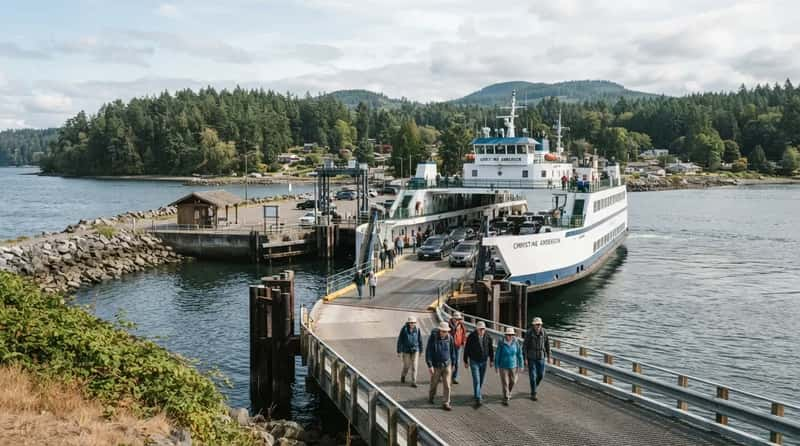
This one is easy to miss because it isn’t a state ferry. Pierce County’s 2026 fare table lists a senior (65 or older) or disability walk-on fare of $4.46, year-round. The county’s ferry runs between Steilacoom and Anderson Island.
The fares were set by an ordinance adopted on November 18, 2025. Seniors show a valid photo ID or a Regional Reduced Fare Permit when boarding. There is no peak-season markup on the senior walk-on fare. That makes it one of the most predictable prices on this list.
But bring a car, and the story changes at #12.
#12 – Bringing a Car? The Peak Jump Hits Seniors Too
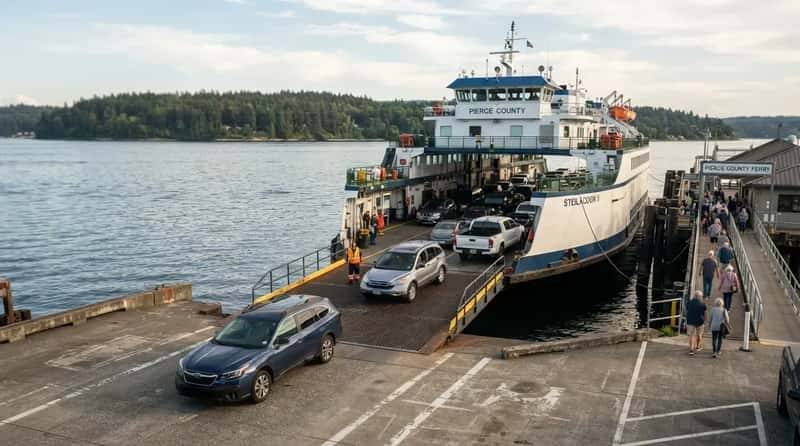
A senior discount doesn’t shield you from the calendar. Pierce County’s senior vehicle fare (up to 22 feet) is $21.00 in the non-peak period and $28.35 in peak, which runs May 22 to September 7. That’s a $7.35 swing for the same crossing.
The off-peak window covers January 1 to May 21 and September 8 to December 31, so most of the year is the cheaper rate. Length is measured to the furthest protruding item at the rear, trailer included.
At a Glance
- Senior walk-on: $4.46, all year
- Senior motorcycle: $11.29 off-peak, $16.01 peak
- Senior vehicle (up to 22 ft): $21.00 off-peak, $28.35 peak
- Peak season: May 22 to September 7
A bike rack or small trailer can push you into a different price category. It’s the kind of surprise that turns a bargain into an argument at the dock.
The next entry is about a mix-up that has confused plenty of riders, at #11.
#11 – The ORCA Card Mix-Up Over Senior Ferry Fares
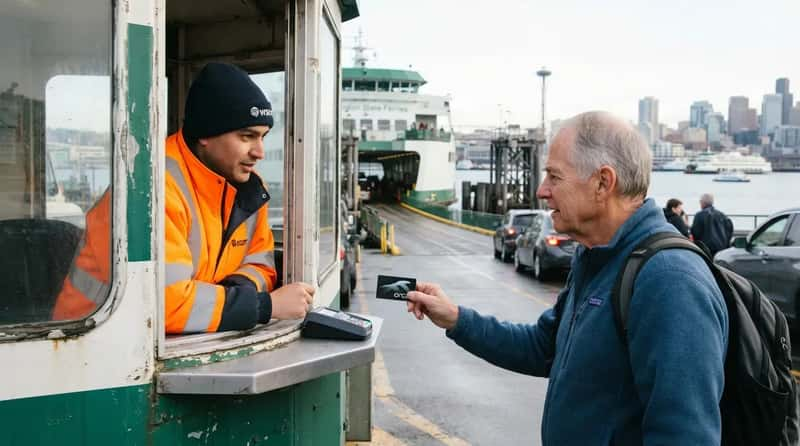
Two sources disagree about whether a popular senior card works on Washington’s ferries. Community Transit says the Senior Regional Reduced Fare Permit gives riders 65+ discounted fares on services including Washington State Ferries. A senior-support page says the ferries don’t participate in that permit at all.
WSDOT itself lists a senior (65 and over) fare, and reduced fares are bought in person with proof of eligibility. So the discount is real, but the way you prove it may not be the way you expect. Pierce County, by contrast, accepts either a photo ID or the permit.
Next, we cross the country to the only discount here that starts at 62.
#10 – Cape May–Lewes: The One Discount That Starts Earlier
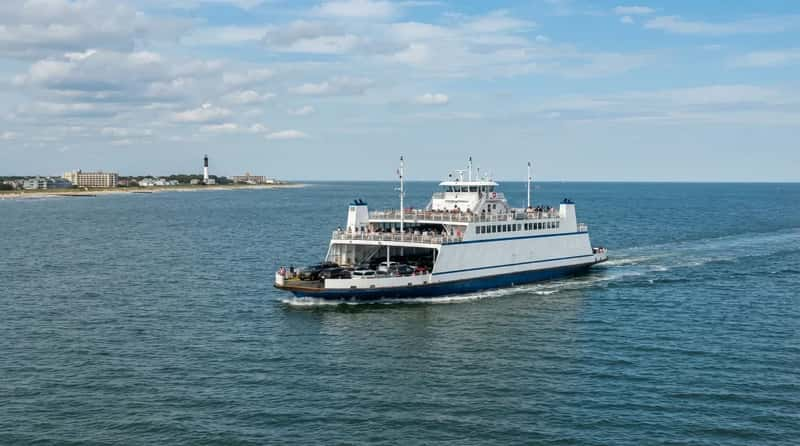
Most senior fares on this list begin at 65. The Cape May–Lewes Ferry’s discount starts at 62 and requires valid ID showing a birth date. It applies throughout the year, on a crossing between New Jersey and Delaware that takes about 85 minutes.
The discount applies to both drivers and passengers, per qualified individual. It can’t be combined with other coupons or promotions unless specified. The trade-off is that the savings are small dollar amounts, not a percentage.
The winter numbers at #9 hold a surprising coincidence.
#9 – Winter on Delaware Bay: $7 One-Way, $13 Round Trip
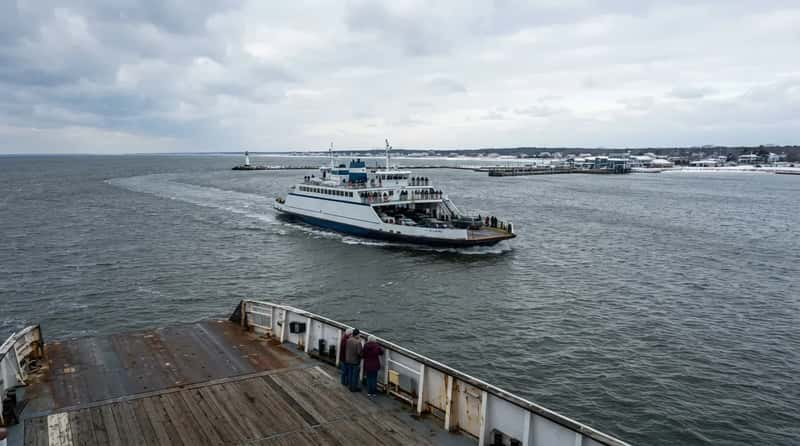
For November 1, 2026 through March 31, 2027, the senior (62+) fare is $7.00 one-way and $13.00 round trip. Adults 14–61 pay $9.00 and $16.00. The winter discount is $2 off one-way and $3 off round trip.
An adult AAA member pays exactly the same $7.00 and $13.00. A senior without a AAA card gets the same deal automatically. A third-party guide listed last winter’s senior fare at $6 one-way and $11 round trip, so the round trip has gone up $2.
Fast Facts
- Winter season: November 1, 2026 to March 31, 2027
- Senior (62+): $7.00 one-way, $13.00 round trip
- Adult (14–61): $9.00 one-way, $16.00 round trip
- Last winter’s senior round trip, per one third-party guide: $11
Winter crossings are colder and quieter, and the price tag is the lowest of the year. The open deck is a different world in January, so bring layers.
But the summer fare table at #8 sparks a debate.
#8 – Summer Fares: Is a $4 Saving a Real Senior Discount?
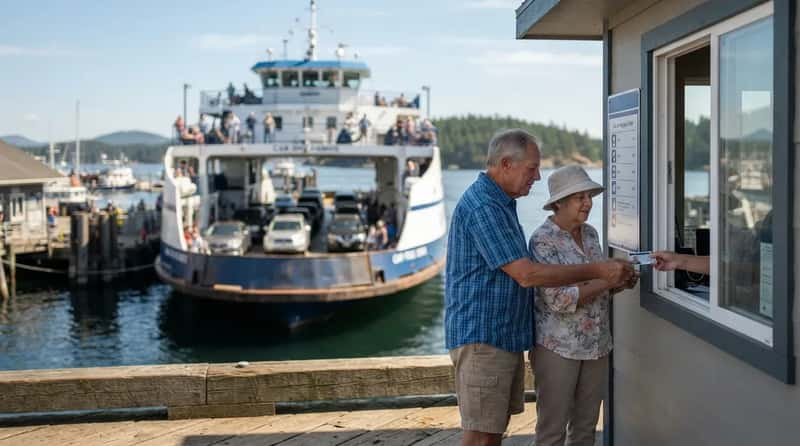
The 2026 summer table lists adults (14–61) at $11 one-way and $20 round trip. Seniors 62+ pay $9 and $16. That’s $2 off one-way and $4 off round trip. Some travelers will call that generous. Others will call it a rounding error.
Here’s the real tension. Drivers and passengers are ticketed separately, so the discount covers the person, not the car. One-way fares for cars, SUVs and pickups increased from $33 to $42 on weekdays in a recent fare change. The vehicle fare dwarfs the senior saving.
The next entry is a route where the numbers come with a big caution flag at #7.
#7 – Alaska Marine Highway: The Half-Price Fare to Double-Check
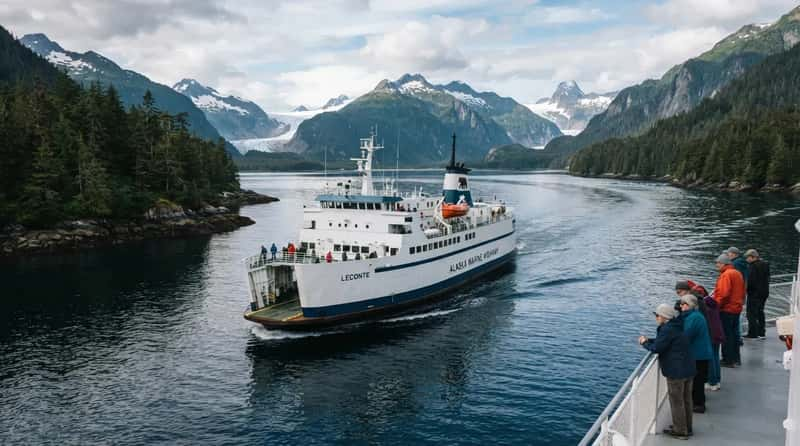
Alaska’s ferry system is a lifeline, and its senior discount has a long history. One travel guide said passengers over 65 could ride the LeConte, Bartlett, Aurora and Tustumena year-round for 50 percent off the regular adult fare. Another Alaska travel resource says the system offers senior rates on some routes.
A 2016 senior-focused article cited a $27 senior ticket on the four-and-a-half-hour ride to Gustavus. That’s a long boat ride for less than a movie night out. But these sources are years old, and Alaska’s schedules and fares have changed. Treat them as a starting point, not a quote.
Now back to California, where a single card unlocks half-price rides at #6.
#6 – San Francisco Bay Ferry: One Card, 50% Off
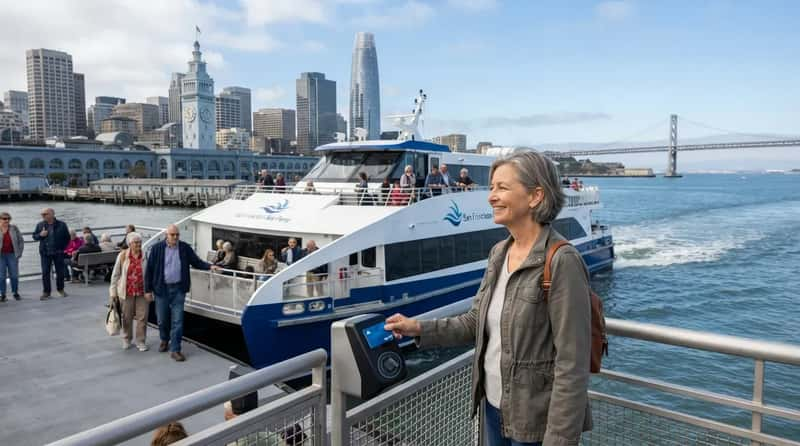
This is the cleanest senior deal on the list. Riders 65 and over can apply for a Senior Clipper Card and receive 50% off ferry fares. There’s no seasonal split in the description and no list of dollar caps.
The catch is that the discount isn’t automatic at the gate. You need the card. When you connect with certain other agencies, Clipper tracks your rides and applies transfer discounts where they exist. That’s a real convenience for riders mixing ferries with buses or trains.
Next: the Marin County crossing with a long history, at #5.
#5 – Sausalito: A 1970 Route With a $7 Senior Fare Today
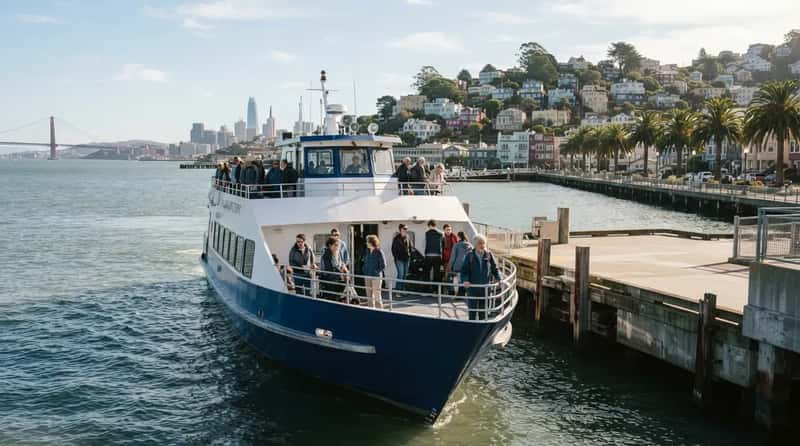
Golden Gate Ferry began service between San Francisco and Sausalito on August 15, 1970. More than five decades later, the senior price is modest. Effective July 1, 2026, seniors 65 and above, youth, disabled and Medicare riders pay $7.00 to Sausalito.
Most Golden Gate Transit and Ferry fares rose by up to $0.25 on that date. All discount fare programs remain in effect. For riders on fixed budgets, that continuity matters as much as the price itself.
Why It Stands Out
- Service began August 15, 1970, over five decades ago
- The $7.00 fare also covers youth, disabled and Medicare riders
- Most fares rose by up to $0.25 on July 1, 2026
- Discount programs stayed in place after the increase
Sausalito is a short hop with a view that tour buses can’t match. But the next route is funded in a way most riders never think about.
#4 – Tiburon: The Same $7, Funded by Bridge Tolls
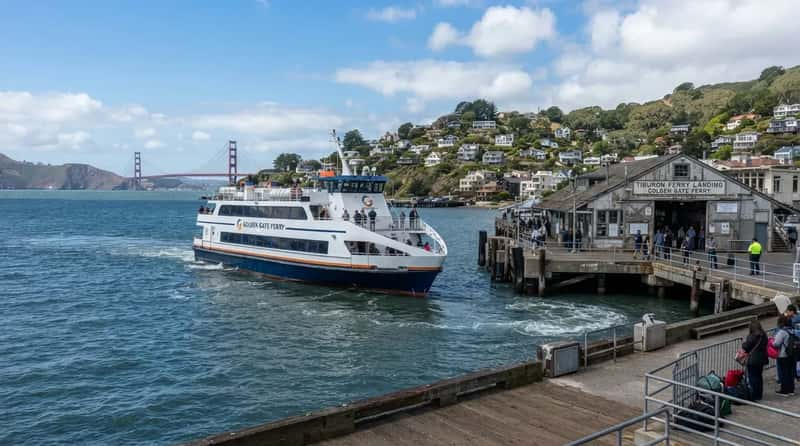
Tiburon carries the same $7.00 senior fare as Larkspur and Sausalito. That makes it a handy comparison point. If you’re choosing between towns for a day trip, the price won’t decide it.
The ferry service is funded primarily by passenger fares and Golden Gate Bridge tolls. So a reduced fare is a policy choice built into a system that bridge drivers help support.
The island route at #3 shows the widest gap on the list.
#3 – Angel Island: $8 for Seniors, $15.50 Cash for Adults
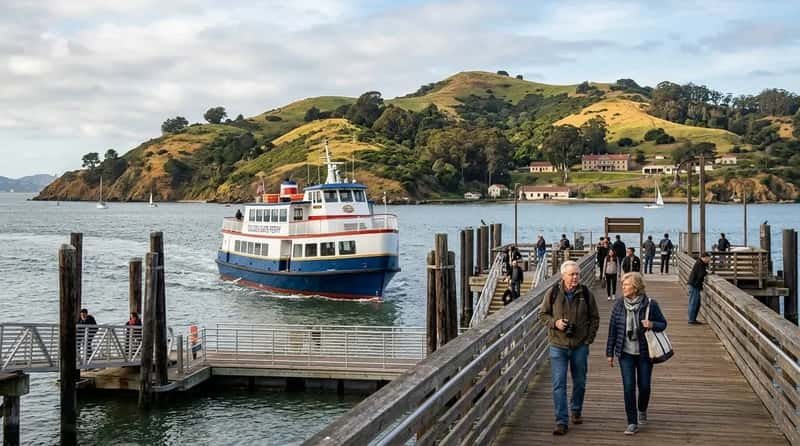
On the Angel Island–Ferry Building route, an adult single ride costs $15.50 in cash and $9.75 with Clipper. The youth, senior, disabled and Medicare fare is $8.00. That’s the biggest cash-fare gap you’ll see here.
The Clipper START fare on the same route is just $5.65. It’s a reminder that fare tables hide several tiers. A senior who knows which tier applies pays less than a tourist who pays cash at the booth.
The next entry shows what happened when fares went up, at #2.
#2 – Fares Rose in 2025 and 2026, but Senior Rates Held
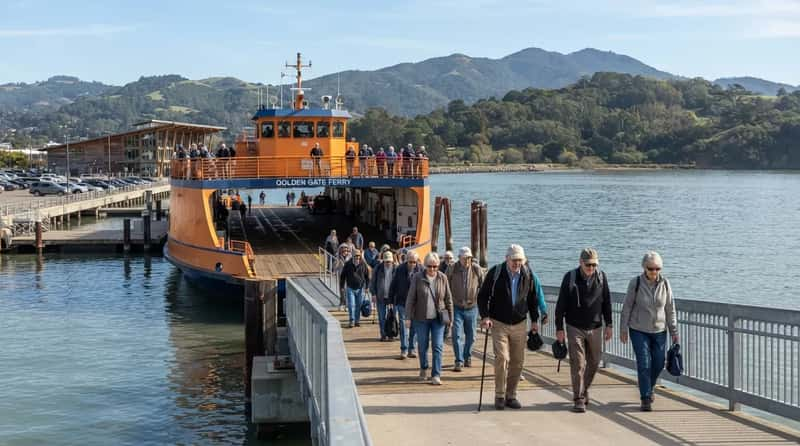
On July 1, 2025, most Golden Gate Transit and Ferry fares rose by up to $0.25 as part of a five-year program. Another round followed on July 1, 2026. Riders often brace for the worst when that happens.
The senior ferry fares in both tables are identical: $7.00 for Larkspur, Sausalito and Tiburon, and $8.00 for Angel Island. Compare that with Cape May–Lewes, where the discounted one-way fare for seniors rose from $8 to $9.
But the number-one entry has the biggest plot twist of all.
#1 – Larkspur: The Fare Table With the Biggest Twist
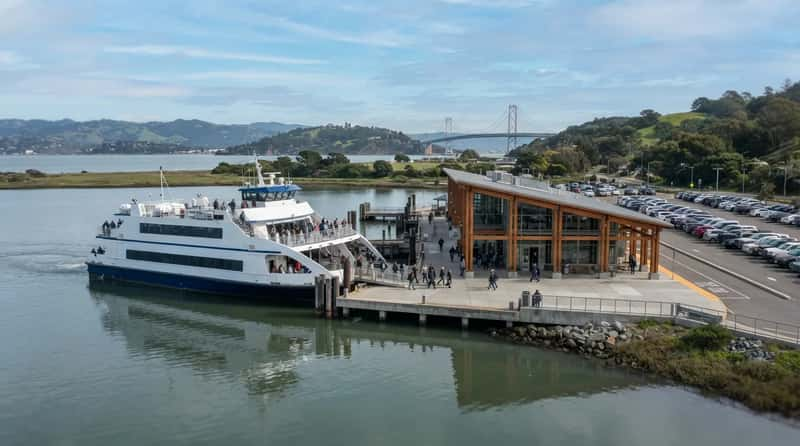
On the Larkspur–Ferry Building route, the senior fare looks like a bargain. An adult single ride costs $14.00 in cash, adults paying with Clipper pay $9.25, and the youth, senior, disabled and Medicare fare is $7.00. That’s half price compared with the cash fare.
Here’s the twist. Against an adult using Clipper, the senior saving is only $2.25. The real money is in how you pay, not just how old you are.
Clipper START riders pay just $4.65 on the same route. The cheapest rider isn’t always the oldest one.
Quick Compare
- Adult, cash: $14.00
- Adult, Clipper: $9.25
- Senior, youth, disabled or Medicare: $7.00
- Clipper START: $4.65
Senior ferry discounts exist on coasts across America, but they aren’t one program. Some start at 62, some at 65, some cut the price in half, and some save only a couple of dollars.
The fare table is where the real story lives, so read the whole thing before you board. Fares change, so verify before you sail.