You’d expect this list to be about rude guests and cold eggs. A few entries are. But the habits that cost hotel restaurants the most are strangely quiet: tables that sit empty, plates that go straight to the bin, and guests who never say what went wrong.
Some of these habits belong to guests, a few belong to the kitchen, and one belongs to management itself. They rarely show up in a review, but they show up on the P&L. The numbers behind them are stranger than the behaviors, so let’s start at the bottom of the list.
#23 – The Jenga Plate: Why Buffet Waste Starts With One “Quick Second Trip”
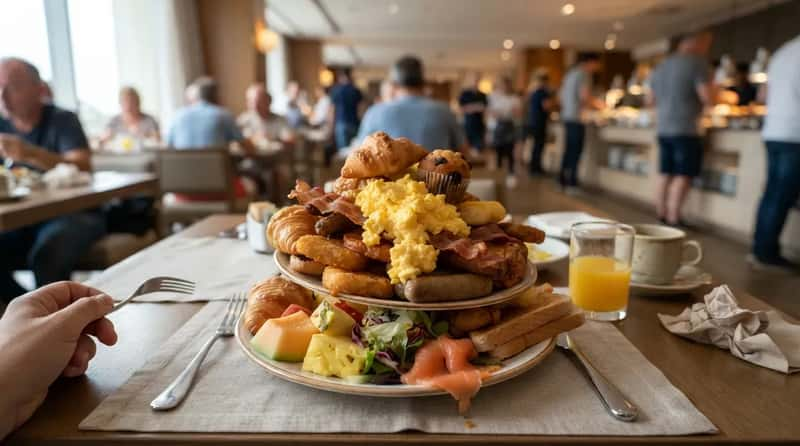
That towering buffet plate feels like a vacation victory. To a hotel manager, it’s one of the priciest habits in the room. Buffet waste rates of 15-25% sit far above the 4-10% typical of à la carte restaurants.
Diners take more than they eat, sample items they never finish, and go back for round after round. Another guide to hotel waste puts buffet plate waste at 25-40% higher than à la carte service. So “I’ll just try everything” comes with a real price tag, and the plate itself may be even sneakier.
#22 – The Oversized Plate Trap That Makes Guests Take (and Toss) More
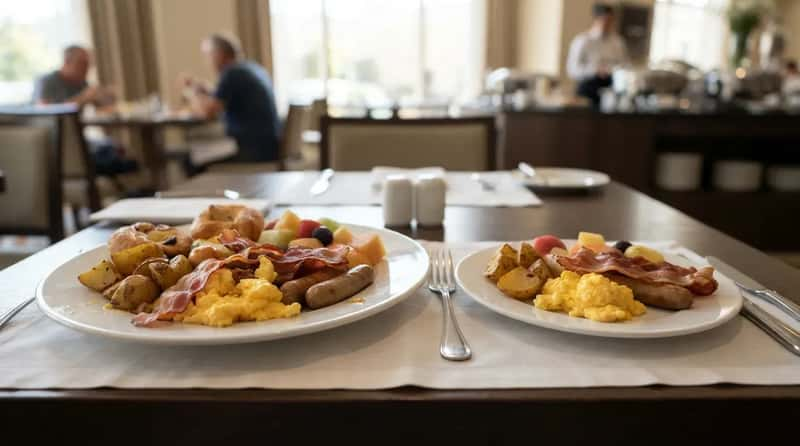
The size of the plate quietly decides how much food ends up in the trash. People reportedly eat 45% more and waste 135% more when handed a large plate instead of a small one. Waste climbs far faster than appetite.
One hotel-waste guide says a 25cm plate versus a 30cm plate can reduce plate waste by 15-20% with no impact on satisfaction scores. Big plates look generous, which is exactly why they’re tempting to keep. Reservations carry a hidden cost of their own.
#21 – The Ghost Reservation: A Table Held for Someone Who Never Walks In
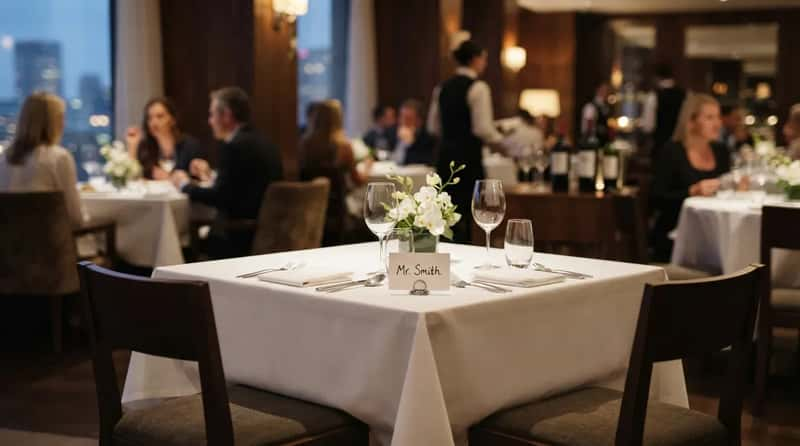
An empty table with a name on it is a small loss that repeats every night. One industry index covered 3,768,761 reservations across 2,417 restaurants over a recent twelve-month period and put the recorded no-show rate at 2.33%. That sounds tiny, until you see what it costs.
You’ll also see much scarier figures of 10-20% online. Those come from surveys of self-reported guest behavior, so they run far higher than recorded outcomes. The real number is smaller, but the cancellations behind it may be worse.
#20 – The “Sorry, Can’t Make It” Text Sent Hours Before Dinner

The no-show gets the blame. The late cancellation is the quieter problem. In that same index, 317,541 of 566,049 recorded cancellations, about 56%, arrived within 24 hours of the reservation or after it started.
The data can’t say whether those tables were refilled. But a cancellation that lands a few hours before service leaves almost no time to try. Staffing and food prep were already planned around that booking.
#19 – The Party of 10 That Takes 13 Seats With It
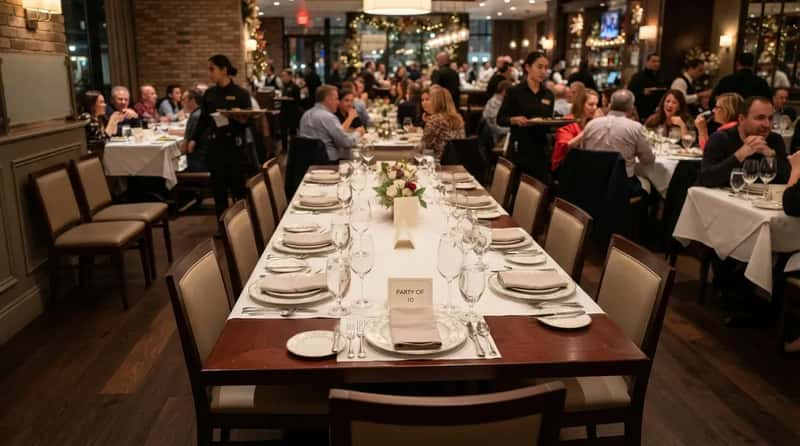
Big groups are the surprise here. Parties of 10 or more no-show at just 1.15%, well below the overall rate. But each one that fails takes an average of 13.4 covers with it.
So large groups are reliable, but when one collapses it can wipe out a big chunk of the evening. And the evening is exactly when misses hurt most.
#18 – Dinner Ghosting: The Meal Where Empty Tables Cost the Most
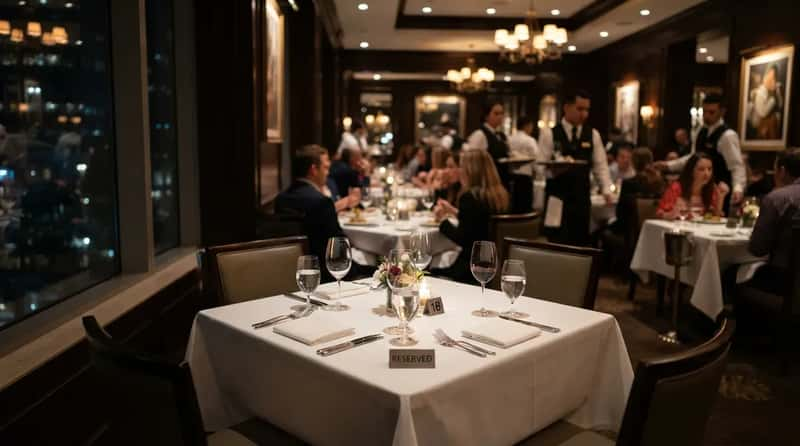
Dinner is when a table is typically worth the most. It’s also when guests flake the most. The no-show rate at dinner (2.63%) runs 43% higher than at lunch (1.84%).
That’s a lot of risk packed into the busiest hours. Lunch guests, it seems, treat a booking more like a promise. Some restaurants have a fix, but it makes plenty of guests bristle.
Quick Compare
- Lunch: 1.84% recorded no-show rate
- Dinner: 2.63% recorded no-show rate
- The gap: dinner runs 43% higher, right when tables are worth the most
#17 – The Deposit Backlash: Guests Who Hate the Card Hold That Actually Works

Many travelers call card holds greedy, but the numbers tell a different story. Reservations with a deposit or card hold recorded a 0.80% no-show rate versus 2.47% without one. OpenTable has reported that deposits cut no-show rates by 57% on average.
One restaurant-industry source says that, of guests with card holds, only 2-4% actually no-show, and roughly 80% of those don’t dispute the charge. Meanwhile, a far simpler tool gets ignored.
#16 – Ignoring the Confirmation Text Everyone Swears They Never Got
A single text message really does move the needle. Reservations with a delivered SMS reminder showed a 16% lower recorded no-show rate than reservations at the same restaurants without one. That comparison covered 46,884 reservations at 257 restaurants.
Reminders only help if guests read them and act. Now let’s leave the booking habits behind and sit down at the table.
#15 – The Napkin Smuggle: Wrapping Breakfast for “Later”
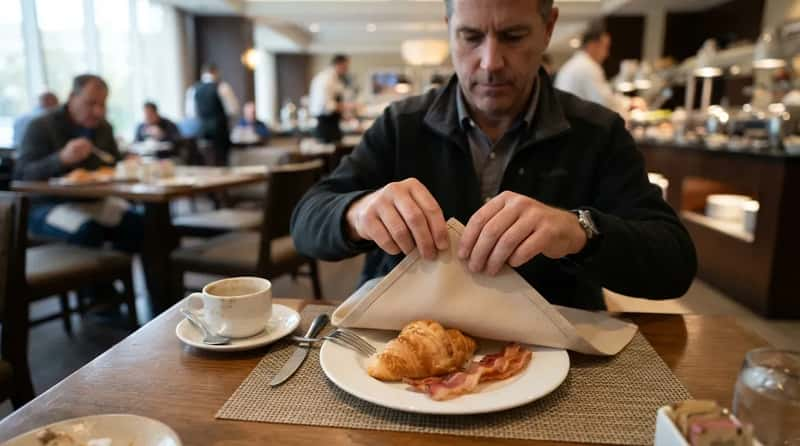
The pocketed croissant and the foil-wrapped bacon are classic hotel moves. They also take food out of the kitchen’s control. A Meliá executive cited by Travelbinger says food safety legislation imposes strict guidelines on hotels.
That’s why a manager can’t simply say yes to every takeaway request, even a small one. Another buffet habit worries kitchens even more.
#14 – Fingers, Samples, and the Tong-Free Tasting

The buffet runs on a quiet honor system. Guests are supposed to use the tongs, spoons, and sneeze guards as intended. Tasting a grape with your fingers or putting a slice back on the tray breaks that deal.
Many kitchens treat handled food as food to be thrown out. One person’s quick taste can mean a whole tray gets pulled. That adds to the waste, and the waste story gets bigger from here.
#13 – The Half-Empty Tray Panic, Five Minutes Before Close
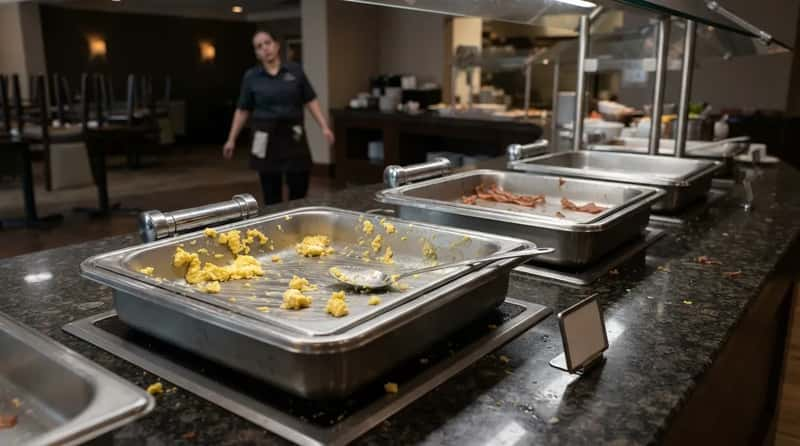
At 10:25 a.m., a hotel kitchen faces a no-win choice. Refill the tray and risk throwing it all out, or leave it low and risk a complaint. Generous displays, unpredictable guest counts, and the “always full” expectation all work against efficiency.
A 2025 study in the International Journal of Hospitality Management interviewed hotel managers and chefs about breakfast buffet waste. The tension, it turns out, is built into the format. The next trend may be even stranger.
#12 – The Empty-Room Effect: People Toss More When Nobody’s Watching

This research is older, but it’s hard to forget. Forbes reported on research showing that higher plate waste occurred most often when fewer hotel guests were in the breakfast buffet area. The suggested reason is that isolated guests felt less shame about throwing food out.
The same coverage cited a study finding that only a little more than half of the food put out in hotel buffets was actually consumed. The quiet early shift may be the quiet bin-filler. And one category of food is the biggest offender.
Fast Facts
- Plate waste rose when fewer guests were in the buffet area.
- The suggested reason: less social pressure, less shame.
- Only a little more than half of buffet food put out was actually eaten.
- The emptiest hours may quietly produce some of the fullest bins.
#11 – Bread and Hot Dishes: The Plate Items Most Likely to Be Left Behind
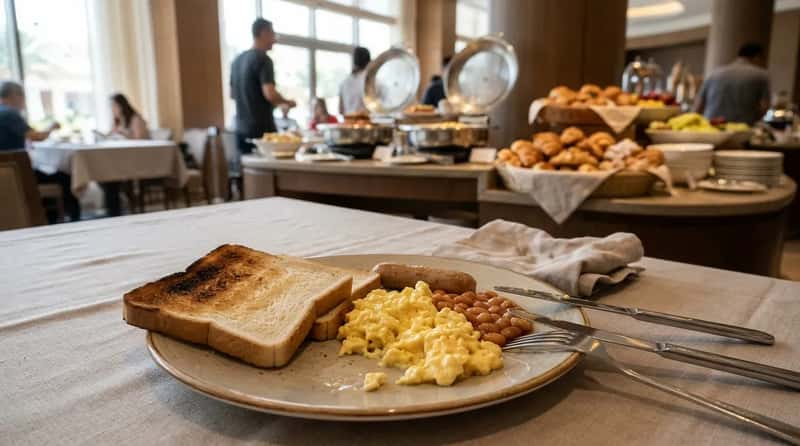
The usual suspects aren’t fruit or yogurt. A Dutch monitoring project found that most food waste is in bread and hot dishes, at 53.9 per cent per guest per breakfast. That’s the croissant you grabbed “just in case” and the eggs you didn’t finish.
On average, 62.2 grams per breakfast guest is left at the end of the buffet, equivalent to two sandwiches. Room service has its own kind of money trap.
#10 – The Room Service Sticker Shock Nobody Warned Them About

Many travelers see room service as a small treat. Hotels see a costly operation. Because of customized orders and delivery, prices are typically much higher than in the hotel’s restaurant, and a gratuity is expected in some regions.
The result is a classic front-desk argument over a bill that was clearly listed. Back downstairs, a lingering guest can cause trouble in the dining room too.
#9 – The Laptop Camper Who Turns Breakfast Into a Four-Hour Office

One coffee, one laptop, and a table held through the whole breakfast shift. It looks harmless. But for a small hotel café, a table is a limited resource.
Remember that the cost of a no-show depends on whether the table could have turned again. The same logic applies to a table that never turns. Many hotels say nothing because they want to feel welcoming, so the camper stays and the line grows.
Worth Knowing
- A table’s value comes from how often it turns, not just from one check.
- In a small café, one long stay takes up a bigger share of the room.
- Staff rarely speak up, because hospitality instincts pull the other way.
- Some venues try a laptop-free peak hour or a designated work corner instead of a confrontation.
#8 – The Swimsuit-to-Brunch Walk Through the Lobby

Pool-to-breakfast outfits split the room. Some guests call it relaxed vacation style. Others feel that wet towels and bare feet next to a nicely dressed table change the mood of a restaurant.
Dress policies vary a lot by hotel, and enforcement is awkward. Staff are often the ones who have to say something, and nobody signed up for that part of the job. Noise is the next flashpoint, and it’s the loudest one.
#7 – Speakerphone at the Breakfast Table

A video call over the omelet is a small thing, until everyone in the room hears your quarterly meeting. A hotel dining room is shared space, and sound travels.
Staff rarely correct it, because nobody wants to scold a paying guest. So the whole room absorbs it quietly. The next habit has a bigger cost, and it lands on the people serving the food.
#6 – Taking a Bad Day Out on the Server
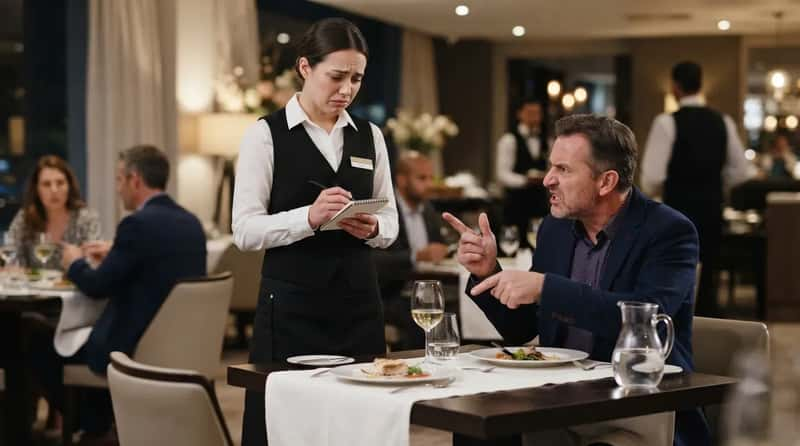
A late flight, a lost reservation, a cold room. The nearest person with a name tag gets the blame. A 2025 field-based review of hotel staff complaints lists guest-induced emotional exhaustion among its main themes.
Managers see it in turnover and burnout. And sometimes the unfriendliness runs the other way.
#5 – The Flat “Just One?” Greeting That Sours the Whole Meal

Open rudeness is rarer than indifference, and indifference is just as costly. Nearly two-thirds of survey respondents ranked “unfriendly staff” as the most frustrating part of any hotel stay, according to the “Hotels at Face Value” report from Alice.
One distracted or indifferent employee can undercut everything else the property has paid for. Now for the kitchen’s own mistakes.
#4 – Cooking for 200 When Only 140 Show Up
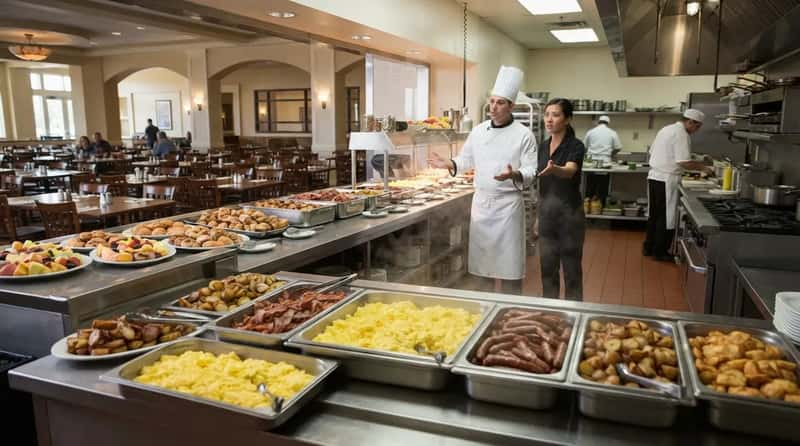
Not every habit on this list belongs to guests. One hotel-waste guide describes a typical miss: the kitchen preps for 200 covers, 140 show up, and the remainder becomes waste. It calls bad forecasting the root cause of most buffet waste.
The same guide says some hotels have reduced over-production waste by 40% just by getting forecasting right. That’s a fix with no change to the guest experience. A bigger blind spot comes next.
#3 – Throwing Food Out Without Ever Weighing It
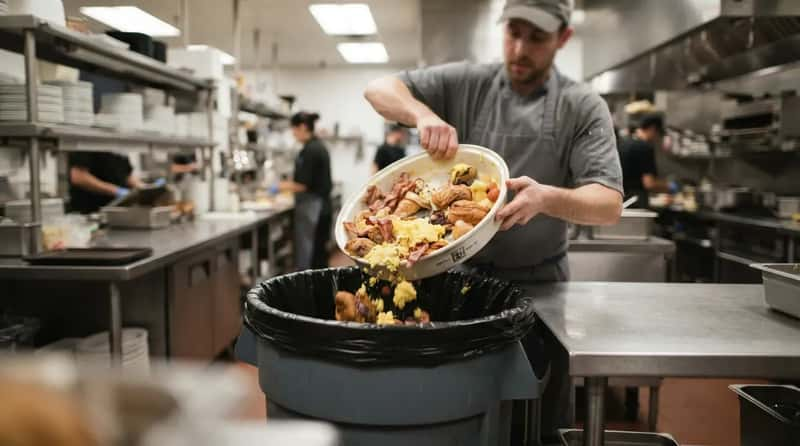
You can’t cut what you don’t count. A foodservice guide notes that most hotels don’t track buffet waste separately from other kitchen waste. Measurement alone can transform a breakfast.
Hilton’s Green Breakfast pilot led to a 62% drop in total breakfast waste in four months across 13 UAE hotels. At Novotel Brisbane, a breakfast focus led to 66% less waste by value. The two biggest problems on this list are also the quietest.
#2 – The Silent Walkout: Unhappy Guests Who Never Say a Word

The worst complaint is the one that never reaches the manager. A 2025 Zendesk study found 56% of unhappy customers never complain. They simply walk away. The write-up adds that 73% will bolt to a rival.
The same source says guests give restaurants roughly 2.2 chances before they are gone for good. Managers can’t fix what they never hear about. The last item is about what happens inside the team.
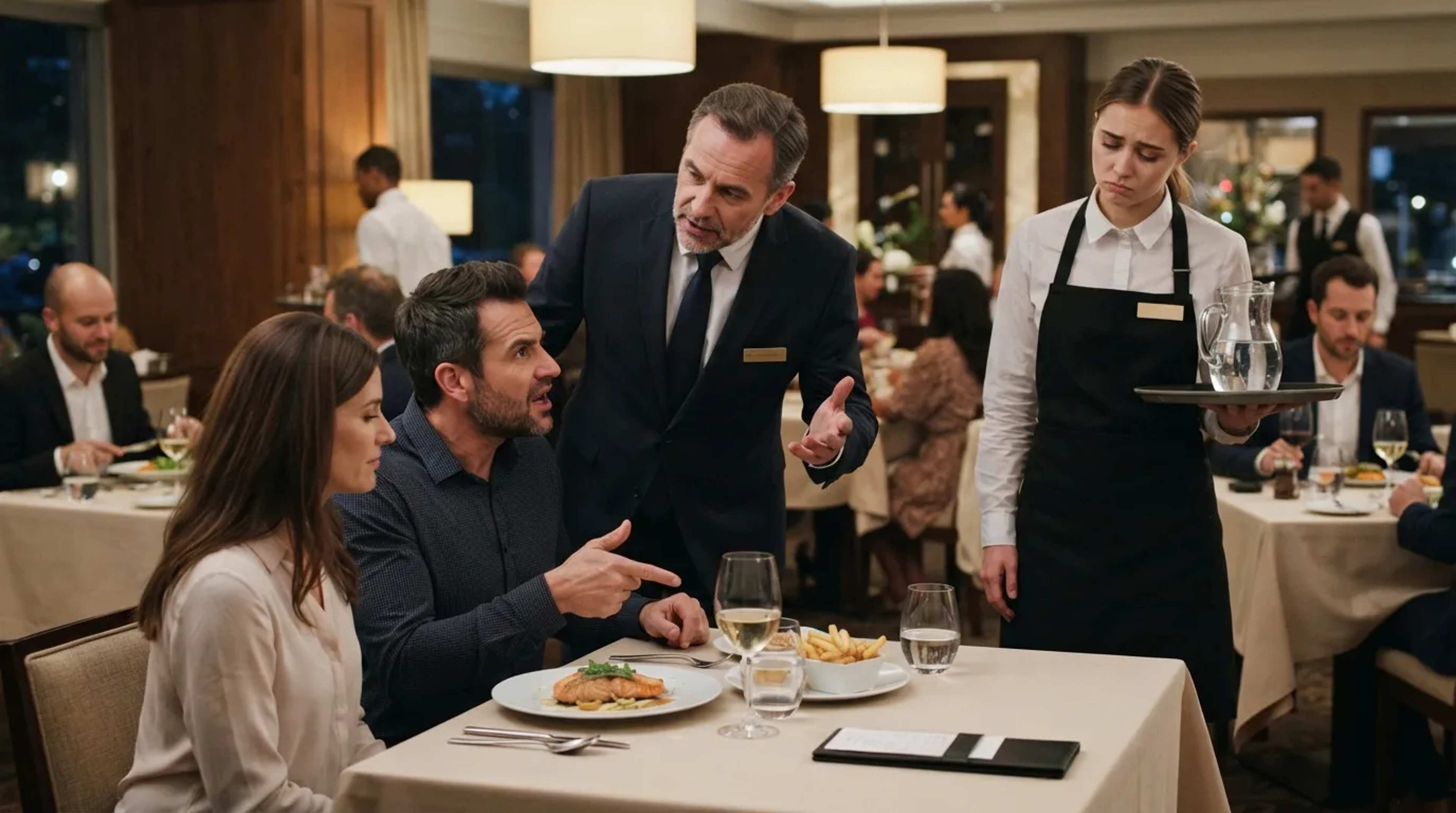
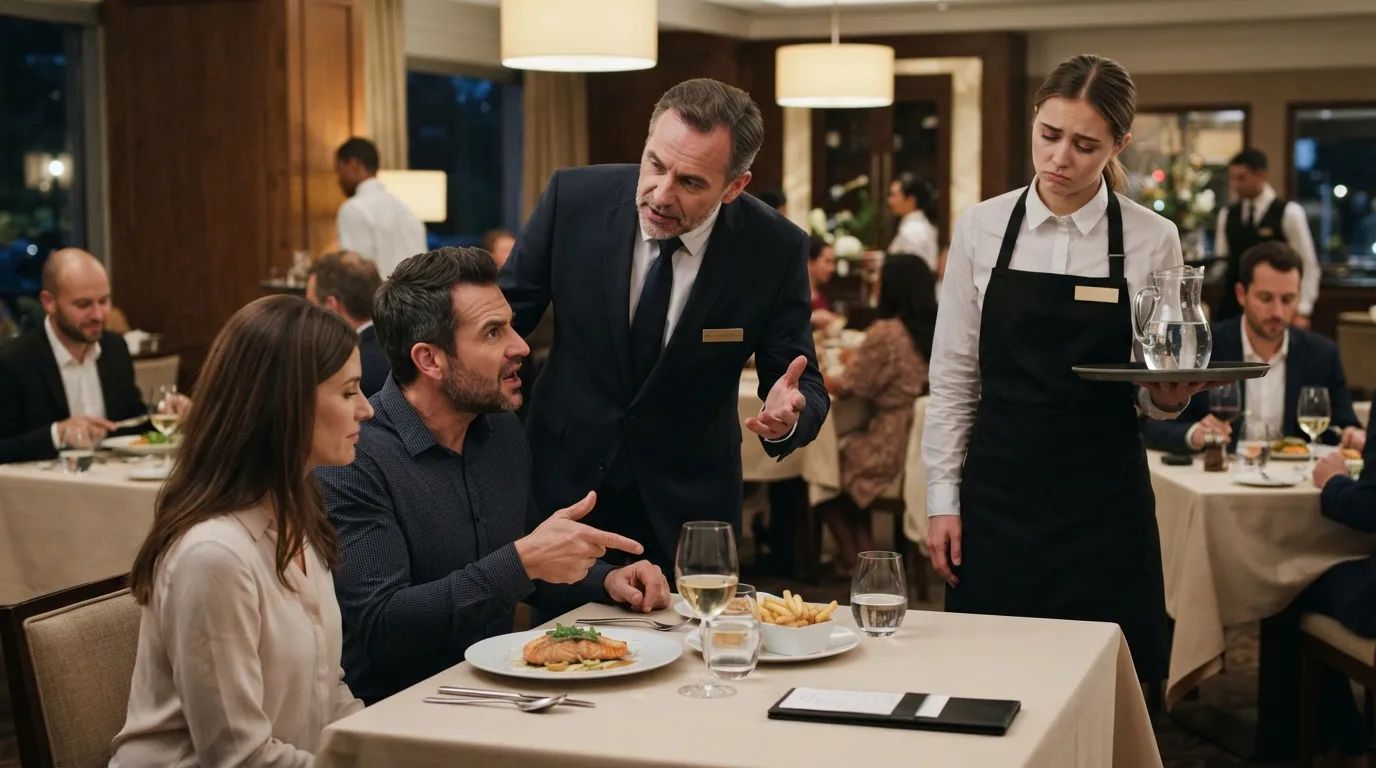
#1 – “Just Smile and Take It”: The Habit of Siding With the Loudest Guest
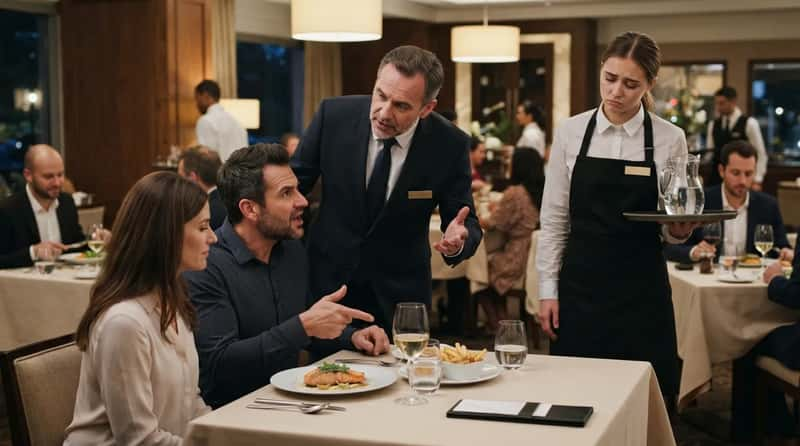
This one belongs to management, and it may be the most corrosive. A CHART hospitality piece argues that when leaders reward the loudest and most unreasonable voices by comping a meal or room, it sends a clear message to staff: absorb the frustration.
The article says this pattern contributes to burnout, high turnover, and a disconnect between frontline staff and leadership. A manager who ends it protects the people the next guest will meet.
The biggest surprise is how ordinary these habits are. A pileup on a plate, an unreturned table, an unspoken complaint, a server left to absorb the blame. None of them look dramatic, but together they add up to waste, lost covers, and tired teams.
Many of the fixes are small: a smaller plate, a text reminder, a better forecast, a manager who backs the team. Which one would you retire first?