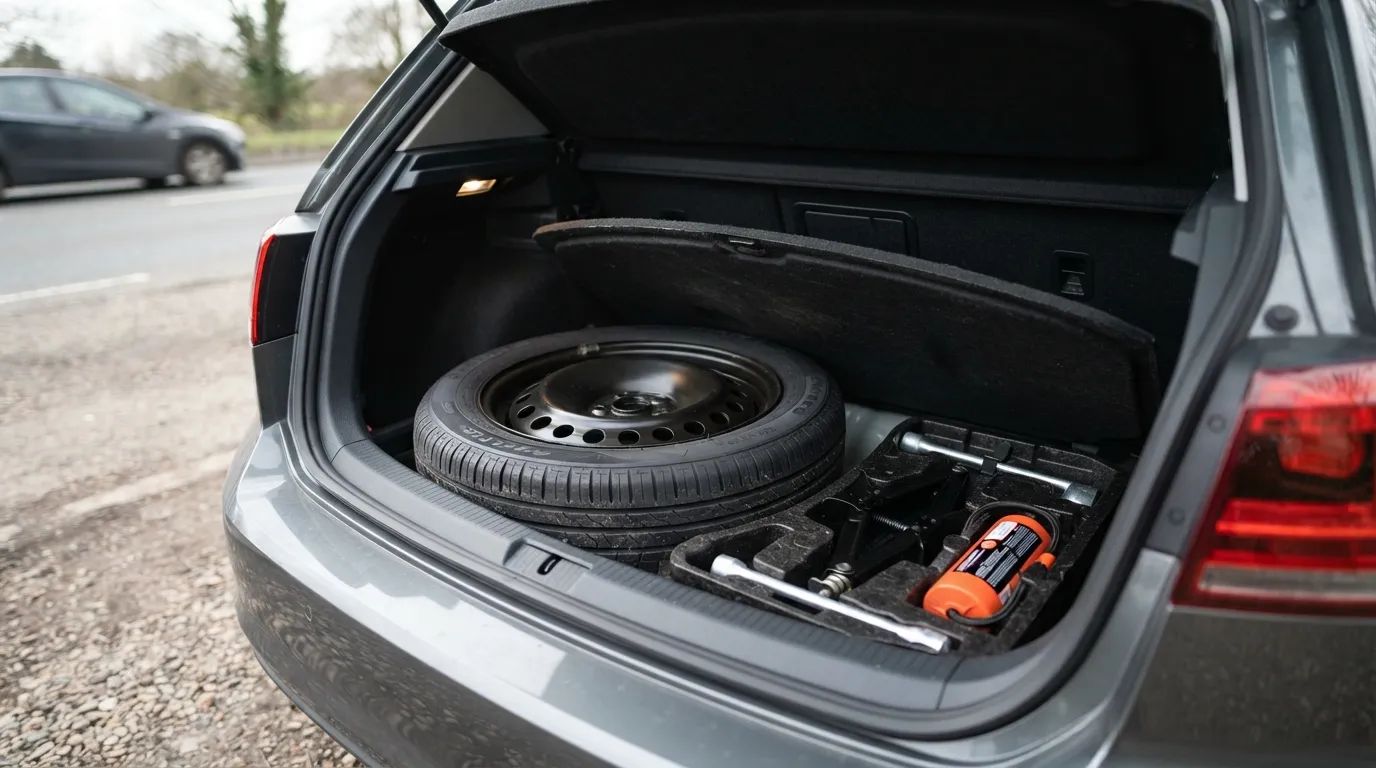
Most drivers think a spare tyre and some loose change in the cupholder is all the emergency prep they’ll ever need. They’re wrong, and the moment they find out is usually somewhere dark, cold, and miles from help.
The AAA fields more than 32 million roadside assistance calls a year, and NHTSA logged roughly 6.18 million police-reported crashes in the U.S. in 2024 alone. Experienced drivers have quietly turned their boots into survival kits, and the list below shows exactly what’s sitting in them.
#17 – A Proper First Aid Kit (Not a Plaster and a Prayer)
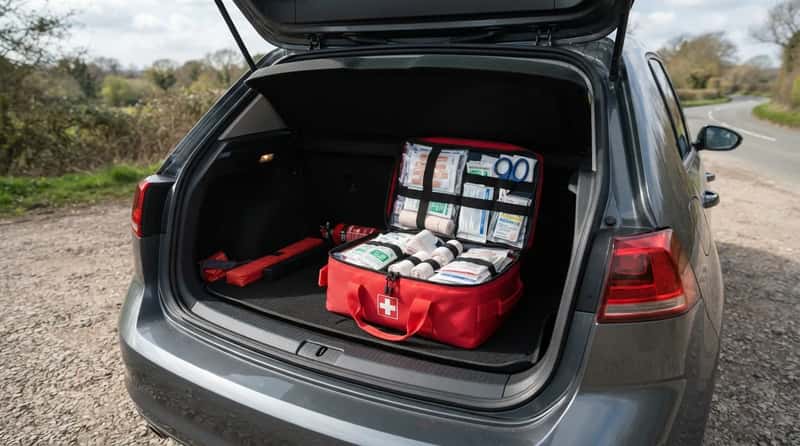
Most people carry a single plaster rattling around the glovebox and call it a first aid kit. That’s not preparation, it’s wishful thinking.
A proper kit needs plasters, bandages, antiseptic wipes, and scissors for the small cuts and bumps that actually happen. Add painkillers and antihistamines if allergies are ever an issue.
Check and restock it twice a year. A kit with expired antiseptic or missing bandages is just dead weight when you finally need it.
A first aid kit only patches you up once someone’s actually seen you’re in trouble. That’s where #16 comes in.
#16 – Reflective Warning Triangle
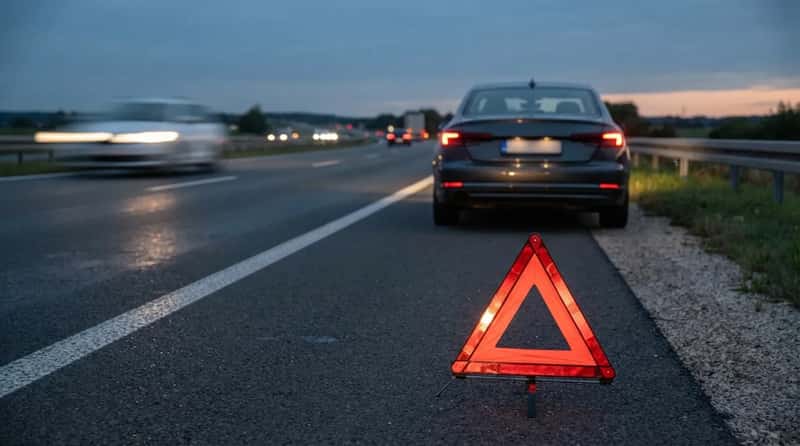
Breaking down on a fast road without a warning triangle isn’t just inconvenient, it’s genuinely dangerous.
Prop it up behind your car and it reflects headlights, flagging your presence long before a driver would otherwise notice you.
Most of Europe legally requires one in the car – yet plenty of drivers still skip it entirely.
The triangle marks your car. Something else needs to mark you.
#15 – High-Visibility Vest
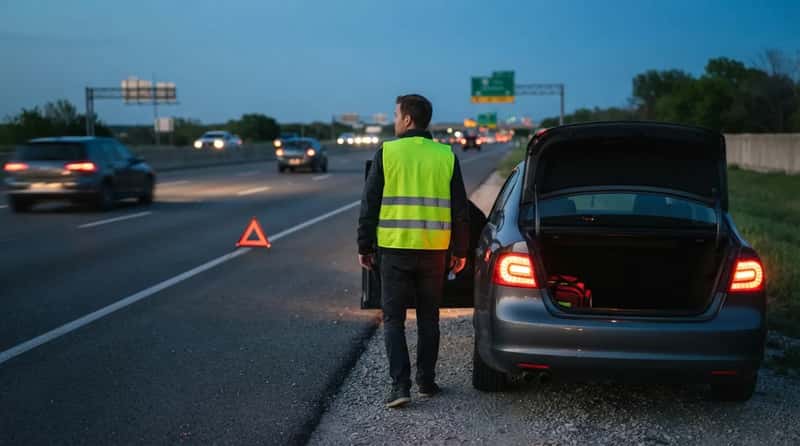
A triangle protects your car’s position. A hi-vis vest protects yours, and that difference has saved lives.
Throw it on the second you step outside a broken-down vehicle, especially in low light.
Between 2015 and 2019, 263 people died on Texas roadsides alone after their vehicles broke down. It’s a grim number that makes a £5 vest look like the cheapest insurance you’ll ever buy.
Now, what happens once it’s actually dark and you need to see what you’re doing?
#14 – A Reliable Torch (With Spare Batteries)
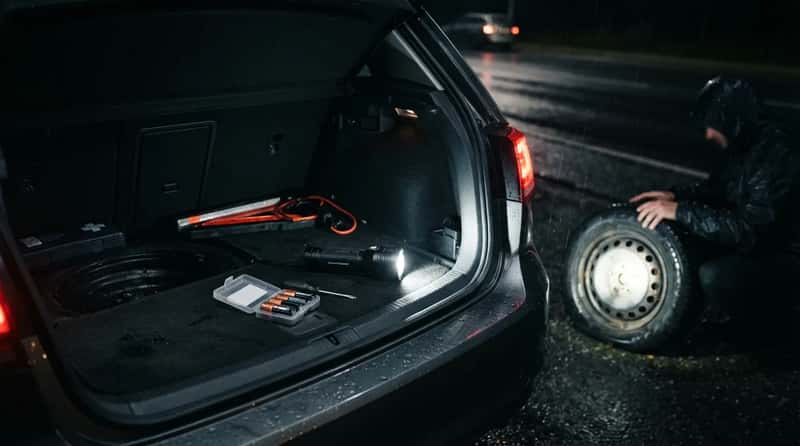
Your phone torch will die at the worst possible moment. Count on it.
A dedicated LED torch is brighter and more reliable, and spare batteries mean it never lets you down.
Test it every few months. Batteries corrode quietly inside the casing, and you’ll only find out they’ve failed when you’re crouched by a wheel at 11pm in the rain.
Visibility sorted. Now for the single most common reason drivers call for help at all.
#13 – Jump Leads or a Portable Jump Starter
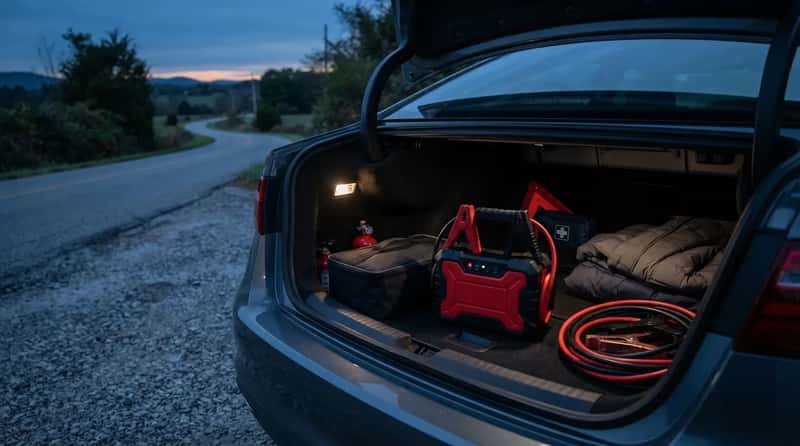
Dead batteries are the number one reason drivers call for roadside help, yet most boots are completely empty of anything to fix one.
Jump leads work, but they need a good Samaritan nearby, and that’s not guaranteed on a quiet road at midnight.
A compact lithium jump starter is the smarter modern option – no second car required, and it fits easily in a bag.
Fast Facts
- AAA fields more than 32 million roadside assistance calls in a typical year.
- Dead batteries, flat tires, and lockouts account for nearly half of all those calls.
- Vehicles between six and ten years old see the highest rate of battery failures.
Tyres are next, and the numbers here are genuinely alarming.
#12 – Tyre Inflator and Pressure Gauge
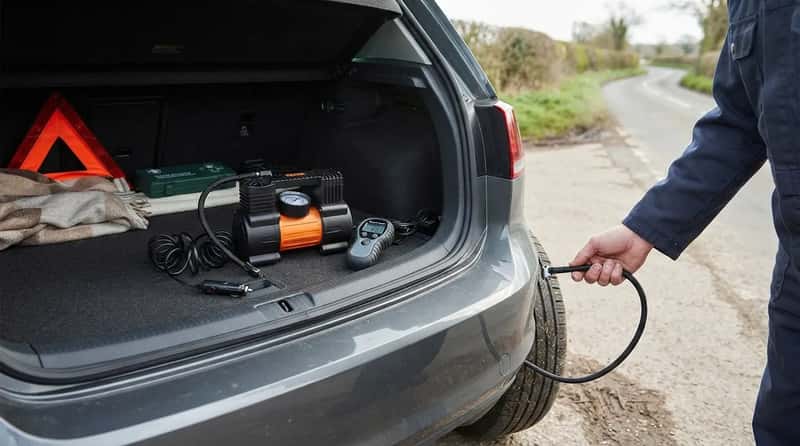
Tyre issues cause 35% of all roadside emergencies – more than one in three breakdowns.
A 12V compressor plugged into your car can re-inflate a slow puncture enough to limp to a garage safely.
Pair it with a digital pressure gauge – accurate to within 1 PSI, and it pays for itself in fuel savings alone.
But an inflator only helps if the tyre isn’t already destroyed.
#11 – Tyre Repair Kit or Spare Tyre
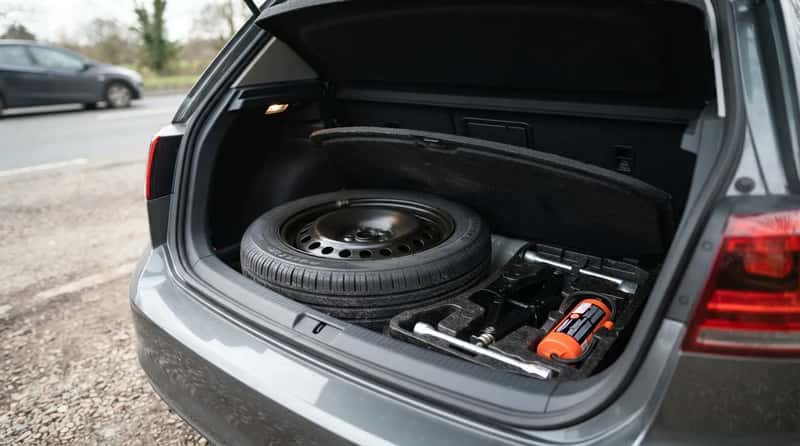
Most new cars no longer carry a full spare. Manufacturers swap it for a foam sealant kit to save weight.
That sealant can’t fix sidewall damage, and once you use it the tyre is often written off anyway.
Check your jack and wheel brace actually fit your current wheels. Plenty of drivers only discover a mismatch mid-breakdown.
Speaking of unpleasant surprises, what about the one that costs you the entire engine?
#10 – Engine Oil (At Least 1 Litre)
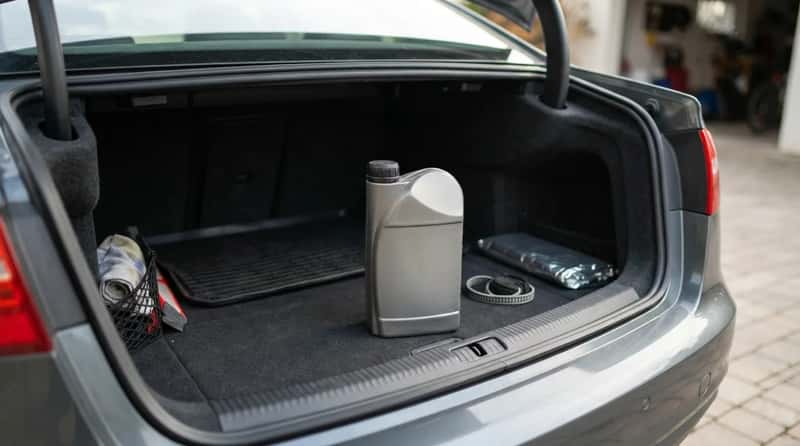
Driving on low oil is one of the fastest ways to destroy an expensive engine, and it’s entirely preventable.
Check your oil level when the car is cold, and top up if it’s below the mark on the dipstick.
Always carry the exact grade your car needs – it’s printed in the manual and usually on the filler cap itself.
Fluids aren’t just about oil. What happens when the temperature gauge creeps into the red?
#9 – Coolant
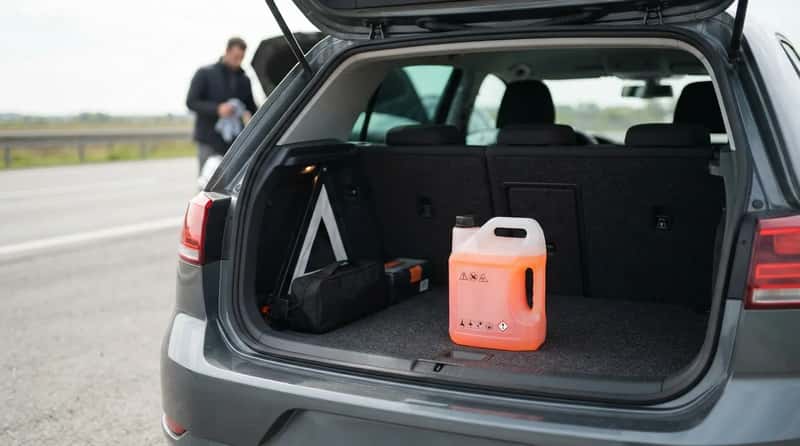
An overheating engine can crack a cylinder head – a repair that costs thousands.
Pre-mixed coolant is the safest option to carry, since undiluted concentrate can cause real problems in a hot, low radiator.
Never open a hot radiator cap without letting the engine cool first. A jet of boiling coolant is a serious burn risk.
Now, what happens when technology fails you completely?
#8 – A Paper Map
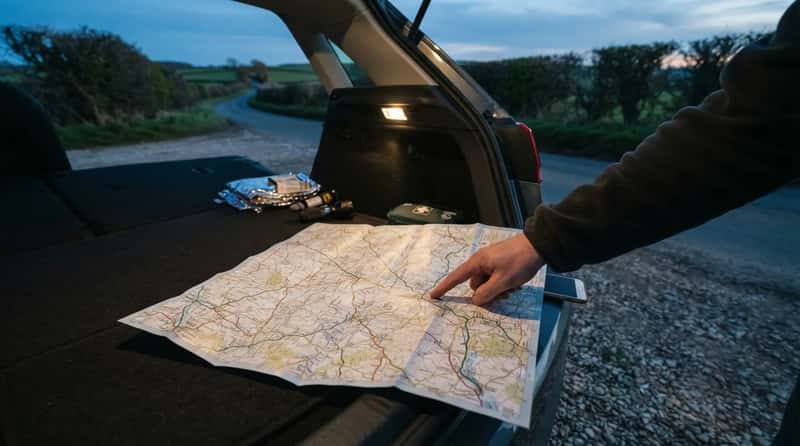
This one gets laughed at, until someone’s phone dies 40 miles from anywhere familiar.
GPS needs data, battery, and signal – three things a breakdown can take away all at once.
23% of breakdowns happen more than 10 miles from populated areas – exactly where signal is weakest.
Quick Compare
- Paper map: Never loses signal, never needs charging, works in total silence.
- GPS app: Faster and more precise, but useless without battery, signal, and data.
- Best move: Carry both, and let one back up the other.
What else do experienced drivers keep ready that most people forget entirely?
#7 – A Power Bank / USB Charger
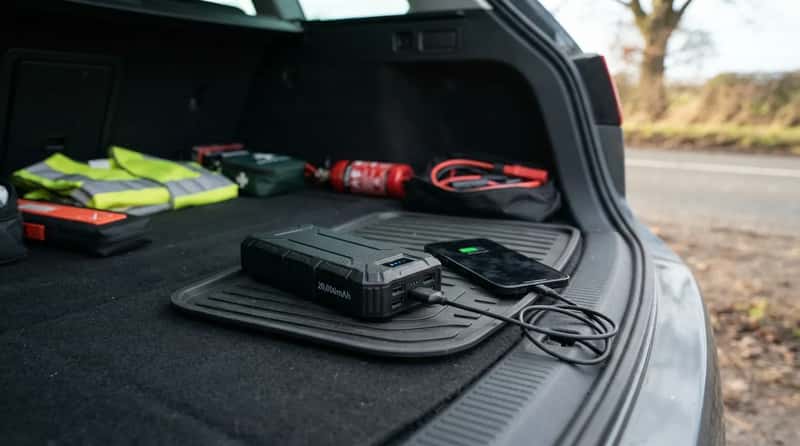
A dead phone turns a manageable breakdown into a genuine crisis.
A 12V charger only works while the engine runs, which is useless if the battery itself is flat.
Get a power bank with at least 20,000mAh – enough to charge your phone twice over before you find help.
Next: something most drivers assume is only a winter item.
#6 – An Emergency Blanket or Warm Layer
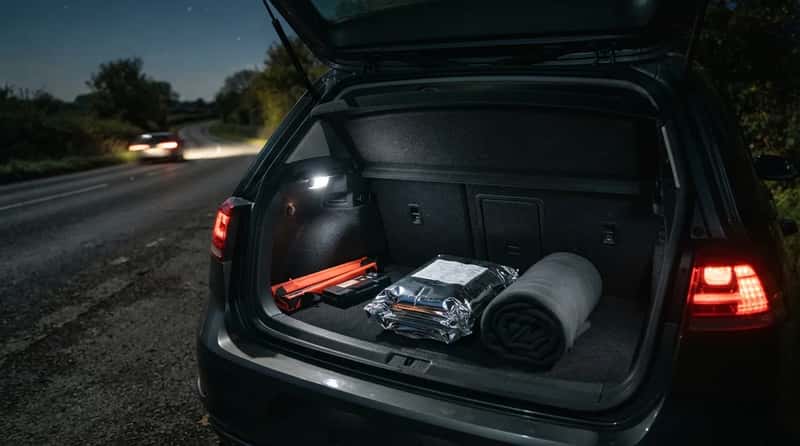
A breakdown at 2am in summer is still cold. A breakdown in October without a blanket is genuinely dangerous.
A compact Mylar emergency blanket folds to the size of a wallet and retains body heat remarkably well.
But warmth isn’t the only comfort issue at stake here.
#5 – Water and Non-Perishable Snacks
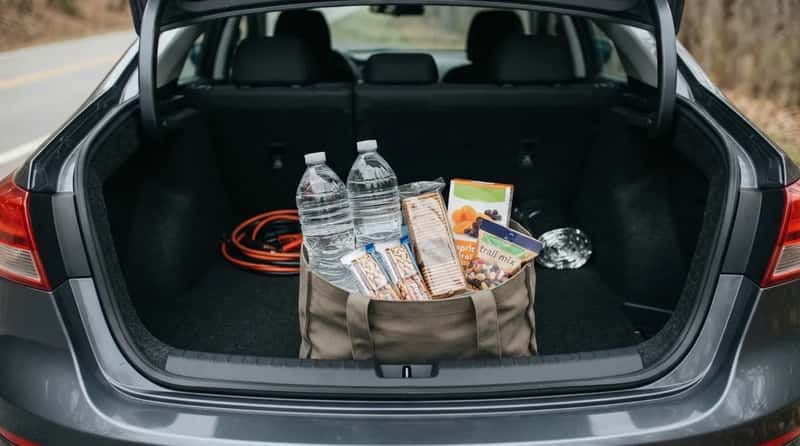
Being stranded without water moves from uncomfortable to medically serious faster than most people expect.
Keep protein bars or anything that survives heat, and skip chocolate that melts in a hot boot.
Rotate both every few months. Plastic bottles degrade in heat, and water left too long can pick up an unpleasant taste.
Almost there, but the next item is one mechanics quietly say is criminally underused.
#4 – A Basic Tool Kit and Multitool
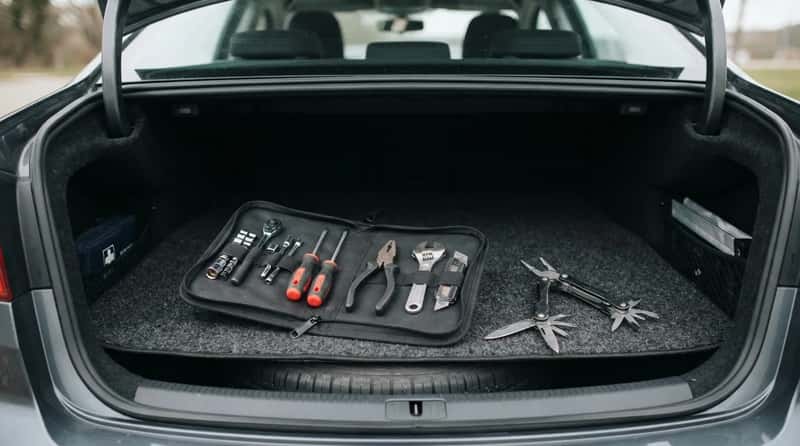
You don’t need to be a mechanic to benefit from a basic tool kit – you just need the right tool at the right moment.
A multitool with a blade and screwdriver can cut a seat belt or break a window in a genuine emergency.
A compact socket set, screwdrivers, and pliers handle most minor fixes, from a loose battery terminal to a rattling exhaust bracket.
The next two items are ones most drivers genuinely haven’t considered.
#3 – Sunglasses (Yes, Really – All Year)
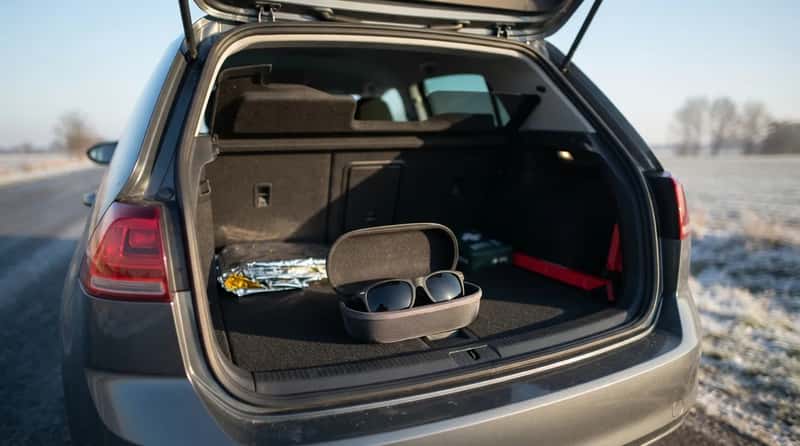
This feels too simple to belong on a serious list. It isn’t.
Low winter sun causes just as much glare as summer, sometimes more.
Keep a spare pair in the boot specifically – not the ones on your face – for the day you leave your usual pair at home.
Next: something your car almost certainly needs but nobody thinks to pack.
#2 – An Empty Fuel Can
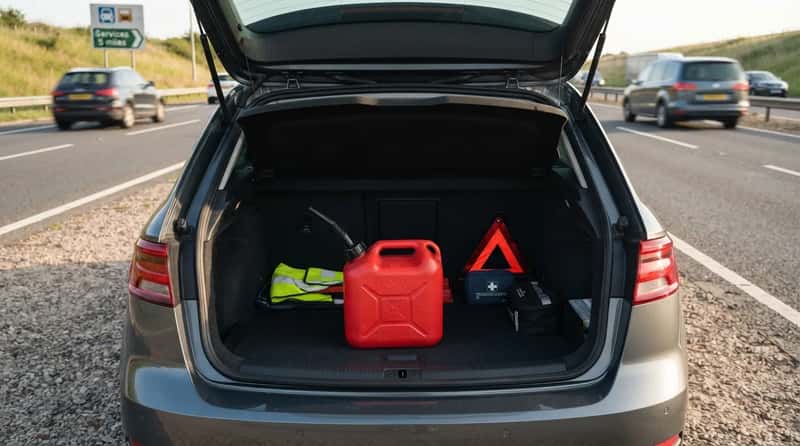
Running out of fuel feels like a rookie mistake, until it happens to you on a motorway miles from a services.
An empty can lets you walk to the nearest station and bring enough fuel back to get moving again.
The key word is empty. Never store petrol long-term in the boot for safety and legal reasons.
Now, the item that ties every single thing on this list together.
#1 – A Boot Organiser
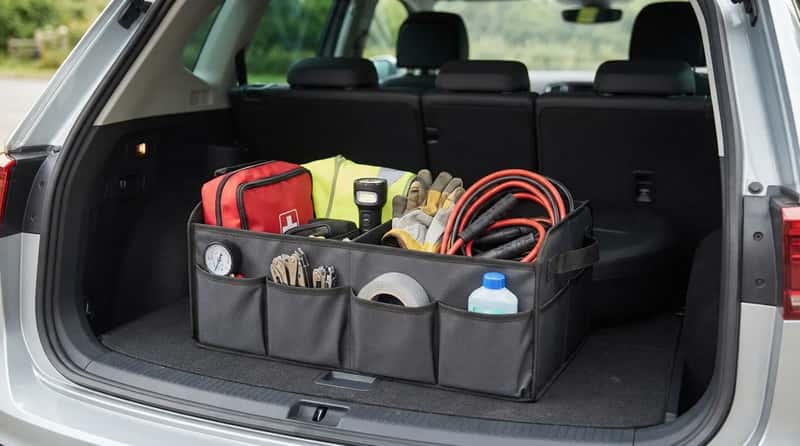
Every item on this list is useless if it’s buried under coats, rolling around loose, in the dark, under stress.
A proper organiser with fixed compartments means you can find your torch or first aid kit in under five seconds.
This is the one experienced drivers call non-negotiable. All the preparation in the world fails if you’re frantically emptying the boot at the roadside trying to find your jump leads.
Worth Knowing
- Fixed compartments stop heavier items like a jump starter crushing anything fragile.
- Keeping the torch and gloves in the top layer saves precious seconds in the dark.
- A collapsible design frees up boot space on the days you don’t need the full kit.
The Bottom Line
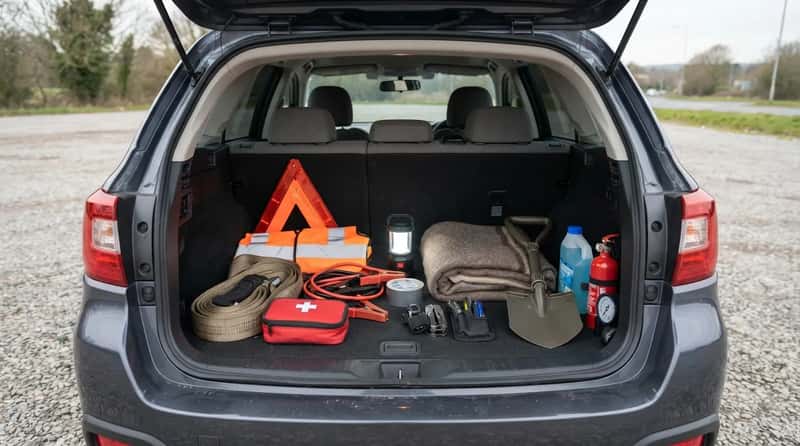
Most drivers are one bad night away from wishing they’d packed better. Your car is more than transportation, it’s a mobile shelter when things go wrong.
These 17 items aren’t about paranoia, they’re about the quiet confidence of knowing you’re actually ready. The most experienced drivers aren’t the ones who never break down – they’re the ones who are ready when they do.
Did we miss something you swear by? Drop it in the comments below.