You’ve seen this person at every gate. They look half-asleep, barely glancing up from a paperback, and somehow they end up with bin space, a smooth boarding, and a calmer morning than everyone around them. It isn’t luck, and it isn’t a secret club. It’s a handful of small habits that look like nothing from the line behind them.
Some of these moves cost nothing. A few can save a connection, a prescription, or hundreds of dollars. And one involves a gadget most of us toss into a bag without a second thought, right as the agent reaches for the tag.
#17 – They Size Up the Plane Through the Window Before Anyone Calls a Group
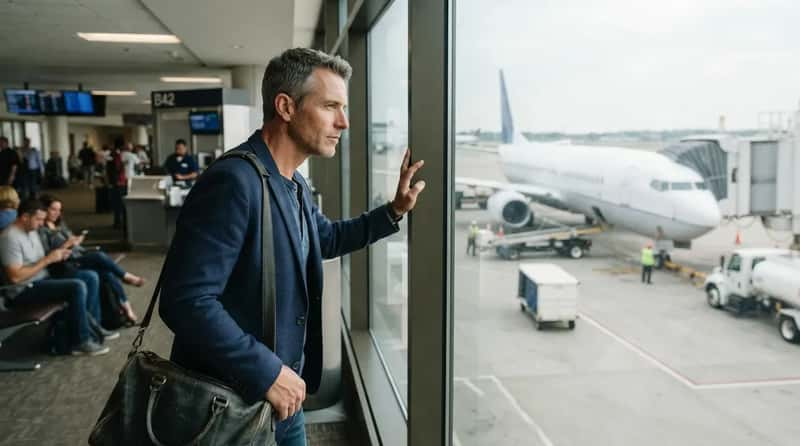
The person standing by the glass isn’t just killing time. Overhead bins aren’t the same on every aircraft, so travel writers suggest looking up which plane you’ll be flying and researching its bin size. The jet parked outside tells a veteran what kind of boarding they’re about to have.
The math is blunt. Bin space is limited, and on a full flight it may not cover every passenger’s carry-on. Experienced flyers do that arithmetic while everyone else scrolls.
The next move is one gate agents notice instantly.
#16 – They Stay Seated Until Their Group Is Called, Because the Agent Sees Everything
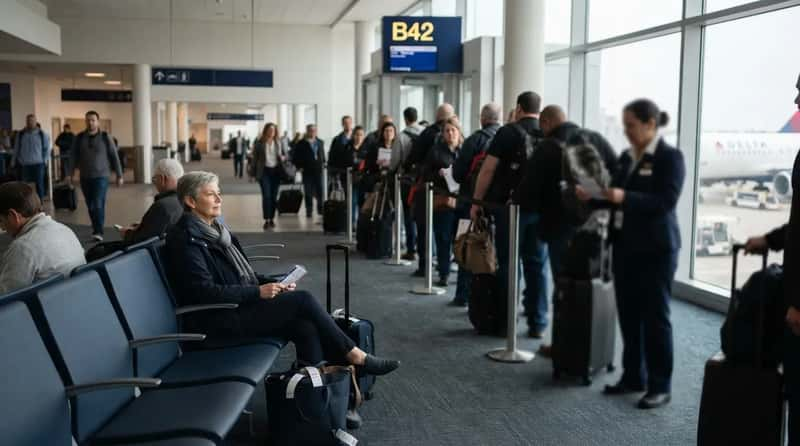
The calm traveler near the back of the gate area isn’t shy. Gate agents can see your exact boarding group or zone, so edging toward the door early rarely works. One industry newsletter calls sneaking ahead “highly frowned upon.”
Plenty of travelers swear that hovering at the door gets them a bin. Experts point to a different route: priority boarding, an airline credit card, or frequent flyer status.
Some agents may wave you ahead if boarding is running behind, but that’s a favor, not a strategy. The smartest flyers dodge the bin fight another way entirely.
#15 – They Walk On With Only a Personal Item and Skip the Gate-Check Lottery
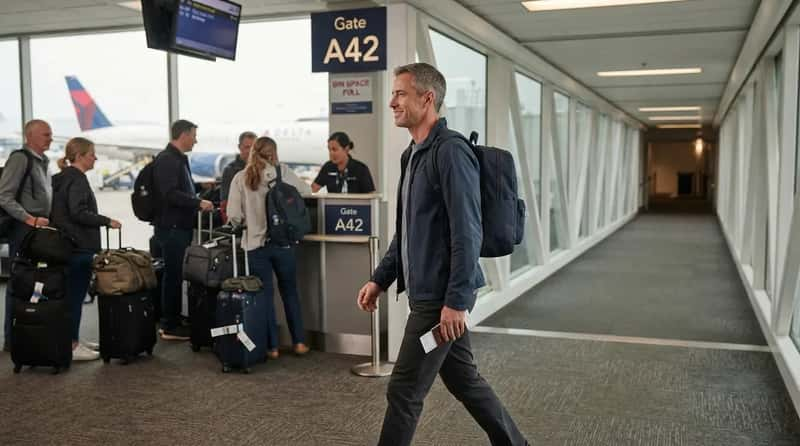
Watch who strolls past the “bins are full” announcement without a flicker of worry. If you only have one bag that fits under the seat in front of you, you can’t be forced to gate-check it. No tag, no waiting, no surprise.
The standard allowance is one carry-on and one personal item, and gate-checking applies only to bags headed for the overhead bin. Many airlines now charge even for the first checked bag, so more passengers are trying to go carry-on only.
That plan can quietly fall apart, and the next item is where.
#14 – They Re-Read Their Fare Rules, Because Basic Economy Can Turn a Carry-On Into an Expensive Surprise
Fare type decides far more than your seat. For most major carriers, your fare type determines your boarding group. That means the cheapest tickets often board when the bins are already crowded.
Some airlines then add a penalty. A United spokesperson confirmed that a Basic Economy customer who brings a full-size carry-on to the gate must pay the checked bag fee plus a $25 gate handling charge.
Fast Facts
- Your fare type usually sets your boarding group.
- Cheaper fares tend to board later, when bins are already filling up.
- United’s Basic Economy gate penalty: the checked bag fee plus a $25 handling charge.
- Policies differ from airline to airline, so each carrier’s rules are worth a quick look.
Carry-on rules on the cheapest fares keep changing from airline to airline. That’s why veterans check the current policy before every trip, not just the first one. At the gate, another announcement is about to split the crowd in two.
#13 – They Treat “The Bins Are Full” as Information, Not an Alarm
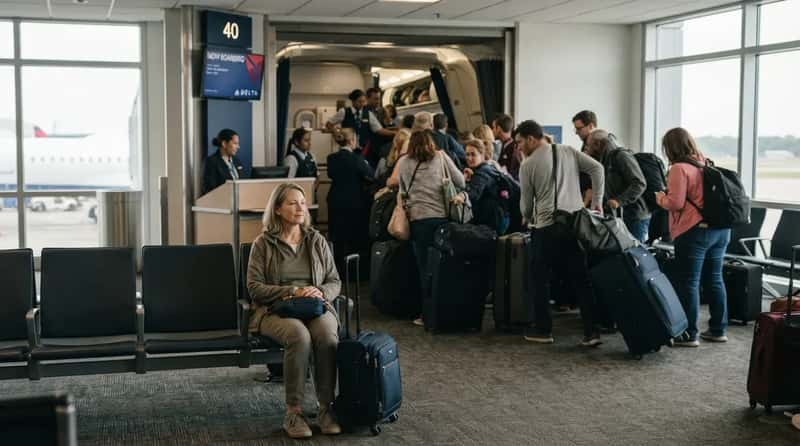
When the announcement hits, half the gate surges forward. The experienced flyer barely moves. A Delta spokesperson has explained the process: flight attendants notify the gate when bins fill, and larger roller bags that won’t fit under the seat get checked.
Not everyone trusts the announcement. Some passengers say they were forced to gate-check carry-ons and then found open overhead space on board.
Either way, the pros stay one step ahead, and the next step costs nothing.
#12 – They Volunteer to Gate-Check Their Bag for Free, and the Reason Isn’t Generosity
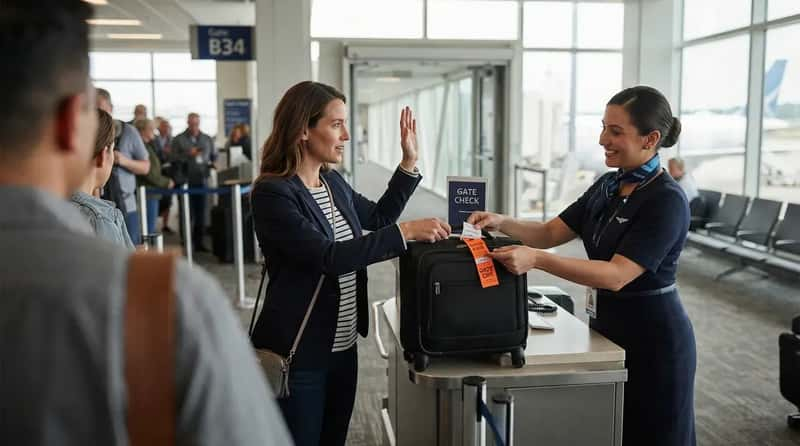
That hand raised at the podium looks like kindness. It’s strategy. Agents ask for volunteers because there are likely to be more carry-on bags than overhead bin space, which leads to unhappy passengers and slower boarding.
Most airlines will check a carry-on at the gate at no extra cost when a plane runs out of bin space, even airlines that normally charge for carry-ons. You skip the bin scramble and walk down the jet bridge with empty hands.
There’s a catch, though. Unlike a stroller you pick up on the jet bridge, a bag checked this way will most likely be routed to the baggage carousel. That detail matters a lot for the next flyer.
#11 – They Empty the Bag Before the Tag Goes On
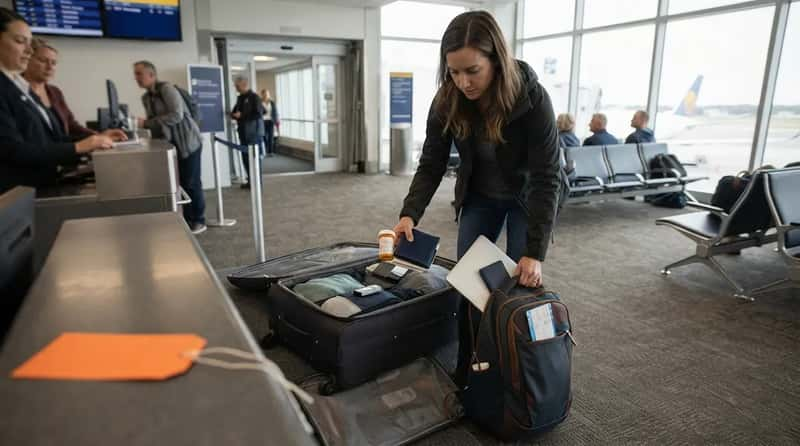
The moment before handoff is where veterans slow down. They pull out the laptop, medications, passport and valuables before the bag goes anywhere. Whatever stays inside is out of reach until you land.
Your bag is tagged at the gate or jet bridge and loaded in the cargo hold. On most domestic routes it comes back at the jet bridge on arrival.
Worth Knowing
- Documents first: passport and ID stay with you.
- Medications belong in your personal item, never in a bag headed for the hold.
- Laptops and other expensive electronics should come out too.
- Spare batteries and power banks have their own rule, which comes up at #1.
A prescription left in a side pocket is a small mistake with a big consequence. The next question separates the calm from the panicked.
#10 – They Ask “Will This Bag Make My Connection?” Before Letting Go of It
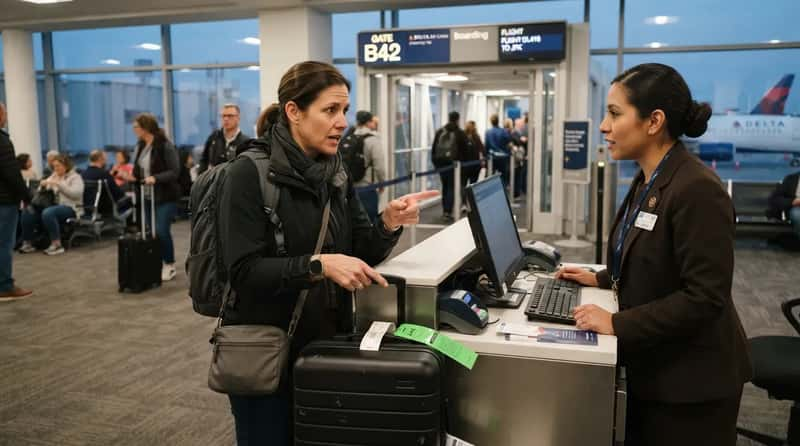
Families call free gate-checking a golden ticket. Connecting passengers know it can be a trap. The advice from travel writers is simple: if you have a connecting flight, verify with the gate agent that the bag will be able to make the connection.
This matters because a bag sent to the carousel can leave you facing a nasty decision at a tight layover. For a parent wrangling little ones, a free gate check is a relief. For a runner with eleven minutes to spare, it’s a gamble.
The next move happens days before anyone reaches the gate.
#9 – They Check In Early, Because Nobody Posts the Bump List

Here’s the quiet reason seasoned flyers hit “check in” the moment it opens. According to the Gate Access newsletter, passengers who check in last are more likely to be bumped. You’ll never see that list at the gate.
The same source adds that most airlines prefer not to bump children and families. That’s an industry claim, not a federal rule, so treat it as a tendency. Still, being early costs nothing.
And when a bump does happen, the prepared flyers aren’t the ones who lose.
#8 – They Don’t Grab the First Voucher Offered for Giving Up a Seat
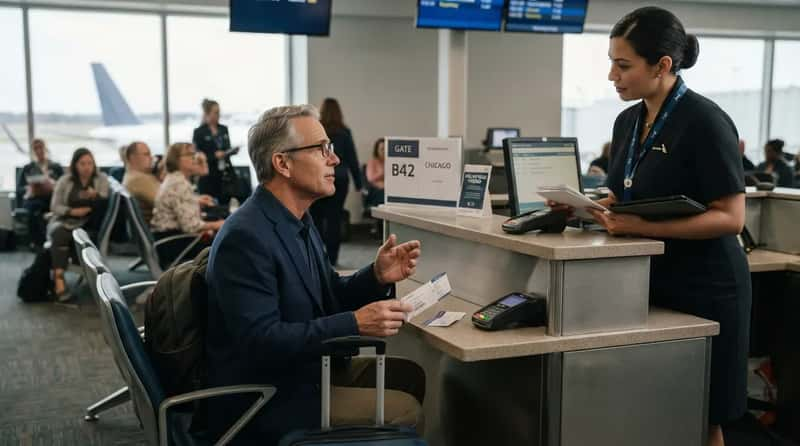
When the gate agent asks for volunteers, experienced flyers listen first and talk second. The Department of Transportation has noted that there is no limit to the money or vouchers an airline may offer, and passengers can negotiate freely. The first number is only an opening bid.
Some travelers see any voucher as free money. Others wince, because vouchers can come with restrictions and expiration dates. Smart volunteers ask whether cash is possible.
They also ask what the airline will do about the rebooking, the hotel and the meals. The next item shows what happens when nobody volunteers.
#7 – They Know Exactly What Being Bumped Involuntarily Is Worth
The flyer who stays quiet when the agent says “oversold” may know the formula cold. Under DOT rules, you get 200% of your one-way fare (max $1,075) for a 1-2 hour delay, or 400% (max $2,150) for a longer one. It’s the airline’s problem, and the law says so.
Timing matters, too. Payment is due at the airport in cash or by check, or within 24 hours if you’re rerouted before payment can be made.
It only applies when the reason was within the airline’s control, such as overbooking or an aircraft swap. Weather, security, or your own conduct don’t count. Now for what happens when the delay isn’t a bump at all.
#6 – They Know the Three-Hour Line That Turns a Delay Into a Refund
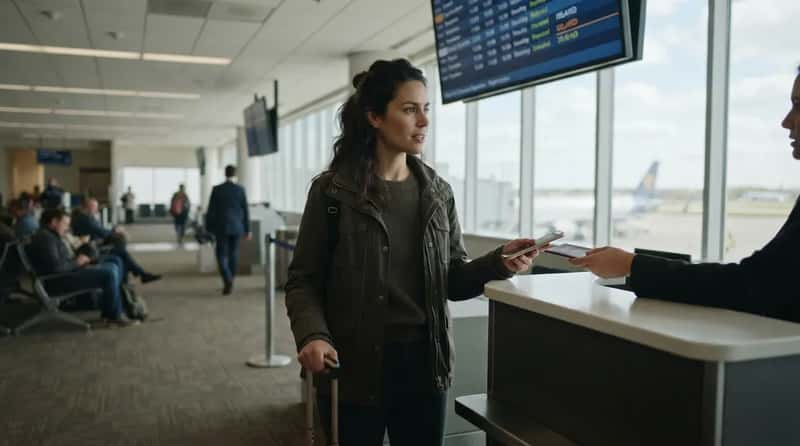
On the departure board, a delay is just a number. To a veteran, it’s a threshold. Once a delay reaches three hours on a domestic flight (six for an international one) and you choose not to travel, the automatic refund rule kicks in. That includes nonrefundable tickets.
Here’s the part most people don’t realize: if you accept the airline’s rebooking or take the rescheduled flight, you waive your right to a refund.
Refunds take seven business days for credit cards and 20 calendar days for cash, check or debit. The smartest flyers also know where to stand while they decide.
#5 – They’re Already on the App While the Rest of the Gate Lines Up
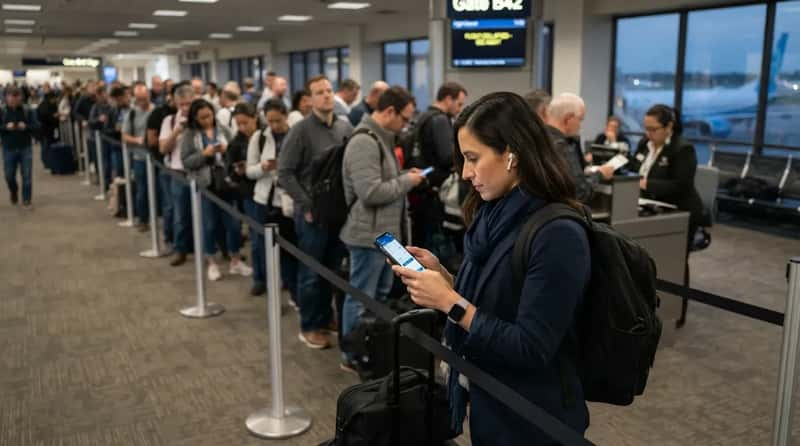
When a flight collapses, the scene is predictable. Within minutes, there can be a 200-person line snaking away from the gate agent. The veteran joins the line, then quietly opens a second channel.
The advice is to get in line but also chat with an agent on the airline’s app or call the main customer service number, which may get you help faster. If you booked through a travel agent, call them right away.
Some travelers think the gate line is the only legitimate route. Experienced ones run every channel at once. The next question is one most people never think to ask.
#4 – They Ask the Agent Exactly Why the Flight Is Late
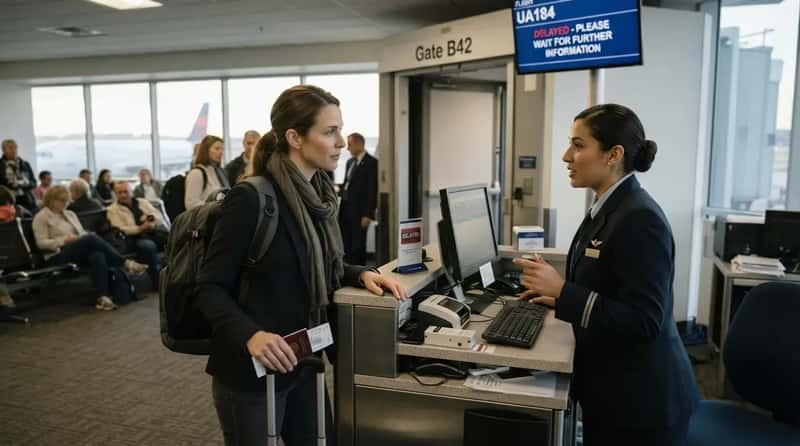
It sounds like small talk. It isn’t. Claim guides advise you to note the reason given for the delay and ask a gate agent if it isn’t clear. The cause matters: weather generally means no compensation, while a controllable problem like a mechanical issue or crew trouble can open more doors.
Many major airlines have promised meals or hotel help when a delay is within their control. But they can only do that if the reason is on the record, and the gate is where it first gets said out loud.
That leads to a hard truth about money.
#3 – They Don’t Wait at the Desk for a Delay Check That Doesn’t Exist
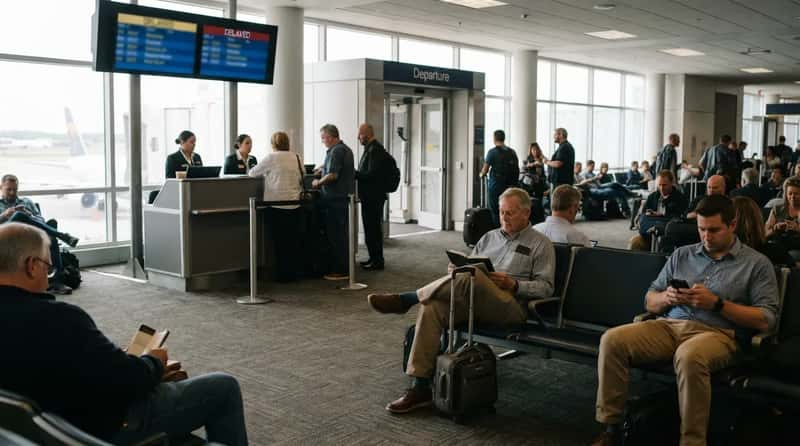
Many travelers assume a long delay means a payout. The reality is blunter. No federal cash compensation exists for a delay you fly through, and the US has nothing like EU261. Experienced flyers don’t spend an hour in line chasing it.
Europe works differently. EU Regulation 261/2004 provides fixed payouts of €250 to €600 for qualifying delays and cancellations.
Quick Compare
- Europe (EU261): fixed payouts of €250 to €600 for qualifying delays and cancellations.
- US, long delay: no federal cash compensation, even when the airline caused it.
- US, involuntary bump: 200% or 400% of your one-way fare, capped at $1,075 or $2,150.
In the US, airlines aren’t required to pay cash compensation for a delay, even one they caused, and a proposed federal rule on the subject was withdrawn in 2025. Knowing that saves the argument, and the energy, for what actually works. Next up is a plane that breaks the usual bag rules.
#2 – They Pack Soft When the Gate Shows a Regional Jet
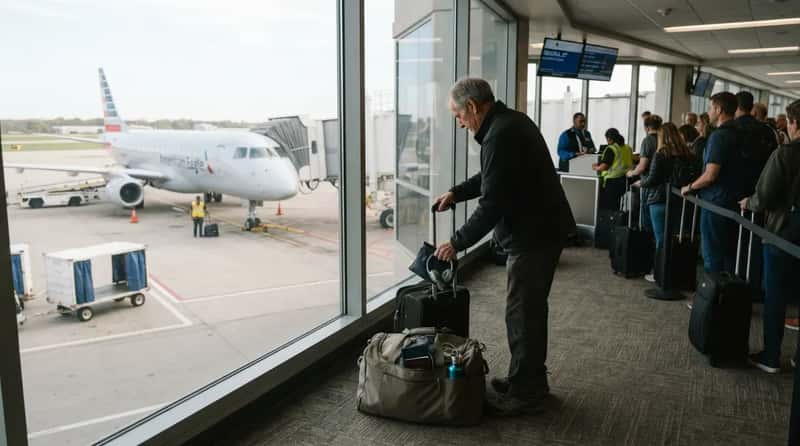
One glance at a small plane through the glass, and the veteran starts adjusting. Even compliant carry-ons won’t fit in some regional jet bins. American Airlines has said that customers may be asked to valet check larger carry-on bags before boarding smaller regional aircraft.
The consolation is that most regional carriers gate-check full-size bags for free. So the smart move is a bag that can be handed over in seconds, with everything important already pulled out.
But the single most overlooked habit is still ahead.
#1 – They Pull the Power Bank Out Before Any Bag Leaves Their Hands
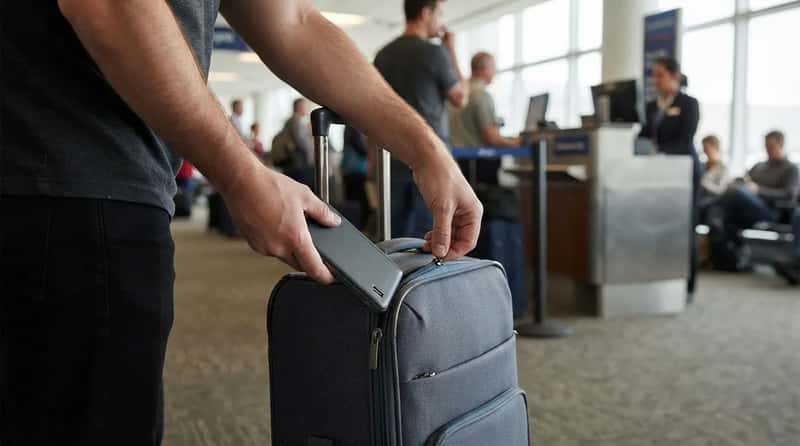
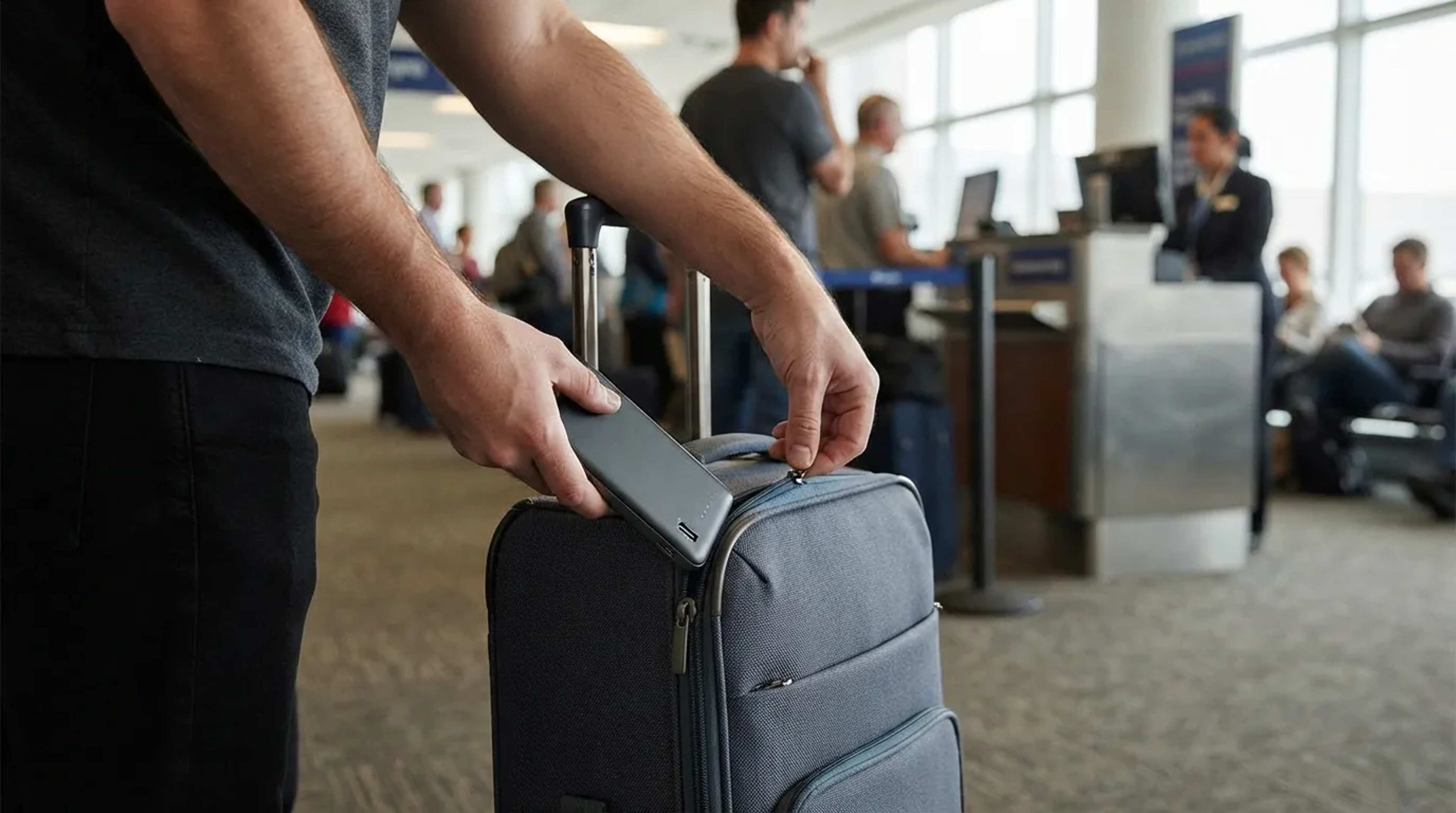
This is the quiet move that matters most. The FAA treats power banks, portable chargers and spare lithium batteries as spare batteries, so they must stay in the cabin. That way the crew can respond if one overheats, catches fire or starts producing smoke. A bag in the cargo hold has no crew nearby.
If your carry-on is gate-checked, you must remove all power banks and spare batteries before handing over the bag. Power banks are prohibited in checked baggage, and 100 watt-hours or less is generally permitted in the cabin without advance approval.
Many airlines also set stricter limits on how many power banks each passenger may carry, so check yours. It takes ten seconds at the gate, and nobody behind you will ever notice.
None of these moves look dramatic. That’s the point. The flyer who skips the bin scramble, pulls the power bank, and knows the three-hour refund line isn’t lucky. They just read the gate better than the crowd behind them.
The biggest surprise is how much of this comes down to rules most people never look up, from the $2,150 bump cap to the fact that US law has no EU-style delay check. Which of these have you watched a stranger learn the hard way at your gate?