Most flyers over 65 believe a senior boarding line is waiting at the gate, but it mostly doesn’t exist. That one mistake leaves them in the same crowded jet bridge scrum they hoped to skip.
Early boarding is tied to needing extra time, not to a birthday. Here’s what federal rules and the airlines’ own policies really say, starting with a reality check and ending with a rule almost nobody knows.
#14 – The Senior Boarding Line That Doesn’t Exist
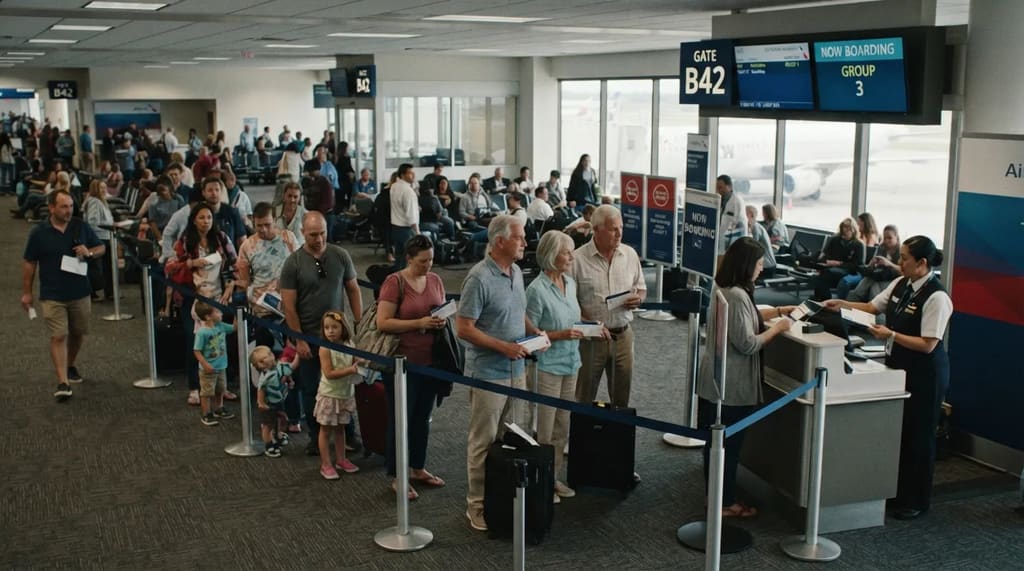
Turning 65 does not hand you a secret lane at the gate.
Southwest says it has no special boarding for seniors. The boarding orders for Delta, United and American all include an assistance-based preboarding step, and age is not the trigger.
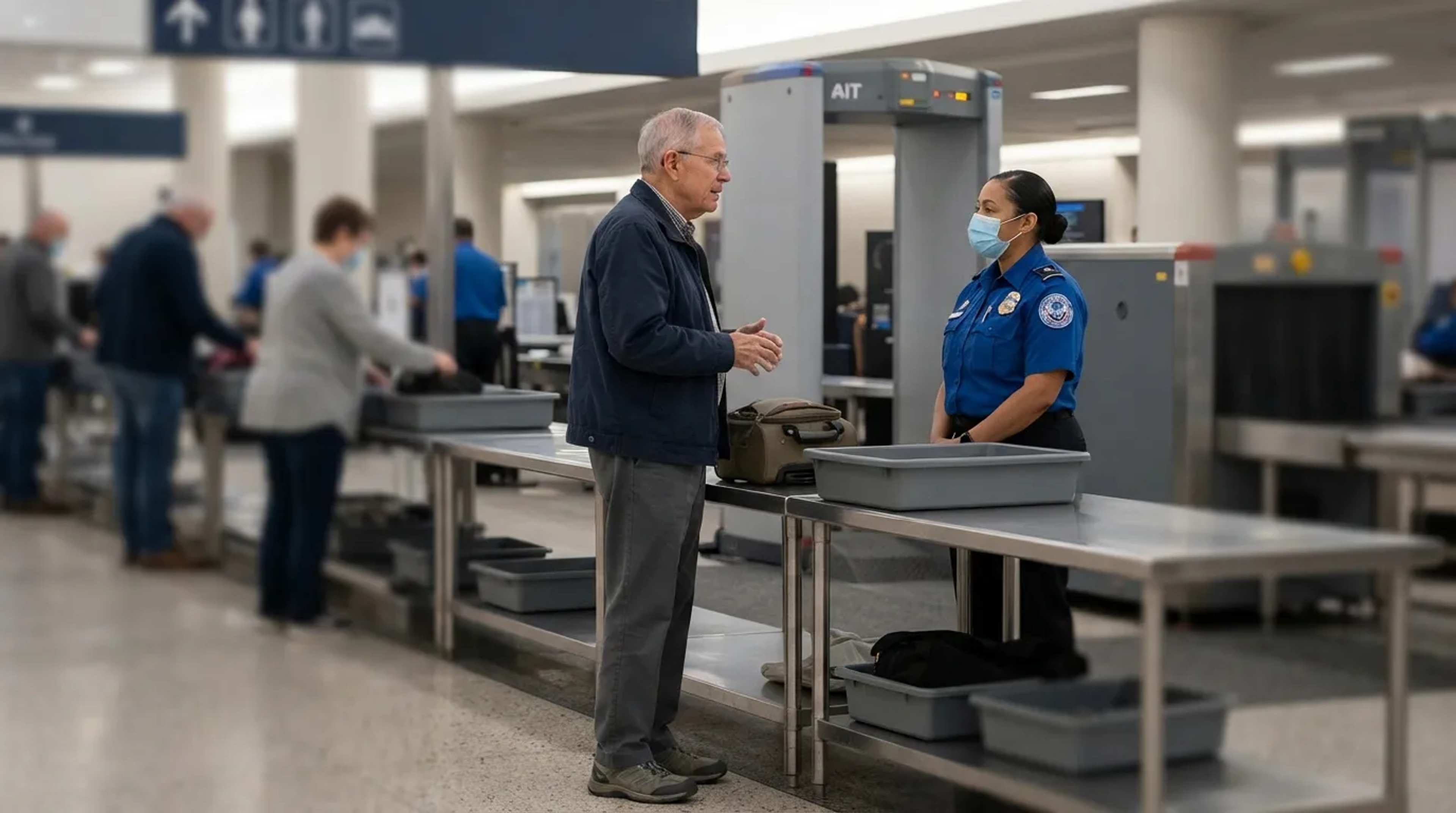
That means the gate agent isn’t checking birth dates. The one age-based perk is TSA’s expedited screening courtesy for passengers 75 and older.1
So the first rule of etiquette is a reality check. A spry 68-year-old boards with the group printed on the boarding pass, while a younger passenger who needs extra time can use the preboarding step.
At a Glance
- Age alone does not qualify you for preboarding.
- Need for extra time or assistance is what counts.
- The age-based perk is at security: TSA’s courtesy for passengers 75 and older.
- Your boarding pass group applies unless you ask otherwise.
Standing at the gate and waiting for a “senior call” is the most common mistake. The next rule shows what to do instead.
#13 – Say the Words Before Boarding Starts
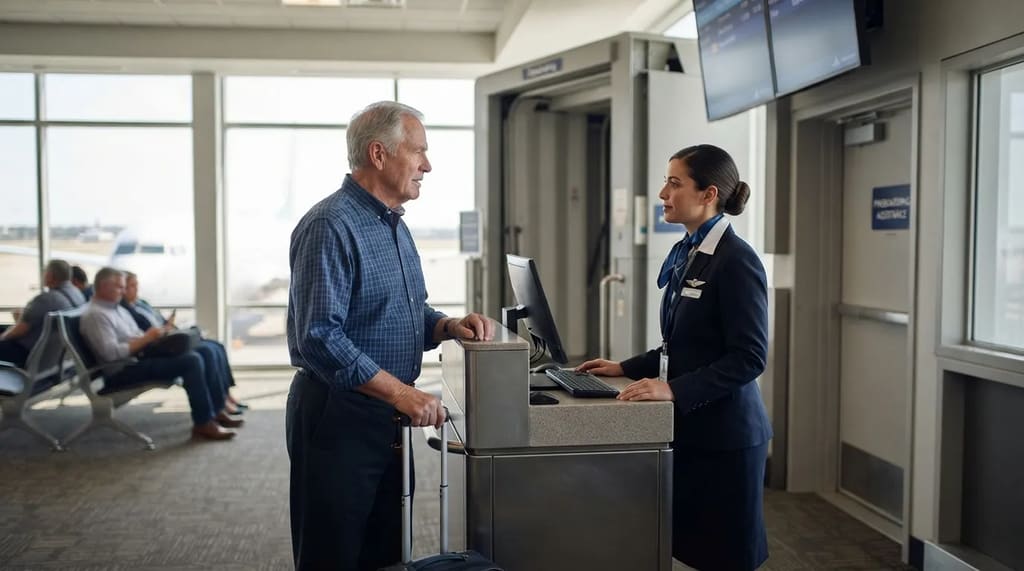
The step that unlocks everything is one spoken sentence.
Airlines must offer preboarding to passengers with a disability who self-identify at the gate as needing additional time or assistance to board, stow accessibility equipment, or be seated. The key word is “self-identify.”2
Nobody will assume it for you. At American, preboarding for special assistance has to be requested, and no one calls your name for it automatically.
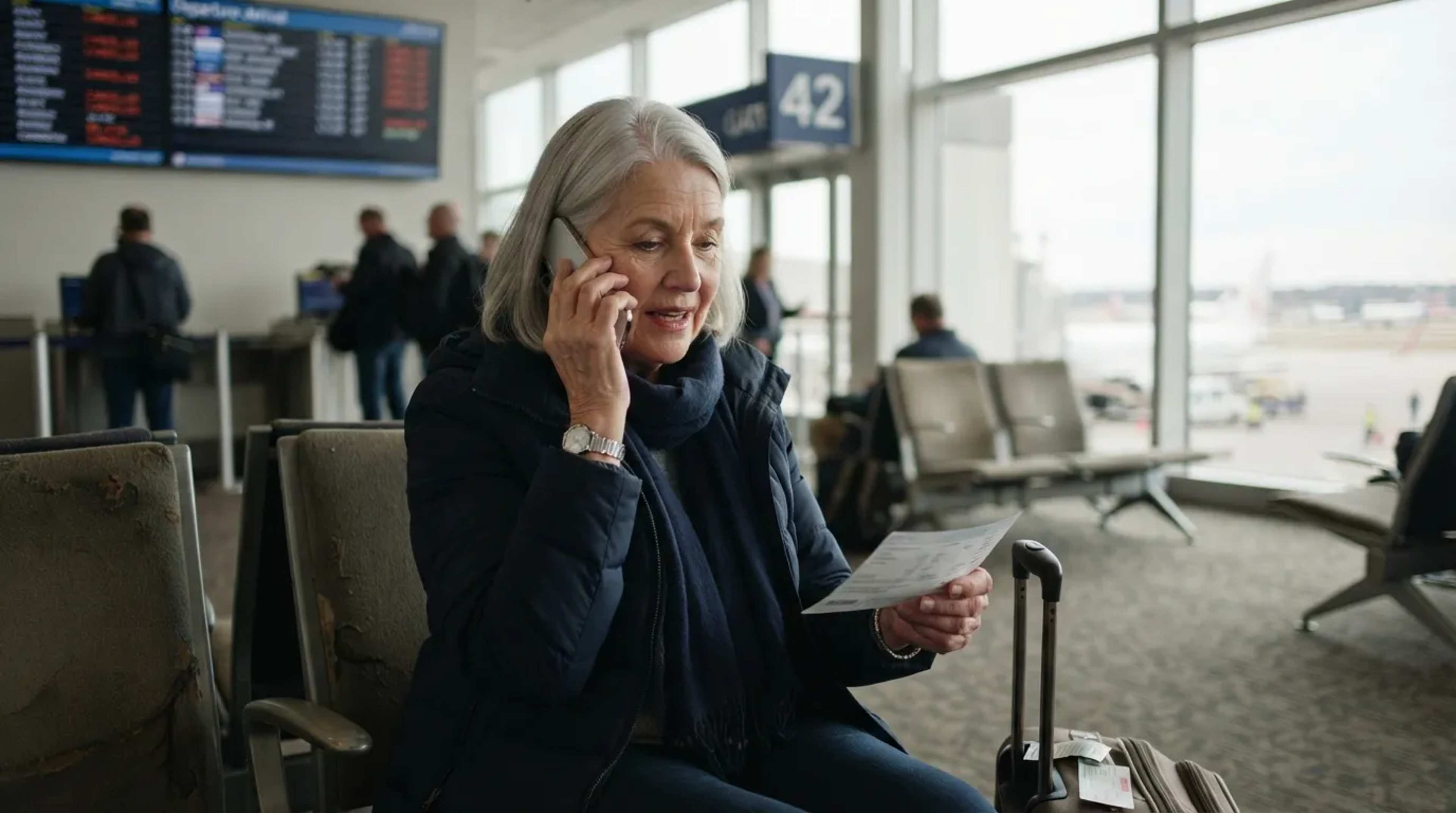
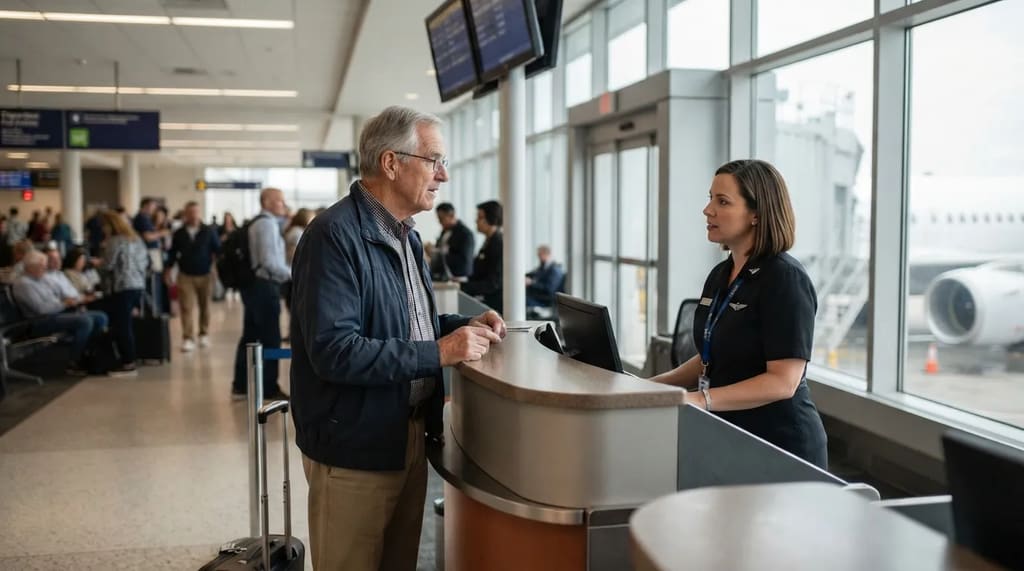
Walk up before boarding begins and say you’d like to preboard because you need extra time to get to your seat and get settled. That is the whole script.
But how you word that sentence matters more than most people realize.
#12 – Be Specific About What You Need
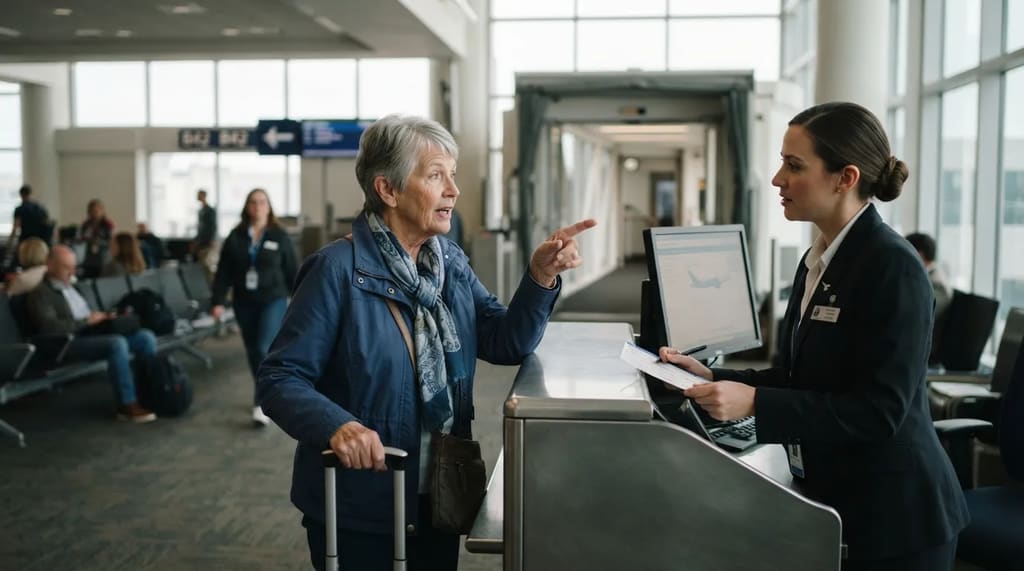
Vague requests tend to get vague help.
The Department of Transportation advises being as specific as possible about the type or level of boarding assistance you need. Describe it in plain terms, such as extra time on the jet bridge or a hand with a carry-on.
Preboarding can also help you secure stowage for an assistive device, or give you easier access to overhead compartments. If that’s your goal, say so at the desk.
DOT’s tips tell passengers to advise gate personnel of any assistance they may need, including preboarding, carry-on help or help moving within the aircraft. The law does not obligate carriers to provide services that don’t relate to the passenger’s disability.
Get the wording right and you still have to get the timing right, and that’s where the politest flyers lose out.
#11 – Don’t Wait for the Announcement
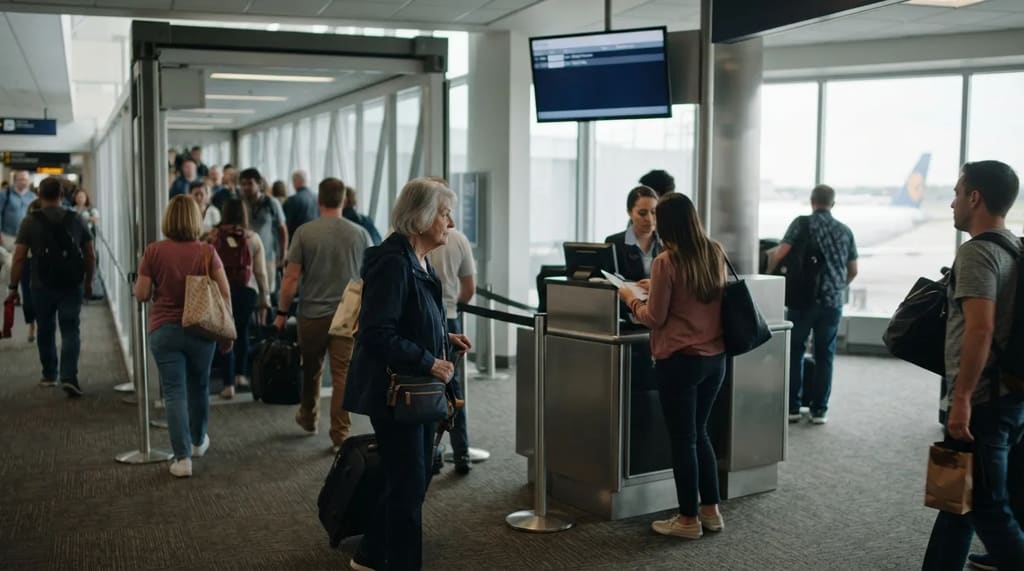
Waiting politely for your turn is the costliest habit of all.
If you wait until your zone is called, the preboarding window has already closed, and you’re stuck in the shuffle you hoped to skip. The agent can’t board you early once the crowd is already moving.
DOT’s own notice on preboarding treats a gate announcement as something a carrier may choose to make.3 In other words, don’t count on hearing one.
One advocacy guide suggests being at the gate 15 minutes before boarding begins, which is typically 30 to 40 minutes before scheduled departure. That guide is several years old, so treat it as a rule of thumb.
Next comes a mistake that sends people digging through their bags at the podium.
#10 – Leave the Doctor’s Note in the Drawer
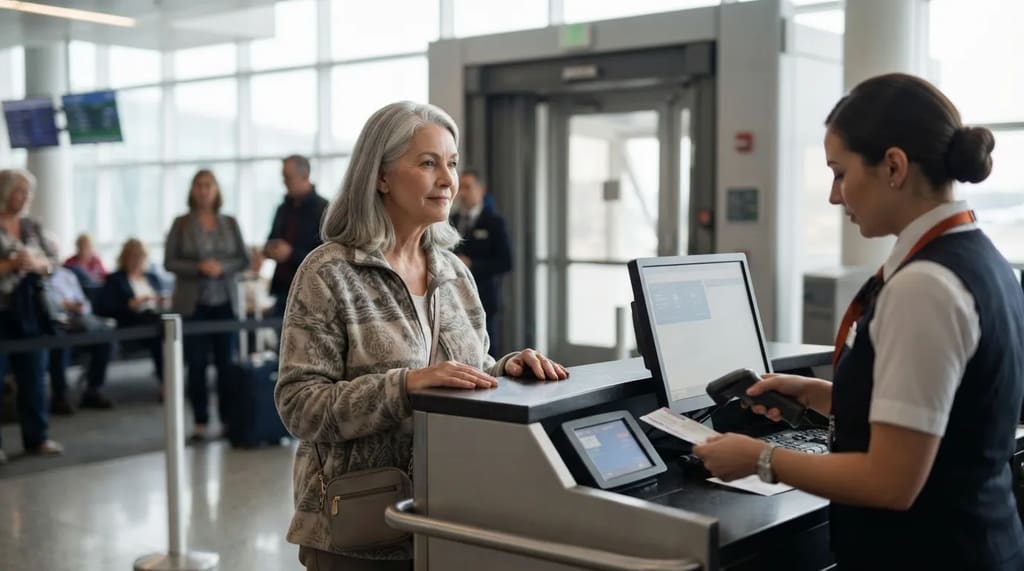
You don’t need to prove anything to a gate agent.
One guide to the rule says you don’t need documentation or a doctor’s note, because self-identification is enough. For ordinary requests like preboarding or wheelchair help, a gate agent can’t ask for a doctor’s letter.
DOT says the rule is meant to give passengers “enough time and space to board, stow their accessibility equipment, or be seated safely.” Your medical history isn’t part of that.4
Some flyers carry a note anyway for peace of mind, and that’s your call. The rule simply doesn’t ask for one.
Southwest flyers should read the next entry twice, because the old advice no longer applies.
#9 – Southwest Rewrote the Rules in 2026
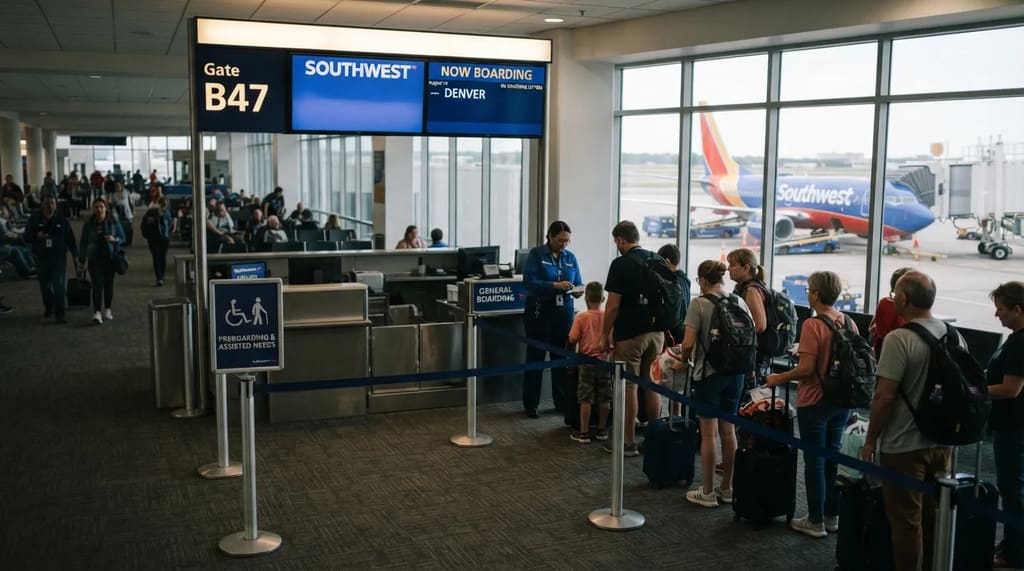
If your boarding advice comes from a friend who flew Southwest years ago, it’s out of date.
Assigned seating began January 27, 2026. Older advice about slipping in between boarding letters belongs to the open-seating era.5
The gate now has a dedicated area for preboarding and priority boarding, including people who qualify because of a disability or other needs. Southwest says to make the request to an agent at the ticket desk or the departure gate.
Preboarding itself still exists, but it no longer comes with a free pick of the cabin on that airline. If you need help boarding, the preboarding rules still apply.
Fast Facts
- Assigned seating started January 27, 2026.
- Southwest has no special boarding for seniors.
- Ask at the ticket desk or the departure gate.
- Preboarding passengers can board with one companion.
But Southwest has one more rule that matters if you’re flying as a couple.
#8 – Bring One Companion, but Ask the Right Way
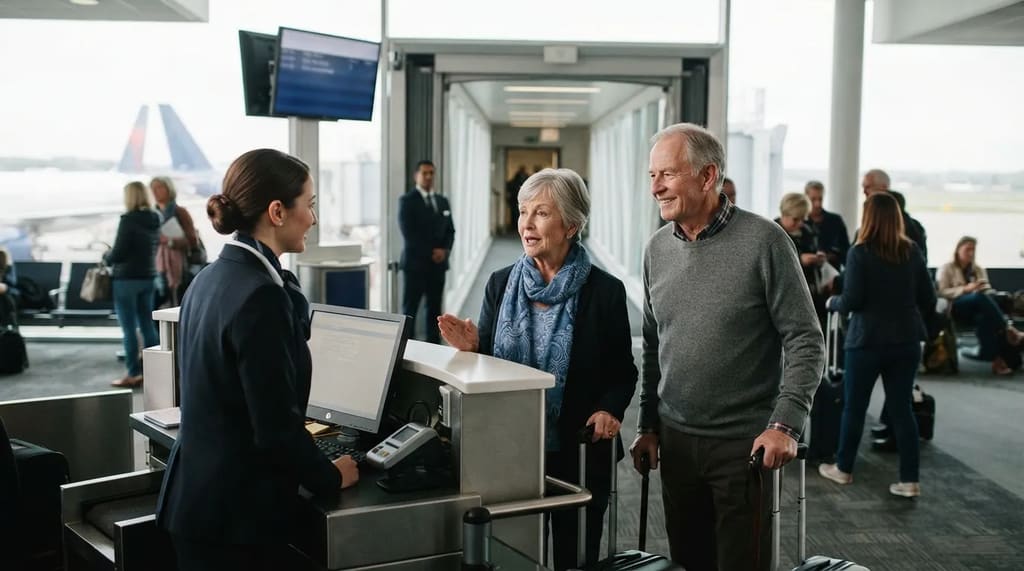
Traveling with your spouse changes how you phrase the request.
Southwest says preboarding passengers can board with one companion.6 Policies differ by airline, so a polite ask at the gate settles it faster than assuming.
The companion rides on your need for extra time, so the request should come from the person who needs it. Put both in one sentence, saying you need extra time and who is traveling with you.
One guide offers a model line: “I need extra time, and my husband will be with me.” It works just as well with a friend or an adult child.
Now for a verdict that some readers will argue with, and it involves your wallet.
#7 – Don’t Pay for What You Can Ask For
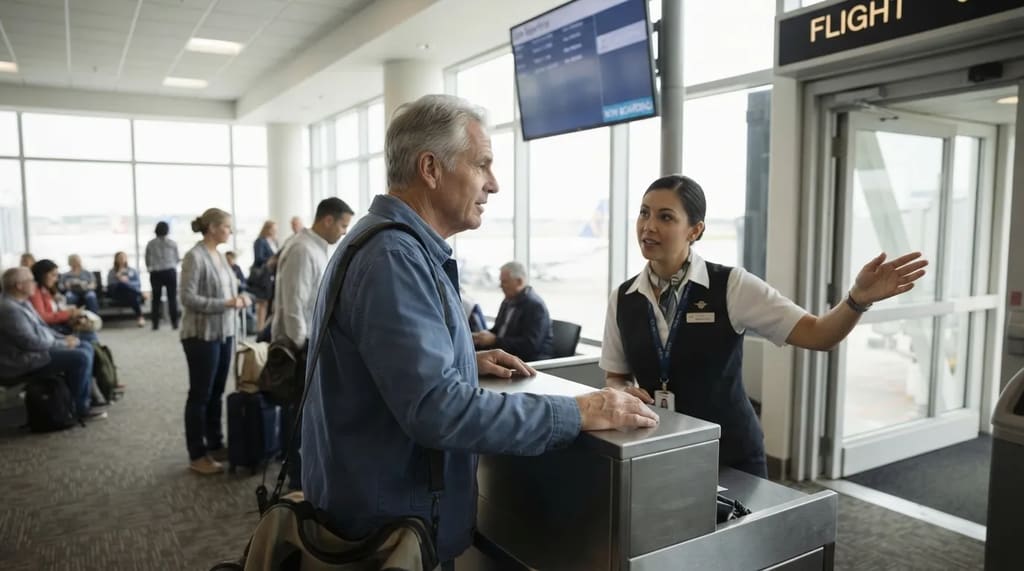
If you truly need extra time, skip the fee.
Here’s the verdict some will dispute: preboarding is something you ask for, not something you buy. Paid priority boarding is a different product with a different purpose.
One consumer site says United sells Priority Boarding for $15 per flight segment to passengers without a disability, elite status or a co-branded card. Prices change, so check the airline’s current terms.
Paid boarding can make sense for a flyer who simply wants overhead bin space. But if the real issue is extra time to get seated, the free rule is the one built for you.
Quick Compare
- Preboarding: free, requested at the gate, built for people who need extra time or help.
- Paid priority boarding: a fee (one site reports $15 per segment on United), built for bin space and convenience.
- Best fit: ask for preboarding if time is the issue, and consider paying only if bins are the issue.
That free step has a surprising feature, and it’s the one that makes some travelers uncomfortable.
#6 – You Board Ahead of First Class, and Nobody Should Argue
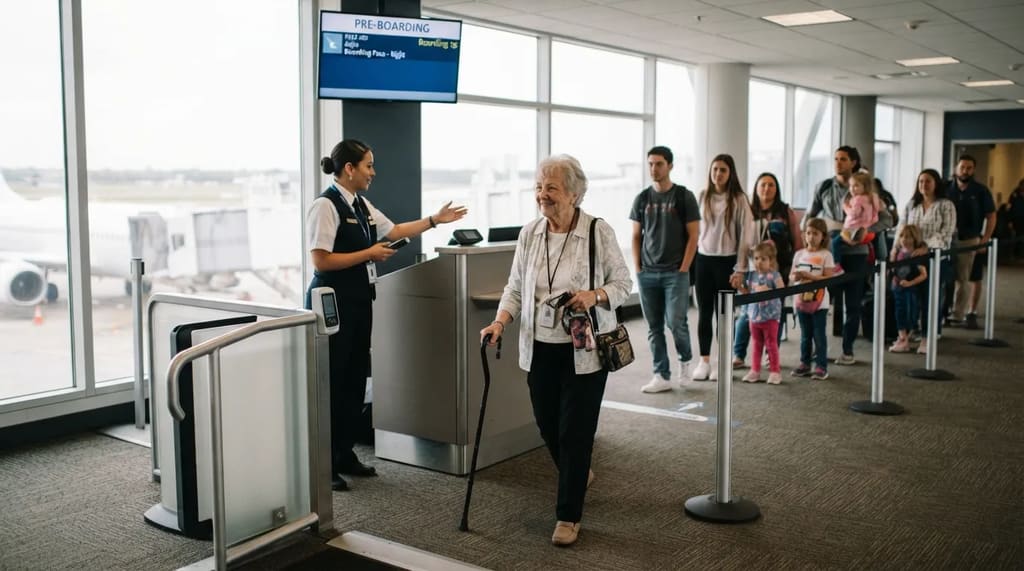
Preboarders go before first class, and that’s by design.
Under the DOT’s Bill of Rights, a passenger who self-identifies at the gate must board before all other passengers, and that includes the first-class cabin and elite members. That also puts preboarders ahead of families with young children.4 7
So don’t apologize, and don’t step aside for someone with a fancier boarding pass. One advocacy writer says being skipped in the boarding lane by able-bodied passengers means your right to preboard was denied.
The flip side matters too. The law doesn’t obligate carriers to provide services to a passenger who doesn’t have a disability.
Once you’re first on the plane, though, there’s a bigger prize than a quiet aisle.
#5 – Your Mobility Device Gets Priority Stowage
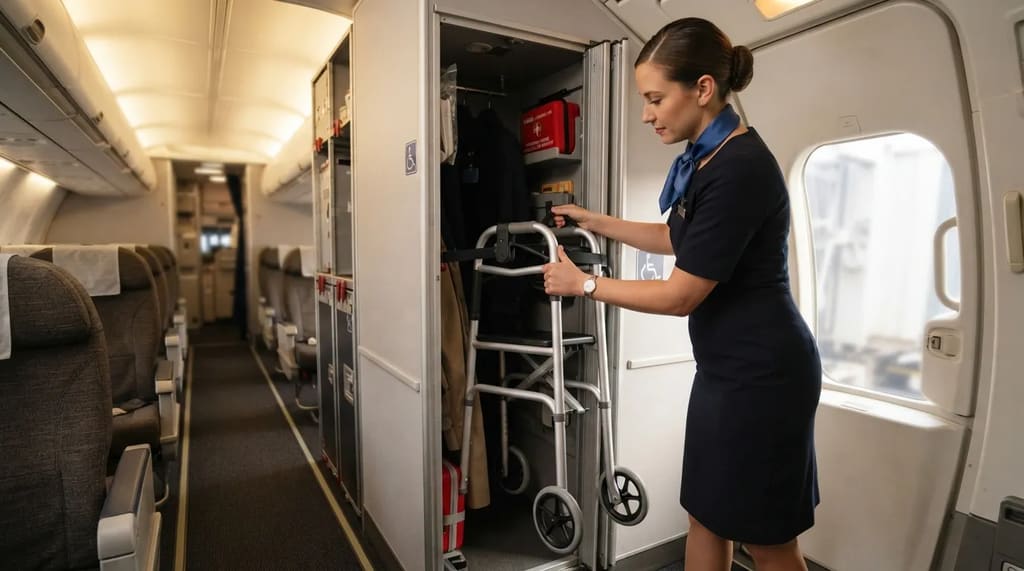
A folding wheelchair or walker has a protected place on board, but only if you preboard.
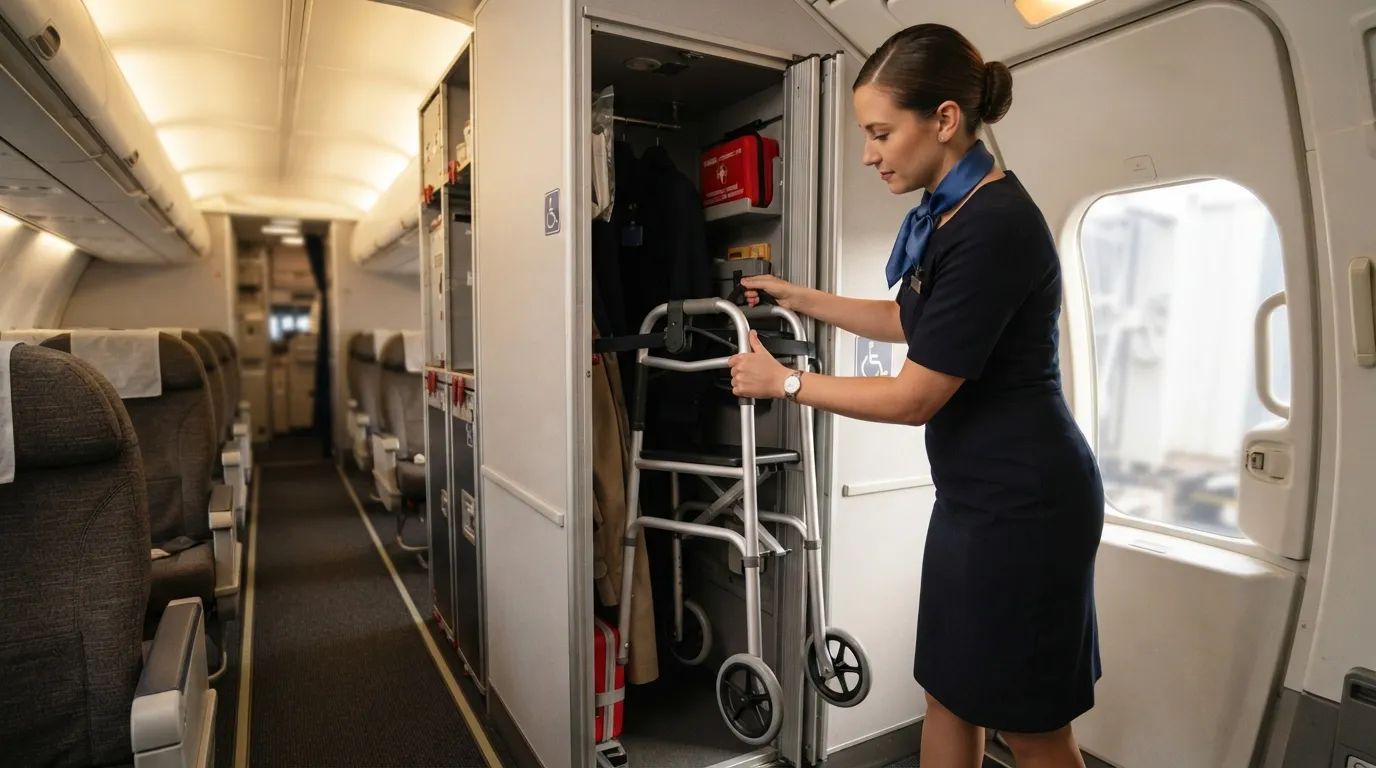
If you preboard and the stowage area can hold a foldable wheelchair, it may be stored with priority over other passengers’ and flight attendants’ carry-on baggage. You may also have the option to have the wheelchair strapped to a passenger seat.
Carriers must offer preboarding to a passenger stowing a wheelchair in the cabin. They also may not suggest you skip stowing it for non-safety reasons, such as it being easier for the airline.
Assistive devices may go in overhead compartments and under seats, consistent with carry-on rules. The priority storage rule only applies if you preboard.
If you use a wheelchair, the next rule is where people assume the paperwork has them covered.
#4 – Wheelchair Assistance Doesn’t Replace the Gate Ask
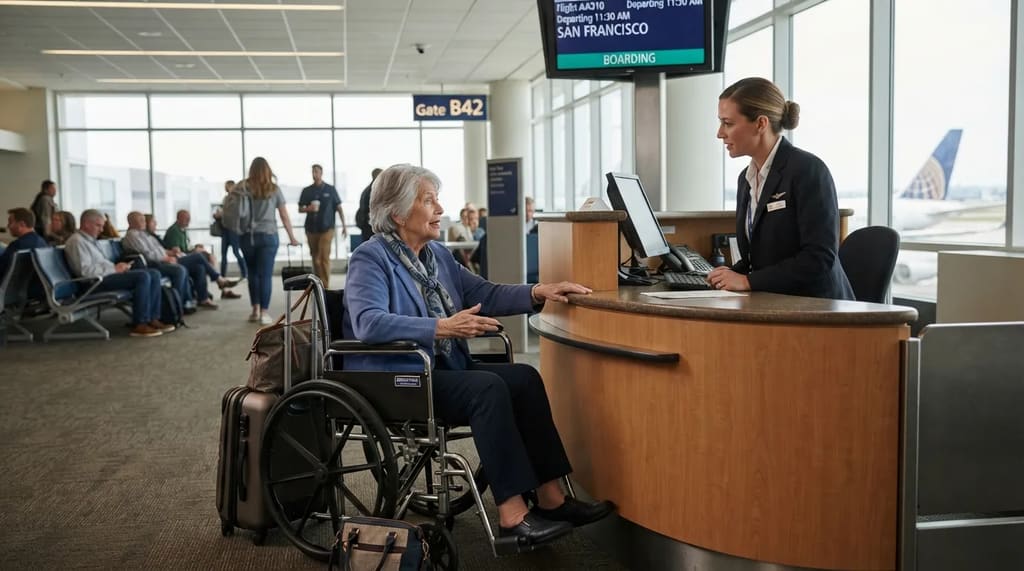
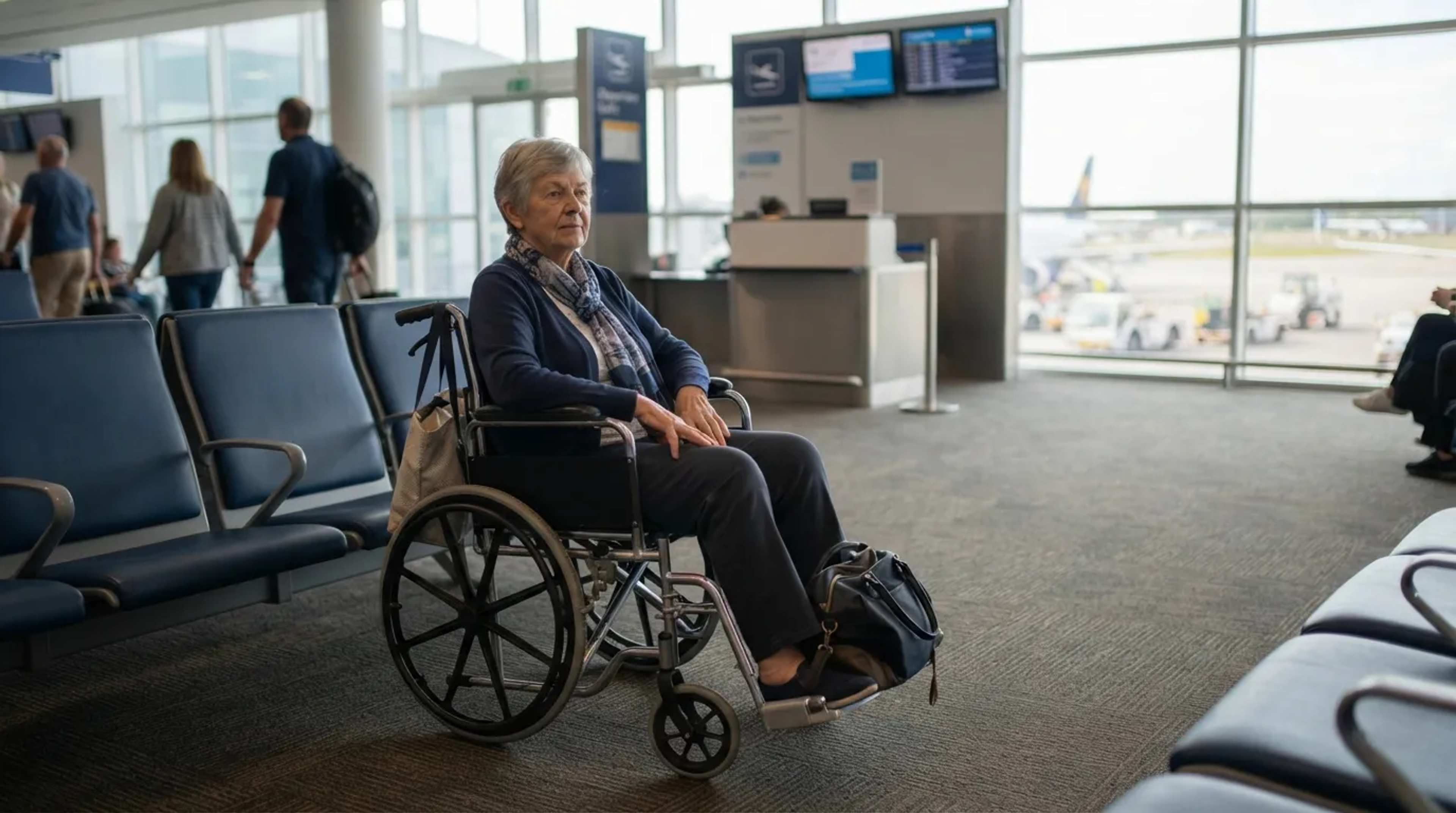
Booking wheelchair help doesn’t mean you’ve asked to preboard.
One advocacy guide says that even if you’ve requested wheelchair assistance, you should also speak with the gate agent once you arrive. Think of it as a second, separate request.
Airlines may not require advance notice that a person with a disability is traveling, but they can ask for up to 48 hours for specific accommodations that need preparation. A call ahead is smart for equipment-heavy trips.
The rules also set a limit on waiting. Carriers shall not leave a passenger in a ground wheelchair or similar device, in which the passenger is not independently mobile, for more than 30 minutes.
Worth Knowing
- Airlines can’t require advance notice just because you have a disability.
- Up to 48 hours’ notice can be requested for accommodations that need preparation.
- A ground wheelchair wait for a non-independent passenger shouldn’t pass 30 minutes.
- Wheelchair booking and the preboarding ask are two separate requests.
Many travelers treat the advance call as optional. That’s allowed, but the next rule shows why the gate is still where things go right or wrong.
#3 – Don’t Move Seats on Your Own
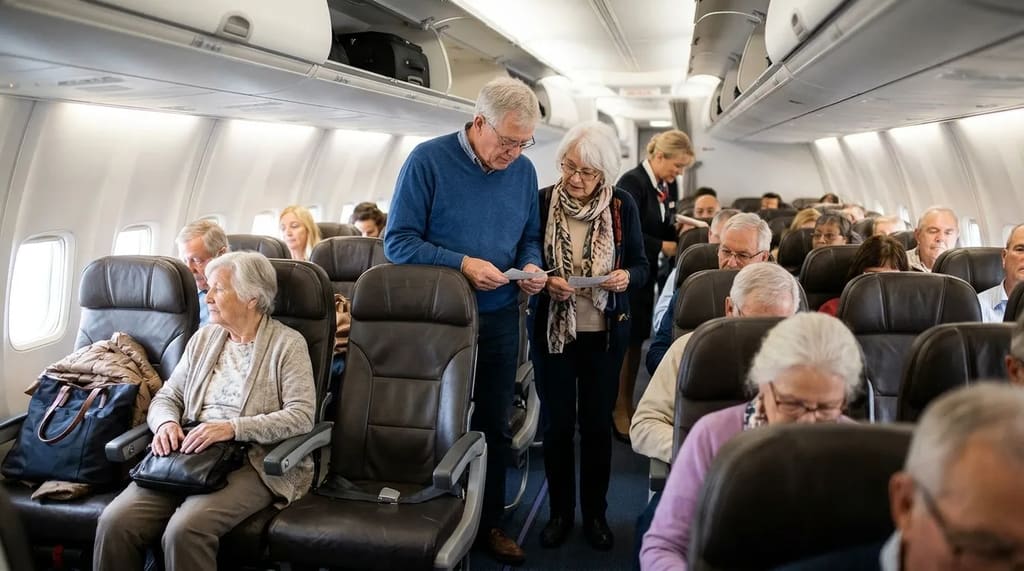
Preboarding can land you a better seat, but only in narrow cases.
Related Stories From Travelbinger

If a carrier doesn’t provide advance seat assignments, passengers who identify as needing a seating accommodation must be allowed to preboard and select the seat that best meets their needs.3 Southwest’s 2026 switch to assigned seating removed that open-cabin pick on that airline.
Delta says it can preboard you and try to help ensure an empty seat next to you. Notice the word “try.”
Agents hold seats back for late elite flyers and standby passengers, and they often can’t move you until their own holds clear. A former agent warned that switching seats without telling the crew can cause delays.
But what happens when the agent says no, or hurries you along anyway?
#2 – If the Answer Is No, Ask for the Specialist
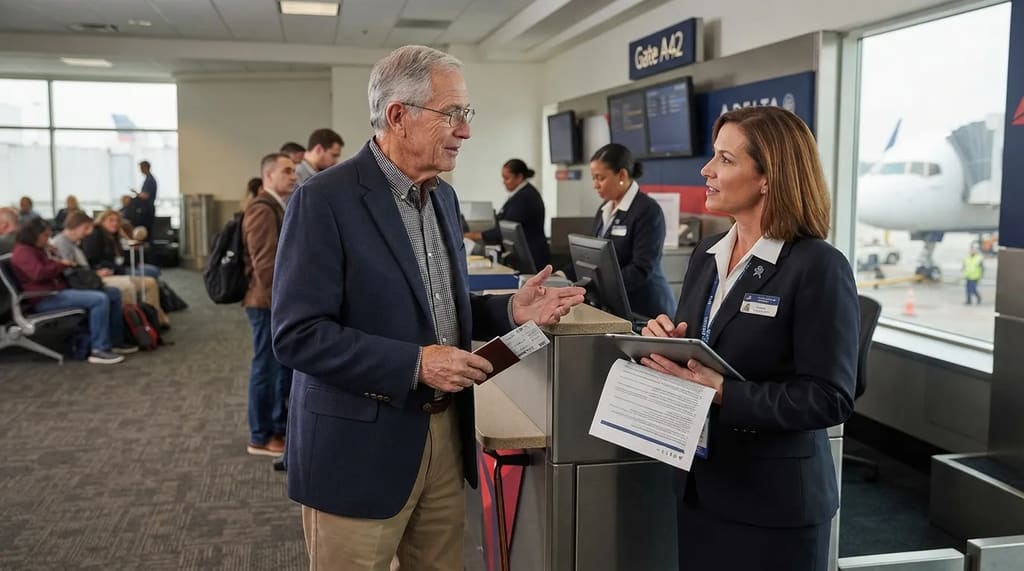
A refusal at the gate isn’t the final word.
One consumer guide says asking for the airline’s disability specialist moves the conversation from one agent’s judgment on a busy day to the airline’s own accommodation rules. That specialist is known as a CRO.
Delta’s own policy is that any passenger who needs extra time or assistance to board can and should request it at the gate. Airline policies back you up.
One advocacy writer says that being rushed, or made to feel unsafe because of onlookers, means your right to preboard has been denied. Stay calm and keep your wording factual.
And the final rule is the one almost nobody knows, because it flips the whole subject around.
#1 – Preboarding Is Your Choice, Not a Requirement
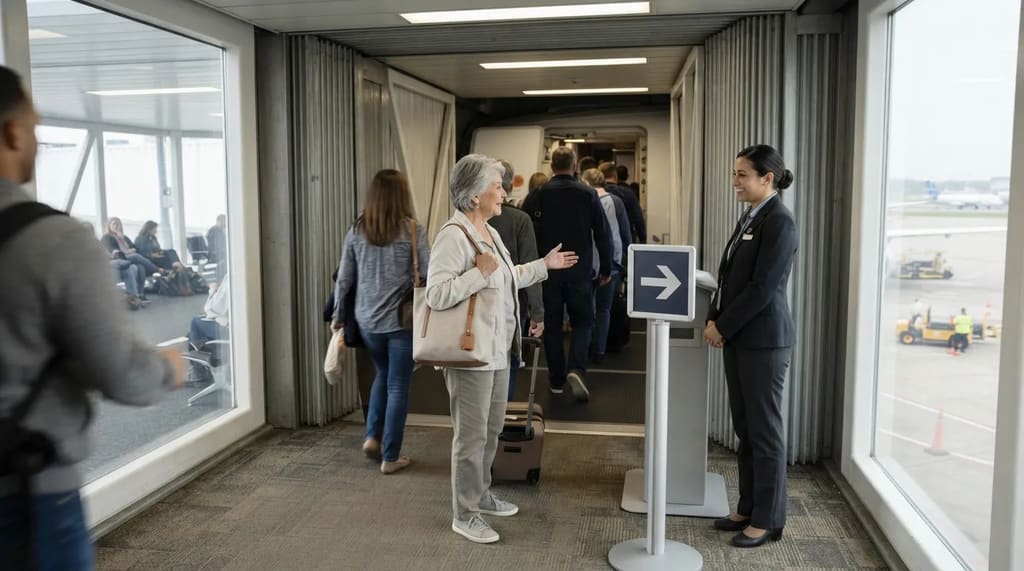
The airline cannot force you to preboard.
Federal rules say a carrier shall not require a person with a disability to accept special services, including preboarding, that the passenger did not request.2 If you’d rather board with your group, that’s your decision.
Delta, for one, lets you board with other passengers or be preboarded.8 Pick whichever fits the day, whether that means a long jet bridge, a heavy carry-on or stiff knees.
Preboarding rights are codified under 14 CFR §382.93, a binding federal regulation, not a courtesy policy. Etiquette here means knowing it’s yours to use or decline, with no guilt either way.
Which brings us to what all fourteen rules add up to.
The Bottom Line
There is no senior boarding line, and age alone won’t move you up. Need is the trigger, and you have to speak up at the gate.
The rules that matter most are asking early, being specific, skipping the doctor’s note and skipping the fee if you need extra time. Remember that you also have the right to say no thanks.
What’s the smoothest preboarding experience you’ve had, and which airline handled it best?
- TSA Screening 75 and Older: https://www.tsa.gov/travel/tsa-cares/screening-passengers-75-and-older
- 14 CFR 382.93 Preboarding: https://www.customsmobile.com/regulations/expand/title14_chapterII_part382_subpartG_section382.93
- Federal Register ACAA Technical Manual: https://www.federalregister.gov/documents/2012/07/05/2012-15233/nondiscrimination-on-the-basis-of-disability-in-air-travel-draft-technical-assistance-manual
- DOT Preboarding Notice: https://www.transportation.gov/sites/dot.gov/files/docs/Preboarding%20Notice%20Final_0.pdf
- Southwest Assigned Seating: https://www.southwest.com/customer-enhancements/assigned-seating/
- Upgraded Points Southwest Boarding: https://upgradedpoints.com/travel/airlines/southwest-airlines-boarding-process-groups/
- Wheelchair Travel Preboarding Guide: https://wheelchairtravel.org/airlines-preboarding-passengers-disabilities-access-law-violations/
- Delta Accessibility Plan: https://www.delta.com/us/en/legal/notices/accessibility-plan-for-canada